

Synopsis
Covers the whole plot, including the ending.
- Difficulty
- Easy
- Pacing
- Moderate
- Mood
- Emotional, Reflective, Poignant, Hopeful
- Read it if
- You enjoy poignant, character-driven YA novels about grief, family reconciliation, and finding your voice through art, written in verse.
- Skip it if
- You prefer fast-paced plots with high stakes or shy away from stories heavily focused on emotional processing and family drama.
One of Those Hideous Books Where the Mother Dies Plot Summary
Covers the whole plot, including the ending.
The Unspeakable Tragedy
Fifteen-year-old Ruby Milliken's life in Boston changes when her mother, Nora, dies suddenly from a brain aneurysm. Ruby is overwhelmed with grief. Her only comfort is her boyfriend, Ray. However, this tragedy also brings an unwelcome change: Ruby learns her estranged father, a famous Hollywood actor named Peter Robert, is her legal guardian. This means she must leave everything familiar and move across the country to live with a man she has never met and resents.
Forced Relocation to La-La Land
Despite her protests, Ruby leaves Boston and Ray, flying to Los Angeles to live with Peter Robert. Her first impressions of L.A. are negative; she finds it superficial and isolating. Her new home is a mansion in the Hollywood Hills, very different from her life in Boston. Peter Robert tries to be welcoming, but he is a stranger to Ruby, and their interactions are tense. Ruby feels betrayed and abandoned, struggling to accept the famous actor as the absent father who never contacted her.
A New School and Unwanted Attention
Ruby enrolls at Pacific Palisades High School, where her father's celebrity makes her an object of curiosity. She struggles to fit in among the wealthy, image-conscious students. Her only comfort comes from her calls with Ray. However, she soon meets Chloe, an artistic girl who isn't impressed by fame and genuinely tries to befriend Ruby. Chloe's down-to-earth nature and shared love for indie music begin to ease Ruby's isolation, offering her a connection in her new environment.
The First Glimmers of Connection
Despite her dislike, Ruby has a small, unexpected moment with Peter. One evening, she finds him watching an old movie starring her mother. Seeing her mother on screen, young, triggers grief in Ruby, and Peter comforts her. This shared moment of loss, though brief, allows Ruby to see a different side of her father—not just the famous actor or absent parent, but a man who also grieved for Nora. It is a fragile step towards understanding, hinting at a deeper relationship.
Ray's Visit and Growing Distance
Ray visits Ruby in Los Angeles, a trip she had looked forward to. However, the reunion is not as comforting as she hoped. The distance, both geographical and emotional, becomes clear. Ruby has changed, and Ray struggles to understand her new life and her complex feelings towards Peter. While she still loves him, Ruby finds herself drawn to new experiences and people in L.A., including Peter's assistant, Mark. The visit highlights the challenges of their long-distance relationship and Ruby's changing sense of self.
A Budding Friendship and Artistic Expression
Ruby's friendship with Chloe deepens, and Chloe encourages Ruby to explore her artistic side through photography. Ruby, who previously used her camera only to document her life with Ray, begins to use it to capture her new surroundings and complex emotions. This creative outlet helps her cope with grief and confusion. Through her lens, Ruby starts to see the beauty and unique aspects of L.A., and her photography helps her process her experiences and find her own voice amidst the chaos of her new life.
Peter's Past and Ruby's Discovery
Driven by curiosity, Ruby starts to investigate her parents' relationship. She finds old photos and letters, piecing together a more complete picture of her parents' brief marriage and divorce. She learns that her mother had been a struggling actress and that Peter had faced his own challenges before becoming famous. This discovery helps Ruby see her father as a person, realizing that his absence was due to a complex mix of circumstances and his own youthful mistakes. It begins to soften her resentment.
The Truth About the Divorce
Ruby finally confronts Peter about his past and her mother. He reveals the truth: Nora had left him, not the other way around, because she felt she was holding him back from his career and didn't want to raise a child in their unstable early lives. He confesses his regret and the pain he felt over losing Nora and being separated from Ruby. This conversation changes Ruby's long-held view of her father, replacing it with a more complex understanding of sacrifice, love, and the difficult choices her parents made.
New Connections and Shifting Priorities
As Ruby spends more time in L.A., she finds herself drawn to Mark, Peter's kind assistant. Their shared interests and easy friendship develop into a budding romance, making Ruby realize that her feelings for Ray have shifted. The distance and the changes she's undergone have created an emotional gap that seems too wide to bridge. This new connection with Mark shows Ruby's growing independence and her willingness to embrace new experiences and relationships, moving forward from her past.
A New Beginning, Not an Ending
By the end of the book, Ruby has come to terms with her mother's death. She has formed a genuine connection with Peter, understanding him not as a perfect father, but as a flawed person who loves her. She has found true friendship with Chloe and a new love with Mark. Ruby realizes that moving to L.A. and facing her father was an unexpected path to self-discovery and healing. She embraces her new identity, recognizing that while her mother's death was terrible, her own story is far from over.
Principal Figures
Ruby Milliken
Protagonist
A grieving teenager forced to live with her estranged celebrity father.
Ruby is a fifteen-year-old girl from Boston, initially characterized by her fierce loyalty to her mother and her intense resentment towards her absent father, Peter Robert. She is artistic, observant, and deeply sensitive, though she often hides her vulnerability behind a sarcastic and defiant exterior. Her identity is heavily tied to her life in Boston with her mother and boyfriend, Ray. She struggles with grief, abandonment issues, and the overwhelming changes forced upon her, but possesses an underlying resilience and a desire for truth.
Relationships: Nora Milliken (Beloved mother, source of unconditional love and her initial identity.); Peter Robert (Estranged father, initially despised but eventually understood and loved.); Ray (Boyfriend from Boston, initial emotional anchor, later outgrown.); Chloe (Best friend in L.A., provides genuine connection and encourages artistic expression.); Mark (Peter's assistant, becomes a new romantic interest and source of stability.)
Peter Robert
Supporting
Ruby's estranged, mega-famous actor father.
Peter Robert is a highly successful Hollywood actor, known for his charming public persona. Privately, he is a man burdened by past regrets, particularly his separation from Nora and his inability to be present in Ruby's life. He is initially awkward and unsure how to connect with Ruby, often relying on his wealth to compensate for his emotional absence. Despite his fame, he carries a quiet sadness and a deep desire to make amends and build a relationship with his daughter, revealing himself to be more complex and vulnerable than Ruby initially believes.
Relationships: Ruby Milliken (Daughter, initially estranged but ultimately reconciled.); Nora Milliken (Ruby's mother, his former wife, whom he still respects and grieves.); Mark (His assistant, a trusted confidant and friend.)
Nora Milliken
Mentioned
Ruby's beloved, deceased mother.
Nora Milliken is Ruby's deceased mother, whose memory profoundly shapes Ruby's worldview and grief. She is depicted through Ruby's memories as a loving, independent, and supportive parent. Though gone, her presence is felt throughout the narrative as Ruby grapples with her loss and the legacy she left behind. Ruby's initial understanding of her parents' past is heavily influenced by Nora's perspective, which is later challenged by new revelations. Nora represents Ruby's past life and the comfort of the familiar.
Relationships: Ruby Milliken (Daughter, deeply loved and missed.); Peter Robert (Former husband, their relationship's history is central to the plot.)
Ray
Supporting
Ruby's devoted boyfriend from Boston.
Ray is Ruby's first boyfriend from Boston, a kind and dependable presence who offers Ruby comfort and stability in the wake of her mother's death. He represents Ruby's past life and her initial resistance to change. He is genuinely in love with Ruby and tries his best to support her, even from a distance. However, he struggles to understand the complexities of Ruby's new life in L.A. and her evolving feelings, ultimately becoming a symbol of the life she is gradually moving beyond.
Relationships: Ruby Milliken (Boyfriend, initially a strong bond, later outgrown.)
Chloe
Supporting
Ruby's quirky and artistic new best friend in Los Angeles.
Chloe is a student at Pacific Palisades High, who quickly becomes Ruby's first genuine friend in L.A. She is an artistic, independent, and unpretentious girl who sees beyond Peter Robert's fame to Ruby's true self. Chloe's creativity and down-to-earth nature provide a much-needed anchor for Ruby in her new, bewildering environment. She encourages Ruby to explore her own artistic talents, particularly photography, and offers a non-judgmental space for Ruby to process her emotions.
Relationships: Ruby Milliken (Best friend and confidante.)
Mark
Supporting
Peter Robert's kind and steady personal assistant.
Mark is Peter Robert's reliable and empathetic personal assistant. He acts as a bridge between Ruby and her father, often mediating their interactions and offering Ruby quiet support. Mark is observant, understanding, and possesses a calm demeanor that appeals to Ruby amidst her emotional turmoil. He is mature and responsible, providing a sense of stability that Ruby craves. As Ruby spends more time in L.A., she develops romantic feelings for Mark, seeing him as a genuine and trustworthy individual.
Relationships: Ruby Milliken (Peter's assistant, later a romantic interest.); Peter Robert (Employer and trusted colleague.)
Themes & Insights
Grief and Loss
The main theme is Ruby's struggle with her mother's sudden death. The story explores the different stages of grief, from shock and denial to anger, sadness, and eventual acceptance. Ruby's feelings appear as resentment towards her father, isolation, and a desperate clinging to her past life. Her photography, first a way to preserve memories of her mother, later helps her process her current feelings and move forward. The book acknowledges that grief is not linear and that healing involves integrating loss into a new identity, as Ruby finds joy in L.A. while still remembering Nora.
“One of those hideous books where the mother dies.”
Identity and Self-Discovery
Ruby's forced move to L.A. removes her established identity, making her confront who she is without her mother and Ray as her main supports. In Boston, she was 'Nora's daughter' and 'Ray's girlfriend.' In L.A., she is 'Peter Robert's daughter,' a role she initially dislikes. Her journey involves shedding old ideas about herself and her family, especially her father. Through new friendships, artistic expression (photography), and confronting her past, Ruby begins to define herself on her own terms, separate from her previous relationships and her father's fame. This is clear in her changing feelings for Ray and her new connection with Mark.
“Maybe I'm not the same Ruby I was in Boston.”
Family and Forgiveness
Family is a central theme, focusing on estranged relationships and the journey towards forgiveness. Ruby feels deep anger towards her father for his perceived abandonment. The story slowly reveals the reasons behind Peter's absence and her parents' divorce, showing a more complex truth than Ruby first understood. This discovery allows Ruby to see Peter not just as a bad person, but as a flawed human who made difficult choices and regrets his past. Ultimately, the story is about Ruby learning to forgive her father and, in doing so, opening herself to a new family bond.
“He wasn't the scumbag I'd always painted him to be. He was just a guy who'd made some mistakes.”
The Illusion of Fame vs. Reality
The book explores the contrast between Hollywood's glamorous facade and the real lives of the people behind it. Ruby first sees her father through his celebrity, an untouchable figure who chose fame over family. Her move to L.A. exposes her to the superficiality and pressures of the entertainment industry, but also reveals the human struggles beneath the glitter. She sees her father's vulnerabilities and the challenges he faced, realizing that his public image doesn't fully capture his private reality. This theme shows how fame can distort perceptions and create emotional distance.
“Everyone loves my father. Everyone but me.”
Plot Devices & Literary Techniques
First-Person Narrative (Ruby's Voice)
The entire story is told through Ruby's immediate, unfiltered perspective.
The novel is written entirely in Ruby's first-person voice, often in a stream-of-consciousness style reminiscent of a diary or internal monologue. This device allows readers direct access to Ruby's raw emotions, sarcastic wit, and evolving thoughts as she navigates grief and change. Her voice is authentic, full of teenage angst, humor, and vulnerability, making her journey deeply personal and relatable. The use of her internal monologue also emphasizes her initial isolation and her gradual opening up to new experiences and people.
Photography as a Metaphor and Coping Mechanism
Ruby's camera helps her process emotions and perceive her new world.
Photography serves as both a literal activity for Ruby and a powerful metaphor throughout the book. Initially, her camera is a tool to capture and hold onto her past life in Boston, especially memories of her mother and Ray. As she adjusts to L.A., Chloe encourages her to use photography to observe and interpret her new surroundings. This process forces Ruby to look beyond her initial judgments and find beauty or meaning in the unfamiliar. It becomes a coping mechanism for her grief and a way for her to frame her new reality, symbolizing her shifting perspective and emerging artistic identity.
Long-Distance Relationship (Ray)
Ray represents Ruby's past and the difficulty of maintaining old ties amidst new growth.
Ruby's long-distance relationship with Ray acts as a constant tether to her old life in Boston. Initially, these calls and his eventual visit are her lifeline, representing comfort and familiarity. However, as Ruby begins to adapt to L.A. and change internally, the distance highlights the growing chasm between them. Ray's inability to fully understand her new experiences and emotions underscores Ruby's evolution, making the long-distance relationship a symbol of her past and the inevitable process of outgrowing certain connections as she moves forward.
One of Those Hideous Books Where the Mother Dies Quotes
“The hardest part about having a mom with cancer is that you can’t tell anyone. Because if you do, then it’s real.”
“Sometimes I think I'm the only person in the world who knows how to be sad.”
“It’s funny how you can live with someone your whole life and not really know them until they’re gone.”
“I used to think that the worst thing that could happen was losing someone you love. Now I know the worst thing is losing yourself.”
“Maybe love isn’t about being perfect. Maybe it’s about being there.”
“The world keeps going, even when yours stops.”
“I wish I could freeze time, just for a little while, so I could remember everything.”
“It’s like I’m living in a movie, and I’m just waiting for the happy ending that’s never going to come.”
“You can’t just pretend things aren’t happening. Eventually, they catch up to you.”
“Grief is a funny thing. It comes in waves. Sometimes it’s a ripple, sometimes it’s a tsunami.”
“I guess that’s what growing up is, isn’t it? Realizing that not everything has a happy ending.”
“Sometimes you have to break down to build yourself back up.”
“It's hard to breathe when your heart feels like it's been ripped out.”
“Maybe it’s okay to not be okay. Maybe that’s part of it.”
Quiz
10 questions on the plot and the characters. Each answer comes with a short explanation.
Question 1
What is the primary reason Ruby is forced to move to Los Angeles?
- Her mother got a new job there.
- Her mother passed away.
- She decided to run away to live with her famous father.
- Her boyfriend, Ray, moved there.
Show answer
B. Her mother passed away. The book's title and Ruby's introduction explicitly state that the story is about 'what happens when my mother dies' and she is moved to L.A.
Question 2
How far away is Los Angeles from Ruby's original home and boyfriend, Ray?
- One thousand miles
- Two thousand miles
- Three thousand miles
- Five hundred miles
Show answer
C. Three thousand miles Ruby states she is 'dragged three thousand miles away' from her home and boyfriend.
Question 3
What is Ruby's father's profession?
- A director
- A writer
- A megafamous actor
- A music producer
Show answer
C. A megafamous actor Ruby describes her father as a 'megafamous actor' who has been 'trying to win Oscars'.
Question 4
What is Ruby's initial attitude towards her father?
- Excited to finally meet him.
- Indifferent, as she barely knows him.
- Deeply resentful and angry.
- Hopeful for a new start.
Show answer
C. Deeply resentful and angry. Ruby calls her father a 'scumbag' and states 'Everyone loves my father. Everyone but me,' indicating deep resentment.
Question 5
How many times has Ruby's father visited her in her fifteen years of life?
- Several times a year
- Once or twice a year
- Not even once
- Only for her birthdays
Show answer
C. Not even once Ruby explicitly states her father has been 'too busy trying to win Oscars to even visit me once in fifteen years.'
Question 6
What is Ruby's primary emotional struggle at the beginning of the book?
- Adjusting to a new school.
- Coping with her mother's death and forced relocation.
- Dealing with the loss of her best friend.
- Financial difficulties after her mother's passing.
Show answer
B. Coping with her mother's death and forced relocation. The core conflict Ruby introduces is 'the deeply hideous story of what happens when my mother dies and I'm dragged three thousand miles away'.
Question 7
What is the reason Ruby's parents divorced?
- Her father had an affair.
- Her mother chose to leave him.
- Her father divorced her mom before Ruby was born.
- They mutually agreed to separate due to career differences.
Show answer
C. Her father divorced her mom before Ruby was born. Ruby states her father 'divorced my mom before I was born,' highlighting his absence from her life from the very beginning.
Question 8
How has Ruby primarily 'seen' her father before moving to L.A.?
- Through video calls.
- In the movies.
- From photographs her mother kept.
- At public appearances.
Show answer
B. In the movies. Ruby mentions, 'The only way I've ever even "seen" him is in the movies, since he's this megafamous actor.'
Question 9
What does the title 'One of Those Hideous Books Where the Mother Dies' foreshadow about the narrative's tone?
- It suggests a lighthearted and humorous approach to grief.
- It indicates a cynical, perhaps self-aware, and emotionally charged perspective on a common YA trope.
- It implies a straightforward, dramatic exploration of loss without much introspection.
- It hints at a mystery surrounding the mother's death.
Show answer
B. It indicates a cynical, perhaps self-aware, and emotionally charged perspective on a common YA trope. Ruby's use of 'hideous' and her direct address to the trope suggests a self-aware, critical, and emotionally raw perspective on her situation, rather than a simple dramatic telling.
Question 10
What does Ruby's immediate concern for her 'gorgeous boyfriend, Ray' reveal about her priorities at the onset of her mother's death and relocation?
- It shows her immaturity and inability to grasp the gravity of her mother's death.
- It highlights her dependence on romantic relationships for emotional support.
- It demonstrates her struggle to maintain a semblance of her old life and connections amidst profound loss and disruption.
- It indicates that she is more upset about leaving Ray than about her mother's passing.
Show answer
C. It demonstrates her struggle to maintain a semblance of her old life and connections amidst profound loss and disruption. While her mother's death is central, her immediate focus on Ray underscores the disruptive impact of the move on her existing life and relationships, representing her desire to cling to familiarity and stability.
One of Those Hideous Books Where the Mother Dies FAQ
What is the central conflict Ruby faces at the beginning of the book?
Ruby's central conflict stems from the sudden death of her mother, which forces her to move from Boston to Los Angeles. This move not only separates her from her boyfriend, Ray, but also thrusts her into the unfamiliar world of living with her estranged, famous actor father, whom she resents for his absence throughout her life.
Who is Ray and what is his significance to Ruby in Boston?
Ray is Ruby's boyfriend in Boston and represents her anchor to her old life and sense of normalcy. Their relationship is depicted as passionate and deeply important to Ruby, making her forced separation from him a major source of her initial grief and anger.
How does Ruby primarily view her father, and why?
Ruby views her father with intense resentment and anger, largely because he divorced her mother before she was born and never visited her in fifteen years. She sees him as a 'scumbag' and a self-absorbed actor more concerned with his career and Oscars than with her.
What is the initial setting of the story, and where does Ruby relocate to?
The story initially takes place in Boston, where Ruby lives with her mother and is deeply connected to her boyfriend, Ray. Following her mother's death, Ruby is relocated three thousand miles away to Los Angeles, to live with her famous actor father.
What unique narrative style does the book employ?
The book is written entirely in free verse poetry, offering an intimate and immediate look into Ruby's thoughts, feelings, and experiences. This poetic style enhances the emotional depth and personal nature of her journey through grief and adaptation.
Are there any subtle clues about Ruby's father's true feelings before their first meeting?
While Ruby initially perceives her father as uncaring, subtle details might hint at his complexities, such as the fact he does take her in. The narrative, being from Ruby's perspective, heavily filters his actions through her resentment, but the reader can infer his own struggles or attempts at connection, however clumsy.
How does the author use the 'Hollywood' setting to highlight Ruby's internal conflict?
The glitzy, superficial world of Hollywood contrasts sharply with Ruby's raw grief and authentic emotions. It amplifies her feelings of displacement and isolation, making her struggle to connect with her father even more pronounced against a backdrop of manufactured reality and public perception.
Are there recurring motifs or symbols related to Ruby's mother throughout the book?
The memory of Ruby's mother, often evoked through flashbacks or Ruby's internal monologues, serves as a constant presence and a benchmark for Ruby's emotional state. Objects or places associated with her mother, though not explicitly detailed in the synopsis, would likely become significant symbols of loss and longing.
How does Ruby's relationship with Ray evolve or face challenges due to the distance?
The long-distance relationship with Ray becomes a significant source of emotional strain for Ruby. The physical separation inevitably tests their bond, leading to feelings of loneliness, jealousy, and uncertainty, forcing Ruby to confront the realities of maintaining a relationship across thousands of miles.
How does Ruby's grief manifest psychologically beyond just sadness?
Beyond sadness, Ruby's grief manifests as intense anger, particularly directed at her father for his past absence and the circumstances of her relocation. She also experiences feelings of abandonment, isolation, and a deep sense of injustice, which fuel her rebellious behavior and resistance to her new life.
What psychological impact does living with a famous, estranged father have on Ruby's identity?
Living with her famous, estranged father forces Ruby to confront her own identity in relation to his celebrity and their complicated past. She struggles with feelings of being overlooked, overshadowed, and unsure of her place in his world, which can lead to self-doubt and a quest for her own unique identity.
How does Ruby's initial resistance to her father serve as a coping mechanism?
Ruby's intense resistance and anger towards her father act as a psychological coping mechanism to deal with the overwhelming grief of losing her mother and the trauma of forced relocation. By externalizing her pain as anger towards him, she avoids fully processing the raw, debilitating sadness of her loss.
In what ways does Ruby's move to L.A. challenge her preconceived notions about family?
Ruby's move to L.A. shatters her preconceived notions of family, which were based solely on her relationship with her mother. She's forced to redefine what 'family' means as she navigates a relationship with a father she never knew and confronts the complexities of a blended, unconventional family unit.
Is Ruby's anger at her father entirely justified, or are there nuances to his character?
While Ruby's anger at her father is understandable given his long absence and her profound loss, the narrative encourages readers to consider nuances. His fame and past choices are presented through Ruby's biased lens, implying there might be other perspectives or reasons for his behavior that are not immediately apparent.
How does the title, 'One of Those Hideous Books Where the Mother Dies,' set the tone and invite reader interpretation?
The title immediately establishes a self-aware, cynical, and perhaps darkly humorous tone, signaling that Ruby is aware of her own 'trope.' It invites readers to interpret the story not just as a tragedy, but as Ruby's personal, unfiltered, and perhaps defiant take on a common literary theme, challenging expectations.
To what extent is Ruby's journey about finding a new family versus learning to cope with loss?
Ruby's journey is a complex blend of both. While she is forced into a new family dynamic, a significant part of her struggle is internal, learning to process her mother's death and adapt to a drastically altered life. The resolution likely involves elements of both acceptance of her new circumstances and personal healing.
What message might the author be conveying about the complexities of parental relationships, especially with absent parents?
The author likely conveys that parental relationships, particularly with absent parents, are fraught with complexity, resentment, and unmet expectations. It suggests that absence leaves deep scars, but also explores the possibility of reconciliation and understanding, even if imperfect, in the face of profound loss.
Does the book suggest that love can truly conquer distance, or does it highlight the challenges of long-distance relationships?
The book likely highlights the significant challenges and emotional toll that long-distance relationships impose, especially on a young, grieving protagonist like Ruby. While her love for Ray is strong, the narrative uses the distance to explore themes of insecurity, trust, and the painful realities of separation.
How does Ruby's voice, being so strong and opinionated, shape the reader's perception of other characters?
Ruby's strong, opinionated voice acts as a powerful filter, heavily coloring the reader's perception of other characters, especially her father and new acquaintances in L.A. Her biases and emotional state mean that readers initially see these characters through her lens of resentment, grief, or longing, which can be both unreliable and deeply personal.
About the author

Sonya Sones is an American author known for her young adult fiction. Her notable work, "One of Those Hideous Books Where the Mother Dies," explores themes of loss and adolescence through a unique narrative style. Sones has received recognition for her contributions to literature aimed at young readers.
Similar books
- Love That Dog
Sharon Creech
4.0 (39k) average on GoodreadsChildren'sExplores grief and finding artistic expression through free verse poetry.
- Out of the Dust
Karen Hesse
3.8 (69k) average on GoodreadsChildren'sA verse novel about a young girl coping with tragedy and family challenges.
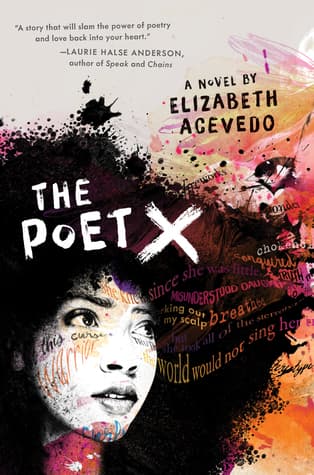
- The Poet X
Elizabeth Acevedo
4.4 (62k) average on GoodreadsYoung AdultYA novel in verse about a young woman finding her voice and identity through poetry.
- Speak
Laurie Halse Anderson
4.0 (485k) average on GoodreadsPsychologyWhile both books utilize unique narrative structures to explore adolescent trauma, Anderson's 'Speak' delves into the psychological fallout of assault with a starker, more intense realism and deeper metaphorical exploration. Sones's book, while effective, focuses more directly on the immediate emotional landscape of grief, making it less confrontational in its thematic depth compared to 'Speak'.
- The Fault in Our Stars
John Green
4.2 (3.6M) average on GoodreadsYoung AdultBoth books address themes of loss and mortality in young adult lives. However, Green's 'The Fault in Our Stars' is more overtly philosophical, employing witty, intellectual dialogue and a more intricate plot. Sones's work, in contrast, is more grounded in the day-to-day emotional struggles of a grieving teen, prioritizing Ruby's internal monologue and a more direct emotional journey over complex philosophical debates or intricate plot twists.
- Harry Potter and the Sorcerer's Stone
J.K. Rowling
4.5 (7M) average on GoodreadsFantasyRescued from a miserable life under the stairs, an orphaned boy discovers he's a wizard destined for a magical school, where he uncovers a dangerous secret tied to the dark wizard who murdered his parents.





Enjoyed the summary?
A summary gives you the shape of the book. The book itself has the detail, the examples and the voice.
Find One of Those Hideous Books Where the Mother Dies on AmazonAs an Amazon Associate, BookBrief earns from qualifying purchases. How we're funded