
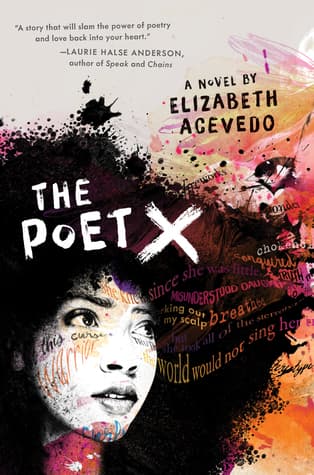
Synopsis
Covers the whole plot, including the ending.
- Difficulty
- Easy
- Pacing
- Moderate
- Mood
- Empowering, Intense, Poetic, Authentic
- Read it if
- You love powerful coming-of-age stories about finding your voice, enjoy poetic prose, or are interested in themes of faith, family, and first love in a vibrant cultural setting.
- Skip it if
- You prefer fast-paced plots with little introspection or are uncomfortable with challenging themes related to religion and family conflict.
The Poet X Plot Summary
Covers the whole plot, including the ending.
Xiomara's Inner World and Outer Struggles
Xiomara Batista, a fifteen-year-old Dominican-American girl in Harlem, often disagrees with her devout Catholic mother, Mami. Mami, who almost became a nun, sets strict religious rules for Xiomara and her twin brother, Xavier (Twin). Xiomara's body draws unwanted male attention, which Mami blames on Xiomara's sin, often punishing her physically. Xiomara puts her frustrations and observations about her family, faith, and the world into a secret leather notebook of poetry. She feels unheard and misunderstood, especially by Mami, who puts the church first. Twin, who is more academic and seems to follow Mami's rules, also has secrets.
A New Connection and a Hidden Passion
In bio class, Xiomara likes Aman, a classmate with kind eyes. They connect through talks and late-night texts, starting a secret relationship Xiomara knows Mami would not approve of. At the same time, Xiomara's English teacher, Ms. Galiano, notices Xiomara's writing and asks her to join the school's slam poetry club. Xiomara is unsure at first, afraid of Mami's anger if she found out. But the idea of speaking her truth, of saying the words she only whispered to herself, is strong. This creates a conflict between obeying and expressing herself.
First Slam and Growing Boldness
Despite her fears, Xiomara starts sneaking out for poetry club meetings, often lying to Mami. She finds friends and support among the other poets, who encourage her to share her work. The club gives her a safe place to explore her voice and improve her writing. Ms. Galiano continues to be a supportive mentor, seeing Xiomara's talent. Xiomara also attends a local poetry slam, seeing the power of spoken word. Inspired, she secretly performs her first poem at a club meeting, feeling a rush of excitement and validation she rarely gets at home. Her relationship with Aman deepens, giving her another source of comfort and understanding away from her family's watch.
Mami's Discovery and the Notebook's Fate
The balance Xiomara keeps between her secret life and home life breaks when Mami finds her poetry notebook. Mami, angry at what she sees as rebellious thoughts, especially poems questioning her faith and about Aman, confronts Xiomara. In a fit of anger, Mami throws the notebook into a bonfire, destroying months of Xiomara's private thoughts and feelings. This act devastates Xiomara; she feels her voice and identity have been silenced. The incident creates a bigger distance between mother and daughter, making Xiomara feel more alone and misunderstood.
The Aftermath and Twin's Revelation
After her notebook is destroyed, Xiomara becomes more withdrawn, heartbroken and defiant. She keeps sneaking out to see Aman, finding comfort in his steady support. Her relationship with Mami becomes more tense, marked by silence and unspoken anger. During this time, Xiomara learns a secret about her brother, Twin: he is gay and has a boyfriend named Cody. Twin tells Xiomara, sharing the pressure he feels to meet their parents' expectations, especially their father's wish for him to become a priest. This shared experience of hiding their true selves and defying parents strengthens the twins' bond, creating new understanding and support.
A New Opportunity and a Renewed Voice
Despite the setback, Ms. Galiano, not knowing about the notebook's destruction, keeps encouraging Xiomara to get ready for the school's poetry slam. She gives Xiomara a flyer for a city-wide slam competition, urging her to submit her work. At first, Xiomara feels a great loss and doubt, thinking she cannot recreate what was destroyed. But Ms. Galiano's belief in her talent, along with encouragement from Aman and Twin, slowly brings back Xiomara's spirit. She starts rewriting her poems, finding that recreating them is not just about memory, but about taking back her voice and dealing with her pain, making her new work deeper and stronger.
The Church Retreat and a Moment of Clarity
Mami makes Xiomara attend a church retreat, hoping it will bring her back to the church. There, Xiomara struggles to match her personal beliefs and experiences with the church's strict rules. She watches other attendees, especially the girls, and thinks about the expectations placed on them. Instead of finding peace, Xiomara uses the time to think more about her mother, her faith, and her own identity. The retreat, rather than making her more pious in Mami's eyes, strengthens her decision to speak her truth and follow her own path. It confirms her commitment to poetry as her way of worship and expression.
The Poetry Slam and a Public Confession
The day of the school poetry slam arrives. Xiomara, feeling nervous and determined, decides to perform her most personal and challenging poems. Mami, unknown to Xiomara, has followed her to the school and is in the audience. Xiomara takes the stage and delivers powerful, raw verses about her mother's strictness, her struggles with faith, her body, and her desire for freedom and self-expression. Her performance is a public statement of her inner world, a defiant act of taking back her voice. Mami, hearing her daughter's heart, looks shaken and leaves the auditorium before Xiomara finishes, unable to handle the intensity of her daughter's words.
Confrontation and Reconciliation
After the slam, Xiomara returns home to a tense atmosphere. Mami, still shaken by what she heard, confronts Xiomara. This time, the confrontation is different. Instead of immediate punishment, they have a difficult, honest conversation. Xiomara stands firm, explaining her feelings and her need for self-expression. Papi, who has often been quiet, steps in, telling Mami to listen to their daughter. He shares his own past desires and sacrifices, showing Mami he understands Xiomara's longing for freedom. This moment is a turning point. Mami begins to see Xiomara not just as a rebellious daughter, but as a young woman with her own valid voice and view. This leads to a fragile, yet hopeful, understanding.
A Path Forward
After the slam and family talk, things at home slowly change. Mami, though still struggling with some of Xiomara's choices, starts to respect her daughter's passion. Papi becomes more openly supportive, and Xiomara's bond with Twin deepens as they keep sharing secrets and supporting each other. Xiomara gets an email from Ms. Galiano saying she has been accepted into the city-wide slam competition. This acceptance confirms her talent and her journey. Xiomara no longer hides her poetry. She accepts her identity as a poet, ready to keep using her voice to navigate her world and inspire others. She knows her words are her power, and she is no longer afraid to use them.
The Poet X Characters
Xiomara Batista
Protagonist
A fierce and passionate Harlem teenager who finds her voice through slam poetry.
Xiomara is a fifteen-year-old Dominican-American girl living in Harlem. She is physically imposing, which she uses as a defense mechanism against unwanted male attention and her mother's strictures. Internally, she is sensitive, observant, and deeply thoughtful, pouring her complex emotions about faith, family, and identity into a secret notebook of poetry. She struggles with her mother's rigid Catholicism and the expectations placed upon her as a young woman. Her journey is one of self-discovery and empowerment as she learns to articulate her truth and stand up for her own desires, despite the severe consequences.
Relationships: Mami (Altagracia Batista) (Strict, religious mother; often adversarial); Papi (Javier Batista) (Distant but ultimately supportive father); Xavier (Twin) Batista (Twin brother, confidant, fellow secret-keeper); Aman (Secret boyfriend, source of comfort and understanding); Ms. Galiano (Supportive English teacher and poetry club mentor)
Mami (Altagracia Batista)
Antagonist/Supporting
Xiomara's devoutly religious mother, a former novitiate, who imposes strict rules on her daughter.
Mami is a deeply religious Dominican woman who once considered becoming a nun. She is fiercely protective of her children, particularly Xiomara, but her protectiveness manifests as extreme control and strict adherence to Catholic doctrine. She views Xiomara's developing body and rebellious spirit as sinful and a source of shame. Her actions, though often harsh and physically punitive, stem from a desire to save her daughter's soul and protect her from the perceived dangers of the world. Her character represents the clash between traditional religious values and modern self-expression.
Relationships: Xiomara Batista (Daughter, often in conflict); Papi (Javier Batista) (Husband); Xavier (Twin) Batista (Son, whom she expects to become a priest)
Papi (Javier Batista)
Supporting
Xiomara's quiet father, who eventually steps in to mediate family conflicts.
Papi is Xiomara's father, a quieter, more reserved figure compared to Mami. He works long hours and often remains in the background during Mami and Xiomara's confrontations. His past involves a more rebellious youth and a love for music, which he suppressed for Mami. This shared history of suppressed passion allows him to empathize with Xiomara's struggles. While initially passive, he eventually finds his voice to support Xiomara and challenge Mami's rigid control, playing a crucial role in the family's eventual, fragile reconciliation.
Relationships: Xiomara Batista (Daughter, whom he eventually supports); Mami (Altagracia Batista) (Wife); Xavier (Twin) Batista (Son)
Xavier (Twin) Batista
Supporting
Xiomara's academically gifted twin brother, who hides his own secrets.
Xavier, known as Twin, is Xiomara's twin brother. He is academically brilliant and outwardly more compliant with Mami's expectations, particularly her desire for him to become a priest. However, Twin harbors a significant secret: he is gay and has a boyfriend named Cody. He is a quiet and thoughtful individual who provides a crucial confidant for Xiomara, sharing his own struggles with identity and parental expectations. Their sibling bond strengthens as they navigate their secret lives and support each other's quest for authenticity.
Relationships: Xiomara Batista (Twin sister, close confidant); Mami (Altagracia Batista) (Mother, whose expectations he struggles to meet); Cody (Secret boyfriend)
Aman
Supporting
Xiomara's secret boyfriend, who offers her understanding and unwavering support.
Aman is Xiomara's classmate and secret boyfriend. He is a kind, empathetic, and patient young man who sees beyond Xiomara's tough exterior. He encourages her poetry and provides a safe space for her to be vulnerable and authentic, away from the judgment of her family. Their relationship is a source of comfort and understanding for Xiomara, giving her the confidence to pursue her passions. He represents an external world of acceptance and support that contrasts sharply with the restrictions of her home life.
Relationships: Xiomara Batista (Secret boyfriend)
Ms. Galiano
Supporting
Xiomara's English teacher and poetry club mentor, who recognizes her talent.
Ms. Galiano is Xiomara's English teacher and the advisor for the school's slam poetry club. She is perceptive and supportive, recognizing Xiomara's raw talent and powerful voice even before Xiomara herself fully embraces it. Ms. Galiano consistently encourages Xiomara to join the club and to share her work, providing the opportunity and guidance that allows Xiomara to discover her passion for spoken word. She acts as a crucial mentor figure, offering a non-judgmental space for Xiomara's artistic growth.
Relationships: Xiomara Batista (Student and mentee)
Father Sean
Mentioned
The priest at Xiomara's church, representing the church's authority.
Father Sean is the priest at Xiomara's family church. He is often mentioned by Mami as a figure of authority and spiritual guidance. While not a major character, he symbolizes the institutional religion that Xiomara struggles against and that Mami so devoutly follows. His sermons and Mami's interpretations of them are a constant backdrop to Xiomara's internal conflict regarding her faith and her mother's expectations.
Relationships: Mami (Altagracia Batista) (Spiritual leader and guide)
Cody
Mentioned
Twin's secret boyfriend.
Cody is Twin's secret boyfriend. He is not seen directly but is mentioned by Twin when he confides in Xiomara about his sexuality. Cody represents Twin's hidden life and his own struggle for identity and acceptance, mirroring Xiomara's secret relationship with Aman and her poetry. His existence highlights the parallel journeys of the twin siblings in defying parental expectations.
Relationships: Xavier (Twin) Batista (Secret boyfriend)
The Poet X Themes
Identity and Self-Discovery
The novel explores Xiomara's journey of discovering her true self amid family, faith, and growing sexuality. Her poetry helps her find herself, letting her say thoughts and feelings she suppresses daily. Through writing and performing, Xiomara learns who she is, what she believes, and how to stand up for her truth. This ends with her powerful slam performance where she publicly claims her identity as a poet.
“I can’t just let myself be swallowed. Not by Mami. Not by the church. Not by anyone.”
Religion vs. Personal Freedom
A main theme is the conflict between strict religious rules and personal freedom. Xiomara struggles with her mother's Catholic faith, which she sees as limiting and hypocritical, especially about female sexuality and self-expression. Her poetry often questions church teachings and her mother's devotion. The novel does not dismiss faith but explores finding personal spirituality and moral truth outside set religious rules. It suggests true faith can come from being authentic and expressing oneself.
“I just want to understand how the Saints can be so good and Mami can be so cruel.”
The Power of Voice and Language
This theme is central, as Xiomara's story is about finding and using her voice. At first, her voice is only in her secret notebook, a safe place for unspoken thoughts. As she finds slam poetry, she learns to turn private words into public performance, empowering herself and challenging the silence put on her. Writing and speaking poetry becomes an act of rebellion, healing, and self-assertion, showing how language can free and connect people.
“I want to be able to speak the truth of my life with the same reverence and rhythm I hear in every good poem.”
Mother-Daughter Relationships and Intergenerational Conflict
The complicated relationship between Xiomara and Mami is a core part of the story. Their conflict comes from different values, cultural expectations, and a deep lack of understanding. Mami's desire to control Xiomara comes from her own past and strict religious beliefs. Xiomara wants independence and self-expression. The novel explores the pain and love in this dynamic, showing how generational and cultural differences can create deep divides, but also how honesty and vulnerability can lead to a fragile, yet meaningful, understanding.
“I’m learning that some poems don’t rhyme, and some stories don’t have a clear beginning, middle, and end. My mother and I are an unfinished poem.”
Sexual Awakening and Body Image
Xiomara's physical changes and growing sexuality cause much conflict and self-consciousness. Her body attracts unwanted attention, which Mami blames on Xiomara, leading to shame and punishment. Xiomara deals with how others and she herself see her body, and how it clashes with religious ideas of purity. Her relationship with Aman lets her explore intimacy and desire on her own terms. Her poetry lets her express feelings about her body and sexuality, taking back control of her story.
“My body is my temple, but sometimes I wish it were a fortress.”
Plot Devices & Literary Techniques
Free Verse Poetry
The entire novel is written in free verse, reflecting Xiomara's internal world.
The entire novel is written in free verse poetry, directly immersing the reader into Xiomara's mind and poetic sensibility. This device is crucial as it mirrors Xiomara's own form of expression, allowing her internal thoughts, observations, and emotions to flow unconstrained by traditional narrative prose. The rhythm, line breaks, and imagery inherent in free verse not only make the reading experience unique but also emphasize the theme of voice and the power of language, demonstrating how Xiomara literally 'thinks' and 'feels' in poetry.
Xiomara's Notebook
A physical manifestation of Xiomara's hidden thoughts and voice.
Xiomara's leather-bound notebook serves as a powerful symbol and plot device. It is her sanctuary, a private space where she can articulate her forbidden thoughts, questions about faith, and desires without fear of judgment. The notebook represents her true, authentic voice, hidden from her restrictive home environment. Its eventual discovery and destruction by Mami is a pivotal moment, symbolizing the violent suppression of her identity, but also sparking her resolve to reclaim her voice publicly through performance.
The Slam Poetry Club
A catalyst for Xiomara's public self-expression and community.
The school's slam poetry club acts as a critical catalyst for Xiomara's transformation. It provides a structured, yet liberating, environment where she can develop her craft, receive encouragement, and find a community that values her voice. The club, and the act of performing at slams, forces Xiomara to move from private writing to public speaking, confronting her fears and ultimately empowering her to assert her identity. It offers a counter-narrative to the restrictive environment of her home and church.
Religious Imagery and Metaphor
Used throughout to highlight Xiomara's internal conflict and questioning of faith.
Acevedo frequently employs religious imagery and metaphors, often subverting them, to illustrate Xiomara's internal struggle with her Catholic upbringing. Xiomara questions the stories of saints, compares her own 'sins' to biblical narratives, and uses the language of faith to articulate her own spiritual and emotional experiences. This device highlights the tension between the sacred and the profane, and how Xiomara reinterprets traditional religious concepts to make sense of her own life and find her personal truth, often seeing her poetry as a new form of prayer or worship.
The Poet X Quotes
“And I think about all the things we could be if we just gave ourselves permission.”
“I can't be a house for a man. I am a house for myself.”
“It's like I'm a poem and I want to be read, but I'm also a secret and I want to be kept.”
“Sometimes it feels like my body is just a place my mother gets to put her rules.”
“I'm learning that some poems don't rhyme, and some stories don't have a clear beginning, middle, and end.”
“Even when I'm silent, I'm a poem.”
“A girl's mouth is a weapon. No one wants a woman with a mouth full of fire.”
“I wonder if I will ever feel like I belong in my own skin.”
“There are things that happen to a girl that she's not supposed to talk about.”
“I want to be a woman who is loud and angry and full of opinion. I want to be a woman who is not afraid to take up space.”
“Every time I write, I get a little closer to myself.”
“I think about how sometimes the truth is a hard thing to swallow, but it's always worth it.”
“Maybe the bravest thing I'll ever do is to tell my own story.”
“My words are like a fire, and if I don't let them out, they'll burn me up from the inside.”
“There's power in having your own voice, even if it's just a whisper.”
Quiz
10 questions on the plot and the characters. Each answer comes with a short explanation.
Question 1
What is the primary way Xiomara initially expresses her bottled-up thoughts and feelings?
- By confiding in her brother, Twin
- By writing in a leather notebook
- Through arguments with her mother
- By talking to her best friend, Caridad
Show answer
B. By writing in a leather notebook Xiomara initially pours her 'frustration and passion onto the pages of a leather notebook,' reciting the words to herself like prayers. This is her private outlet before she discovers slam poetry.
Question 2
Why does Xiomara feel she needs to use her 'fists and her fierceness' in her Harlem neighborhood?
- To protect her younger brother from bullies
- To defend herself and assert her presence after her body developed curves
- To gain respect from local gangs she wants to join
- Because her mother encouraged her to be strong and confrontational
Show answer
B. To defend herself and assert her presence after her body developed curves The book states, 'Ever since her body grew into curves, she has learned to let her fists and her fierceness do the talking,' indicating it's a defense mechanism against unwanted attention and to assert her space.
Question 3
What is the main obstacle preventing Xiomara from openly pursuing her interest in the slam poetry club?
- Her shyness and fear of public speaking
- Lack of talent or confidence in her poetry
- Her mother's strict religious beliefs and disapproval
- Pressure from her friends to focus on other activities
Show answer
C. Her mother's strict religious beliefs and disapproval Xiomara's mother, Mami, is 'determined to force her daughter to obey the laws of the church,' making Xiomara believe her thoughts are 'best kept to herself' and making joining the club a secret endeavor.
Question 4
Who is Aman in Xiomara's life?
- Her best friend's older brother
- A boy in her bio class for whom she develops romantic feelings
- Her slam poetry mentor at school
- A cousin who lives in the Dominican Republic
Show answer
B. A boy in her bio class for whom she develops romantic feelings The description explicitly states Xiomara 'catches feelings for a boy in her bio class named Aman, who her family can never know about.'
Question 5
How does slam poetry specifically help Xiomara in relation to her mother's religion?
- It provides a stage for her to publicly denounce her mother's beliefs.
- It helps her to understand and articulate her own complex relationship to faith and the world.
- It introduces her to new religious perspectives that she finds more appealing.
- It serves as a distraction from religious duties and expectations.
Show answer
B. It helps her to understand and articulate her own complex relationship to faith and the world. The summary states Xiomara discovers slam poetry 'as a way to understand her mother’s religion and her own relationship to the world,' implying it's a tool for personal exploration and processing, not rejection.
Question 6
What is the primary setting for 'The Poet X'?
- The Bronx
- Queens
- Harlem
- Brooklyn
Show answer
C. Harlem The first paragraph of the description clearly states Xiomara 'feels unheard and unable to hide in her Harlem neighborhood.'
Question 7
What does Xiomara's internal conflict between her private writings and public performance symbolize?
- Her struggle to decide between a career in writing versus a career in performance.
- The broader theme of finding one's voice and asserting identity in the face of societal and familial expectations.
- Her indecision about whether to pursue a relationship with Aman or focus on her studies.
- The challenge of balancing schoolwork with extracurricular activities.
Show answer
B. The broader theme of finding one's voice and asserting identity in the face of societal and familial expectations. Xiomara's journey from private notebook entries to public slam poetry directly reflects the novel's core theme: 'in the face of a world that may not want to hear her, Xiomara refuses to be silent.' It's about overcoming external pressures to express her authentic self.
Question 8
How does Xiomara's relationship with Aman complicate her life, particularly concerning her family?
- Aman encourages her to leave home, which causes tension with her parents.
- Aman is from a rival neighborhood, leading to conflicts with her local community.
- Her family's strict religious rules mean she must keep their relationship a secret, adding to her internal and external struggles.
- Aman is also interested in poetry, making her feel competitive rather than supported.
Show answer
C. Her family's strict religious rules mean she must keep their relationship a secret, adding to her internal and external struggles. The text highlights that Aman is a boy 'who her family can never know about,' directly linking their relationship to the strictures imposed by her mother's religious determination, thus creating a significant secret for Xiomara.
Question 9
What does the phrase 'let her fists and her fierceness do the talking' reveal about Xiomara's initial coping mechanism?
- She prefers physical confrontation over verbal communication.
- She uses her strong personality to intimidate others into silence.
- She is naturally aggressive and enjoys fighting.
- She is a leader among her peers and commands respect through force.
Show answer
A. She prefers physical confrontation over verbal communication. This phrase signifies that before finding poetry, Xiomara used a physical and confrontational demeanor ('fists and fierceness') as her primary way of communicating and dealing with the world, especially when she felt 'unheard.' It's a non-verbal, defensive form of 'talking.'
Question 10
The author, Elizabeth Acevedo, is described as a 'renowned slam poet.' How does this detail enrich the understanding of 'The Poet X'?
- It suggests the novel might also feature her own personal experiences with slam poetry.
- It implies that the novel will contain many technical details about poetry competition rules.
- It indicates the book is primarily a non-fiction account of the slam poetry scene.
- It means the book is written entirely in verse, mimicking slam poetry.
Show answer
A. It suggests the novel might also feature her own personal experiences with slam poetry. Knowing Acevedo is a renowned slam poet suggests she brings authentic insight and experience to Xiomara's journey, making the depiction of slam poetry and its impact on the protagonist feel grounded and real, likely drawing from her own understanding of the art form.
The Poet X FAQ
What is "The Poet X" about?
"The Poet X" tells the story of Xiomara Batista, a Dominican-American teenager in Harlem who uses slam poetry to express her frustrations, desires, and questions about faith, family, and her identity. She grapples with her strict, religious mother, her burgeoning romance with Aman, and her struggle to find her voice in a world that often tries to silence her.
Why should I read "The Poet X"?
You should read "The Poet X" for its powerful, lyrical verse that captures the raw emotions and experiences of a young woman finding her voice. It offers a poignant exploration of faith, family expectations, first love, and the liberating power of self-expression, resonating deeply with anyone who has felt unheard or misunderstood.
What is the background/setting of "The Poet X"?
The novel is set in contemporary Harlem, New York City, within a vibrant Dominican-American community. This setting is crucial as it shapes Xiomara's cultural identity, her family's strict religious beliefs, and the everyday challenges and joys she experiences, from her school life to her secret walks with Aman.
What are the most memorable quotes?
Some memorable lines include, "I am learning to love the sound of my own voice, even if it shakes" and "My words are fire. My truth is a torch." These quotes encapsulate Xiomara's journey of self-discovery and empowerment through poetry, highlighting her growing confidence and refusal to be silenced.
What writing style does the author use?
Elizabeth Acevedo employs a unique and compelling verse novel style, where the entire story is told through free verse poetry. This style not only reflects Xiomara's passion for slam poetry but also allows for a deeply intimate and rhythmic exploration of her thoughts and feelings, making the narrative intensely personal and impactful.
What minor details add significant meaning?
The detail of Xiomara's leather notebook, which she calls "Papi's gift," is significant. It's not just a place for her poems, but a private sanctuary where she can be her true self, hidden from her mother's scrutiny. The notebook represents her burgeoning identity and the secret world she builds for herself.
What are some subtle foreshadowing moments?
Early mentions of Xiomara's brother, Twin, helping her cover for small transgressions or understanding her unspoken feelings subtly foreshadow his eventual crucial role in supporting her poetry and helping her navigate her mother's strictness, particularly when her secret is revealed.
What unexpected character connections exist?
An unexpected connection emerges between Xiomara and Father Sean. Initially, he represents the church's authority and her mother's influence, but through their conversations, he becomes a surprising confidante, offering her a space to question her faith and express her doubts without immediate judgment.
What are unspoken character motivations?
Mami's strictness is driven by a deep-seated fear and guilt over her past, particularly her own youthful indiscretions before becoming a nun. This unspoken history motivates her intense desire to control Xiomara's life and ensure she adheres strictly to religious doctrine, believing it will 'save' her daughter.
What psychological complexities do characters exhibit?
Xiomara exhibits complex internal conflict, torn between her desire for self-expression and her ingrained fear of disappointing her mother and God. She grapples with guilt, defiance, and a yearning for understanding, showcasing the psychological toll of living a dual life.
What are the major emotional turning points?
A major emotional turning point is when Xiomara performs her poem 'Ode to the Tongue' at the slam, fully exposing her vulnerabilities and beliefs. Another is the confrontation with Mami after her journal is discovered, leading to a profound rupture and eventual, fragile understanding.
How do relationship dynamics evolve?
The relationship between Xiomara and Mami evolves from one of strict control and silent rebellion to a tense but ultimately more honest understanding. While Mami's beliefs don't entirely change, she begins to acknowledge Xiomara's voice, fostering a more nuanced, if still challenging, mother-daughter bond.
Which parts remain ambiguous or open-ended?
The full extent of Mami's reconciliation with Xiomara's choices remains somewhat open-ended. While she attends Xiomara's final performance, the novel suggests their journey towards complete acceptance and understanding is ongoing, leaving room for continued growth and dialogue.
What are controversial scenes or decisions?
A controversial decision is when Mami discovers and reads Xiomara's private notebook, leading to a violent confrontation where she burns the pages. This act of invasion and destruction highlights the profound clash between generations and beliefs, sparking debate about parental authority versus a child's right to privacy.
"The Poet X" ending explained: how it ends & what it means
The book ends with Xiomara performing at the school slam, after her mother has read her poems and confronted her. Mami, though initially furious, attends the performance, a silent acknowledgment of her daughter's talent and voice. This signifies that while their relationship is still complex, Xiomara has finally claimed her space and Mami has taken a crucial, albeit small, step towards accepting her daughter's authentic self.
About the author

Elizabeth Acevedo is an author known for her contributions to contemporary young adult literature. Her notable works include "The Poet X," which explores themes of identity and self-expression through poetry, and "Clap When You Land," a novel that delves into family and grief. Acevedo's writing often reflects her Dominican heritage and the experiences of young people navigating complex emotions.
Similar books
- Long Way Down
Jason Reynolds
4.3 (58k) average on GoodreadsYoung AdultBoth are powerful YA novels in verse exploring complex themes of identity and difficult family circumstances.
- Clap When You Land
Elizabeth Acevedo
4.4 (27k) average on GoodreadsYoung AdultAnother incredible novel in verse by the same author, exploring sisterhood and secrets with a poetic voice.
- The Hate U Give
Angie Thomas
4.5 (504k) average on GoodreadsYoung AdultBoth novels feature strong female protagonists finding their voice amidst societal pressures. However, 'The Hate U Give' uses traditional prose to explore racial injustice and activism on a broader societal scale, while 'The Poet X' leverages its verse format for an intimate, internal exploration of personal identity, faith, and artistic expression within a specific cultural context. Thomas's novel is more outwardly focused on systemic issues, whereas Acevedo's is more inwardly focused on individual spiritual and artistic awakening.
- Between Shades of Gray
Ruta Sepetys
4.4 (164k) average on GoodreadsHistorical FictionWhile Sepetys's historical fiction is renowned for its meticulous research and emotional depth in depicting adversity through rich prose and external historical events, 'The Poet X' thrives on the immediate, internal landscape of a contemporary teenager. Acevedo uses the immediacy of poetry to convey emotional truth and character development, prioritizing the feeling of a young, conflicted woman over detailed historical exposition. Sepetys builds worlds through historical facts and detailed descriptions; Acevedo builds worlds through poetic introspection and raw emotion.
- Harry Potter and the Sorcerer's Stone
J.K. Rowling
4.5 (7M) average on GoodreadsFantasyRescued from a miserable life under the stairs, an orphaned boy discovers he's a wizard destined for a magical school, where he uncovers a dangerous secret tied to the dark wizard who murdered his parents.
- The Hunger Games
Suzanne Collins
4.3 (6.4M) average on GoodreadsFantasyIn a future where children fight to the death on live television, Katniss Everdeen volunteers for the arena, turning a death sentence into a fight for survival and a spark of rebellion.



Enjoyed the summary?
A summary gives you the shape of the book. The book itself has the detail, the examples and the voice.
Find The Poet X on AmazonAs an Amazon Associate, BookBrief earns from qualifying purchases. How we're funded