

Synopsis
Covers the whole plot, including the ending.
- Difficulty
- Easy
- Pacing
- Fast
- Mood
- Suspenseful, Gritty, Action-packed, Intense
- Read it if
- You enjoy fast-paced thrillers with a stoic, highly capable protagonist who unravels complex conspiracies.
- Skip it if
- You prefer character-driven stories over plot-driven action, or are looking for a lighthearted read.
One Shot Plot Summary
Covers the whole plot, including the ending.
The Sniper and the Arrest
A sniper shoots five people in a Midwestern city. Police, led by Detective Emerson, quickly arrest James Barr, a former U.S. Army sniper with a questionable past. The evidence against Barr seems clear: his rifle is found, his fingerprints are at the scene, and his car is identified. During questioning, Barr is badly beaten and falls into a coma. Before losing consciousness, he writes 'Get Reacher for me,' asking for Jack Reacher, a former military police investigator.
Reacher's Arrival and Initial Skepticism
Jack Reacher, living off the grid, hears about Barr's request through news. He comes to the city, at first believing Barr is guilty because he knows about Barr's past in the military, specifically an incident in Kuwait where Barr admitted killing four people. Reacher plans to ensure Barr gets a fair trial and punishment, not to free him. But he meets Helen Rodin, Barr's defense lawyer and the daughter of District Attorney Alex Rodin. Helen convinces Reacher to investigate for Barr's sister, who believes Barr is innocent.
Unraveling the 'Slam Dunk' Case
Reacher, with Helen's help, starts looking at the evidence. He immediately sees problems that challenge the prosecution's 'slam-dunk' case. He questions how Barr, a skilled sniper, could have missed a sixth shot, and why he would leave such obvious evidence. They find that the parking garage video is incomplete, a witness's statement seems forced, and the victims appear unrelated to Barr or each other. Reacher feels something is wrong with the official story, pushing him to investigate further.
The Sixth Shot and the Real Target
Reacher focuses on the 'missed' sixth shot. He concludes that a real sniper would not miss at such close range. The shot was meant to hit a water barrel, making a splash to hide the shooter from one angle, but also to frame Barr. He thinks only one of the five victims was the real target, and the others were killed to make the shooting seem random. Reacher suspects the real target was James Caldwell, an ordinary businessman.
Meeting the Gun Shop Owner
Reacher talks to Martin Cash, who owns a gun shop where Barr supposedly bought the rifle. Cash first confirms Barr's purchase. But under Reacher's intense questioning, Cash subtly reveals that Barr bought a different, older rifle than the one found at the crime scene. This is important because it proves the police's rifle was not Barr's, further weakening the prosecution's case and suggesting a wider plot.
Zec and the Russian Connection
As Reacher and Helen continue their investigation, they find that the seemingly random victims were connected. James Caldwell, the real target, was involved in a money laundering plan with a ruthless criminal known as Zec, from Eastern Europe. Zec, a former Soviet sniper, runs a large network of illegal activities. Reacher realizes Zec planned the shooting, not Barr, to kill Caldwell and use Barr as a scapegoat because of his military record.
The Threat to Helen
As Helen Rodin investigates with Reacher, she becomes a threat to Zec's operation. Zec's men start threatening her and her family, including her father, D.A. Alex Rodin. This increased danger makes Reacher her protector, moving her to a safe place and constantly watching her. The threats show how serious their investigation is and how dangerous their enemies are, strengthening Helen's resolve to find the truth, despite the personal cost.
Barr's Awakening and Confession
James Barr finally wakes from his coma. Under Reacher's questioning, with Helen present, Barr tells the truth about the day of the shooting. He admits he went to the parking garage to kill those who wronged him in Kuwait, but he lost his nerve and left without shooting. He also says he knew Zec's men were following him and that he was being set up. This confession clears Barr of the sniper killings but confirms he was indeed targeted for framing.
Confrontation with Zec
Reacher, having found Zec's location and the scope of his operation, tracks him to his isolated, heavily guarded compound. He enters the compound alone, using his military training to stop Zec's bodyguards. The confrontation ends in a brutal, hand-to-hand fight between Reacher and Zec, who is also a skilled fighter. Reacher defeats Zec, killing him and ending his criminal business.
Aftermath and Justice
With Zec dead, the full conspiracy is revealed, and James Barr is cleared. The corrupt police and prosecutors who helped frame Barr are exposed. Helen Rodin, seeing Reacher's unique justice, becomes stronger in her legal career. Reacher, true to his wandering nature, quietly leaves, letting the city handle the aftermath. Helen thinks about Reacher's impact on her life and the case, changed by the experience.
Principal Figures
Jack Reacher
Protagonist
A nomadic, ex-military police investigator with an unwavering moral compass.
Jack Reacher is a highly intelligent, physically imposing, and intensely principled former U.S. Army military police major. He lives off the grid, with no permanent address, phone, or possessions, moving wherever his instincts take him. Reacher is driven by a deep sense of justice and an innate ability to see through deception. He possesses exceptional deductive reasoning skills, combat proficiency, and an unyielding determination to uncover the truth, often operating outside the bounds of conventional law enforcement.
Relationships: Helen Rodin (professional ally, develops mutual respect and a fleeting attraction); James Barr (former military acquaintance, initial suspect, later proven innocent)
Helen Rodin
Supporting
A tenacious defense attorney fighting for her client against her powerful father and a corrupt system.
Helen Rodin is a sharp, determined defense attorney, the daughter of the influential District Attorney Alex Rodin. She is intelligent and driven, initially somewhat naive about the depths of corruption she might face. Despite her inexperience in high-stakes criminal cases, she possesses a strong moral compass and a commitment to justice, pushing back against the pressure from her father and the prosecution. Her collaboration with Reacher forces her to confront harsh realities and grow significantly.
Relationships: Jack Reacher (professional ally, develops mutual respect and a fleeting attraction); Alex Rodin (father, professional rival (prosecution vs. defense)); James Barr (client)
James Barr
Supporting
The accused sniper, a former military marksman with a troubled past.
James Barr is a former U.S. Army sniper with a history of past violence during his service, specifically an incident in Kuwait where he killed four people. He is initially presented as the clear culprit in the five-victim sniper shooting. After being severely beaten and falling into a coma, he is unable to defend himself. His request for Reacher is the catalyst for the entire investigation. Barr is a complex character, haunted by his past, and ultimately a victim of a sophisticated frame-up.
Relationships: Jack Reacher (former military acquaintance, his requested investigator); Helen Rodin (his defense attorney)
Zec
Antagonist
A ruthless former Soviet sniper and a cunning criminal mastermind.
Zec is the primary antagonist, a cold, calculating, and utterly ruthless former Soviet sniper who operates a vast criminal enterprise. He is a master of deception and manipulation, orchestrating the sniper attack to eliminate a business associate and frame James Barr. Zec is highly intelligent, resourceful, and deeply dangerous, with a network of loyal enforcers. His past as a sniper gives him the skills to execute the precise and misleading attack that kicks off the plot.
Relationships: Jack Reacher (mortal enemy); James Caldwell (business associate, murder victim)
Alex Rodin
Supporting
The powerful and ambitious District Attorney, Helen's father.
Alex Rodin is the District Attorney and Helen Rodin's father. He is a powerful and respected figure in the legal community, driven by ambition and a desire to maintain his public image. He is initially convinced of Barr's guilt and pressures Helen to drop the case or accept the obvious conclusion. While not actively malicious, his ambition and trust in the system blind him to the deeper corruption at play, putting him at odds with his daughter and Reacher.
Relationships: Helen Rodin (daughter, professional rival); Emerson (subordinate, detective on the case)
Detective Emerson
Supporting
The lead detective on the case, seemingly competent but secretly compromised.
Detective Emerson is the lead police detective investigating the sniper shooting. He appears competent and dedicated, presenting the 'slam-dunk' case against James Barr. However, as the story progresses, it becomes clear that Emerson is either deliberately overlooking critical details or actively complicit in the frame-up, working for Zec. He is a key figure in manipulating the evidence and ensuring Barr is the scapegoat, driven by fear or personal gain.
Relationships: Zec (subordinate/collaborator); Alex Rodin (superior)
Martin Cash
Supporting
A seemingly ordinary gun shop owner crucial to unraveling the frame-up.
Martin Cash is the owner of a local gun shop where James Barr allegedly purchased the rifle used in the shooting. He is a seemingly innocuous character, initially confirming the police's narrative. However, under Reacher's incisive questioning, Cash subtly reveals that Barr purchased a different rifle than the one found at the crime scene. He is a nervous but ultimately honest individual who inadvertently provides a crucial piece of evidence that cracks the prosecution's case wide open, despite the danger it puts him in.
Relationships: Jack Reacher (interrogated by); James Barr (customer)
James Caldwell
Mentioned
One of the sniper's victims, revealed to be the true target.
James Caldwell is one of the five victims of the sniper shooting. He is initially presented as a random casualty. However, Reacher's investigation reveals that Caldwell was not a random victim but the intended target of the sniper attack. He was involved in a money laundering scheme with Zec, and his death was orchestrated to eliminate him and send a message. Caldwell's role is crucial in shifting the focus of the investigation from a random act of violence to a targeted assassination.
Relationships: Zec (business associate, murder victim)
Themes & Insights
Justice vs. Law
The novel explores the difference between legal justice and what Reacher sees as true justice. The legal system, shown by Helen and her father, can make mistakes, be manipulated, and be influenced by politics. Reacher, however, acts outside the law, driven by strong morals to fix wrongs. His methods are often violent and outside legal bounds, but they lead to the truth and stop the real villains. This shows that true justice sometimes means bypassing the system. This is clear when Reacher stops Zec after the legal system failed to identify him.
“'I'm not a hero. I'm a drifter. But I know right from wrong, and I'll do what it takes to make it right.'”
The Nature of Truth and Deception
A main theme is how easily truth can be hidden by lies. The entire case against James Barr is a carefully built lie, meant to be a 'slam-dunk' that no one would question. Reacher's ability to observe, deduce, and challenge assumptions helps him uncover the layers of deceit. From the 'missed' sixth shot to the swapped rifle, the story shows how appearances can be used to hide darker realities. This theme is clear in how Zec uses Barr's past to create a believable, but false, story.
“'The truth is out there, but you have to want to find it. And sometimes, it's hidden under a mountain of lies.'”
The Burden of the Past
Both James Barr and Jack Reacher are affected by their past military service and the violence they have seen or caused. Barr's past actions in Kuwait are used to frame him, making him an easy scapegoat. Reacher, though not directly involved in the current crime, carries his own experiences and knowledge of Barr's history. The novel suggests that the past, especially a violent one, cannot truly be escaped and often affects the present, shaping people and their reasons for acting. This is why Reacher initially believes Barr is guilty.
“'Some things you do, you can never outrun. They stick to you like a shadow.'”
The Outsider's Perspective
Reacher's life as an outsider is important to his effectiveness. Because he has no ties, no political goals, and no personal interest in the city or its systems, he can see the case clearly in a way those inside the system cannot. He is not swayed by public opinion, political pressure, or career goals. This allows him to question every assumption and follow the evidence, even if it goes against the official story. Helen Rodin, initially an insider, benefits from adopting Reacher's outsider view.
“'When you have nothing to lose, you have everything to gain. And everything to see.'”
Plot Devices & Literary Techniques
The 'Slam-Dunk' Case
An apparently open-and-shut case designed to mislead and prevent further investigation.
The 'slam-dunk' case against James Barr is a primary plot device. It is meticulously constructed by the antagonists to appear irrefutable, with overwhelming evidence pointing to Barr's guilt. This serves to immediately establish a false reality, allowing the true perpetrators to operate in the shadows. Reacher's role is to systematically dismantle this seemingly perfect case, forcing him to question every piece of evidence and thereby revealing the deeper conspiracy at play. It creates a strong initial obstacle and highlights Reacher's investigative prowess.
The Missed Shot
A seemingly insignificant detail that proves to be a crucial clue for Reacher.
The 'missed' sixth shot, which hit a water barrel, is a critical plot device. For Reacher, a former military marksman, the idea that a skilled sniper like Barr would miss at close range is illogical. This single detail is the first major crack in the 'slam-dunk' case. It prompts Reacher to question the entire narrative and deduce that the shot was not missed but deliberately aimed to create a specific visual effect (a splash) and to serve as a signature for the frame-up, indicating the true shooter's intent and skill.
The Request for Reacher
Barr's specific request for Reacher, drawing the protagonist into the mystery.
James Barr's scrawled request, 'Get Reacher for me,' is the inciting incident and a powerful plot device. It directly pulls Reacher, a man living off the grid, into the narrative. This request is baffling to others but significant to Reacher due to their shared military past and Reacher's unique understanding of Barr. It establishes Reacher's reputation and sets up his internal conflict (initial belief in Barr's guilt) before he even begins his investigation, providing a personal stake in the outcome.
The Corrupt Insider
A seemingly trusted figure within the system who is secretly working for the antagonist.
Detective Emerson serves as the corrupt insider plot device. His position within law enforcement allows him to manipulate evidence, control information, and steer the investigation away from the true culprits. This device highlights the insidious nature of the antagonist's reach and the difficulty of fighting corruption from within the system. Emerson's betrayal makes the challenge for Reacher and Helen even greater, forcing them to rely only on each other and Reacher's unconventional methods to uncover the truth.
One Shot Quotes
“The kind of place where you get directions like ‘go past the diner, turn left at the old gas station, and if you hit the creek, you’ve gone too far.’”
“There are no second chances. Not for the first shot.”
“I’m not a hero. I’m a drifter. But sometimes, even a drifter needs to stop drifting.”
“Details matter. Especially when people are trying to hide them.”
“The truth is a stubborn thing. It doesn't care what you want it to be.”
“Sometimes good intentions aren't enough. Sometimes you need to be good at what you do.”
“He didn’t look like much, but neither did a loaded gun.”
“Wrong place, wrong time. Or maybe the right place, right time, if you were looking for trouble.”
“A man who thinks he knows everything learns nothing.”
“Justice isn’t always about what’s legal. Sometimes it’s about what’s right.”
“You can never assume anything. Assumptions get people killed.”
“The first rule of a cover-up is that there are no rules.”
“Silence can be a weapon, too. Sometimes the most effective one.”
“He moved like a man who knew he could handle anything, because he usually could.”
Quiz
10 questions on the plot and the characters. Each answer comes with a short explanation.
Question 1
What is the initial number of shots fired by the gunman, according to the summary?
- Three shots
- Five shots
- Six shots
- Seven shots
Show answer
C. Six shots The summary explicitly states: 'Six shots. Five dead.' indicating six shots were fired.
Question 2
What is the accused man's name who requests Jack Reacher?
- James Barr
- Jack Reacher
- Lee Child
- John Doe
Show answer
A. James Barr The summary states, 'The accused man says: You got the wrong guy. Then he says: Get Reacher for me.' and later identifies him as 'James Barr'.
Question 3
What is unique about Jack Reacher's lifestyle when he is initially called upon?
- He lives in a secluded cabin in the woods.
- He has no phone, no address, and no commitments.
- He is on a secret military assignment.
- He is imprisoned for a past offense.
Show answer
B. He has no phone, no address, and no commitments. The summary describes Reacher's world as 'no phone, no address, no commitments', highlighting his transient and unattached nature.
Question 4
What is the relationship between the young defense lawyer and the District Attorney (D.A.)?
- They are colleagues working on the same team.
- She is working for the D.A. against her will.
- She is the D.A.'s daughter and is working against him.
- They are unrelated rivals in separate firms.
Show answer
C. She is the D.A.'s daughter and is working against him. The summary mentions Reacher being 'teamed with a young defense lawyer who is working against her D.A. father'.
Question 5
Why does the accused, James Barr, specifically ask for Reacher, despite there being 'good reasons why Reacher is the last person Barr would want to see'?
- Barr wants Reacher to confess to the crime.
- Barr believes Reacher is the only one who can expose the true killer.
- Barr wants to exact revenge on Reacher for a past event.
- Barr is delusional and randomly picked Reacher's name.
Show answer
B. Barr believes Reacher is the only one who can expose the true killer. The summary implies that Reacher's understanding of Barr's words causes the 'slam-dunk case' to explode, suggesting Barr's request is crucial to uncovering the truth, rather than for personal revenge or delusion.
Question 6
What is the initial assessment of the case by the police?
- A complex mystery with no clear suspects.
- A slam-dunk case, solved within hours.
- A case requiring extensive forensic analysis.
- A cold case with no immediate leads.
Show answer
B. A slam-dunk case, solved within hours. The summary clearly states: 'But within hours the cops have it solved: a slam-dunk case.'
Question 7
What term does the summary use to describe the case from Reacher's perspective, emphasizing its difficulty?
- A simple puzzle
- A complex battlefield
- A straightforward investigation
- A trivial matter
Show answer
B. A complex battlefield The summary notes, 'Like most things Reacher has known in life, this case is a complex battlefield.'
Question 8
What specific detail is mentioned about the gunman's position relative to the victims?
- He was on a rooftop several blocks away.
- He worked from a parking structure just thirty yards away.
- He was inside the same building as the victims.
- He used a drone from a remote location.
Show answer
B. He worked from a parking structure just thirty yards away. The summary provides the detail: 'The gunman worked from a parking structure just thirty yards away–point-blank range for a trained military sniper like James Barr.'
Question 9
What is implied to be the true motive for the killer's actions, based on Reacher's approach to the 'unseen enemy'?
- Random acts of violence
- A personal vendetta against James Barr
- A calculated plan demonstrating ruthlessness and cunning
- An accidental shooting gone wrong
Show answer
C. A calculated plan demonstrating ruthlessness and cunning The summary states that Reacher needs 'to know his ruthlessness and respect his cunning–and then match him shot for shot…' to take down the unseen enemy, implying a highly calculated and intelligent antagonist.
Question 10
What 'explosive secret' is mentioned regarding the prosecution team?
- They are planning to frame Reacher.
- They have a hidden witness who will clear Barr.
- The summary states they 'have an explosive secret of its own,' without revealing the specifics.
- They are secretly working with the defense lawyer's father.
Show answer
C. The summary states they 'have an explosive secret of its own,' without revealing the specifics. The summary states 'dueling with a prosecution team that has an explosive secret of its own,' but does not elaborate on what that secret is, leaving it as an unrevealed plot point.
One Shot FAQ
What is the central premise of 'One Shot'?
The book centers on a seemingly open-and-shut case where James Barr, a former military sniper, is accused of gunning down five random people. However, Barr claims innocence and specifically requests Jack Reacher, an ex-military investigator with whom he has a complicated past, to prove it.
Who is James Barr and what is his connection to Jack Reacher?
James Barr is a former military sniper accused of a mass shooting. His connection to Reacher stems from an incident in the Gulf War where Barr committed similar killings, but Reacher and his team were forced to fabricate evidence to prevent an international incident. Reacher believes Barr is guilty from that past experience.
Who is Helen Rodin and what role does she play?
Helen Rodin is the young defense lawyer assigned to James Barr's case. She is the daughter of the District Attorney and initially struggles to believe Barr's innocence, but as Reacher uncovers more inconsistencies, she becomes his key ally in the legal fight, often clashing with her own father.
What makes the initial case against James Barr seem like a 'slam-dunk'?
The prosecution has overwhelming evidence, including a rifle found at the scene with Barr's fingerprints, a van matching his description, and his clear military background as a skilled sniper. These factors strongly point to him as the perpetrator, making his plea of innocence seem incredible.
What is the 'one shot' referred to in the title?
The 'one shot' refers to the killer's deliberate miss during the shooting, which was not accidental but a calculated move to frame James Barr. This single missed shot is the crucial detail that Reacher latches onto, realizing it's the key to unraveling the entire conspiracy.
How does Reacher initially react to Barr's request, given their history?
Reacher is initially convinced of Barr's guilt due to Barr's past actions in the Gulf War, where he committed similar killings. He only agrees to investigate to ensure Barr faces justice, not to help him, believing Barr is a cold-blooded killer deserving of punishment.
What specific detail about the shooting makes Reacher question Barr's guilt?
Reacher focuses on the precision of the shots and, crucially, the single missed shot. He deduces that a highly trained sniper like Barr would not miss randomly; therefore, the miss must have been deliberate, pointing to a different shooter or a calculated framing.
What is the 'explosive secret' held by the prosecution team?
The prosecution team, specifically District Attorney Alex Rodin and Detective Emerson, are complicit in covering up the true identities of the victims and the real motive behind the killings to protect powerful figures involved in a land development scheme. They are actively trying to railroad Barr.
How does Reacher use his past military experience to solve the case?
Reacher leverages his deep understanding of military tactics, sniper capabilities, and human psychology to analyze the crime scene, the shooter's methods, and the motivations of those involved. His training allows him to see details and patterns that others miss, treating the investigation like a battlefield.
What is the true motive behind the mass shooting?
The shooting was a targeted assassination of a specific individual who was obstructing a powerful Russian crime boss's land development deal. The other victims were collateral damage, and James Barr was framed to quickly close the case and divert attention from the real conspiracy.
How does the relationship between Helen Rodin and her father, the D.A., evolve?
Their relationship becomes increasingly strained and adversarial as Helen aligns with Reacher and uncovers her father's complicity in the cover-up. She finds herself ethically opposed to his actions, leading to a professional and personal rift.
What moral dilemma does Reacher face regarding James Barr's past?
Reacher grapples with the fact that while Barr is innocent of the current crime, he was indeed guilty of similar mass killings in the past, which Reacher helped cover up. This past guilt complicates his drive to clear Barr's name, forcing him to confront his own moral compromises.
How does the book explore themes of justice versus law?
The novel highlights the tension between strict legal procedures and true justice. While the law is manipulated to frame Barr, Reacher operates outside the legal system to uncover the truth, suggesting that sometimes true justice requires unconventional, and even extralegal, methods.
What is the significance of the character 'the Zec'?
The Zec is the cold and ruthless Russian crime boss who orchestrates the entire plot, including the mass shooting and the framing of Barr. He represents the ultimate unseen enemy, a powerful and cunning antagonist who pulls the strings from the shadows.
Is James Barr's request for Reacher a genuine plea for help or something else?
Barr's request is a genuine plea for help, but it's also a calculated move. He knows Reacher's past involvement and integrity, believing Reacher is the only one who would both understand the nuances of a sniper's actions and possess the moral conviction to uncover the truth, even if it implicates himself.
How does Reacher's nomadic lifestyle contribute to his effectiveness?
Reacher's lack of fixed address, phone, or commitments allows him unparalleled freedom and anonymity. He can move unhindered, observe without being noticed, and act decisively without worrying about personal repercussions, making him an ideal investigator for complex, dangerous cases.
What does the ending suggest about the nature of justice in Reacher's world?
The ending often suggests that official legal channels are insufficient for true justice, especially against powerful, corrupt adversaries. Reacher frequently takes matters into his own hands, delivering a brutal, personal form of justice that satisfies his own moral code, even if it's outside the law.
How does the book challenge reader assumptions about heroism?
The book challenges traditional heroism by presenting Reacher as a morally ambiguous figure. While he fights for justice, he is also a former soldier who covered up past crimes and is willing to use extreme violence. He's not a 'good guy' in the conventional sense, but a pragmatic problem-solver.
About the author

Lee Child is a British author known for his thriller novels featuring the character Jack Reacher. His notable works include "Killing Floor," "Die Trying," "One Shot," "Gone Tomorrow," "The Affair," and "61 Hours." Child's writing is characterized by suspenseful plots and intricate storytelling, making him a prominent figure in contemporary fiction.
Similar books
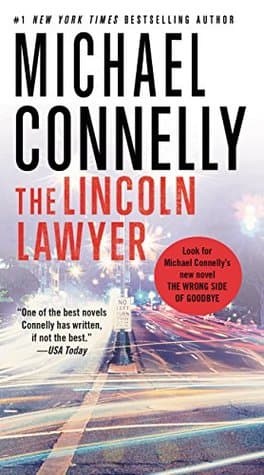
- The Lincoln Lawyer
Michael Connelly
4.2 (193k) average on GoodreadsThrillerFeatures a clever defense lawyer and an intricate legal/criminal plot.
- Gone Tomorrow
Lee Child
4.2 (89k) average on GoodreadsThrillerAnother Jack Reacher novel with a similar lone wolf protagonist solving a complex mystery.
- The Innocent
David Baldacci
3.8 (2k) average on GoodreadsHistorical FictionInvolves a former government operative on the run who uncovers a conspiracy.
- Angels & Demons
Dan Brown
3.9 (2.7M) average on GoodreadsThrillerA Harvard symbologist races through Rome's ancient sites, deciphering cryptic clues to unmask the Illuminati and stop a vengeful plot to destroy the Vatican with a stolen antimatter weapon.
- Gone Girl
Gillian Flynn
4.1 (2.3M) average on GoodreadsThrillerA wife's sudden disappearance on her fifth anniversary reveals a web of lies and psychological warfare, exposing the secrets within a seemingly perfect marriage.
- The Girl on the Train
Paula Hawkins
3.9 (2.1M) average on GoodreadsThrillerA woman’s fascination with a seemingly perfect couple she watches from her daily train commute leads her into a dark investigation when she witnesses something that shatters their idyllic image.





Enjoyed the summary?
A summary gives you the shape of the book. The book itself has the detail, the examples and the voice.
Find One Shot on AmazonAs an Amazon Associate, BookBrief earns from qualifying purchases. How we're funded