
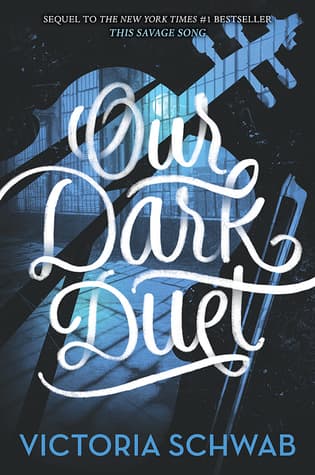
Synopsis
Covers the whole plot, including the ending.
- Difficulty
- Medium
- Pacing
- Fast
- Mood
- Dark, Suspenseful, Intense, Melancholy
- Read it if
- You love dark urban fantasy, morally complex characters, and a high-stakes battle against literal and metaphorical monsters.
- Skip it if
- You prefer lighthearted fantasy or stories without significant character trauma and difficult choices.
Our Dark Duet Plot Summary
Covers the whole plot, including the ending.
A New City, A New Hunt
Six months after leaving Verity, Kate Harker lives in Prosperity, a city without monsters in the south. She uses a fake name, Kate Larissa, and hunts violent humans, trying to fill the emptiness left by real monsters. Despite the calm, Kate feels an unsettling quiet, a sense of something missing. She often thinks of August Flynn and her old life in Verity, struggling with her identity as a monster hunter without actual monsters. Her inner conflict is clear; she wants the excitement and purpose of the hunt but also the safety she has found, even if it feels empty.
Verity Under Siege
In Verity, August Flynn leads the Flynns' monster-hunting forces, working with his sister Ilsa and the remaining Sunai. The city is in chaos, with the truce between the Flynns and Harkers broken, and humans fighting each other. A new kind of monster, a Malchai, has appeared. It feeds on chaos and fear and is more dangerous than anything they have seen. August, still dealing with his own monstrous nature and the burden of leadership, tries desperately to keep peace and protect the innocent, but the city is ready to explode. He misses Kate but believes she is safer away from the growing conflict.
The Call to Return
Kate receives an unexpected, urgent message from her father, Leo Harker, through a coded newspaper ad. He says Verity is falling apart, attacked by a new, terrifying monster he cannot fight alone, and asks her to return. This message breaks Kate's fragile peace in Prosperity. Despite her decision to stay away, her father's plea, combined with her need to fight monsters, makes her consider going back. The message also suggests the true scale of the threat, confirming her uneasy feeling that the quiet in Prosperity was only temporary.
A Treacherous Journey
Kate decides to return to Verity. She makes a dangerous journey through territories where human groups clash and the monsters' influence is spreading beyond Verity's borders. During her travels, she thinks about her past, her complex relationship with her father, and her bond with August. She wonders if she is making the right choice, knowing that returning means facing the new monster, the unresolved issues with August, and the painful memories of Verity. The journey itself tests her resolve and skills, preparing her for the chaos ahead.
Reunion and Revelation
When she arrives in Verity, Kate finds the city more broken than she imagined. She eventually reunites with August, but their reunion is tense. While an undeniable connection exists, their time apart and the growing war have changed them both. August is tougher, burdened by his responsibilities, and Kate is more guarded. They quickly realize the new monster, a Malchai named Soro, is more cunning than a typical monster. It feeds not just on violence but on the emotional chaos and inner demons of its victims. Soro's power makes humans fight each other, speeding up the city's fall into anarchy.
The Nature of Soro
Kate, August, and the Flynns' forces investigate Soro, discovering its terrifying ability to increase humans' darkest emotions: fear, anger, paranoia, and hatred, turning citizens against each other. Soro does not just consume souls; it corrupts them, creating a cycle of violence and despair that fuels its growth. They realize that to defeat Soro, they must not only fight the monster physically but also find a way to stop the chaos it thrives on. The monster's existence shows how fragile humanity is and how easily society can crumble when fear takes over.
Leo Harker's Desperation
Leo Harker, weak and desperate, tells Kate his plan to fight Soro. His methods are extreme and morally wrong, involving his own monster creations and using the city's fear. Kate is horrified by his willingness to sacrifice innocent people and make Verity even more unstable. This confrontation deepens the divide between father and daughter, as Kate realizes Leo's desperation has pushed him further into darkness, blurring the lines between monster and monster hunter. She understands she cannot rely on her father's methods and must find her own way to fight Soro, even if it means opposing him.
A City Divided, A Team United
Despite their personal tensions, Kate and August form a difficult alliance. They realize the only way to fight Soro is to unite the remaining humans and bring back some order and hope. They work tirelessly; August uses his music to calm, and Kate uses her leadership and combat skills to protect. They try to convince the different groups, human and monster, that Soro is their common enemy. Their efforts are a desperate attempt to create a united front in a city tearing itself apart, showing that even in chaos, cooperation is possible.
The Ultimate Sacrifice
As Soro grows stronger, consuming more souls and spreading its influence, August realizes that normal methods are failing. He discovers that because Soro feeds on chaos and fear, it can be stopped by overwhelming it with an opposite force: pure, focused order and calm. In a heartbreaking decision, August chooses to make the ultimate sacrifice. He confronts Soro, using his Sunai ability to absorb all the chaos, fear, and malice Soro has created and feeds on, turning it into a flood of calm and peace. This act destroys Soro but also consumes August, turning him into a glass statue.
Aftermath and Farewell
After August's sacrifice, Soro is defeated, but Verity is broken. Kate is devastated by August's loss, struggling to accept her grief with the victory. She finds herself alone in a city that is slowly healing, but the cost has been huge. She deeply mourns August, recognizing his profound impact on her life and the world. Kate decides to stay in Verity, honoring August's memory by helping to rebuild the city and protect it from future threats. She embraces her role as a true monster hunter who fights for humanity, not just against monsters.
A Faint Hope
With Soro defeated and August gone, Kate works to rebuild Verity. She works with Ilsa and the remaining Flynns, trying to establish a new order in a city scarred by war. August's memory is always present, both a source of pain and inspiration. Kate finds a faint hope for the future, a chance that peace can grow even in the most broken places. She understands that the fight against monsters continues, but her purpose is clearer than ever: to protect the innocent and ensure that August's sacrifice was not in vain. The world is changed forever, and so is Kate, now a symbol of strength.
Principal Figures
Kate Harker
Protagonist
A pragmatic monster hunter struggling with her identity and the legacy of her family.
Kate Harker is a fierce and independent monster hunter. She is cynical, sharp-witted, and initially driven by a need to prove herself to her monstrous father, Leo Harker. She struggles with her identity, feeling she belongs neither entirely with humans nor with monsters. Her experiences in Verity and her bond with August force her to confront her capacity for empathy and her true purpose. She often uses sarcasm and a tough exterior to hide her vulnerabilities and the deep emotional scars from her past.
Relationships: August Flynn (Deep, complex bond; allies, friends, and a burgeoning romantic connection cut short by tragedy.); Leo Harker (Strained, antagonistic father-daughter relationship, marked by manipulation and a desperate desire for approval.); Ilsa Flynn (Allies and comrades in the fight against monsters.)
August Flynn
Protagonist/Sacrificial Hero
A Sunai monster, struggling with his humanity and the burden of leadership.
August Flynn is a Sunai, a monster who consumes souls to prevent violence but yearns for a normal human life. He is compassionate, empathetic, and deeply burdened by his monstrous nature and the responsibility of protecting Verity. He uses his music as a way to control his abilities and connect with his humanity. August is selfless, constantly putting others before himself, and possesses an innate goodness that contrasts sharply with the monsters he fights. His internal struggle with his identity as both monster and protector is central to his character.
Relationships: Kate Harker (Deep, complex bond; allies, friends, and a burgeoning romantic connection cut short by tragedy.); Ilsa Flynn (Devoted sisterly bond, partners in leading the Flynns' forces.); Callum Flynn (Adoptive father figure, leader of the Sunai.)
Leo Harker
Antagonist/Supporting
Kate's monstrous father, a master manipulator and creator of monsters, desperate to maintain control.
Leo Harker is Kate's father, a powerful and manipulative human who creates monsters. He is ruthless, ambitious, and obsessed with control, often blurring the lines between good and evil in his pursuit of power. He views his monsters as tools and his daughter as a pawn in his schemes. In 'Our Dark Duet,' his desperation to combat Soro leads him to increasingly morally ambiguous actions, further alienating Kate. He represents the danger of unchecked power and the corruption that can arise from fear.
Relationships: Kate Harker (Strained, antagonistic father-daughter relationship, marked by manipulation and a desperate desire for approval.)
Ilsa Flynn
Supporting
August's sister, a strong and capable Sunai who leads with him.
Ilsa Flynn is August's older sister, also a Sunai, who leads the Flynns' forces alongside him. She is pragmatic, loyal, and fiercely protective of her family and Verity. Ilsa is a capable fighter and strategist, providing a steady presence amidst the chaos. She deeply cares for August and struggles with the burden of leadership. While she understands the necessity of their monstrous nature, she, like August, strives to use her powers for good. Her resilience and unwavering support are crucial to the Flynns' continued fight.
Relationships: August Flynn (Devoted sisterly bond, partners in leading the Flynns' forces.); Callum Flynn (Adoptive father figure, leader of the Sunai.)
Soro
Antagonist
A new, terrifying Malchai monster that feeds on chaos, fear, and internal demons.
Soro is the primary antagonist of the novel, a powerful and insidious Malchai. Unlike typical monsters that feed on physical violence, Soro thrives on emotional chaos, fear, hatred, and the internal demons of humans. It amplifies these negative emotions, turning people against each other and creating a self-sustaining cycle of destruction. Soro represents the destructive power of human nature when unchecked and highlights how easily society can crumble under the weight of fear. Its existence forces both Kate and August to confront the monsters within humanity itself.
Callum Flynn
Supporting
The patriarch of the Flynn family and leader of the Sunai.
Callum Flynn is the adoptive father of August and Ilsa, and the respected leader of the Sunai. He is wise, calm, and deeply committed to maintaining the fragile peace in Verity and protecting his family. He provides guidance and a moral compass for August, helping him understand and control his abilities. Callum embodies the more benevolent side of monster-kind, striving to use their powers for good. He carries the weight of leadership and the responsibility of his 'children' with quiet strength.
Relationships: August Flynn (Adoptive father-son bond, mentor and leader.); Ilsa Flynn (Adoptive father-daughter bond, mentor and leader.)
Sloan
Mentioned
A human leader in Prosperity who aids Kate.
Sloan is a human contact Kate makes in Prosperity. He is a pragmatic and resourceful leader, providing Kate with information and assistance during her time there. While not a central character, he represents the human element outside of Verity's immediate conflict, showing Kate a different side of humanity. He values order and justice, aligning with Kate's personal mission to hunt human criminals.
Relationships: Kate Harker (Temporary ally and contact in Prosperity.)
Themes & Insights
The Monsters Within
This theme explores the idea that humanity's greatest threats often come from within. Soro, the Malchai, feeds on fear, hatred, and chaos, increasing the destructive potential of human emotions. The breakdown of Verity, where humans turn on each other, shows this. Leo Harker's desperation and morally wrong actions also show how humans can become monstrous when seeking power or survival. Both Kate and August struggle with their own internal 'monsters' — Kate with her cynicism and inherited darkness, August with his monstrous nature and the burden of his powers. The real battle is not just against outside creatures but against the darkness in every heart.
“Which will be harder to conquer: the monsters they face, or the monsters within?”
Sacrifice and Redemption
The novel strongly features the theme of sacrifice, especially through August's final act. His decision to absorb Soro's chaos, knowing it will destroy him, is a deep act of selflessness and redemption. It changes him from a monster who consumes souls to a hero who sacrifices his own for the greater good. Kate's journey also involves personal sacrifices, leaving her peaceful life in Prosperity to return to Verity's chaos and confront her past. These sacrifices, though painful, lead to a form of redemption for the city and for the characters, showing that true heroism often comes at a great personal cost.
“He would not let Verity fall. Not if he could help it. Not if he could keep a single soul from falling into the monster's maw. He would be the calm.”
Identity and Belonging
Both Kate and August struggle with their identities throughout the story. Kate, a human raised by a monster-making father, feels she does not fully belong in either world. She questions who she is without monsters to hunt and where her loyalties lie. August, a monster who wants to be human, constantly fights his nature and the fear it causes in others. Their shared struggle for a place in the world, caught between monstrosity and humanity, forms a core part of their bond. The novel suggests that identity is not only defined by birth or power, but by choices and actions, and that belonging can be found even in the most unlikely alliances.
“He was a monster who wanted to be human. She was a human who wanted to be a monster. And they were both wrong.”
The Fragility of Peace and Order
The story clearly shows how easily peace and order can fall apart in the face of fear and chaos. Verity, already a city under stress, falls into complete anarchy with Soro's arrival, a monster that thrives on discord. The human groups turn on each other, showing how thin the layer of civilization is. Kate's initial peace in Prosperity feels empty precisely because it is a false calm, a temporary break from a world on the edge. The book argues that true peace requires constant watchfulness, cooperation, and a willingness to face destructive forces, both outside and within.
“Order was a fragile thing, easily broken, and once broken, hard to mend.”
Plot Devices & Literary Techniques
The Malchai (Soro)
A new breed of monster that feeds on chaos and internal human darkness.
The Malchai, specifically Soro, functions as the primary antagonist and a powerful plot device. Unlike the Sunai (August) who consume souls of violent acts or Corsai who feed on shadows, Soro feeds on the emotional chaos, fear, and hatred of humans. This unique ability means Soro doesn't just physically threaten Verity but internally corrodes it, turning its citizens against each other. This device raises the stakes, making the conflict not just about fighting a monster but about restoring humanity's moral fabric. Soro's existence also forces characters to confront the 'monsters within' themselves and society.
August's Music
A magical ability to soothe, calm, and control his Sunai powers.
August's music serves as a crucial plot device, representing his connection to humanity and his means of controlling his monstrous nature. When he plays his violin, he can soothe fear, bring calm, and even suppress his urge to consume souls. This ability is initially a tool for self-control and comfort, but it becomes a weapon against Soro, as his music can counteract the chaos the Malchai creates. Ultimately, his music is instrumental in his final, self-sacrificial act, as he uses it to channel the overwhelming calm that destroys Soro, highlighting the power of art and peace against destruction.
Verity City
A divided, monster-ridden city that reflects the internal struggles of its inhabitants.
Verity City is more than just a setting; it acts as a plot device reflecting the moral and emotional state of its inhabitants. Divided between the North (Harker territory, monstrous) and South (Flynn territory, striving for order), the city itself is a battleground. As Soro gains power, Verity descends into total anarchy, mirroring the internal chaos and fear that the monster feeds on. The city's decay and eventual, fragile rebuilding underscore the themes of the fragility of order and the cost of war. Its fate is intrinsically linked to the characters' struggles and choices.
The Harker/Flynn Divide
The fundamental ideological and physical division that defines Verity's conflict.
The long-standing divide between the Harkers (monster-makers, chaos-driven) and the Flynns (Sunai, order-driven) is a foundational plot device. It establishes the central conflict of the series, creating the initial conditions for monsters and monster hunters, and shaping the identities and loyalties of Kate and August. This divide creates inherent tension and mistrust, making cooperation difficult even when facing a common enemy like Soro. The eventual necessity of Kate and August working together, despite this divide, highlights the theme of overcoming inherited conflict for a greater good, though the cost is immense.
Our Dark Duet Quotes
“Monsters don't have to be hideous. They just have to be evil.”
“Sometimes, the only way to stay sane is to go a little mad.”
“What do you do when the world is burning, and you're the only one who can put out the fire?”
“Every monster has a melody. Every song has a price.”
“Some roads are meant to be walked alone.”
“Fear is a weapon. You can let it paralyze you, or you can wield it.”
“There are worse things than death. And I'm one of them.”
“The hardest part of being a hero is knowing when to stop.”
“We are all broken, in one way or another. It's how we put ourselves back together that matters.”
“Sometimes, the only way to save someone is to let them go.”
“Hope is a dangerous thing. It can keep you alive, but it can also get you killed.”
“The city was a song, and he was its discordant note.”
“You don't fight monsters because you hate what's in front of you. You fight them because you love what's behind you.”
“He was a monster, but he was *her* monster.”
Quiz
10 questions on the plot and the characters. Each answer comes with a short explanation.
Question 1
What is the primary power of the new monster, the 'Chaos Eater,' that emerges in 'Our Dark Duet'?
- It can control other monsters and command them to do its bidding.
- It feeds on chaos and brings out its victims' inner demons, causing them to turn on each other.
- It can manipulate memories, making people forget who they are and their allegiances.
- It has the ability to perfectly mimic any human or monster, creating confusion and mistrust.
Show answer
B. It feeds on chaos and brings out its victims' inner demons, causing them to turn on each other. The Chaos Eater, a new and dangerous monster, feeds on the escalating chaos in Verity and amplifies the inner demons of humans and even monsters, turning them against one another.
Question 2
Where does Kate Harker spend the beginning of 'Our Dark Duet' before returning to Verity?
- Slightly North of Somewhere, chasing monsters with her own crew.
- In the neutral territory of Prosperity, attempting to broker a peace deal.
- Hidden in the Sunai compound, training new monster hunters.
- With her father in a secret hideout, planning their next move.
Show answer
A. Slightly North of Somewhere, chasing monsters with her own crew. At the start of the book, Kate is in 'Slightly North of Somewhere,' a place outside Verity, actively hunting monsters with a new group of allies, having left Verity behind.
Question 3
What is the specific type of monster August Flynn is, and what is its unique ability related to music?
- He is a Malchai, who feeds on fear and can induce paralyzing terror with his voice.
- He is a Corsai, who feeds on pain and can amplify suffering with discordant notes.
- He is a Sunai, who feeds on sin and can consume souls through music.
- He is a Sycorax, who feeds on joy and can drain happiness with mournful melodies.
Show answer
C. He is a Sunai, who feeds on sin and can consume souls through music. August is a Sunai, a rare type of monster that feeds on human sin. His unique ability is to consume souls and collect sins through the power of music, particularly his violin.
Question 4
What is the name of the new human character who becomes a significant ally to Kate Harker outside Verity?
- Sloan
- Alice
- Soro
- Zara
Show answer
C. Soro Soro is one of Kate's new companions outside Verity. He is a skilled hunter and becomes a trusted member of her small monster-hunting crew.
Question 5
What is the specific 'cost' August must pay when he uses his Sunai abilities to consume a soul, beyond the act itself?
- He experiences a brief moment of the victim's greatest fear.
- He feels the weight of the victim's sins within himself, causing internal torment.
- His human form temporarily destabilizes, showing monstrous features.
- He loses a small piece of his own memories with each consumption.
Show answer
B. He feels the weight of the victim's sins within himself, causing internal torment. When August consumes a soul, he is burdened with the victim's sins, feeling their weight and corruption within himself. This is a constant source of internal struggle and pain for him.
Question 6
What philosophical question does 'Our Dark Duet' primarily explore regarding the nature of monsters and humanity?
- Can monsters truly be redeemed if they choose to act human?
- Are monsters inherently evil, or are humans capable of greater monstrosity?
- Is violence ever justified in the pursuit of peace?
- Does power corrupt absolutely, regardless of one's intentions?
Show answer
B. Are monsters inherently evil, or are humans capable of greater monstrosity? A central theme is the blurred line between monsters and humans. The book constantly questions whether the 'monsters' are truly the creatures, or if the cruelty, violence, and inner demons of humans make them the greater threat.
Question 7
What is the specific physical manifestation of the Chaos Eater's influence on the city of Verity?
- Buildings crumble and collapse randomly, creating physical disarray.
- Strange, unsettling whispers can be heard everywhere, driving people mad.
- The city itself becomes physically distorted and shifts, making navigation impossible.
- The city is plagued by riots, civil unrest, and people turning violently on one another.
Show answer
D. The city is plagued by riots, civil unrest, and people turning violently on one another. The Chaos Eater feeds on the internal turmoil and conflict of its victims, manifesting as widespread riots, violence, and a complete breakdown of order within Verity, with citizens attacking each other.
Question 8
What is the ultimate fate of Ilsa, August's sister, in 'Our Dark Duet'?
- She leaves Verity to search for a cure for their monstrous nature.
- She is killed by a human mob, fueled by the Chaos Eater's influence.
- She sacrifices herself to save August and Kate from a powerful monster.
- She transforms into a new, more powerful type of monster, becoming an antagonist.
Show answer
C. She sacrifices herself to save August and Kate from a powerful monster. Ilsa sacrifices herself to protect August and Kate, specifically using her abilities to create a shield that allows them to escape a dangerous situation, knowing it would be her end.
Question 9
How does August ultimately defeat the Chaos Eater, or at least neutralize its threat to Verity?
- He uses his music to purify the monster, turning it into a benign entity.
- He absorbs all the chaos and sin the monster has created, at great personal cost.
- Kate helps him trap it in a specially designed prison, severing its connection to the city.
- He convinces the monster to leave Verity by offering it a new source of chaos elsewhere.
Show answer
B. He absorbs all the chaos and sin the monster has created, at great personal cost. August, in a desperate and self-sacrificing act, uses his Sunai abilities to absorb all the chaos, sin, and inner demons that the Chaos Eater has amplified and collected, effectively becoming a vessel for it.
Question 10
What is the significant change in Kate Harker's 'monstrous' nature by the end of 'Our Dark Duet'?
- She fully embraces her monstrous side, becoming a ruthless hunter without human empathy.
- She learns to control her inner monster, using its power for good without being consumed by it.
- She gains a physical monstrous ability, similar to August's music, due to prolonged exposure to monsters.
- She fully accepts that her 'monstrous' capacity for violence and darkness is a part of her, not something to be suppressed.
Show answer
D. She fully accepts that her 'monstrous' capacity for violence and darkness is a part of her, not something to be suppressed. By the end, Kate comes to terms with her own capacity for violence and darkness, acknowledging it as an intrinsic part of herself rather than something she needs to fight or deny. She accepts her 'monstrous' side as part of her identity.
Our Dark Duet FAQ
What is the core conflict that drives the plot of 'Our Dark Duet'?
The central conflict revolves around Kate Harker's return to Verity to fight a new, powerful monster called the Lo, which feeds on chaos and inner demons, while August Flynn struggles to maintain order within the city and control his own monstrous nature as a Sunai. They must face not only external threats but also the internal 'monsters' within themselves and their allies.
Where does Kate Harker begin the story, and what is her initial mission?
Kate Harker starts the book in Prosperity, a city north of Verity, where she has been hunting monsters for six months with her partner, Sloan. Her initial mission, driven by a deep sense of responsibility and guilt, is to track and eliminate any monsters that escape Verity's borders, particularly after the events of 'This Savage Song'.
What role does August Flynn play in Verity at the beginning of 'Our Dark Duet'?
August Flynn has taken on a leadership role in Verity, working alongside the remaining council members and the other Sunai, Soro. He is desperately trying to maintain peace and order in a city on the brink of collapse, constantly battling the escalating violence and the psychological toll of absorbing so much chaos and fear from the citizens.
Who is the 'Lo' and what makes it such a formidable new antagonist?
The Lo is a new, ethereal monster that emerges from the growing chaos and fear in Verity. Unlike typical Corsai or Malchai, it doesn't have a physical form but manifests as a creeping dread and feeds on the internal demons, doubts, and fears of its victims, turning them against themselves and each other, making it incredibly difficult to fight directly.
How does Kate's relationship with August evolve throughout the book, particularly given their past?
Kate and August's relationship deepens into a complex bond of mutual respect, understanding, and love, though it remains largely unspoken. Despite their initial separation and the emotional scars from their past, they learn to trust each other implicitly, relying on their unique strengths and vulnerabilities to fight the Lo, solidifying their partnership against the encroaching darkness.
What is the significance of the 'Song of the Lo' and how does it affect the characters?
The 'Song of the Lo' is not a literal song but the pervasive influence of the monster, which amplifies inner demons and drives people to madness and violence. It affects characters by forcing them to confront their deepest fears and flaws, such as August's struggle with his monstrous nature or Kate's guilt over Callum's death, often leading to self-destructive behavior or turning them against allies.
What is the true nature of the 'Threshold' and why is it important to the plot?
The Threshold is a metaphysical barrier between the human world and the realm where monsters originate, and its weakening is a central theme. It's important because the Lo is a monster that exists beyond the usual classifications, suggesting a further erosion of this barrier and the potential for even more dangerous entities to cross over, signifying a deeper breakdown of the world's order.
How does Callum Harker's legacy and his 'collection' continue to influence the events of this book?
Callum Harker's legacy profoundly influences the book, particularly through his 'collection' of monsters and the power vacuum he left. His experiments and the very existence of the Sunai and other monsters are a direct result of his actions, and the lingering effects of his rule contribute to Verity's instability, while Kate grapples with his shadow and the responsibility of his surname.
What is the significance of the repeating phrase, 'The world is breaking. And so are they'?
This phrase serves as a grim prophecy and a constant reminder of the deteriorating state of both the physical world and the mental/emotional states of the protagonists. It highlights the parallel decay: as the city succumbs to chaos and monsters, Kate and August are also pushed to their breaking points, forced to confront their own vulnerabilities and inner turmoil.
How does August's struggle to control his Sunai abilities reflect a deeper psychological conflict?
August's struggle to control his Sunai abilities, particularly the urge to absorb violence, reflects his deeper psychological conflict between his monstrous nature and his desire for humanity and peace. He constantly fears losing himself to the monster within, battling the guilt of his past actions and the burden of carrying the city's chaos, which mirrors his internal fight for self-acceptance and control.
What psychological impact does the constant exposure to violence and chaos have on Kate Harker?
The constant exposure to violence and chaos hardens Kate, making her more ruthless and pragmatic, but also leaves her emotionally scarred and prone to isolating herself. She carries the weight of past losses, particularly her father's death and the lingering guilt, which manifests as a relentless drive to fight, even at the expense of her own well-being and emotional connections.
How do supporting characters like Soro and Ilsa contribute to the psychological landscape of the story?
Soro acts as a foil and a mirror to August, representing a different path for a Sunai and highlighting August's internal struggle with his identity. Ilsa, through her unwavering faith and resilience, provides a moral compass and a reminder of humanity's enduring spirit, even in the face of overwhelming despair, offering psychological anchors for both August and the reader.
In what ways do Kate and August represent different coping mechanisms for trauma and loss?
Kate copes with trauma by externalizing it, channeling her pain into aggressive action and monster hunting, often pushing people away. August, conversely, internalizes his trauma, grappling with immense guilt and the constant battle to suppress his monstrous urges, seeking to control chaos by absorbing it rather than confronting it directly.
What is the ultimate message about humanity's capacity for both creation and destruction presented in the book?
The book ultimately suggests that humanity possesses an inherent capacity for both immense creation and profound destruction. Monsters are born from human violence, yet characters like August strive to use their abilities for protection, and Kate fights to preserve what's left. It highlights that the choice between creating and destroying lies within each individual, shaping the world around them.
How does the ending of 'Our Dark Duet' resolve the main conflicts while leaving room for thematic interpretation?
The ending resolves the immediate threat of the Lo and brings a fragile peace to Verity, with Kate and August making significant personal sacrifices. While the specific monster is defeated and their personal journeys reach a poignant, bittersweet conclusion, it leaves room for interpretation regarding the cyclical nature of violence, the definition of humanity, and the enduring power of sacrifice and connection in a broken world.
Is the 'duet' in the title solely about Kate and August, or does it have a broader meaning?
While the 'duet' primarily refers to Kate and August's intertwined fates and their unique partnership against the monsters, it also carries a broader meaning. It can symbolize the duet between humanity and monstrosity, order and chaos, or even the internal struggle within characters between their light and dark aspects, making it a multifaceted metaphor for the book's themes.
How does the author use the concept of 'monsters' to explore deeper societal or personal fears?
The author uses 'monsters' not just as physical threats but as metaphors for societal and personal fears: the Corsai represent physical violence, the Malchai represent greed and corruption, and the Lo embodies internal chaos, self-doubt, and the breakdown of order. By personifying these fears, the narrative allows for a tangible exploration of humanity's darker impulses and vulnerabilities.
What is the significance of the final scene between Kate and August, and what does it imply about their future?
The final scene between Kate and August is deeply poignant, emphasizing their profound connection and the sacrifices they've made. It signifies a bittersweet acceptance of their separate paths, yet also a lasting bond forged through shared trauma and love. It implies that while they may not be physically together, their influence on each other is permanent, and their individual fights for peace will continue, shaped by their duet.
About the author

Victoria Schwab is a contemporary author known for her work in fiction, particularly in the fantasy genre. Her notable books include "Our Dark Duet," a sequel exploring themes of darkness and redemption; "The Near Witch," a tale of witchcraft and folklore; and "Tunnel of Bones," which continues the adventures from her previous works.
Similar books
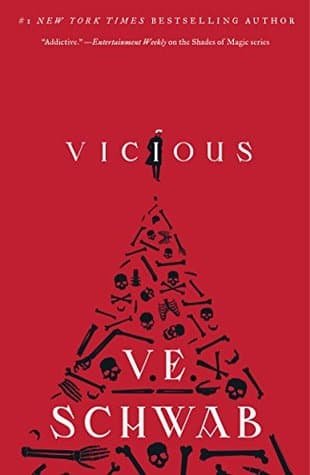
- Vicious
V.E. Schwab
4.0 (7k) average on GoodreadsThrillerExplores morally gray characters with supernatural abilities and dark themes.
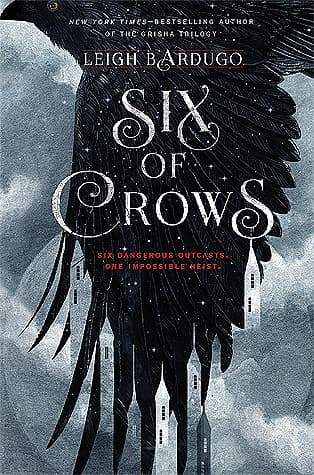
- Six of Crows
Leigh Bardugo
4.4 (316k) average on GoodreadsFantasyFeatures a strong ensemble cast, intricate plotting, and high-stakes missions in a dangerous world.
- Harry Potter and the Sorcerer's Stone
J.K. Rowling
4.5 (7M) average on GoodreadsFantasyRescued from a miserable life under the stairs, an orphaned boy discovers he's a wizard destined for a magical school, where he uncovers a dangerous secret tied to the dark wizard who murdered his parents.
- The Hunger Games
Suzanne Collins
4.3 (6.4M) average on GoodreadsFantasyIn a future where children fight to the death on live television, Katniss Everdeen volunteers for the arena, turning a death sentence into a fight for survival and a spark of rebellion.
- 1984
George Orwell
4.2 (3.1M) average on GoodreadsPoliticsIn a future where surveillance and thought control are absolute, a man's search for truth clashes with the Party, showing that hope can be a form of rebellion.
- Divergent
Veronica Roth
4.2 (2.9M) average on GoodreadsFantasyIn a society divided by virtues, a sixteen-year-old's difference from the norm starts a rebellion that threatens her world.




Enjoyed the summary?
A summary gives you the shape of the book. The book itself has the detail, the examples and the voice.
Find Our Dark Duet on AmazonAs an Amazon Associate, BookBrief earns from qualifying purchases. How we're funded