

Synopsis
Covers the whole plot, including the ending.
- Difficulty
- Medium
- Pacing
- Variable
- Mood
- Dark, Political, Melancholy, Conclusive
- Read it if
- You've read the previous books in The Wicked Years series and want to see how Elphaba's legacy concludes through the eyes of her granddaughter, Rain, amidst a politically charged and war-torn Oz.
- Skip it if
- You haven't read the preceding books; this is the final installment and heavily relies on established characters and plotlines, making it inaccessible as a standalone.
Out of Oz Plot Summary
Covers the whole plot, including the ending.
The Emerald City's Unrest and the Return of Dorothy
Oz is fractured. The Emerald City, under General Jinjur and the new Emperor of the Ozian Army, Brrr (a former talking bear), prepares to invade Munchkinland. Glinda, the former Sorceress and now Supreme Regent of the Ozian Army, is under house arrest in her palace, her influence waning. Meanwhile, the Cowardly Lion, Brrr's former companion, is a fugitive. In this brewing conflict, Dorothy Gale, now a young woman, suddenly returns to Oz, appearing in the dilapidated cottage in Munchkinland that once belonged to her Aunt Em and Uncle Henry, summoned by a mysterious 'Click'. She is disoriented by the changes in the land she once knew.
Rain's Childhood and the Legacy of Elphaba
Rain, Elphaba's green-skinned granddaughter, grows up in Glinda's and Brrr's care in the Emerald City. With Glinda's house arrest and Brrr's rise to military power, Rain's upbringing becomes isolated and shadowed by her grandmother's legacy. She is often left alone, developing a strong attachment to a mechanical bird named Twixt. Rain knows her magical heritage and the unusual circumstances of her birth, having been born from a union between Sarima and the Clock of the Time Dragon. She grapples with her family's past, particularly the stories about Elphaba and the Wizard.
Dorothy's Quest and the Tin Woodman's Fate
Dorothy finds the Scarecrow's former residence in Munchkinland and reunites with him. She learns that the Tin Woodman, Nick Chopper, has been missing for some time, taken by the Emerald City forces. Determined to find him, Dorothy and the Scarecrow journey towards the Emerald City. Their quest is driven by Dorothy's loyalty to her old friends and her desire to understand the new, unsettling political landscape of Oz. Along the way, they encounter remnants of the old Oz, now twisted by the conflicts and oppression from the Emerald City's regime.
The Cowardly Lion's Exile and the Search for Relief
The Cowardly Lion, having escaped the Emerald City, is in hiding from Brrr's forces. He carries guilt and responsibility, having once been close to Brrr and witnessing his transformation into a ruthless military leader. Driven by a desperate hope for peace and a return to the old ways of Oz, the Lion seeks the legendary 'Relief' — a mythical substance or state believed to end suffering and conflict. His journey takes him through dangerous parts of Oz, where he encounters both allies and enemies.
Glinda's Confinement and Political Machinations
Glinda, though confined, is not powerless. She uses her intellect and remaining political connections to orchestrate events from her isolation. Her main concern is Rain's safety and future, seeing her as both a ward and a key to restoring balance in Oz. Glinda tries to undermine Brrr's authority and the Emerald City's war efforts, subtly influencing those around her and sending messages through trusted contacts. She grapples with her past decisions and the unintended consequences of her attempts to maintain order in Oz, particularly her role in Brrr's rise.
Rain's Discovery of Magic and the Broom
As political tensions grow, Rain begins to show her own magical abilities, inherited from her grandmother Elphaba. These powers are wild and untamed, often appearing unexpectedly. During her solitary explorations within Glinda's palace, Rain discovers Elphaba's broom, long believed lost. This discovery marks a turning point for Rain, as she begins to understand her lineage and the powerful legacy she carries. The broom becomes a symbol of her connection to Elphaba and a tool for her own journey.
The Gathering of the Old Guard and New Alliances
Dorothy and the Scarecrow, having faced many dangers, eventually encounter the Cowardly Lion. The three old friends, reunited, decide to find the Tin Woodman and confront the Emerald City. Their paths soon intertwine with Rain, who, wielding Elphaba's broom, has fled Glinda's palace seeking answers and protection. An uneasy alliance forms between the seasoned adventurers and the young, powerful witch, as they realize their individual quests are intertwined with the larger fate of Oz and the unfolding war.
The Emerald City's Invasion and the Clock of the Time Dragon
The Emerald City's invasion of Munchkinland begins in earnest, bringing destruction and fear. Brrr's army, using advanced weaponry and brutal tactics, appears unstoppable. Amidst the chaos, the true significance of the Clock of the Time Dragon, the magical artifact instrumental in Rain's conception, comes to light. It is a powerful, ancient device capable of manipulating time and space, and its connection to Oz is deeper than anyone imagined. The Clock becomes a focal point for the conflict, as its power could determine the war's outcome.
Confrontation with Brrr and the Nature of Power
The combined forces of Dorothy, the Scarecrow, the Lion, and Rain finally confront Brrr and his army in the Emerald City. The confrontation is a desperate struggle, showing Brrr's descent into tyranny and the devastating effects of unchecked power. Rain, using Elphaba's broom and her nascent magical abilities, plays a crucial role in the battle. The encounter forces the characters to grapple with the cost of war and the insidious ways power can corrupt even those with seemingly noble intentions, as Brrr's motivations are revealed as a twisted form of protection.
The Unveiling of the Tin Woodman and the Search for Relief
During the confrontation, the Tin Woodman's fate is finally revealed. He has been held captive and altered by Brrr's forces, his identity and memories manipulated. The discovery of his condition is a devastating blow to Dorothy and her friends. Simultaneously, the Cowardly Lion's long quest for 'Relief' reaches its end. It is revealed that 'Relief' is not a physical substance but a state of being, a collective understanding and acceptance of the past, and a willingness to move forward. This realization shifts the focus from external solutions to internal transformation.
Glinda's Sacrifice and the Restoration of Order
In a key moment, Glinda, having escaped her confinement, makes a selfless sacrifice to aid the protagonists and restore balance to Oz. Her actions show a deep understanding of the moral complexities of leadership and atonement. Her sacrifice, combined with the efforts of Dorothy, the Scarecrow, the Lion, and Rain, helps to dismantle Brrr's regime and end the immediate conflict. A fragile new order begins to emerge, but the scars of war and the divisions within Oz remain, hinting at a long road to healing.
Rain's Choice and the Future of Oz
With the war concluded and the Emerald City's tyranny overthrown, Rain is at a crossroads. She has fully embraced her magical heritage and the power of Elphaba's broom. Faced with the responsibility of her lineage and the future of Oz, she chooses her role in the world. Her decision is not about wielding power for control, but about stewardship and compassion. The ending suggests that while the immediate conflict is resolved, Oz's future remains uncertain, dependent on its inhabitants' choices and the wisdom of its new generation, with Rain as a central figure.
Principal Figures
Rain
Protagonist
Elphaba's green-skinned granddaughter, inheriting a powerful magical legacy.
Rain is the green-skinned granddaughter of Elphaba, born from Sarima and the Clock of the Time Dragon. She is a sensitive and intelligent child, growing up in the shadow of her infamous grandmother and the political machinations of Oz. Initially naive and somewhat isolated, she develops a strong sense of curiosity and a deep connection to her magical heritage. Her primary drive is to understand her identity and her place in a world that both fears and reveres her lineage, often feeling the weight of expectations.
Relationships: Elphaba (Grandmother (never met, but deeply influenced by her legacy)); Glinda (Caretaker and mentor, though their relationship is complex); Brrr (Initial caretaker, later an antagonist); Dorothy Gale (Reluctant ally, then friend and fellow seeker of peace)
Dorothy Gale
Protagonist/Returning Heroine
The girl from Kansas, returned to a much-changed and war-torn Oz.
Dorothy returns to Oz as a young woman, no longer the innocent child but still possessing a strong moral compass and an unwavering loyalty to her friends. She is initially disoriented by the drastic changes in Oz and the pervasive conflict. Her primary motivation is to find her old friends, particularly the Tin Woodman, and to understand how the land she once knew has fallen into such disarray. She represents a connection to the 'old Oz' and its values, providing a moral anchor amidst the chaos.
Relationships: Scarecrow (Old friend and trusted companion); Cowardly Lion (Old friend and trusted companion); Tin Woodman (Old friend, whose disappearance drives much of her initial quest); Rain (Initial stranger, later a powerful ally and friend)
Glinda
Supporting/Ambiguous Ally
The former Sorceress and Supreme Regent, now under house arrest, manipulating from the shadows.
Glinda is a complex and highly intelligent figure, once a powerful sorceress and now a political prisoner. Despite her confinement, she retains considerable influence and uses her cunning to orchestrate events. Her motivations are often ambiguous, driven by a desire to maintain order and protect Oz, but also by her own pride and past mistakes. She acts as a mentor figure to Rain, but their relationship is fraught with Glinda's own history and the burden of Elphaba's legacy. She grapples with the consequences of her past actions and the unintended rise of Brrr.
Relationships: Rain (Caretaker, mentor, and ward); Brrr (Former ally, now political adversary); Elphaba (Rival, peer, and complex source of influence); Dorothy Gale (Acquaintance from the past, now an unexpected ally)
Brrr
Antagonist
The former talking bear, now the ruthless Emperor of the Ozian Army.
Brrr, once the Cowardly Lion's companion, has transformed into a powerful and tyrannical military leader. He is driven by a misguided sense of order and a desire to control Oz, believing his methods are necessary for its stability. His actions are brutal and oppressive, leading to the invasion of Munchkinland and the subjugation of many Ozians. He represents the corrupting influence of power and the dangers of extreme ideology, believing that the end justifies the means. His past friendship with the Lion adds a layer of tragedy to his villainy.
Relationships: Cowardly Lion (Former close friend, now bitter enemy); Glinda (Former subordinate, now political adversary); Rain (Initial caretaker, later a target of his regime)
The Cowardly Lion
Supporting Protagonist
A fugitive from the Emerald City, seeking peace and the mythical 'Relief'.
The Cowardly Lion is a more mature and burdened character, haunted by his past and the transformation of his friend, Brrr. He is on the run, seeking the mythical 'Relief' in a desperate attempt to bring peace and alleviate the suffering in Oz. Despite his lingering fears, he demonstrates considerable courage and loyalty to his friends. His journey is one of atonement and a search for meaning in a chaotic world, believing that true peace can only come from understanding and acceptance.
Relationships: Brrr (Former close friend, now adversary); Dorothy Gale (Old friend and trusted companion); Scarecrow (Old friend and trusted companion); Rain (Reluctant ally, then friend)
The Scarecrow
Supporting Protagonist
Dorothy's loyal and intelligent companion, offering wisdom and perspective.
The Scarecrow remains Dorothy's steadfast and intelligent companion. He is a voice of reason and offers insightful observations on the political and social turmoil in Oz. Though often philosophical, he is also fiercely loyal and brave when circumstances demand it. He represents intellect and the power of thought in navigating complex situations, often providing crucial analysis of Brrr's motivations and the broader implications of the war. His unwavering support for Dorothy is a constant throughout their journey.
Relationships: Dorothy Gale (Old friend and trusted companion); Cowardly Lion (Old friend and trusted companion); Tin Woodman (Old friend, whose disappearance he laments); Rain (Ally, whom he observes with intellectual curiosity)
The Tin Woodman (Nick Chopper)
Supporting/Mentioned
The missing friend, whose fate becomes a key mystery and motivation.
The Tin Woodman's disappearance is a central mystery and a driving force for Dorothy's return to Oz. He is initially absent, having been captured and altered by Brrr's forces. When he is finally found, his condition is a stark reminder of the brutality of the new regime. He represents the innocent victims of political conflict and the fragility of identity. His eventual fate is a poignant reflection on loss and the enduring power of friendship.
Relationships: Dorothy Gale (Old friend); Scarecrow (Old friend); Cowardly Lion (Old friend); Brrr (Captor and manipulator)
Twixt
Supporting/Mentioned
A mechanical bird, Rain's confidante and companion.
Twixt is a small, mechanical bird, Rain's constant companion and confidante. While not a sentient being in the traditional sense, Twixt serves as a symbol of Rain's innocence, her need for connection, and her unique perspective on the world. The bird often reflects Rain's inner thoughts and feelings, providing a foil for her developing magical abilities and her growing understanding of Oz. Twixt represents the blend of magic and mechanism that often characterizes the world of Oz.
Relationships: Rain (Close companion and confidante)
Themes & Insights
The Corrupting Nature of Power
The novel explores how power can corrupt even those with noble intentions. Brrr, once a loyal companion, becomes a ruthless tyrant as he gains control of the Emerald City's army, believing his oppressive methods are necessary for Oz's stability. Glinda, despite her wisdom, made past decisions driven by a desire for control, leading to unintended consequences. This theme is clear in the Emerald City's invasion of Munchkinland, where the pursuit of power leads to destruction and suffering, turning former friends into bitter enemies.
“'Power, even when wielded with the best intentions, has a way of twisting the hand that holds it.'”
Legacy and Identity
Rain grapples with the legacy of her grandmother, Elphaba, and the weight of her green skin and magical abilities. She struggles to forge her own identity separate from the infamous witch, while also coming to terms with the power she has inherited. Dorothy, too, faces her own legacy as the 'heroine' of Oz, forced to reconcile her past experiences with the changed present. This theme is highlighted as Rain discovers Elphaba's broom, a tangible link to her past, and must decide how she will use that power for her future and Oz's future.
“'How does one escape the shadow of a legend, especially when that shadow is also one's own skin?”
War and Its Consequences
The novel shows the devastating effects of war. The Emerald City's invasion of Munchkinland brings destruction, displacement, and brutalization. The war is not glorified but depicted as a tragic cycle of violence and suffering, with no clear 'good' or 'evil' sides, but rather complex motivations and devastating outcomes. The fate of the Tin Woodman, captured and altered, shows the war's personal cost, while the unrest underscores the societal breakdown caused by conflict.
“'The only victory in war is that it ends, and even then, the scars remain etched deeper than any sword cut.'”
The Search for Redemption and Relief
Many characters are on a journey of redemption or seeking relief from past mistakes and ongoing suffering in Oz. The Cowardly Lion's quest for 'Relief' embodies this, representing a desperate hope for an end to conflict and a return to peace. Glinda also seeks to atone for her past manipulations. The theme suggests that true 'relief' or redemption is not an external object to be found, but an internal state achieved through understanding, acceptance, and selfless action, ultimately leading to a collective effort to heal Oz.
“'Perhaps Relief isn't a place to find, but a space to make, within ourselves and between us.'”
The Nature of Truth and Storytelling
The novel questions the nature of truth, memory, and how stories are constructed and manipulated. The history of Elphaba, the Wizard, and even Dorothy's adventures are re-examined, revealing multiple perspectives and often conflicting narratives. Characters grapple with 'official' versions of events versus their own lived experiences. This theme is relevant in a world where political powers, like Brrr's regime, rewrite history and control information to maintain authority, making the search for genuine truth perilous.
“'The past is not a story written in stone, but a river constantly reshaping its banks with every memory and every telling.'”
Plot Devices & Literary Techniques
Elphaba's Broom
A magical artifact symbolizing inherited power and destiny.
Elphaba's broom, long believed lost or destroyed, is discovered by Rain. It serves as a tangible link to her infamous grandmother and a powerful symbol of her inherited magical abilities. The broom is not just a mode of transport but an extension of Rain's burgeoning power, aiding her in battle and representing her acceptance of her unique destiny. Its presence constantly reminds Rain, and the reader, of the legacy she carries and the potential she holds to shape the future of Oz, either for good or ill.
The Clock of the Time Dragon
An ancient magical artifact capable of manipulating time and space, central to Rain's origin.
The Clock of the Time Dragon is the magical artifact responsible for Rain's unusual conception and birth. It is revealed to be an ancient and immensely powerful device, capable of manipulating the fabric of time and space. Its significance grows throughout the narrative, culminating in its role in the climax, where its powers could either destroy or save Oz. The Clock represents the deep, mystical forces at play in Oz, connecting personal destinies to cosmic scales and hinting at the cyclical nature of history.
The 'Click'
A mysterious sound that summons Dorothy back to Oz.
The 'Click' is the enigmatic sound that draws Dorothy Gale back to Oz. It functions as a classic call to adventure, a mysterious summons that propels the protagonist into the story. Its ambiguous nature adds an element of fate or destiny to Dorothy's return, suggesting that she was always meant to come back to Oz at this crucial juncture. The 'Click' serves as a narrative device to initiate Dorothy's journey and to underscore the idea that certain events in Oz are preordained or guided by unseen forces.
The Search for 'Relief'
A metaphorical quest for peace and understanding in a war-torn land.
The Cowardly Lion's quest for the mythical 'Relief' acts as a powerful allegory for the collective desire for peace and an end to suffering in Oz. Initially perceived as a tangible object or place, 'Relief' is gradually revealed to be a state of being – an internal and collective acceptance of the past, forgiveness, and a commitment to building a better future. This plot device shifts the narrative from an external solution to an internal transformation, emphasizing that true peace must come from within and through shared effort, rather than from a magical cure.
Out of Oz Quotes
“The past is a country from which we are all exiles, and the future is a land we can never reach.”
“There is no such thing as an innocent bystander. Not in Oz, not anywhere.”
“Magic is just science we don't understand yet.”
“One never knows what one is capable of until one is asked to be more than one thinks one is.”
“The truth is a thing that changes shape, depending on who is holding it.”
“Sometimes the greatest act of love is to let go.”
“Every ending is just a new beginning, if you're brave enough to see it.”
“We are all just stories in the end, hoping to be remembered well.”
“To be truly free, one must first be free of one's own expectations.”
“Fear is a powerful wizard, but hope is a stronger one.”
“The world doesn't need saviors; it needs people who are willing to try.”
“Sometimes the greatest strength is found in admitting one's weaknesses.”
“Identity is not a fixed thing, but a river that constantly flows and changes.”
“There are no goodbyes, only until we meet again, in some form or another.”
Quiz
10 questions on the plot and the characters. Each answer comes with a short explanation.
Question 1
What is the primary reason the Emerald City is preparing to invade Munchkinland at the beginning of 'Out of Oz'?
- To reclaim ancient magical artifacts believed to be hidden there.
- To punish Munchkinland for harboring political dissidents against the Emerald City.
- To establish new trade routes and expand the Emerald City's economic influence.
- To capture the Cowardly Lion, who is known to be hiding in Munchkinland.
Show answer
B. To punish Munchkinland for harboring political dissidents against the Emerald City. The Emerald City is mounting an invasion of Munchkinland due to political unrest and the perception that Munchkinland is harboring those who oppose the current regime.
Question 2
Who is Rain's grandmother, the famous green-skinned witch?
- Nessarose Thropp
- Glinda Upland
- Elphaba Thropp
- Sarima
Show answer
C. Elphaba Thropp Rain is introduced as Elphaba’s green granddaughter, born at the end of 'Son of a Witch'.
Question 3
What is Glinda's status at the beginning of 'Out of Oz'?
- She is ruling the Emerald City as the new Empress.
- She is leading the rebellion against the Emerald City.
- She is under house arrest.
- She has fled Oz and is living in seclusion.
Show answer
C. She is under house arrest. The provided text states that 'Glinda is under house arrest', indicating her restricted freedom.
Question 4
What significant item does Rain eventually take up, symbolizing her role in the series' conclusion?
- The Ruby Slippers
- A magical wand
- Her grandmother's broom
- The Grimmerie
Show answer
C. Her grandmother's broom The text explicitly states, 'Rain will take up her broom, and bring the series to a close,' referring to Elphaba's iconic broom.
Question 5
Which character is described as 'on the run from the law' in the context of the social unrest in Oz?
- Dorothy Gale
- The Tin Woodman
- The Cowardly Lion
- Fiyero
Show answer
C. The Cowardly Lion The synopsis mentions, 'The Cowardly Lion is on the run from the law,' highlighting his fugitive status.
Question 6
What is the overarching atmosphere or state of Oz described as in 'Out of Oz'?
- A period of peace and prosperity
- A time of great scientific advancement
- Knotted with social unrest, chaos, and war
- Undergoing a spiritual awakening
Show answer
C. Knotted with social unrest, chaos, and war The text clearly states, 'Oz is knotted with social unrest... Amid chaos and war,' setting the tone for the final book.
Question 7
At what point in her life does Rain 'come of age' in the narrative of 'Out of Oz'?
- During a period of unprecedented peace in Oz.
- Amidst the chaos and war gripping Oz.
- While studying magic under Glinda's tutelage.
- After a long journey outside the borders of Oz.
Show answer
B. Amidst the chaos and war gripping Oz. The synopsis mentions, 'Amid chaos and war, Elphaba’s green granddaughter... comes of age,' directly linking her coming-of-age to the tumultuous state of Oz.
Question 8
The return of which key character from the original Oz stories is specifically mentioned as adding to the complexity of the current situation in 'Out of Oz'?
- The Scarecrow
- Dorothy
- The Wizard of Oz
- Boq
Show answer
B. Dorothy The text explicitly states, 'Dorothy is back,' indicating her return as a significant event in the current Oz narrative.
Question 9
What is the primary thematic significance of Rain taking up Elphaba's broom at the end of the series?
- It signifies her intention to escape Oz forever.
- It symbolizes the passing of the torch and her acceptance of a powerful, perhaps burdensome, legacy.
- It indicates her desire to simply fly for recreation.
- It means she is joining the Emerald City's military forces.
Show answer
B. It symbolizes the passing of the torch and her acceptance of a powerful, perhaps burdensome, legacy. Taking up Elphaba's broom, especially to 'bring the series to a close,' strongly implies Rain is inheriting and continuing her grandmother's complex legacy and role in Oz.
Question 10
The social unrest in Oz, with invasions and characters on the run, reflects which core theme often present in the 'Wicked Years' series?
- The triumph of good over evil in a simplistic sense.
- The inherent goodness of all political leaders.
- The complexities of power, morality, and the cyclical nature of conflict.
- The ultimate irrelevance of individual actions in grand schemes.
Show answer
C. The complexities of power, morality, and the cyclical nature of conflict. The described state of 'social unrest,' 'chaos and war,' and political maneuvers like invasions and house arrests, strongly aligns with the series' ongoing exploration of complex moral ambiguities, political corruption, and the consequences of power.
Out of Oz FAQ
What is the central conflict driving the plot of 'Out of Oz'?
The central conflict revolves around the Emerald City's imperialistic invasion of Munchkinland, fueled by the oppressive rule of the Emperor and the manipulation of the political landscape. This war directly impacts Rain, as she is a Munchkin and her home becomes a battleground, forcing her to confront the violence and injustice unfolding around her.
Who is Rain and what is her lineage?
Rain is the green-skinned granddaughter of Elphaba, born to Elphaba's son, Liir, and Candle. She possesses some of her grandmother's magical abilities and carries the legacy of the Wicked Witch of the West, making her a pivotal figure in the ongoing saga of Oz and a target for various factions.
How does Dorothy Gale's return impact the narrative?
Dorothy Gale's return to Oz, initially under the guise of an ambassador, quickly complicates the political landscape and her true intentions become ambiguous. She brings with her the legacy of her previous visits and a mysterious relationship with the Emperor, further entwining her fate with Rain and the ongoing war.
What role does Glinda play in the unfolding events?
Glinda, once a powerful sorceress, is under house arrest at the novel's beginning, stripped of much of her influence. Despite her confinement, her wisdom and past actions continue to resonate, and she eventually plays a crucial, albeit subtle, role in advising key characters and attempting to restore balance to Oz.
What becomes of the Cowardly Lion in this installment?
The Cowardly Lion is on the run from the law, accused of various crimes and struggling with his past. He finds himself entangled with Rain and her companions, offering his strength and loyalty, but also grappling with his own fears and the shifting moral landscape of Oz.
How does the 'broom' mentioned in the synopsis relate to Rain's journey?
The 'broom' symbolizes Rain's inheritance of Elphaba's power and legacy, but also her own agency and destiny. It represents her coming into her own as a magical practitioner and her willingness to confront the conflicts of Oz directly, rather than simply being a passive recipient of her family's history.
Are there any subtle connections to previous books in the series regarding the nature of magic or the 'Granny'?
Yes, Rain's burgeoning magical abilities and her connection to 'Granny' (Elphaba) often manifest in ways reminiscent of Elphaba's own struggles with her powers and the societal perception of her magic. The novel subtly explores the inherited nature of magic and the burden of a powerful lineage.
What is the significance of the Emperor's true identity or past, if hinted at?
The Emperor's true identity and past are shrouded in mystery, but hints suggest a deeper connection to the history of Oz and potentially to events or characters from earlier books. This hidden background plays a role in understanding his motivations for the invasion and his relationship with Dorothy.
How does Rain's green skin influence her self-perception and interactions with others?
Rain's green skin is a constant reminder of her grandmother Elphaba and marks her as an outsider, often leading to prejudice and fear from others. This physical difference deeply influences her self-perception, fostering both a sense of identity and a burden of expectation, driving her internal struggle for acceptance and purpose.
What psychological impact does the ongoing war have on the characters, particularly Rain and the Munchkins?
The war inflicts profound psychological trauma on all characters, especially Rain and the Munchkins, who face displacement, violence, and the constant threat of death. Rain grapples with the moral ambiguities of conflict, while the Munchkins experience fear, resentment, and a struggle to maintain their cultural identity amidst destruction.
How does Dorothy's character arc reflect a psychological shift from her earlier appearances in Oz?
Dorothy's character arc in 'Out of Oz' reveals a significant psychological shift from her innocent, determined self. She is now more jaded, pragmatic, and morally ambiguous, suggesting that her repeated exposure to Oz's complexities has eroded her earlier idealism and forced her to make difficult, ethically challenging choices.
What are the psychological motivations behind the Emperor's desire for conquest?
The Emperor's motivations for conquest are rooted in a complex blend of power hunger, a desire for control, and potentially a deep-seated insecurity or a need to prove his authority. His actions suggest a psychological drive to impose order and dominance, perhaps as a response to perceived threats or a personal history of powerlessness.
Is the ending of 'Out of Oz' intended to be a definitive closure for the series, or does it leave room for further interpretation?
While 'Out of Oz' brings the series to a narrative close, resolving many plotlines, it also leaves room for interpretative debate regarding the future of Oz and its inhabitants. The ending offers a sense of completion for Rain's personal journey, yet the broader political and magical landscape of Oz might suggest ongoing cycles of change.
How does the novel challenge or reinforce traditional notions of 'good' and 'evil' established in earlier Oz stories?
The novel consistently challenges traditional notions of 'good' and 'evil' by presenting morally ambiguous characters and situations. It blurs the lines, showing that even seemingly 'good' characters have flaws and 'evil' ones can have understandable motivations, reinforcing Maguire's deconstruction of black-and-white morality.
What is the overarching message or theme that Maguire aims to convey through Rain's story?
Through Rain's story, Maguire explores themes of inherited legacy, the cyclical nature of conflict, the search for identity, and the burden of responsibility. The overarching message seems to be about finding one's own path amidst overwhelming historical and political forces, and the enduring power of compassion and individual choice.
To what extent is 'Out of Oz' a commentary on real-world political conflicts or social unrest?
'Out of Oz' functions as a strong commentary on real-world political conflicts, imperialism, and social unrest, using the fantastical setting of Oz to mirror contemporary issues. The war between the Emerald City and Munchkinland, the propaganda, and the plight of refugees all resonate with current global events, inviting readers to draw parallels.
How does the final resolution of the conflict between the Emerald City and Munchkinland reflect Maguire's perspective on war and peace?
The final resolution of the conflict between the Emerald City and Munchkinland reflects Maguire's nuanced perspective on war and peace, suggesting that true peace is rarely simple or absolute. It often involves difficult compromises, lingering resentments, and the recognition that power dynamics are constantly shifting, rather than a definitive victory of one side over another.
About the author

Gregory Maguire is an American author known for his works of fiction that often reimagine classic tales. He is best known for "Wicked: The Life and Times of the Wicked Witch of the West," which explores the backstory of the Wicked Witch from "The Wizard of Oz." Other notable works include "Confessions of an Ugly Stepsister," "A Lion Among Men," "Out of Oz," and "Lost."
Similar books
- Wicked: The Life and Times of the Wicked Witch of the West
Gregory Maguire
3.5 (573k) average on GoodreadsFantasyThe first book in the series, establishing the world and tone.
- A Great and Terrible Beauty
Libba Bray
3.8 (208k) average on GoodreadsFantasyFeatures a young woman discovering magical powers and a dark legacy in a fantastical setting.
- Jonathan Strange & Mr Norrell
Susanna Clarke
3.8 (198k) average on GoodreadsFantasyExplores complex political intrigue and the return of magic in a rich, alternate world.
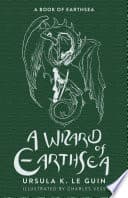
- A Wizard of Earthsea
Ursula K. Le Guin
4.0 (241k) average on GoodreadsFantasyLe Guin's 'A Wizard of Earthsea' offers a more concise and mythic approach to magic and destiny, focusing on a singular hero's journey and his internal struggles. In contrast, 'Out of Oz' is far more expansive and politically charged, exploring societal decay and collective responsibility rather than individual growth. While both deal with the nature of power, Le Guin's work is often praised for its elegant simplicity and profound philosophical depth conveyed through a leaner narrative, whereas Maguire's strength lies in his labyrinthine plotting and detailed deconstruction of established myths, often at the cost of narrative economy. As observed by literary scholars like Fredric Jameson, the focus on grand societal narratives versus individual quests often differentiates the impact and scope of fantasy works (Jameson, F. (2005). Archaeologies of the Future: The Desire Called Utopia and Other Science Fictions. Verso).
- Harry Potter and the Sorcerer's Stone
J.K. Rowling
4.5 (7M) average on GoodreadsFantasyRescued from a miserable life under the stairs, an orphaned boy discovers he's a wizard destined for a magical school, where he uncovers a dangerous secret tied to the dark wizard who murdered his parents.
- The Hunger Games
Suzanne Collins
4.3 (6.4M) average on GoodreadsFantasyIn a future where children fight to the death on live television, Katniss Everdeen volunteers for the arena, turning a death sentence into a fight for survival and a spark of rebellion.




Enjoyed the summary?
A summary gives you the shape of the book. The book itself has the detail, the examples and the voice.
Find Out of Oz on AmazonAs an Amazon Associate, BookBrief earns from qualifying purchases. How we're funded