

Synopsis
Covers the whole plot, including the ending.
- Difficulty
- Medium
- Pacing
- Variable
- Mood
- Dark, Melancholic, Existential, Unsettling, Reflective
- Read it if
- You are looking for a deeply introspective and often unsettling coming-of-age story that doesn't shy away from the darker aspects of human experience, mental health, and the pain of growing up.
- Skip it if
- You prefer lighthearted, optimistic narratives, or are sensitive to themes of abuse, depression, and existential dread.
Oyasumi Punpun Plot Summary
Covers the whole plot, including the ending.
A Child's World Crumbles: Early Life and Aiko's Arrival
Punpun Punyama is a young boy living with his parents. His father is abusive, and his mother is often absent or sad. One night, his father attacks his mother, leading to his arrest and her hospitalization. Punpun's uncle, Yuichi, moves in to care for him. Punpun, who sees himself as a small, bird-like creature, struggles to understand these events, often seeking advice from an imagined 'God'. During this time, a new girl named Aiko Tanaka transfers to his class. Punpun immediately likes her, and they form a bond, sharing childhood dreams of going to Kagoshima.
The Weight of Promises: Aiko's Departure and Punpun's Isolation
Punpun's feelings for Aiko grow, and they promise to go to Kagoshima together. However, Aiko's life is also unstable; she lives with her neglectful mother, who is part of a cult. One day, Aiko suddenly moves away without saying goodbye, leaving Punpun heartbroken. This event, along with his family problems—his mother eventually leaves and his uncle struggles with his own mental health and relationships—makes Punpun feel more isolated. He deals with feelings of being left behind and the difficulty of keeping connections, retreating into his own mind and the advice of 'God'.
Adolescence and New Friendships: Seki, Shimizu, and the Cult
Years pass, and Punpun starts middle school, still living with his uncle Yuichi. He becomes friends with two classmates, Seki and Shimizu. Seki is a cynical but loyal friend. Shimizu is a quiet boy who believes in aliens and is later shown to be involved with a cult, the same one Aiko's mother was in. This brings a strange element to their lives. Punpun also develops a crush on another classmate, Sachi Nanjou, an artist, but their relationship remains platonic. Punpun's internal struggles continue, showing up as increasingly strange visions of 'God'.
High School and Failed Romance: Sachi and the Adult World
In high school, Punpun's social awkwardness continues. He briefly dates a girl named Fumi, but their relationship is shallow and ends. He still deals with his uncle's behavior, including Yuichi's on-again, off-again relationship with his girlfriend, Midori. Punpun also sees his friends' struggles, especially Seki, who faces family problems and financial hardship. These experiences, combined with his own inability to form deep connections, add to Punpun's growing doubt about love and the adult world. He begins to feel lost, with no clear direction.
The University Years: Isolation and a New Path
Punpun attends university, but his social anxieties keep him from truly connecting with his peers. He largely isolates himself, dealing with depression and a lack of motivation. During this time, he meets a woman named Aiko Tanaka, who he thinks is his childhood crush. He tries to reconnect, but it turns out to be a different Aiko, leading to more disappointment. He eventually drops out of university, feeling lost. He takes odd jobs, drifting, and his internal 'God' figure becomes more sinister, reflecting Punpun's declining mental state.
Reunion with Sachi and a Glimmer of Hope
After dropping out of university, Punpun works a series of low-paying jobs. He eventually reconnects with Sachi Nanjou, who is now an aspiring manga artist and a single mother. Sachi, with her practical nature, offers Punpun a place to stay and a chance to work as her assistant. This time could be a turning point for Punpun, as Sachi's directness challenges his passive and self-pitying ways. She encourages him to face his problems and provides some stability and purpose, even if he struggles to fully accept it.
Aiko's Return and the Descent into Darkness
Punpun's life changes drastically when Aiko Tanaka, his childhood love, reappears. She is now an adult, working in a hostess club, and very troubled. She seeks out Punpun, saying her life has been ruined by her abusive, cult-leader mother. Punpun, still focused on his childhood promise to her, is drawn back into her life. Their reunion is full of tension and unresolved trauma. Aiko eventually reveals she has killed her mother in a fit of rage and asks Punpun for help to escape. Driven by a twisted sense of loyalty and a desperate desire to keep his childhood promise, Punpun helps her cover up the crime and escape.
On the Run: A Fugitive's Journey with Aiko
Punpun and Aiko run away, traveling across Japan to avoid the police. During their desperate journey, their relationship becomes intensely dependent and unhealthy. They share intimate moments, but also extreme emotional distress and abuse. Aiko's mental state is fragile, and Punpun, consumed by guilt and his long-held obsession, struggles to cope. Their flight is marked by poverty, fear, and growing hopelessness. Punpun's internal bird-like form becomes increasingly distorted, reflecting his moral decline and psychological pain.
The Inevitable End: Aiko's Death and Punpun's Collapse
Their journey eventually leads them to a secluded area, where Aiko's mental state completely breaks down. Overwhelmed by guilt, fear, and her past trauma, Aiko dies by suicide, leaving Punpun devastated and alone. This event shatters Punpun's already fragile mind. He tries to take his own life but fails. He is eventually found and hospitalized, suffering from severe psychological trauma. The police investigate Aiko's mother's death, and Punpun is cleared of direct involvement but is left with deep guilt and loss.
The Aftermath: Recovery and a New Identity
After his hospitalization, Punpun begins a slow recovery. Sachi supports him, remaining a steady presence in his life, offering him a home and a chance to heal. Punpun, however, is deeply scarred by the events with Aiko. He decides to let go of his 'Punpun' identity, which represents his past traumas, and live as an anonymous person, blending into society. He takes on a new, ordinary appearance, losing his bird-like form, and tries to live a normal life, working and trying to move past his traumatic experiences, though the memories continue to bother him.
A Glimpse of the Future: The Cost of Normalcy
Years later, Punpun lives a seemingly normal, unremarkable life. He is still close to Sachi and her daughter, and he has a stable job. He occasionally runs into his old friends, Seki and Shimizu, who have also grown up. However, despite looking normal, Punpun remains emotionally distant and scarred. The story suggests that while he has survived, he has lost a part of himself, unable to fully experience joy or deep connection. The series ends with Punpun observing his friends, realizing he is different and forever marked by his past, living a life of quiet acceptance.
Principal Figures
Punpun Punyama
Protagonist
A young boy who visualizes himself as a bird, navigating a traumatic childhood and adulthood.
Punpun is the central protagonist, initially depicted as an innocent, bird-like figure, representing his naive perspective. He is highly sensitive, introverted, and prone to anxiety and depression. Throughout his life, he struggles with his dysfunctional family, unrequited love, and a profound sense of existential dread. His internal monologue, often directed at an imagined 'God,' reveals his deep-seated insecurities and inability to cope with the harsh realities of life. He is easily influenced and often passive, allowing events to unfold around him rather than taking decisive action, which leads to tragic consequences.
Relationships: Aiko Tanaka (Childhood crush, later toxic and codependent romantic partner); Yuichi Punyama (Uncle and guardian, often misguided but caring); Sachi Nanjou (Friend, later a supportive and pragmatic romantic interest); Seki (Childhood friend, cynical but loyal); Shimizu (Childhood friend, naive and involved in a cult); God (Imagined internal advisor, reflecting Punpun's mental state)
Aiko Tanaka
Love Interest/Catalyst
Punpun's enigmatic childhood crush, whose tragic life deeply intertwines with his own.
Aiko Tanaka is Punpun's first love and a significant catalyst for many of his life's events. She is introduced as a mysterious and somewhat ethereal new girl. Her life is marked by severe neglect and abuse from her mother, who is involved in a cult. Aiko yearns for escape and a normal life, often projecting these desires onto Punpun and their shared childhood dream of Kagoshima. As an adult, she is deeply traumatized, manipulative, and emotionally unstable, seeking solace and escape through Punpun, ultimately leading to a tragic end for both of them. Her beauty and vulnerability mask a profound inner darkness.
Relationships: Punpun Punyama (Childhood crush, later toxic and codependent romantic partner); Aiko's Mother (Abusive mother, cult leader)
Yuichi Punyama
Supporting
Punpun's eccentric uncle and guardian, struggling with his own personal demons.
Yuichi is Punpun's uncle who steps in to care for him after his parents' separation. He is a well-meaning but flawed character, often unemployed, depressed, and struggling with his own relationships and past traumas, particularly his failed marriage and his ex-wife's suicide. He provides a semblance of stability for Punpun but often falls short due to his own emotional instability and poor decision-making. Despite his flaws, he genuinely cares for Punpun, offering him advice, though it is often cynical or misguided. His struggles mirror Punpun's in many ways, highlighting the cycle of dysfunction.
Relationships: Punpun Punyama (Nephew and ward); Midori (On-again, off-again girlfriend); Punpun's Mother (Sister)
Sachi Nanjou
Supporting
A pragmatic and independent aspiring artist who offers Punpun stability and a different perspective.
Sachi Nanjou is a crucial figure in Punpun's adult life. She is introduced as a free-spirited and outspoken aspiring manga artist. Unlike many of the other characters, Sachi is grounded, resilient, and possesses a strong sense of self. She becomes Punpun's friend, employer, and eventually a romantic interest, providing him with a much-needed anchor. She is direct and honest, often challenging Punpun's passive and self-pitying nature. As a single mother, she demonstrates strength and pragmatism, offering Punpun a chance at a more stable and meaningful life, though he struggles to fully embrace it.
Relationships: Punpun Punyama (Friend, later a supportive and pragmatic romantic interest); Toshiki (Her daughter)
Seki Masumi
Supporting
Punpun's cynical but loyal childhood friend, often playing the role of a realist.
Seki is one of Punpun's closest childhood friends. He is characterized by his cynical outlook, often making sarcastic remarks and questioning the motivations of others. Despite his tough exterior, Seki is fiercely loyal to his friends, particularly Shimizu, and eventually Punpun. He comes from a troubled background, facing economic hardship and family issues, which contribute to his jaded worldview. He often tries to guide Punpun with practical advice, though Punpun rarely takes it. Seki represents the struggle of growing up in a harsh reality, but he ultimately finds a way to carve out a stable life for himself.
Relationships: Punpun Punyama (Childhood friend); Shimizu (Best friend)
Shimizu
Supporting
Punpun's quiet and imaginative childhood friend, involved with a cult.
Shimizu is Punpun's other childhood friend, known for his quiet demeanor, wild imagination, and peculiar beliefs, particularly in aliens. He is naive and easily influenced, which leads to his involvement with a cult, the same one Aiko's mother was associated with. Shimizu often serves as a contrast to Seki's cynicism, representing a more innocent, albeit misguided, perspective. His involvement with the cult highlights the pervasive influence of such groups and the vulnerability of impressionable individuals. Despite his eccentricities, he remains a loyal friend to Seki and Punpun.
Relationships: Punpun Punyama (Childhood friend); Seki (Best friend)
Punpun's Mother
Supporting/Antagonist
Punpun's emotionally unstable and neglectful mother.
Punpun's mother is a deeply troubled individual who suffers from depression and is a victim of domestic abuse. Her emotional instability and neglect profoundly impact Punpun's childhood. She eventually leaves the family, further contributing to Punpun's feelings of abandonment. Her actions, though often stemming from her own suffering, create a chaotic and traumatic environment for her son. She represents the generational cycle of dysfunction and the profound impact of parental figures on a child's development.
Relationships: Punpun Punyama (Mother); Punpun's Father (Abusive husband); Yuichi Punyama (Brother)
Punpun's Father
Mentioned/Minor Antagonist
Punpun's abusive and absent father.
Punpun's father is largely an absent figure, but his initial act of domestic violence against Punpun's mother sets the entire narrative in motion. His arrest and subsequent absence leave a lasting scar on Punpun's psyche and contribute to the breakdown of his family structure. He represents the destructive force of domestic abuse and the void left by a missing parent, shaping Punpun's early experiences with trauma and abandonment.
Relationships: Punpun Punyama (Father); Punpun's Mother (Abused wife)
God
Plot Device/Internal Monologue
An imagined deity Punpun consults, reflecting his inner turmoil and moral decay.
The 'God' character is a manifestation of Punpun's internal monologue and subconscious. Initially appearing as a benevolent, albeit often unhelpful, advisor, 'God' evolves to reflect Punpun's deteriorating mental state. As Punpun's life becomes darker, 'God' becomes more sinister, mocking, and ultimately a representation of his guilt, self-loathing, and fragmented psyche. This entity serves as a unique narrative device, providing insight into Punpun's thoughts and emotions in a visual and auditory manner.
Relationships: Punpun Punyama (Internal manifestation of Punpun's psyche)
Themes & Insights
Loss of Innocence and Disillusionment
This is the main theme of the manga, showing Punpun's journey from a naive child to a disillusioned adult. His bird-like form symbolizes his innocence, which slowly changes as he faces the difficult parts of life: family trauma, broken promises (Aiko leaving), complicated relationships, and the world's inherent cruelty. Each major event, from his parents' separation to Aiko's tragic end, removes some of his childish idealism, leaving him with a deep sense of disappointment about love, happiness, and life's meaning. This is clear in his changing 'God' figure, which becomes more cynical.
“Even if you don't believe in God... there are some things you just can't do alone. Even if you don't believe in God, there are times you need to pray.”
Trauma and Mental Health
The manga explores how childhood trauma affects a person's mental health. Punpun's early experiences with domestic abuse, being left alone, and his unstable family life lead to severe anxiety, depression, and social isolation. His internal struggles are shown through his bird-like form and the 'God' figure, which visually represent his psychological state. Characters like Yuichi and Aiko also deal with their own traumas, showing a cycle of pain and how hard it is to break free. The story directly shows self-harm, suicidal thoughts, and the deep psychological damage from unresolved emotional wounds.
“I wish I could erase my memories. I wish I could forget everything and start over.”
The Nature of Love and Relationships
Oyasumi Punpun shows a complex and often bleak view of love and human connection. Punpun's crush on Aiko starts pure but becomes a toxic obsession based on childhood fantasy rather than real understanding. His other relationships, like with Sachi, are more realistic but still difficult because he cannot truly open up. The manga explores different kinds of love—family, romantic, platonic—often showing them as sources of pain, disappointment, and manipulation rather than comfort. It questions if true, unconditional love is possible or just an ideal that always leads to heartbreak.
“No matter how much you love someone, you can't save them. You can't even save yourself.”
Identity and Self-Acceptance
Punpun's struggle with who he is is central to the story, especially through his changing visual appearance. His bird-like form symbolizes his separation from human identity, his feeling of being different, and his inability to truly connect. As he gets older and faces more trauma, his form changes, reflecting his inner corruption and self-hatred. The series ends with him letting go of the 'Punpun' identity, trying to become an anonymous, 'normal' person. This search for a stable identity is painful, suggesting that real self-acceptance might mean facing, not escaping, one's past and nature, a challenge Punpun struggles with.
“I wanted to be someone else. Anyone else but me.”
Social Alienation and Modern Japanese Society
The manga hints at problems in modern Japanese society, especially the pressure to conform, the rise of cults, and the widespread feeling of being alone. Punpun, Seki, and Shimizu all represent people who struggle to fit into societal norms, often feeling like outsiders. Aiko's mother's cult shows how vulnerable people are when they look for belonging and meaning in a disconnected world. The ordinary, often bleak city scenes and the characters' struggles with unemployment and aimlessness reflect a generation dealing with a lack of purpose and a feeling of being lost in a vast, uncaring society, which adds to their isolation.
“Everyone wants to be special. But if everyone's special, then no one is.”
Plot Devices & Literary Techniques
Punpun's Changing Forms
Visual representation of Punpun's psychological state and loss of innocence.
Punpun's visual depiction as a simple, bird-like doodle (and later other abstract, often grotesque forms) is a central plot device. This abstract representation allows readers to project their own interpretations onto him, while simultaneously symbolizing his detachment from humanity, his innocence, and his deteriorating mental state. As he experiences trauma and grows older, his form becomes more distorted, reflecting his inner turmoil, self-loathing, and the loss of his childhood purity. This device uniquely illustrates his psychological journey without explicit dialogue, making his internal world palpable.
'God' as Internal Monologue
An imagined deity that externalizes Punpun's thoughts, fears, and moral compass.
The recurring appearance of 'God' as a floating, afro-haired head is a unique narrative device. 'God' functions as Punpun's internal monologue, conscience, and often, his tormentor. Initially offering simplistic advice, 'God' evolves to reflect Punpun's increasing cynicism, despair, and moral corruption. This device provides direct insight into Punpun's fragmented psyche, his anxieties, and his struggle to make sense of the world. 'God's' pronouncements often serve as dark humor or brutal truths, highlighting Punpun's inability to cope with reality and his reliance on an imagined, increasingly malevolent, guide.
Non-Linear Narrative Elements (Flashbacks/Flashforwards)
Jumps in time to reveal past traumas or foreshadow future events.
While largely chronological, the manga employs occasional flashbacks and subtle flashforwards. Flashbacks are crucial for revealing the full extent of characters' past traumas, such as Aiko's abusive childhood or Yuichi's failed marriage, providing context for their present behavior. The narrative also includes subtle hints or glimpses of future events, creating a sense of foreboding or inevitability. This non-linear approach enriches the character development and deepens the thematic exploration of memory, consequence, and the inescapable nature of one's past.
Symbolism of Kagoshima
A childhood dream representing escape, hope, and an idealized future.
Kagoshima, a distant city Punpun and Aiko dream of visiting as children, serves as a powerful symbol. Initially, it represents an idealized escape from their troubled lives, a place where they can be happy and free. It embodies their childhood innocence, hope, and the promise of a better future. However, as their lives become more complicated and tragic, Kagoshima transforms into a symbol of lost innocence, broken promises, and the impossibility of truly escaping one's past. Their eventual journey, albeit forced and tragic, is a dark inversion of their childhood dream.
The Cult of Pegasusu
A background element highlighting social alienation and the search for belonging.
The cult, led by Aiko's mother and later involving Shimizu, serves as a symbolic backdrop. It represents the darker aspects of society: the vulnerability of lonely or disillusioned individuals, the allure of false hope, and the destructive power of manipulation. The cult's presence underscores the themes of social alienation and the search for meaning, even if it leads to harmful ends. It also connects directly to Aiko's traumatic past, providing context for her psychological damage and the cycle of abuse she endures.
Oyasumi Punpun Quotes
“I want to be a bird.”
“I'm not a bird. I'm a human being.”
“I love you. I love you so much it hurts.”
“The world is a scary place.”
“I'm sorry for being born.”
“We're all just trying to survive.”
“Happiness is something you have to fight for.”
“I don't know what love is anymore.”
“The past is a heavy burden.”
“Sometimes, I feel like I'm disappearing.”
“Life is just a series of goodbyes.”
“I want to be remembered.”
“Love is a beautiful lie.”
“I'm tired of pretending to be okay.”
“Maybe we're all just broken.”
Quiz
10 questions on the plot and the characters. Each answer comes with a short explanation.
Question 1
What traumatic event marks the end of Punpun's childhood innocence at the beginning of the story?
- His mother's death from illness
- His father's arrest for spousal abuse that hospitalized his mother
- Being bullied at school and losing all his friends
- His family moving to a new city away from all his relatives
Show answer
B. His father's arrest for spousal abuse that hospitalized his mother The book opens with Punpun's father being arrested for domestic violence that put Punpun's mother in the hospital, which shatters Punpun's innocent worldview and sets the tone for his troubled journey into adulthood.
Question 2
How is Punpun visually depicted throughout most of the manga?
- As a realistic human boy with detailed facial expressions
- As a simple bird-like cartoon figure with minimal features
- As different animals depending on his emotional state
- As a shadowy silhouette without any distinct features
Show answer
B. As a simple bird-like cartoon figure with minimal features Punpun is famously drawn as a simplistic, bird-shaped cartoon character throughout the series, which contrasts with the realistic art style of other characters and environments, symbolizing his emotional detachment and simplified self-perception.
Question 3
Who becomes Punpun's primary guardian after his father's arrest and mother's hospitalization?
- His strict grandfather
- His irresponsible uncle
- A kind neighbor who takes him in as a foster child
- He lives alone and takes care of himself from a young age
Show answer
B. His irresponsible uncle Punpun's uncle takes on the role of his guardian, though he is often unreliable and struggling with his own issues, which contributes to Punpun's unstable upbringing and search for guidance.
Question 4
What is the name of Punpun's childhood crush who becomes a central figure in his life throughout the story?
- Sachi Nanjo
- Aiko Tanaka
- Midori Ogawa
- Yaguchi Harumi
Show answer
B. Aiko Tanaka Aiko Tanaka is Punpun's childhood love interest whose relationship with him evolves through various stages of their lives, representing both hope and tragedy in his quest for connection and meaning.
Question 5
Which of these themes is NOT prominently explored in 'Oyasumi Punpun'?
- The loss of innocence and harsh realities of growing up
- Existential dread and the search for meaning in life
- Magical adventures in a fantasy world
- Mental health struggles and trauma
Show answer
C. Magical adventures in a fantasy world While 'Oyasumi Punpun' contains surreal elements and metaphorical imagery, it is fundamentally a grounded, psychological drama about real-world struggles rather than a fantasy adventure story with magical quests.
Question 6
What symbolic role do Punpun's 'god' hallucinations play in the narrative?
- They provide comic relief through silly antics
- They represent Punpun's internal moral compass and psychological struggles
- They are actual deities that guide Punpun through supernatural events
- They serve as narrators who explain the plot to readers
Show answer
B. They represent Punpun's internal moral compass and psychological struggles Punpun's visions of 'god' manifest as bizarre, often disturbing figures that reflect his deteriorating mental state, moral conflicts, and search for guidance in a confusing world, rather than being literal supernatural beings.
Question 7
How does the manga's art style contribute to its exploration of Punpun's psychological state?
- It uses bright, cheerful colors to contrast with the dark themes
- It combines realistic backgrounds with Punpun's simplistic cartoon form to highlight his alienation
- It employs abstract expressionism that makes the story difficult to follow
- It mimics children's book illustrations to maintain an innocent tone throughout
Show answer
B. It combines realistic backgrounds with Punpun's simplistic cartoon form to highlight his alienation The juxtaposition of highly detailed, realistic environments with Punpun's simple bird-like design visually represents his sense of disconnection from the world and his own identity, enhancing the themes of isolation and psychological turmoil.
Question 8
What ultimately happens to Aiko Tanaka by the end of Punpun's story?
- She marries Punpun and they live happily ever after
- She becomes a successful artist and cuts ties with Punpun completely
- She dies tragically, leaving Punpun to grapple with profound loss
- She moves abroad and Punpun never learns what happened to her
Show answer
C. She dies tragically, leaving Punpun to grapple with profound loss Aiko's death is a pivotal, devastating moment in the narrative that represents the culmination of Punpun's failed attempts to find salvation through love, forcing him to confront ultimate despair and the possibility of moving forward.
Question 9
Which character serves as a dark mirror to Punpun, representing what he might become if he fully embraces his nihilistic tendencies?
- Punpun's uncle
- Seki
- Pegasus
- Midori
Show answer
C. Pegasus Pegasus, the leader of a cult-like group, embodies extreme nihilism and destructive behavior that parallels Punpun's own dark thoughts, showing a potential path of complete moral abandonment that Punpun flirts with but ultimately must decide whether to follow.
Question 10
What does the phrase 'Oyasumi Punpun' (Goodnight Punpun) symbolically represent in the context of the story's conclusion?
- A literal bedtime story Punpun tells to children
- A farewell to childhood innocence and the painful process of growing up
- The title of a book Punpun writes about his experiences
- A recurring lullaby that Punpun's mother used to sing to him
Show answer
B. A farewell to childhood innocence and the painful process of growing up The title serves as a metaphorical 'goodnight' to Punpun's innocence and suffering, suggesting both an end to his traumatic journey and a bittersweet acceptance of adulthood's realities by the story's conclusion.
Oyasumi Punpun FAQ
What is 'Oyasumi Punpun' about?
'Oyasumi Punpun' follows Punpun Punyama, a boy depicted as a simple bird-like doodle, from childhood to adulthood in Japan. After his father's arrest for domestic violence, Punpun navigates trauma, love, depression, and existential crises, with his journey symbolizing the loss of innocence and the harsh realities of growing up.
Why should I read 'Oyasumi Punpun'?
You should read it for its raw, unflinching portrayal of mental health, trauma, and the transition to adulthood. Inio Asano's blend of surreal art (with Punpun drawn as a doodle) and gritty realism creates a unique, emotionally impactful experience that resonates with themes of loneliness, hope, and human fragility.
What is the background/setting of 'Oyasumi Punpun'?
The story is set in modern Japan, spanning from Punpun's childhood in the 1990s to his adulthood in the 2000s. Locations include his home, schools, and urban environments like Tokyo, with the setting reflecting societal pressures, isolation, and the mundane yet oppressive aspects of Japanese life.
What are the most memorable quotes from 'Oyasumi Punpun'?
Memorable quotes include: 'I want to be a bird,' reflecting Punpun's desire for escape; 'Goodnight, Punpun,' a recurring phrase symbolizing resignation or farewell; and 'Happiness is something you must build for yourself,' highlighting the book's themes of self-reliance and existential struggle.
What writing style does Inio Asano use in 'Oyasumi Punpun'?
Asano uses a mix of surrealism and stark realism, with Punpun and his family drawn as simplistic doodles against detailed, realistic backgrounds. The narrative is introspective, often delving into dark, psychological depths with nonlinear storytelling and symbolic imagery to explore trauma and growth.
What minor details add significant meaning in 'Oyasumi Punpun'?
Minor details like Punpun's doodle form, which changes shape based on his mental state, add meaning by visualizing his inner turmoil. Small objects, such as a telescope symbolizing escapism or a knife representing violence, recur to underscore themes of obsession and trauma throughout the story.
What are some subtle foreshadowing moments in 'Oyasumi Punpun'?
Early scenes of Punpun's father's violence foreshadow Punpun's own struggles with anger and abuse. Punpun's childhood obsession with Aiko Tanaka hints at their tragic, intertwined futures, and references to 'God' or higher powers subtly foreshadow the cult storyline and Punpun's search for meaning.
What unexpected character connections exist in 'Oyasumi Punpun'?
Unexpected connections include Punpun's uncle Yuichi, who shares similar traumas and becomes a surrogate father, and Seki, a friend whose own dysfunctional family mirrors Punpun's. Later, characters like Sachi, a manga artist, and the cult leader Pegasus intersect in ways that influence Punpun's descent and redemption.
What are unspoken character motivations in 'Oyasumi Punpun'?
Punpun is motivated by a deep-seated fear of abandonment and a longing for love, driving his obsessive pursuit of Aiko. Aiko's actions are fueled by a desire to escape her abusive mother and find validation, while Yuichi's care for Punpun stems from guilt over his own failed relationships and search for purpose.
What psychological complexities do characters exhibit in 'Oyasumi Punpun'?
Punpun exhibits depression, dissociation, and violent tendencies, grappling with identity and self-worth. Aiko shows codependency and trauma responses, Yuichi displays alcoholism and regret, and Sachi embodies artistic passion masking loneliness. These complexities highlight the book's exploration of mental illness and human flaws.
What are the major emotional turning points in 'Oyasumi Punpun'?
Major turning points include Punpun's father's arrest, which shatters his innocence; his reunion with Aiko as adults, reigniting hope and obsession; Aiko's death, plunging Punpun into despair; and his eventual acceptance of life's imperfections, leading to a tentative redemption in the finale.
How do relationship dynamics evolve in 'Oyasumi Punpun'?
Punpun's relationship with Aiko evolves from childhood crush to toxic codependency and tragic loss. With Yuichi, it shifts from dependency to mutual understanding as both face their demons. Friendships, like with Seki, wax and wane, reflecting Punpun's isolation and the fleeting nature of connections in adulthood.
Which parts of 'Oyasumi Punpun' remain ambiguous or open-ended?
Ambiguities include the true nature of 'God' or higher powers, the fate of some side characters like Sachi, and whether Punpun achieves lasting happiness. The ending, with Punpun walking away from his past, is open to interpretation regarding his recovery and future stability.
What are controversial scenes or decisions in 'Oyasumi Punpun'?
Controversial scenes include graphic depictions of domestic violence, Punpun's descent into misanthropy and violence, and the tragic handling of Aiko's death. Decisions like Punpun's involvement with a cult and his passive acceptance of suffering spark debate on the book's bleakness and moral messages.
'Oyasumi Punpun' ending explained: how it ends & what it means
The ending shows Punpun, after Aiko's death and his own breakdown, finding a semblance of peace by accepting life's imperfections and moving forward alone. It symbolizes that adulthood involves carrying trauma but still seeking meaning, with the phrase 'Goodnight, Punpun' suggesting a farewell to his painful past and a tentative new beginning.
About the author

Inio Asano is a Japanese manga artist known for his introspective and often surreal storytelling. He is best known for his work "Oyasumi Punpun," which explores themes of adolescence, mental health, and the complexities of life. Asano's unique art style and narrative approach have garnered attention in the manga community.
Similar books
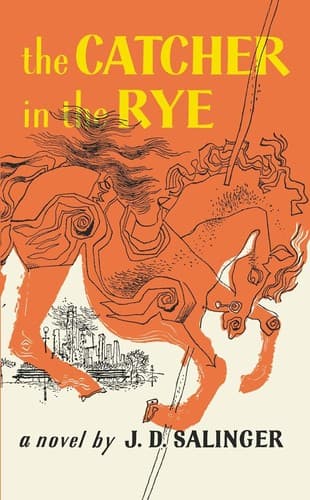
- The Catcher in the Rye
J.D. Salinger
3.8 (2.7M) average on GoodreadsYoung AdultExplores teenage alienation and disillusionment with the adult world through a unique narrative voice.
- Kafka on the Shore
Haruki Murakami
4.1 (306k) average on GoodreadsLiterary FictionFeatures a young protagonist on a journey of self-discovery, blending surreal elements with harsh realities.
- A Little Life
Hanya Yanagihara
4.3 (212k) average on GoodreadsLiterary FictionA sprawling, emotionally intense narrative focusing on trauma, friendship, and the long-term impact of childhood experiences.
- The Fault in Our Stars
John Green
4.2 (3.6M) average on GoodreadsYoung AdultThe Fault in Our Stars presents a romantic relationship that, despite facing terminal illness, ultimately emphasizes hope, connection, and finding meaning in a finite existence. Oyasumi Punpun, in contrast, often portrays love and relationships as sources of further pain, obsession, and psychological deterioration, with a far bleaker, less redemptive outlook.
- Eleanor & Park
Rainbow Rowell
4.0 (860k) average on GoodreadsYoung AdultEleanor & Park is a tender, realistic portrayal of first love and overcoming personal struggles, focusing on the supportive and healing aspects of connection, albeit with its own challenges. Oyasumi Punpun delves into far darker territory, where love frequently exacerbates existing trauma, leading to destructive cycles and profound psychological distress, with little to no romanticized resolution.
- Harry Potter and the Sorcerer's Stone
J.K. Rowling
4.5 (7M) average on GoodreadsFantasyRescued from a miserable life under the stairs, an orphaned boy discovers he's a wizard destined for a magical school, where he uncovers a dangerous secret tied to the dark wizard who murdered his parents.





Enjoyed the summary?
A summary gives you the shape of the book. The book itself has the detail, the examples and the voice.
Find Oyasumi Punpun on AmazonAs an Amazon Associate, BookBrief earns from qualifying purchases. How we're funded