

Synopsis
Covers the whole plot, including the ending.
- Difficulty
- Easy
- Pacing
- Moderate
- Mood
- Whimsical, Heartwarming, Romantic, Uplifting
- Read it if
- You enjoy modern fairytale retellings with themes of self-acceptance and finding your own path, or if you liked the movie adaptation.
- Skip it if
- You prefer gritty realism or complex, multi-layered fantasy worlds.
Penelope Plot Summary
Covers the whole plot, including the ending.
The Wilhern Curse and Penelope's Seclusion
Penelope Wilhern is the only daughter of wealthy socialites Jessica and Franklin Wilhern. Their family has an old curse from a scorned witch: a Wilhern girl will be born with a pig's face until 'one of her own kind' loves her. Penelope, born with a pig's snout, is kept hidden in their mansion. Her mother, Jessica, wants to break the curse, believing Penelope must marry a blue-blooded suitor. Penelope's room has talking objects for company, but she wants real connection and freedom outside her home.
The Parade of Suitors and Failed Attempts
Jessica Wilhern, with her friend Wanda, arranges for many rich bachelors to meet Penelope. Each suitor is brought in, often blindfolded, and introduced to Penelope behind a one-way mirror. The meetings go badly; when they see Penelope's face, the men scream and flee, sometimes jumping out windows. Jessica's desperation grows, making Penelope feel unlovable and cursed. Penelope endures these humiliating meetings, losing hope with each rejection, while her father, Franklin, does little to stop Jessica's constant search for a cure.
Lemon's Scheme and Max's Arrival
Meanwhile, Lemon, a tabloid reporter who lost an eye trying to photograph Penelope years ago, wants to expose the 'pig-faced girl.' He hires Jack McAvoy, a charming gambler down on his luck, to pretend to be a suitor. Jack, using the name Max Campion, agrees, needing money for gambling debts. He is told to gain Penelope's trust and then take her picture. Lemon gives Max a hidden camera, stressing the importance of getting the shot that will reveal Penelope to the world and make Lemon rich.
Max's Connection and Disappearance
Max Campion, posing as a suitor, meets Penelope. Unlike the others, he is interested and looks past her appearance, talking to her about her interests and dreams. Penelope, not used to such kindness, begins to trust him, feeling a connection she has never known. Max finds himself drawn to her wit and spirit. However, when it is time to take the photo, he feels too guilty to betray her. Max suddenly leaves the mansion, unable to go through with Lemon's plan, leaving Penelope heartbroken and feeling more betrayed than ever.
Penelope's Escape to the Outside World
Devastated by Max's disappearance, Penelope reaches her limit. She is tired of being a prisoner in her mother's plans. With new determination, she decides to take control of her life. Using a scarf to hide her snout, Penelope escapes the mansion and goes into the city for the first time. The outside world is overwhelming but exciting. She enjoys simple things like riding a bus and watching people, feeling a sense of freedom and anonymity she had never known. This act of defiance marks a turning point in her journey to self-discovery and independence.
Friendship with Annie and Lemon's Continued Pursuit
Penelope finds work and becomes friends with Annie, a kind delivery driver for a flower shop. Annie becomes Penelope's first true friend, accepting her without question, even after Penelope eventually shows her face. Meanwhile, Lemon, still obsessed with the story, teams up with Edward Vanderman Jr., a former suitor humiliated by Penelope's appearance. Edward, wanting revenge and to prove he is sane, believes Penelope is a monster and joins Lemon in their search to find and expose her. Their efforts keep Penelope moving, forcing her to constantly hide her identity.
Meeting Johnny and Growing Independence
Penelope meets Johnny Martin, a talented musician and bar owner, who is kind and supports her creativity. She finds a sense of belonging and purpose, even performing her own songs at his club. During this time, she begins to understand that her appearance does not define her worth. She forms real connections, learns to live in the world, and gains confidence. She starts to realize the curse might not be about finding a husband, but about accepting herself. Her experiences outside the mansion slowly change her view on beauty, love, and self-acceptance, bringing her closer to breaking the curse in an unexpected way.
Max's Return and Public Revelation
It is revealed that Johnny Martin is actually Jack McAvoy (Max Campion), who found a new life as a musician after leaving Penelope. He still feels guilty about his past actions. Lemon and Edward finally find Penelope, and during a public performance at Johnny's club, they pull off her scarf, revealing her pig snout to a shocked crowd. The public's reaction is initially one of sensationalism and fear, fueled by tabloid headlines. However, Penelope, no longer afraid, stands firm, refusing to hide. This public reveal, though painful at first, is a key moment in her journey to full self-acceptance.
The Curse's True Meaning and Self-Love
With her identity exposed, Penelope faces a choice: hide again or embrace who she is. She realizes the curse's words—'loved by one of her own kind'—were misunderstood. It was never about finding a blue-blooded husband, but about loving herself and accepting her unique identity. She stands on a bridge, thinking about her future, and in a moment of self-acceptance, she says, 'I like myself the way I am.' As these words leave her lips, the magic works. Her pig's snout changes, and she gets a beautiful, human nose, symbolizing the breaking of the curse through inner validation, not outside approval.
Reunion and a New Beginning
Now free of her curse, Penelope is no longer a spectacle but a young woman who has found her place in the world. She reunites with Johnny (Max), who admits his true identity and deep regret for his past actions. Penelope, having forgiven him and herself, accepts his apology. The Wilhern family, especially Jessica, finally understands the true nature of the curse and Penelope's journey. Penelope, now transformed and confident, is free to live her life as she chooses, pursuing her passions and embracing a future with Johnny, built on real connection and mutual respect, not on a superficial cure.
Penelope Characters
Penelope Wilhern
Protagonist
A kind-hearted young woman born with a pig's snout due to a family curse.
Penelope is intelligent, artistic, and deeply sensitive, yearning for connection and normalcy despite her unusual appearance. She is initially shy and self-conscious, having been sheltered and constantly reminded of her 'flaw.' Her kindness and wit shine through, even in her isolation. She possesses an inner strength that emerges as she challenges her prescribed fate. Her journey is one of self-discovery and learning to love herself unconditionally.
Relationships: Jessica Wilhern (Daughter, often at odds due to Jessica's obsession with breaking the curse.); Franklin Wilhern (Daughter, Franklin is a gentle but largely passive father.); Max Campion (Johnny Martin) (Love interest, initially betrayer, later a supportive partner.); Annie (Close friend and confidante.); Lemon (Antagonist, reporter obsessed with her story.)
Max Campion / Johnny Martin
Love Interest / Supporting
A charming but troubled gambler hired to expose Penelope, who later falls for her.
Initially introduced as Jack McAvoy, a down-on-his-luck gambler with a hidden past, Max is hired by Lemon to get a photo of Penelope. He is charming and witty, but also carries a burden of guilt and a desire for a clean slate. His initial mercenary motives give way to genuine affection for Penelope, leading him to abandon his mission. He reinvents himself as Johnny Martin, a musician, seeking redemption and a new life, proving himself capable of deep loyalty and love.
Relationships: Penelope Wilhern (Love interest, initially a deceptive suitor, later a supportive partner.); Lemon (Former employer, whom he betrayed by not getting the photo.)
Jessica Wilhern
Supporting / Antagonist (initially)
Penelope's overbearing, socialite mother, obsessed with breaking the family curse.
Jessica is a formidable and determined socialite, driven by a deep-seated desire to break the Wilhern curse and restore her family's reputation. Her love for Penelope is overshadowed by her desperation to 'fix' her, leading her to make often misguided and emotionally damaging decisions. She is controlling and unyielding, unable to see beyond the superficial aspects of the curse. Her journey involves learning to accept Penelope for who she is, rather than for what she looks like.
Relationships: Penelope Wilhern (Mother, initially stifling and controlling, later accepting.); Franklin Wilhern (Wife, dominates their relationship.); Wanda (Socialite friend and accomplice in matchmaking efforts.)
Lemon
Antagonist
A tenacious tabloid reporter obsessed with exposing Penelope's true identity.
Lemon is a relentless and opportunistic tabloid reporter, driven by a personal vendetta and the desire for a career-making scoop. He lost an eye trying to photograph Penelope years ago, fueling his obsession. He is cynical, manipulative, and willing to exploit others to get his story. He represents the public's intrusive curiosity and the pressure of societal judgment that Penelope faces. His actions, though villainous, inadvertently push Penelope towards her journey of self-discovery.
Relationships: Penelope Wilhern (Target of his journalistic pursuit.); Max Campion (Initially his hired operative.); Edward Vanderman Jr. (Allied with him in the pursuit of Penelope.)
Annie
Supporting
Penelope's first true friend, a quirky and accepting delivery driver.
Annie is an eccentric, kind-hearted, and non-judgmental young woman who becomes Penelope's first friend outside the mansion. She works as a flower delivery driver and embodies genuine acceptance and friendship. She sees Penelope's inner beauty and never questions her appearance, offering unwavering support and practical advice as Penelope navigates the outside world. Annie represents the power of true friendship and unconditional acceptance.
Relationships: Penelope Wilhern (Close friend and confidante.)
Franklin Wilhern
Supporting
Penelope's kind but passive father, overshadowed by his wife's determination.
Franklin is Penelope's loving father, who, while caring deeply for his daughter, is largely submissive to his wife, Jessica. He often expresses concern for Penelope's well-being but lacks the courage to stand up to Jessica's forceful methods. He represents the well-meaning but ultimately ineffective parent, who learns to assert himself and support Penelope's choices as she gains independence.
Relationships: Penelope Wilhern (Father, caring but initially passive.); Jessica Wilhern (Husband, often overruled by her.)
Edward Vanderman Jr.
Supporting / Antagonist
A snobby suitor who is humiliated by Penelope and seeks revenge.
Edward is a pompous and entitled aristocrat who attempts to marry Penelope but flees in horror upon seeing her face. His humiliation fuels a desire for revenge, leading him to ally with Lemon in the pursuit of exposing Penelope. He represents the superficiality and cruelty of the societal judgment that Penelope faces, unable to look past her physical appearance. His character underscores the theme of inner versus outer beauty.
Relationships: Penelope Wilhern (Failed suitor, later an antagonist.); Lemon (Ally in their shared goal to expose Penelope.)
Wanda
Mentioned / Supporting
Jessica Wilhern's socialite friend and accomplice in matchmaking.
Wanda is Jessica's socialite friend who assists in arranging the parade of suitors for Penelope. She is a loyal but somewhat superficial friend, embodying the upper-class world that Jessica inhabits. Wanda's primary role is to facilitate Jessica's plans, reflecting the societal pressures and expectations placed upon Penelope and her family. She is less malicious than simply complicit in the misguided attempts to 'cure' Penelope.
Relationships: Jessica Wilhern (Socialite friend and accomplice.)
Penelope Themes
Self-Acceptance and Inner Beauty
The main theme is Penelope's journey to accept herself, pig snout and all, rather than seeking approval from others. The curse breaks not with a prince's kiss, but with Penelope's own declaration of self-love. This is clear when she says, 'I like myself the way I am,' and the curse immediately breaks. Her experiences outside the mansion, making real friends and finding purpose, teach her that true beauty comes from within and her appearance does not define her. The story shows that the real 'curse' was her inability to accept her unique self.
“I like myself the way I am.”
The Illusion of Appearance and Societal Judgment
The film contrasts Penelope's kind nature with her 'cursed' appearance and society's superficial reactions. The blue-blooded suitors, Edward Vanderman Jr., and the reporter Lemon represent the harsh judgment of a world focused on outward perfection. Penelope's snout acts as a symbol for any perceived 'flaw' society finds unacceptable. The story shows how easily people are swayed by appearance and how hard it is to look past it. Her public reveal eventually forces society to face its own biases, and many come to admire her strength.
“It's not the power of the curse, it's the power of the person.”
Freedom vs. Confinement
Penelope's physical confinement in the mansion reflects her emotional and psychological imprisonment. Her escape into the city represents her breaking free from society's expectations and her mother's control. The enchanted room, though comforting, is still a cage. Once outside, she experiences true freedom for the first time—the freedom to choose her own path, make her own friends, and define who she is. This theme is shown by her initial excitement and later confidence in navigating the world independently, proving that true freedom comes from within.
“I'm not gonna hide anymore.”
The Nature of Love and Connection
The film explores different kinds of love: Jessica's misguided, controlling love for Penelope, the superficial 'love' sought by the suitors, and the real, unconditional love from Annie and eventually Max/Johnny. Penelope learns that true love is not based on looks or social status, but on shared values, respect, and understanding. Max's initial betrayal and later redemption show that love needs honesty and acceptance. The breaking of the curse through self-love allows her to have a healthy, reciprocal romantic relationship.
“I'm just a guy who wants to be with you.”
Plot Devices & Literary Techniques
The Wilhern Family Curse
A magical affliction causing Wilhern girls to be born with a pig's snout until loved by 'one of her own kind'.
This curse is the central driving force of the plot, dictating Penelope's isolation and her mother's desperate attempts to break it. It acts as a powerful external conflict and a metaphor for societal pressures and inherited burdens. The ambiguity of 'one of her own kind' is a key element, leading characters to misinterpret its meaning and ultimately revealing that the 'kind' refers to Penelope herself, and the 'love' is self-love. It provides both the initial problem and the magical catalyst for Penelope's transformation.
The One-Way Mirror / Hidden Identity
A physical barrier allowing Penelope to see suitors without being seen, and her use of a scarf in public.
The one-way mirror in the mansion symbolizes Penelope's initial isolation and her mother's attempt to control her exposure to the outside world. It creates a psychological barrier as well, preventing genuine connection. Later, Penelope's use of a scarf to hide her snout in public serves the same function, allowing her to observe and interact with the world anonymously. This device highlights her fear of judgment and her journey towards shedding her disguise and embracing her true self publicly, signifying her ultimate liberation.
The Tabloid Reporter (Lemon)
A persistent journalist obsessed with exposing Penelope, representing intrusive media and public scrutiny.
Lemon acts as a constant external threat and a symbol of the sensationalist media and the public's morbid curiosity. His relentless pursuit of Penelope, fueled by personal vendetta, keeps the stakes high and forces Penelope to confront the consequences of her unique appearance. He serves as an antagonist who inadvertently pushes Penelope towards her public revelation and ultimately, her self-acceptance, by making hiding an unsustainable option. His character underscores the theme of societal judgment and the struggle for privacy.
Penelope Quotes
“The world isn't always fair, Penelope. Sometimes you have to make your own luck.”
“Being a goddess is a lot more work than it sounds. Especially when you're trying to pass for human.”
“He looked at her as if she were the most interesting thing he'd ever seen, and for a girl who felt invisible most of the time, it was a powerful sensation.”
“Sometimes the greatest power isn't in what you can do, but in what you choose not to do.”
“It's not about being perfect, it's about being true to who you are, even the parts that scare you.”
“Love, it turned out, was a lot more complicated than the myths made it sound.”
“You can't run from your destiny forever, especially when it's literally etched into your soul.”
“The hardest battles are often fought within yourself.”
“Being different doesn't make you less; it makes you unique, and sometimes, uniquely powerful.”
“Even goddesses need friends. Especially when the world is trying to figure out who you are.”
“There's a fine line between a miracle and a catastrophe, and I seem to be constantly dancing on it.”
“The past isn't just history; it's a living thing that shapes everything we are now.”
“Sometimes, the biggest secrets are hidden in plain sight.”
“Courage isn't the absence of fear, but the decision to act in spite of it.”
Quiz
10 questions on the plot and the characters. Each answer comes with a short explanation.
Question 1
What is the primary physical characteristic that marks Penelope due to her family's curse?
- She has a tail.
- She has the face of a pig.
- She has hooves instead of feet.
- She has green skin.
Show answer
B. She has the face of a pig. The book description explicitly states Penelope was born with 'the face of a pig' due to a family curse.
Question 2
What is the main reason Penelope's mother is so determined to find her a husband?
- To secure her family's social standing.
- To break the family curse.
- To gain access to her inheritance.
- To get her out of the house.
Show answer
B. To break the family curse. The description states Penelope's family is 'in a desperate attempt to find her a husband in order to break the curse.'
Question 3
Who hires Max to pose as a suitor and infiltrate Penelope's family?
- Penelope's mother
- A rival socialite
- Lemon, a mischievous tabloid reporter
- Penelope's matchmaking sidekick
Show answer
C. Lemon, a mischievous tabloid reporter The text clearly states, 'mischievous tabloid reporter Lemon hires down-on-his-luck Max to pose as a prospective suitor.'
Question 4
Why does Max ultimately disappear after meeting Penelope?
- He got a better job offer.
- He was afraid of her family.
- He couldn't bring himself to expose her after developing genuine feelings.
- He found the curse too unsettling.
Show answer
C. He couldn't bring himself to expose her after developing genuine feelings. The description explains that 'when Max finds himself truly drawn to Penelope, he can't bring himself to expose and disappoint her, so he just disappears.'
Question 5
What does Penelope use to hide her true identity when she ventures out into the world?
- A large hat
- A scarf
- A mask
- Heavy makeup
Show answer
B. A scarf The text mentions, 'Hiding her true identity with a scarf, Penelope discovers a wondrous world.'
Question 6
What is Penelope's emotional state or desire before she decides to leave her family's home?
- She is content with her secluded life.
- She yearns for something greater than her current situation.
- She is only focused on breaking the curse.
- She is resigned to her fate.
Show answer
B. She yearns for something greater than her current situation. The description notes, 'Though she yearns for something greater, what's a girl to do when faced with a determined mother and her matchmaking sidekick?'
Question 7
What is the overarching theme Penelope discovers by breaking free from her family and exploring the world?
- The importance of wealth and social status.
- That true happiness comes from self-acceptance and freedom.
- That love is only possible with a perfect appearance.
- The necessity of following family traditions.
Show answer
B. That true happiness comes from self-acceptance and freedom. After leaving, Penelope 'discovers a wondrous world where freedom opens her eyes to possibilities she never knew existed. Making new friends along the way, she discovers happiness in the most unexpected places,' suggesting a theme of self-discovery and freedom.
Question 8
What phrase best describes the initial role Max is hired for by Lemon?
- A bodyguard
- A private investigator
- A prospective suitor tasked with exposing Penelope
- A family therapist
Show answer
C. A prospective suitor tasked with exposing Penelope Lemon hires Max 'to pose as a prospective suitor and infiltrate the family' with the intent to 'snap a photo of the mysterious girl,' which implies exposing her.
Question 9
The description implies Penelope's 'enchanted bedroom' and 'coolest clothes' are meant to offset what aspect of her life?
- Her lack of intelligence.
- Her isolation and physical curse.
- Her family's financial struggles.
- Her rebellious nature.
Show answer
B. Her isolation and physical curse. The description first lists these luxuries, then immediately states, 'There is only one problem: She was born into a cursed family and has the face of a pig. Hidden away from the world,' suggesting these comforts are compensatory for her curse and isolation.
Question 10
What is the primary motivation behind Penelope's decision to break free from her family and venture out?
- To find Max again.
- To prove her independence and live life on her own terms after feeling betrayed.
- To directly seek a magical cure for her curse.
- To escape a forced marriage.
Show answer
B. To prove her independence and live life on her own terms after feeling betrayed. The text states, 'Fed up with this latest betrayal and determined to live life on her own terms, Penelope decides to break free from her family and go out into the world in search of adventure.'
Penelope FAQ
What is the central premise of 'Penelope'?
Penelope Wilhern is a young woman from a wealthy, aristocratic family, cursed with a pig's snout for a nose. The curse can only be broken when she is loved by 'one of her own kind,' which her mother interprets as a suitor from a blue-blooded family.
Who are the key characters in Penelope's immediate family and what are their roles?
Penelope's mother, Jessica Wilhern, is determined to break the curse by finding Penelope a suitor, often resorting to extreme measures. Her father, Franklin Wilhern, is more reserved but complicit in the elaborate deception and isolation of Penelope. Wanda, the family's loyal but somewhat misguided housekeeper, also plays a significant role in Penelope's upbringing.
How does the character of Max O'Leary become involved with Penelope?
Max is a down-on-his-luck gambler hired by the opportunistic tabloid reporter Lemon to pose as a suitor and secretly photograph Penelope. However, he becomes genuinely smitten with her kind spirit and cannot bring himself to betray her, leading him to disappear after their first meeting.
What prompts Penelope to leave her sheltered life and explore the outside world?
After Max's disappearance and the continuous parade of unsuitable suitors, Penelope becomes fed up with her family's manipulative attempts to marry her off. She yearns for true freedom and decides to break away, disguised with a scarf, to experience life on her own terms.
How does Penelope's journey outside her home contribute to her personal growth?
Venturing out allows Penelope to make genuine friends like Annie and Lemon, experience different aspects of life, and discover her own strengths and desires. This newfound independence and self-acceptance are crucial to her understanding of the curse and her own identity.
What is the significance of the Wilhern family's ancestral past in relation to the curse?
The curse was placed on the Wilhern family generations ago by a wronged witch, targeting the firstborn daughter of each generation until 'one of her own kind' truly loves her. This history underscores the long-standing burden and the family's desperation to break it.
How does the film subtly hint at the true nature of the curse's solution, beyond just 'love'?
The curse states 'one of her own kind will love her,' which is initially misinterpreted as a blue-blooded suitor. However, the film subtly implies that 'her own kind' refers to Penelope loving herself and accepting her unique identity, making self-love the ultimate key to breaking the spell.
What role does the character of Lemon play in both hindering and helping Penelope?
Lemon initially exploits Penelope's situation for a tabloid exclusive, hiring Max to expose her. However, after meeting Penelope as a friend, he experiences a change of heart and becomes an unexpected ally, offering her advice and support without knowing her true identity.
Is there a deeper meaning behind Penelope's enchanted bedroom and the way it's depicted?
Penelope's fantastical bedroom, while beautiful, also represents her gilded cage and isolation. It's a place of comfort but also confinement, symbolizing her family's attempts to make her imprisonment palatable, yet ultimately highlighting her yearning for genuine freedom.
How does Penelope's isolation impact her psychological development as a young woman?
Her prolonged isolation fosters a deep sense of loneliness and a distorted self-image, making her believe she is unlovable. This leads to a strong desire for connection and acceptance, which becomes the driving force behind her eventual rebellion and journey of self-discovery.
Analyze Jessica Wilhern's motivations. Is she purely villainous or more complex?
Jessica is driven by a desperate, albeit misguided, love for her daughter and a fierce desire to protect the family's reputation. Her actions, while controlling and often cruel, stem from a deep fear and a warped understanding of how to break the curse, making her a complex, rather than purely villainous, character.
How does Max's initial deception and subsequent genuine feelings affect his own character arc?
Max, initially cynical and driven by greed, undergoes a significant transformation. His inability to betray Penelope and his genuine attraction to her reveal his inherent goodness, leading him to confront his past mistakes and seek a more meaningful life. He learns the value of honesty and true connection.
What psychological impact does Penelope's physical difference have on her self-esteem before she leaves home?
Before leaving home, Penelope's pig snout causes immense shame, fear, and a profound lack of self-worth. She internalizes the idea that she is a monster, leading to deep insecurity and a belief that she is unworthy of love or happiness, which is reinforced by her mother's actions.
Is 'Penelope' primarily a romance, or does it offer a broader message?
'Penelope' transcends a simple romance. While love is a component, the core message is about self-acceptance, finding one's own identity, and the importance of inner beauty over superficial appearances. It's a coming-of-age story wrapped in a modern fairytale.
How does the ending of the film challenge traditional fairytale tropes?
Instead of being saved by a prince, Penelope breaks her own curse through self-love and acceptance. Her 'true love' isn't just Max, but her own empowered self, and her appearance doesn't magically become 'perfect' by society's standards, but rather transforms into what makes her feel beautiful, a unique nose, challenging the idea that beauty must conform.
What is the significance of Penelope's unique nose at the end of the story?
Penelope's nose doesn't become 'normal' but transforms into a unique, human nose that is still distinct. This signifies that true beauty lies in embracing one's individuality and that she no longer needs to conform to societal expectations to be loved or to love herself.
How does the film comment on the nature of 'monsters' and beauty standards?
The film argues that true 'monsters' are those who judge and exploit others based on appearance, like Lemon initially or the snobby suitors. Penelope, despite her pig's snout, is portrayed as kind and beautiful within. It critiques rigid beauty standards and promotes the idea that true beauty comes from within and self-acceptance.
Could the character of Max be interpreted as a symbolic 'prince' or something more modern?
While Max fills a traditional 'prince' role in terms of falling in love with the cursed maiden, he is more modern. He's flawed, makes mistakes, and doesn't 'save' Penelope in the traditional sense; rather, he inspires her to save herself, and they find love as equals after her personal transformation.
Similar books
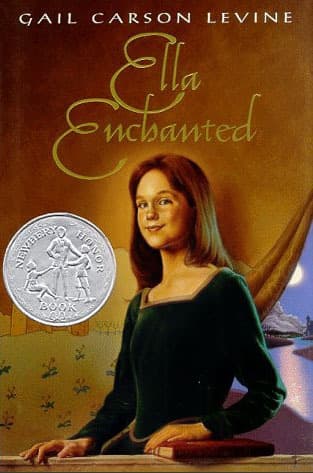
- Ella Enchanted
Gail Carson Levine
4.0 (387k) average on GoodreadsFantasyA strong-willed heroine navigating a magical curse and societal expectations in a fairytale setting.
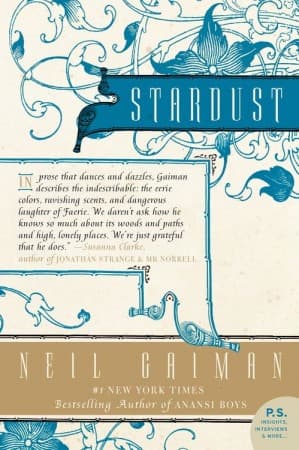
- Stardust
Neil Gaiman
4.1 (359k) average on GoodreadsFantasyA whimsical, romantic fantasy journey of self-discovery, though for a slightly older audience.
- A Court of Thorns and Roses
Sarah J. Maas
4.2 (476k) average on GoodreadsFantasyMaas's A Court of Thorns and Roses also retells 'Beauty and the Beast' but targets an older YA/New Adult demographic with significantly darker themes, explicit romance, and complex political intrigue. While Penelope maintains a lighter, more innocent tone centered on self-discovery and first love, Maas delves into trauma, war, and morally gray characters, building a sprawling fantasy world. Penelope is a straightforward romantic fantasy, whereas ACOTAR is an epic fantasy romance with a far more intricate plot and character motivations.
- Harry Potter and the Sorcerer's Stone
J.K. Rowling
4.5 (7M) average on GoodreadsFantasyRescued from a miserable life under the stairs, an orphaned boy discovers he's a wizard destined for a magical school, where he uncovers a dangerous secret tied to the dark wizard who murdered his parents.
- The Hunger Games
Suzanne Collins
4.3 (6.4M) average on GoodreadsFantasyIn a future where children fight to the death on live television, Katniss Everdeen volunteers for the arena, turning a death sentence into a fight for survival and a spark of rebellion.
- 1984
George Orwell
4.2 (3.1M) average on GoodreadsPoliticsIn a future where surveillance and thought control are absolute, a man's search for truth clashes with the Party, showing that hope can be a form of rebellion.




Enjoyed the summary?
A summary gives you the shape of the book. The book itself has the detail, the examples and the voice.
Find Penelope on AmazonAs an Amazon Associate, BookBrief earns from qualifying purchases. How we're funded