
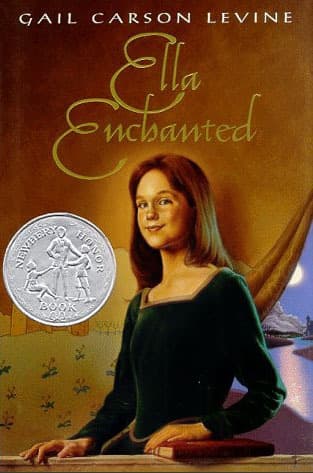
Synopsis
Covers the whole plot, including the ending.
- Difficulty
- Easy
- Pacing
- Moderate
- Mood
- Whimsical, Humorous, Heartwarming, Adventurous
- Read it if
- You enjoy clever fairy tale retellings with a strong, witty heroine and a dash of romance.
- Skip it if
- You prefer gritty, dark fantasy or stories without a clear 'happily ever after'.
Ella Enchanted Plot Summary
Covers the whole plot, including the ending.
The Gift of Obedience
Ella of Frell is born in Kyrria and 'blessed' by the fairy Lucinda with obedience. This curse forces Ella to obey any direct command. Her mother, Lady Eleanor, and the house fairy, Mandy, try to lessen the curse, teaching Ella to delay obeying or find loopholes. As a child, Ella struggles with the curse, often ending up in embarrassing or dangerous situations. Her mother keeps the curse a secret, fearing others would exploit Ella. This early period shows Ella's feisty nature, a direct reaction to her forced obedience, and her close bond with her mother and Mandy.
A Mother's Loss and a Father's Neglect
Ella's mother falls ill and dies. Her last words, 'Don't let anyone make you angry,' are twisted by the curse into a permanent inability to feel anger, adding to her problems. After her mother's death, Ella's father, Sir Peter, shows his true, greedy nature. Deep in debt, he sends Ella to finishing school to get her out of the way and save money. At school, Ella befriends Areida, a kind girl, and first meets Prince Charmont, known as Char. She also learns more about the world outside Frell, including ogres and other species.
Finishing School and a Princely Encounter
At finishing school, Ella does well in her studies and makes friends, especially with Areida. Her curse, though, causes problems; she is forced to give away her mother's locket to a demanding girl and must endure an embarrassing incident of forced dancing. During a royal visit, Ella has her first real meeting with Prince Char. Their early talks are full of witty banter and mutual interest, starting a connection. Ella finds Char charming and kind, but also sees the large social gap between them. Her time at school is a brief break before her father's money problems force her to return home, setting the stage for more hardship.
The Arrival of Stepmother and Stepsisters
Sir Peter's money troubles lead him to marry Dame Olga, a wealthy but cruel woman with two equally unpleasant daughters, Hattie and Olive. Ella's home life immediately worsens. Dame Olga and her daughters quickly discover Ella's curse through Hattie's observations. They begin to exploit it without mercy, forcing Ella to do demeaning chores, give up her possessions, and endure constant verbal abuse. Ella's only comfort is her secret letters with Prince Char, which she writes under the name 'A. L. L.' She tells him about her struggles, finding a sympathetic ear and a growing emotional connection. The abuse from her new family increases, making her desperate to escape.
The Quest for Lucinda
Driven to desperation by her stepfamily's cruelty, especially Hattie's command to end her friendship with Areida, Ella decides to run away and find Lucinda. She believes only the fairy who cursed her can undo it. Mandy, her house fairy, gives her enchanted boots for fast, safe travel. Ella begins a dangerous journey through the kingdom, meeting various magical creatures and challenges. Her quest is full of danger, including a close call with hungry ogres, from whom she is rescued by elves. This journey shows Ella changing from a passive victim to an active agent in her own destiny, displaying her courage and resourcefulness.
Encounters on the Road
During her travels, Ella meets many magical beings. Elves rescue her from ogres and offer her shelter and friendship. She also meets gentle giants and gnomes, learning about their customs. These encounters broaden Ella's understanding of the world and its people, changing her ideas about different races. The elves, in particular, become loyal allies, helping her navigate the landscape and offering advice. Despite the kindness she receives, Ella remains focused on her goal: finding Lucinda and breaking the curse that controls her life.
Reunion with Char and the Royal Ball
Ella eventually finds Lucinda, but the fairy, unaware of the pain she has caused, refuses to lift the curse, insisting it is a gift. Disheartened, Ella returns to her father's house. Soon after, Prince Char returns from his travels, and royal balls are announced. Mandy uses her magic to create a beautiful gown and glass slippers for Ella, allowing her to attend the balls anonymously. Ella dances with Char, their connection clear, but she must flee each night before midnight, fearing her stepfamily's anger and the discovery of her curse. During one escape, she loses a glass slipper, which Char finds, increasing his search for the mysterious maiden.
The Slipper and the Search
Char, captivated by the mysterious woman from the balls, searches the kingdom for the owner of the glass slipper. His quest brings him to Ella's home, where Dame Olga and her daughters try desperately to make the slipper fit, even using violence. Ella, confined to the kitchen by her stepfamily, is forbidden from trying on the slipper. However, Char, recognizing Ella's wit and spirit from their letters, insists on seeing every woman in the house. Mandy subtly helps, ensuring Ella gets a chance to try on the slipper, which fits perfectly. This moment confirms Ella's identity to Char, but also brings her curse to the forefront of her mind.
The Proposal and the Curse's Climax
Char, overjoyed at finding Ella, proposes marriage. However, Dame Olga, full of jealousy and malice, commands Ella to refuse his proposal. The curse forces Ella to reject him, devastating Char and herself. Realizing the danger her curse poses, especially to Char and the kingdom if she were queen, Ella makes a desperate decision. She plans to leave Char and disappear, believing it's the only way to protect him. This inner conflict between her love for Char and her inability to control her actions shows the curse's power and her deep despair. She knows she cannot marry him while the curse holds her captive.
Breaking the Curse
As Ella tries to leave, Char confronts her, demanding an explanation. Dame Olga, seeing this, commands Ella to kill Char. Faced with the ultimate evil of the command, and the deep love she feels for Char, Ella's will finally breaks through the curse. She refuses to obey, her sheer determination and love overriding Lucinda's magic. The curse shatters, freeing Ella. Overjoyed and finally in control of her own destiny, Ella accepts Char's proposal. The experience strengthens their bond, built on mutual respect and understanding. They marry, and Ella becomes queen, ruling justly and compassionately.
Ella Enchanted Characters
Ella of Frell
Protagonist
A feisty and intelligent young woman cursed with obedience.
Ella is the protagonist of the story, cursed at birth with absolute obedience. Despite this affliction, she possesses a sharp wit, a strong will, and an unyielding desire for freedom. She is highly intelligent, resourceful, and compassionate, often putting others' needs before her own, even when it means personal sacrifice. Her inability to feel anger, a side effect of her mother's dying words under the curse, adds a layer of complexity to her character, forcing her to process injustice through logic and determination rather than rage.
Relationships: Lucinda (The fairy who cursed her); Lady Eleanor (Her loving mother); Sir Peter (Her greedy and neglectful father); Mandy (Her fairy godmother/cook and confidante); Prince Charmont (Char) (Her romantic interest and eventual husband); Dame Olga (Her cruel stepmother); Hattie (Her manipulative stepsister); Olive (Her dim-witted stepsister); Areida (Her best friend)
Prince Charmont (Char)
Love Interest / Supporting
The charming and intelligent prince who falls in love with Ella.
Prince Charmont, known as Char, is the heir to the throne of Kyrria. He is depicted as kind, intelligent, adventurous, and possessing a strong sense of justice. Unlike many fairy tale princes, he is not merely a handsome figurehead; he is actively involved in the kingdom's affairs and genuinely cares for his people. His wit and humor are a perfect match for Ella's, and he values intelligence and character over superficial beauty. He is persistent in his pursuit of the mysterious maiden from the balls and is deeply hurt by Ella's forced rejection, but his love and understanding ultimately help her break the curse.
Relationships: Ella of Frell (His romantic interest and eventual wife); King Jerrold (His father); Queen Meridith (His mother)
Mandy
Supporting
Ella's loyal house fairy and surrogate mother figure.
Mandy is Ella's cook and a secret fairy, though she rarely uses her magic openly. She serves as Ella's confidante, protector, and surrogate mother after Lady Eleanor's death. Mandy is wise, practical, and fiercely loyal to Ella, using her limited magic subtly to aid Ella when truly necessary, such as providing the enchanted boots and the ball gown. She understands the nuances of Lucinda's curse and teaches Ella strategies to cope with it. Her quiet strength and unwavering support are crucial for Ella's survival and her eventual triumph over the curse.
Relationships: Ella of Frell (Confidante, guardian, and surrogate mother); Lady Eleanor (Friend and employer)
Lucinda
Antagonist (unwitting)
The imprudent fairy who curses Ella with obedience.
Lucinda is a fairy who believes her 'gifts' are always beneficial, regardless of the recipient's wishes. She is well-meaning but utterly oblivious to the negative consequences of her actions, particularly the 'gift' of obedience she bestows upon Ella. She is powerful but lacks wisdom and empathy, refusing to reverse the curse because she genuinely believes it is a blessing. Her character embodies the dangers of good intentions without understanding, serving as the catalyst for Ella's struggles and quest.
Relationships: Ella of Frell (The recipient of her curse); Other fairies (Her peers, often disapproving of her methods)
Dame Olga
Antagonist
Ella's cruel, greedy, and manipulative stepmother.
Dame Olga is Ella's stepmother, a wealthy but deeply unpleasant woman driven by greed and social ambition. She is manipulative, cruel, and entirely devoid of empathy. Upon discovering Ella's curse, she and her daughters exploit it relentlessly, forcing Ella into servitude and humiliation. She views Ella as an obstacle to her daughters' advancement and is determined to see one of them marry Char. Her final command to Ella to kill Char is the ultimate act of malice and serves as the catalyst for the curse's breaking.
Relationships: Ella of Frell (Her stepdaughter, whom she abuses); Hattie (Her favored daughter); Olive (Her other daughter); Sir Peter (Her husband, whom she dominates)
Hattie
Antagonist
Ella's cunning and cruel stepsister.
Hattie is Dame Olga's eldest daughter and Ella's most direct tormentor among the stepsisters. She is manipulative, cunning, and quick to discover and exploit Ella's curse. Hattie delights in making Ella's life miserable, issuing demeaning commands and constantly trying to undermine her. She is obsessed with social status and marrying Prince Char, seeing Ella as her main rival. Her cruelty is calculated and self-serving, making her a formidable adversary for Ella.
Relationships: Ella of Frell (Her stepsister, whom she torments); Dame Olga (Her mother); Olive (Her sister)
Olive
Antagonist
Ella's dim-witted and gluttonous stepsister.
Olive is Dame Olga's younger daughter and Hattie's less intelligent, but equally unpleasant, sister. She is gluttonous, vain, and easily led by Hattie. While not as cunning as her sister, Olive participates in the torment of Ella, often out of thoughtlessness or a desire to follow Hattie's lead. Her primary concerns are food and her appearance, and she lacks the intellectual capacity to be truly manipulative on her own.
Relationships: Ella of Frell (Her stepsister, whom she abuses); Dame Olga (Her mother); Hattie (Her sister)
Lady Eleanor
Supporting / Mentioned
Ella's loving and protective mother.
Lady Eleanor is Ella's kind and devoted mother. She is the first to understand the severity of Lucinda's curse and spends years trying to protect Ella from its effects, teaching her strategies to delay obedience or find loopholes. Her death is a pivotal moment in the story, plunging Ella into the harsh reality of her father's neglect and her stepfamily's cruelty. Her final words, 'Don't let anyone make you angry,' inadvertently add another layer to Ella's curse, preventing her from experiencing that emotion. Her memory and the lessons she taught Ella continue to guide the protagonist.
Relationships: Ella of Frell (Her daughter); Mandy (Her friend and servant); Sir Peter (Her husband)
Sir Peter
Supporting
Ella's avaricious and neglectful father.
Sir Peter is Ella's father, a man characterized by his greed and self-interest. After his wife's death, he quickly reveals his true nature, primarily concerned with his financial woes and social standing. He is largely absent from Ella's life, sending her away to finishing school and later marrying Dame Olga for her wealth. He is oblivious to the abuse Ella suffers at the hands of her stepfamily and offers her no protection or comfort. His neglect forces Ella to rely on her own wit and courage to navigate her difficult circumstances.
Relationships: Ella of Frell (His daughter, whom he neglects); Lady Eleanor (His deceased wife); Dame Olga (His second wife)
Areida
Supporting
Ella's loyal friend from finishing school.
Areida is Ella's first true friend, whom she meets at finishing school. She is kind, spirited, and loyal. Their friendship is a source of joy and normalcy for Ella, providing a stark contrast to her difficult home life. Hattie's command forcing Ella to end their friendship is a major turning point, pushing Ella to seek out Lucinda. Despite the forced separation, Areida's unwavering belief in Ella and their shared bond remain important to Ella.
Relationships: Ella of Frell (Her best friend)
Ella Enchanted Themes
The Nature of Freedom and Self-Determination
The main theme is Ella's struggle for freedom from her obedience curse. The story explores what it means to be truly free, not just physically, but in thought and action. Ella's feisty spirit and rebellion against the curse highlight the human desire for autonomy. Even when forced to obey, her inner resistance and quest to break the curse show her commitment to self-determination. Her journey represents breaking free from expectations and finding one's own voice, ending with her defiant act of choosing love over forced obedience, which shatters the curse.
“Instead of making me docile, Lucinda's curse made a rebel of me. Or perhaps I was that way naturally.”
Love as a Liberating Force
Love, especially the romantic love between Ella and Char, is a strong force that can overcome great obstacles. Their relationship builds on mutual respect, wit, and real understanding, differing from the superficiality often found in traditional fairy tales. Ella's deep love for Char, and her inability to harm him even under the curse, gives her the strength to defy Lucinda's magic. This theme suggests that true love empowers individuals to go beyond their limits and act according to their deepest desires, rather than binding them further.
“I would not. I could not. I would not marry him. I would not kill him. I would not marry him. I would not kill him. I would not marry him. I would not kill him. My heart pounded, and my head swam. I would not.”
The Power of Words and Language
The obedience curse itself comes from spoken commands, showing the power of words. Ella constantly looks for loopholes and uses clever phrasing to lessen the curse's effects, showing language's flexibility. The story also explores how words can hurt (the stepfamily's commands) and connect (Ella's letters with Char). The curse breaks when Ella's will overrides a spoken command, proving that inner conviction can triumph over external linguistic control. This theme also touches on the importance of clear communication and the dangers of misunderstandings, as seen with Lucinda's 'gift'.
“I hated the words, and I hated my mouth for speaking them. I hated Lucinda for giving me the curse. I hated myself for being unable to defy it.”
The Subversion of Fairy Tale Tropes
Gail Carson Levine intentionally changes many classic Cinderella ideas, offering a fresh view of the traditional story. Ella is not a passive victim waiting for a prince; she actively seeks her freedom and even saves the prince herself. The 'fairy godmother' (Mandy) is a practical, subtle figure, and the 'evil stepmother' and stepsisters are given more depth in their cruelty. The 'gift' is a curse, the glass slipper helps reunite them rather than saving her, and the 'happily ever after' is earned through Ella's own courage and agency. This theme challenges common gender roles and story expectations in children's literature.
“A gift? It's a curse! A curse! And I hate it!”
The Importance of Inner Strength and Wit
Ella's main tools for survival and success are her intelligence, wit, and inner strength. Despite being physically controlled by the curse, her mind stays free and sharp. She uses her cleverness to find loopholes in commands, write engaging letters to Char, and navigate dangerous situations. Her resilience in the face of constant abuse from her stepfamily, and her determination to undertake a dangerous quest, highlight the power of character over circumstance. The story supports the idea that true strength comes from within, rather than from magic or outside forces.
“I was not a lady, not a princess, not even a human being. I was a puppet, a toy, a thing of no consequence.”
Plot Devices & Literary Techniques
The Curse of Obedience
The central magical affliction that drives the plot.
The curse of obedience, bestowed upon Ella by Lucinda, forces her to obey any direct command. This device is the primary source of conflict, shaping Ella's character, her relationships, and her quest. It acts as an external antagonist, preventing her from living freely and placing her in constant peril. The curse not only creates physical constraints but also psychological distress, forcing Ella to develop immense inner strength and resourcefulness to navigate her life. Its ultimate breaking is the climax of the story, symbolizing Ella's triumph over external control.
The Enchanted Letters
Ella's secret correspondence with Prince Char.
Ella's secret exchange of letters with Prince Char, under the pseudonym 'A. L. L.', serves as a crucial plot device for developing their romantic relationship. It allows them to connect intellectually and emotionally, forming a bond based on shared wit and understanding, rather than superficial appearances. These letters provide Ella with a much-needed outlet for her thoughts and feelings, and they give Char insight into the true character of the woman he eventually seeks. The letters highlight the importance of communication and genuine connection in their relationship, setting it apart from typical fairy tale romances.
The Glass Slipper
A classic fairy tale element used to identify Ella.
The glass slipper functions as a classic fairy tale motif that Gail Carson Levine cleverly recontextualizes. While it still serves as the means by which Char identifies Ella after the balls, its significance is subtly shifted. It is not a symbol of Ella's salvation, but rather a tool for Char to find the woman he already loves based on her character, revealed through their letters and interactions. The slipper's fit confirms her identity, but it is Ella's wit and courage, not the slipper itself, that ultimately secure her destiny. It's a nod to the original story, while empowering Ella's agency.
Mandy's Subtle Magic
Limited magical interventions that aid Ella.
Mandy's magic is a plot device that provides crucial, but limited, assistance to Ella. Unlike a traditional fairy godmother who solves all problems, Mandy's magic is subtle and often requires Ella's own effort. Her enchanted boots facilitate Ella's journey to find Lucinda, and her creation of the ball gown and glass slippers enables Ella to attend the royal balls. These magical interventions are never a complete solution; they merely provide opportunities for Ella to act on her own behalf, reinforcing the theme of self-reliance and ensuring that Ella's achievements are her own.
Ella Enchanted Quotes
“I was born with the curse of obedience.”
“Self-pity is a sin.”
“I can make you do anything, you know.”
“I don't need a prince to rescue me. I can rescue myself.”
“Maybe it's not the gift that's good or bad, but the person who has it.”
“If I obeyed every order, I was a puppet. If I refused, I was a traitor to myself.”
“Love is not a gift, but a choice.”
“I was angry at Lucinda, but mostly I was angry at myself for not finding a way out.”
“The worst part of my curse was not what I was forced to do, but what I was prevented from doing.”
“It's not fair that one person's happiness should depend on another's misery.”
“Sometimes the best way to get rid of a monster is to stop feeding it.”
“Maybe the secret to breaking a curse is not to break it at all, but to live with it, and make it your own.”
“I wasn't a princess; I was just Ella.”
“Kindness is a choice, not a gift.”
Quiz
10 questions on the plot and the characters. Each answer comes with a short explanation.
Question 1
What 'gift' does the fairy Lucinda bestow upon Ella at birth?
- The gift of beauty
- The gift of obedience
- The gift of song
- The gift of invisibility
Show answer
B. The gift of obedience Lucinda, an imprudent young fairy, gives Ella the 'gift' of obedience, which forces her to comply with any direct command.
Question 2
How does Ella's curse of obedience affect her personality?
- It makes her docile and compliant.
- It makes her shy and withdrawn.
- It makes a rebel of her.
- It makes her overly trusting of others.
Show answer
C. It makes a rebel of her. The text states, 'Instead of making me docile, Lucinda's curse made a rebel of me. Or perhaps I was that way naturally.'
Question 3
What is Ella's primary goal after her mother's death and being left with her stepfamily?
- To marry a wealthy lord.
- To become a famous singer.
- To track down Lucinda and undo the curse.
- To run away and join a circus.
Show answer
C. To track down Lucinda and undo the curse. Ella sets out on a quest for freedom and self-discovery, specifically trying to track down Lucinda to undo the curse.
Question 4
Which of the following creatures does Ella NOT encounter during her quest?
- Ogres
- Elves
- Dragons
- Giants (implied by 'fending off ogres')
Show answer
C. Dragons The description mentions 'fending off ogres, befriending elves,' but does not mention dragons.
Question 5
According to the description, what is notable about Ella's relationship with the prince?
- It is one-sided, with Ella doing all the pursuing.
- It is based on humor and mutual respect.
- It is a power struggle, with the prince always in control.
- It is purely transactional, for social gain.
Show answer
B. It is based on humor and mutual respect. The description highlights that their 'relationship with the prince is balanced and based on humor and mutual respect.'
Question 6
What traditional fairy tale elements are mentioned as being present in 'Ella Enchanted'?
- A talking animal sidekick and a magic lamp.
- A pumpkin coach, a glass slipper, and a happily ever after.
- A magic beanstalk and a golden harp.
- A poisoned apple and a sleeping curse.
Show answer
B. A pumpkin coach, a glass slipper, and a happily ever after. The text explicitly states: 'Yes, there is a pumpkin coach, a glass slipper, and a happily ever after.'
Question 7
How does 'Ella Enchanted' deviate from traditional female roles in fairy tales, according to the description?
- Ella passively waits for a prince to rescue her.
- Ella takes matters into her own hands with ambition and verve.
- Ella relies solely on magic to solve her problems.
- Ella prioritizes wealth and status above all else.
Show answer
B. Ella takes matters into her own hands with ambition and verve. The description states that Ella 'takes matters in her own hands with ambition and verve,' a deviation from traditional passive female roles.
Question 8
What award has 'Ella Enchanted' received?
- A Caldecott Medal
- A Newbery Honor
- A Printz Award
- A Coretta Scott King Award
Show answer
B. A Newbery Honor The text explicitly mentions: 'Ella Enchanted has won many well-deserved awards, including a Newbery Honor.'
Question 9
What is the primary theme explored by Gail Carson Levine in her examination of traditional female roles through Ella's character?
- The importance of adhering to societal expectations.
- The triumph of individual agency and self-determination against imposed limitations.
- The inevitable failure of rebellion against authority.
- The necessity of magic to overcome all challenges.
Show answer
B. The triumph of individual agency and self-determination against imposed limitations. Ella's struggle against her curse and her quest for freedom emphasize the theme of individual agency and self-determination, especially as she 'takes matters in her own hands.'
Question 10
Who ultimately rescues the prince in 'Ella Enchanted', according to the provided text?
- A powerful fairy godmother.
- His loyal royal guards.
- Ella herself.
- A magical creature from the forest.
Show answer
C. Ella herself. The description states, 'in fact, it is she who ultimately rescues him,' referring to Ella.
Ella Enchanted FAQ
What is the central conflict Ella faces due to Lucinda's 'gift'?
Ella's central conflict stems from the fairy Lucinda's 'gift' of obedience, which forces her to comply with any direct command. This curse makes her a slave to others' wills, endangering her at every turn, especially when her stepmother and stepsisters discover her affliction and exploit it for their cruel amusement.
How does Ella's personality defy the typical 'docile' expectations of her curse?
Despite being forced to obey, Ella's inherent feistiness and intelligence make her a rebel. Instead of succumbing to docility, she actively seeks ways to circumvent commands, verbally resist, or escape situations, demonstrating remarkable agency and a fierce desire for freedom from her affliction.
Who are the key figures in Ella's life after her mother's death?
After her mother's death, Ella is left with her avaricious father, Sir Peter, who quickly remarries Dame Olga. This brings her into contact with her cruel stepsisters, Hattie and Olive, who relentlessly abuse her curse, and later, Prince Char, with whom she develops a deep and respectful relationship.
What is Ella's primary goal throughout the story, and how does she pursue it?
Ella's primary goal is to break Lucinda's curse of obedience. She embarks on a perilous quest to find Lucinda, traveling through various lands, encountering ogres and giants, and making allies like the elves, all while trying to maintain her secret and navigate her increasingly complicated life.
How does the story subvert the traditional Cinderella trope of the prince rescuing the princess?
In a significant subversion, Ella is the one who ultimately rescues Prince Char. She breaks her curse by choosing to disobey a command that would harm him, demonstrating her self-sacrifice and agency. This act of defiance saves Char from being killed by her own hand and solidifies their partnership based on mutual respect.
What is the significance of the names 'Ella' and 'Cinderella' in the story?
Ella is her given name, representing her true self. The name 'Cinderella' is a cruel nickname given to her by her stepsisters, particularly Hattie, after Ella is forced to sit in the ashes by the hearth. This name symbolizes her degradation and forced servitude under their command.
How does Ella's secret identity as 'Lela' influence her relationship with Prince Char?
Ella uses the pseudonym 'Lela' in her letters to Prince Char, allowing her to express her true thoughts, wit, and intelligence without the constraints of her curse or her difficult home life. This secret correspondence forms the foundation of their intellectual and emotional bond before they ever meet in person.
What role do the giants and elves play in Ella's journey?
The giants initially pose a threat, as Ella is commanded to sing for them, but they also provide a temporary refuge and a means of travel. The elves, particularly Slannen, become allies and friends, offering Ella advice, protection, and a place to stay, aiding her in her quest to find Lucinda.
How does Ella's mother's locket serve as a plot device and symbol?
Ella's mother's locket contains a miniature portrait of her mother and becomes a cherished keepsake. It serves as a plot device when it's stolen by Hattie, forcing Ella to confront her stepsister and leading to further abuse of her curse, symbolizing the loss of her past comfort and the escalating cruelty.
How does Ella's curse force her to develop a strong sense of self-awareness and inner resilience?
The curse constantly challenges Ella's autonomy, forcing her to be acutely aware of her own thoughts and desires versus her compelled actions. This internal struggle hones her mental fortitude, making her incredibly resourceful, strategic, and resilient as she constantly seeks loopholes and maintains her inner identity despite outward obedience.
Discuss the psychological impact of being forced to act against one's will, as experienced by Ella.
Ella experiences profound psychological distress from the curse, feeling a constant battle between her mind and body. She struggles with guilt and frustration over actions she's forced to perform, such as being rude or harming herself, leading to feelings of helplessness and a desperate longing for control over her own life and choices.
How does Ella's relationship with Prince Char reflect a healthier, more egalitarian romantic dynamic?
Their relationship is built on mutual respect, shared humor, and intellectual connection through their letters as Lela and Char. Unlike typical fairy tale romances, Ella doesn't simply wait to be rescued; she actively contributes to their dynamic, challenges Char, and ultimately saves him, creating a partnership of equals.
How does the author use Ella's internal monologue to convey her struggle and wit?
Ella's internal monologue is crucial, providing direct insight into her thoughts, frustrations, and clever strategies to circumvent the curse. It reveals her sharp wit, her emotional pain, and her unwavering determination, allowing readers to deeply connect with her inner world and appreciate her resilience.
What makes Ella's ultimate act of defiance against her curse so powerful and symbolic?
Ella's final defiance, choosing to disobey the command to hurt Char, is powerful because it's an act of self-sacrifice for love. It signifies her reclaiming complete agency, breaking the curse not through magical intervention but through her own will and the strength of her love, making her freedom earned and deeply personal.
How does the novel reinterpret the concept of 'gifts' in fairy tales, particularly Lucinda's?
The novel critically reinterprets 'gifts' by showing Lucinda's 'gift' of obedience as a curse, highlighting how well-intentioned but thoughtless magic can be harmful. It challenges the idea that all magical endowments are beneficial, emphasizing that true gifts come from within or are earned, not arbitrarily bestowed.
In what ways does 'Ella Enchanted' critique traditional gender roles prevalent in classic fairy tales?
The book critiques traditional gender roles by presenting Ella as intelligent, proactive, and ultimately the rescuer, rather than a passive victim. Her relationship with Char is based on equality, and she actively seeks her own freedom and destiny, challenging the stereotype of women needing a prince to solve their problems.
Discuss the moral ambiguity of Lucinda's character and her 'gifts'.
Lucinda is morally ambiguous because she genuinely believes she is bestowing good 'gifts,' yet her lack of foresight and understanding of human nature causes immense suffering. Her character highlights the dangers of power without wisdom and the subjective nature of what constitutes a 'gift,' forcing Ella to confront the consequences of others' well-meaning but harmful actions.
How does the setting of Kyrria contribute to the story's fairy tale ambiance while also allowing for unique twists?
Kyrria provides a classic fairy tale backdrop with its castles, forests, ogres, and giants, grounding the story in familiar fantasy. However, it also allows for unique twists by introducing distinct cultural elements, diverse magical creatures, and a political structure that creates opportunities for Ella's adventures and Char's royal duties.
About the author

Gail Carson Levine is an American author known for her contributions to children's and young adult literature. She is best recognized for her novels such as "Ella Enchanted," a retelling of the Cinderella story, "The Two Princesses of Bamarre," which features themes of bravery and friendship, "Fairest," a unique take on beauty and identity, and "Cinderellis and the Glass Hill," a whimsical twist on classic fairy tales.
Similar books
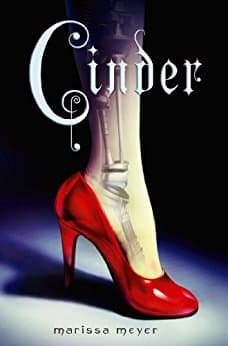
- Cinder
Marissa Meyer
4.1 (683k) average on GoodreadsFantasyA science fiction retelling of Cinderella with a strong female protagonist facing unique challenges.
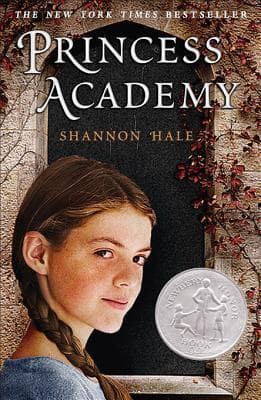
- Princess Academy
Shannon Hale
4.0 (105k) average on GoodreadsFantasyFeatures a young girl from humble beginnings who finds her voice and strength in a royal setting.
- Harry Potter and the Sorcerer's Stone
J.K. Rowling
4.5 (7M) average on GoodreadsFantasyRescued from a miserable life under the stairs, an orphaned boy discovers he's a wizard destined for a magical school, where he uncovers a dangerous secret tied to the dark wizard who murdered his parents.
- The Hunger Games
Suzanne Collins
4.3 (6.4M) average on GoodreadsFantasyIn a future where children fight to the death on live television, Katniss Everdeen volunteers for the arena, turning a death sentence into a fight for survival and a spark of rebellion.
- 1984
George Orwell
4.2 (3.1M) average on GoodreadsPoliticsIn a future where surveillance and thought control are absolute, a man's search for truth clashes with the Party, showing that hope can be a form of rebellion.
- Divergent
Veronica Roth
4.2 (2.9M) average on GoodreadsFantasyIn a society divided by virtues, a sixteen-year-old's difference from the norm starts a rebellion that threatens her world.




Enjoyed the summary?
A summary gives you the shape of the book. The book itself has the detail, the examples and the voice.
Find Ella Enchanted on AmazonAs an Amazon Associate, BookBrief earns from qualifying purchases. How we're funded