
Synopsis
Covers the whole plot, including the ending.
- Difficulty
- Medium
- Pacing
- Moderate
- Mood
- Melancholy, Suspenseful, Dark, Introspective
- Read it if
- You enjoy psychological dramas, explorations of family secrets, and character studies of jealousy and obsession.
- Skip it if
- You prefer fast-paced plots with clear heroes and villains, or dislike stories with themes of illegitimacy and moral ambiguity.
Pierre and Jean Plot Summary
Covers the whole plot, including the ending.
A Family's Idyllic Life and Emerging Rivalry
The Roland family, made up of former Parisian jewelers Monsieur and Madame Roland, and their two adult sons, Pierre and Jean, live a comfortable, retired life in Le Havre. Pierre, the older son, is a new doctor. He is thin, dark, and nervous, with big goals and quick discouragement. Jean, five years younger, is plump, fair, and calm. He is a new law graduate. Both sons are home after their studies and thinking about their futures, including settling down. Both also subtly want the attention of the charming young widow, Madame Rosémilly. During a family fishing trip with Madame Rosémilly, the brothers have a hard rowing competition. It is for sport, but it is also clearly fueled by an unspoken rivalry for the widow's affections. This shows the competition under their seemingly loving sibling relationship.
Unexpected Inheritance and Pierre's Rising Jealousy
After the fishing trip, the Roland family gets surprising news: Monsieur Maréchal, a rich old family friend who had recently died in Paris, has left his entire fortune to Jean. The news gets different reactions; Monsieur and Madame Roland are happy for Jean, and Jean himself is surprised but pleased. Pierre, however, immediately feels intense jealousy. While he congratulates his brother, the unexpected and unequal distribution of Maréchal's wealth instantly creates bitterness in him. This shatters the fragile peace of their family and plants the first seeds of suspicion in his mind.
Seeds of Doubt and Obsessive Suspicion
Pierre's jealousy quickly turns into obsessive suspicion, fueled by comments from others. The local pharmacist, Marowsko, hears the news and says the inheritance 'will not look good,' suggesting something wrong. Later, a girl from a brewery says Jean 'looks so little like you,' referring to Pierre and his father. These comments, with Pierre's existing resentment, start a terrifying thought in his mind: What if Jean is not his father's son, but Monsieur Maréchal's son? This possibility starts to consume Pierre, disturbing his peace and making him question everything about his family.
Pierre's Tormented Search for Truth
Troubled by his suspicions, Pierre cannot enjoy a happy family meal. His thoughts are on the possible truth. He goes out to sea, looking for comfort, but the 'suspicions raised by the remarks of his relatives' continue to bother him. He cannot understand why Maréchal, whom he had known since childhood, would leave his entire fortune only to Jean. Forced to return home by a thick fog, Pierre starts a 'careful investigation' to solve the mystery. He remembers that Maréchal's portrait was taken off the wall shortly after Jean's birth. This seemingly small detail now seems important. His mind races, putting together bits of memory.
Confrontation and Unbearable Certainty
Pierre asks his mother directly about Maréchal's portrait, subtly letting her know he suspects something. He hopes a trip to Trouville might distract him, but it only makes his suspicions stronger. His mother's vague and upset reaction about the portrait, along with his sudden view of a strong resemblance between Maréchal and Jean, changes his nagging doubt into a 'certainty.' He is now sure that Jean is Maréchal's illegitimate son. This truth fills him with anger and a deep sense of betrayal. The knowledge becomes a heavy burden, isolating him within his family.
Pierre's Desperation and Confession to Madame Rosémilly
Unhappy and tormented by the secret he carries, and by the regret and shame he feels for his suspicions, Pierre becomes more agitated. He torments his mother with his unspoken accusations, but she stays silent. During a trip to the beach, in an emotional moment, Pierre tells Madame Rosémilly he loves her. She does not ignore his advances, suggesting a possible romantic connection. This briefly offers a glimmer of hope or distraction from his inner turmoil, even as his family secret still weighs heavily on him.
The Brothers' Quarrel and Pierre's Revelation
Jean, now financially secure from Maréchal's inheritance, moves into a new, more luxurious apartment. This further fuels Pierre's already strong jealousy and resentment. The tension between the brothers finally breaks into a heated argument. In a fit of uncontrolled anger and bitterness, Pierre tells the devastating truth he has found. He tells Jean, 'You are the son of a man who left you his fortune,' directly implying Jean's illegitimacy. Their mother, in an adjacent room, hears this 'horrible confession.' This sets the stage for a family crisis and the irreversible shattering of their lives.
Madame Roland's Confession and Reconciliation with Jean
After Pierre's revelation, Madame Roland, faced with the truth, confirms the long-held secret to Jean. She admits, 'You are not Roland's son.' Devastated and ashamed, she first wants to leave forever, unable to face her family or the past. However, Jean, despite the shock and pain of learning his true parentage, begs her to stay. In a poignant moment, mother and son reconcile. Jean accepts his mother and her past, showing a deep capacity for forgiveness and understanding, even as the family dynamic is changed forever.
Pierre's Departure and a New Life
With the truth out and the family changed, Pierre decides he cannot stay. The weight of his discovery, his role in exposing the secret, and the emotional turmoil are too much for him. He decides to leave Le Havre and his family. He wants a complete break and a fresh start, so he gets a job as a doctor on a transatlantic liner. This decision shows his acceptance of a solitary future. He chooses to escape the stifling atmosphere of his family's shattered reality and start a 'new life of a wandering prisoner,' as the narrator describes it, meaning a self-imposed exile.
Farewell and the New Family Dynamic
In the last chapter, the Roland family, including Monsieur Roland, who still does not know the tragedy that has happened, gathers at the port. This group, like the first scene of family unity, is now missing Pierre. They are all there to say goodbye to 'La Lorraine,' the ship on which Pierre is starting his new life. His departure means a permanent change to the family structure. Monsieur Roland remains unaware, but the remaining family members, Madame Roland and Jean, have a new, though painful, understanding and bond, forever marked by the secret revealed and the son who chose to leave.
Pierre and Jean Characters
Pierre Roland
Protagonist
The elder, ambitious, and intensely jealous son who uncovers a family secret.
Pierre is the elder son, a recently qualified doctor, characterized by his dark hair, thin build, and nervous temperament. He is ambitious but prone to discouragement and plagued by a deep-seated insecurity. His love for his mother is possessive, and his pride is easily wounded. The inheritance left to Jean ignites a profound jealousy in him, which quickly transforms into an obsessive suspicion about his brother's parentage. Driven by a relentless need to uncover the truth, he becomes a detective within his own family, ultimately exposing a devastating secret and destroying his own peace. He is proud, observant, and ultimately self-destructive in his pursuit of truth.
Relationships: Jean Roland (Brother, rival, subject of his jealousy); Madame Roland (Mother, object of his possessive love and later, his accusations); Monsieur Roland (Father, whom he resents for his perceived favoritism towards Jean); Madame Rosémilly (Romantic interest, potential escape)
Jean Roland
Protagonist
The younger, placid son whose unexpected inheritance unravels the family's secrets.
Jean is the younger son, a newly graduated lawyer, described as fair, plump, and placid. He is generally good-natured and less ambitious than Pierre, content with a more comfortable existence. His unexpected inheritance from Monsieur Maréchal propels him into a central role in the family drama, making him the unwitting catalyst for Pierre's suspicions. Despite the shocking revelation of his true parentage, Jean demonstrates a remarkable capacity for forgiveness and understanding, ultimately reconciling with his mother and adapting to his new reality. He is characterized by his calm demeanor and ability to move forward.
Relationships: Pierre Roland (Brother, rival, target of Pierre's anger); Madame Roland (Mother, later revealed to be his biological mother through Maréchal); Monsieur Roland (Legally his father, but not biologically); Madame Rosémilly (Romantic interest)
Madame Roland
Supporting
The mother of Pierre and Jean, who harbors a long-held secret about her younger son's paternity.
Madame Roland is the matriarch of the family, a woman who has successfully maintained a façade of domestic bliss for years. She is deeply affectionate towards both her sons, though she secretly favors Jean due to his true parentage. Her past affair with Monsieur Maréchal is the central secret of the novel. When Pierre begins to uncover the truth, she becomes increasingly agitated and withdrawn, struggling to protect her secret and her family's reputation. Ultimately, she is forced to confess, revealing her deep love and regret. She is portrayed as a sympathetic figure, a victim of her past choices and societal expectations.
Relationships: Pierre Roland (Son, her accuser); Jean Roland (Son, product of her secret affair, whom she ultimately confides in); Monsieur Roland (Husband, whom she deceived); Monsieur Maréchal (Former lover, Jean's biological father)
Monsieur Roland
Supporting
The retired jeweler and patriarch, blissfully unaware of the family's deep-seated secrets.
Monsieur Roland is the retired jeweler, a jovial and somewhat naive patriarch. He is content with his comfortable life in Le Havre and his two sons. He is utterly oblivious to the complex emotional undercurrents and the profound secret that defines his family. His character serves as a stark contrast to the internal turmoil experienced by his wife and sons. He genuinely believes both sons are his and is proud of their achievements, remaining unaware of the tragedy unfolding around him even as Pierre departs. His ignorance highlights the isolation of the other characters and the devastating nature of the secret.
Relationships: Pierre Roland (Son, whom he believes to be his); Jean Roland (Son, whom he believes to be his); Madame Roland (Wife, whose secret he never discovers)
Madame Rosémilly
Supporting
A charming young widow, pursued by both brothers, who serves as a catalyst for their rivalry.
Madame Rosémilly is a young, beautiful, and wealthy widow who is a frequent guest of the Roland family. Both Pierre and Jean are attracted to her, and their unspoken rivalry for her affection is an early indicator of their competitive relationship. She is intelligent and perceptive, seemingly aware of the brothers' competition, and plays a role in subtly fueling it. Pierre later declares his feelings for her, and she shows a degree of interest, offering a potential escape for him. Her presence highlights the social aspirations and romantic desires of the brothers, and her choice could symbolize a future for either of them.
Relationships: Pierre Roland (Object of his affection); Jean Roland (Object of his affection)
Monsieur Maréchal
Mentioned
The deceased family friend whose will reveals a long-kept secret and sets the plot in motion.
Monsieur Maréchal is a wealthy, old family friend whose death and will serve as the inciting incident of the novel. Though he is never seen alive in the narrative, his presence is felt throughout. He had a long-standing affair with Madame Roland and is Jean's biological father. His decision to leave his entire fortune to Jean, bypassing Pierre and the Roland family, is what triggers Pierre's intense jealousy and subsequent investigation. His portrait, initially a benign object, becomes a key piece of evidence in Pierre's unraveling of the truth. He represents the hidden past and its enduring impact.
Relationships: Madame Roland (Former lover); Jean Roland (Biological father); The Roland Family (Old family friend)
Marowsko
Mentioned
The pharmacist whose casual remark fuels Pierre's initial suspicions.
Marowsko is the local pharmacist who, upon hearing about Jean's inheritance, makes a seemingly innocent but loaded comment to Pierre: 'it will not look good.' This remark, coupled with Pierre's already burgeoning jealousy, serves as one of the first explicit triggers that pushes Pierre's thoughts towards suspicion and the idea of illegitimacy. He represents the voice of public gossip and insinuation, which, however subtle, can have a profound impact on a mind already predisposed to doubt.
Relationships: Pierre Roland (Acquaintance, unwitting catalyst for Pierre's suspicions)
Pierre and Jean Themes
Jealousy and Resentment
The novel explores how destructive jealousy is, especially between siblings. Pierre's initial resentment of Jean's calm nature and easy success grows into a consuming jealousy when Jean inherits Maréchal's fortune. This jealousy drives Pierre to find the truth, leading him to destroy his family's peace and his own happiness. His inability to cope with his brother's good fortune shows how envy can corrupt a person and break family bonds, leading to Pierre's self-imposed exile.
“He felt in his soul a kind of irritation, a vague and confused bitterness against his brother.”
Secrets and Deception
The main theme is the long-kept secret of Jean's true father. Madame Roland's deception, kept for decades, forms the basis of the family's unstable life. The gradual reveal of this secret, started by Pierre's suspicions, shows how damaging lies are and how they affect relationships. The secret not only affects Madame Roland but also changes the identities and relationships of both her sons. This shows how hidden truths eventually come out and demand to be faced, no matter how painful.
“A terrible secret, which she had kept for twenty years, was about to be revealed.”
Identity and Belonging
Identity is important, especially for Jean. His entire sense of self is challenged by the revelation that he is illegitimate. He learns he is not biologically a Roland, forcing him to rethink his past and his place in the family and society. Pierre's identity is also affected, as he feels his position as the 'true' son is threatened. The novel explores how one's lineage and the truth of one's birth shape who they are and where they belong. It highlights the importance society placed on legitimate birth and inherited status in 19th-century France.
“You are the son of a man who left you his fortune.”
Social Class and Fortune
The novel looks at the role of money and social standing in 19th-century French society. The Roland family, though retired jewelers, wants to maintain and improve their status. Jean's unexpected inheritance from Maréchal immediately improves his prospects. It allows him to live a more comfortable life and gain a better position in society, including being able to court Madame Rosémilly. This shows how wealth can change one's path and influence social dynamics. It contrasts with Pierre's struggle for professional success and financial independence, which he sees as undermined by Jean's windfall.
“It was no longer the same Jean, the poor student who had come home. He was a rich man now.”
Plot Devices & Literary Techniques
The Inheritance
The catalyst that ignites the central conflict and unravels the family secret.
Monsieur Maréchal's will, leaving his entire fortune to Jean, serves as the primary inciting incident of the novel. This unexpected bequest is the spark that ignites Pierre's intense jealousy and suspicion, prompting him to question Jean's parentage. Without the inheritance, the family's long-kept secret might have remained buried. It acts as a powerful external force that disrupts the established order of the Roland family, forcing hidden truths to the surface and driving the entire narrative forward, leading to the ultimate disintegration of their familial harmony.
The Portrait of Monsieur Maréchal
A symbolic object that serves as a crucial clue to the family secret.
The portrait of Monsieur Maréchal, initially a mundane household item, becomes a potent symbol and a key piece of evidence in Pierre's investigation. Its removal from the wall after Jean's birth, and later Pierre's insistent questioning about its whereabouts, directly link Maréchal to the family's hidden past. The portrait represents the physical manifestation of the secret, a constant reminder of Madame Roland's infidelity. Pierre's observation of a likeness between the portrait and Jean solidifies his 'intolerable certainty,' transforming a decorative object into a damning testament to the truth.
Sibling Rivalry
A foundational conflict that drives the brothers' actions and reactions.
The underlying sibling rivalry between Pierre and Jean is a pervasive plot device, present from the novel's opening. Initially subtle, manifesting in a rowing competition for Madame Rosémilly's attention, it escalates dramatically with Jean's inheritance. This rivalry provides the emotional engine for Pierre's jealousy and his subsequent relentless pursuit of the truth. It highlights the destructive potential of envy within family relationships, demonstrating how competitive dynamics can turn toxic when fueled by perceived injustices or unequal advantages, ultimately leading to a complete rupture between the brothers.
The Sea and Fog
Environmental elements that reflect Pierre's internal turmoil and provide moments of introspection.
The sea, particularly the port of Le Havre, is a recurring setting that mirrors Pierre's psychological state. His fishing trips and solitary excursions on the water provide him with moments of intense introspection, during which his suspicions fester and grow. The fog, specifically, acts as a metaphorical representation of his confused and clouded mental state, forcing him to return home, symbolically driving him back to confront the unsettling truths. The sea ultimately becomes a means of escape for Pierre, representing a new, solitary, and uncertain future, contrasting with the confined and suffocating atmosphere of his family life.
Pierre and Jean Quotes
“We are all of us made up of many men, and the man who appears is the one who is most in harmony with the circumstances.”
“A man who has never been loved is like a man who has never seen the sun.”
“Jealousy is a terrible thing. It resembles love, but it is the opposite of love.”
“The truth is rarely pure and never simple.”
“Happiness is not a destination, but a manner of traveling.”
“We are all prisoners of our own thoughts.”
“The sea is a mirror that reflects the soul.”
“Family is not defined by blood, but by bonds of the heart.”
“To understand everything is to forgive everything.”
“The greatest tragedy is not to die, but to live without purpose.”
“Wealth does not bring happiness, but it can bring comfort.”
“Silence is often more eloquent than words.”
“The past is a ghost that haunts the present.”
“Love is a madness that reason cannot cure.”
Quiz
10 questions on the plot and the characters. Each answer comes with a short explanation.
Question 1
What profession has Pierre recently qualified in at the beginning of the novel?
- Lawyer
- Pharmacist
- Doctor
- Jeweller
Show answer
C. Doctor Pierre has just obtained his medical degree, which establishes his professional identity and contrasts with Jean's law degree, setting up their rivalry.
Question 2
What event triggers Pierre's suspicion about Jean's parentage?
- Jean moving into a new apartment
- Marshal leaving his entire fortune to Jean
- Mrs. Rosémilly rejecting Pierre's advances
- A family fishing trip with Mrs. Rosémilly
Show answer
B. Marshal leaving his entire fortune to Jean The inheritance from Marshal, an old family friend, exclusively to Jean sparks Pierre's jealousy and leads him to question why only Jean received the fortune, planting the seed of doubt about his brother's true parentage.
Question 3
Who makes an insinuation that fuels Pierre's suspicion about Jean's resemblance to the family?
- Mr. Roland
- A girl from the brewery
- Mrs. Rosémilly
- Marshal
Show answer
B. A girl from the brewery The girl from the brewery remarks that Jean looks little like Pierre, which, combined with other hints, deepens Pierre's obsessive suspicion about Jean being Marshal's natural son.
Question 4
What does Pierre remember happening to Marshal's portrait when Jean was born?
- It was given to Jean as a gift
- It was taken off the wall
- It was burned by their mother
- It was moved to Pierre's room
Show answer
B. It was taken off the wall Pierre recalls that Marshal's portrait was removed from the wall around Jean's birth, a detail he later interprets as evidence to support his suspicion of Jean's true parentage.
Question 5
How does Pierre's mother react when he confronts her about the portrait of Marshal?
- She denies any knowledge of it
- She becomes defensive and evasive
- She immediately confesses the truth
- She laughs it off as a joke
Show answer
B. She becomes defensive and evasive Her defensive and evasive attitude, along with the portrait's removal, transforms Pierre's doubt into 'intolerable certainty' about the secret of Jean's parentage.
Question 6
What does Pierre do after revealing the truth to Jean about his parentage?
- He apologizes and reconciles with Jean
- He decides to embark as a doctor on a transatlantic liner
- He marries Mrs. Rosémilly
- He takes over the family jewellery business
Show answer
B. He decides to embark as a doctor on a transatlantic liner Tormented by the secret and his actions, Pierre chooses to leave by becoming a ship's doctor on La Lorraine, symbolizing his escape from the family tragedy and his new 'life of a vagrant convict'.
Question 7
Which character remains unaware of the family tragedy throughout the novel?
- Mrs. Roland
- Jean
- Mr. Roland
- Mrs. Rosémilly
Show answer
C. Mr. Roland Mr. Roland, the father, does not suspect the truth about Jean's parentage or the emotional turmoil it causes, highlighting the theme of hidden realities beneath surface appearances.
Question 8
What is the significance of the family fishing trip with Mrs. Rosémilly early in the novel?
- It reveals the brothers' shared love for sailing
- It exposes the underlying rivalry between Pierre and Jean
- It leads to Mrs. Rosémilly's engagement to Jean
- It causes a storm that foreshadows later conflicts
Show answer
B. It exposes the underlying rivalry between Pierre and Jean The fierce rowing competition between Pierre and Jean to impress Mrs. Rosémilly unveils the deep-seated rivalry that exists beneath their apparent affection, setting the stage for the central conflict.
Question 9
How does Jean respond when his mother confirms the secret of his parentage?
- He angrily disowns her and leaves
- He begs her to stay and they reconcile
- He demands his inheritance be returned
- He confronts Mr. Roland about the truth
Show answer
B. He begs her to stay and they reconcile Despite the shocking revelation, Jean shows compassion by begging his mother to stay, leading to their reconciliation, which contrasts with Pierre's more tormented and destructive reaction.
Question 10
What theme is highlighted by the contrast between the family's happy appearance at the beginning and the hidden tragedy at the end?
- The importance of wealth and inheritance
- The illusion of familial harmony versus underlying secrets
- The benefits of retirement in Le Havre
- The superiority of law over medicine as a profession
Show answer
B. The illusion of familial harmony versus underlying secrets The novel explores how superficial unity and affection in the Roland family mask deep rivalries and secrets, particularly Jean's true parentage, ultimately shattering the initial image of happiness.
Pierre and Jean FAQ
What is 'Pierre and Jean' about?
The novel follows the Roland family in Le Havre, where two brothers, Pierre and Jean, initially appear united but harbor deep rivalry. When their family friend Maréchal leaves his entire fortune to Jean alone, Pierre becomes consumed by jealousy and suspicion that Jean is Maréchal's illegitimate son. This revelation unravels family secrets, leading to emotional turmoil, confrontations, and Pierre's eventual departure on a transatlantic liner.
Why should I read 'Pierre and Jean'?
It's a masterful psychological study of jealousy, family dynamics, and hidden truths in bourgeois society. Maupassant's precise realism and deep character exploration make it a compelling read about how a single event can expose long-buried secrets and destroy relationships, with themes that remain relevant today.
What is the background/setting of 'Pierre and Jean'?
The story is set in late 19th-century Le Havre, a port city in Normandy, France. The Roland family has retired there after working as Parisian jewellers, representing the bourgeois class seeking tranquility. The maritime setting—with fishing trips, fog, and transatlantic liners—mirrors the emotional turbulence and journeys of the characters.
What are the most memorable quotes?
Key quotes include Pierre's jealous outburst to Jean: 'You are the son of a man who left you his fortune,' revealing the central conflict. Another is the description of Pierre's departure as beginning 'a life of a vagrant convict,' symbolizing his self-imposed exile. The pharmacist Marowsko's insinuation—'it will not look good'—also sparks Pierre's obsessive suspicion.
What writing style does the author use?
Guy de Maupassant employs a realist and naturalist style, focusing on detailed observations of everyday life and psychological depth. The narrative is tightly structured, with precise descriptions of settings like Le Havre's port and the family's interactions, using irony and subtle foreshadowing to build tension around hidden truths.
What minor details add significant meaning?
The removal of Maréchal's portrait from the wall when Jean was born is a subtle clue that Pierre later recalls, hinting at the affair. The fog during Pierre's sea outing symbolizes his confusion and inability to escape his suspicions. Jean's physical contrast to Pierre—blond and placid versus brown and nervous—subtly underscores their different paternities.
What are some subtle foreshadowing moments?
The fierce rowing competition between Pierre and Jean to impress Mme Rosémilly foreshadows their deeper rivalry. Marowsko's comment about the inheritance 'not looking good' plants the seed of doubt in Pierre's mind. The initial description of the brothers' contrasting personalities hints at underlying tensions that erupt after the inheritance.
What unexpected character connections exist?
The revelation that Jean is the biological son of Maréchal, not Mr. Roland, redefines all family relationships. Mme Roland's past affair with Maréchal connects her secret guilt to Jean's inheritance, while Pierre's investigation uncovers this hidden link, turning brotherly rivalry into a conflict over legitimacy and identity.
What are unspoken character motivations?
Pierre's jealousy is driven by unspoken feelings of inadequacy and a desire for maternal affection, as he suspects his mother favored Jean due to his true paternity. Mme Roland's guilt over her affair motivates her secrecy and overprotectiveness toward Jean. Jean's placid nature masks a need for validation through the inheritance.
What psychological complexities do characters exhibit?
Pierre exhibits obsessive-compulsive tendencies, tormented by suspicion and shame, leading to self-destructive behavior. Jean shows denial and passivity, struggling to accept his illegitimate identity. Mme Roland embodies guilt and maternal conflict, torn between her secret and family unity, while Mr. Roland's ignorance highlights themes of blindness and naivety.
What are the major emotional turning points?
The inheritance announcement triggers Pierre's jealousy. Pierre's confrontation with his mother about Maréchal's portrait confirms his suspicions. The quarrel where Pierre reveals the truth to Jean shatters their brotherhood. Mme Roland's confession to Jean forces a reconciliation, and Pierre's decision to leave marks the family's fractured but resigned state.
How do relationship dynamics evolve?
Brotherly rivalry escalates from competition over Mme Rosémilly to bitter enmity after the inheritance. Pierre's relationship with his mother deteriorates as he torments her with accusations, while Jean and his mother grow closer through shared secrecy. The family's superficial harmony collapses, leaving Mr. Roland as the only one unaware of the truth.
Which parts remain ambiguous or open-ended?
It's ambiguous whether Mme Rosémilly accepts Pierre's declaration of love or if it's a fleeting moment. The full emotional impact on Jean after learning the truth is left unexplored. The novel ends without resolving whether Pierre finds peace in exile or if the family ever reconciles, leaving their futures uncertain.
What are controversial scenes or decisions?
Pierre's harsh revelation of the truth to Jean, done in anger, is controversial for its cruelty and irreversible damage. Mme Roland's decision to keep the affair secret for decades raises ethical questions about honesty and family integrity. Pierre's choice to abandon his family rather than confront the situation constructively sparks debate on responsibility.
'Pierre and Jean' ending explained: how it ends & what it means
The novel ends with Pierre departing on the transatlantic liner La Lorraine, describing his new life as that of a 'vagrant convict,' symbolizing self-imposed exile and punishment. The family, except Pierre, gathers to see him off, with Mr. Roland still oblivious. This conclusion highlights themes of escape, unresolved secrets, and the lasting impact of truth on familial bonds.
What role does social class play in the story?
The Roland family's bourgeois status in Le Havre emphasizes appearances and respectability, making the scandal of Jean's illegitimacy more damaging. The inheritance from Maréchal, a wealthy friend, triggers conflict because it threatens social perceptions and family honor, driving Pierre's obsession with uncovering the truth to restore what he sees as moral order.
How does the maritime setting influence the plot?
The sea and port of Le Havre serve as metaphors for emotional turbulence and journeys. Fishing trips and fog reflect Pierre's inner confusion, while transatlantic liners symbolize escape and new beginnings. The maritime environment underscores themes of uncertainty, isolation, and the characters' attempts to navigate hidden depths in their lives.
What is the significance of Pierre's profession as a doctor?
Pierre's medical background contrasts with his emotional irrationality, highlighting the conflict between reason and passion. His role as a doctor on the liner at the end represents a fall from his aspirations and a pragmatic escape, but also a continuation of his restless, analytical nature that doomed his family relationships.
How does Maupassant use irony in the novel?
Irony is evident in Mr. Roland's complete ignorance of the family tragedy, contrasting with the reader's full awareness. The inheritance intended to benefit Jean destroys brotherly bonds instead. Pierre's pursuit of truth leads to his own exile, undermining his initial desire for justice, and the family's happy facade masks deep dysfunction.
About the author
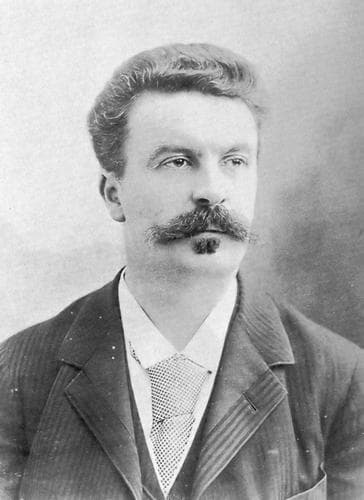
Henri René Albert Guy de Maupassant was a 19th-century French author, remembered as a master of the short story form, as well as a representative of the Naturalist school, who depicted human lives, destinies and social forces in disillusioned and often pessimistic terms.
Similar books
- The Stranger
Albert Camus
4.1 (3k) average on GoodreadsFantasyExplores an individual's alienation and detachment within a seemingly normal life.
- A Simple Heart
Gustave Flaubert
3.5 (5k) average on GoodreadsFictionA poignant novella that delves into the inner lives and emotional struggles of its characters.
- Nineteen Eighty-Four
George Orwell
4.2 (5.5M) average on GoodreadsFictionWinston Smith dreams of truth and rebellion in a world where Big Brother watches all, but he confronts the terrifying power of a regime that controls not just actions, but thoughts.
- The Frozen River
Ariel Lawhon
4.4 (600k) average on GoodreadsFictionIn 1789 Maine, a heroic midwife's diary helps her expose a murder and get justice in a town that wants to silence her.
- A Man Called Ove
Fredrik Backman
4.4 (569k) average on GoodreadsFictionA stubborn widower, who lives by strict rules, finds his quiet world changed by a lively new family next door, making him face his past and find happiness in human connection.
- The Art of Racing in the Rain
Garth Stein
4.2 (452k) average on GoodreadsFictionThrough the eyes of Enzo, a wise and observant dog, a race car driver's family navigates a journey of love, loss, and resilience, learning that life's most important lessons often come in the curves, not just on the straightaways.






Enjoyed the summary?
A summary gives you the shape of the book. The book itself has the detail, the examples and the voice.
Find Pierre and Jean on AmazonAs an Amazon Associate, BookBrief earns from qualifying purchases. How we're funded