
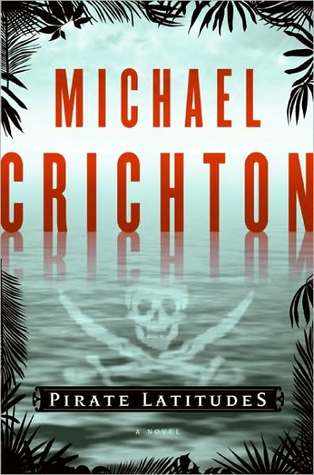
Synopsis
Covers the whole plot, including the ending.
- Difficulty
- Medium
- Pacing
- Fast
- Mood
- Action-packed, Suspenseful, Adventurous, Gritty
- Read it if
- You enjoy historical thrillers with swashbuckling pirate action, vivid descriptions of 17th-century Caribbean life, and a touch of creature horror.
- Skip it if
- You prefer fantasy over historical fiction, or dislike graphic violence and morally ambiguous characters.
Pirate Latitudes Plot Summary
Covers the whole plot, including the ending.
A Dangerous Proposition in Port Royal
In 1665 Port Royal, Jamaica, Captain Charles Hunter, a privateer, is called by Sir James Almont, the English governor. Almont reveals that a Spanish galleon, the *El Trinidad*, with gold and jewels from New Spain, is in the Spanish harbor of Matanceros, Cuba, for repairs. Almont, wanting to get rich, orders Hunter to gather a crew and capture the *El Trinidad*. This mission is dangerous because Matanceros is guarded by the Spanish commander Cazalla. Hunter has doubts about the defenses and Cazalla's reputation, but Almont's offer of treasure and a hint of being called a coward make Hunter accept the job.
Assembling the Crew and Setting Sail
Hunter starts to gather a crew, knowing he needs discretion and skill for this secret operation. He recruits familiar people and new ones, including the giant Lazue, the navigator Sanson, the agile Arabella, and a diver named Enders. Each person has a skill for the raid. Hunter chooses his ship, the *Cassandra*, for its speed. Despite the secrecy, rumors of a treasure hunt spread in Port Royal, attracting dangerous people, but Hunter keeps the real target secret. With supplies loaded and the crew told about their mission, the *Cassandra* sails at night towards Matanceros.
Infiltrating Matanceros Harbor
The *Cassandra* approaches Matanceros at night, navigating reefs and avoiding Spanish patrols. Hunter plans to get into the harbor by climbing the cliffs at the entrance. The crew climbs the rock faces using ropes and hooks. They quietly get rid of Spanish guards on the cliffs and at the harbor entrance. Surprise is important, and their stealth helps them get past the main defenses without being noticed. Their goal is to disable the shore batteries and clear a path for the *Cassandra* to enter the harbor and reach the *El Trinidad* undetected.
The Capture of El Trinidad
After disabling the shore batteries, Hunter's crew attacks the *El Trinidad*, anchored near the docks. The Spanish crew, though surprised, fights back. A hand-to-hand fight happens on the galleon's decks. Hunter, Lazue, and Arabella lead the attack, fighting with skill. Many of Hunter's men are hurt or killed, but their desire for the treasure pushes them. The remaining Spanish sailors are overwhelmed and surrender or are thrown overboard. Hunter secures the ship, finding it full of gold, silver, and jewels, confirming the intelligence.
Escape from Matanceros and Cazalla's Pursuit
With the *El Trinidad* secured, Hunter tells his crew to get both ships ready to leave. They quickly move supplies and some of the treasure to the *Cassandra*. As they try to leave the harbor, the alarm is raised, and the Spanish commander, Cazalla, mobilizes his forces. Cazalla's ships, including a frigate, chase them. A sea battle happens as Hunter tries to get away from the Spanish fleet. The *Cassandra* and the *El Trinidad* fire cannons at Cazalla's ships, taking damage but staying ahead. Hunter's navigation skills and the speed of the *Cassandra* are tested as they try to escape Cazalla.
The Kraken Attack and the Storm
During the chase, a kraken comes from the sea, attacking both English and Spanish ships. The squid causes damage, crushing hulls and pulling men into the sea. Many lives are lost as the creature attacks without care. During the kraken's attack, a hurricane hits the Caribbean. The storm is huge, scattering the remaining ships and destroying the fleets. Masts break, sails tear, and hulls are hit by waves. Both the *Cassandra* and the *El Trinidad* are badly damaged, and Cazalla's frigate is also crippled. The natural disasters are more deadly than any battle, leaving few survivors and scattering the treasure.
Shipwreck and Survival
The *Cassandra* wrecks on a deserted island during the hurricane, along with the damaged *El Trinidad*. Hunter, Arabella, Lazue, Sanson, Enders, and a few other survivors make it to shore. The island is empty, with little food or shelter. Tensions are high among the survivors as supplies run low and the environment is harsh. Hunter tries to keep order and morale, while some crew members, especially Lazue, become resentful and mutinous, questioning Hunter's leadership and the fate of their treasure. The group faces hunger, exposure, and the island's dangers.
Cazalla's Vengeance and the Final Confrontation
Cazalla, who also survived the storm and kraken attack, finds Hunter on the island with his smaller crew. Wanting revenge and to get back the *El Trinidad*'s treasure, Cazalla attacks Hunter's camp by surprise. A long battle follows, with both sides fighting for survival. Hunter and Cazalla fight in a personal duel, driven by their animosity. The island becomes a battlefield, with many casualties. The fate of the treasure and the lives of the survivors are at stake in this fight.
The Discovery of the Kraken's Lair
During the final battle or after it, Hunter, perhaps chasing Cazalla or seeking shelter, finds a hidden cove or cave on the island. He finds this is the kraken's lair. Inside the lair, he finds the kraken, and evidence of its activity – not just remains of sea creatures, but also parts of the *El Trinidad*'s cargo, including some treasure, which the kraken had pulled down. This discovery shows the kraken's power and its role in destroying both fleets, adding a supernatural element to the events and explaining why ships disappeared in the region.
A Treacherous Rescue and a Grim Return
As the battle with Cazalla ends, or shortly after, an English ship spots the wreckage and survivors on the island. Hunter and the few remaining crew members, including Arabella, are rescued. However, much of the *El Trinidad*'s treasure is lost to the sea, eaten by the kraken, or too hard to get from the island. Back in Port Royal, Hunter faces the reality of his mission's outcome. He survived, but the fortune he was sent to get is mostly gone, and many of his crew died. He reports to Governor Almont, who is disappointed by the lack of treasure but relieved that Hunter, a valuable asset, returned alive, though without the promised riches.
Pirate Latitudes Characters
Captain Charles Hunter
Protagonist
Resourceful and daring privateer captain, tasked with a perilous treasure raid.
Captain Charles Hunter is a skilled and intelligent privateer operating out of Port Royal. He is known for his navigational prowess, tactical mind, and leadership abilities, earning him the respect of his crew and the attention of Governor Almont. Despite his daring nature, he is pragmatic and understands the immense risks involved in his missions. Hunter is driven by a combination of duty to the English crown, personal ambition for wealth, and a keen sense of adventure. He possesses a strong moral compass but is not above ruthless actions when necessary for survival or mission success. His quick thinking and adaptability are crucial to his survival against both human adversaries and natural disasters.
Relationships: Sir James Almont (employer/subordinate); Arabella (competent crew member and potential romantic interest); Lazue (loyal but eventually mutinous crew member); Cazalla (arch-nemesis)
Sir James Almont
Supporting
Governor of Jamaica, who orchestrates the raid on the Spanish galleon.
Sir James Almont is the ambitious and somewhat unscrupulous English Governor of Jamaica. He represents the colonial authority and is primarily motivated by increasing his personal wealth and the standing of the English crown through privateering. He is shrewd and manipulative, using his position to command Captain Hunter into undertaking the highly dangerous mission to capture the *El Trinidad*. Almont is willing to take significant risks with other people's lives for the promise of immense treasure. He is detached from the brutal realities of the mission, viewing it purely as a strategic and financial endeavor.
Relationships: Captain Charles Hunter (employer/subordinate)
Cazalla
Antagonist
Ruthless and vengeful Spanish commander, guarding Matanceros.
Cazalla is the formidable Spanish commander of Matanceros, known for his cruelty and unwavering loyalty to King Philip IV. He is a skilled military leader, utterly dedicated to protecting Spanish interests and treasures. Cazalla is depicted as a bloodthirsty and unforgiving individual, earning him the moniker 'blood-swiller.' He embodies the relentless opposition Hunter faces, driven by a fierce sense of duty and a personal vendetta once Hunter successfully raids Matanceros. His pursuit of Hunter is relentless and personal, making him a formidable and terrifying adversary throughout the latter half of the story.
Relationships: Captain Charles Hunter (mortal enemy)
Arabella
Supporting
Agile and deadly female crew member, skilled with a blade.
Arabella is a distinctive and highly capable member of Hunter's crew, standing out in a male-dominated world. She is agile, quick-witted, and exceptionally skilled with a dagger and in close combat. Her presence on the ship adds an element of mystery and intrigue. Arabella is fiercely independent and proves herself invaluable during the infiltration and subsequent battles. She demonstrates loyalty to Hunter and possesses a strong will, surviving the most harrowing events. Her quiet competence and surprising resilience make her a vital asset and a compelling character.
Relationships: Captain Charles Hunter (loyal crew member, with implied mutual respect/attraction)
Lazue
Supporting
Hunter's hulking Scottish giant and first mate, initially loyal but prone to mutiny.
Lazue is Hunter's imposing first mate, a giant of a man with immense strength and a formidable presence. Initially, he is fiercely loyal to Hunter and a crucial asset in combat and physical tasks. However, as the mission progresses and hardships mount, particularly after the shipwreck and the loss of the treasure, Lazue's loyalty begins to waver. He becomes increasingly disgruntled and mutinous, driven by a desire for the promised riches and a growing distrust of Hunter's leadership under extreme duress. His physical power makes him a dangerous figure when his loyalty shifts.
Relationships: Captain Charles Hunter (first mate, later antagonistic); Sanson (fellow crew member)
Sanson
Supporting
Expert navigator and a key member of Hunter's crew.
Sanson is the highly skilled navigator aboard the *Cassandra*. His expertise in charting courses, reading the stars, and understanding currents is indispensable for Hunter's daring voyages, especially when navigating treacherous waters like those around Matanceros. He is reliable, intelligent, and level-headed, providing crucial information and guidance throughout the mission. Sanson represents the technical competence vital for successful privateering operations and remains a steadfast member of the crew through many perils.
Relationships: Captain Charles Hunter (crew member, trusted expert)
Enders
Supporting
Skilled diver, essential for underwater tasks during the raid.
Enders is a specialized crew member recruited for his exceptional diving abilities. His skill is critical for tasks requiring underwater stealth or retrieval, such as potentially disabling underwater defenses or investigating sunken objects. He is an unsung hero, performing dangerous tasks in the dark depths. His unique talent highlights the diverse skill set required for Hunter's ambitious plan and provides a practical solution to specific challenges encountered during the raid on Matanceros.
Relationships: Captain Charles Hunter (crew member)
Kraken
Antagonist
A monstrous, legendary sea creature that attacks both fleets.
The Kraken is a colossal, mythical squid-like creature that emerges during the pursuit, attacking both Hunter's and Cazalla's ships indiscriminately. It is a force of nature, representing the unpredictable and terrifying power of the sea. Its appearance introduces a supernatural element to the historical narrative, causing immense devastation and changing the course of the chase. The Kraken is not a sentient antagonist in the human sense, but its destructive actions effectively serve as a major obstacle and a catalyst for the plot's dramatic turns, ultimately contributing to the loss of the treasure and the shipwreck.
Relationships: All sailors (predator to prey)
Pirate Latitudes Themes
Man vs. Nature
This theme is a main part of *Pirate Latitudes*, showing how weak humans are against nature. The book clearly shows the force of a hurricane, which destroys both English and Spanish fleets, making human conflict seem small. The kraken, a sea creature, also shows this theme, acting as a force that destroys ships and lives, showing that even pirates and soldiers are at the mercy of the ocean's power. Hunter's fight to survive on the island against hunger and exposure highlights this constant battle.
“The sea, in its indifferent fury, cared nothing for flags or gold, only for the breaking of wood and bone.”
Greed and Ambition
The desire for wealth and power drives almost every character. Governor Almont's desire to get rich for himself and the crown starts the mission. Captain Hunter, while doing his duty, also wants the fortune of the *El Trinidad*. Cazalla wants to get back the treasure and protect his king's assets. This theme is most clear in the crew's increasing tensions and desires for mutiny after the shipwreck, as the promise of gold becomes a fight for survival, showing how greed can ruin alliances.
“Gold, they all knew, was a powerful god, capable of turning men into devils or angels, depending on its presence or absence.”
Survival and Resilience
The story is a constant test of human strength and the will to survive against hard odds. From the raid on a fortified port to escaping an enemy fleet, surviving a kraken attack, and a hurricane and shipwreck, Hunter and his crew are always pushed to their limits. Their resilience is shown through their cleverness in solving problems, their physical toughness in combat, and their mental strength when despairing. The island part of the story especially shows the desperate fight for life.
“In the face of such overwhelming odds, survival itself became the only true treasure.”
The Brutality of the Pirate Life
*Pirate Latitudes* gives a realistic, harsh picture of 17th-century privateering and piracy. Life in Port Royal is hard, and missions are deadly. The book details hand-to-hand combat, violent deaths, and the constant threat of disease, betrayal, or execution. The characters, though skilled, are often ruthless, reflecting their world. This theme contrasts with romantic ideas of pirate adventures, showing the constant danger, the moral compromises, and the high cost of seeking fortune at sea.
“Life in Port Royal was cheap, and a man could lose it for a shilling or a glance.”
Plot Devices & Literary Techniques
The MacGuffin (El Trinidad's Treasure)
The central object driving the plot and character motivations.
The treasure aboard the Spanish galleon *El Trinidad* serves as the primary MacGuffin in *Pirate Latitudes*. Its immense value and the perceived ease of its capture (initially) propel Captain Hunter and his crew into action. The treasure is the ultimate goal for the English, the object of fierce protection for the Spanish, and the source of both hope and ultimately despair for Hunter's crew. While the pursuit of the treasure drives the entire plot, its eventual loss due to natural forces ironically highlights the futility of human greed against the power of nature, making the journey, not the destination, the true narrative focus.
The Force of Nature as Antagonist (Kraken & Hurricane)
Non-human elements that act as primary obstacles and catalysts for disaster.
Instead of relying solely on human antagonists, Crichton introduces the Kraken and a devastating hurricane as powerful, indiscriminate forces that act as major antagonists. These natural elements decimate both the English and Spanish fleets, effectively leveling the playing field and forcing characters to confront primal threats beyond human control. This device shifts the narrative from a purely historical naval adventure to a struggle for survival against the raw power of the natural world, adding a layer of unpredictability and terror that human adversaries alone could not provide, and ultimately leading to the loss of the MacGuffin.
The Desperate Pursuit
A sustained chase sequence that heightens tension and character stakes.
The desperate pursuit by Cazalla's Spanish fleet after the capture of the *El Trinidad* serves as a prolonged and high-stakes plot device. This continuous chase maintains intense suspense, forcing Hunter to constantly outmaneuver his relentless enemy. It compresses time and space, bringing the two opposing forces into repeated, brutal confrontations. The pursuit escalates the personal vendetta between Hunter and Cazalla, making their eventual showdown on the island even more impactful. It also provides the perfect setting for the introduction of the kraken and the hurricane, as both fleets are vulnerable while engaged in this high-tension chase.
The Isolated Island Setting
A confined, resource-scarce environment that amplifies conflict and desperation.
The deserted island where Hunter's and Cazalla's shipwrecked crews find themselves serves as a crucial isolated setting. This environment strips characters of their ships, resources, and the familiar structures of civilization, forcing them into a primal struggle for survival. The scarcity of food and water, combined with the psychological toll of isolation, intensifies internal conflicts among Hunter's crew, leading to mutiny, and sets the stage for the final, brutal confrontation with Cazalla. The island's hidden kraken lair further emphasizes its role as a place of both despair and terrifying discovery.
Pirate Latitudes Quotes
“A man who is not afraid of the sea will soon be drowned, for he will be going out on a day he shouldn't. But we do be afraid of the sea, and we do be alive.”
“In this world, a man makes his own luck.”
“The sea does not forgive. It does not forget.”
“Gold is the only true king in these waters.”
“Every man has a price, and every woman, too.”
“A ship is only as good as her crew.”
“The wind favors the bold, not the cautious.”
“In the end, we are all slaves to our desires.”
“Trust is a luxury we cannot afford.”
“The horizon holds both promise and peril.”
“A sharp mind is worth more than a sharp sword.”
“We are not men of honor, but men of opportunity.”
“The sea whispers secrets to those who listen.”
“In this life, you either take or you are taken.”
Quiz
10 questions on the plot and the characters. Each answer comes with a short explanation.
Question 1
What is the name of the Spanish treasure galleon that Captain Charles Hunter targets in the novel?
- Santa Maria
- El Trinidad
- San Felipe
- Nuestra Señora
Show answer
B. El Trinidad The Spanish treasure galleon El Trinidad is stalled in Matanceros harbor awaiting repairs, making it the target of Hunter's daring raid for Spanish gold.
Question 2
In what year is 'Pirate Latitudes' primarily set?
- 1492
- 1588
- 1665
- 1718
Show answer
C. 1665 The novel is set in 1665, during a time when Jamaica is an English outpost challenging Spanish supremacy in the Caribbean.
Question 3
What is the capital of Jamaica where much of the story begins?
- Kingston
- Port Royal
- Spanish Town
- Montego Bay
Show answer
B. Port Royal Port Royal is described as Jamaica's capital in the book, a rough town of taverns and danger where Hunter plans his raid.
Question 4
Who is the Spanish commander guarding the Matanceros outpost and the galleon El Trinidad?
- Don Alonzo
- Cazalla
- Captain Mendoza
- General Cortés
Show answer
B. Cazalla Cazalla is the blood-swiller and favorite commander of King Philip IV who guards the impregnable Spanish outpost at Matanceros.
Question 5
What is the primary motivation for Captain Hunter's raid on Matanceros?
- To rescue English prisoners
- To claim land for England
- To seize Spanish gold
- To assassinate Cazalla
Show answer
C. To seize Spanish gold Hunter's goal is to commandeer the galleon El Trinidad and its fortune in Spanish gold, driven by the prospect of riches in the lawless New World.
Question 6
Which English king's name is invoked to justify taking Spanish gold in the novel?
- King James I
- King Charles II
- King Henry VIII
- King George III
Show answer
B. King Charles II In the name of King Charles II of England, gold in Spanish hands is considered fair game for taking, reflecting the colonial tensions of the era.
Question 7
What major obstacle does Hunter face on Matanceros island after the initial raid?
- A mutiny among his crew
- Dense jungle and Spanish infantry
- A lack of food and water
- A sudden hurricane
Show answer
B. Dense jungle and Spanish infantry After infiltrating Matanceros, Hunter must contend with the dense jungle and the firepower of Spanish infantry to reach the treasure.
Question 8
What theme is highlighted by the description of Port Royal as 'a cut-throat town of taverns, grog shops, and bawdy houses'?
- The luxury of colonial life
- The moral decay of pirates
- The lawlessness and danger of the New World
- The cultural exchange between empires
Show answer
C. The lawlessness and danger of the New World This description emphasizes the harsh, perilous environment of the Caribbean outposts where survival is uncertain and law is made by those who take it into their own hands.
Question 9
After hijacking El Trinidad, what does the text imply about Hunter's situation?
- He immediately returns to Port Royal safely
- He faces new troubles beyond the raid
- He is celebrated as a hero in England
- He abandons the treasure and escapes alone
Show answer
B. He faces new troubles beyond the raid The text states 'But his troubles have just begun...' indicating that escaping with the galleon is not the end of Hunter's challenges in the story.
Question 10
What does the phrase 'law in the New World is made by those who take it into their hands' reflect about the novel's setting?
- The strict enforcement of Spanish law
- The dominance of English legal systems
- The anarchic nature of colonial frontier life
- The religious conflicts of the era
Show answer
C. The anarchic nature of colonial frontier life This phrase captures the anarchic and opportunistic environment of the Caribbean colonies, where power and survival often depend on personal initiative rather than established law.
Pirate Latitudes FAQ
What is 'Pirate Latitudes' about?
The novel follows Captain Charles Hunter in 1665 Jamaica as he leads a daring raid on the heavily fortified Spanish outpost of Matanceros to capture the treasure galleon El Trinidad. After assembling a rough crew with the governor's backing, Hunter faces deadly Spanish forces, treacherous jungles, and the ruthless commander Cazalla in a high-stakes adventure for Spanish gold.
Why should I read 'Pirate Latitudes'?
Readers should dive into this book for its fast-paced, cinematic adventure that blends historical detail with thrilling action. Michael Crichton masterfully portrays the brutal, opportunistic world of 17th-century Caribbean piracy, complete with complex heists, moral ambiguity, and relentless suspense from Port Royal's taverns to Matanceros' jungles.
What is the background/setting of 'Pirate Latitudes'?
Set in 1665, the story unfolds in Jamaica, an English colony struggling against Spanish dominance. Port Royal serves as a lawless hub of taverns and danger, while the raid targets Matanceros harbor—a fortified Spanish outpost guarded by commander Cazalla. The setting emphasizes the cutthroat politics and harsh realities of New World colonization.
What are the most memorable quotes?
Key quotes include Hunter's reflection on Port Royal's code: 'In the name of His Majesty... gold in Spanish hands is gold for the taking,' highlighting the story's theme of justified piracy. Another is Cazalla's menacing reputation as a 'blood-swiller,' underscoring the brutal stakes of the conflict between English privateers and Spanish forces.
What writing style does the author use?
Michael Crichton employs a brisk, detail-oriented prose that immerses readers in historical authenticity while driving the plot with taut suspense. His style blends factual descriptions of 17th-century naval warfare and Caribbean life with sharp dialogue and relentless action, keeping the narrative gripping from heist planning to chaotic escapes.
What minor details add significant meaning?
Small details like the dysentery and dagger threats in Port Royal underscore the colony's precariousness, while the galleon El Trinidad being 'stalled for repairs' creates a critical window for Hunter's raid. The jungle's density on Matanceros isn't just scenery—it becomes a tactical obstacle that heightens the crew's vulnerability and ingenuity.
What are some subtle foreshadowing moments?
Early mentions of Matanceros' 'bloody legends' foreshadow the high casualty rate of Hunter's mission. The governor's backing hints at political risks that may resurface later, and Cazalla's description as King Philip IV's 'favorite commander' subtly warns of his relentless pursuit, setting up ongoing conflicts beyond the initial raid.
What unexpected character connections exist?
Hunter's alliance with the Jamaican governor reveals how colonial authority tacitly supports piracy for profit, blurring lines between legality and outlawry. The crew's diverse backgrounds—from seasoned sailors to local roughnecks—create unexpected loyalties and tensions that drive the plot, especially when facing Cazalla's unified Spanish forces.
What are unspoken character motivations?
Hunter's pursuit of gold masks a deeper desire for legitimacy and power in a lawless world, while the governor's support stems from political ambition to weaken Spain. Cazalla's brutality isn't just duty—it's personal pride in defending Spanish supremacy, making his clash with Hunter a symbolic battle beyond mere treasure.
What psychological complexities do characters exhibit?
Hunter balances ruthless pragmatism with leadership loyalty, often sacrificing men for the mission's success. Cazalla embodies fanatical devotion to Spain, viewing Hunter's raid as an insult to honor. The crew members show varying degrees of greed, fear, and camaraderie, reflecting the moral compromises of pirate life in a hostile era.
What are the major emotional turning points?
Key moments include the crew's losses during the Matanceros raid, which harden Hunter's resolve, and the hijacking of El Trinidad, bringing temporary triumph amid carnage. The escape from Cazalla's clutches shifts from relief to dread as new troubles emerge, emphasizing the cyclical nature of risk and reward in their world.
How do relationship dynamics evolve?
Hunter's relationship with his crew evolves from a transactional alliance to tested loyalty under fire, especially after casualties in Matanceros. His adversarial dynamic with Cazalla escalates from strategic rivalry to personal vendetta, while interactions with the governor reveal shifting power balances as the raid's consequences unfold.
Which parts remain ambiguous or open-ended?
The aftermath of the raid is left open, with Hunter's 'troubles just begun' hinting at unresolved political fallout or Cazalla's revenge. The moral outcome of seizing Spanish gold is ambiguous—whether it brings Hunter lasting success or further peril isn't clarified, leaving readers to ponder the costs of piracy in a colonial world.
What are controversial scenes or decisions?
Hunter's willingness to sacrifice crew members during the raid sparks debate on his leadership ethics. The governor's sanctioning of piracy under English authority blurs moral lines, while the violent carnage left in Matanceros raises questions about the justification of brutality in the name of profit and colonial conflict.
'Pirate Latitudes' ending explained: how it ends & what it means
The novel concludes with Hunter successfully hijacking El Trinidad and escaping Cazalla, but the final line—'his troubles have just begun'—implies ongoing dangers. This ending suggests that in this world, victory is fleeting; political repercussions, Spanish retaliation, or internal betrayals likely await, underscoring the perpetual risk of the pirate life.
What deeper themes does the book explore?
The story delves into themes of colonialism's brutality, where English and Spanish forces clash over resources and power. It examines the gray morality of piracy sanctioned by authority, and the personal costs of ambition in a lethal environment. Survival often requires compromising ethics, as seen in Hunter's calculated risks and the crew's sacrifices.
About the author

Michael Crichton was an American author and filmmaker known for his contributions to the science fiction genre. His notable works include Jurassic Park, The Andromeda Strain, Timeline, Sphere, Congo, and State of Fear, many of which explore themes of technology and its impact on society. Crichton's writing often blends scientific concepts with thrilling narratives, making him a significant figure in contemporary literature.
Similar books
- Treasure Island
Robert Louis Stevenson
Classic pirate adventure with a focus on treasure and daring exploits.
- The Count of Monte Cristo
Alexandre Dumas
4.3 (746k) average on GoodreadsHistorical FictionEpic adventure with themes of revenge and elaborate schemes.
- Captain Blood
Rafael Sabatini
4.2 (15k) average on GoodreadsHistorical FictionHistorical pirate fiction set in the Caribbean with a focus on daring raids and naval battles.
- Angels & Demons
Dan Brown
3.9 (2.7M) average on GoodreadsThrillerA Harvard symbologist races through Rome's ancient sites, deciphering cryptic clues to unmask the Illuminati and stop a vengeful plot to destroy the Vatican with a stolen antimatter weapon.
- Gone Girl
Gillian Flynn
4.1 (2.3M) average on GoodreadsThrillerA wife's sudden disappearance on her fifth anniversary reveals a web of lies and psychological warfare, exposing the secrets within a seemingly perfect marriage.
- The Girl on the Train
Paula Hawkins
3.9 (2.1M) average on GoodreadsThrillerA woman’s fascination with a seemingly perfect couple she watches from her daily train commute leads her into a dark investigation when she witnesses something that shatters their idyllic image.



Enjoyed the summary?
A summary gives you the shape of the book. The book itself has the detail, the examples and the voice.
Find Pirate Latitudes on AmazonAs an Amazon Associate, BookBrief earns from qualifying purchases. How we're funded