
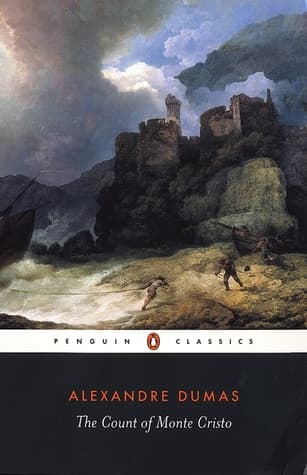
Synopsis
Covers the whole plot, including the ending.
- Difficulty
- Medium
- Pacing
- Variable
- Mood
- Epic, Vengeful, Dramatic, Romantic, Melancholy
- Read it if
- You love epic tales of revenge, intricate plots, moral dilemmas, and rich historical settings with a blend of adventure and romance.
- Skip it if
- You prefer fast-paced, concise narratives and dislike lengthy descriptions, complex subplots, or a protagonist driven by prolonged vengeance.
The Count of Monte Cristo Plot Summary
Covers the whole plot, including the ending.
Betrayal on the Pharaon
In 1815, young Edmond Dantès, first mate of the merchant ship Pharaon, arrives in Marseille, ready to become captain and marry his beloved Mercédès. However, his quick rise causes jealousy. Fernand Mondego, Mercédès's rejected cousin, and Danglars, the ship's supercargo who wants Dantès's position, conspire to frame him. Danglars writes an anonymous letter accusing Dantès of being a Bonapartist agent, delivering a letter from Napoleon in exile. Caderousse, Dantès's envious neighbor, is there but too scared to do anything. On his wedding day, Dantès is arrested by Villefort, the ambitious public prosecutor. Villefort, realizing the letter implicates his own father, a Bonapartist, decides to silence Dantès by sending him to the Château d'If without trial.
Years in the Château d'If
Dantès is imprisoned in the formidable island fortress of the Château d'If. Initially, he is full of despair and thinks about suicide. After fourteen years, he hears scratching from an adjacent cell. This leads to his meeting with an old Italian abbé, Faria, a brilliant scholar and former political prisoner. Faria helps Dantès figure out who his betrayers are and why they acted as they did. He also teaches Dantès many subjects, transforming him from an uneducated sailor into a sophisticated intellectual. Faria becomes a mentor to Dantès during their shared captivity.
The Secret of Monte Cristo and Escape
As Abbé Faria's health declines, he tells Dantès about a large treasure hidden on the uninhabited island of Monte Cristo, a fortune belonging to the Spada family for whom Faria once worked. He gives Dantès the map and instructions, believing him worthy of the inheritance. Faria eventually dies. Seizing a desperate chance, Dantès switches places with Faria's corpse, sewn into a burial sack. He is then thrown into the sea, escaping the Château d'If after fourteen years of wrongful imprisonment. He is rescued by a passing smuggling ship, whose crew he befriends and eventually joins, waiting for his moment.
Discovery of the Treasure and Transformation
After several months working with the smugglers, Dantès arranges to be left on Monte Cristo alone. He follows Abbé Faria's instructions and unearths the immense treasure of gold, jewels, and precious artifacts. Now very wealthy, Dantès is reborn. He uses several aliases, most notably the Count of Monte Cristo, and begins to carefully plan his retribution against those who wronged him: Fernand, Danglars, and Villefort. His immediate goal is to understand the current lives of his enemies and their families, and to reward those who showed him kindness, such as the Morrel family, who had tried to save him.
The Count's Debut in Paris
Ten years after his escape, the Count of Monte Cristo arrives in Paris, a figure of great wealth, sophistication, and mystery. He quickly enters the highest levels of society, buying a grand mansion and a country house. He creates an aura of mysterious power, impressing everyone with his intelligence, charm, and seemingly endless resources. Through his various disguises and agents, such as Bertuccio, the Abbé Busoni, and Lord Wilmore, he gathers information on Fernand, now General de Morcerf; Danglars, now a wealthy baron and banker; and Villefort, now the King's Attorney. He learns of their successes, their families, and their weaknesses, patiently preparing for his plan.
The Seeds of Ruin: Fernand
The Count begins to systematically ruin Fernand Mondego's reputation. He manipulates events to expose Fernand's betrayal of Ali Pasha in Greece, showing how Fernand got rich by selling out his benefactor and his family. The details are brought to light through a newspaper article planted by the Count and later investigated by Albert de Morcerf, Fernand's son, at the Count's subtle suggestion. The scandal leads to a public trial where Fernand is disgraced and loses his titles and wealth. Mercédès, recognizing the Count as Dantès, confronts him, begging him to spare her son, Albert, who challenges the Count to a duel, but Mercédès intervenes, telling Albert the truth.
The Seeds of Ruin: Danglars
Monte Cristo targets Danglars through financial manipulation. Knowing Danglars's greed, the Count subtly guides him into a series of disastrous investments and speculations. He uses his vast credit and influence to create false market trends, causing Danglars to lose millions. He also introduces Danglars to criminals, like Andrea Cavalcanti (Benedetto), further harming his integrity. Danglars's fortune quickly shrinks, and his reputation as a shrewd banker collapses. His wife, Madame Danglars, also suffers financially due to her own risky investments and affairs, adding to the family's ruin. Eventually, Danglars flees Paris, bankrupt and disgraced.
The Seeds of Ruin: Villefort
Villefort's downfall is the most personal and psychologically damaging. The Count, aware of Villefort's past and his secret illegitimate son with Madame Danglars, orchestrates a series of revelations. Through his agent Bertuccio, he exposes the buried infant, Benedetto, who is revealed to be Andrea Cavalcanti, a criminal. This revelation, along with the poisoning spree within Villefort's own household by his second wife, Heloïse, who is trying to secure her son's inheritance, drives Villefort to the edge. The Count, as Abbé Busoni, confronts Villefort directly about his crimes, ending in Villefort's public breakdown and descent into madness after Andrea Cavalcanti's trial and the death of his family.
The Aftermath and Redemption
Having achieved his revenge, the Count finds himself unexpectedly empty. He witnesses the destruction of his enemies, but also the damage to those he once loved, particularly Mercédès and Albert. He saves Albert from a duel, and later provides financial support to Mercédès. He also visits Caderousse, who, despite being given a chance at redemption, succumbs to his greed and is ultimately killed by Benedetto. The Count begins to question the morality of his vengeance. He finds comfort in the love of Haydée, the daughter of Ali Pasha, whom he rescued from slavery. He also helps Maximilien Morrel, the son of his former benefactor, recognizing his genuine love for Valentine Villefort.
Love, Loss, and Departure
The Count, having saved Valentine Villefort from her stepmother's poison, arranges her apparent death and subsequent resurrection to allow her to marry Maximilien Morrel, the man she truly loves. He uses his knowledge of poisons and his hidden grotto on the Isle of Monte Cristo to help them reunite and ensure their future happiness. Seeing their genuine love and the pure happiness he has brought them, the Count experiences a deep change. He thinks about justice, mercy, and divine providence. He leaves a letter for Maximilien and Valentine, with his final wisdom and a portion of his remaining fortune, before sailing away from Europe with Haydée, embracing a future based on love and hope rather than vengeance.
The Count of Monte Cristo Characters
Edmond Dantès / The Count of Monte Cristo
Protagonist
A wronged sailor transformed into a wealthy, vengeful nobleman
Initially a naive, honest, and ambitious young sailor, Edmond Dantès is unjustly imprisoned for fourteen years. During his incarceration, he is educated by Abbé Faria, transforming him into the brilliant, multilingual, and extremely wealthy Count of Monte Cristo. His primary motivation becomes a meticulously planned, elaborate revenge against those who betrayed him: Fernand Mondego, Danglars, and Villefort. He is cold, calculating, and almost omniscient in his pursuit of justice, but ultimately questions the morality of his actions and seeks a path to redemption and peace.
Relationships: Mercédès (Fiancée, later wife of Fernand, his lost love); Abbé Faria (Mentor and surrogate father in prison); Fernand Mondego (Rival, betrayer, responsible for his imprisonment); Danglars (Jealous shipmate, betrayer, responsible for his imprisonment); Villefort (Ambitious prosecutor, betrayer, responsible for his imprisonment); Maximilien Morrel (Son of his benefactor, whom he protects and rewards); Haydée (Rescued princess, his devoted companion and lover)
Mercédès Mondego
Supporting
Dantès's beautiful fiancée, who marries Fernand out of despair
Mercédès is a beautiful Catalan woman, deeply in love with Edmond Dantès. After his disappearance and presumed death, she is pressured by her family and her unrequited admirer, Fernand Mondego, into marrying him. She lives a life of quiet sorrow and regret, always believing Dantès was innocent. She is a devoted mother to Albert and instinctively recognizes the Count as Edmond, bearing the burden of her past choices and witnessing her family's downfall with profound grief. She embodies the tragic consequences of Dantès's revenge.
Relationships: Edmond Dantès (Fiancée, true love); Fernand Mondego (Cousin, husband (after Dantès's imprisonment)); Albert de Morcerf (Son)
Baron Danglars
Antagonist
A greedy, ambitious shipmate who rises to become a wealthy banker
Danglars is the supercargo on the Pharaon and the primary instigator of the plot against Dantès. He is driven by insatiable greed and ambition, desiring Dantès's captaincy. He possesses a cunning and manipulative mind, using others for his own gain. After Dantès's imprisonment, he swiftly rises to become a powerful and immensely wealthy banker in Paris, known for his financial acumen and ruthlessness. His downfall is engineered by the Count through a series of calculated financial manipulations that exploit his avarice.
Relationships: Edmond Dantès (Betrayer, rival); Eugénie Danglars (Daughter); Madame Danglars (Wife)
Fernand Mondego, Count de Morcerf
Antagonist
Mercédès's jealous cousin, who becomes a general and peer of France
Fernand is Mercédès's cousin, deeply in love with her but rejected. His jealousy of Edmond Dantès leads him to conspire with Danglars, writing the address on the denunciation letter. He is characterized by his weak will, envy, and lack of moral compass. After Dantès's imprisonment, he joins the army, rises through the ranks by betraying his superiors (notably Ali Pasha), and becomes a wealthy and respected General and Peer of France. His past crimes and betrayals are systematically exposed by the Count, leading to his public disgrace and suicide.
Relationships: Edmond Dantès (Rival, betrayer); Mercédès (Cousin, wife); Albert de Morcerf (Son)
Gérard de Villefort
Antagonist
An ambitious public prosecutor whose career is built on hidden secrets
Villefort is the ambitious deputy public prosecutor who interrogates Dantès. Discovering that the letter implicates his own Bonapartist father, Noirtier, he sacrifices Dantès to protect his career and reputation. He is cold, calculating, and ruthlessly self-serving, willing to commit any crime to maintain his social standing. His life is a web of secrets, including an illegitimate son with Madame Danglars, whom he attempts to bury alive. The Count's revenge unravels these secrets, leading to the exposure of his crimes and his eventual descent into madness.
Relationships: Edmond Dantès (Judge, betrayer); Noirtier de Villefort (Father); Valentine Villefort (Daughter); Madame de Villefort (Heloïse) (Second wife, poisoner); Benedetto (Andrea Cavalcanti) (Illegitimate son)
Abbé Faria
Supporting
An old, wise, and wealthy priest imprisoned with Dantès
Abbé Faria is an elderly, brilliant Italian priest and scholar, imprisoned in the Château d'If for political reasons. He becomes Dantès's mentor, educating him in multiple languages, sciences, philosophy, and the art of deduction. He helps Dantès understand the true nature of his imprisonment and the identities of his betrayers. Faria also reveals the secret location of the Spada family treasure on the Isle of Monte Cristo, making Dantès the heir to his vast fortune. He is a symbol of knowledge, wisdom, and the enduring human spirit.
Relationships: Edmond Dantès (Mentor, surrogate father, benefactor)
Maximilien Morrel
Supporting
The honest and loving son of Dantès's former employer
Maximilien is the son of Monsieur Morrel, the kind ship owner who tried to save Dantès from prison and supported his family. He is an honest, brave, and deeply devoted young man, serving in the Spahis. He falls deeply in love with Valentine Villefort and is willing to defy social conventions and even die for her. He represents the innocent and good in the world, becoming a recipient of the Count's benevolence and a symbol of hope and forgiveness, ultimately finding happiness through the Count's intervention.
Relationships: Monsieur Morrel (Father); Valentine Villefort (Lover, later wife); Edmond Dantès (Beneficiary of his kindness)
Haydée
Supporting
A beautiful Greek princess rescued by the Count, who becomes his devoted companion
Haydée is the daughter of Ali Pasha, whom Fernand Mondego betrayed and sold into slavery. The Count purchases her freedom and raises her, treating her with kindness and respect. She is beautiful, intelligent, and deeply devoted to the Count, eventually falling in love with him. She serves as a key witness in exposing Fernand's crimes and represents the Count's capacity for compassion and love beyond his quest for revenge. She is his companion and ultimately his partner in a new life.
Relationships: Edmond Dantès (Rescuer, protector, companion, lover)
Noirtier de Villefort
Supporting
Villefort's Bonapartist father, paralyzed and communicating through his eyes
Noirtier is a former prominent Bonapartist and the father of Villefort. He is paralyzed by a stroke, rendering him mute and able to communicate only through his eyes. Despite his physical limitations, he remains sharp-witted and morally upright. He uses his intelligence to protect his granddaughter, Valentine, from her stepmother's schemes and communicates crucial information to the Count. He represents a form of justice and moral rectitude that stands in stark contrast to his son's corruption.
Relationships: Gérard de Villefort (Son); Valentine Villefort (Granddaughter, whom he protects)
Albert de Morcerf
Supporting
The honorable but initially naive son of Fernand and Mercédès
Albert is the son of Fernand and Mercédès. He is initially a carefree, somewhat arrogant young nobleman, living a privileged life. He is honorable and fiercely loyal to his family. When his father's reputation is publicly ruined, he challenges the Count to a duel, believing him to be the cause. Upon learning the truth about his father's betrayal and the Count's identity from his mother, he demonstrates strong moral character by renouncing his family name and fortune, choosing to live an honorable life independently.
Relationships: Fernand Mondego (Father); Mercédès (Mother); Edmond Dantès (Avenger, later respected figure)
The Count of Monte Cristo Themes
Justice vs. Revenge
The central theme explores the line between righteous justice and destructive revenge. Dantès, as the Count, carefully plans the downfall of his betrayers, believing he is an instrument of divine justice. However, the story increasingly questions the morality of his actions as innocent people, like Mercédès and Albert, suffer. The Count's internal struggle and eventual realization that true happiness is beyond vengeance lead him to abandon his quest for a path of mercy and love, especially with Maximilien and Valentine.
“Live, then, and be happy, beloved children of my heart, and never forget that, until the day when God shall deign to reveal the future to man, all human wisdom is contained in these two words,—'Wait and hope.'”
Transformation and Rebirth
Edmond Dantès undergoes a deep transformation, both physically and intellectually, while imprisoned in the Château d'If. He enters as an uneducated, naive sailor and emerges as the sophisticated, all-knowing Count of Monte Cristo, a man reborn with a new identity, great wealth, and a single purpose. This theme is mirrored in his various aliases (Abbé Busoni, Lord Wilmore, Sinbad the Sailor), each representing a part of his new persona. The transformation is not just external but also internal, as he deals with the moral implications of his power and vengeance, ultimately seeking a spiritual rebirth.
“I am not the man I was. I am the Count of Monte Cristo.”
Fate and Divine Providence
The novel often alludes to fate and divine intervention. Dantès often sees himself as an agent of God's will, delivering justice to the wicked. The miraculous escape from prison, the discovery of the treasure, and the almost supernatural precision of his plans suggest a guiding hand beyond mere coincidence. However, the Count's eventual disillusionment with pure vengeance implies that humans should not entirely take over the role of divine judgment, and that true happiness comes from accepting life's changes and offering mercy.
“There is neither happiness nor unhappiness in this world; there is only the comparison of one state with another, nothing more. He who has felt the deepest grief is best able to experience supreme happiness.”
The Corrupting Influence of Power and Greed
The antagonists—Danglars, Fernand, and Villefort—are all driven by ambition, greed, and a desire for power. Danglars's greed leads him to financial ruin, Fernand's envy and opportunism lead to betrayal and disgrace, and Villefort's ruthless ambition to protect his reputation leads him to commit terrible acts and ultimately madness. The novel shows how these vices corrupt the soul and lead to self-destruction, demonstrating that material wealth and social status gained through immoral means are ultimately empty and temporary.
“How is it that there is no punishment for a man who is a coward, for a man who is a traitor?”
Loyalty and Betrayal
Betrayal starts the entire story, with Dantès's unjust imprisonment stemming from the treachery of his envious acquaintances. Conversely, the loyalty shown by characters like Monsieur Morrel, who tried to save Dantès and supported his father, is richly rewarded by the Count. The steady love of Mercédès, despite her marriage to Fernand, and the unwavering devotion of Maximilien Morrel to Valentine, contrast with the pervasive treachery. The novel highlights the lasting power of true loyalty and the devastating consequences of betrayal.
“To one who has been for twenty years in a dungeon, liberty is a goddess, and when she appears, one can but fall down and worship her.”
Plot Devices & Literary Techniques
The Prison Education of Dantès
The transformation of Dantès into the Count through intellectual mentorship
Dantès's fourteen years in the Château d'If, particularly his mentorship by Abbé Faria, is a crucial plot device. This period serves as a crucible, transforming the uneducated sailor into a sophisticated, multilingual, and strategically brilliant individual. Without Faria's vast knowledge, his understanding of human nature, and his revelation of the Monte Cristo treasure, Dantès's elaborate revenge would be impossible. It justifies the Count's seemingly omniscient abilities and allows him to blend seamlessly into aristocratic society, making his vengeance plausible and impactful.
Disguise and Assumed Identities
The Count's use of multiple aliases to manipulate and observe
The Count of Monte Cristo employs numerous aliases—Abbé Busoni (an Italian priest), Lord Wilmore (an English nobleman), Sinbad the Sailor (a mysterious benefactor)—to interact with his enemies and allies without revealing his true identity. This device allows him to gather information, test loyalties, and subtly influence events from different angles. It heightens the mystery surrounding his character and emphasizes his calculated, theatrical approach to revenge, enabling him to penetrate various social circles and exploit the weaknesses of his targets.
The Monte Cristo Treasure
The immense wealth that funds the Count's elaborate revenge
The vast treasure hidden on the Isle of Monte Cristo, revealed by Abbé Faria, is the financial engine of Dantès's revenge. This immense wealth provides him with the resources to purchase influence, buy properties, travel extensively, and hire agents, all necessary for his intricate plans. It transforms him from a powerless prisoner into a figure of immense power and mystery, allowing him to manipulate markets, stage elaborate events, and even save lives. Without the treasure, his grand scheme of retribution would be impossible to execute.
Dramatic Irony
The audience's awareness of the Count's true identity and motives, unknown to other characters
Dramatic irony is a pervasive device in the novel. The reader is aware from the outset that the mysterious, wealthy Count of Monte Cristo is, in fact, the wronged Edmond Dantès. This creates tension and suspense as the Count interacts with his unsuspecting enemies, whose fates he holds in his hands. It allows the reader to appreciate the intricate layers of his plans and the subtle ways he torments his betrayers, making their eventual recognition of him (or their downfall) all the more impactful. The audience is privy to the Count's inner thoughts and intentions, which are hidden from the characters in the story.
Epistolary Elements
The use of letters and documents to drive the plot and reveal information
Letters and documents play a critical role in advancing the plot. The anonymous denunciation letter against Dantès is the catalyst for his imprisonment. Abbé Faria's map and instructions for the Monte Cristo treasure are crucial for Dantès's escape and subsequent wealth. Later, various letters, newspaper articles, and legal documents are used by the Count to expose his enemies' pasts and orchestrate their downfalls, such as the newspaper report exposing Fernand's betrayal of Ali Pasha. These elements serve as tangible evidence and instruments of manipulation.
The Count of Monte Cristo Quotes
“All human wisdom is contained in these two words: Wait and Hope.”
“Life is a storm, my young friend. You will bask in the sunlight one moment, be shattered on the rocks the next. What makes you a man is what you do when that storm comes.”
“I am not proud, but I am happy; and happiness blinds, I think, more than pride.”
“There is neither happiness nor misery in the world; there is only the comparison of one state with another, nothing more.”
“Hatred is blind; rage carries you away; and he who pours out vengeance runs the risk of tasting a bitter draught.”
“The difference between treason and patriotism is only a matter of dates.”
“Moral wounds have this peculiarity - they may be hidden, but they never close; always painful, always ready to bleed when touched, they remain fresh and open in the heart.”
“Until the day when God shall deign to reveal the future to man, all human wisdom is summed up in these two words: Wait and hope.”
“I have always had more dread of a pen, a bottle of ink, and a sheet of paper, than of a sword or pistol.”
“It is necessary to have wished for death in order to know how good it is to live.”
“The friends we have lost do not repose under the ground... they are buried deep in our hearts.”
“How did I escape? With difficulty. How did I plan this moment? With pleasure.”
“There is something in this world which makes men forget their own interests, their own safety, their own lives, to secure the happiness and welfare of those they love.”
“I am not a man, but an avenging angel.”
Quiz
10 questions on the plot and the characters. Each answer comes with a short explanation.
Question 1
What is the primary reason Edmond Dantès is imprisoned in the Château d'If?
- He is caught smuggling goods into France
- He is falsely accused of being a Bonapartist conspirator
- He murders a rival in a duel over Mercédès
- He steals a letter meant for Napoleon Bonaparte
Show answer
B. He is falsely accused of being a Bonapartist conspirator Dantès is framed by Danglars, Fernand, and Villefort, who conspire to accuse him of treason as a Bonapartist to remove him from their lives and advance their own interests.
Question 2
Who reveals the location of the treasure on the Isle of Monte Cristo to Edmond Dantès?
- Abbé Faria
- Caderousse
- Mercédès
- Gérard de Villefort
Show answer
A. Abbé Faria While imprisoned together, Abbé Faria shares the secret of the Spada treasure with Dantès, which becomes central to his transformation into the Count of Monte Cristo.
Question 3
What alias does Edmond Dantès use when he returns to Paris to enact his revenge?
- Lord Wilmore
- Sinbad the Sailor
- The Count of Monte Cristo
- Abbé Busoni
Show answer
C. The Count of Monte Cristo After escaping prison and acquiring the treasure, Dantès adopts the identity of the Count of Monte Cristo, a mysterious and wealthy nobleman, to infiltrate Parisian society and target his enemies.
Question 4
How does the Count of Monte Cristo engineer the financial ruin of Baron Danglars?
- By bribing government officials to revoke his banking license
- By manipulating stock prices and exploiting his greed through false information
- By forging documents that prove Danglars committed treason
- By kidnapping his daughter and demanding a ransom
Show answer
B. By manipulating stock prices and exploiting his greed through false information The Count uses his wealth and influence to create financial schemes, such as spreading false news about bonds, which leads Danglars to make disastrous investments and ultimately flee Paris bankrupt.
Question 5
What tragic event involving Villefort's family is orchestrated by the Count as part of his revenge?
- The public exposure of Villefort's illegitimate son, Benedetto
- The poisoning of Villefort's wife and son
- The forced marriage of Villefort's daughter to a criminal
- The theft of Villefort's legal documents, ruining his career
Show answer
B. The poisoning of Villefort's wife and son The Count subtly manipulates events so that Villefort's second wife, Héloïse, poisons members of the family, leading to multiple deaths and Villefort's mental breakdown, reflecting the theme of excessive vengeance.
Question 6
Which character serves as a moral contrast to the Count, advocating for forgiveness over revenge?
- Maximilien Morrel
- Albert de Morcerf
- Haydée
- Mercédès
Show answer
D. Mercédès Mercédès, Dantès' former fiancée, pleads with him to spare her son Albert and expresses regret over the past, highlighting the human cost of his quest for vengeance.
Question 7
What symbolic item does the Count of Monte Cristo use to sign his letters?
- A red cross
- A black hand
- A five-pointed star
- A serpent biting its tail (ouroboros)
Show answer
D. A serpent biting its tail (ouroboros) The ouroboros symbolizes eternity and cyclical nature, reflecting the Count's view of his revenge as an inescapable fate and the endless cycle of suffering and retribution.
Question 8
How does the Count of Monte Cristo's revenge on Fernand Mondego (Count de Morcerf) ultimately unfold?
- Fernand is killed in a duel with the Count
- Fernand's treasonous past in Ali Pasha's betrayal is exposed, leading to his social ruin and suicide
- Fernand is imprisoned for life in the Château d'If
- Fernand loses all his wealth in a card game orchestrated by the Count
Show answer
B. Fernand's treasonous past in Ali Pasha's betrayal is exposed, leading to his social ruin and suicide The Count arranges for Haydée, the daughter of Ali Pasha whom Fernand betrayed, to testify publicly about his treachery, destroying his reputation and leading Fernand to take his own life.
Question 9
What philosophical dilemma does the Count of Monte Cristo face towards the end of the novel, causing him to question his actions?
- Whether wealth can truly bring happiness
- Whether he has the right to act as divine providence, punishing others for their sins
- Whether he should reveal his true identity to all of Paris
- Whether he should forgive Caderousse for his minor role in the conspiracy
Show answer
B. Whether he has the right to act as divine providence, punishing others for their sins After witnessing the collateral damage of his revenge, including innocent victims like Édouard de Villefort, the Count grapples with the morality of his role as an avenging angel, leading to his eventual redemption and departure with Haydée.
Question 10
In the Robin Buss translation mentioned in the description, what key aspect of Dumas's original work is preserved?
- It includes all the serialized cliffhangers from the 1840s publications
- It remains faithful to Dumas's style, including previously censored passages about sexuality and politics
- It modernizes the language to appeal to contemporary readers
- It abridges the novel to focus only on the revenge plot
Show answer
B. It remains faithful to Dumas's style, including previously censored passages about sexuality and politics Robin Buss's translation is noted for being complete and unabridged, restoring elements often omitted in earlier English versions, thus maintaining the original's richness in themes like romance and historical context.
The Count of Monte Cristo FAQ
What is 'The Count of Monte Cristo' about?
The novel follows Edmond Dantès, a young sailor who is wrongfully imprisoned in the Château d'If for 14 years after being falsely accused of treason. After escaping and discovering a hidden treasure on the Isle of Monte Cristo, he reinvents himself as the wealthy Count of Monte Cristo to systematically exact revenge on the three men who conspired against him: Fernand Mondego, Danglars, and Villefort.
Why should I read 'The Count of Monte Cristo'?
It's a masterful blend of adventure, revenge, and psychological drama with intricate plotting and memorable characters. The novel explores timeless themes of justice, betrayal, and redemption while offering a thrilling narrative full of twists, disguises, and dramatic confrontations that have captivated readers for nearly two centuries.
What is the background/setting of 'The Count of Monte Cristo'?
Set primarily in France and Italy between 1815 and 1838, the story begins during the Bourbon Restoration after Napoleon's exile. Key locations include Marseille, the Château d'If prison, Rome, Paris, and the fictional Isle of Monte Cristo, reflecting the political intrigue and social stratification of post-Napoleonic Europe.
What are the most memorable quotes from the book?
Famous lines include 'Wait and hope' (Abbé Faria's advice to Dantès), 'All human wisdom is contained in these two words: wait and hope,' and the Count's declaration, 'I am not proud, but I am happy; and happiness blinds, I think, more than pride.' These encapsulate the novel's themes of patience, suffering, and moral ambiguity.
What writing style does Alexandre Dumas use?
Dumas employs a fast-paced, serialized style with vivid descriptions, dramatic dialogue, and intricate subplots. His prose blends historical detail with romantic exaggeration, creating a sweeping epic that balances action with psychological depth, as seen in the meticulous planning of the Count's revenge schemes.
What minor details add significant meaning to the story?
The red silk purse Edmond's father uses to hold his meager savings symbolizes the Dantès family's poverty and desperation, contrasting sharply with the Count's later wealth. Similarly, the date of Edmond's arrest—March 1, 1815—coincides with Napoleon's return from Elba, linking his personal tragedy to broader historical forces.
What are some subtle foreshadowing moments?
Early in the novel, Dantès innocently delivers a letter from Napoleon to Villefort's father, unknowingly setting in motion his own downfall. Later, Abbé Faria's death in prison foreshadows Dantès' transformation, as he uses the priest's knowledge and the treasure map to become the Count, essentially 'resurrecting' through Faria's legacy.
What unexpected character connections exist?
Haydée, the Count's enslaved companion, is revealed to be the daughter of Ali Pasha, betrayed and murdered by Fernand Mondego—tying her personal vengeance directly to the Count's plot. Additionally, Benedetto, the criminal son of Villefort and Madame Danglars, unknowingly helps destroy both his biological parents through his crimes.
What are unspoken character motivations?
Fernand Mondego's jealousy of Dantès' engagement to Mercédès drives his betrayal, while Danglars' motivation stems from professional envy as a fellow sailor. Villefort's actions are rooted in political ambition; he imprisons Dantès to protect his father's Bonapartist ties, prioritizing his career over justice.
What psychological complexities do characters exhibit?
Edmond Dantès evolves from a naïve, optimistic youth into a cold, calculating avenger, yet retains traces of his former self through his mercy toward Maximilien Morrel. The Count's elaborate schemes, such as manipulating Albert de Morcerf's kidnapping, reveal a mind both brilliant and tortured by his past suffering.
What are the major emotional turning points?
Key moments include Dantès' despair upon hearing his fiancée Mercédès married Fernand, his revelation of the treasure with Abbé Faria, his tearful reunion with Mercédès after years, and his ultimate decision to spare Albert de Morcerf's life, signaling a shift from pure vengeance to a glimmer of humanity.
How do relationship dynamics evolve?
Dantès and Mercédès' romantic bond fractures irreparably due to his imprisonment and her marriage to Fernand, yet they share a poignant, platonic connection later. The Count's paternal relationship with Haydée grows from one of ownership to mutual devotion, culminating in her declaration of love, which helps him find emotional redemption.
Which parts remain ambiguous or open-ended?
The fate of the Count and Haydée is left uncertain; they sail away together, but it's unclear if they find happiness or if he remains haunted by his past. Additionally, the moral justification of his revenge is debated—whether his actions restore justice or merely perpetuate cycles of suffering, as seen in Villefort's madness and Fernand's suicide.
What are controversial scenes or decisions?
The Count's manipulation of innocent characters like Valentine de Villefort (whom he poisons temporarily) and Édouard de Villefort (whose death he indirectly causes) sparks debate over whether his revenge crosses into cruelty. His cold detachment during these events challenges readers to question the limits of retribution.
'The Count of Monte Cristo' ending explained: how it ends & what it means
The novel concludes with the Count achieving his revenge: Fernand commits suicide, Danglars is ruined financially, and Villefort goes insane. However, the Count spares Albert and allows Valentine to marry Maximilien. He leaves Paris with Haydée, suggesting a move toward forgiveness and a new life, symbolized by his final letter urging Maximilien to 'wait and hope.'
What is the significance of the treasure in the story?
The treasure on Monte Cristo serves as both a literal and symbolic tool: it funds the Count's revenge, enabling his transformation from prisoner to aristocrat, and represents the knowledge and opportunity granted by Abbé Faria. It symbolizes how suffering (his imprisonment) leads to power, but also questions whether wealth can truly compensate for lost innocence and happiness.
How does the historical context influence the plot?
The post-Napoleonic era's political instability allows characters like Villefort to exploit justice for personal gain, while Dantès' initial arrest ties to Bonapartist sympathies. The Count uses this context to his advantage, such as revealing Fernand's betrayal of Ali Pasha during the Greek War of Independence, weaving personal vengeance into broader historical narratives.
What role does religion or morality play?
The novel grapples with moral ambiguity through the Count's actions; he sees himself as an agent of divine justice, quoting 'God will give me justice,' yet his methods often seem hypocritical or excessive. Abbé Faria's teachings provide a moral framework, but the story ultimately leaves it to readers to decide if the ends justify the means.
How does Dumas develop themes of identity and transformation?
Dantès' multiple identities—from sailor to prisoner to Count—highlight themes of reinvention and the malleability of self. His use of aliases like Sinbad the Sailor and Abbé Busoni allows him to manipulate others, but also reflects his fractured psyche, as he struggles to reconcile his vengeful persona with his original, compassionate nature.
About the author
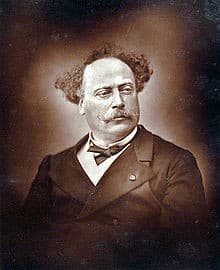
Alexandre Dumas, also known as Alexandre Dumas père, was a French novelist and playwright.
Similar books
- Les Misérables
Victor Hugo
4.2 (683k) average on GoodreadsHistorical FictionShares themes of justice, redemption, and societal critique within a grand French historical setting.
- Great Expectations
Charles Dickens
3.8 (652k) average on GoodreadsHistorical FictionFeatures a protagonist whose life is dramatically altered by a mysterious benefactor and who grapples with social class and personal identity.
- The Three Musketeers
Alexandre Dumas
4.1 (274k) average on GoodreadsHistorical FictionAnother classic adventure by Dumas, known for its swashbuckling action, strong characters, and historical backdrop.
- To Kill a Mockingbird
Harper Lee
4.3 (4.5M) average on GoodreadsHistorical FictionIn the 1930s Jim Crow South, Harper Lee writes about racial injustice, moral growth, and the quiet courage of a lawyer father, Atticus Finch, as seen through his young daughter's eyes.
- The Great Gatsby
F. Scott Fitzgerald
3.9 (3.8M) average on GoodreadsHistorical FictionIn the opulent Roaring Twenties, a mysterious millionaire's lavish parties hide his desperate, tragic pursuit of a lost love, exposing the emptiness within the American Dream.
- Pride and Prejudice
Jane Austen
4.3 (3M) average on GoodreadsHistorical FictionIn a society focused on status and money, Elizabeth Bennet navigates love and pride, challenging Mr. Darcy and social expectations to find true affection.





Enjoyed the summary?
A summary gives you the shape of the book. The book itself has the detail, the examples and the voice.
Find The Count of Monte Cristo on AmazonAs an Amazon Associate, BookBrief earns from qualifying purchases. How we're funded