

Synopsis
Covers the whole plot, including the ending.
- Difficulty
- Medium
- Pacing
- Fast
- Mood
- Suspenseful, desperate, dark, action-packed, thrilling
Plague Plot Summary
Covers the whole plot, including the ending.
The Arrival of the Plague
Eight months after all adults disappear, a new threat appears in Perdido Beach: a highly contagious and fatal plague. It starts subtly, with a few children getting sick, but quickly becomes an epidemic. The symptoms are severe: fever, coughing, and internal bleeding, leading to a gruesome death. Panic spreads through the already fragile community as more children die. Sam, Astrid, and the other leaders are desperate to find a cure or at least contain the illness, but they have almost no medical resources. This new plague tests the children's ability to survive and work together against an invisible, deadly enemy, further destabilizing the FAYZ.
Sam's Leadership Crisis
As the plague devastates Perdido Beach, Sam Temple, the reluctant leader, is overwhelmed. The constant stream of sick and dying children, combined with the community's fear and demands, pushes him to his limit. He second-guesses his decisions, haunted by the deaths and the seemingly impossible odds. His relationship with Astrid strains under the pressure, and he feels increasingly isolated. This time tests his leadership, forcing him to face his own limits and the heavy responsibility for hundreds of lives. The crisis shows his struggle with the hero role he has, revealing his deep desire for a normal life.
Caine's Return and the Outlaws
Caine, after being exiled, returns to Perdido Beach with a group of outlaws, including Diana, Drake, and his loyal followers. He sees the plague as a chance to take control, believing Sam's leadership will fail under pressure. Caine's first goal is to establish dominance and secure resources, especially the shrinking food supply. His presence immediately creates tension, as his methods are often brutal and self-serving. He offers a harsh alternative to Sam's more democratic, though struggling, leadership. This brings back the power struggle, complicating the already terrible situation with the plague and dividing the children further.
The Darkness's Influence
The evil entity known as the Darkness, in the FAYZ, grows stronger. It specifically targets Drake Merwin, twisting his already disturbed mind and increasing his sadistic tendencies, using him as a puppet. The Darkness also subtly manipulates Caine, feeding his ambition and paranoia, pushing him toward destruction. Its ultimate goal is to break the children's spirit and fully use its power within the FAYZ. This unseen enemy adds a psychological layer to the physical threats, suggesting the children are fighting not just for survival against the plague and each other, but also against a cosmic, corrupting force that wants to exploit their weaknesses and despair.
Insect Infestation
As if the plague and internal conflicts were not enough, mutated insects begin to appear, terrorizing the children. These are not ordinary bugs; they are monstrous, predatory creatures, some with stings, others with hard shells, and all with a constant hunger. They infest parts of Perdido Beach, making travel dangerous and further lowering the children's morale and resources. The insects show another way the FAYZ's environment is becoming more hostile and unnatural, a direct result of the meteor's impact and the strange energies at play. They force the children to find new ways to defend themselves and survive, adding a constant, physical threat to their daily lives.
Astrid's Scientific Pursuit
Amid the chaos, Astrid Ellison uses her intelligence to understand and fight the plague. She carefully observes symptoms, collects samples, and tries to form theories about its origin and a possible cure. Despite lacking proper medical equipment and resources, she works tirelessly with the few children who have basic medical knowledge. Her efforts offer hope, providing a logical approach to an illogical crisis. She pushes for sanitation and isolation, trying to implement public health measures. Her scientific work shows the importance of intellect and problem-solving, even in the most desperate situations, and contrasts with the more violent power struggles.
Diana's Moral Dilemma
Diana Ladris, Caine's pragmatic and often ruthless girlfriend, faces a moral dilemma. While loyal to Caine, his violent methods and the children's suffering, especially with the plague, increasingly trouble her conscience. She is also pregnant, a secret she has been keeping, which adds a new layer of vulnerability and responsibility to her decisions. Her powers of persuasion and her ability to understand intentions make her a key, though conflicted, figure. She begins to question Caine's leadership and considers if there is a better way, creating internal conflict that could shift the balance of power in the FAYZ.
The Battle for the Power Plant
The damaged power plant becomes a critical strategic location, as controlling it means access to electricity, a valuable resource for light, communication, and possibly medical equipment. Both Sam's group and Caine's outlaws understand its importance, leading to a tense standoff and skirmishes. The battle for the power plant reflects the larger power struggle within the FAYZ, showing the desperation for resources and control. It involves clever tactics, dangerous fights, and sacrifices, as the children fight not just for power, but for the means to keep their fragile society going against the growing darkness and the plague.
Drake's Rampage
Driven to madness by the Darkness, Drake Merwin becomes an even more terrifying figure. With his whip-arm and sadistic joy, he goes on a brutal rampage, attacking and killing children randomly. He becomes the physical form of the Darkness's destructive will, a monstrous force that causes fear and despair everywhere he goes. His actions are not just random violence; they are meant to break the children's spirit and speed up the FAYZ's descent into chaos. Drake's rampage forces the children to confront pure evil, and defeating him is essential for any sense of order to return.
The Quest for the Cure
As the plague continues to spread, Astrid, with the help of Little Pete and other intelligent children, works harder to find a cure. She thinks the FAYZ itself, or something within it, might hold the answer. This search leads them to explore dangerous, contaminated areas and to experiment with various FAYZ-specific phenomena. Their desperate search shows the theme of hope against overwhelming odds and the power of intellect. The urgency of their mission is clear, as every moment means more children die, putting immense pressure on them to succeed before it's too late for everyone in the FAYZ.
Sacrifices and Alliances
The growing threats of the plague, insects, and internal conflicts force the children to make difficult choices and form unexpected alliances. Sam and Caine, long-time rivals, find themselves in situations where temporary cooperation is needed for survival, though trust is low. Characters make significant personal sacrifices, some even dying, to protect others or achieve a greater good. These moments highlight the extreme conditions within the FAYZ and test the moral limits of its inhabitants. They reveal deep courage and despair, showing how shared hardship can sometimes bridge divides, even if only briefly, when facing threats to their existence.
The Origin of the Plague Revealed
Through Astrid's persistent investigation and Little Pete's unique abilities, the true origin of the plague is finally discovered. It is a direct result of the meteor's impact and the strange, mutating energies of the FAYZ itself. The illness is not a normal disease but a manifestation of the FAYZ's unstable and malevolent nature, possibly even a deliberate act by the Darkness. This discovery changes the children's understanding of their situation, confirming that their environment is not just dangerous but actively hostile. It also suggests that a conventional cure might be impossible, requiring a solution that addresses the FAYZ's fundamental properties.
Confrontation with the Darkness
The book's climax involves a direct and terrifying confrontation with the sentient Darkness. Having manipulated Drake and others, the Darkness tries to fully use its power, aiming to consume the FAYZ and its inhabitants. This battle is not just physical; it is also psychological and spiritual, testing the children's will to live and their ability to resist despair. Sam, Caine, and other powerful children must unite, however briefly, against this ultimate enemy. The confrontation shows the true extent of the Darkness's evil and its desire for destruction, pushing the children to their absolute limits in a desperate fight for their very existence and the future of the FAYZ.
Aftermath and Lingering Threats
After the intense confrontation and the partial end of the plague, a fragile calm returns to Perdido Beach, but the FAYZ remains dangerous and unpredictable. The plague may have lessened, but its scars remain, both physically and emotionally. The giant insects still pose a threat, and the Darkness, though temporarily pushed back, is not defeated. The leadership struggles continue, and the children are left to rebuild their lives amid lingering fear and uncertainty. The ending emphasizes that survival in the FAYZ is an ongoing struggle, with new challenges always appearing, ensuring the children's ordeal is far from over.
Principal Figures
Sam Temple
Protagonist
The reluctant leader of Perdido Beach, burdened by responsibility.
Sam Temple is the primary protagonist, a powerful light-wielder who has reluctantly assumed leadership of Perdido Beach. He struggles with the immense pressure of his role, often doubting his own decisions and yearning for a normal life outside the FAYZ. He is compassionate but can be indecisive, prone to moments of self-pity and despair. His primary motivation is to protect the children, but the constant threats, especially the plague, push him to his emotional and physical limits, highlighting his internal conflict between duty and personal desire. He represents the heavy cost of leadership.
Relationships: Astrid Ellison (girlfriend, intellectual partner); Caine Soren (half-brother, rival); Little Pete (brother, source of FAYZ knowledge)
Astrid Ellison
Protagonist/Supporting
The intelligent 'Brainbox' and Sam's girlfriend, seeking scientific solutions.
Astrid Ellison is the intellectual powerhouse of Perdido Beach, known as the 'Brainbox.' She is highly intelligent, pragmatic, and analytical, serving as Sam's closest advisor and a key figure in the search for a cure to the plague. Despite her brilliance, she struggles with the emotional toll of the FAYZ and the moral compromises required for survival. She is fiercely loyal to Sam but also pushes him to make difficult decisions. Her scientific approach offers a crucial counterpoint to the raw power and violence prevalent in the FAYZ, embodying hope through reason and knowledge.
Relationships: Sam Temple (boyfriend, leadership partner); Little Pete (brother, protector)
Caine Soren
Antagonist
Sam's ambitious half-brother, a charismatic but ruthless leader.
Caine Soren is Sam's half-brother and a formidable antagonist. Charismatic and intelligent, he possesses the power of telekinesis and a ruthless drive for control. He views the FAYZ as an opportunity to establish his own dominion, often using fear and manipulation to achieve his goals. While he is capable of strategic thinking, his ambition frequently blinds him to the suffering of others. In 'Plague,' he returns to Perdido Beach to exploit the crisis, believing he can lead better than Sam, though his methods are often brutal. He embodies the corrupting influence of power.
Relationships: Sam Temple (half-brother, rival); Diana Ladris (girlfriend, partner); Drake Merwin (loyal but unstable enforcer)
Diana Ladris
Supporting
Caine's pragmatic girlfriend, capable of sensing powers and intentions.
Diana Ladris is Caine's shrewd and pragmatic girlfriend, possessing the ability to sense the power levels and intentions of others. She is intelligent, calculating, and often acts as Caine's moral compass, though her own survival instincts often override her conscience. In 'Plague,' she is secretly pregnant, which adds a layer of vulnerability and shifts her perspective, making her question Caine's brutal methods more acutely. She represents the nuanced grey areas of morality within the FAYZ, torn between loyalty to Caine and a growing sense of responsibility for the children's well-being.
Relationships: Caine Soren (boyfriend, partner)
Little Pete
Supporting
Astrid's autistic brother, whose unique powers are tied to the FAYZ.
Little Pete is Astrid's younger brother, who is autistic and non-verbal. Despite his apparent limitations, he possesses immense, uncontrolled power that is intrinsically linked to the FAYZ itself. He is often a catalyst for events, and his mind holds secrets to the FAYZ's nature and the Darkness. In 'Plague,' his unique connection to the FAYZ makes him crucial in understanding the origin and potential solution to the plague, even if his contributions are often cryptic and difficult to interpret. He represents the mysterious and unpredictable forces at play within their isolated world.
Relationships: Astrid Ellison (sister, protector); Sam Temple (brother-in-law, protector)
Drake Merwin
Antagonist
A sadistic and unstable boy, manipulated by the Darkness.
Drake Merwin is a deeply disturbed and sadistic boy, known for his 'whip-arm' – a living, prehensile tentacle that replaces one of his arms. He is inherently cruel and enjoys inflicting pain, making him a terrifying enforcer for Caine. In 'Plague,' he becomes a primary vessel for the Darkness, which amplifies his violent tendencies and uses him as a puppet to sow chaos and destruction. He represents pure, unadulterated evil and the corrupting influence of the FAYZ, embodying the physical manifestation of the Darkness's will to destroy the children.
Relationships: Caine Soren (leader, manipulator); The Darkness (possessor, controller)
Computer Jack
Supporting
The tech-savvy boy who maintains communication and surveillance.
Computer Jack is the tech expert of Perdido Beach, responsible for maintaining what little technology remains, including radios and surveillance equipment. He is intelligent, resourceful, and often provides crucial information to Sam and Astrid. His skills are invaluable in a world without adults, allowing for some level of communication and intelligence gathering. Despite his physical weakness, his intellectual contributions are significant, highlighting the importance of specialized skills in the struggle for survival. He helps monitor threats and understand the broader FAYZ landscape.
Relationships: Sam Temple (leader, recipient of information); Astrid Ellison (collaborator on information)
Orc
Supporting
A former bully turned more complex character, loyal to Caine.
Orc is a large, powerful boy who was once a prominent bully. He possesses super strength and is generally loyal to Caine, though he occasionally displays flickers of a more complex personality and even a rudimentary sense of morality. He is often used as muscle but is not entirely without thought. His internal struggles, particularly his fear and occasional glimpses of compassion, make him a more nuanced character than a simple brute. He represents the potential for change, even in the most hardened individuals, within the FAYZ's harsh environment.
Relationships: Caine Soren (leader, object of loyalty); Howard (friend, companion)
Howard Bascom
Supporting
A fearful but ultimately brave boy, often allied with Orc.
Howard Bascom is a timid and easily frightened boy, often overshadowed by his more imposing companion, Orc. Despite his fear, he displays moments of surprising bravery and loyalty. He is one of the few who tries to maintain a sense of order and fairness within Caine's group, often acting as a reluctant voice of reason. His character highlights the spectrum of responses to the FAYZ's horrors, from abject terror to quiet resilience. He demonstrates that courage isn't the absence of fear, but acting despite it, and he often finds himself caught between opposing forces.
Relationships: Orc (friend, companion)
The Darkness
Antagonist
A sentient, malevolent entity residing within the FAYZ.
The Darkness is the overarching, cosmic antagonist of the Gone series, a sentient and malevolent entity that originated from the meteor that created the FAYZ. It feeds on fear, despair, and violence, seeking to corrupt and destroy everything within its domain. In 'Plague,' its influence becomes more direct and insidious, possessing individuals like Drake and subtly manipulating others. It is the ultimate source of many of the FAYZ's unnatural phenomena, including possibly the plague itself. The Darkness represents the ultimate evil, an existential threat that transcends the human conflicts.
Relationships: Drake Merwin (puppet, host); Little Pete (counterpart, opposite force)
Themes & Insights
The Corrupting Nature of Power
This theme explores how power, especially without adult authority, can corrupt individuals and lead to tyranny. Characters like Caine and Drake show this, using their abilities and influence for self-gain, control, and violence instead of for the common good. Even Sam, the 'good' leader, struggles with the huge burden and moral compromises that come with power, highlighting its dangers and the constant temptation to abuse it. The FAYZ creates a vacuum where the strongest or most cunning can rise, often at the expense of justice and compassion.
“Power corrupts, and absolute power corrupts absolutely. The FAYZ was the ultimate testing ground, where the children, given unchecked authority, quickly showed the depths of human depravity and the fragility of morality.”
Survival Against Overwhelming Odds
The novel constantly shows the children's desperate struggle for survival against many threats: hunger, internal conflict, the plague, mutated insects, and the evil Darkness. This theme shows their resilience, resourcefulness, and the extreme measures they must take to stay alive. It shows the human will to endure, even when facing seemingly impossible challenges and constant despair. The children's ability to adapt, form alliances, and fight back against an increasingly hostile environment is central to their story.
“It wasn't just about living anymore. It was about finding a reason to live, when every day brought a new horror designed to break them.”
The Burden of Leadership
This theme is primarily explored through Sam Temple's character, who carries the responsibility of leading hundreds of children. He constantly second-guesses his decisions, feels the weight of every death, and struggles with the emotional and psychological toll of being in charge. The FAYZ's chaotic nature makes leadership a thankless and often impossible task, highlighting the sacrifices and moral compromises required. The theme also touches on different leadership styles, contrasting Sam's reluctant compassion with Caine's ruthless practicality.
“Every decision he made felt like a gamble with hundreds of lives, and the weight of it was crushing him.”
The Nature of Good and Evil
The FAYZ exposes the best and worst of humanity. Characters like the sadistic Drake, manipulated by the Darkness, represent pure evil, while Sam and Astrid embody the struggle for good and hope. However, the lines are often blurred, with characters like Caine and Diana existing in morally gray areas, making choices driven by survival and ambition rather than clear morality. The presence of the sentient Darkness further complicates this, suggesting that evil can be an external, corrupting force as well as an internal human flaw.
“The FAYZ didn't create monsters, not really. It just gave the monsters that were already there permission to be themselves. And for the good ones, it made them fight harder to stay that way.”
Loss of Innocence and Childhood
The children in the FAYZ are forced to grow up too quickly, losing their innocence as they face death, violence, and the harsh realities of survival. They lose their childhood, taking on adult responsibilities, making life-or-death decisions, and witnessing terrible horrors. This theme highlights the tragic impact of the FAYZ on their psychological and emotional development, forcing them to shed their naivety and confront a brutal world where the rules of childhood no longer apply. The children are left scarred, forever changed by their experiences.
“They were just kids, but the FAYZ had stolen their childhoods, replacing playtime with bloodshed and school lessons with survival skills.”
Plot Devices & Literary Techniques
The FAYZ (Fallout Alley Youth Zone)
The mysterious, impenetrable dome enclosing the children.
The FAYZ is the central plot device, a giant, invisible, impenetrable dome that mysteriously appeared, trapping everyone under the age of 15 inside and making all adults disappear. It's not just a physical barrier; it's a dynamic, mutating environment that grants powers to some children, creates monstrous creatures, and is the source of many of the story's conflicts, including the plague. The FAYZ acts as both a prison and a catalyst for the children's transformations, constantly evolving and presenting new, unpredictable threats.
The Plague
A deadly, contagious illness threatening the FAYZ population.
The plague is the primary inciting incident and major conflict of this specific book. It's a highly contagious, fatal illness that spreads rapidly through the FAYZ, causing widespread panic, death, and further destabilizing the fragile society. It serves as a ticking clock, forcing the characters to act quickly and make desperate choices. The plague also acts as a means to explore themes of leadership, scientific inquiry (through Astrid), and the desperate struggle for survival, pushing the children to their absolute limits and revealing the FAYZ's inherent hostility.
Mutant Powers
Supernatural abilities developed by some children within the FAYZ.
The mutant powers are a key plot device, as certain children develop unique supernatural abilities (e.g., Sam's light, Caine's telekinesis, Diana's power-sensing). These powers are central to the conflicts, battles, and character dynamics. They often reflect aspects of the characters' personalities or desires, and their uncontrolled nature can be as dangerous as their potential for good. The powers are both a blessing and a curse, allowing for feats of heroism but also enabling acts of cruelty, and are intrinsically linked to the FAYZ's mysterious energies.
The Darkness's Influence
Subtle and overt manipulation by the sentient entity.
The Darkness's influence acts as a pervasive, insidious plot device. It manipulates characters like Drake and Caine, whispering in their minds, amplifying their negative traits, and driving them towards violence and despair. This unseen force adds a psychological dimension to the external conflicts, suggesting that the children are fighting not just each other or the environment, but also a cosmic evil that seeks to corrupt their very souls. Its manipulation often instigates key conflicts and revelations, pushing the story forward through its malevolent will.
Little Pete's Connection
Little Pete's autistic mind as a conduit and key to FAYZ secrets.
Little Pete's unique connection to the FAYZ serves as a crucial plot device. His autistic mind acts as a conduit to the FAYZ's core and the Darkness, often manifesting as uncontrolled bursts of power or cryptic insights. He is not actively seeking to help, but his very presence and reactions often provide the clues needed to understand the FAYZ's phenomena, including the plague's origin. He is a passive oracle, his condition making him both vulnerable and immensely powerful, a living mystery that the other characters must try to decipher to survive.
Quiz
10 questions on the plot and the characters. Each answer comes with a short explanation.
Question 1
What is the primary genre of the book 'Plague' by Michael Grant?
- Romance
- Thriller, Mystery, Science Fiction
- Historical Fiction
- Fantasy
Show answer
B. Thriller, Mystery, Science Fiction The book is explicitly described as Thriller, Mystery, and Science Fiction.
Question 2
How long has it been since all the adults disappeared in the FAYZ?
- Six months
- Eight months
- One year
- Ten months
Show answer
B. Eight months The text states, 'It's been eight months since all the adults disappeared.'
Question 3
What is the name of the town where the events take place?
- Havenwood
- Perdido Beach
- Shadow Creek
- Lost Angeles
Show answer
B. Perdido Beach The book description mentions 'Perdido Beach' multiple times.
Question 4
What major threat is spreading at an alarming rate in 'Plague'?
- A zombie outbreak
- A political uprising
- A highly contagious, fatal illness
- A severe drought
Show answer
C. A highly contagious, fatal illness The description states, 'A highly contagious, fatal illness spreads at an alarming rate.'
Question 5
Who is described as being controlled by 'The Darkness' in a haze of delirium and confusion?
- Sam
- Astrid
- Caine
- Its Nemesis
Show answer
D. Its Nemesis The text says, 'The Darkness has found its way into the mind of its Nemesis at last and is controlling it through a haze of delirium and confusion.'
Question 6
Besides the illness, what other sinister threat is terrorizing Perdido Beach?
- Giant spiders
- Mutant animals
- Sinister, predatory insects
- Alien invaders
Show answer
C. Sinister, predatory insects The description mentions, 'Sinister, predatory insects terrorize Perdido Beach.'
Question 7
What is the name of the fourth book in the 'Gone' series by Michael Grant?
- Fear
- Hunger
- Plague
- Light
Show answer
C. Plague The text explicitly states, 'Plague, Michael Grant's fourth book in the bestselling Gone series...'
Question 8
The characters have survived hunger and lies, but what is rising, increasing the stakes?
- Hope
- The stakes
- Friendship
- Peace
Show answer
B. The stakes The text says, 'But the stakes keep rising, and the dystopian horror keeps building.'
Question 9
What is the general state of Perdido Beach despite previous conflicts, at the beginning of the events in 'Plague'?
- Open warfare
- A moment of calm
- Complete chaos
- Under siege
Show answer
B. A moment of calm The description mentions, 'Yet despite the simmering unrest left behind by so many battles, power struggles, and angry divides, there is a momentary calm in Perdido Beach.'
Question 10
What is the central dilemma the main characters face as they deal with the turmoil in the FAYZ?
- Whether to rebuild civilization or abandon it
- How to escape the FAYZ or survive within it
- Who will become the new leader of the FAYZ
- If they should trust the remaining adults
Show answer
B. How to escape the FAYZ or survive within it The concluding question in the synopsis asks, 'With so much turmoil surrounding them, what desperate choices will they make when it comes to saving themselves and those they love?' This implies the core conflict is about survival and escape versus staying within the FAYZ.
Plague FAQ
What is the book "Plague" by Michael Grant about?
"Plague" is the fourth book in the Gone series. It continues the story eight months after all adults disappeared, focusing on the survivors in Perdido Beach as a deadly, contagious illness spreads, alongside other terrifying threats like mutated insects and a growing darkness.
Who are the main characters in "Plague"?
The main characters featured in "Plague" include Sam, Astrid, Diana, and Caine, who are struggling to survive and make difficult choices in the increasingly dangerous FAYZ.
What kind of threats do the characters face in "Plague"?
The characters face multiple escalating threats, including a highly contagious and fatal illness, sinister predatory insects, and a malevolent force known as the Darkness that is influencing one of the characters.
Is "Plague" a standalone book or part of a series?
"Plague" is part of the bestselling Gone series by Michael Grant. It is the fourth book in this dystopian thriller series.
What is the FAYZ in the Gone series?
The FAYZ (Fallout Area Zone) is the quarantined area where all the children and teenagers are trapped after the adults mysteriously vanished. It's a place of survival, power struggles, and escalating dangers.
What is the significance of the 'Darkness' in "Plague"?
The 'Darkness' is a sinister, malevolent entity that has found a way to influence and control a character, referred to as its 'Nemesis,' leading to confusion and delirium.
How does "Plague" compare to the previous books in the Gone series?
"Plague" escalates the stakes and horror established in previous books, introducing a new deadly illness and intensifying the supernatural and psychological threats faced by the survivors.
What are the main themes explored in "Plague"?
The book explores themes of survival, desperate choices, leadership under pressure, the spread of fear and illness, and the struggle against overwhelming darkness and internal conflict.
Is "Plague" suitable for younger readers?
While the Gone series is enjoyed by fans of all ages, it deals with mature themes of survival, violence, and psychological horror, so it's generally recommended for young adult readers and above.
What happens to the characters who are 'plagued' in the book?
Characters who contract the illness face a highly contagious and fatal disease. The book focuses on the struggle for survival against this and other threats, and the difficult decisions characters must make to save themselves and others.
About the author

Michael Grant is an American author known for his work in young adult fiction. His notable books include the dystopian series "Gone," the sci-fi thriller "BZRK," the fantasy novel "Light," the historical fiction series "Front Lines," and the apocalyptic tale "Plague." Grant's writing often explores themes of survival, power, and the complexities of human nature.
Similar books
- Lord of the Flies
William Golding
3.7 (2.3M) average on GoodreadsYoung AdultWhile "Plague" shares the core premise of children left to govern themselves in the absence of adults and the subsequent descent into savagery, Grant's novel introduces supernatural elements and a more explicit 'other' threat (the Gaiaphage and the evolving powers). Golding's work is a more direct allegorical exploration of human nature's darker side, whereas Grant's series, while touching on similar themes, is more action-oriented and genre-driven, incorporating science fiction elements to amplify the dystopian setting and the children's struggles. Grant's characters, despite their flaws, often display more heroism and a stronger will to rebuild than Golding's.
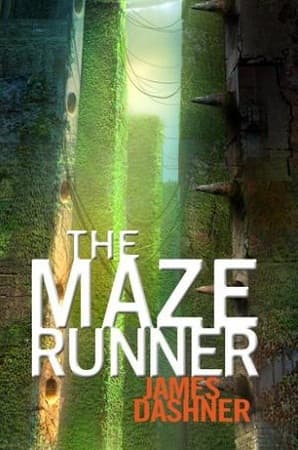
- The Maze Runner
James Dashner
4.0 (1.1M) average on GoodreadsFantasyBoth "Plague" and "The Maze Runner" feature young protagonists trapped in a dangerous, isolated environment with mysterious circumstances. However, Dashner's series focuses more on unraveling the overarching mystery of the Glade and WICKED, with the 'plague' (the Flare) being a more external, post-escape threat. Grant's "Plague" integrates the disease directly into the immediate survival narrative of the FAYZ, making it an internal and constant threat. While both involve high-stakes survival and leadership struggles, Grant delves deeper into the psychological impact of sustained horror and moral compromise within a fixed, inescapable zone, whereas Dashner's narrative is more about escape and discovery.
- Angels & Demons
Dan Brown
3.9 (2.7M) average on GoodreadsThrillerA Harvard symbologist races through Rome's ancient sites, deciphering cryptic clues to unmask the Illuminati and stop a vengeful plot to destroy the Vatican with a stolen antimatter weapon.
- Gone Girl
Gillian Flynn
4.1 (2.3M) average on GoodreadsThrillerA wife's sudden disappearance on her fifth anniversary reveals a web of lies and psychological warfare, exposing the secrets within a seemingly perfect marriage.
- The Girl on the Train
Paula Hawkins
3.9 (2.1M) average on GoodreadsThrillerA woman’s fascination with a seemingly perfect couple she watches from her daily train commute leads her into a dark investigation when she witnesses something that shatters their idyllic image.
- The Da Vinci Code
Dan Brown
3.9 (1.9M) average on GoodreadsThrillerA symbologist and a cryptologist race through European landmarks, deciphering ancient codes and uncovering a conspiracy that could rewrite the foundations of Christianity.





Enjoyed the summary?
A summary gives you the shape of the book. The book itself has the detail, the examples and the voice.
Find Plague on AmazonAs an Amazon Associate, BookBrief earns from qualifying purchases. How we're funded