
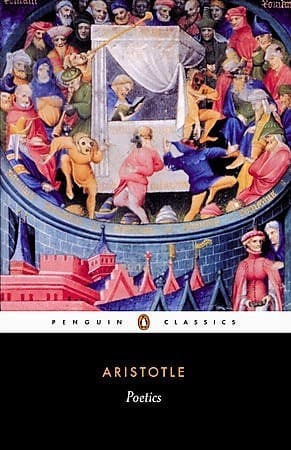
Core Idea
- Difficulty
- Hard
- Read it if
- You are interested in the foundational theories of Western literary criticism, the structure and purpose of storytelling, or the philosophical underpinnings of drama and art.
- Skip it if
- You are looking for a modern, accessible guide to creative writing, a light philosophical read, or a book that directly addresses contemporary literary forms.
Key Takeaways from Poetics
Plot as the Soul of Tragedy
The arrangement of incidents is paramount, not character.
Aristotle says the most important part of tragedy is the plot, or the 'arrangement of incidents.' He believes a well-made plot, with a clear beginning, middle, and end, is more important than character development or spectacle. The order of events, their logical connection, and their inevitable progression create pity and fear in the audience, leading to catharsis. A strong plot can exist without deeply drawn characters, but strong characters cannot carry a tragedy without a strong plot. This challenges modern ideas that often prioritize character study, reminding us that story structure itself has great power to move and teach.
“The plot is the source and, as it were, the soul of tragedy; character comes second.”
In the book: Aristotle uses the analogy of a painting, stating that a random splash of colors, however beautiful, is less impactful than a coherent outline. He also points out that 'tragedy is an imitation not of men but of action and life.'
Try this: When crafting any narrative, prioritize the logical and compelling sequence of events. Map out the plot points, reversals, and recognitions first, ensuring they build inevitably towards a resolution, rather than relying solely on charismatic characters or thematic exposition.
Related ideas: plot-structure, narrative-priority, action-over-character
The Power of Mimesis
Art imitates life, but not slavishly; it reveals universal truths.
Mimesis, or imitation, is central to Aristotle's theory, but people often misunderstand it as simple copying. He clarifies that art does not just copy reality; it imitates actions and human experience in a way that shows universal patterns and truths. A poet, through mimesis, creates a probable or necessary series of events that show what could happen, not just what has happened. This makes poetry (and all creative stories) more meaningful than history, which is limited to specific facts. The power is in simplifying and organizing experience to show its underlying logic and emotional effect.
“Poetry is a more philosophical and a higher thing than history: for poetry tends to express the universal, history the particular.”
In the book: Aristotle contrasts poetry with history, asserting that history deals with 'what Alcibiades did or suffered,' while poetry deals with 'what kind of things a certain kind of man will do or say probably or necessarily.'
Try this: When creating, don't just recount events; seek to distill universal human experiences and emotions. Ask what underlying truth or pattern your narrative is revealing about the human condition, rather than simply documenting facts. Strive for 'poetic truth' over literal accuracy.
Related ideas: imitation-art, universal-truth, poetic-truth
Catharsis: The Emotional Release
Tragedy purges pity and fear, offering emotional purification.
Catharsis is tragedy's main goal and effect, a concept that has caused centuries of discussion. Aristotle describes it as the 'purging' or 'purification' of pity and fear. This means not just feeling these emotions strongly, but experiencing them in a controlled, artistic way that ultimately cleanses or relieves the audience. By seeing others' suffering, audiences face their own weaknesses and fears, allowing for a release that is both emotionally satisfying and morally instructive. This suggests that art has a healing role, helping us process difficult emotions in a safe place.
“Tragedy, then, is an imitation of an action that is serious, complete, and of a certain magnitude... through pity and fear effecting the proper purgation of these emotions.”
In the book: The plays of Sophocles, such as 'Oedipus Rex,' are prime examples where the protagonist's downfall elicits profound pity (for his undeserved suffering) and fear (that such a fate could befall anyone), culminating in a powerful emotional release for the audience.
Try this: When designing experiences or narratives intended to evoke strong emotions, consider how to guide the audience through an emotional arc that leads to a sense of resolution or release, rather than leaving them in a state of unresolved distress. Understand the power of shared emotional experience for group cohesion and individual processing.
Related ideas: emotional-release, pity-fear, tragic-effect
Hamartia: The Tragic Error
A character's downfall stems from a significant, often intellectual, mistake.
Hamartia, often called a 'tragic flaw,' is better understood as a 'great error' or 'mistake,' often intellectual rather than moral. It is not necessarily a vice, but a misjudgment or lack of knowledge about important facts that causes the tragic hero's downfall. This difference is important because it makes the hero's suffering more pitiable – they are not evil, but fall due to a understandable human mistake. This concept highlights the role of human choice and decisions, however flawed, in shaping destiny, making the tragedy more impactful and relatable than if it were just from pure evil or random chance.
“The change of fortune should be not from wickedness to goodness, but from goodness to badness, and this change should come about not as a result of vice but of some great error or frailty (hamartia).”
In the book: Oedipus's hamartia is not pride, but his relentless pursuit of the truth, unknowingly unraveling his own horrifying past. He is a good man making a series of errors in judgment and knowledge, leading to his ruin.
Try this: When developing characters, especially those facing significant challenges, consider how their downfall might stem from a specific, identifiable error in judgment or a blind spot, rather than outright malice. This creates a more nuanced and psychologically resonant narrative.
Related ideas: tragic-flaw, error-judgment, character-downfall
Recognition and Reversal
The most effective plots feature sudden shifts in fortune and knowledge.
Aristotle names 'recognition' (anagnorisis) and 'reversal' (peripeteia) as key parts of a complex and effective plot. A reversal is a sudden change from one situation to its opposite, often from good fortune to bad. Recognition is a change from not knowing to knowing, often involving finding out a true identity or an important fact. When these two happen at the same time, as in 'Oedipus Rex' where the messenger's news meant to reassure Oedipus instead reveals his true parentage and crime, the effect is very powerful. This structural complexity turns a simple story into a profound tragedy, making the audience's emotional journey more intense and meaningful.
“The finest kind of Recognition is one that occurs along with Reversal, like that in Oedipus.”
In the book: In 'Oedipus Rex,' the messenger arrives to relieve Oedipus's fear of marrying his mother by revealing he was adopted. This news, however, triggers Oedipus's recognition of his true parentage and the fulfillment of the prophecy, simultaneously reversing his fortune from king to pariah.
Try this: In storytelling, strategically place moments of sudden, ironic reversal and profound discovery. Consider how a piece of information intended to help a character might inadvertently lead to their undoing, or how a long-held belief might be suddenly shattered by a revelation.
Related ideas: anagnorisis, peripeteia, plot-twist
The Ideal Tragic Hero
A character who is 'intermediate' – not wholly good or evil.
Aristotle states that the tragic hero should not be perfectly good, as their downfall would be only shocking and not pitiable. Nor should they be completely bad, as their suffering would feel deserved, removing pity. Instead, the ideal tragic hero is 'intermediate' – a generally good, fair character of high standing, who makes a significant error (hamartia). This creates a relatable figure whose suffering causes both pity (because they are mostly good) and fear (because their downfall seems possible for anyone). This nuanced portrayal ensures the audience's emotional involvement and helps catharsis, showing the fragile nature of human luck and judgment.
“The change of fortune should be not from goodness to badness... but from good to bad, of one who is not eminently good and just, yet whose misfortune is brought about not by vice or depravity, but by some error or frailty.”
In the book: Characters like Oedipus or Creon in 'Antigone' fit this description. They are noble figures, often rulers, who possess admirable qualities but whose fatal errors lead to their ruin, rather than inherent wickedness.
Try this: When creating protagonists for dramatic narratives, avoid overly simplistic portrayals of good or evil. Develop characters with a mix of virtues and recognizable human failings, making their struggles and potential downfalls more resonant and emotionally impactful for the audience.
Related ideas: tragic-hero, character-complexity, relatable-suffering
Unity of Action
A single, complete, and coherent plot is essential for impact.
Aristotle stresses the importance of 'unity of action,' meaning a tragedy should focus on one complete action with a clear beginning, middle, and end. Every event in the plot must be logically connected and necessary; removing any part should disrupt the entire structure. This strict coherence ensures the plot's inevitability and maximizes its emotional impact, preventing distractions and keeping the audience focused on the main tragic progression. This idea, often misunderstood as 'unity of time and place' (which Aristotle mentions but does not stress as much), shows the power of a tightly woven story.
“As therefore in the other imitative arts, one imitation is always of one thing, so in poetry the imitation must be of one action, and of that a whole, the several incidents of which are so constituted, that if any one of them be displaced or removed, the whole will be disjoined and disturbed.”
In the book: He criticizes plays that try to encompass an entire hero's life, arguing that such breadth sacrifices depth and coherence. Instead, he champions plays like 'Oedipus Rex,' which focuses intensely on a single, unfolding crisis.
Try this: In any creative project, ensure a clear, singular focus. Identify the core action or problem and remove any extraneous elements that do not directly contribute to its progression or resolution. Every scene, character, or detail should serve the central narrative purpose.
Related ideas: narrative-unity, plot-cohesion, story-focus
Spectacle is Secondary
The visual elements are the least artistic and least important.
Aristotle places spectacle (the visual elements, scenery, costumes, etc.) at the bottom of his list of tragic elements. While he admits it can create emotion, he calls it 'least artistic' because it depends on external production rather than the poet's skill. A truly great tragedy, he argues, should move an audience even when simply read, proving its power comes from plot, character, and language, not just what is seen. This view prioritizes intellectual and structural artistry over mere sensory appeal, an important difference often missed in modern, visually-driven entertainment.
“The Spectacle has, indeed, an emotional attraction of its own, but, of all the parts, it is the least artistic, and connected least with the art of poetry. For the power of Tragedy, we may be sure, is independent of representation and actors.”
In the book: He implies that a well-written play should be able to achieve its emotional effects through its text alone, without elaborate staging. He critiques playwrights who rely on 'spectacular means' to achieve tragic effects that should arise from the plot itself.
Try this: When evaluating or creating art, look beyond surface-level aesthetics. Prioritize the underlying structure, narrative, and thematic depth. Ask if the work would still be powerful and meaningful if stripped of its visual or auditory embellishments. Focus on the core message and construction.
Related ideas: visual-hierarchy, artistic-value, substance-over-style
The Purpose of Poetic Language
Language should be clear but elevated, avoiding banality or obscurity.
Aristotle discusses the importance of diction (lexis) in tragedy, supporting language that is clear and suitable but also elevated and ornate. It should not be so common as to be ordinary, yet not so obscure or old-fashioned as to be hard to understand. Metaphor, epithet, and unusual words can enrich the language, but they must be used carefully to avoid being over-the-top or confusing. The goal is to create a sense of dignity and distance fitting for serious topics, while still conveying meaning effectively. This balance ensures the audience can engage intellectually and emotionally without being bogged down by overly simple or overly complex language.
“The perfection of style is to be clear without being mean.”
In the book: He discusses the use of 'rare words, metaphors, and lengthened forms' as ways to elevate style, but warns against their excessive use, which can lead to riddles or barbarism.
Try this: In writing or speaking, strive for clarity without sacrificing elegance or impact. Use evocative language and rhetorical devices thoughtfully to enhance your message, rather than to obscure it or show off. Find the balance between accessibility and intellectual richness.
Related ideas: diction, poetic-language, style-clarity
Tragedy's Moral Function
Beyond entertainment, tragedy offers moral and intellectual insight.
While often seen as primarily entertainment, Aristotle's 'Poetics' suggests tragedy has a deep moral and intellectual role. By presenting actions that are 'serious' and 'complete,' and by creating pity and fear leading to catharsis, tragedy gives audiences more than just pleasure. It offers insights into human nature, the results of actions, the fragility of fortune, and the universal patterns of justice and suffering. The experience of tragedy, when well-made, is not just emotional but also instructional, helping people understand and process life's complexities and morality, leading to deeper empathy and wisdom.
“Tragedy is an imitation of an action that is serious, complete, and of a certain magnitude... through pity and fear effecting the proper purgation of these emotions.”
In the book: The entire framework of catharsis, hamartia, and the ideal tragic hero points to a deliberate design to not just entertain, but to educate and purify the audience's emotions and understanding of the human condition.
Try this: When creating or consuming narratives, consider the deeper implications and lessons embedded within the story. Look for how the narrative explores moral dilemmas, human failings, and universal truths, rather than just focusing on plot mechanics or superficial enjoyment. Engage with art as a tool for understanding life.
Related ideas: moral-lesson, art-purpose, intellectual-insight
Poetics Quotes
“Epic poetry and Tragedy, Comedy also and Dithyrambic poetry, and the music of the flute and of the lyre in most of their forms, are all in fact modes of imitation.”
“Tragedy is an imitation of an action that is serious, complete, and of a certain magnitude; in language embellished with each kind of artistic ornament, the several kinds being found in separate parts of the play; in the form of action, not of narrative; through pity and fear effecting the proper purgation of these emotions.”
“The Plot, then, is the first principle, and, as it were, the soul of Tragedy.”
“A perfect plot, accordingly, must not be too simple, nor yet too complex, but must imitate actions which excite pity and fear, —this being the distinctive mark of tragic imitation.”
“It is not the function of the poet to relate what has happened, but what may happen,—what is possible according to the law of probability or necessity.”
“Hence poetry is more philosophical and a higher thing than history: for poetry tends to express the universal, history the particular.”
“The change of fortune from good to bad should come about not through vice and depravity, but through some great error or frailty.”
“Recognition is, as the name indicates, a change from ignorance to knowledge, producing love or hate between the persons destined by the poet for good or ill fortune.”
“Peripeteia is the change from one state of things within the play to its opposite, in the way we have described, and that too in the probable or necessary sequence of events.”
“Pity is aroused by unmerited misfortune, fear by the misfortune of a man like ourselves.”
“A man who is too good to be tragic, or too bad, would be unsuitable. The best is a character between these two extremes.”
“As therefore, in painting, a painter may draw a picture of one who is not perfectly beautiful, and yet omit nothing that is characteristic, and may even make him better looking; so too in poetry, the poet must imitate men as they are, or as they are said or thought to be, but always in a way that makes them appear better.”
“The Dithyramb and the Nomes are, again, forms of poetry, but they differ in that the former is sung by a chorus, the latter by a single performer.”
“It is clear that the poet should be an inventor of tales rather than of verses, since he is a poet because he imitates, and what he imitates are actions.”
Quiz
10 questions on the main ideas. Each answer comes with a short explanation.
Question 1
According to Aristotle in 'Poetics,' which element is considered 'the source and the soul of tragedy'?
- Character
- Spectacle
- Plot
- Language
Show answer
C. Plot Aristotle explicitly states in 'Poetics' that 'the plot is the source and the soul of tragedy,' highlighting its supreme importance over other elements.
Question 2
What two emotions does Aristotle state tragedy aims to produce in the audience?
- Joy and sorrow
- Pity and fear
- Anger and relief
- Wonder and disgust
Show answer
B. Pity and fear The text states that tragedy aims to 'produce pity and fear in the audience,' which are crucial for the process of catharsis.
Question 3
Which of the following Greek tragedians are mentioned as examples in Aristotle's 'Poetics'?
- Aristophanes
- Menander
- Aeschylus, Sophocles, and Euripides
- Homer
Show answer
C. Aeschylus, Sophocles, and Euripides The introduction explicitly notes that Aristotle takes examples 'from the plays of Aeschylus, Sophocles and Euripides.'
Question 4
What is the meaning of 'mimesis' as introduced by Aristotle in 'Poetics'?
- Emotional release
- Imitation
- Moral failing
- Dramatic structure
Show answer
B. Imitation The text defines 'mimesis' as 'imitation,' a fundamental concept in Aristotle's understanding of art.
Question 5
How does Aristotle describe the ideal tragic character in terms of their nature?
- Flawless and morally perfect
- Entirely evil and deserving of their fate
- Heroic stature, idealized yet true to life
- Common and relatable to the everyday person
Show answer
C. Heroic stature, idealized yet true to life The description states that effective tragedies center on 'characters of heroic stature, idealized yet true to life,' emphasizing a balance between grandeur and realism.
Question 6
What does the concept of 'katharsis' primarily refer to in the context of tragedy?
- The discovery of a hidden truth
- A sudden change of fortune
- Purification or emotional cleansing
- The introduction of a new character
Show answer
C. Purification or emotional cleansing The text explicitly identifies 'katharsis' as 'purification,' referring to the emotional release experienced by the audience.
Question 7
What is 'hamartia,' as a central concept in Aristotle's 'Poetics'?
- A fatal flaw in character, like hubris
- An error or mistake made by the tragic hero
- The chorus's commentary on the action
- The moment of recognition by the hero
Show answer
B. An error or mistake made by the tragic hero The text defines 'hamartia' as 'error,' which is often understood as a mistake or misjudgment by the protagonist rather than an inherent moral flaw.
Question 8
Aristotle argues that the most effective tragedies rely on which combination of plot devices?
- Monologues and deus ex machina
- Flashbacks and foreshadowing
- Complication and resolution, recognition and reversals
- Extensive dialogue and minimal action
Show answer
C. Complication and resolution, recognition and reversals The summary states that 'the most effective tragedies rely on complication and resolution, recognition and reversals,' highlighting these specific structural elements.
Question 9
Why does Aristotle suggest we derive pleasure from the 'apparently painful process' of tragedy?
- Because it allows us to feel superior to the characters' misfortunes.
- Due to the intellectual satisfaction of understanding complex plot structures.
- Through the process of catharsis, which purifies emotions like pity and fear.
- From the vicarious experience of suffering without personal risk.
Show answer
C. Through the process of catharsis, which purifies emotions like pity and fear. The text poses the question 'why we derive pleasure from this apparently painful process' and the concept of 'katharsis' (purification) is the direct answer to how this pleasure is derived through the purging of pity and fear.
Question 10
Which aspect of 'Poetics' makes it 'fully accessible to the modern reader' in Malcolm Heath's translation?
- Its inclusion of modern theatrical examples.
- Its focus solely on plot diagrams.
- Its lucid English translation and extended introduction with detailed discussion of key concepts.
- Its abridged version, removing complex philosophical arguments.
Show answer
C. Its lucid English translation and extended introduction with detailed discussion of key concepts. The description states that Malcolm Heath's translation 'makes the Poetics fully accessible to the modern reader' through its 'lucid English translation' and 'extended introduction, which discusses the key concepts in detail.'
Poetics FAQ
What is the main subject of Aristotle's Poetics?
Aristotle's Poetics is primarily a work of literary criticism that examines the elements and principles of Greek tragedy. It analyzes how dramatic components like plot, character, language, and spectacle combine to evoke specific emotional responses in the audience, such as pity and fear.
What does Aristotle mean by 'mimesis' in Poetics?
'Mimesis' in Poetics refers to imitation or representation, a fundamental concept where art imitates life. Aristotle argues that tragedy, like other forms of art, is an imitation of an action, specifically a serious and complete action, rather than just a simple copying of reality.
Does Aristotle believe that tragedy should aim to make the audience feel sad?
While tragedy evokes pity and fear, Aristotle doesn't state its primary aim is sadness. Instead, he suggests that these emotions lead to 'katharsis,' a purification or purgation that provides a unique pleasure and understanding, rather than simply leaving the audience in a state of distress.
What is 'hamartia' and how does it relate to tragic heroes?
'Hamartia' is often translated as a 'tragic flaw' or 'error in judgment.' It refers to a mistake or error committed by the tragic hero, often due to ignorance or a moral failing, that leads to their downfall, rather than purely external forces or inherent evil.
How does Aristotle's view of plot differ from just a sequence of events?
For Aristotle, the plot is not merely a sequence of events but the 'soul of tragedy,' a carefully constructed and unified whole with a beginning, middle, and end. It involves a causal chain where events logically follow from one another, leading to complication, recognition, and resolution, rather than just a chronological recounting.
How is Aristotle's Poetics different from modern literary criticism?
Aristotle's Poetics provides foundational theories for understanding drama, focusing on structural elements, emotional impact, and universal principles of imitation, whereas modern literary criticism encompasses a much broader array of theoretical approaches, including post-structuralism, feminism, and post-colonialism, often engaging with social, political, and psychological contexts beyond just the dramatic form itself.
What is 'katharsis' and why is it important in tragedy?
'Katharsis' is a complex concept, often interpreted as a purgation or purification of the emotions of pity and fear experienced by the audience during a tragedy. It's important because it explains why people derive pleasure from watching painful events, suggesting a beneficial emotional release or intellectual clarification.
Does Poetics offer practical advice for playwrights?
Yes, Poetics offers significant practical advice for playwrights, outlining principles for constructing effective plots, developing compelling characters, and using language to achieve desired emotional effects. Aristotle details elements like reversals (peripeteia) and recognitions (anagnorisis) that contribute to a well-structured and impactful tragedy.
About the author
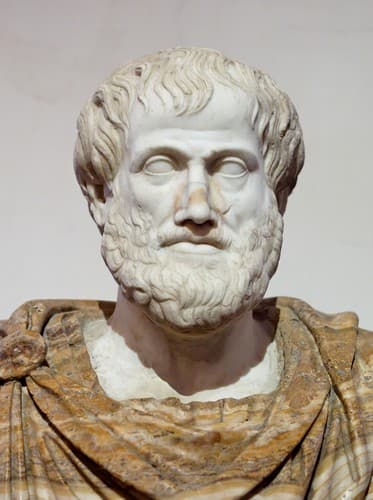
Aristotle was a Greek philosopher and polymath whose writings covered many subjects, including physics, ethics, politics, and art. He is renowned for his seminal works such as "Physics," "Poetics," and "Politics," which laid the groundwork for Western philosophy and scientific inquiry. A student of Plato and tutor to Alexander the Great, Aristotle's intellectual contributions continue to influence thought across numerous disciplines.
Similar books
- The Goldfinch
Donna Tartt
3.9 (720k) average on GoodreadsLiterary FictionHaunted by a tragic explosion and clutching a stolen Dutch masterpiece, a young orphan navigates the opulent drawing rooms of New York and the gritty underbelly of the art world, desperately seeking connection and redemption amidst a life spiraling into crime and obsession.
- Girl with a Pearl Earring
Tracy Chevalier
3.9 (627k) average on GoodreadsHistorical FictionA young servant in 17th-century Delft finds her quiet world intertwined with the painter Johannes Vermeer as she becomes his muse, blurring the lines of class, art, and forbidden desire.
- The Story of Art
E.H. Gombrich
3.9 (311k) average on GoodreadsReferenceExplore thousands of years of human creativity, from ancient cave art to modern masterpieces, with Gombrich's classic account, updated with new insights into art's changing story.
- The New Drawing on the Right Side of the Brain
Betty Edwards
3.9 (297k) average on GoodreadsPsychologyLearn to draw by using the often-ignored visual side of your brain, changing how you see the world.
- Ways of Seeing
John Berger
3.9 (251k) average on GoodreadsHistoryJohn Berger's "Ways of Seeing" changes how we see art by showing the historical and social forces that shape our view, making us question the power dynamics in every image.
- On Writing: A Memoir of the Craft
Stephen King
4.3 (222k) average on GoodreadsBiography




Enjoyed the summary?
A summary gives you the shape of the book. The book itself has the detail, the examples and the voice.
Find Poetics on AmazonAs an Amazon Associate, BookBrief earns from qualifying purchases. How we're funded