
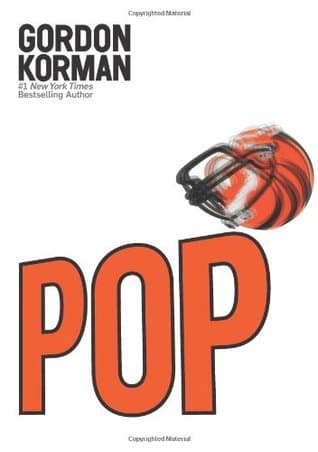
Synopsis
Covers the whole plot, including the ending.
- Difficulty
- Easy
- Pacing
- Moderate
- Mood
- Heartwarming, Thought-provoking, Humorous, Somber
- Read it if
- You enjoy sports stories with a serious underlying message, character-driven narratives about friendship and family, and books that tackle difficult topics with sensitivity.
- Skip it if
- You prefer lighthearted reads without heavy themes, or are not interested in sports as a central plot element.
Pop Plot Summary
Covers the whole plot, including the ending.
A New Town and an Unexpected Friend
Marcus Jordan moves to Plumstead, Pennsylvania, with his mother after his parents' divorce. He feels like an outsider. He wants to make the varsity football team as a wide receiver. Practicing alone at the local park, he meets Charlie, an older man who is a skilled, if eccentric, football player. Charlie's passes are perfect, and he reads plays well. Marcus is impressed by Charlie's talent and quickly forms a bond with him, seeing him as a mentor. They practice together, and Marcus feels more confident about tryouts, despite his loneliness in the new town.
Charlie Popovich: The King of Pop
Marcus learns Charlie is Charlie Popovich, a former NFL linebacker known as 'The King of Pop.' This excites Marcus, but he also notices Charlie's strange behavior. Charlie sometimes forgets things, repeats himself, and acts without thinking, like showing up at Marcus's house unannounced or causing small problems. Marcus thinks these are just Charlie's quirks, focusing on learning from a football legend. Meanwhile, Marcus attends Plumstead High School tryouts. He faces a hostile environment led by the star quarterback, Troy Popovich, who is Charlie's son. Troy and his friends make it clear they do not want Marcus on the team.
Trouble and Team Dynamics
Charlie's behavior becomes more of a problem. He 'borrows' the school mascot costume and causes a scene. Marcus is wrongly blamed and nearly suspended. Marcus also struggles to fit in with the football team, as Troy Popovich and his group actively try to undermine him. Despite Marcus's talent, he is excluded and often left out of drills. Coach Blanda, the team coach, seems to see Marcus's potential but is also careful about Charlie's influence and the trouble he causes. Marcus tries to defend Charlie, but he admits Charlie's actions are harder to explain, especially when they affect his standing with the team.
First Game and a Fateful Collision
Against expectations, Marcus makes the varsity team and plays a lot in the first game. He plays well, catching passes and showing his skill, which annoys Troy. During the game, Charlie Popovich appears on the sidelines, dressed in his old uniform, confused and trying to 'coach' from the field. In a key moment, Charlie runs onto the field during a play, colliding with an opposing player and causing chaos. The incident results in a penalty. Charlie is escorted away, leaving Marcus embarrassed and the team in disarray. This public display of Charlie's behavior raises concerns in the community and with the coach.
The Truth About Charlie's Condition
After the game incident, Coach Blanda and Marcus's mother talk to Marcus about Charlie. Coach Blanda says Charlie Popovich has Chronic Traumatic Encephalopathy (CTE), a brain disease from repeated head trauma in his football career. This news changes Marcus's view of his mentor; Charlie's quirks are symptoms of a serious illness. Marcus begins to understand the sad reality behind Charlie's 'pranks' and memory issues. He feels sad, worried, and responsible for Charlie, realizing his friend is not just quirky but truly ill and needs help.
Troy's Struggle and Family Secrets
Marcus realizes Troy's hostility is not just jealousy. Troy has lived with his father's declining condition for years, trying to cover for him and protect him from public view. Troy's dislike for Marcus comes from Marcus's unintentional involvement with his father and the exposure of Charlie's illness. Troy resents Marcus for befriending Charlie and for not understanding the situation's seriousness. This revelation makes Troy a more complex character, burdened by family secrets and the pain of watching his father get worse. The two boys, despite their initial conflict, share a bond through Charlie.
A Plea for Understanding
Marcus, now understanding Troy, starts to feel for him. He and Troy, despite their past conflicts, begin to work together to support Charlie. They realize Charlie needs professional help and that his condition, CTE, needs public understanding. Marcus, with help from his new friend Cara, researches CTE and its effects. They try to convince Coach Blanda to talk about the issue with the team and the community. This shared experience starts to bring Marcus and Troy closer, as they both care for Charlie and want to help him, even if it means exposing their family's private struggle.
The Team Rallies
Marcus and Troy's efforts, and the growing awareness of Charlie's condition, unite the football team. They wear armbands to support Charlie and CTE awareness. Coach Blanda, initially unsure, becomes a strong supporter, recognizing the importance of player safety and the long-term effects of head injuries. The team's new unity helps them play better, as a cohesive unit. This change shows a turning point, as the team moves past internal rivalries to a shared goal, showing maturity and compassion.
Charlie's Hospitalization and a Difficult Goodbye
Charlie's condition gets worse, and he needs to be hospitalized. His memory lapses are more frequent, and he cannot function independently as well. Marcus visits Charlie, finding him often confused but sometimes clear-headed. These visits are heartbreaking for Marcus, as he sees the man who was 'The King of Pop' fading. The reality of CTE becomes clearer. The team, including Troy, visits Charlie, offering support and respect. It is a somber but important moment, as they acknowledge Charlie's legacy and the sad cost of his career.
A New Chapter and Lasting Impact
By the end of the season, Marcus has become an important part of the Plumstead High football team and has found a sense of belonging in his new town. His friendship with Troy becomes mutual respect, and he has made strong bonds with others, including Cara. The community, through Charlie's story, learns more about CTE and football's risks. While Charlie's future is uncertain and sad, his legacy goes beyond his football skill to raising awareness. Marcus, no longer just the 'new kid,' has helped bring about a shift in perspective, leaving a lasting impact on Plumstead.
Pop Characters
Marcus Jordan
Protagonist
New kid in town, seeking to make his mark on the football team and find belonging.
Marcus is a talented wide receiver who moves to Plumstead, Pennsylvania, with his mother after his parents' divorce. He feels like an outsider and is determined to prove himself on the football field. Initially drawn to Charlie Popovich's football skills, Marcus develops a deep admiration and friendship with the former NFL star. He is observant, compassionate, and resilient, often trying to see the best in people. His journey involves navigating a new social landscape, dealing with team politics, and ultimately confronting the harsh reality of Charlie's illness, which forces him to mature and advocate for others.
Relationships: Charlie Popovich (mentor and friend); Troy Popovich (initial rival, later ally); Cara (friend and romantic interest); Coach Blanda (coach and mentor)
Charlie Popovich
Supporting
A legendary former NFL linebacker suffering from CTE.
Charlie, known as 'The King of Pop' during his NFL career, is a football savant whose incredible skills are still evident despite his age. However, he suffers from Chronic Traumatic Encephalopathy (CTE), a degenerative brain disease caused by repeated head injuries. This manifests as erratic behavior, memory loss, confusion, and impulsive actions, which are initially mistaken for eccentricity by Marcus. Charlie is a tragic figure, a once-great athlete whose mind is slowly failing him, highlighting the devastating long-term consequences of professional football. His condition drives much of the plot and forces other characters to confront difficult truths.
Relationships: Marcus Jordan (mentee and friend); Troy Popovich (son); Coach Blanda (former teammate and friend)
Troy Popovich
Supporting
Star quarterback and Charlie's son, initially hostile towards Marcus.
Troy is the talented but arrogant star quarterback of the Plumstead High football team and Charlie Popovich's son. He initially resents Marcus, seeing him as a threat and ostracizing him from the team. His hostility stems from the painful burden of living with his father's deteriorating condition and trying to protect him from public scrutiny. Troy is fiercely loyal to his father, even as he struggles to cope with the reality of Charlie's CTE. His character arc involves moving past his anger and forming an unexpected alliance with Marcus to support his father and raise awareness about CTE.
Relationships: Charlie Popovich (father); Marcus Jordan (initial rival, later ally); Coach Blanda (coach)
Coach Blanda
Supporting
Head football coach, former teammate of Charlie, and a figure of authority.
Coach Blanda is the head football coach at Plumstead High. He is a respected but traditional coach, initially focused on team performance and discipline. He was also a former teammate of Charlie Popovich and has a long-standing, complicated relationship with him, aware of Charlie's struggles long before Marcus. Blanda initially tries to manage Charlie's disruptions and Troy's animosity towards Marcus. However, as Charlie's condition becomes undeniable, Coach Blanda transforms into an advocate for player safety and CTE awareness, using his position to educate the team and the community.
Relationships: Charlie Popovich (former teammate and friend); Marcus Jordan (player); Troy Popovich (player)
Cara
Supporting
Marcus's friend and romantic interest, intelligent and supportive.
Cara is a bright and supportive girl who becomes Marcus's friend and eventual romantic interest. She is intelligent, observant, and possesses a strong moral compass. Cara is one of the first people Marcus connects with in Plumstead, providing him with emotional support and perspective. She helps Marcus research CTE and understand the gravity of Charlie's condition, playing a crucial role in his journey to advocate for Charlie. Her presence offers Marcus a sense of normalcy and connection amidst the chaos of Charlie's illness and team dynamics.
Relationships: Marcus Jordan (friend and romantic interest)
Mrs. Jordan
Supporting
Marcus's mother, navigating a new town and her son's challenges.
Mrs. Jordan is Marcus's mother, who has recently divorced and moved with Marcus to Plumstead. She is a caring and concerned parent, trying to provide stability for her son in a new environment. She is initially unaware of the full extent of Charlie Popovich's condition but becomes worried by his erratic behavior and its impact on Marcus. She supports Marcus's football aspirations but also prioritizes his safety and well-being. Her perspective provides an adult viewpoint on Charlie's issues and the challenges of relocating.
Relationships: Marcus Jordan (son)
Mr. Popovich (Charlie's father)
Mentioned
Charlie's elderly father, who lives with him.
Mr. Popovich is Charlie's elderly father who lives with him. He is a quiet and often overwhelmed figure, struggling to cope with his son's deteriorating condition. He tries to manage Charlie's behavior and protect him, but he is largely unable to control the unpredictable nature of Charlie's CTE. His presence highlights the family burden of Charlie's illness and the quiet suffering it causes, often in the background of Charlie's more public outbursts.
Relationships: Charlie Popovich (son); Troy Popovich (grandfather)
Dallas
Supporting
One of Troy's friends and a fellow football player.
Dallas is one of Troy Popovich's friends and a member of the football team. He initially participates in the ostracization of Marcus, following Troy's lead. He represents the typical high school jock mentality, prioritizing team hierarchy and loyalty to the star quarterback. However, as Charlie's condition becomes more apparent and the team begins to unite, Dallas, along with other teammates, starts to show more compassion and understanding, eventually joining the efforts to support Charlie.
Relationships: Troy Popovich (friend and teammate); Marcus Jordan (teammate)
Pop Themes
Identity and Belonging
Marcus's journey is about finding his place after his parents' divorce and moving. He seeks belonging through football and his friendship with Charlie. He starts as an outsider, struggling to fit in with the team and social groups. His eventual acceptance and leadership role, especially in supporting Charlie, cement his identity as a football player and a compassionate person who makes a difference. This theme also explores Troy's struggle to maintain his identity as the son of a football legend while dealing with his father's illness.
“He was the new kid in a new town, and he was determined to make a name for himself.”
The Price of Glory/Consequences of Sports
The novel shows the long-term effects of professional sports, specifically football, through Charlie Popovich's CTE. His decline from 'The King of Pop' to a confused, erratic man shows the physical and mental cost of repeated head trauma. The book makes readers question the celebration of sports and consider the sacrifices athletes make. This theme is central to the plot, driving the awareness campaign and affecting all characters, especially Marcus, Troy, and Coach Blanda, who must face the difficult side of the game they love.
“Every time he popped someone, a little piece of himself died.”
Empathy and Understanding
Initially, Marcus does not understand Charlie's behavior, and Troy is hostile towards Marcus. When the truth about Charlie's CTE is revealed, the characters must develop empathy. Marcus learns to look past Charlie's 'pranks' to see the suffering. Troy's animosity changes into a shared burden and then an alliance with Marcus, as they both understand the pain of Charlie's illness. The book encourages understanding for those with neurological conditions and for looking past surface behaviors to the underlying causes, helping create compassion within the community and the football team.
“It wasn't just a funny quirk anymore. It was a disease. It was heartbreaking.”
Family and Loyalty
Family loyalty is central, especially with Troy Popovich's efforts to protect his father, Charlie. Troy's initial hostility towards Marcus comes from his desire to keep his father's illness a secret and shield him from public judgment. The Popovich family's private pain becomes public, forcing Troy to confront his loyalty and eventually share the burden. Marcus also shows loyalty to his new friend, Charlie, even when it creates difficulties. The novel explores how family bonds are tested and strengthened during adversity and illness.
“He’d been trying to cover for his dad his whole life, it seemed.”
Mentorship and Influence
The relationship between Marcus and Charlie Popovich begins as a mentorship, with Charlie sharing his football knowledge with Marcus. Charlie's 'King of Pop' status and skills initially make him an inspiring figure. However, this mentorship becomes complex as Charlie's illness appears, and Marcus starts to take on a more protective role. Charlie's influence on Marcus shifts from purely athletic to a lesson in compassion, responsibility, and understanding the human cost of greatness. Coach Blanda also acts as a mentor, guiding Marcus and the team.
“He was teaching Marcus to play football the way it was meant to be played.”
Plot Devices & Literary Techniques
Eccentric Mentor
Charlie Popovich initially appears as a quirky, brilliant football savant.
Charlie Popovich functions as the eccentric mentor figure for Marcus. His incredible football skills and unconventional behavior initially make him a fascinating, almost magical, guide for the new kid. This device is crucial as it sets up the dramatic reveal of his underlying condition. The 'eccentricity' later becomes a tragic symptom of CTE, subverting the typical mentor trope and adding a layer of poignancy and realism to his character. His initial charm draws Marcus in, making the subsequent discovery of his illness even more impactful and heartbreaking.
Misinformation and Misinterpretation
Charlie's symptoms are initially misinterpreted as harmless quirks or pranks.
A key plot device is the misinformation and misinterpretation surrounding Charlie's behavior. Marcus and others initially view Charlie's memory lapses, strange actions, and impulsive 'pranks' as harmless eccentricities or even intentional mischief. This misunderstanding creates humor and tension but also serves to mask the severity of his condition. The eventual revelation that these are symptoms of CTE dramatically shifts the narrative, highlighting how easily serious medical conditions can be overlooked or dismissed when not understood, and emphasizing the importance of awareness and accurate diagnosis.
The 'Pop' Nickname
The double meaning of Charlie's nickname 'The King of Pop'.
Charlie Popovich's nickname, 'The King of Pop,' serves as a powerful double entendre. On one hand, it refers to his legendary ability to 'pop' or hit opposing players with immense force during his NFL career, signifying his dominance and skill. On the other hand, it subtly foreshadows the 'pop' or damage to his brain from those very hits, leading to CTE. This literary device is central to the book's theme, symbolizing the tragic cost of his glory and adding a layer of irony and sadness to his once-celebrated moniker, making it a poignant reminder of his fate.
Sports as a Microcosm
The football team dynamics mirror larger social issues and personal growth.
The Plumstead High football team acts as a microcosm for the larger themes of identity, belonging, rivalry, and unity. The initial animosity between Marcus and Troy, the struggle for acceptance, and the ultimate solidarity forged in the face of Charlie's illness reflect broader social dynamics. The team's journey from internal conflict to a cohesive unit advocating for a cause parallels Marcus's personal growth and the community's evolving understanding of CTE. The sport itself provides the backdrop for character development, conflict, and resolution, making the team's challenges resonate beyond the field.
Pop Quotes
“I'm not a football player. I'm a quarterback.”
“Sometimes the hardest hits aren't the ones you see coming.”
“You don't have to be the biggest guy on the field to make a difference.”
“Football is more than just a game. It's a way of life.”
“The past has a way of catching up with you, whether you're ready or not.”
“It's not about winning or losing. It's about how you play the game.”
“Friendship can be the strongest defense against anything.”
“Every hit tells a story, and not all of them have happy endings.”
“You can't change the past, but you can learn from it.”
“The field is where I feel most alive.”
“Sometimes the truth hurts more than a tackle.”
“It takes a team to win, but it only takes one person to inspire.”
“The game doesn't define you, but how you play it does.”
“In football, as in life, you have to keep moving forward.”
“The best plays are the ones you make when no one's watching.”
Quiz
10 questions on the plot and the characters. Each answer comes with a short explanation.
Question 1
Why does Marcus move to a new town at the beginning of the book?
- His father got a new job in the area
- His parents have recently split up
- He was expelled from his previous school
- To live closer to his grandparents
Show answer
B. His parents have recently split up Marcus moves to a new town after his parents' divorce, which is a key part of his struggle to adjust and find his place in the unfamiliar environment.
Question 2
What is Charlie Popovich's nickname from his NFL career?
- The Prince of Pop
- The King of Pop
- The Pop Master
- The Pop Warrior
Show answer
B. The King of Pop Charlie was nicknamed 'the King of Pop' during his time as an NFL linebacker, reflecting his reputation for hard hits and football prowess.
Question 3
How does Marcus first meet Charlie?
- At a school football tryout
- While practicing football alone in a park
- Through a mutual friend in town
- At a local sports store
Show answer
B. While practicing football alone in a park Marcus meets Charlie while practicing football by himself in the dead of summer, striking up an unexpected friendship with the former NFL player.
Question 4
What is the relationship between Charlie and the quarterback at Marcus's new school?
- They are uncle and nephew
- They are father and son
- They are former teammates
- They are coach and player
Show answer
B. They are father and son Charlie is the father of the quarterback at Marcus's school, which creates tension as the quarterback leads the team in excluding Marcus.
Question 5
Why does Charlie's behavior get Marcus into trouble?
- Charlie steals from local stores and involves Marcus
- Charlie is a prankster whose actions have negative consequences for Marcus
- Charlie encourages Marcus to skip school regularly
- Charlie starts fights with other students on Marcus's behalf
Show answer
B. Charlie is a prankster whose actions have negative consequences for Marcus Charlie's prankster nature leads to situations that cause trouble for Marcus, complicating his efforts to fit in at his new school.
Question 6
What is a central theme explored in 'Pop' regarding football?
- The importance of winning at all costs
- The damage caused by concussions and hard hits ('pops') in the sport
- The financial rewards of professional football
- The history of football rules and regulations
Show answer
B. The damage caused by concussions and hard hits ('pops') in the sport The book delves into the consequences of repeated head trauma in football, using Charlie's character to highlight the long-term effects of such injuries.
Question 7
Which element is NOT part of Marcus's experience in the new town?
- Facing exclusion from the school football team
- Developing a romantic relationship
- Winning a scholarship to a prestigious college
- Dealing with his parents' divorce
Show answer
C. Winning a scholarship to a prestigious college While Marcus deals with football tryouts, romance, and family issues, winning a college scholarship is not a plot point in the book.
Question 8
How does Charlie's football expertise initially affect Marcus?
- It makes Marcus overconfident and arrogant
- It helps Marcus improve his skills and feel lucky to learn from a pro
- It causes Marcus to quit football out of intimidation
- It leads Marcus to focus solely on academics instead
Show answer
B. It helps Marcus improve his skills and feel lucky to learn from a pro Marcus is impressed by Charlie's abilities and sees their friendship as a great opportunity to enhance his own football skills for tryouts.
Question 9
What does the book suggest about the impact of Charlie's NFL career on his current life?
- It has left him financially secure but socially isolated
- It has caused cognitive and behavioral issues due to past injuries
- It has made him a local celebrity with no negative effects
- It has inspired him to become a full-time football coach
Show answer
B. It has caused cognitive and behavioral issues due to past injuries Charlie's prankster behavior and other actions hint at underlying problems stemming from head injuries sustained during his football career, aligning with the book's theme on sports-related damage.
Question 10
In what way does Marcus's story combine with the sports action in the book?
- Marcus uses football as an escape from all his personal problems
- Football serves as a backdrop for Marcus's journey of adjustment, friendship, and confronting challenges
- Marcus abandons football halfway through to focus on other interests
- The sports action is unrelated to Marcus's personal struggles
Show answer
B. Football serves as a backdrop for Marcus's journey of adjustment, friendship, and confronting challenges The football elements are intertwined with Marcus's experiences, helping him navigate his new life, build relationships, and address issues like family dynamics and peer conflict.
Pop FAQ
What is 'Pop' by Gordon Korman about?
'Pop' follows Marcus Jordan, a teenager who moves to a new town after his parents' divorce. While practicing football alone, he befriends Charlie Popovich, a charismatic former NFL linebacker nicknamed 'the King of Pop.' Their friendship helps Marcus navigate football tryouts and social challenges at his new school, but Charlie's erratic behavior and pranks create complications, especially since Charlie is the father of the school's quarterback, Troy, who initially bullies Marcus.
Why should I read 'Pop'?
You should read 'Pop' for its engaging blend of sports action, humor, and emotional depth. It tackles themes like friendship, family dynamics, and the serious issue of CTE (chronic traumatic encephalopathy) in football through a relatable young adult lens. The book's fast-paced plot and authentic characters, especially Marcus's journey of fitting in, make it appealing to both sports fans and general readers.
What is the background/setting of 'Pop'?
The story is set in a small town during the summer before Marcus starts high school. The primary settings include the local park where Marcus practices football and meets Charlie, the school football field for tryouts and games, and Marcus's new home as he adjusts to life after his parents' split. This backdrop emphasizes themes of new beginnings and community dynamics.
What are the most memorable quotes from 'Pop'?
Memorable quotes include Charlie's advice to Marcus: 'Football isn't just about strength; it's about heart,' highlighting the sport's emotional aspects. Another is Marcus reflecting on his situation: 'In a new town, you're either invisible or a target,' which captures his struggle with isolation. Charlie's playful line, 'I'm the King of Pop, and don't you forget it!' underscores his charismatic yet troubled personality.
What writing style does Gordon Korman use in 'Pop'?
Gordon Korman employs a straightforward, accessible writing style with a first-person narrative from Marcus's perspective. The prose is fast-paced, blending humor with suspense, and includes vivid descriptions of football action to engage readers. Korman uses dialogue-driven scenes to develop characters and themes, making the book easy to read for young adults and reluctant readers.
What minor details add significant meaning in 'Pop'?
Minor details like Charlie's repeated pranks, such as stealing garden gnomes, subtly hint at his cognitive decline from CTE, showing his childlike behavior. Marcus's habit of practicing football alone in the park symbolizes his loneliness and determination. The nickname 'the King of Pop' not only references Charlie's football fame but also foreshadows the 'pops' or hits that caused his brain injuries.
What are some subtle foreshadowing moments in 'Pop'?
Foreshadowing includes Charlie's forgetfulness and mood swings early in the story, hinting at his CTE diagnosis later. When Marcus notices Charlie's confusion during football drills, it subtly suggests his deteriorating mental state. The tension between Marcus and Troy from their first meeting foreshadows their eventual conflict and resolution over Charlie's condition.
What unexpected character connections exist in 'Pop'?
An unexpected connection is that Charlie, Marcus's friend and mentor, is the father of Troy, the quarterback who bullies Marcus at school. This creates a complex dynamic where Marcus is caught between loyalty to Charlie and conflict with Troy. Additionally, Marcus's growing friendship with Alyssa, a cheerleader, adds a romantic subplot that intersects with the football team's social hierarchy.
What are unspoken character motivations in 'Pop'?
Charlie's unspoken motivation is his desire to relive his glory days and mentor Marcus to cope with his loneliness and CTE symptoms. Marcus is motivated by a need to prove himself in a new town and heal from his parents' divorce, though he rarely voices this. Troy bullies Marcus partly out of jealousy and protectiveness over his father, Charlie, whom he sees as vulnerable.
What psychological complexities do characters exhibit in 'Pop'?
Charlie exhibits complexities through his jovial exterior masking CTE-induced confusion and memory loss, showing the trauma of sports injuries. Marcus deals with anxiety and resilience as he navigates bullying and family changes. Troy displays a mix of arrogance and deep-seated fear for his father's health, revealing layers of insecurity beneath his tough demeanor.
What are the major emotional turning points in 'Pop'?
Major emotional turning points include Marcus's first confrontation with Troy, which escalates their rivalry, and the moment Marcus realizes Charlie's pranks are symptoms of CTE, shifting his view from admiration to concern. The climax occurs when Charlie's condition worsens during a critical football game, forcing Marcus and Troy to unite and support him, leading to emotional growth and reconciliation.
How do relationship dynamics evolve in 'Pop'?
Marcus and Charlie's relationship evolves from mentor-student to a deeper bond where Marcus becomes a caretaker as Charlie's CTE progresses. Marcus and Troy start as enemies due to bullying but gradually develop mutual respect and teamwork through shared concern for Charlie. Marcus's romance with Alyssa grows from initial awkwardness to supportive companionship, helping him integrate into the community.
Which parts of 'Pop' remain ambiguous or open-ended?
The book leaves ambiguous the long-term outcome of Charlie's CTE treatment and whether he fully recovers. It also doesn't explicitly resolve how Marcus's parents' divorce continues to affect him beyond his initial adjustment. The future of Marcus and Troy's friendship after the football season is open-ended, suggesting ongoing growth rather than a fixed conclusion.
What are controversial scenes or decisions in 'Pop'?
Controversial scenes include Charlie's reckless pranks that endanger others, raising questions about responsibility with CTE. Some readers might debate Marcus's decision to keep Charlie's condition secret initially, balancing loyalty versus safety. The portrayal of football's physical risks, through Charlie's injuries, sparks discussion on sports ethics and health trade-offs.
'Pop' ending explained: how it ends & what it means
The ending sees Marcus and Troy putting aside their rivalry to help Charlie during a football game where his CTE symptoms flare up. Marcus earns a spot on the team and acceptance in the town, symbolizing personal growth. It means that friendship and understanding can overcome conflict, and highlights the serious consequences of football injuries, urging reflection on sports safety.
About the author

Gordon Korman is a Canadian author known for his work in children's and young adult fiction. His notable books include "One False Note," "The Medusa Plot," "Schooled," "Ungifted," "Restart," and "Swindle," which often feature humor and relatable characters. Korman has been writing since he was a teenager and has published numerous titles that engage young readers.
Similar books
- Heat
Mike Lupica
3.9 (1k) average on GoodreadsThrillerFeatures a young protagonist navigating challenges through sports, with a focus on baseball and personal growth.
- The Crossover
Kwame Alexander
4.3 (42k) average on GoodreadsChildren'sExplores family dynamics and the love of sports, with a poetic narrative style and emotional depth.
- Out of My Mind
Sharon M. Draper
4.4 (111k) average on GoodreadsChildren's'Out of My Mind' directly addresses disability (cerebral palsy) from the first-person perspective of a non-verbal protagonist, focusing on her internal world and struggle for communication. 'Pop' approaches memory loss and disability from an external perspective, through the eyes of a young caregiver, highlighting the impact of neurodegenerative disease on relationships and identity.
- Harry Potter and the Sorcerer's Stone
J.K. Rowling
4.5 (7M) average on GoodreadsFantasyRescued from a miserable life under the stairs, an orphaned boy discovers he's a wizard destined for a magical school, where he uncovers a dangerous secret tied to the dark wizard who murdered his parents.
- The Hobbit, or There and Back Again
J.R.R. Tolkien
4.3 (2.9M) average on GoodreadsFantasyA comfort-loving hobbit named Bilbo Baggins is whisked away by a mischievous wizard and a band of dwarves on an unexpected journey to reclaim stolen treasure from a fearsome dragon, discovering courage and a magical ring along the way.
- Harry Potter and the Goblet of Fire
J.K. Rowling
4.6 (2.6M) average on GoodreadsFantasyA bewildered Harry Potter, underage and thrust into a deadly Triwizard Tournament, must brave dragons, mermaids, and a resurgent dark magic to survive a year that will forever alter the wizarding world.





Enjoyed the summary?
A summary gives you the shape of the book. The book itself has the detail, the examples and the voice.
Find Pop on AmazonAs an Amazon Associate, BookBrief earns from qualifying purchases. How we're funded