
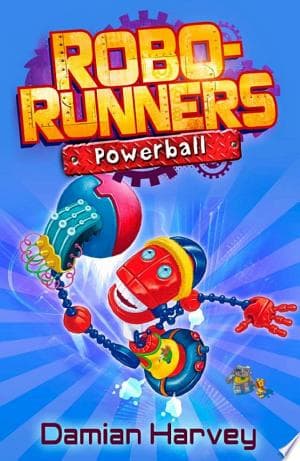
Synopsis
Covers the whole plot, including the ending.
- Difficulty
- Easy
- Pacing
- Fast
- Mood
- Action-packed, Gritty, Hopeful, Adventurous
- Read it if
- You enjoy fast-paced, action-packed science fiction with robot protagonists and high-stakes sporting competition.
- Skip it if
- You prefer character-driven dramas over plot-heavy action, or dislike stories with competitive violence.
Powerball Plot Summary
Covers the whole plot, including the ending.
Arrival at Iron City
Crank, a small, ambitious robot, and his larger, more careful friend Al, arrive in the magnificent, mobile Iron City. They are fugitives, having escaped their previous owners, and see Iron City as a place for new beginnings. Crank is especially excited about becoming a renowned powerball star, a sport he deeply admires. As they move through the crowded, metallic streets, they are amazed by the city's size and the energy around the powerball arenas. Crank dreams of joining a top team and proving his worth, believing their past troubles can be forgotten if they succeed in the sport.
First Encounters and the Underbelly
Soon after arriving, Crank and Al try to join the powerball scene. They meet a tough coach named Scar, who quickly dismisses Crank's first attempts to impress him, showing how competitive the sport is. Scar makes it clear that talent alone is not enough; survival in Iron City requires more. The friends also see the difficult conditions many unattached robots face. These robots are often exploited or forced into dangerous, low-paying jobs just to get energy. This first experience starts to chip away at Crank's hopeful view of the city.
The Scrappers and a Glimmer of Hope
With critically low energy and no other options, Crank and Al must join a struggling powerball team called the Scrappers. This team consists of various downtrodden robots, led by the practical and experienced 'Grinder'. They learn that the Scrappers are about to be disbanded if they do not start winning, meaning their very existence depends on their performance. The prize for winning matches is not just fame, but essential energy cells — the robots' literal lifeblood. This realization shatters Crank's romantic view of powerball, revealing its brutal, survival-driven core.
Training and Team Dynamics
Training with the Scrappers is very different from Crank's ideal vision. The team lacks good equipment, relying on cleverness and grit. Crank, initially focused on showy individual moves, struggles to adapt to Grinder's focus on strategic play and selfless teamwork. Al, with his strength and steadiness, is a valuable asset, often helping to balance Crank's impulsiveness and Grinder's strict leadership. Through tough, often painful, practice sessions, Crank slowly begins to understand that powerball in Iron City is not about personal awards, but about collective survival. He starts to respect his teammates and their unique skills.
First Match and Hard Lessons
The Scrappers' first official powerball match is a difficult test. They face a well-organized, aggressive opposing team. Crank, despite his growing understanding of teamwork, returns to old habits, trying to score spectacular individual goals. This ego-driven play disrupts the team's strategy and leaves them vulnerable. The Scrappers suffer a demoralizing defeat, pushing them closer to being disbanded. Grinder directly confronts Crank, making him realize the severe impact of his actions on the entire team. This loss is a key moment for Crank, forcing him to face his flaws and the seriousness of their situation.
The Threat of the Junkyard
After their loss, the stakes rise dramatically when the Scrappers learn more about the 'Junkyard.' This is the terrifying destination for any robot or team that fails to perform, where they are stripped for parts and permanently deactivated. The thought of ending up in the Junkyard weighs heavily on the team, causing deep fear and urgency. This discovery motivates them, especially Crank, to train harder and work together more than ever before. The threat of the Junkyard changes powerball from a game of survival into a desperate fight for existence.
A New Strategy and Growing Unity
Grinder, seeing the Scrappers' unique strengths and weaknesses, creates an unusual strategy that uses their individual skills while minimizing their disadvantages against better-equipped teams. Crank, having learned from his past failures, commits to mastering his role within this new system. He starts to see the value in supporting his teammates, setting up plays, and defending, rather than just focusing on scoring. The team begins to work well together, forming bonds of trust and friendship. Their shared struggle and the looming threat of the Junkyard forge them into a surprisingly effective unit, showing true resilience.
The Comeback and Rising Hopes
The Scrappers' new strategy begins to work. They win several important matches, surprising their opponents and even earning some respect from the city's powerball fans. Crank, now playing as a true team player, helps significantly in their victories, assisting goals and making key defensive plays. The energy cells from their wins stabilize their existence, and for the first time since arriving in Iron City, the team feels a glimmer of hope. Their success challenges the established powerball order, proving that determination and unity can overcome better resources.
The Final Showdown
The Scrappers' winning streak leads them to a critical match against one of Iron City's top-ranked and most formidable teams. This game is not just for more energy cells, but for their continued existence and a chance to truly establish themselves. The atmosphere in the arena is electric, with the entire city watching. Crank, Al, Grinder, and the rest of the Scrappers know that this is their moment of truth. They must execute their strategy perfectly and rely on the bonds they have formed to overcome their superior opponents, or face the grim reality of the Junkyard.
Victory and New Beginnings
In a nail-biting, hard-fought match, the Scrappers, through sheer determination, teamwork, and smart tactics, defeat their powerful opponents. Crank plays a key role, not with individual heroics, but with a crucial assist or defensive play that secures their victory. The crowd erupts, recognizing the underdog team's incredible achievement. With their win, the Scrappers secure their place in Iron City, earning respect and ensuring their survival. Crank and Al, no longer just robots on the run, have found a true home and a purpose, proving that powerball is more than just a game — it is a story of resilience and unity.
Principal Figures
Crank
Protagonist
An ambitious, small robot who dreams of powerball stardom.
Crank is a small, agile robot, driven by a desire for fame and recognition in the world of powerball. Initially, he is somewhat naive and overconfident, believing his individual skill is all that matters. He is quick-witted and possesses a natural talent for the game, but lacks discipline and an understanding of true teamwork. His past as a fugitive has instilled in him a longing for a place where he can belong and prove his worth. He is fiercely loyal to Al and eventually to his Scrappers teammates, though he struggles with humility.
Relationships: Al (Best friend and loyal companion); Grinder (Coach and mentor); The Scrappers (Teammates and surrogate family)
Al
Supporting
Crank's large, strong, and cautious best friend.
Al is a larger, more robust robot, serving as Crank's steadfast companion and moral compass. He is less impulsive than Crank, often providing a voice of reason and caution. While not as flashy in powerball, his strength, reliability, and calm demeanor make him an invaluable asset to the Scrappers. He is deeply protective of Crank and endures the hardships of Iron City with quiet resilience. Al's loyalty is unwavering, and he often mediates conflicts, bringing a sense of stability to their dynamic and the team.
Relationships: Crank (Best friend and protégé); Grinder (Teammate and respected leader); The Scrappers (Teammates)
Grinder
Supporting
The gruff, experienced coach and leader of the Scrappers.
Grinder is a seasoned, pragmatic robot who leads the struggling Scrappers team. He is stern, demanding, and initially skeptical of Crank's abilities, but possesses a deep understanding of powerball and the harsh realities of Iron City. He values teamwork, strategy, and resilience above individual talent. His gruff exterior hides a commitment to his team's survival, and he acts as a mentor figure, particularly to Crank, teaching him the true meaning of the game. Grinder represents the wisdom and toughness required to navigate the city's challenges.
Relationships: Crank (Player and mentee); Al (Player and trusted team member); The Scrappers (Team members and subordinates)
Scar
Supporting
A tough, established powerball coach in Iron City.
Scar is a prominent and formidable powerball coach in Iron City, known for his success and his demanding nature. He represents the established, cutthroat side of the sport, initially dismissing Crank and Al as insignificant. Scar's team is well-funded and highly skilled, embodying the kind of success Crank initially aspires to. While not an antagonist in the traditional sense, he serves as a benchmark of the challenges the Scrappers face and the harsh realities of the powerball hierarchy. His presence highlights the competitive environment.
Relationships: Crank (Rival and initial dismisser)
The Scrappers (team)
Supporting
The ragtag powerball team that Crank and Al join.
The Scrappers are a diverse group of downtrodden robots, each with their own quirks and skills, who are united by their shared desperation to avoid the Junkyard. They are initially disorganized and lacking in confidence, but under Grinder's leadership, they learn to work together. Their collective struggle and the bonds they form embody the theme of unity and resilience. Members include various robots with distinct physical attributes and roles on the team, who collectively represent the underdogs of Iron City's powerball scene.
Relationships: Crank (Teammate); Al (Teammate); Grinder (Coach and leader)
Themes & Insights
The Importance of Teamwork over Individualism
This theme is central to Crank's journey. At first, Crank believes his individual skill will bring glory, as seen in his early, showy attempts to impress Coach Scar. However, his experience with the Scrappers, especially his first disastrous match where his ego-driven play leads to a loss, forces him to confront this. Grinder always emphasizes collective strategy and mutual support. Crank's change into a selfless player, setting up goals and playing defense, is key to the Scrappers' eventual success, showing that true strength comes from unity. This is reinforced by the Scrappers' diverse skills complementing each other.
“It's not about how many goals you score, Crank. It's about how many goals we score.”
Survival and Desperation
The harsh reality of Iron City means powerball is not just a sport, but a matter of life and death for its robot inhabitants. The Scrappers' motivation to win comes from the need for energy cells and the terrifying threat of the Junkyard, where failed robots are dismantled. This desperation shows in their rigorous training, the high stakes of every match, and the constant fear of failure. Crank and Al's initial status as fugitives also highlights this theme, as they constantly seek a place where they can survive and thrive, finding it only through their team's collective effort.
“Win, or get scrapped. Those are the rules in Iron City.”
Finding Belonging and Identity
Crank and Al arrive in Iron City as fugitives, unattached and looking for a place to belong. Crank first seeks identity through fame, but he truly finds belonging within the Scrappers. The team, made up of various outcasts and underdogs, offers him a sense of purpose and a surrogate family. Through shared struggle and mutual support, Crank moves beyond his past as a 'robot on the run' to become a valued member of a community. His identity shifts from an individual player to an important part of a winning team, giving him a stable place in the otherwise ruthless city.
“For the first time, Crank felt like he wasn't just running from something, but running towards something.”
Resilience and Overcoming Adversity
The Scrappers show resilience, constantly facing seemingly impossible odds. They lack resources, are initially dismissed as failures, and face the constant threat of the Junkyard. Despite losses and setbacks, they always pick themselves up, adapt, and train harder. Grinder's strategic thinking and the team's willingness to learn and grow demonstrate this theme. Their ultimate victory against a superior team highlights how determination and a unified spirit can overcome significant disadvantages, offering hope in a harsh environment.
“We might be scraps, but we're tough scraps.”
Plot Devices & Literary Techniques
The Junkyard
The ultimate consequence for failed robots in Iron City.
The Junkyard serves as a powerful external motivator and a constant threat hanging over the Scrappers. It is the destination for any robot or team that fails to perform, where they are permanently deactivated and stripped for parts. This device elevates the stakes of powerball from a mere game to a fight for literal existence. The fear of the Junkyard drives the characters' actions, intensifies their training, and fosters a desperate unity among the team members, making every match a high-stakes battle for survival.
Energy Cells
The vital resource that powers robots and serves as the prize for winning powerball matches.
Energy cells are a crucial plot device that directly ties the game of powerball to the robots' survival. They are not merely a reward but a necessity for the robots to function. The Scrappers' initial desperation for energy highlights their precarious existence. Winning matches means earning these cells, which literally keeps them 'alive.' This device grounds the fantastical world in a tangible, survival-driven economy, making the stakes of the game immediately understandable and impactful, especially when the team's energy supplies run low.
The Travelling Iron City
A mobile, bustling metropolis that provides the setting and context for the powerball league.
Iron City itself acts as more than just a setting; it's a character in its own right and a significant plot device. Its mobile nature implies a transient existence for many of its inhabitants, including Crank and Al. The city's vastness and the clear hierarchy within its powerball league establish the challenges and opportunities for the protagonists. Its bustling, competitive atmosphere reinforces the cutthroat nature of the sport and the constant struggle for survival, shaping the characters' experiences and motivations as they navigate its metallic streets.
The Underdog Narrative
The story structure where a disadvantaged group rises to challenge powerful, established entities.
The entire narrative of 'Powerball' is built upon the classic underdog story. Crank and Al are fugitives, and the Scrappers are a struggling, resource-poor team dismissed by others. This device creates inherent tension and makes their eventual success all the more satisfying. It highlights themes of resilience, teamwork, and the triumph of spirit over superior resources. The audience naturally roots for the Scrappers, as their journey symbolizes the hope that even the most disadvantaged can achieve greatness through unity and determination against overwhelming odds.
Powerball Quotes
“The universe doesn't care about your plans, only your probabilities.”
“We weren't just predicting the future; we were nudging it.”
“Every choice is a branch, every outcome a leaf on an infinite tree.”
“Power isn't just about what you can do, but what you choose not to.”
“The greatest danger wasn't in failing, but in succeeding too well.”
“Time is not a river; it's a tapestry, and we just found a loose thread.”
“The algorithms were just tools; the true magic was in the interpretation.”
“You can't cheat fate, but you can certainly distract it.”
“Every solution creates a new problem. That's the first law of reality, or at least, of this device.”
“The quiet hum of the Powerball was the sound of a thousand futures whispering.”
“Ignorance is not bliss when the storm is already on the horizon.”
“We didn't just see the odds; we felt them, a tremor in the fabric of what was to be.”
“The real power wasn't in knowing the future, but in choosing to change it.”
“Sometimes, the most significant change comes from the smallest, most improbable nudge.”
Quiz
10 questions on the plot and the characters. Each answer comes with a short explanation.
Question 1
Where do Crank and Al initially hope to become world-famous powerball stars?
- The Steel Arena
- Iron City
- The Robot League
- The Grand Circuit
Show answer
B. Iron City The synopsis states that Crank hopes they can all become world-famous powerball stars when they arrive at the travelling Iron City.
Question 2
Who are the two main robot characters on the run at the beginning of the story?
- Bolt and Gear
- Crank and Cog
- Crank and Al
- Rust and Spark
Show answer
C. Crank and Al The opening line of the synopsis introduces the main characters: 'Meet Crank and Al ... robots on the run.'
Question 3
What is the primary genre of 'Powerball' by Damian Harvey?
- Fantasy
- Mystery
- Science Fiction
- Sports Drama
Show answer
C. Science Fiction The genre is explicitly stated at the beginning of the prompt: 'Science Fiction.'
Question 4
What surprising discovery do Crank and Al make about powerball in Iron City?
- It's a fixed game designed for entertainment.
- It's a matter of life and death, not just a game.
- It requires more advanced programming than they possess.
- The prize money is significantly less than advertised.
Show answer
B. It's a matter of life and death, not just a game. The synopsis states: 'Our heroes soon discover that powerball is more than just a game ... it's a matter of life and death.'
Question 5
According to the synopsis, what is required 'for a team to survive' in the context of powerball?
- Superior individual skill and strategy.
- More than just scoring goals.
- Advanced technological upgrades.
- A charismatic leader and loyal followers.
Show answer
B. More than just scoring goals. The synopsis concludes by saying 'it takes more than goals for a team to survive,' implying teamwork, strategy, or other factors are crucial.
Question 6
What characteristic is attributed to the illustrator, Mark Oliver, in the synopsis?
- His innovative use of digital art.
- His realistic portrayal of robots.
- His incomparable talent.
- His consistent adherence to the author's vision.
Show answer
C. His incomparable talent. The synopsis mentions the series is 'illustrated by the incomparable Mark Oliver,' highlighting his talent.
Question 7
What is the implied reason for Crank and Al being 'on the run' at the beginning of the story?
- They are seeking fame and fortune.
- They are escaping a dangerous situation or authority.
- They are exploring the world out of curiosity.
- They are looking for a new home.
Show answer
B. They are escaping a dangerous situation or authority. The phrase 'robots on the run' typically implies an escape from danger, pursuit, or an undesirable situation, setting a tone of urgency and conflict even before they reach Iron City.
Question 8
Which of the following titles is NOT listed as a continuation in the 'Powerball' series?
- The Tin Man
- Mech Warriors
- Razorbites
- Aquanauts
Show answer
B. Mech Warriors The listed continuations are 'The Tin Man, Tunnel Racers, Razorbites, The Ghost Sea and Aquanauts.' 'Mech Warriors' is not among them.
Question 9
What is the central thematic shift that Crank and Al experience regarding powerball in Iron City?
- From a simple sport to a complex strategic challenge.
- From a path to fame to a struggle for survival.
- From an individual pursuit to a team-based endeavor.
- From a local game to a globally recognized event.
Show answer
B. From a path to fame to a struggle for survival. Initially, Crank 'hopes they can all become world-famous powerball stars.' However, they 'soon discover that powerball is more than just a game ... it's a matter of life and death,' indicating a shift from seeking fame to fighting for their existence.
Question 10
Considering the 'life and death' stakes of powerball, what might be a likely underlying conflict in Iron City?
- A malfunctioning power grid affecting robot performance.
- A corrupt system or powerful entity controlling the game's outcomes.
- An alien invasion that uses powerball as a trial.
- A natural disaster that limits resources for robots.
Show answer
B. A corrupt system or powerful entity controlling the game's outcomes. When a game becomes 'a matter of life and death' and things are 'not quite what they expected,' it often points to a systemic issue, a manipulative force, or a hidden agenda within the setting, rather than a random event or technical glitch, particularly in a science fiction context where power structures can be dystopian.
Powerball FAQ
What is the core premise of 'Powerball' and who are the main characters?
'Powerball' follows two robot friends, Crank and Al, who are fugitives. They arrive at the mobile Iron City with the ambition of becoming renowned powerball stars, only to discover the sport is far more dangerous and complex than they initially believed, intertwining with matters of survival.
What is Iron City and why is it significant to Crank and Al?
Iron City is a unique, traveling metropolis where Crank and Al seek refuge and fame. It's significant because it's the central hub for powerball, the game they hope will transform their lives from fugitives to celebrated athletes, offering a potential new beginning.
How does the game of powerball differ from traditional sports in the book?
Powerball in the book is depicted as a high-stakes, life-or-death competition, far removed from a mere game. It requires not just athletic skill but also strategic thinking, teamwork, and an understanding that losing can have dire consequences beyond just a score, fundamentally altering the robots' perceptions of sport.
What kind of challenges do Crank and Al face once they begin playing powerball?
Crank and Al face intense physical danger, moral dilemmas, and the challenge of navigating the ruthless politics of powerball. They must quickly adapt to the brutal reality that survival depends on more than just scoring goals, forcing them to develop new tactics and alliances.
Who is Mark Oliver and what is his contribution to the 'Powerball' series?
Mark Oliver is the illustrator for the 'Powerball' series, including this refreshed cover look. His 'incomparable' illustrations contribute significantly to the visual identity and atmosphere of the book, bringing Damian Harvey's robotic world and the intensity of powerball to life for readers.
Are there any subtle hints about the true nature of powerball before Crank and Al fully understand it?
Yes, there are subtle hints. The initial description of powerball as 'more than just a game' and the emphasis on 'survival' rather than just winning, subtly foreshadow the deadly stakes involved. The urgency of their fugitive status also implies that their choices in Iron City will have profound repercussions.
How does the 'traveling' nature of Iron City contribute to the narrative or themes?
The traveling nature of Iron City could symbolize the characters' own transient existence as fugitives, always on the move. It might also suggest a lack of fixed rules or authority, allowing for the brutal, unregulated nature of powerball to flourish, or perhaps it's a mobile arena designed to collect new 'players' or resources.
What deeper connection might exist between Crank and Al's past as 'robots on the run' and their current struggles in Iron City?
Their past as fugitives likely honed their survival instincts and ability to adapt under pressure, skills that are unexpectedly crucial in the high-stakes world of powerball. This background might also make them more distrustful of authority and more reliant on each other, strengthening their bond in the face of new threats.
Is there any significance to the name 'Iron City' beyond being a metal-themed location?
'Iron City' could symbolize the harsh, unyielding reality that Crank and Al face, a place where only the strongest survive, much like iron itself. It might also hint at the industrial, utilitarian nature of the robot society, where even entertainment serves a more brutal, underlying purpose.
How does Crank's initial optimism about becoming a 'world-famous powerball star' evolve throughout the story?
Crank's initial optimism likely transforms into a grim determination for survival, tempered by the harsh realities of powerball. His focus shifts from fame and glory to protecting himself and Al, forcing him to confront the dangerous illusions he held about the sport and about Iron City itself.
Discuss the psychological impact of discovering that a dream ('powerball stars') is actually a nightmare ('life and death').
This discovery would cause severe psychological dissonance for Crank and Al, shattering their hopes and forcing a rapid re-evaluation of their goals and safety. It likely induces fear, paranoia, and a profound sense of betrayal, turning their aspiration into a source of immense stress and trauma, altering their perception of trust and ambition.
How does the dynamic between Crank and Al, as friends, change under the extreme pressure of powerball?
Under extreme pressure, their friendship likely deepens, as they become even more reliant on each other for survival and emotional support. However, it could also be tested by difficult choices or internal disagreements, revealing new strengths or weaknesses in their bond as they navigate the brutal demands of the game.
What psychological traits make Crank and Al particularly suited, or unsuited, for the challenges of powerball?
Their fugitive past likely instills resilience, resourcefulness, and a strong will to survive, making them adaptable. However, Crank's initial naivete about fame could make him vulnerable, while Al's specific traits (which are less detailed in the synopsis) would also play a role, perhaps offering a more cautious or pragmatic counterpoint.
What deeper commentary might the book be making about the nature of entertainment or competitive sports?
The book could be a commentary on how entertainment can become exploitative and dehumanizing, where the line between sport and spectacle blurs into a fight for survival. It might criticize societies that prioritize brutal competition and fame over the well-being of participants, reflecting a dark side of competitive culture.
Could 'powerball' be a metaphor for a larger societal struggle or a critique of a specific system?
Yes, powerball could be a metaphor for the cutthroat nature of survival in a dystopian society, where resources are scarce, and life is cheap. It might critique systems that use extreme competition to control populations or distract from deeper societal issues, turning individuals against each other for the amusement or benefit of an unseen power.
How does the concept of 'team' evolve for Crank and Al, especially with the 'more than goals for a team to survive' line?
The concept of 'team' for Crank and Al likely evolves from a focus on athletic performance to a bond of mutual protection and trust essential for survival. It signifies that true teamwork goes beyond scoring points; it involves loyalty, sacrifice, and strategic collaboration to overcome life-threatening obstacles, redefining their understanding of partnership.
What themes of freedom versus entrapment are explored through Crank and Al's journey?
Crank and Al's journey explores themes of freedom versus entrapment as they escape one form of oppression ('on the run') only to find themselves ensnared in another within Iron City's powerball arena. Their pursuit of freedom through fame ironically leads them into a more dangerous form of captivity, challenging their understanding of true liberation.
Given the series continues with titles like 'The Tin Man' and 'The Ghost Sea', what might these suggest about the broader world or future challenges for Crank and Al?
These titles suggest a diverse and challenging world beyond Iron City, possibly involving new robotic characters ('The Tin Man'), maritime or aquatic environments ('The Ghost Sea', 'Aquanauts'), and perhaps continued themes of survival, mystery, and confronting past or future technological threats. They hint at a vast, evolving narrative landscape.
Similar books
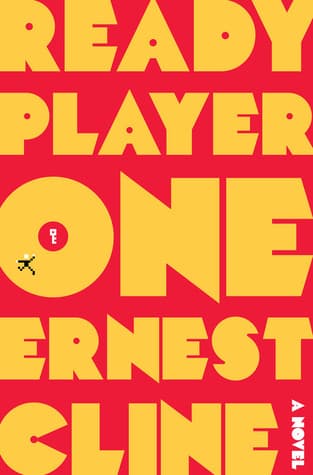
- Ready Player One
Ernest Cline
4.3 (861k) average on GoodreadsFantasyFeatures competitive games in a futuristic setting with high stakes.
- Cinder
Marissa Meyer
4.1 (683k) average on GoodreadsFantasyRobot protagonists in a dystopian future with adventure and danger.
- The Hunger Games
Suzanne Collins
4.3 (6.4M) average on GoodreadsFantasySurvival-based competition with life-or-death consequences.
- Uglies
Scott Westerfeld
3.9 (560k) average on GoodreadsFantasyWhile both novels present dystopian societies, Uglies delves deeply into themes of conformity, identity, and the societal manipulation of beauty standards through surgical intervention. Westerfeld's series offers a more philosophical and complex critique of social control. "Powerball," while effective in its sports-dystopian fusion, primarily focuses on the immediate struggle for survival and victory within its established game, offering a less expansive thematic exploration of the underlying societal structures and their psychological impacts.
- 1984
George Orwell
4.2 (3.1M) average on GoodreadsPoliticsIn a future where surveillance and thought control are absolute, a man's search for truth clashes with the Party, showing that hope can be a form of rebellion.
- Divergent
Veronica Roth
4.2 (2.9M) average on GoodreadsFantasyIn a society divided by virtues, a sixteen-year-old's difference from the norm starts a rebellion that threatens her world.





Enjoyed the summary?
A summary gives you the shape of the book. The book itself has the detail, the examples and the voice.
Find Powerball on AmazonAs an Amazon Associate, BookBrief earns from qualifying purchases. How we're funded