
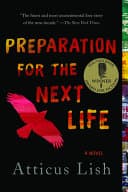
Synopsis
Covers the whole plot, including the ending.
- Difficulty
- Medium
- Pacing
- Moderate
- Mood
- Gritty, Realistic, Bleak, Empathetic, Intense
- Read it if
- You want a raw, unflinching, and deeply empathetic portrayal of the struggles faced by a returning veteran with PTSD and an undocumented immigrant in modern America.
- Skip it if
- You prefer lighthearted stories or are sensitive to graphic depictions of violence, poverty, and the harsh realities of marginalized lives.
Preparation for the Next Life Plot Summary
Covers the whole plot, including the ending.
Leaving the Reservation
Braden, a U.S. Army veteran recently returned from Iraq, travels to New York City with a friend, trying to make a fresh start. He is haunted by his war experiences and struggles with PTSD, shown in his distrust of authority and restless energy. He quickly finds work in a Chinese restaurant kitchen, enduring long hours and low pay, living in a cramped, shared apartment. His initial interactions with the city show the harsh realities of immigrant life and the working poor, as he tries to navigate an urban environment where his military skills are mostly irrelevant and his past trauma remains unaddressed.
Meeting Zou Lei
Zou Lei, an undocumented Uighur immigrant, arrives in New York City from Xinjiang, China, with her aunt and uncle, seeking asylum and a better life. She finds work in a restaurant, enduring similar hardships to Braden. Her journey to America was difficult and dangerous, leaving her vulnerable and determined to survive. She is constantly aware of her precarious legal status and the need to send money back to her family. Her initial experiences include exploitation and the struggle to communicate in a new language, as she tries to find her place in a bewildering new environment.
A Chance Encounter
Braden and Zou Lei meet by chance at a street fair in Queens. Their first interaction is brief and tentative, marked by a language barrier and a shared sense of being outsiders. Despite their different backgrounds, they are drawn to each other by an unspoken understanding of hardship and resilience. Braden notices Zou Lei's quiet strength and beauty, while Zou Lei is intrigued by Braden's intensity and the visible scars of his past. This chance encounter plants the seed for a deeper connection in a city where genuine human connection is often hard to find amid the struggle for survival.
Building a Connection
Braden and Zou Lei begin to spend more time together, navigating their language differences and cultural gaps. They find solace in each other's company, sharing meals, walks, and quiet moments. Braden teaches Zou Lei English words, and she shares glimpses of her Uighur culture. Their relationship develops slowly, based on mutual respect and a shared understanding of their marginalized positions in society. They find a sense of belonging in each other that is absent in their individual lives, creating a small bubble of intimacy against the backdrop of the city's indifference.
The Weight of the Past
As Braden and Zou Lei's relationship deepens, Braden's unresolved trauma from the war begins to surface more frequently and aggressively. He experiences violent flashbacks, struggles with nightmares, and has unpredictable outbursts of anger, often triggered by minor events. He becomes increasingly paranoid and distrustful, especially of authority figures. Zou Lei, while sympathetic, struggles to understand his deep internal conflict and the origins of his rage, which often manifests in frightening and unpredictable ways, creating tension in their budding relationship and highlighting the gap between their experiences.
Seeking Stability
Zou Lei continues to work multiple grueling jobs, saving every penny to send back to her family in Xinjiang and to pay for legal fees to secure her asylum claim. She endures exploitation and discrimination, but her determination remains strong. She sees her future in America as directly tied to her ability to provide for those she left behind, and her relentless pursuit of stability shows her resilience. Her focus on practical survival often clashes with Braden's more volatile and emotionally driven approach to life, creating a subtle but persistent tension between them.
Escalating Tensions
Braden's paranoia and aggression escalate, leading him into dangerous situations. He gets into fights, confronts strangers, and attracts police attention. His behavior becomes more erratic, and he struggles to keep employment, further isolating him. Zou Lei tries to help him, offering comfort and practical advice, but she is increasingly frightened by his unpredictability and the potential consequences of his actions. His internal war begins to spill into their shared reality, threatening to unravel the fragile peace they have found together.
A Glimpse of Hope
Despite the mounting challenges, Braden and Zou Lei manage to secure their own small apartment, a significant milestone that offers them a brief glimmer of hope and independence. This shared space becomes a sanctuary from the city's harshness, a place where they can nurture their relationship away from prying eyes and judgments. For a short period, they experience a semblance of domesticity and stability, allowing them to imagine a future together. This period is a poignant contrast to the escalating chaos that will soon engulf them.
The Breaking Point
Braden's mental state reaches a breaking point. His delusions and paranoia become all-consuming, leading to a violent outburst against a perceived threat. This incident draws the attention of the authorities, and Braden finds himself on the run. Zou Lei is caught in the crossfire, her own precarious existence threatened by Braden's actions. The fragile world they built together begins to crumble under the weight of his unaddressed trauma and the unforgiving realities of their lives, forcing them into a desperate struggle for survival.
On the Run
Following Braden's violent act, he and Zou Lei are forced to go on the run, becoming fugitives from the law. They navigate the city's underbelly, relying on their wits and each other for survival. Their journey is marked by fear, hunger, and constant vigilance, as they try to evade capture. Zou Lei's resourcefulness and determination are put to the test as she tries to protect Braden and herself, while Braden's mental state continues to waver, making their escape increasingly perilous. Their flight highlights the desperation and unforgiving nature of the city.
The Final Confrontation
Braden's escalating violence and paranoia lead to a final, tragic confrontation with law enforcement. Cornered and disoriented, he engages in a desperate struggle, which ultimately results in his death. Zou Lei is a helpless witness to this devastating climax, her hopes for a future shattered. Braden's story ends in violence, a grim reminder of the destructive power of unaddressed trauma and the societal failures that contribute to it. His death leaves Zou Lei alone again, forced to confront the wreckage of their shared experience and the uncertainty of her own future.
Aftermath and Hope
In the aftermath of Braden's death, Zou Lei is left to pick up the pieces of her life. She is heartbroken but also resilient, determined to survive and pursue her dream of a better life. The experience with Braden, while tragic, has also forged her strength and resolve. She continues her fight for legal status, her journey marked by a newfound sense of independence and a deeper understanding of the human condition. Despite the loss, Zou Lei emerges with an enduring spirit, showing the resilience of the immigrant experience and the enduring hope for a future, however uncertain.
Principal Figures
Braden
Protagonist
An Iraq War veteran haunted by PTSD and struggling to adapt to civilian life.
Braden is a deeply troubled young man, a veteran of the Iraq War, who carries the invisible wounds of PTSD. He is intensely loyal to those he cares about but is also prone to violent outbursts, paranoia, and distrust of authority. His military training has left him with a honed sense of vigilance and survival, but these skills are ill-suited for the complexities of urban civilian life. He seeks connection and meaning but is constantly undermined by his internal demons and the harsh realities of his existence as a marginalized worker in New York City.
Relationships: Zou Lei (Romantic partner, source of comfort and brief stability); His friend (unnamed) (Comrade from the military, initial support system)
Zou Lei
Protagonist
An undocumented Uighur immigrant striving for a better life in New York City.
Zou Lei is a resilient and determined young woman from Xinjiang, China, who has endured immense hardship to reach America. She is an undocumented immigrant, constantly aware of her precarious legal status, yet fiercely dedicated to sending money back to her family. She is resourceful, hardworking, and possesses a quiet strength that allows her to navigate the exploitation and discrimination she faces. Despite her vulnerability, she maintains a hopeful spirit and a deep capacity for empathy, seeking connection and stability in a bewildering new world.
Relationships: Braden (Romantic partner, source of both love and profound heartbreak); Her Aunt and Uncle (Family members, initial support in New York City)
Zou Lei's Aunt
Supporting
Zou Lei's initial guardian and connection to her Uighur community in New York.
Zou Lei's aunt provides her with initial shelter and guidance upon her arrival in New York City. She represents the established immigrant community, offering a degree of familiarity and cultural connection in a foreign land. While she cares for Zou Lei, her primary focus is on survival and adherence to traditional values, sometimes clashing with Zou Lei's more independent spirit. She embodies the struggles and resilience of many first-generation immigrants, navigating a new culture while trying to preserve their heritage.
Relationships: Zou Lei (Aunt and guardian); Zou Lei's Uncle (Husband and fellow immigrant)
Zou Lei's Uncle
Supporting
Zou Lei's relative who helps her find work and navigate the city.
Zou Lei's uncle plays a role in helping her secure her first jobs in New York City. He is part of the network of Uighur immigrants, demonstrating the communal support systems that exist within these communities. Like his wife, he is focused on practical survival and the challenges of immigrant life. He offers a male perspective on the struggles faced by new arrivals, often dealing with the harsher aspects of labor and cultural adaptation.
Relationships: Zou Lei (Uncle and guide); Zou Lei's Aunt (Wife and fellow immigrant)
Braden's Friend (unnamed)
Supporting
A fellow veteran who accompanies Braden to New York City.
Braden's friend is a fellow veteran who travels to New York with him, initially providing companionship and a shared understanding of their military past. He represents a potential path for Braden to reintegrate into civilian life, but his presence is fleeting. He is less burdened by the severe trauma that afflicts Braden, suggesting different outcomes for veterans. His departure leaves Braden more isolated and underscores the individual nature of their struggles.
Relationships: Braden (Fellow veteran and initial companion)
Restaurant Owners/Managers
Mentioned/Antagonistic
Exploitative employers who represent the harsh realities of the working poor.
These characters, often nameless, represent the pervasive exploitation faced by undocumented immigrants and low-wage workers in New York City. They offer grueling work for minimal pay, often under unsafe conditions, and take advantage of their employees' vulnerable legal status. They embody the systemic pressures that trap characters like Zou Lei and Braden in cycles of poverty and desperation, highlighting the indifference of the capitalist system to human suffering.
Relationships: Zou Lei (Employer/employee, exploitative); Braden (Employer/employee, exploitative)
Police Officers
Antagonistic
Figures of authority who embody the indifferent and often oppressive state.
The police officers represent the arm of the state, often appearing as an impersonal and threatening force to both Braden and Zou Lei. For Braden, they trigger his anti-authority sentiments and paranoia. For Zou Lei, they represent the constant threat of deportation and the loss of her fragile security. Their interactions are typically adversarial, highlighting the characters' marginalization and the lack of protection or understanding they receive from official channels.
Relationships: Braden (Adversarial, representing state authority); Zou Lei (Threatening, representing immigration enforcement)
The City of New York
Antagonistic/Setting
A sprawling, indifferent, and often hostile environment.
New York City functions almost as a character itself, a vast and unforgiving entity that constantly tests the protagonists' resilience. It offers promises of opportunity but delivers harsh realities, exploitation, and alienation. Its anonymity allows for both freedom and profound loneliness, while its relentless pace and systemic inequalities grind down its most vulnerable inhabitants. It is a place of both dreams and nightmares, reflecting the internal and external struggles of Braden and Zou Lei.
Relationships: Braden (An overwhelming and ultimately consuming environment); Zou Lei (A challenging but ultimately hopeful frontier)
Themes & Insights
The Trauma of War and Its Aftermath
The novel explores the psychological and emotional scars left by war, particularly through Braden's character. His PTSD manifests in violent outbursts, paranoia, and an inability to reintegrate into civilian society. The narrative vividly portrays his internal struggle, showing how experiences in Iraq have fundamentally altered his perception of the world and his capacity for peace. This theme is evident in his flashbacks, his distrust of authority, and his ultimate inability to escape the cycle of violence, as seen in his tragic end.
“He knew he was in the wrong place, but the wrong place was everywhere.”
The Immigrant Experience and the Pursuit of the American Dream
Zou Lei's journey shows the difficult and often brutal reality of the immigrant experience. Her struggle for asylum, her relentless work ethic in exploitative jobs, and her constant fear of deportation highlight the systemic challenges faced by undocumented individuals. The novel critiques the idealized 'American Dream,' revealing it to be a harsh reality of low wages, discrimination, and constant insecurity. Zou Lei's unwavering determination to send money home and secure a legal future shows the resilience and sacrifices made in pursuit of a better life, despite overwhelming odds.
“She worked because that was all there was to do. Work, and send money home.”
Alienation and Disconnection in Urban Life
Both Braden and Zou Lei experience deep alienation in New York City. Braden's war trauma isolates him from those who haven't shared his experiences, while Zou Lei's language barrier, undocumented status, and cultural differences create a constant sense of otherness. The city itself, with its vastness and indifference, increases this feeling of disconnection. Their relationship, however fleeting, offers a temporary antidote to this pervasive loneliness, showing the human need for connection amid a dehumanizing environment. This is evident in their quiet moments together, contrasting with the chaotic anonymity of the city around them.
“The city didn't care. It kept moving, oblivious.”
Systemic Exploitation and Social Inequality
The novel critiques the systemic exploitation prevalent in society, particularly within the context of the working poor and undocumented immigrants. Braden and Zou Lei are both trapped in low-wage jobs, enduring long hours and poor conditions, with little hope for upward mobility. The restaurant industry, in particular, is depicted as a place of rampant exploitation, where employers take advantage of vulnerable populations. This theme underscores how social inequality is perpetuated, with the powerful preying on the desperate, and how the 'system' itself is designed to keep marginalized individuals in their place, regardless of their effort or potential.
“There was always another hand to pick up the slack, another mouth to feed.”
The Nature of Love and Survival
Amid the harsh realities, a fragile love story develops between Braden and Zou Lei. Their connection is born out of shared vulnerability and a mutual understanding of hardship, offering a brief sanctuary from their individual struggles. However, their love is constantly tested by Braden's escalating trauma and the external pressures of survival. The novel explores whether love can truly flourish or even endure when basic needs and psychological stability are constantly under threat, ultimately suggesting that while love can offer solace, it may not be enough to overcome the overwhelming forces of trauma and systemic oppression.
“He found a kind of peace in her presence, a quiet that had been missing for too long.”
Plot Devices & Literary Techniques
Dual Perspective Narrative
Alternating focus between Braden and Zou Lei.
The novel employs a dual perspective, alternating chapters or sections between Braden's and Zou Lei's experiences. This device allows the reader to deeply empathize with both protagonists, understanding their individual struggles, motivations, and internal worlds. It highlights their different backgrounds and challenges while also underscoring the commonalities of their marginalization and their shared search for connection. This structure enriches the narrative by providing a comprehensive view of the systemic issues at play and the personal impact of trauma and immigration.
Symbolism of New York City
The city as both a promised land and a brutal antagonist.
New York City functions as a powerful symbol throughout the novel. For Zou Lei, it represents the promise of a new life, freedom, and opportunity, a stark contrast to her oppressive homeland. For Braden, it is a chaotic, overwhelming, and ultimately hostile environment that exacerbates his PTSD. The city's indifference, its vastness, and its systemic inequalities become a character in themselves, reflecting the internal and external battles of the protagonists. It symbolizes the elusive nature of the 'American Dream' and the unforgiving realities faced by the marginalized.
Foreshadowing of Violence
Subtle and overt hints of Braden's inevitable violent trajectory.
The narrative frequently employs foreshadowing, particularly concerning Braden's escalating violence and eventual demise. His violent flashbacks, his quick temper, his paranoia, and his military training are all established early on, creating a sense of dread and inevitability. These subtle and overt hints build tension and prepare the reader for the tragic climax, emphasizing that Braden's unaddressed trauma and the societal failures surrounding him are leading him down an inescapable path of destruction. This device underscores the novel's grim realism.
Language Barrier
A literal and metaphorical obstacle to communication.
The language barrier between Braden (English speaker) and Zou Lei (Uighur/Mandarin speaker) serves as a significant plot device. It initially creates challenges in their communication but also forces them to develop a deeper, non-verbal understanding. Metaphorically, it represents the broader barriers to understanding between different cultures, experiences, and even between individuals struggling with trauma. It highlights the difficulty of conveying complex emotions and experiences, emphasizing the characters' isolation and the effort required to bridge gaps in connection.
Preparation for the Next Life Quotes
“The wind was a god, and she was its prophet, blown across the sea.”
“He knew he was being watched, that he was always being watched. That was the American way.”
“The city was a beast, and they were its food.”
“She had come to America for a new life, but it was the old life that pursued her, in new forms.”
“Love was a luxury they couldn't afford, a weakness in a world that demanded strength.”
“Every day was a battle, and every night was a brief, uneasy truce.”
“He was a ghost in his own life, a shadow moving through the margins.”
“The language barrier was more than just words; it was a wall built of misunderstanding and fear.”
“Hope was a dangerous thing, a flickering candle in a hurricane.”
“They were both fighters, but the enemy was not each other, it was the world around them.”
“Survival was a constant negotiation with hunger, cold, and loneliness.”
“America had promised freedom, but delivered a different kind of cage.”
“The past was a weight, a heavy coat she could never take off.”
“He wanted to protect her, but he couldn't even protect himself from the slow decay of his own mind.”
“The only thing certain was uncertainty.”
Quiz
10 questions on the plot and the characters. Each answer comes with a short explanation.
Question 1
What is the primary reason Zou Lei comes to America?
- To study at an American university.
- To seek medical treatment for a rare disease.
- To escape political persecution in her home country.
- To find work and send money back to her family in China.
Show answer
D. To find work and send money back to her family in China. Zou Lei immigrates to America primarily to find work, often low-wage and strenuous, to support her impoverished family back in China.
Question 2
What is Brad Skinner's military background?
- He was a Marine sniper who served in Afghanistan.
- He was an Army infantryman who served in Iraq.
- He was a Navy SEAL who served in multiple covert operations.
- He was an Air Force pilot who served during the Gulf War.
Show answer
B. He was an Army infantryman who served in Iraq. Brad Skinner is a veteran of the Iraq War, having served as an Army infantryman, and struggles with PTSD as a result.
Question 3
Where do Zou Lei and Brad Skinner initially meet?
- At a community center for immigrants.
- At a restaurant where Zou Lei works.
- At a gym where they both work out.
- Through a mutual friend at a social gathering.
Show answer
C. At a gym where they both work out. Zou Lei and Brad Skinner first meet at a gym, where Zou Lei is training and Brad often spends his time.
Question 4
What specific type of physical labor does Zou Lei perform for much of the novel?
- Working in a garment factory.
- Washing dishes in a busy restaurant.
- Delivering food on a bicycle.
- Working in a nail salon and a Chinese restaurant kitchen.
Show answer
D. Working in a nail salon and a Chinese restaurant kitchen. Zou Lei endures harsh working conditions, primarily in a nail salon and later in a Chinese restaurant kitchen, experiencing exploitation and physical strain.
Question 5
What is a recurring physical manifestation of Brad Skinner's PTSD?
- Frequent nosebleeds.
- Sudden, uncontrollable tremors.
- Severe headaches and migraines.
- Disorientation and an inability to recognize familiar places.
Show answer
D. Disorientation and an inability to recognize familiar places. Brad often experiences episodes of disorientation and memory loss, particularly in unfamiliar or stressful environments, a symptom of his severe PTSD.
Question 6
What does Zou Lei do to try and improve her English skills?
- She attends formal ESL classes at a local college.
- She watches American television shows with subtitles.
- She carries a small dictionary and studies it diligently.
- She practices speaking with other Chinese immigrants.
Show answer
C. She carries a small dictionary and studies it diligently. Zou Lei is often depicted carrying and meticulously studying a small English dictionary, reflecting her determination to adapt and communicate.
Question 7
The novel explores the theme of the 'American Dream' through Zou Lei's experiences. How does her journey primarily challenge or affirm this concept?
- It affirms it by showing how hard work inevitably leads to prosperity and happiness.
- It challenges it by depicting a relentless struggle against poverty, exploitation, and alienation.
- It shows that the American Dream is only accessible to those with advanced education.
- It suggests the American Dream is easily achieved if one avoids major cities.
Show answer
B. It challenges it by depicting a relentless struggle against poverty, exploitation, and alienation. The novel profoundly challenges the idealized 'American Dream' by portraying Zou Lei's brutal reality of exploitation, poverty, and isolation, despite her immense effort.
Question 8
What is the significance of the 'next life' referenced in the title?
- It refers to the afterlife, where the characters hope to find peace.
- It symbolizes a fresh start or a better existence that the characters are constantly striving for but may never fully attain in their current lives.
- It is a literal reference to a religious cult the characters consider joining.
- It signifies the prosperity they expect to achieve after a few years of hard work.
Show answer
B. It symbolizes a fresh start or a better existence that the characters are constantly striving for but may never fully attain in their current lives. The 'next life' represents a longed-for future of peace, stability, and dignity that both characters, particularly Zou Lei, are relentlessly preparing for, often through extreme hardship, but which remains elusive.
Question 9
How does Brad Skinner's relationship with his family, particularly his mother, impact his character arc?
- His family provides a strong support system that helps him overcome his PTSD.
- His mother's constant nagging drives him to seek solace in Zou Lei.
- His difficult relationship with his mother and distant family further isolates him and exacerbates his sense of alienation.
- His family encourages him to get professional help, which he readily accepts.
Show answer
C. His difficult relationship with his mother and distant family further isolates him and exacerbates his sense of alienation. Brad's family, especially his mother, is largely unsupportive or unable to understand his struggles, contributing to his profound sense of isolation and making his path to recovery even harder.
Question 10
Towards the end of the novel, what significant physical injury does Zou Lei sustain that further complicates her survival?
- She breaks her leg in a fall at the restaurant.
- She suffers severe burns to her hands from a kitchen accident.
- She is severely beaten, leading to a traumatic brain injury.
- She contracts a serious illness due to poor living conditions.
Show answer
C. She is severely beaten, leading to a traumatic brain injury. Zou Lei endures a brutal assault that leaves her with a severe head injury, a devastating blow that further imperils her already precarious existence and ability to work.
Preparation for the Next Life FAQ
What is the core premise of 'Preparation for the Next Life'?
'Preparation for the Next Life' tells the story of Zou Lei, an undocumented Uighur immigrant from China, and Brad Skinner, a veteran of the Iraq War suffering from PTSD. Their lives intersect in the underbelly of Queens, New York, as they both struggle to survive and find meaning amidst their respective traumas and the harsh realities of American society.
Who are the two main protagonists, and what are their primary struggles?
Zou Lei is an undocumented immigrant working grueling, low-wage jobs, primarily in a Chinese restaurant, enduring exploitation and constant fear of deportation. Her struggle is one of survival, language barriers, and finding a foothold in a foreign land. Brad Skinner is a former Marine haunted by the violence he witnessed and participated in during the Iraq War, grappling with severe PTSD, substance abuse, and homelessness, trying to reconcile his past with a future that seems increasingly bleak.
How does the book portray the immigrant experience in New York City?
The book offers a stark and unvarnished portrayal of the undocumented immigrant experience, highlighting the arduous physical labor, the constant threat of discovery, the exploitation by employers, and the profound isolation faced by individuals like Zou Lei. It details the struggle to learn English, navigate unfamiliar social customs, and the desperate effort to send money back home while barely surviving themselves.
What role does the setting of Queens, New York, play in the narrative?
Queens serves as a vital backdrop, representing a melting pot of cultures and a hub for immigrant communities, yet also a place of stark economic disparity and anonymity. Its sprawling, often harsh urban landscape mirrors the internal desolation of the characters, emphasizing their marginalization and the unforgiving nature of their environment. The specific neighborhoods and their hidden economies are meticulously detailed.
What ultimately happens to Zou Lei and Brad Skinner at the end of the novel?
The ending is bleak and tragic for both characters. Zou Lei, after enduring immense hardship and a period of homelessness, is eventually arrested by immigration authorities and deported back to China. Brad Skinner, unable to escape his PTSD and the escalating violence he internalizes, commits a brutal act of murder and then takes his own life, succumbing entirely to his inner demons.
Are there any subtle indications of Zou Lei's past in China beyond her Uighur identity?
While not explicitly detailed, Zou Lei occasionally recalls fragmented memories of her village, the arid landscape, and the political oppression faced by Uighurs, hinting at a life marked by hardship and a desperate need to escape. Her resilience and stoicism are often linked to a deep-seated survival instinct forged in a challenging homeland.
How does Atticus Lish use language and dialect to distinguish characters and their backgrounds?
Lish masterfully employs fragmented English for Zou Lei, reflecting her struggle with the language, while Brad's internal monologues are often terse and punctuated by military slang and expletives, revealing his trauma. The dialogue among other characters, particularly the Chinese restaurant workers, often incorporates Mandarin or Cantonese, adding authenticity to the multicultural environment and highlighting Zou Lei's linguistic isolation.
What is the significance of the boxing scenes and Brad's fascination with combat?
The boxing scenes are deeply symbolic, representing Brad's attempt to channel his aggression and find a sense of control and purpose outside of military combat. They also highlight his primal connection to violence and his inability to escape the mindset of a soldier, even as he seeks a new form of discipline. His training is a preparation, not just for a fight, but for a continued struggle for existence.
What specific triggers or flashbacks does Brad Skinner experience, and how do they manifest?
Brad frequently experiences vivid and disorienting flashbacks to specific combat scenarios in Iraq, particularly those involving roadside bombs and the deaths of comrades. These manifest as sudden surges of adrenaline, paranoia, hyper-vigilance, and an inability to distinguish past from present, leading to erratic behavior, violent outbursts, and a constant feeling of being under threat, even in civilian life.
How does the author portray the psychological impact of cultural displacement on Zou Lei?
Zou Lei experiences profound cultural displacement, manifested through her constant struggle with English, her isolation from both American society and her own Uighur community, and her internalized fear of authority. This leads to a deep sense of alienation, a reluctance to form connections, and a constant state of anxiety, impacting her self-worth and her ability to envision a stable future.
In what ways do Zou Lei and Brad Skinner's traumas mirror or contrast each other?
Both Zou Lei and Brad are survivors of extreme trauma, leading to isolation and a constant fight for survival. Zou Lei's trauma is rooted in political oppression, economic exploitation, and cultural displacement, a battle for existence within a hostile system. Brad's trauma stems from the violence of war, an internal battle with PTSD and his own capacity for destruction. While one is trying to build a life, the other is unraveling, yet both are deeply scarred and marginalized.
Is there a sense of hope or redemption offered to the characters, even amidst their struggles?
The novel offers very little, if any, conventional hope or redemption. While there are fleeting moments of connection between Zou Lei and Brad, and instances where they try to help each other, these are ultimately overwhelmed by their individual traumas and societal forces. The narrative is relentlessly bleak, suggesting that for these marginalized individuals, escape from their circumstances is nearly impossible.
How does the author use the raw, visceral prose style to enhance the novel's themes?
Lish's prose is stark, unadorned, and hyper-realistic, often focusing on physical sensations, the mundane details of labor, and the gritty realities of urban life. This style immerses the reader in the characters' harsh experiences, conveying their physical and psychological suffering without sentimentality, thereby underscoring themes of dehumanization, struggle, and the unforgiving nature of their world.
What is the implied critique of American society in 'Preparation for the Next Life'?
The novel offers a damning critique of American society's treatment of its most vulnerable populations. It exposes the systemic exploitation of undocumented immigrants, the inadequate support for veterans suffering from PTSD, and the vast economic disparities that trap individuals in cycles of poverty and violence. It suggests a society that is indifferent, even hostile, to those on its fringes.
How does the title 'Preparation for the Next Life' relate to the fates of Zou Lei and Brad Skinner?
The title is deeply ironic and tragic. For Zou Lei, 'preparation' refers to her relentless struggle to build a new life in America, which ultimately fails, leading her back to a life she tried to escape. For Brad, it alludes to his training for combat, his inability to adjust to civilian life, and perhaps his subconscious preparation for a final, violent act. It suggests a cycle of struggle and suffering that offers no true 'next life' of peace or fulfillment.
Does the novel suggest any agency for its characters, or are they entirely victims of circumstance?
While both Zou Lei and Brad demonstrate incredible resilience and a drive to survive, their agency is severely limited by external forces—systemic racism, economic exploitation, war trauma, and lack of resources. They make choices, but these choices are often reactive and constrained by their desperate circumstances, suggesting that while they fight, they are ultimately overwhelmed by the powerful currents of their 'next life.'
How does the brief, fragile relationship between Zou Lei and Brad develop?
Their relationship is born out of shared loneliness and mutual understanding of suffering, rather than romantic love. They find solace in each other's presence, a quiet companionship. Brad offers Zou Lei protection and a sense of belonging, while Zou Lei provides Brad with a rare moment of peace and connection. However, their respective traumas and external pressures prevent any lasting bond from forming, highlighting the fragility of human connection in their harsh world.
What is the political undertone of portraying Zou Lei as a Uighur immigrant?
By making Zou Lei Uighur, Lish subtly highlights a specific, often overlooked, geopolitical conflict and the persecution faced by this ethnic minority in China. This choice adds another layer of political and cultural complexity to Zou Lei's reasons for seeking refuge, underscoring the severe human rights abuses she might have been fleeing and amplifying her vulnerability as an undocumented immigrant in the US.
Similar books
- Tenth of December
George Saunders
4.0 (62k) average on GoodreadsLiterary FictionExplores the lives of ordinary, often struggling, Americans with deep humanity and dark humor.
- The Road
Cormac McCarthy
4.0 (716k) average on GoodreadsScience FictionFeatures a bleak, post-apocalyptic setting with characters fighting for survival against overwhelming odds, though this book is contemporary.
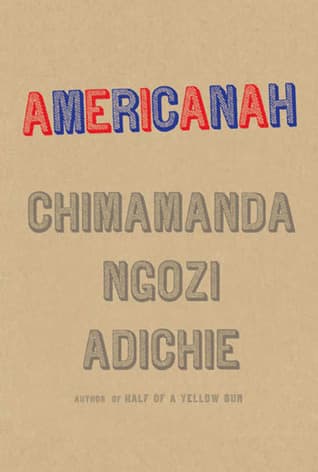
- Americanah
Chimamanda Ngozi Adichie
4.3 (264k) average on GoodreadsLiterary FictionDeals with the immigrant experience, race, and identity in America with a focus on realism and social commentary.
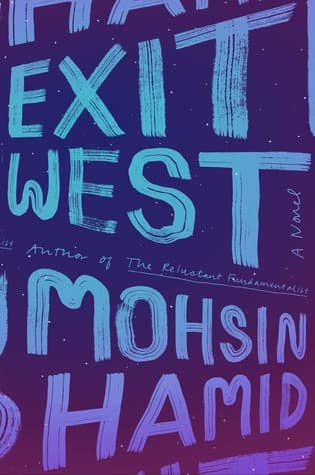
- Exit West
Mohsin Hamid
3.8 (105k) average on GoodreadsLiterary FictionHamid's novel uses magical realism to explore the refugee experience, offering a more allegorical and hopeful narrative. Lish's approach is strictly realistic, grittier, and focuses on the harsh, unadorned realities of undocumented life and trauma, making his narrative more grounded but also more relentlessly bleak.
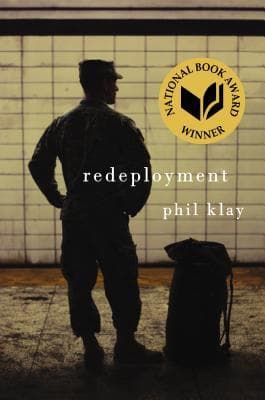
- Redeployment
Phil Klay
4.0 (22k) average on GoodreadsLiterary FictionKlay's book is a collection of short stories offering diverse perspectives on the Iraq War and its aftermath. Lish provides a singular, sustained, and deeply intimate narrative of one veteran's post-war struggle, intertwined with an immigrant's fight for survival. While both are powerful, Klay's is fragmented, whereas Lish's is a continuous, suffocating plunge into specific lives.
- Nineteen Eighty-Four
George Orwell
4.2 (5.5M) average on GoodreadsFictionWinston Smith dreams of truth and rebellion in a world where Big Brother watches all, but he confronts the terrifying power of a regime that controls not just actions, but thoughts.



Enjoyed the summary?
A summary gives you the shape of the book. The book itself has the detail, the examples and the voice.
Find Preparation for the Next Life on AmazonAs an Amazon Associate, BookBrief earns from qualifying purchases. How we're funded