

Synopsis
Covers the whole plot, including the ending.
- Difficulty
- Medium
- Pacing
- Moderate
- Mood
- Atmospheric, Brooding, Philosophical, Epic
- Read it if
- You are a long-time fan of Anne Rice's Vampire Chronicles and want to see all your favorite characters return for an epic, universe-spanning story.
- Skip it if
- You prefer fast-paced horror or are looking for an entry point into the Vampire Chronicles; this book is deeply embedded in its existing lore.
Prince Lestat Plot Summary
Covers the whole plot, including the ending.
The Voice and the Fledgling Burnings
The vampire world is in chaos. A powerful 'Voice' is telling ancient vampires, including Marius and the Twins, Mekare and Maharet, to burn young vampires in cities around the world. These massacres are new, causing fear among the Undead. Many vampires are driven mad or destroyed by the Voice or the burnings. Lestat de Lioncourt, living alone, knows about the chaos but at first avoids it. The events are told from different vampires' viewpoints, showing the widespread panic and the urgent search for answers about the Voice.
Lestat's Reawakening and the Call to Leadership
During this global chaos, various powerful vampires, including Marius, Louis de Pointe du Lac, and David Talbot of the Talamasca, contact Lestat. They believe he is the only one strong and charming enough to unite the divided vampire race and face the Voice. Lestat, at first unwilling and still dealing with his past, cannot ignore their pleas. He starts to talk with other vampires through a new psychic network, sharing his thoughts and hearing their desperate calls for leadership. His return signals a change from his private life, as he begins to accept the great responsibility placed on him.
Gathering of the Ancients
Responding to the call for unity, Lestat decides to host a large meeting of the oldest and most powerful vampires at his chateau in France. Invitations go to Mekare and Maharet, Marius, Armand, Louis, Pandora, Flavius, Eric, and many others. This meeting is new in vampire history, bringing together beings with thousands of years of history and different views. The goal is to understand the Voice, plan how to stop the burnings, and perhaps create a new order for their kind. The vampires' journey to the chateau is filled with personal thoughts and anticipation of the important talks to come.
The First Council and Revelation of Amel
At the chateau, the vampires have intense discussions, sharing their experiences with the Voice and their ideas. During these talks, Mekare and Maharet, the oldest and most knowledgeable, reveal the truth: the Voice is Amel, the ancient spirit that gave them their vampiric nature. Amel, a preternatural blood-spirit, has been inside Mekare since she first consumed it long ago. Now, with more vampires and Mekare's control weakening, Amel is appearing outside of her, causing the burnings as it tries to experience the world and find a new host. This news shocks and frightens the Undead, as it means their lives are tied to this unpredictable entity.
Amel's Proposal
With Amel's truth revealed, Mekare, acting as a link, tells the council Amel's wishes. Amel is tired of its current life and wants a new, powerful host who can give it a different experience of the world and a more stable existence. The spirit chooses Lestat, seeing his strength, charm, and unique connection to all vampires through his various gifts. The plan is for Lestat to become Amel's new body, freeing Mekare and possibly ending the burnings. This idea causes fear, hope, and doubt among the vampires, as it would change Lestat and their future.
Lestat's Decision
After much thought, inner struggle, and talks with his closest friends like Louis and Marius, Lestat decides to accept Amel into himself. He sees it as his fate and the only way to save his kind from the ongoing chaos. The transfer of Amel from Mekare to Lestat is a powerful event, witnessed by the vampires. After receiving Amel, Lestat changes greatly, becoming much more powerful and connected to every vampire through the blood. He declares himself the Prince of the Undead, creating a new order and promising stability for the vampire world under his leadership.
The New Order and the Great Family
As the new Prince, Lestat, now with Amel inside him, immediately starts creating a new order. He declares that all vampires are part of a 'Great Family' and that creating new vampires is forbidden without his direct permission or an established ancient's permission. He emphasizes communication and support, using his stronger psychic abilities to connect with vampires globally. He also describes a future where vampires can live more peacefully and secretly with humans, guided by a shared goal. The burnings stop, and a fragile peace begins in the vampire world, though challenges remain.
Challenges to the Throne
Despite the initial relief and acceptance, Lestat's new rule has challenges. Some rogue vampires, especially those who like chaos or dislike authority, resist his rules. Others, like the ancient Rhoshamandes, have their own plans. Lestat must show his authority, sometimes by force, but more often through his charisma and Amel's power within him. He also faces the inner struggle of combining Amel's mind with his own, learning to use its vast power responsibly. The novel explores the delicate balance of power and the ongoing efforts to unite a diverse and often rebellious species under one leader.
Exploration of Amel's Nature
With Amel now inside him, Lestat begins to understand the entity more deeply. He experiences Amel's ancient memories, its cosmic origins, and its basic desire for sensation. He learns that Amel is not evil but a primal force that can cause destruction when unchecked. Lestat's conversations with Amel, both internal and external through his stronger psychic connection, show a complex, almost childlike mind seeking meaning and connection. This exploration helps Lestat control Amel's power and make it part of his own being, giving him a unique view of vampirism itself.
The Future of the Undead
By the end of the novel, Lestat is firmly established as the Prince of the Undead. He continues to communicate with the Great Family, settling disputes, offering advice, and ensuring the new rules are followed. The initial crisis of the burnings is over, replaced by cautious hope and adjustment. Lestat, now stronger and wiser, accepts his role as the reluctant leader, knowing his fate is tied to all vampires. The book ends with a sense of a new beginning for the Children of Darkness, under their charming and powerful Prince Lestat, with the promise of more adventures and challenges.
Prince Lestat Characters
Lestat de Lioncourt
Protagonist
The 'Brat Prince' who becomes the reluctant leader of the vampires.
Lestat is a flamboyant, rebellious, yet deeply philosophical vampire, known for his rockstar persona and his often-reckless pursuit of truth and experience. He is a natural leader, charismatic and powerful, but also prone to fits of melancholy and self-doubt. Throughout the novel, he grapples with the burden of his fame and the responsibility thrust upon him to unite the fractured vampire world. He possesses a strong moral compass despite his vampiric nature, often seeking to understand and protect humanity.
Relationships: Louis de Pointe du Lac (complex, deep love and companionship); Marius de Romanus (mentor, friend, fellow ancient); Amel (host and consciousness, eventually integrated); David Talbot (friend, confidante, Talamasca liaison)
Amel
Antagonist/Plot Device
The ancient, sentient blood-spirit that is the source of vampirism.
Amel is not a character in the traditional sense but an ancient, cosmic, preternatural entity that grants vampirism. It is a primal force, a consciousness that desires sensation and experience. Initially manifesting as the destructive 'Voice' causing the fledgling burnings, it is later revealed to be an entity weary of its current state and seeking a new host. It is neither good nor evil, but a fundamental force of nature with an almost childlike curiosity and power.
Relationships: Mekare (original host, bound for millennia); Lestat de Lioncourt (new host, integrated consciousness)
Mekare
Supporting
The ancient vampire, twin to Maharet, who first consumed Amel.
Mekare is one of the oldest and most powerful vampires, the very first to consume Amel and thus the original vessel for the vampiric spirit. She is silent, having had her tongue cut out millennia ago, and communicates telepathically, primarily through her twin, Maharet. She is fiercely protective of her family and the vampire lineage, possessing immense wisdom and a deep understanding of Amel's nature. Her long burden of containing Amel is a central element of her character.
Relationships: Maharet (twin sister, inseparable bond); Amel (original host, bound for millennia)
Maharet
Supporting
The ancient vampire, twin to Mekare, who acts as her voice and confidante.
Maharet is Mekare's identical twin sister, sharing a profound, telepathic bond. She acts as Mekare's voice and interpreter, conveying her sister's thoughts and wisdom to others. Like Mekare, she is one of the most ancient and knowledgeable vampires, deeply concerned with the welfare of their kind and the stability of the world. She is often the one to explain complex vampiric lore and history to the younger vampires, providing crucial context for the crisis.
Relationships: Mekare (twin sister, inseparable bond); The Great Family (maternal figure, guardian)
Marius de Romanus
Supporting
An ancient Roman vampire, mentor, and artist.
Marius is a powerful and ancient vampire, a scholar, artist, and guardian of the oldest vampires (Akasha and Enkil, and later Mekare and Maharet). He is a mentor figure to Lestat and possesses vast knowledge of vampire history and lore. He is thoughtful, philosophical, and often acts as a voice of reason among the more volatile ancients. His concern for the future of their kind drives him to seek Lestat's leadership.
Relationships: Lestat de Lioncourt (mentor, friend); Amel (knowledgeable about its history); Pandora (lover, companion)
Louis de Pointe du Lac
Supporting
Lestat's first great love and eternal companion.
Louis is a melancholic, introspective vampire, often plagued by existential angst and moral questioning. He is Lestat's first and perhaps deepest love, and their bond is central to the series. He struggles with the violence inherent in vampirism and often seeks solace in humanity. In Prince Lestat, he is a steadying presence for Lestat, offering emotional support and a moral perspective during the crisis.
Relationships: Lestat de Lioncourt (deep, enduring love and companionship); Claudia (deceased fledgling, adoptive daughter)
Armand
Supporting
An ancient, eternally youthful vampire with a complex past.
Armand is an ancient vampire, made young by Marius, who has experienced many eras and identities. He is artistic, passionate, and often tormented by his past and the nature of his existence. He has a complicated relationship with Lestat, marked by both admiration and rivalry. In this novel, he participates in the council, offering his unique perspective and reaffirming his connection to the larger vampire family.
Relationships: Marius de Romanus (maker, mentor); Lestat de Lioncourt (complex admiration and rivalry)
David Talbot
Supporting
The former Elder of the Talamasca, now a vampire, and Lestat's confidante.
David Talbot was once the wise and powerful Elder of the Talamasca, a secret society dedicated to studying the supernatural. He was forcibly made a vampire by Lestat and has since become a close friend and confidante. He provides a unique perspective, bridging the human and supernatural worlds, and offers Lestat practical advice and historical context. His intelligence and calm demeanor are invaluable during the crisis.
Relationships: Lestat de Lioncourt (maker, friend, confidante); The Talamasca (former leader, still connected)
Pandora
Supporting
An ancient Roman vampire, companion to Marius.
Pandora is an ancient Roman vampire, made by Marius, with a strong will and independent spirit. She is highly cultured, beautiful, and deeply devoted to Marius. She brings her millennia of experience and perspective to the council, offering insights and supporting Marius's efforts to find a solution to the crisis. Her presence underscores the long history and interconnectedness of the ancient vampires.
Relationships: Marius de Romanus (maker, lover, companion)
Prince Lestat Themes
Leadership and Responsibility
The novel shows the difficulties of leadership, especially when given to someone like Lestat who initially avoids it. The Voice crisis makes the vampire world look for a leader, and Lestat, despite his past, is chosen because of his power, charisma, and connection to his kind. His journey from private individual to Prince of the Undead highlights that true leadership often involves great personal sacrifice and the need to unite different groups. This is clear in his decision to accept Amel, understanding the great responsibility it holds for his kind's survival and future.
“I am Prince Lestat. I am the Prince of the Undead. And I have heard your pleas. I have heard your cries. And I have come to you.”
Identity and Transformation
Identity is a main theme, for individual characters and for the vampire species. Lestat deals with his identity as a celebrity, a rebel, and now a possible savior. The core of this theme is the change he goes through when he accepts Amel, altering his being and purpose. For the entire vampire race, the crisis makes them rethink their group identity – are they just scattered predators, or can they form a united 'Great Family'? The novel suggests that identity changes and develops, especially when facing threats and integrating new, powerful forces.
“I was Lestat, yes, but I was also Amel, and Amel was Lestat. We were one, inextricably bound, and the world was changing.”
Family and Community
Despite their often solitary nature, vampires are brought together by 'family' ties – both blood relatives (like Mekare and Maharet) and those created through the bloodline. The crisis from the Voice makes them confront their isolation and realize the need for community. Lestat's idea of the 'Great Family' emphasizes this theme, highlighting mutual support, communication, and a shared purpose. The gathering of the ancients at Lestat's chateau shows this desire for connection and group action, proving that even immortal beings want belonging and a shared future.
“We are a family. We are the Great Family. And we must stand together, or we will fall apart.”
The Nature of Existence and Immortality
The novel explores the ideas of immortality and life itself. Through Amel, the source of vampirism, the story looks at a primal consciousness seeking experience and meaning over thousands of years. Ancient vampires think about their long lives, the changes they have seen, and the possibility of endless boredom. The burning of young vampires raises questions about the value of vampire life and their reason for being. Lestat's connection with Amel offers a new view on what it means to be alive, to have great power, and to be connected to the universe, moving beyond just survival to a search for understanding.
“To live forever is to know everything, to feel everything, to suffer everything. And to learn nothing new, unless you seek it out.”
Power and Control
The story constantly examines power – who has it, how it is gained, and what happens when it is misused or uncontrolled. The 'Voice' (Amel) represents an uncontrolled, ancient power causing chaos. The ancient vampires have great individual power, but as a group they lack direction. Lestat's rise is about centralizing this power and controlling the species. The challenge is using this power responsibly, balancing individual freedom with the need for order. The fear of Amel's destructive potential shows the dangers of uncontrolled power, while Lestat's integration of it is an attempt to use and direct it for the common good.
“Power is a burden, Lestat. A terrible, beautiful burden.”
Plot Devices & Literary Techniques
The Voice (Amel)
A mysterious, disembodied command driving ancient vampires to destroy fledglings.
The Voice serves as the primary inciting incident and antagonist for much of the novel. Its enigmatic nature creates suspense and drives the plot forward as vampires seek its origin and purpose. Later revealed to be Amel, the blood-spirit itself, it becomes a crucial plot point for Lestat's transformation. It forces the scattered vampire community to unite, providing the catalyst for the grand council and Lestat's eventual acceptance of leadership. Without the Voice, the vampires would likely remain in their isolated existences.
The Psychic Network
An emergent telepathic connection among vampires, allowing widespread communication.
The increasing psychic connection among vampires, particularly the ancients, is a vital plot device. It allows for the rapid spread of news about the burnings, the sharing of theories about the Voice, and ultimately, the coordination of the grand council. It facilitates Lestat's communication with the wider vampire world, enabling him to rally support and eventually establish his authority as Prince. This device modernizes the vampire world, allowing for global communication and a sense of collective consciousness previously impossible.
The Grand Council
A historic gathering of the most ancient and powerful vampires at Lestat's chateau.
The Grand Council is a pivotal plot device that brings together the vast and diverse cast of characters from the Vampire Chronicles. It serves as the forum for the revelation of Amel's true nature, the debate over Lestat's role, and his eventual ascension to Prince. This gathering allows for exposition of ancient lore, character interactions, and the collective decision-making process that shapes the future of the vampire world. It signifies a shift from individual narratives to a more collective, political one.
Lestat's Narrative Voice
The story is primarily told from Lestat's first-person perspective, interspersed with other POVs.
While not exclusively Lestat's story, his narrative voice is the anchor of the novel. His unique blend of introspection, arrogance, and philosophical musings shapes the reader's understanding of the events. Interspersed with third-person perspectives or other characters' first-person accounts, it provides a panoramic view of the vampire world while keeping Lestat at its emotional and thematic core. This allows for deep dives into his internal struggles and his evolving relationship with his identity and destiny.
Prince Lestat Quotes
“The world changes, we change, and God's purpose remains a mystery.”
“There are no goodbyes for us. Wherever you are, you will always be in my heart.”
“To be a vampire is to live with an insatiable hunger, not just for blood, but for experience, for knowledge, for life itself.”
“We are the monsters, yes, but we are also the dreamers, the poets, the artists of the night.”
“The greatest gift of immortality is not endless time, but endless opportunity to learn, to grow, to love.”
“Every soul carries its own unique music, and sometimes, if you listen closely enough, you can hear it.”
“To be alone forever is the true horror, not death.”
“The past is a living thing, always with us, always shaping what we are and what we will become.”
“There is a purity to rage, a terrible, beautiful clarity that cuts through all pretense.”
“We are all bound by invisible threads, connected in ways we can barely comprehend.”
“The greatest battles are not fought with swords or fangs, but within the confines of one's own heart.”
“Don't ever let anyone tell you that you cannot be both a creature of darkness and a bringer of light.”
“Sometimes, the only way to find yourself is to get utterly, irrevocably lost.”
“The music of the spheres, the hum of the universe, it is all within us, if only we learn to listen.”
Quiz
10 questions on the plot and the characters. Each answer comes with a short explanation.
Question 1
What is the primary crisis facing the vampire world at the beginning of 'Prince Lestat'?
- A shortage of human blood due to overpopulation.
- The rapid and uncontrolled proliferation of vampires.
- A new human organization actively hunting vampires.
- The ancient ones are dying off at an alarming rate.
Show answer
B. The rapid and uncontrolled proliferation of vampires. The book description explicitly states that their kind have been proliferating out of control, leading to the crisis.
Question 2
What is the 'Voice' commanding the ancient vampires to do?
- To gather all vampires in one central location.
- To reveal themselves to humanity.
- To burn fledgling vampires in cities worldwide.
- To seek out and destroy the oldest vampires.
Show answer
C. To burn fledgling vampires in cities worldwide. The description states the Voice 'commands that they burn fledgling vampires in cities from Paris to Mumbai, Hong Kong to Kyoto and San Francisco.'
Question 3
Which ancient vampire is described as the 'true child of the Millennia'?
- Louis de Pointe du Lac
- Marius
- Armand
- David Talbot
Show answer
B. Marius The text lists Marius as 'the true child of the Millennia' among the characters appearing in the novel.
Question 4
How do vampires in 'Prince Lestat' communicate more effectively than in previous centuries?
- Through a newly discovered telepathic link unique to the ancient ones.
- By using human technologies 'undreamed of in previous centuries'.
- Through a direct connection to the Voice, which acts as a broadcast system.
- They have developed a secret network of couriers and messengers.
Show answer
B. By using human technologies 'undreamed of in previous centuries'. The description highlights that 'thanks to technologies undreamed of in previous centuries, they can communicate as never before.'
Question 5
Which organization is David Talbot associated with, as mentioned in the summary?
- The Children of Darkness
- The Secret Talamasca
- The Ancient Council
- The Blood Drinker Syndicate
Show answer
B. The Secret Talamasca David Talbot is identified as 'vampire and ultimate fixer from the Secret Talamasca'.
Question 6
What role is Lestat expected to play in the vampire crisis?
- To discover the true identity of the Voice.
- To lead the immolation of fledgling vampires.
- To unite the Children of Darkness.
- To negotiate with the human world for peace.
Show answer
C. To unite the Children of Darkness. The prompt asks if Lestat 'will heed the call to unite the Children of Darkness as they face this new twilight'.
Question 7
Which of the following historical periods is NOT mentioned as a setting Lestat's story traverses or involves other characters from?
- Ancient Egypt
- Feudal Japan
- Fourth-century Carthage
- Renaissance Venice
Show answer
B. Feudal Japan The summary lists 'present-day New York and Ancient Egypt to fourth-century Carthage and Renaissance Venice', but Feudal Japan is not mentioned.
Question 8
What is the most significant characteristic that sets Lestat apart from other vampires in the world of the Undead?
- He is the oldest living vampire.
- He is the only blood drinker truly known to the entire world of the Undead.
- He possesses unique magical abilities no other vampire has.
- He is the only one immune to the Voice's commands.
Show answer
B. He is the only blood drinker truly known to the entire world of the Undead. The description states, 'There is only one vampire, only one blood drinker, truly known to the entire world of the Undead' and then identifies him as Lestat.
Question 9
The summary provides questions about the Voice, specifically asking 'Who – or what – is the Voice? What does it desire, and why?' What does this imply about the Voice at the beginning of the novel?
- Its identity, motives, and nature are known only to the ancient ones.
- It is a newly introduced character whose intentions are clear to all.
- Its origins and purpose are a central mystery to be uncovered in the story.
- It is merely a collective delusion among the widespread vampire population.
Show answer
C. Its origins and purpose are a central mystery to be uncovered in the story. The rhetorical questions posed in the summary ('Who – or what – is the Voice? What does it desire, and why?') directly indicate that these are unknown elements and central plot points for the narrative to explore.
Question 10
What is the thematic significance of the 'new twilight' mentioned in relation to the vampires facing the crisis?
- It refers to the literal end of the day, when vampires are most active.
- It symbolizes a period of peaceful coexistence with humanity.
- It suggests a dangerous and uncertain era, possibly the decline or end of their kind.
- It represents a new golden age for vampires, free from human interference.
Show answer
C. It suggests a dangerous and uncertain era, possibly the decline or end of their kind. The phrase 'new twilight' in the context of a crisis, massacres, and proliferation out of control typically implies a period of great danger, decline, or a turning point towards an uncertain or potentially grim future, rather than a positive outcome.
Prince Lestat FAQ
What is the central crisis facing the vampire world at the beginning of 'Prince Lestat'?
The vampire world is in crisis due to uncontrolled proliferation of new vampires, coupled with modern communication technologies that allow them to connect globally. This overpopulation and interconnectedness lead to a mysterious 'Voice' commanding ancient vampires to immolate fledglings across major cities worldwide, initiating widespread massacres.
Who is 'the Voice' and what are its initial commands?
The Voice is revealed to be Amel, the original spirit that inhabited Akasha and is the source of all vampiric existence. Its initial commands are for ancient vampires to burn fledgling vampires in cities like Paris, Mumbai, and San Francisco, aiming to control the burgeoning vampire population.
How does Lestat become involved in resolving the crisis?
Lestat, after initially withdrawing, is called upon by various vampires and eventually hears the Voice himself. He decides to heed the call, believing he can unite the Children of Darkness and find a solution, ultimately becoming a central figure in understanding and confronting Amel.
Which major characters from the Vampire Chronicles return in this novel?
Many key characters return, including Louis de Pointe du Lac, Armand, Mekare and Maharet, Pandora, Flavius, David Talbot, and Marius. The novel brings together a vast ensemble, showcasing the interconnectedness of the vampire lineage.
What is the significance of the Talamasca in the events of the book?
The Talamasca, particularly through David Talbot, plays a crucial role as chroniclers and observers of the supernatural world. David acts as a 'fixer' and provides vital information and connections, helping Lestat and others understand the unfolding crisis and the true nature of Amel.
How does the novel connect to the events of 'The Queen of the Damned' regarding Akasha and the origins of vampires?
The novel directly builds on the origin story established in 'The Queen of the Damned,' revealing that Amel, the spirit that entered Akasha, is the true source of the vampiric condition. Akasha was merely its vessel, and upon her destruction, Amel became unbound and sought a new host.
What is the role of Mekare and Maharet in understanding Amel?
Mekare and Maharet, being the oldest surviving vampires after Akasha, possess the deepest understanding of the ancient origins. Mekare, having absorbed Akasha's brain, carries the knowledge of Amel's initial possession and is crucial in deciphering its nature and intentions.
What new supernatural entities are introduced or further explored in 'Prince Lestat'?
The novel introduces new ancient vampires like Gremt and Rhoshamandes, and significantly expands on the concept of spirits and their interaction with the material world, particularly through the revelation of Amel's true nature as a sentient, powerful spirit.
How does Lestat's leadership style evolve throughout the crisis?
Lestat, initially a rebel and individualist, is forced to confront his desire for solitude versus his inherent charisma and ability to lead. He evolves from a reluctant hero to a more responsible and unifying figure, accepting the mantle of Prince to guide the vampire world.
What psychological impact does 'the Voice' have on the ancient vampires?
The Voice's commands create profound psychological distress and division among the ancient vampires. Many are compelled against their will to commit atrocities, leading to guilt, despair, and a desperate search for understanding and a way to resist the unseen force.
How does the concept of immortality affect the vampires' decision-making and relationships in this book?
Immortality brings both immense wisdom and deep-seated weariness. It allows vampires to endure centuries of change but also leads to ennui and detachment. Their long lives make them cautious but also prone to ancient grudges and deep bonds, influencing their reactions to the crisis and their willingness to trust Lestat.
Discuss the internal conflict of characters like Louis or Armand during the crisis.
Louis grapples with his perennial melancholy and moral anguish, struggling with the violence commanded by the Voice and his desire for peace. Armand, having found a measure of contentment, is pulled back into the ancient struggles, forced to confront his past and his loyalty to Lestat.
What is the ultimate resolution of the crisis involving Amel?
The crisis is resolved when Amel, the core spirit, is convinced by Lestat and the ancient ones to choose a new, willing host: Lestat himself. By merging with Amel, Lestat becomes the conduit for the vampiric power, ending the uncontrolled immolations and bringing a measure of stability.
Is Lestat truly a 'Prince' by the end of the novel, or is his role more complex?
While Lestat formally accepts the title of 'Prince,' his role is more complex. He doesn't rule as a monarch but rather acts as a central figure, a conduit for Amel, and a mediator for the diverse vampire factions. He represents unity and a new path forward, rather than absolute authority.
How does the novel explore themes of power and responsibility within the vampire hierarchy?
The novel deeply explores themes of power and responsibility by showing the devastating consequences of unchecked ancient power (Amel) and the struggle of leaders like Lestat to wield their influence for the greater good. It examines the burden of leadership and the moral dilemmas faced by those with immense power.
What philosophical questions does 'Prince Lestat' raise about the nature of the soul and existence?
'Prince Lestat' delves into profound philosophical questions about the nature of the soul, consciousness, and what constitutes life. By revealing Amel as a sentient spirit, it blurs the lines between living beings and ethereal entities, prompting reflection on the essence of existence and the origin of the vampiric 'soul'.
Does the ending of 'Prince Lestat' offer a definitive solution, or does it leave room for future conflicts?
The ending offers a definitive solution to the immediate crisis of the immolations and the Voice, establishing Lestat as the new vessel for Amel. However, it implicitly leaves room for future conflicts by consolidating immense power in one individual and by the very nature of an immortal, disparate society, suggesting new challenges will inevitably arise.
About the author

Anne Rice was an American author of gothic fiction, erotic literature, and Christian literature. She was best known for her series of novels The Vampire Chronicles. The first book became the subject of a film adaptation—Interview with the Vampire (1994).
Similar books
- The Vampire Lestat
Anne Rice
4.1 (177k) average on GoodreadsFantasyDirectly continues and expands upon the core mythology and characters established in earlier Vampire Chronicles.
- A Discovery of Witches
Deborah Harkness
4.0 (369k) average on GoodreadsFantasyFeatures ancient, powerful supernatural beings, a rich historical backdrop, and a focus on the origins and future of their species.
- Interview With The Vampire
Anne Rice
4.0 (485k) average on GoodreadsFantasyIntroduces the iconic characters and the lush, introspective style that defines the series.
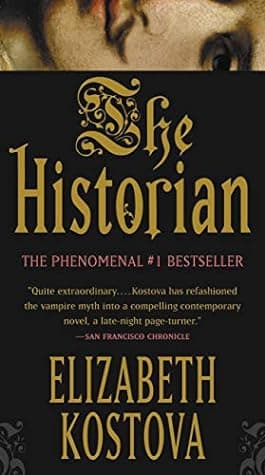
- The Historian
Elizabeth Kostova
3.8 (242k) average on GoodreadsThrillerKostova's The Historian grounds its vampire narrative in historical research and academic pursuit, weaving a meticulously researched tale around the Dracula myth. It's a slow-burn mystery with a strong emphasis on atmosphere and historical detail. Prince Lestat, while also dealing with ancient beings, is far more fantastical and less concerned with historical accuracy. Rice creates an entirely new mythology for her vampires, focusing on their internal world, powers, and spiritual origins rather than external historical figures. Kostova's approach is scholarly and grounded, whereas Rice's is expansive and mythopoeic, creating a self-contained, evolving universe for her undead.
- Harry Potter and the Sorcerer's Stone
J.K. Rowling
4.5 (7M) average on GoodreadsFantasyRescued from a miserable life under the stairs, an orphaned boy discovers he's a wizard destined for a magical school, where he uncovers a dangerous secret tied to the dark wizard who murdered his parents.
- The Hunger Games
Suzanne Collins
4.3 (6.4M) average on GoodreadsFantasyIn a future where children fight to the death on live television, Katniss Everdeen volunteers for the arena, turning a death sentence into a fight for survival and a spark of rebellion.




Enjoyed the summary?
A summary gives you the shape of the book. The book itself has the detail, the examples and the voice.
Find Prince Lestat on AmazonAs an Amazon Associate, BookBrief earns from qualifying purchases. How we're funded