
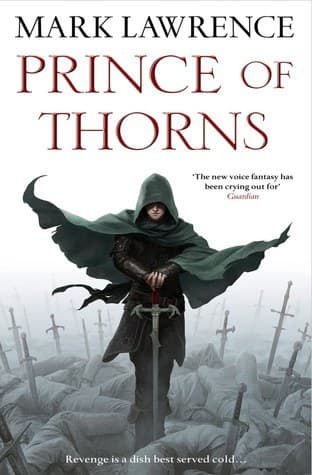
Synopsis
Covers the whole plot, including the ending.
- Difficulty
- Medium
- Pacing
- Fast
- Mood
- Dark, Brutal, Cynical, Vengeful, Atmospheric
- Read it if
- You enjoy grimdark fantasy with an anti-hero protagonist, morally ambiguous characters, and a brutal, post-apocalyptic setting.
- Skip it if
- You prefer traditional heroic narratives, lighthearted fantasy, or are sensitive to graphic violence and mature themes.
Prince of Thorns Plot Summary
Covers the whole plot, including the ending.
The Road to Vyene
The story begins with Jorg Ancrath, a fourteen-year-old prince and leader of a brutal outlaw band, leading his men through the Silent King's ruined lands. Their immediate goal is the wealthy city of Vyene, which they plan to raid. On the way, they find a small village, which Jorg orders burned after they take what they want. His men, including Makin, Kent, and Sirs, are a mixed group of murderers and thugs, loyal to Jorg despite his youth and often cruel nature. Jorg often thinks about his past, hinting at a traumatic event involving thorns and the deaths of his mother and younger brother, William. His ruthlessness and calculated violence are clear from the start.
The Burning of Vyene
Jorg's plan to take Vyene is carefully brutal. He uses deception and overwhelming force, setting fires to draw out the city's defenders, then ambushing them. The attack is chaotic and bloody, showing Jorg's strategic mind and his complete disregard for human life. He takes part in the killing, driven by cold ambition. During the raid, he meets the city's leader, Duke Orrin, and executes him without hesitation. The successful attack on Vyene solidifies Jorg's reputation among his men and in the wider land as a terrifying force, a 'Prince of Thorns' who leaves only destruction.
A Glimpse of the Past
Mixed with the present story are vivid, unsettling flashbacks to Jorg's childhood. These show the traumatic event that shaped him: at age nine, he, his mother, and his younger brother, William, were ambushed by an unknown attacker (later revealed as Count Renar). Jorg was thrown into a huge, dense thorn bush, where he stayed trapped for four days, watching his mother and brother die slowly. The thorns wounded him badly, and the experience gave him dark power and an unyielding will to survive. It changed his view of pain and morality forever.
The Necromancer and the Dead King
After the raid on Vyene, Jorg and his men continue their journey, facing various dangers of the broken empire. They find a necromancer, a powerful dark magic user who controls the dead. Jorg, having his own ability to 'master' the dead and influence the living, confronts the necromancer. Through this meeting, he learns more about the growing threat of the Dead King, a legendary figure gathering an undead army, possibly aiming to conquer the entire empire. This reveals a larger threat to Jorg's world, beyond the small fights of lords and outlaws.
Return to Ancrath
After months of raiding, Jorg makes the unexpected choice to return to his ancestral home, Castle Ancrath, his father King Olidan's seat. This decision stems from a desire for revenge against his father, whom he blames for his mother's death and his own suffering, and a deep ambition to claim his birthright. His men are cautious, knowing Ancrath's strong defenses and King Olidan's power. Jorg, however, is determined, seeing it as the next logical step in his rise to power. His return sets the stage for a confrontation with his past and his family.
The Trap at the Crossroads
As Jorg and his brotherhood near Ancrath, King Olidan's soldiers ambush them at a strategic crossroads. The battle is fierce and desperate, with Jorg's smaller, more agile group fighting against a larger number of trained soldiers. Several of Jorg's men die, and the brotherhood scatters. Jorg himself is almost captured but escapes using his fighting skills and his chilling ability to manipulate enemy minds. This ambush shows the danger of directly confronting his father and tests his remaining men's loyalty and resilience.
Forging Alliances and Betrayals
After the ambush, Jorg, always planning, begins to gather new allies and manipulate old ones. He meets Lord Red Kent, a powerful and feared bandit leader, and through intimidation, charm, and strategic deals, brings Kent and his forces under his control. Jorg's ability to inspire fear and loyalty, even in hardened criminals, is clear. He also uses his knowledge of local lords and their rivalries to cause trouble, weakening his father's position. However, these alliances are always unstable, built on shifting self-interest and possible betrayal.
The Siege of Ancrath
Jorg and his larger forces lay siege to Castle Ancrath. Knowing a direct attack would fail, Jorg uses psychological warfare and infiltration. He uses his ability to control the dead to scare the castle's defenders and exploits hidden tunnels and weak points in the defenses. The siege is long and brutal, with heavy losses on both sides. Jorg's resolve is absolute, fueled by his strong desire for revenge against Olidan and his ambition to claim the throne, no matter the cost in lives, including his own men.
Confrontation with Olidan
Jorg finally breaks through Ancrath's inner defenses and confronts his father, King Olidan. The confrontation is full of years of resentment and unspoken truths. Jorg reveals he knows about Olidan's involvement in the ambush that killed his mother and brother, accusing his father of planning it to remove his mother and secure his own power. Olidan, a cold and calculating ruler, admits his role, confirming Jorg's worst suspicions. This climactic meeting is a battle of wills and words, where Jorg's past trauma and present ambition meet his father's ruthless practicality.
The Throne and the Dead King's Threat
After a fierce and devastating struggle, Jorg defeats his father. The exact details of Olidan's death are somewhat unclear, suggesting Jorg's direct involvement. With Ancrath secured, Jorg, still only fourteen, claims the throne. However, his victory is not complete. The Dead King, who has been quietly gaining power across the empire, is a greater threat than ever. Jorg's new position as king comes with the immediate task of defending his kingdom against an existential threat, showing that his journey for power has just begun and even greater challenges await.
Prince of Thorns Characters
Jorg Ancrath
Protagonist
A ruthless, intelligent, and deeply scarred young prince leading a band of outlaws.
Jorg is the fourteen-year-old protagonist, a prince by birth but a bandit leader by choice. He is exceptionally intelligent, cunning, and charismatic, able to command the loyalty of hardened criminals. Beneath his charming and often cruel exterior lies a profound trauma from his childhood: being trapped in a thorn bush while his mother and brother died. This event instilled in him a unique connection to the dead, a chilling disregard for life, and an unyielding will to survive and dominate. He is driven by a burning desire for revenge against his father and an ambition to claim the throne of Ancrath, and eventually, the entire Broken Empire.
Relationships: Makin (Loyal, paternalistic follower and confidante); King Olidan (Antagonistic father, object of Jorg's revenge); Count Renar (The man who threw Jorg into the thorns, a target of his hate); William (Deceased younger brother, a source of Jorg's trauma)
Makin
Supporting
Jorg's most loyal and seasoned follower, a former knight.
Makin is one of Jorg's oldest and most trusted companions, a grizzled and pragmatic warrior. Unlike many of the other outlaws, Makin has a more honorable past, having been a knight before falling on hard times. He often acts as Jorg's conscience, or at least his voice of caution, though he never directly defies the young prince. Makin understands Jorg's dark nature but remains fiercely loyal, recognizing Jorg's unique capabilities and the twisted charisma he wields. He serves as a grounding figure amidst the chaos, providing a perspective of experience and weary wisdom.
Relationships: Jorg Ancrath (Loyal follower, advisor, and surrogate father figure); Kent (Fellow outlaw, often at odds with Makin's pragmatism)
King Olidan
Antagonist
Jorg's cold, calculating father and the King of Ancrath.
King Olidan is Jorg's father and the ruler of Ancrath. He is a shrewd, ruthless, and politically astute monarch, deeply concerned with maintaining his power and legacy. Olidan is revealed to have orchestrated the ambush that led to the deaths of Jorg's mother and brother, seeing them as obstacles to his ambitions. He is a formidable opponent, not just militarily but also intellectually, matching Jorg's cunning with his own. His relationship with Jorg is one of mutual hatred and a struggle for dominance, representing the corrupting nature of power within the family.
Relationships: Jorg Ancrath (Antagonistic father, rival for the throne); Count Renar (An ally and accomplice in the past)
Count Renar
Supporting
The nobleman responsible for Jorg's childhood trauma.
Count Renar is a powerful nobleman and, crucially, the man directly responsible for throwing young Jorg into the thorn bush and killing his mother and brother. He acts on King Olidan's behalf, making him a central figure in Jorg's traumatic past. Renar embodies the casual cruelty and political maneuvering of the Broken Empire's aristocracy. He is a skilled warrior and a dangerous adversary, representing the direct physical manifestation of Jorg's childhood horror and a significant target for his revenge. His presence fuels Jorg's rage and determination.
Relationships: Jorg Ancrath (The perpetrator of Jorg's trauma, object of his revenge); King Olidan (An ally and accomplice)
Kent
Supporting
A brutal and volatile member of Jorg's brotherhood.
Kent is one of Jorg's key lieutenants, known for his immense strength and brutal nature. He is a loyal but often reckless member of the brotherhood, quick to violence and reveling in the chaos of their raids. Kent represents the more animalistic and base desires of the outlaw band, contrasting with Makin's more pragmatic approach. Despite his savagery, he respects Jorg's authority and cunning, following him into increasingly dangerous situations. His presence emphasizes the morally ambiguous and violent world Jorg inhabits.
Relationships: Jorg Ancrath (Loyal follower, subordinate); Makin (Fellow outlaw, often in conflict due to differing temperaments)
Sirs
Supporting
A quiet and deadly member of Jorg's brotherhood, skilled with a knife.
Sirs is another member of Jorg's inner circle, known for his quiet demeanor and deadly skill with a knife. He is less vocal than Kent or Makin but equally effective in battle. Sirs represents the silent, efficient brutality that characterizes much of Jorg's brotherhood. His loyalty is unquestioning, and he serves as a reliable enforcer and assassin for Jorg. His presence highlights the diversity of skills and personalities within the outlaw band, all united under Jorg's command.
Relationships: Jorg Ancrath (Loyal follower, subordinate); Gog (Fellow outlaw)
Gog
Supporting
A large, simple-minded, and surprisingly effective member of the brotherhood.
Gog is a physically imposing member of Jorg's brotherhood, characterized by his immense size and somewhat simple nature. Despite his lack of intellectual sophistication, Gog is fiercely loyal and surprisingly effective in combat, often acting as a brute-force element in Jorg's plans. His simplicity sometimes provides moments of unexpected humor or pathos amidst the grim narrative. He trusts Jorg implicitly, a testament to Jorg's ability to command loyalty even from those less capable of understanding his complex motivations.
Relationships: Jorg Ancrath (Loyal follower, subordinate); Sirs (Fellow outlaw)
The Necromancer
Mentioned
A powerful magic user encountered by Jorg, serving the Dead King.
The Necromancer is a powerful magic user who commands the dead, encountered by Jorg during his travels. This character serves to introduce the broader, more supernatural threats of the Broken Empire, specifically the growing power of the Dead King. The Necromancer's abilities provide a glimpse into the darker magical forces at play and foreshadow the greater conflict that Jorg will eventually face. His interaction with Jorg hints at Jorg's own latent abilities to influence the dead, suggesting a deeper connection to these dark powers.
Relationships: Jorg Ancrath (Temporary antagonist, source of information); The Dead King (Servant)
The Dead King
Antagonist
A legendary, powerful entity gathering an army of the undead.
The Dead King is a mysterious and ancient entity, a looming antagonist whose influence is felt throughout the Broken Empire. He is gathering an army of the undead and poses an existential threat to all living kingdoms. While he doesn't appear directly in this first novel, his presence is constantly hinted at, building a sense of dread and a larger conflict beyond Jorg's immediate ambitions. He represents the ultimate, supernatural challenge that Jorg will eventually have to confront, elevating the stakes beyond mere political power struggles.
Relationships: Jorg Ancrath (Future ultimate adversary); The Necromancer (Commands his servants)
Prince of Thorns Themes
Revenge and Trauma
Jorg's entire journey is driven by his childhood trauma: being trapped in a thorn bush and seeing his mother and brother murdered. This trauma appears as a strong desire for revenge against his father, King Olidan, and Count Renar. His ruthlessness, his ability to control fear, and his disregard for life are all direct results of this past. Flashbacks clearly show the origins of his psychological wounds, explaining his cruelty and his constant pursuit of power as a way to avoid ever being a victim again. His actions are not just for power, but a twisted form of justice for his lost innocence.
“Before the thorns taught me their sharp lessons and bled weakness from me I had but one brother, and I loved him well. But those days are gone and what is left of them lies in my mother's tomb.”
The Nature of Leadership and Power
The novel explores different types of leadership through Jorg. Despite his youth and lack of morals, he earns strong loyalty from his outlaw band, showing that power can come from charisma, fear, and clever strategy, not just traditional authority. Jorg's leadership is practical and brutal; he motivates his men through shared violence and the promise of rewards, but also through his undeniable cunning and vision. He constantly manipulates those around him, whether his own men or rival lords, to reach his goals. The book questions what truly makes a leader and shows the dark paths one might take to gain and keep power in a broken world.
“A man's reach should exceed his grasp, or what's a heaven for?”
Moral Ambiguity and Redemption
Prince of Thorns thrives on moral ambiguity. Jorg is clearly a villain in many ways—a murderer, a raider, and a manipulator—yet the story is told from his view, allowing readers to understand, if not agree with, his motives. The world itself is a brutal, post-apocalyptic place where survival often requires morally questionable acts. The novel avoids simple good and evil, showing a world where characters operate in shades of gray. While Jorg does terrible things, there are hints of his inner struggle and the lasting effects of his past. This leaves open the question of whether redemption is possible for him, or if he even wants it.
“I was nine when I saw my mother and brother die. I was ten when I killed my first man. Not a soldier, just a man. I was a prince.”
The Broken Empire and Post-Apocalypticism
The 'Broken Empire' setting is key to the novel's themes. It is a world scarred by a past, vaguely technological disaster (implied 'Builders' and ancient machines), now returned to a feudal, violent state. This post-apocalyptic background explains the lawlessness, widespread banditry, and constant struggle for survival. The 'brokenness' of the empire reflects the brokenness of its characters, especially Jorg. The ruins of a technologically advanced past constantly remind them of a lost age, and the current barbarity is a sign of societal collapse, where traditional morality has been lost.
“The Builders built too well, and their ruins stand as an insult to our petty efforts.”
Plot Devices & Literary Techniques
Flashbacks
Interspersed memories of Jorg's traumatic past.
Flashbacks are a crucial device used to reveal Jorg's backstory and the origins of his ruthless personality. They are not linear but appear as vivid, often disturbing, snippets of memory, particularly focusing on the thorn bush incident and the deaths of his mother and brother. These flashbacks provide essential context for Jorg's present-day actions, explaining his motivations, his unique abilities, and the depth of his trauma. They build suspense and empathy (or at least understanding) for a character who otherwise appears purely villainous, slowly uncovering the layers of his psychological damage.
First-Person Narrative (Unreliable Narrator)
The story is told entirely from Jorg's perspective, colored by his biases.
The entire novel is narrated by Jorg Ancrath in the first person. This device immerses the reader directly into his twisted mind, allowing insight into his thoughts, motivations, and internal struggles, even as he commits horrific acts. However, Jorg is an unreliable narrator; his perspective is colored by his trauma, his ambition, and his inherent ruthlessness. He often rationalizes his actions or presents them in a way that serves his self-image. This narrative choice forces the reader to constantly question his version of events and his true nature, adding depth and moral complexity to the story.
Supernatural Abilities / Dark Magic
Jorg's innate ability to influence the dead and the living.
Jorg possesses a unique, unexplained ability to 'master' the dead, making them obey his commands, and to exert a powerful, almost hypnotic influence over the living. This supernatural element is a significant plot device, giving Jorg an edge in battles and allowing him to achieve feats that would be impossible for an ordinary human. It also ties into his traumatic experience in the thorn bush, suggesting a dark gift born from suffering. This ability not only enhances his power but also hints at the darker magical forces at play in the world, particularly the rising threat of the Dead King, establishing a larger magical conflict.
The Broken Empire Setting
A post-apocalyptic world with remnants of a lost, advanced civilization.
The 'Broken Empire' is more than just a backdrop; it's a foundational plot device. The world is a post-apocalyptic landscape, littered with the ruins and forgotten technologies of a highly advanced past civilization (the 'Builders'). This setting justifies the pervasive violence, the lack of centralized authority, and the brutal nature of survival. The remnants of advanced tech (like 'fire-oil' and 'shapers') hint at a lost golden age and add a layer of science fiction to the fantasy. This brokenness underscores the moral decay and desperate struggles of the characters, particularly Jorg, whose ambition thrives in such a chaotic environment.
Prince of Thorns Quotes
“I’m a murderer, not a liar. I have my standards.”
“It’s a long road to get from a place where you have a father to a place where you have a dead father, but it’s a road we all walk.”
“I have to admit that I have a certain fondness for the things that have gone wrong.”
“I was born to a world of blood and fire. I was born to a world of violence. I was born to a world of pain.”
“The dead can’t hurt you. It’s the living you have to worry about.”
“The truth is a weak thing, easily broken by a lie.”
“Revenge is a dish best served cold, but it’s also a dish best served bloody.”
“There are no heroes in my story. Only survivors.”
“Sometimes a man needs to know when to let go, when to stop fighting, and when to just let the world burn.”
“Hope is a mistake. If you can stop yourself from hoping, you can stop yourself from being hurt.”
“Power is a funny thing. It can make a man believe he's a god, and it can make a god believe he's a man.”
“I’m not a monster. I’m just a boy who’s done monstrous things.”
“The greatest trick the devil ever pulled was convincing the world he didn't exist. The second greatest was convincing me I wasn't him.”
“Sometimes you have to burn a bridge to keep the rats from following you.”
Quiz
10 questions on the plot and the characters. Each answer comes with a short explanation.
Question 1
What significant event from Jorg's childhood is central to his motivation and desire for revenge?
- His mother's death from a plague.
- His father disinheriting him from the throne.
- Being trapped in a thorn bush and witnessing his mother and brother's murder.
- Being exiled from his family's castle at a young age.
Show answer
C. Being trapped in a thorn bush and witnessing his mother and brother's murder. Jorg's trauma from being trapped in the thorn bush while his mother and brother were brutally murdered is the driving force behind his quest for revenge.
Question 2
Who is the leader of the band of outlaws Jorg travels with at the beginning of the book?
- Makin
- Gog
- Jorg Ancrath
- The Nuban
Show answer
C. Jorg Ancrath Jorg Ancrath, despite his young age, is the ruthless and cunning leader of the Prince of Thorns' band of outlaws.
Question 3
What unique ability does Jorg possess, allowing him to control certain aspects of the world around him?
- The ability to shapeshift into animals.
- The ability to master the living and the dead.
- The ability to conjure powerful fire spells.
- The ability to heal any wound instantly.
Show answer
B. The ability to master the living and the dead. The book mentions Jorg's ability to 'master the living and the dead,' a form of necromancy or mind control.
Question 4
Which character serves as Jorg's most loyal and often philosophical companion among his band of brothers?
- Coddin
- Gog
- Makin
- Rike
Show answer
C. Makin Makin is consistently portrayed as Jorg's most trusted and often reflective companion, frequently engaging in deeper conversations with the young prince.
Question 5
What is the primary goal Jorg sets for himself, which involves returning to his ancestral home?
- To retrieve a hidden treasure from the castle vaults.
- To marry a princess and secure an alliance.
- To claim his father's throne and exact revenge on those who wronged him.
- To burn the castle down as a final act of rebellion.
Show answer
C. To claim his father's throne and exact revenge on those who wronged him. Jorg's overarching ambition is to return to his father's castle, claim the throne, and seek retribution for the past.
Question 6
What is the name of Jorg's younger brother whose death he witnessed?
- William
- Simon
- Peter
- Thomas
Show answer
B. Simon Jorg's younger brother, Simon, was murdered alongside his mother, an event that deeply scarred Jorg.
Question 7
The 'Thorns' in the title refer metaphorically to what aspect of Jorg's character and journey?
- The literal thorn bushes he hides in.
- The painful lessons, suffering, and hardening he experiences.
- A specific type of magical weapon he wields.
- The thorny crown he seeks to wear.
Show answer
B. The painful lessons, suffering, and hardening he experiences. The 'thorns' symbolize the brutal, painful experiences and lessons that have shaped Jorg into the ruthless leader he becomes, stripping away his childhood innocence.
Question 8
Who is the primary antagonist responsible for the attack that led to Jorg's trauma and his mother and brother's deaths?
- King Olidan
- The Dead King
- Count Renar
- Sir Galen
Show answer
C. Count Renar Count Renar is the one who orchestrated and carried out the brutal attack on Jorg's family, leading to his deep-seated desire for revenge.
Question 9
What is the 'Builder' technology that still exists in Jorg's world, hinting at a past advanced civilization?
- Ancient magical scrolls and spellbooks.
- Intact, futuristic cities and flying machines.
- Advanced machines, structures, and possibly weapons from a prior technological age.
- Genetically engineered beasts used in warfare.
Show answer
C. Advanced machines, structures, and possibly weapons from a prior technological age. The 'Builder' technology refers to remnants of a highly advanced, pre-cataclysmic civilization, revealing the science fiction undertones of the world.
Question 10
What is the ultimate fate of Jorg's father, King Ancrath, by the end of 'Prince of Thorns'?
- He abdicates the throne and goes into exile.
- He is killed by Jorg in a confrontation.
- He forms an alliance with Jorg against a common enemy.
- He dies of natural causes, leaving Jorg the throne peacefully.
Show answer
B. He is killed by Jorg in a confrontation. Jorg ultimately confronts and kills his father, King Ancrath, to seize the throne of Renar, completing a major step in his revenge.
Prince of Thorns FAQ
What is the central premise of 'Prince of Thorns'?
The novel follows Jorg Ancrath, a morally ambiguous and ruthless young prince, as he leads a band of outlaws across a post-apocalyptic, broken empire. Driven by a desire for revenge and power, Jorg aims to reclaim his father's throne and confront the traumatic events of his past, specifically the murder of his mother and brother.
Who is Jorg Ancrath, and what motivates him?
Jorg Ancrath is the protagonist, a ten-year-old boy who, after witnessing the brutal murder of his mother and younger brother, transforms into a cold, calculating, and violent leader of a mercenary band. His primary motivations are revenge against those responsible for his family's deaths and a relentless pursuit of power to ensure he is never again a victim.
What is the significance of the 'thorns' in the title?
The 'thorns' symbolize the brutal lessons and hardening experiences Jorg endures after his traumatic childhood event. They represent the pain, violence, and ruthlessness he embraces as a means of survival and power, bleeding weakness from him and shaping him into the 'Prince of Thorns' he becomes.
Describe the world Jorg inhabits.
Jorg inhabits a grim, post-apocalyptic world that is a distant, decayed future version of Earth, referred to as the 'Broken Empire.' This world is ravaged by violence, populated by monstrous creatures, and governed by warring fiefdoms, with remnants of advanced technology scattered throughout, often misunderstood as magic.
Who are Jorg's 'brothers' and what is their role?
Jorg's 'brothers' are the members of his outlaw band: Machiavel, Coddin, Rike, and others. They are a loyal but equally ruthless group of killers and thieves who follow Jorg due to his charisma, cunning, and sheer force of will, serving as his instruments in his quest for power and vengeance.
What is the 'Builder' technology and how does it manifest?
The 'Builder' technology refers to the advanced scientific creations of the pre-apocalyptic civilization, often mistaken for magic in Jorg's era. Examples include the 'fire-bringers' (guns), the 'ghosts' (AI constructs), and the 'sun-stones' (energy sources), which Jorg occasionally exploits for his own ends, hinting at the science fiction underpinnings.
How does the 'ghost' that accompanies Jorg influence him?
The 'ghost' is an AI construct from the Builder era, initially encountered by Jorg in the tomb of the Silent King. It provides him with cryptic advice, warnings, and occasional insights, acting as a detached observer and sometimes a subtle manipulator, deepening the mystery of Jorg's world and his own abilities.
What are the hints about Jorg's potential supernatural abilities or connections?
Jorg demonstrates an unusual ability to influence or 'master' the dead and seemingly some living creatures, particularly when his resolve is absolute. This power is hinted to be linked to the Builder technology or his own unique psychological state, allowing him to compel obedience beyond normal means.
What is the nature of the 'Nightmares' in the Broken Empire?
The 'Nightmares' are not just figurative fears but literal, monstrous creatures that roam the land, products of the cataclysm that shattered the world. They are a constant threat and a tangible manifestation of the pervasive horror and decay that define the Broken Empire, adding to its dark fantasy elements.
How does trauma shape Jorg's personality and actions?
Jorg's personality is almost entirely forged by the trauma of witnessing his mother and brother's murders and being left for dead in a thorn bush. This event instills in him an extreme fear of weakness, a profound desire for control, and a ruthless pragmatism that justifies any atrocity in pursuit of his goals.
Is Jorg a psychopath or merely a product of his environment?
Jorg exhibits many psychopathic traits, including a lack of empathy, manipulative behavior, and a grandiose sense of self. While his environment certainly brutalized him, the novel suggests a deeper, innate predisposition towards these traits, amplified by his early trauma, making him more than just a victim of circumstance.
How does Jorg's internal monologue contrast with his external actions?
Jorg's internal monologue often reveals a sharp intellect, a sense of humor, and occasional moments of self-reflection or even vulnerability, which starkly contrast with his outwardly cruel, unflinching, and violent actions. This dichotomy allows readers a glimpse into the complex and often contradictory nature of his character.
What role does the concept of 'brotherhood' play for Jorg?
For Jorg, 'brotherhood' is a pragmatic bond built on shared violence and mutual loyalty among his outlaw band, a stark contrast to the loving bond he lost with his biological brother. It provides him with power and companionship, yet he remains emotionally detached, seeing his 'brothers' primarily as tools for his ambition.
Is Jorg a hero, an anti-hero, or a villain?
Jorg is most accurately described as an anti-villain or a dark anti-hero. While he commits horrific acts and lacks traditional heroic virtues, his actions are driven by a compelling, albeit twisted, quest for justice and power. He challenges conventional morality, forcing readers to grapple with his complex motivations.
How does the novel explore themes of revenge and justice?
The novel portrays revenge as a consuming, corrupting force that drives Jorg's every action, blurring the lines between justice and personal vendetta. It explores whether his violent pursuit of retribution truly brings peace or merely perpetuates the cycle of brutality, leaving the reader to ponder the nature of 'justice' in a broken world.
What is the meaning behind the repeated motif of 'the game'?
Jorg frequently refers to life and power struggles as 'the game,' highlighting his strategic, detached approach to conflict and human interaction. This motif suggests his view of the world as a chessboard where people are pawns, and his primary goal is to win, regardless of the cost or moral implications.
How does the blend of fantasy and science fiction impact the narrative?
The blend creates a unique post-apocalyptic setting where 'magic' is often misunderstood advanced technology, and 'monsters' are mutated or engineered creatures. This fusion deepens the world-building, adds layers of mystery, and allows for a commentary on humanity's cyclical nature and the dangers of unchecked power.
Does the novel endorse Jorg's actions, or condemn them?
The novel does not explicitly endorse or condemn Jorg's actions, instead presenting his brutal journey with unflinching honesty. It forces readers to confront the moral ambiguity of survival and power, leaving the judgment to the individual, thereby creating a thought-provoking and often uncomfortable reading experience.
What is the significance of the 'Silent King' and his tomb?
The 'Silent King' is a legendary figure from the Builder era, and his tomb houses powerful Builder technology, including the AI 'ghost' that interacts with Jorg. The tomb represents a link to the past and its advanced knowledge, providing Jorg with tools and insights that accelerate his understanding of the world and his own potential.
About the author
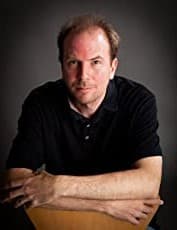
Mark Lawrence is a British author known for his contributions to the fantasy genre. His notable works include the "Broken Empire" trilogy, consisting of "Prince of Thorns," "King of Thorns," and "Emperor of Thorns," as well as the "Book of the Ancestor" series, which features "Red Sister." He is recognized for his dark and complex storytelling.
Similar books
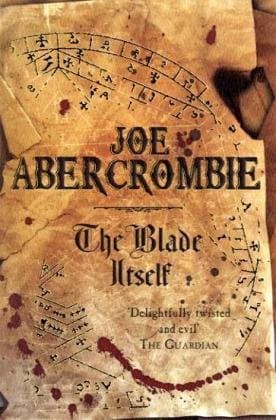
- The Blade Itself
Joe Abercrombie
4.2 (165k) average on GoodreadsFantasyFeatures morally gray characters, grimdark tone, and a focus on brutal realism in a fantasy setting.
- A Game of Thrones
George R.R. Martin
4.5 (2M) average on GoodreadsFantasyPolitical intrigue, morally complex characters, violence, and a harsh, unforgiving world.
- The Poppy War
R.F. Kuang
4.0 (46k) average on GoodreadsFantasyDark fantasy with a ruthless protagonist, graphic violence, and a focus on war and power.
- Harry Potter and the Sorcerer's Stone
J.K. Rowling
4.5 (7M) average on GoodreadsFantasyRescued from a miserable life under the stairs, an orphaned boy discovers he's a wizard destined for a magical school, where he uncovers a dangerous secret tied to the dark wizard who murdered his parents.
- The Hunger Games
Suzanne Collins
4.3 (6.4M) average on GoodreadsFantasyIn a future where children fight to the death on live television, Katniss Everdeen volunteers for the arena, turning a death sentence into a fight for survival and a spark of rebellion.
- 1984
George Orwell
4.2 (3.1M) average on GoodreadsPoliticsIn a future where surveillance and thought control are absolute, a man's search for truth clashes with the Party, showing that hope can be a form of rebellion.



Enjoyed the summary?
A summary gives you the shape of the book. The book itself has the detail, the examples and the voice.
Find Prince of Thorns on AmazonAs an Amazon Associate, BookBrief earns from qualifying purchases. How we're funded