
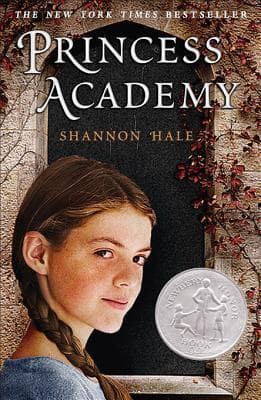
Synopsis
Covers the whole plot, including the ending.
- Difficulty
- Easy
- Pacing
- Moderate
- Mood
- Heartwarming, Inspiring, Gentle, Hopeful
- Read it if
- You enjoy heartwarming coming-of-age stories with a touch of fantasy, strong female characters, and themes of community and self-discovery.
- Skip it if
- You prefer high-stakes epic fantasy or stories with complex magic systems and darker themes.
Princess Academy Plot Summary
Covers the whole plot, including the ending.
The Announcement on Mount Eskel
Miri, a fourteen-year-old girl from the remote, stone-quarrying village on Mount Eskel, feels limited by her inability to work in the quarry alongside her father and sister. 'Quarry-lung' she suffered as a child makes the dust dangerous for her. Her closest friend, Peder, is a quarry-boy who often teases her. One day, a grand procession of royal messengers arrives, led by the stern Minister Olana. They announce that the king's priests have chosen Mount Eskel as the home of the future princess. An academy will be established, and all eligible girls between twelve and eighteen must attend to be educated in royal graces, from which Prince Steffan will choose his bride in one year. This news throws the quiet village into an uproar, as the prospect of one of their own becoming royalty is both exciting and frightening.
Arrival at the Princess Academy
Shortly after the announcement, the Princess Academy is built on a desolate part of Mount Eskel, far from the village. All eligible girls, including Miri, her older sister Marda, and Miri's friends Liana and Britta, are forced to leave their families and move into the academy. The school is overseen by the strict Tutor Olana, who quickly establishes a harsh regimen of lessons in etiquette, history, dancing, and 'proper' speech. The girls are stripped of their mountain clothes and given identical, uncomfortable uniforms. Miri struggles with the sudden loss of her freedom and the demanding lessons, particularly the emphasis on hiding their mountain ways, which Olana deems 'uncivilized.' The girls are initially resentful and competitive, struggling to adapt to their new, confined lives.
The Power of Quarry-Speech
Miri, along with the other girls, struggles with the academic lessons. However, Miri discovers a talent for 'quarry-speech,' a unique, almost telepathic form of communication used by the mountain people while working in the quarries. This ability allows them to share thoughts and feelings over distances, especially when touching the mountain stone. Miri uses this ability to help her classmates, particularly Britta, who is shy and struggles with public speaking. Together, they develop a system where Miri can 'speak' answers to Britta during lessons, helping her to excel. This shared secret begins to build camaraderie among the girls, slowly breaking down the initial competition.
Learning and Leading
As the months pass, Miri begins to thrive under the demanding curriculum, surprising herself and Tutor Olana with her intelligence and quick wit. She excels in lessons, not just through quarry-speech, but through genuine effort and a desire to learn. She starts to question Olana's methods and the value of abandoning their mountain heritage. Miri becomes a leader among the girls, building a sense of community and mutual support, particularly through their shared use of quarry-speech. She helps them to learn and to cope with the academy's strictures, often mediating disputes and encouraging teamwork. Her growing confidence and unique perspective set her apart from the other girls, even as she remains grounded in her mountain identity.
Peder's Visits and Miri's Conflicted Heart
Peder, Miri's childhood friend and crush, makes occasional, secret visits to the academy, bringing news from the village and reminders of their shared past. These visits are a source of comfort and longing for Miri, who deeply misses her family and the simple life she once knew. Peder expresses his feelings for Miri, asking her to be his 'quarry-mate,' a significant proposal in their culture. Miri is torn between her deep affection for Peder and the exciting, yet daunting, prospect of becoming a princess. The academy has opened her eyes to a world beyond Mount Eskel, and she struggles with the idea of choosing between love and a destiny she never imagined, which could greatly benefit her village.
The Prince's Visit and Growing Rivalry
Prince Steffan makes a surprise, early visit to the academy. He is charming and handsome, instantly captivating the girls. During his visit, he spends time with them individually and in groups, observing their manners and conversational skills. Miri finds herself drawn to his kindness and intellect, and they share a meaningful conversation. This visit intensifies the competition among the girls, as each hopes to make a favorable impression. It also highlights the different personalities and aspirations within the group. Miri observes how the girls, despite their earlier camaraderie, still harbor desires to be chosen, creating a subtle tension that threatens to unravel their unity.
The Bandit Attack
Just as the girls are preparing for the final selection, a group of ruthless bandits, led by the infamous Dan, raids the Princess Academy. Their intention is to kidnap the future princess and hold her for ransom. The attack is sudden and brutal, with the bandits overpowering the academy's minimal guards. Tutor Olana is injured while trying to protect the girls. The bandits force the girls to reveal who among them is the most likely candidate for princess. Faced with this terrifying threat, the girls are thrown into chaos and fear, their training and etiquette lessons proving useless in this life-or-death situation. Miri, however, remains calm and begins to think strategically.
Miri's Leadership and Quarry-Speech Defense
During the bandit attack, Miri takes charge. Recalling the strength and unity of her people, she instructs the girls to use their unique quarry-speech to communicate silently and plan their escape. They realize that while the bandits can hear their spoken words, they cannot intercept their shared thoughts through the stone. Miri devises a plan to trick the bandits by pretending to reveal the 'princess' while secretly coordinating a counter-attack. They use their knowledge of the mountain, their physical strength, and their collective mental power to overwhelm and confuse the bandits. This strategic use of their cultural heritage, once deemed 'uncivilized' by Olana, proves to be their salvation.
The Rescue and Aftermath
As the girls execute their plan, they manage to subdue several bandits and send a desperate quarry-speech message to the village for help. Peder, having heard Miri's mental cries for help, rallies the villagers, who arrive armed with their quarry tools and courage. Together, the villagers and the girls overpower the remaining bandits, securing the academy and ensuring everyone's safety. In the aftermath, the girls are physically and emotionally exhausted but also empowered by their survival and their unified effort. Tutor Olana, witnessing their bravery and ingenuity, finally acknowledges the strength and value of their mountain ways, recognizing Miri's exceptional leadership.
The Prince's Choice
Prince Steffan returns for the final selection, and the girls present themselves with newfound confidence and a shared bond. Miri, having saved her classmates and demonstrated extraordinary leadership, is clearly a strong contender. However, during their private conversation, Miri realizes that while she respects Steffan, her heart belongs to Peder and her home on Mount Eskel. She also recognizes that her calling is to serve her village, not just as a princess, but as an advocate for their unique culture and needs. Steffan ultimately chooses Britta, who is revealed to be his half-sister and was sent to the academy for protection and to find a true connection. Miri, though not chosen as princess, finds peace and purpose in her decision.
Return to Mount Eskel
After the selection, Miri returns to her village on Mount Eskel, no longer a simple quarry-girl but a respected leader and a young woman with a clear vision for her future. She is reunited with her family and Peder, whom she accepts as her quarry-mate, solidifying their bond. Miri uses her newfound knowledge and diplomatic skills, honed at the academy, to advocate for her people. She works to establish a school on Mount Eskel, ensuring that the children receive an education that values both their mountain heritage and the wider world. Miri embraces her identity, finding true purpose in empowering her community and building a better future for Mount Eskel, alongside the man she loves.
Principal Figures
Miri
Protagonist
A resilient and intelligent mountain girl who becomes a leader and advocate for her people.
Miri is a fourteen-year-old girl from Mount Eskel, initially feeling inadequate because of her 'quarry-lung,' which prevents her from working in the stone quarry. She is observant, intelligent, and possesses a strong sense of justice and loyalty to her family and village. Despite her initial shyness, Miri has a keen wit and a developing inner strength. She questions authority and yearns for a purpose beyond the traditional roles for girls on the mountain. Her experiences at the academy force her to confront her insecurities and embrace her unique talents.
Relationships: Peder (Childhood best friend and love interest, later quarry-mate.); Tutor Olana (Strict teacher who initially clashes with Miri but later respects her.); Britta (Fellow academy student and close friend, who is revealed to be Prince Steffan's half-sister.); Prince Steffan (The prince who she initially considers, but ultimately chooses friendship and respect over romance.); Marda (Her older sister, with whom she has a typical sibling rivalry and affection.)
Peder
Supporting
Miri's childhood friend and first love, a loyal quarry-boy.
Peder is a quarry-boy from Mount Eskel, Miri's closest friend since childhood, and her eventual love interest. He is strong, reliable, and deeply connected to the mountain and its traditions. Peder is protective of Miri and often teases her, but his affection is clear. He represents Miri's connection to her home and her past, offering a stark contrast to the sophisticated world of the prince. His simple honesty and unwavering loyalty are key to Miri's emotional journey, as she grapples with her feelings for him versus the allure of a royal future.
Relationships: Miri (Childhood best friend and love interest, later quarry-mate.)
Tutor Olana
Supporting
The stern and demanding mistress of the Princess Academy.
Tutor Olana is the royal minister chosen to oversee the Princess Academy. She is strict, unyielding, and believes firmly in the superiority of courtly manners and education over the 'uncivilized' ways of Mount Eskel. Her methods are harsh, aiming to strip the girls of their mountain identities and mold them into refined princesses. Despite her stern exterior, she is dedicated to her duty and her king. Her character initially serves as an antagonist, representing the oppressive forces of tradition and class, but she undergoes a significant shift in perspective.
Relationships: Miri (Teacher and student, initially adversarial but develops mutual respect.)
Britta
Supporting
A shy academy student with a secret, who becomes Miri's close friend.
Britta is one of the girls chosen for the Princess Academy. She is initially shy, quiet, and struggles with public speaking and the academy's lessons. She forms a close bond with Miri, who helps her to succeed using quarry-speech. Britta's gentle nature and vulnerability make her sympathetic. She carries a significant secret: she is Prince Steffan's illegitimate half-sister, sent to the academy for her protection and to find a suitable match. This revelation adds a layer of complexity to her character and explains her initial timidity and later blossoming.
Relationships: Miri (Close friend and confidante.); Prince Steffan (Chosen bride and half-sibling.)
Prince Steffan
Supporting
The charming and intelligent prince who must choose a bride from Mount Eskel.
Prince Steffan is the charming, intelligent, and kind prince of Danland. He is tasked with choosing his bride from among the girls of Mount Eskel, a duty he approaches with sincerity and a genuine desire to understand the girls. He is not arrogant or dismissive of the mountain people, showing genuine curiosity and respect. His interactions with Miri reveal his thoughtful nature. He is ultimately revealed to be Britta's half-brother, a secret that explains his choice and adds depth to his character, showing his compassion and duty to family.
Relationships: Miri (Potential bride, but develops respect and friendship.); Britta (Chosen bride and half-sibling.)
Marda
Supporting
Miri's older sister, initially resentful of Miri's academy success.
Marda is Miri's older sister. She is strong, hardworking, and deeply connected to the traditional life on Mount Eskel, especially the quarry work. She initially resents Miri's selection for the academy, feeling Miri is not as deserving as her due to her inability to work in the quarry. Marda represents the more conventional, practical side of the mountain culture. Her relationship with Miri is a typical sibling dynamic of rivalry and love, but she ultimately supports Miri and is proud of her accomplishments.
Relationships: Miri (Sisterly bond, initially marked by rivalry, later by support.)
Liana
Supporting
A vivacious and confident academy student, Miri's friend.
Liana is one of Miri's friends and a fellow student at the Princess Academy. She is more outgoing and confident than Miri, and initially embraces the idea of becoming a princess with enthusiasm. Liana is a loyal friend and her lively personality often helps to lighten the mood among the girls. She is a foil to Miri's more introspective nature, but they share a deep bond forged through their shared experiences at the academy. She represents the ambition and dreams of some of the girls for a life beyond the mountain.
Relationships: Miri (Close friend.)
Dan
Antagonist
The ruthless leader of the bandits who attack the academy.
Dan is the leader of the bandits who raid the Princess Academy. He is a formidable and cruel figure, driven by greed and a disregard for human life. His primary motivation is to kidnap the future princess for a substantial ransom. He represents the external threat to the girls' safety and the stark reality of the dangers that exist beyond the protected confines of their mountain village. His actions force the girls, and Miri in particular, to rise to the occasion and use their unique strengths.
Themes & Insights
Identity and Self-Worth
The novel explores how individuals, particularly young women, discover and define their identity, often in conflict with societal expectations. Miri initially feels inadequate due to her 'quarry-lung' and her inability to participate in traditional mountain work. The academy challenges her to question her self-worth based on external validation (being chosen as princess) versus internal strengths (her intelligence, leadership, and connection to quarry-speech). Her journey shows that true worth comes from embracing one's unique heritage and abilities, rather than conforming to an imposed ideal. This is evident when she realizes that being a princess is not her destiny, but rather serving her community with her own skills.
“It was not a princess she wanted to be, but a person with power to help her people.”
Community vs. Competition
The story initially sets up a fierce competition among the girls to become princess, mirroring societal pressures. However, through shared hardship and Miri's leadership, the girls learn the power of community. Their unique 'quarry-speech' is a symbol of their shared heritage and a tool for unity, allowing them to overcome challenges like the bandit attack. This theme highlights that collective strength, mutual support, and valuing individual contributions lead to greater success and resilience than individualistic striving. The girls' transformation from rivals to a cohesive unit is central to their survival and growth.
“They were not just girls from the academy anymore; they were Eskel, strong and true.”
The Value of Heritage and Tradition
The novel contrasts the 'civilized' courtly traditions taught by Tutor Olana with the 'uncivilized' but meaningful traditions of Mount Eskel. Olana initially dismisses the mountain ways, but the climax shows that the mountain people's unique skills, like quarry-speech and their resilience, are invaluable. Miri's ultimate decision to return to Mount Eskel and establish a school that teaches both their traditions and wider knowledge emphasizes the importance of honoring one's roots while also embracing progress. It argues that true strength comes from integrating, not abandoning, one's cultural identity.
“The mountain was in them, not just around them.”
Love and Duty
Miri grapples with her feelings for Peder, her childhood love, and the potential duty of marrying Prince Steffan for the good of her village. This theme explores the interplay between personal desire and societal or familial obligation. Miri's journey involves understanding that true love can coexist with duty, but that duty must align with one's authentic self. Her choice to return to Peder and serve her community on Mount Eskel shows that her greatest duty is to her heart and her people, not necessarily to a royal title. Prince Steffan's choice of Britta also reflects a duty to family, though hidden.
“She had thought choosing a prince would be the hardest decision of her life. It was not. Choosing herself was.”
Plot Devices & Literary Techniques
Quarry-Speech
A unique, telepathic communication ability shared by the mountain people.
Quarry-speech is a form of mental communication unique to the people of Mount Eskel, allowing them to share thoughts and feelings over distances, especially when touching the mountain stone. It serves as a powerful symbol of their cultural heritage and unity. Initially dismissed as primitive, it becomes the crucial tool for the girls' survival during the bandit attack, enabling them to communicate silently and coordinate their defense. This device not only highlights their unique identity but also acts as a catalyst for their camaraderie and Miri's leadership, proving the practical value of their 'uncivilized' traditions.
The Princess Academy Setting
A isolated, transformative environment for the girls.
The Princess Academy itself is a crucial plot device. Its isolation from the village forces the girls to confront their new reality and each other. It acts as a crucible, stripping them of their familiar comforts and forcing them into a competitive, yet ultimately unifying, environment. The academy represents the clash between two cultures – the rigid courtly world and the earthy mountain life – and serves as the primary stage for the girls' education, emotional development, and the eventual bandit attack. Its confinement eventually makes their escape and reliance on mountain skills even more impactful.
The Royal Decree
The initial announcement that sets the entire plot in motion.
The royal decree that a princess will be chosen from Mount Eskel is the inciting incident of the novel. It disrupts Miri's ordinary world and forces her and the other girls into an extraordinary situation. This decree creates the central conflict, setting up the competition among the girls, the establishment of the academy, and the arrival of royal influence on the isolated mountain. Without this initial intervention from the outside world, Miri's life would have remained unchanged, and her journey of self-discovery and leadership would not have begun.
The Bandit Attack
A sudden, violent external threat that forces the girls to unite.
The bandit attack on the Princess Academy serves as the major turning point and climax of the novel. It is an external conflict that shatters the structured, competitive environment of the academy and forces the girls to abandon their learned etiquette in favor of raw survival instincts and their inherent mountain strengths. This event is crucial for Miri's development as a leader, as she must rally the girls using quarry-speech to overcome the threat. It also proves the practical value of their mountain heritage and solidifies the bond among the girls, demonstrating the power of community over individual ambition.
Princess Academy Quotes
“It was not a mountain, but a quarry. And it was not a quarry, but a mountain. It was both.”
“Lying was the first step to becoming a princess, or so it seemed.”
“True learning was a thing of the heart, not just the head.”
“She had never known a world without the mountain, and now she wondered if she ever would.”
“A princess was not just a pretty face, but a mind that could rule, a heart that could feel, and hands that could work.”
“Sometimes the most important lessons were learned not from books, but from life itself.”
“The mountain was a part of her, and she was a part of the mountain.”
“It was one thing to be taught, and another to truly understand.”
“Hope was a dangerous thing, but it was also a necessary one.”
“She learned that strength wasn't just about muscle, but about spirit.”
“The world was bigger than Mount Eskel, and she was ready to see it.”
“Friendship was a language everyone understood, even without words.”
“Sometimes the quietest voices had the most important things to say.”
“A princess should not only be beautiful on the outside, but also on the inside.”
Quiz
10 questions on the plot and the characters. Each answer comes with a short explanation.
Question 1
What is the primary industry and way of life for the people of Mount Eskel, including Miri's family, before the Princess Academy is established?
- Farming and agriculture
- Fishing and trade
- Quarrying linder stone
- Weaving and textile production
Show answer
C. Quarrying linder stone Miri's family and the other villagers of Mount Eskel have quarried linder stone for generations, which is central to their economy and way of life.
Question 2
Who is the strict and often cruel mistress in charge of teaching the girls at the Princess Academy?
- Olana
- Britta
- Mistress Bustle
- Frid
Show answer
C. Mistress Bustle Mistress Bustle is the harsh and demanding teacher sent by the king to train the girls to become princesses.
Question 3
What unique power or ability do the mountain dwellers, including Miri, possess that becomes crucial during the bandit attack?
- The ability to control animals
- Telekinesis
- Voice communication through linder stone
- Invisibility
Show answer
C. Voice communication through linder stone The mountain dwellers have a unique ability to communicate through linder stone using their voices, which Miri utilizes to call for help during the bandit attack.
Question 4
What is the name of Miri's childhood best friend, with whom she shares a complicated romantic interest?
- Peder
- Gerti
- Steffan
- Lars
Show answer
A. Peder Peder is Miri's childhood best friend and love interest, whose relationship is tested by the Princess Academy and the arrival of the prince.
Question 5
What is the primary reason the king's priests declare Mount Eskel as the home of the future princess?
- The mountain has a rich history of producing strong leaders.
- A divination ritual revealed it.
- The king wants to foster relations with the isolated mountain community.
- It is the only village that hasn't provided a princess in generations.
Show answer
B. A divination ritual revealed it. The king's priests used a divination ritual to determine that the future princess would come from Mount Eskel.
Question 6
What significant personal challenge does Miri face at the beginning of the story related to her family's work?
- She is unable to lift the heavy linder stone.
- She struggles with the intricate carving required for the stone.
- She is too small and weak to work in the quarry like others her age.
- She dislikes the smell of the linder stone.
Show answer
C. She is too small and weak to work in the quarry like others her age. Miri is depicted as smaller and weaker than other girls her age, preventing her from working in the quarry and leading to feelings of inadequacy before the academy.
Question 7
During the bandit attack, what is the bandits' primary goal concerning the girls at the academy?
- To steal the linder stone from the mountain.
- To kidnap the future princess for ransom.
- To destroy the Princess Academy building.
- To exact revenge on Mistress Bustle.
Show answer
B. To kidnap the future princess for ransom. The bandits specifically target the Princess Academy to kidnap one of the girls, believing she will be the future princess, in order to demand a ransom.
Question 8
How does Miri use her unique 'quarry-speech' ability to ultimately save herself and her classmates from the bandits?
- She uses it to create an illusion that scares the bandits away.
- She communicates with the prince to send help immediately.
- She rallies the villagers on Mount Eskel by sending a distress call through the stone.
- She commands the stone itself to trap the bandits.
Show answer
C. She rallies the villagers on Mount Eskel by sending a distress call through the stone. Miri uses her ability to 'talk' through the linder stone to send a desperate plea for help to the villagers below, who then come to their rescue.
Question 9
What is the ultimate decision Miri makes regarding the prince and her own future at the end of the story?
- She accepts the prince's proposal and becomes his bride.
- She decides to return to her simple life on the mountain and marry Peder.
- She chooses not to marry the prince but instead becomes an ambassador for the mountain, and later opens a school for the villagers.
- She leaves the mountain to travel the world, rejecting both the prince and Peder.
Show answer
C. She chooses not to marry the prince but instead becomes an ambassador for the mountain, and later opens a school for the villagers. Miri ultimately decides that she does not want to be the prince's princess but instead negotiates to become Mount Eskel's ambassador to the lowlands, and later returns to open a school for the villagers.
Question 10
Which of the following themes is most central to Miri's character arc throughout the novel?
- The importance of wealth and social status.
- The conflict between individual ambition and community loyalty.
- The dangers of magic and superstition.
- The inevitability of fate and destiny.
Show answer
B. The conflict between individual ambition and community loyalty. Miri constantly grapples with her personal desire to be chosen as princess and her deep loyalty and connection to her mountain community, ultimately choosing to serve her people.
Princess Academy FAQ
What is the core premise of 'Princess Academy'?
The story centers on Miri, a young girl from the remote, impoverished village of Mount Eskel, which is suddenly chosen by royal priests as the home of the future princess. All teenage girls, including Miri, are forced to attend a 'princess academy' to learn etiquette and academics, preparing for Prince Steffan to choose his bride in a year.
Who is Miri and what makes her unique among the Mount Eskel villagers?
Miri is a spirited and intelligent girl from Mount Eskel who initially feels small and insignificant, unable to work in the quarry like others due to her size. Her uniqueness stems from her strong academic aptitude and her deep connection to the mountain, which allows her to 'quarry-speak' or communicate telepathically through the linder stone.
What is 'quarry-speaking' and how does it play a role in the story?
'Quarry-speaking' is a unique telepathic ability possessed by the Mount Eskel villagers, allowing them to communicate thoughts and feelings over distances through the linder stone. Miri initially struggles with it but eventually masters it, using it to share knowledge with her classmates and, crucially, to orchestrate their defense against the bandits.
Who are the key romantic interests in Miri's life throughout the book?
Miri's primary romantic interest is Peder, her childhood best friend from Mount Eskel, with whom she shares a deep, enduring bond. She also experiences a brief, confusing attraction to Prince Steffan, the royal prince, which complicates her feelings for Peder and her aspirations for the future.
What challenges do the girls face at the Princess Academy, beyond academics?
Beyond rigorous academics and strict etiquette lessons under the harsh tutelage of Olana, the girls face intense competition, jealousy, and social stratification within their own ranks. They also grapple with homesickness, fear of the unknown, and the pressure of potentially marrying a stranger and leaving their home forever.
What is the significance of the linder stone beyond its use in quarry-speaking?
The linder stone is not just a communication medium; it's central to Mount Eskel's economy and identity, providing their livelihood. Its unique properties, including its ability to 'sing' or resonate with emotions, symbolize the deep, almost mystical connection the villagers have to their home and their heritage.
How does Britta's character arc reflect the themes of societal pressure and self-worth?
Britta, initially quiet and seemingly plain, struggles under the pressure of the academy and her own perceived shortcomings. Her arc shows her growing confidence as she learns and contributes, culminating in her unexpected selection as Princess, revealing that true worth is not solely based on outward appearance or initial impression.
What is the true motivation behind the king's decision to find a princess from Mount Eskel?
While initially presented as a divine prophecy, the true motivation is subtly revealed to be more pragmatic: the king wants to secure a princess from a loyal, remote region, away from courtly intrigues. It's also implied to be a way to bring the isolated Mount Eskel into the kingdom's fold and perhaps secure their unique linder stone resources.
How does the 'trading' of knowledge among the girls evolve throughout the academy year?
Initially, knowledge is hoarded and used for competitive advantage. However, as the girls bond and learn quarry-speaking, they begin to 'trade' knowledge and support each other, transforming the competitive environment into a collaborative one. This collective learning proves crucial during the bandit attack.
How does Miri's struggle with her 'smallness' impact her psychological development?
Miri's initial insecurity about her size, which prevents her from working in the quarry, fuels her desire for intellectual achievement and recognition. This insecurity drives her to excel at the academy and eventually helps her realize that strength comes in many forms, particularly through intelligence and leadership, not just physical might.
Analyze the psychological shift in the girls from fierce competitors to a cohesive unit.
The girls initially exhibit rivalry and resentment, driven by fear and the pressure of selection. However, shared hardships, Olana's demanding lessons, and especially the unifying power of quarry-speaking foster empathy and understanding. The bandit attack provides a critical external threat that solidifies their bond, forcing them to rely on each other for survival.
How does Olana, the academy mistress, serve as both an antagonist and a catalyst for growth?
Olana's harshness and strictness initially make her an antagonist, instilling fear and resentment. Psychologically, however, her demanding methods push the girls to overcome their limitations, learn discipline, and discover their inner strength. Her lessons, though severe, equip them with the knowledge and resilience needed to face future challenges, including the bandits.
What psychological impact does the isolation of Mount Eskel have on its inhabitants, particularly Miri?
The isolation of Mount Eskel creates a strong sense of community and tradition but also limits the villagers' worldview and opportunities. For Miri, this isolation initially fosters a feeling of being trapped and insignificant. The academy, despite its challenges, broadens her horizons and allows her to recognize the value of her unique heritage within a larger world.
Is the 'divine prophecy' truly divine, or more of a political maneuver?
While presented as divine, the narrative strongly suggests it's a political maneuver. The king's advisors likely sought a princess from a loyal, uncorrupted, and geographically isolated region like Mount Eskel to avoid existing courtly factions and perhaps to gain influence over the linder stone quarries, making it a strategic rather than mystical choice.
Why does Miri ultimately choose Peder over Prince Steffan, despite the allure of royalty?
Miri chooses Peder because their connection is rooted in shared history, deep understanding, and mutual respect, representing true love and a sense of belonging. Her brief infatuation with Steffan is driven by the novelty and prestige of royalty, but she realizes that the superficial aspects of being a princess would require her to sacrifice her true self and her connection to her home.
What message does the ending convey about traditional notions of 'princesshood' and power?
The ending subverts traditional princess tropes by demonstrating that true 'princesshood' isn't about beauty, royalty, or marrying a prince, but about intelligence, leadership, community, and self-worth. Miri, despite not becoming a princess, gains immense power through her education and her ability to uplift her community, proving that influence can come from unexpected places.
How does the book challenge or reinforce gender roles typically found in fantasy literature?
The book challenges traditional gender roles by showing girls using intellect, collaboration, and unique 'magical' abilities (quarry-speaking) to save themselves, rather than relying on a prince. While the initial premise is about becoming a princess, the narrative empowers the girls through education and agency, redefining what it means to be strong and capable.
What is the broader societal commentary on class and opportunity presented by Mount Eskel's situation?
The book highlights the stark contrast between the impoverished, isolated mountain villagers and the opulent royal court, commenting on disparities in class and opportunity. The academy, while initially a disruption, ultimately provides the girls from Mount Eskel with education and a chance to elevate their status, showing how access to knowledge can bridge societal divides.
About the author

Shannon Hale is an American author known for her work in children's and young adult fiction. Her notable books include "The Goose Girl," "Princess Academy," "Book of a Thousand Days," "River Secrets," "Forest Born," and "Palace of Stone," which often feature themes of adventure and self-discovery. Hale's storytelling has garnered a dedicated readership and critical attention.
Similar books
- Ella Enchanted
Gail Carson Levine
4.0 (387k) average on GoodreadsFantasyFeatures a strong female protagonist, a fairy-tale setting, and themes of self-reliance.
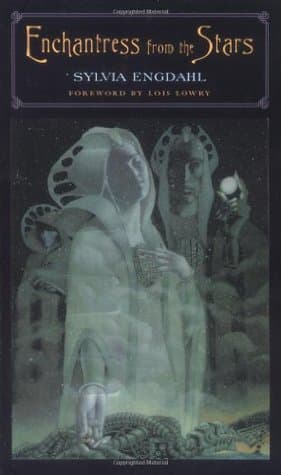
- Enchantress from the Stars
Sylvia Engdahl
4.0 (3k) average on GoodreadsFantasyExplores themes of societal change and a young woman finding her voice in a new world.
- A Great and Terrible Beauty
Libba Bray
3.8 (208k) average on GoodreadsFantasyWhile both Princess Academy and Bray's A Great and Terrible Beauty (2003) feature young women in restrictive academic settings discovering hidden powers, their approaches and tones differ significantly. Bray's novel delves into darker, more gothic themes, exploring spiritualism, madness, and the stifling societal expectations of Victorian England, with the magical element often being dangerous and isolating. Hale's book, conversely, maintains a brighter, more hopeful tone, where the 'academy' is a place of growth and the unique magic (quarry-speech) is a source of connection and collective strength, ultimately serving as a tool for community defense and empowerment rather than an escape from oppressive realities.
- Harry Potter and the Sorcerer's Stone
J.K. Rowling
4.5 (7M) average on GoodreadsFantasyRescued from a miserable life under the stairs, an orphaned boy discovers he's a wizard destined for a magical school, where he uncovers a dangerous secret tied to the dark wizard who murdered his parents.
- The Hunger Games
Suzanne Collins
4.3 (6.4M) average on GoodreadsFantasyIn a future where children fight to the death on live television, Katniss Everdeen volunteers for the arena, turning a death sentence into a fight for survival and a spark of rebellion.
- 1984
George Orwell
4.2 (3.1M) average on GoodreadsPoliticsIn a future where surveillance and thought control are absolute, a man's search for truth clashes with the Party, showing that hope can be a form of rebellion.





Enjoyed the summary?
A summary gives you the shape of the book. The book itself has the detail, the examples and the voice.
Find Princess Academy on AmazonAs an Amazon Associate, BookBrief earns from qualifying purchases. How we're funded