
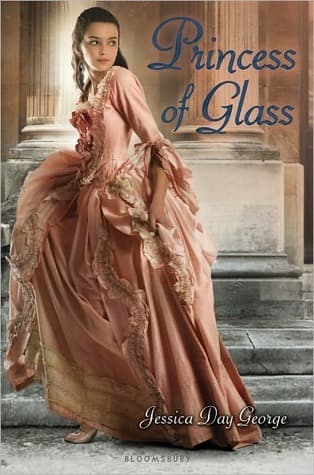
Synopsis
Covers the whole plot, including the ending.
- Difficulty
- Easy
- Pacing
- Moderate
- Mood
- Enchanting, Whimsical, Romantic, Adventurous
- Read it if
- You enjoy lighthearted fairy tale retellings with a focus on female friendships and a touch of romance.
- Skip it if
- You prefer gritty, dark fantasy or stories with complex political intrigue.
Princess of Glass Plot Summary
Covers the whole plot, including the ending.
A Reluctant Exchange
Princess Poppy from the Kingdom of the West is urged by her parents, Queen Lilian and King Theodore, to join a royal exchange program. Her kingdom faces a severe magical blight, and a good marriage alliance is important. Poppy reluctantly agrees to travel to the wealthy Kingdom of the North, ruled by Queen Maude, to meet eligible princes. Her lady-in-waiting, Beatrice, and loyal guard, Stefan, go with her. Poppy feels the heavy responsibility of her kingdom's future, making her anxious about the journey and finding a husband.
Eleanor's Humble Beginnings
In the Kingdom of the North, Eleanor works as a scullery maid for her cruel stepmother, Lady Charlotte, and her two equally cruel stepsisters, Lucinda and Henrietta. Eleanor dreams of a better life, beyond scrubbing floors and constant insults. She is kind and clever, finding comfort in stories and the help of other servants, especially the stable boy, Thomas. Unknown to her, a powerful fairy godmother, Madame Severine, has noticed Eleanor's troubles, seeing her as a tool in a plan for revenge against the royal family.
A Fairy's Intervention
Madame Severine, a fairy godmother with a grudge against Queen Maude and the royal family for past offenses, approaches Eleanor. Severine offers Eleanor a chance to attend the upcoming royal balls, giving her beautiful gowns, magic slippers, and a carriage, but with strict orders to return before midnight. Eleanor, at first hesitant, is swayed by the promise of escaping her hard life, even if only for a few hours. Severine's real goal is to humiliate the royal family and disrupt the royal exchange by making Eleanor more appealing than the visiting princesses.
The First Ball and an Enchanting Encounter
Eleanor, transformed by Madame Severine's magic, attends the first royal ball. She is stunning and immediately catches the eye of Prince Christian, Queen Maude's oldest son and the most eligible bachelor. Christian is charmed by her wit, kindness, and mysterious air. Poppy struggles to connect with anyone. Her practical nature and the problems of her kingdom make her seem less lively than the other princesses. She notices Christian's interest in the mysterious girl, feeling a pang of jealousy and inadequacy, which adds to her worries about her mission.
Poppy's Investigation and Growing Suspicion
After the first ball, Poppy, with her sharp observation skills, notices odd details about the mysterious girl who caught Christian's attention. The girl's sudden appearance, her beautiful but simple gowns, and her disappearance exactly at midnight make Poppy suspicious. She tells Stefan and Beatrice that she believes magic is involved. Poppy, unlike others, does not dismiss the girl as an enigma; she starts to investigate, feeling that something is wrong and that this girl's presence is more than a coincidence.
A Friendship Forged in Secrecy
Eleanor, still under Madame Severine's spell, continues to attend the balls, captivating Prince Christian. However, she also meets Poppy outside the ballroom. Unaware of each other's identities—Eleanor as the mysterious maiden and Poppy as the rival princess—they become genuine friends. They talk about their worries and hopes, finding common ground in feeling out of place. This growing friendship creates a complex emotional conflict, as both girls unknowingly compete for the same prince under different circumstances, all while confiding in each other.
The Midnight Reveal and a Broken Slipper
At the last ball, Madame Severine's magic starts to weaken. As midnight approaches, Eleanor, rushing to leave, loses one of her magic glass slippers on the palace stairs. Poppy sees the slipper change back into an ordinary shoe and realizes the truth about Eleanor and the magical deception. The revelation shocks her, but it also confirms her earlier suspicions. Poppy picks up the slipper, understanding it is a key piece of evidence to uncover the mystery and expose Madame Severine's manipulation.
Confrontation and Confession
With the glass slipper, Poppy confronts Eleanor. Eleanor is initially scared and defensive, fearing exposure and Madame Severine's anger. However, Poppy's calm and understanding manner, along with her genuine concern, convinces Eleanor to confess everything: her stepfamily's cruelty, Madame Severine's offer, and the strict conditions of the magic. Eleanor reveals her fear of the fairy godmother and her true desire for a life of her own, not one controlled by magic. This confession strengthens their bond, turning their rivalry into a shared challenge.
The Fairy Godmother's Wrath
When Madame Severine learns that Eleanor has told Poppy her secrets, she becomes furious. Her plan to humiliate the royal family and disrupt alliances has been jeopardized. She unleashes her magical wrath, targeting Eleanor and anyone who opposes her. Severine's magic grows more malevolent and dangerous, threatening Eleanor and potentially the entire Kingdom of the North. Her actions raise the stakes, turning the romantic competition into a dangerous fight against a powerful and vengeful magical entity.
A Royal Alliance and a Plan
Poppy, Prince Christian, and Eleanor, now united, know they must work together to defeat Madame Severine. Christian, having learned the truth about Eleanor and Severine's schemes, is determined to protect her and his kingdom. Poppy, using her knowledge of magic from her own kingdom and her strategic thinking, helps plan. They combine their strengths: Christian's royal authority, Poppy's magical insight, and Eleanor's knowledge of Severine's magic and limits. Their plan involves confronting Severine directly and breaking her control over Eleanor.
The Final Confrontation
The group confronts Madame Severine in a tense, magically charged showdown. Severine uses her full power, creating illusions and obstacles to stop them. Poppy uses her understanding of magic to counter Severine's spells, while Christian bravely defends Eleanor. Eleanor, empowered by her new courage and her friends' support, plays a key role in breaking Severine's enchantments. The confrontation tests their combined will and magical skill against a powerful and deeply rooted magical enemy.
Breaking the Spell and Finding True Love
Through their combined efforts, Madame Severine is defeated. Her magic weakens, and her influence over Eleanor breaks. With the threat gone, the characters' true affections surface. Prince Christian realizes his genuine love for Eleanor, seeing past the enchantment to her true self. Poppy, free from the immediate pressure of her kingdom, finds a surprising connection with Stefan, her loyal guard, realizing their deep respect and affection. The story ends with both women finding love and happiness, not through forced alliances, but through real connection and courage.
A New Beginning
With Madame Severine's defeat, peace returns to the Kingdom of the North. Prince Christian and Eleanor announce their engagement, a union based on true love and mutual respect, which strengthens the alliance between the North and Eleanor's now-liberated household. Poppy, having chosen Stefan, secures a more personal and heartfelt alliance for her own kingdom, as Stefan's loyalty and strength prove valuable. Both women, having navigated complex magical and political situations, emerge stronger and more confident, ready to lead their lives and contribute to their kingdoms with integrity and love.
Princess of Glass Characters
Princess Poppy
Protagonist
A pragmatic princess from the Kingdom of the West burdened by royal duty.
Princess Poppy is initially portrayed as a reluctant and somewhat cynical royal, burdened by the magical blight afflicting her kingdom. She is intelligent, observant, and possesses a strong sense of duty, often prioritizing her kingdom's needs over her personal desires. Unlike typical fairy tale princesses, she is more interested in practical solutions and strategic thinking than romantic ideals. Her initial apprehension about the exchange program stems from a deep-seated fear of failure and the immense responsibility she carries.
Relationships: Queen Lilian (Mother, exerts pressure for a royal marriage.); King Theodore (Father, supportive but also burdened by the kingdom's plight.); Eleanor (Initially a rival, later a close friend and ally.); Stefan (Loyal guard and eventual love interest.); Prince Christian (Potential suitor, becomes an ally.)
Eleanor
Protagonist/Foil to Poppy
A kind-hearted scullery maid enchanted by a vengeful fairy godmother.
Eleanor is a humble and kind young woman, forced into servitude by her cruel stepmother and stepsisters. Despite her difficult circumstances, she maintains a hopeful spirit and a vivid imagination, often dreaming of a better life. She is initially naive and vulnerable, easily swayed by Madame Severine's magical offer, but possesses an inner strength and resilience. Her desire for freedom and kindness makes her an appealing figure, even when she is unknowingly competing with Poppy.
Relationships: Lady Charlotte (Cruel stepmother.); Lucinda and Henrietta (Cruel stepsisters.); Madame Severine (Vengeful fairy godmother who manipulates her.); Prince Christian (Love interest and eventual fiancé.); Poppy (Initially a rival, later a close friend and ally.)
Prince Christian
Love Interest
The charming and eligible prince of the Kingdom of the North.
Prince Christian is the eldest son of Queen Maude and the primary target for the visiting princesses in the royal exchange program. He is charming, kind, and genuinely seeks a partner who is more than just a political alliance. He is initially captivated by Eleanor's mysterious allure, drawn to her genuine spirit and wit. Christian is honorable and discerning, eventually seeing through Madame Severine's enchantment to recognize Eleanor's true character. He values honesty and kindness above social status.
Relationships: Queen Maude (Mother, concerned about royal alliances.); Eleanor (Love interest and eventual fiancé.); Poppy (Potential suitor, becomes an ally.)
Madame Severine
Antagonist
A vengeful fairy godmother with a grudge against the royal family.
Madame Severine is the manipulative and powerful fairy godmother who orchestrates Eleanor's transformation. She is driven by a deep-seated desire for revenge against Queen Maude and the royal family for past slights, viewing Eleanor as a tool to achieve her vindictive goals. Severine is cunning, capricious, and possesses formidable magical abilities. She represents the darker, more coercive side of fairy tale magic, using her powers to control and manipulate rather than to genuinely help.
Relationships: Eleanor (Her manipulated pawn.); Queen Maude (The object of her revenge.)
Stefan
Supporting
Princess Poppy's loyal and steadfast guard.
Stefan is Princess Poppy's dedicated personal guard, accompanying her on the royal exchange. He is stoic, protective, and deeply loyal to Poppy and her family. Stefan possesses a quiet strength and keen observational skills, often acting as Poppy's confidant and sounding board. He represents unwavering support and a grounded perspective, contrasting with the magical chaos around them. His affection for Poppy is subtle but profound, growing throughout their shared ordeal.
Relationships: Poppy (His charge, then his love interest.)
Beatrice
Supporting
Princess Poppy's lady-in-waiting and friend.
Beatrice is Princess Poppy's lady-in-waiting and a close friend. She is generally cheerful, supportive, and tries to keep Poppy's spirits up during the stressful exchange program. While not as politically astute or magically aware as Poppy, Beatrice offers emotional support and a touch of lightheartedness. She represents the traditional role of a lady-in-waiting but also shows genuine care for Poppy's well-being.
Relationships: Poppy (Her princess and friend.)
Queen Maude
Supporting
The Queen of the North, hosting the royal exchange.
Queen Maude is the regal and somewhat formal ruler of the Kingdom of the North. She is concerned with appearances, proper decorum, and securing advantageous alliances for her kingdom, particularly through her son, Prince Christian. While she appears somewhat aloof, she genuinely cares for her son's future and the stability of her realm. Her past interactions with Madame Severine are the catalyst for the fairy godmother's revenge.
Relationships: Prince Christian (Son.); Madame Severine (Former acquaintance, now enemy.)
Lady Charlotte
Mentioned
Eleanor's cruel stepmother.
Lady Charlotte is Eleanor's stepmother, a character who embodies the classic 'wicked stepmother' trope. She is cruel, demanding, and self-serving, favoring her own daughters over Eleanor and treating Eleanor as a servant. Her harsh treatment of Eleanor is a primary motivator for Eleanor's desire to escape her circumstances and accept Madame Severine's help.
Relationships: Eleanor (Stepmother who abuses her.)
Princess of Glass Themes
The Nature of True Love vs. Duty
This theme explores the clash between what society expects and what a person truly desires in love. Poppy initially feels she must marry for political reasons, seeing marriage as a tool. Eleanor, under magic's influence, seeks freedom and kindness. Both eventually learn that true love goes beyond status and duty. Christian chooses Eleanor for her real character over more 'suitable' princesses, and Poppy finds love with Stefan, her loyal guard, instead of a prince. This shows that real connection is more valuable than forced alliances. Poppy's internal struggle during the balls and Christian's choice of Eleanor show this.
“Perhaps a kingdom could be saved by a brave heart, not just a royal one.”
The Deceptive Nature of Appearances
The story highlights how outward appearances can mislead, especially with magic involved. Eleanor, transformed by Madame Severine's magic, appears as a dazzling, mysterious princess, captivating Christian. However, her true self, the kind and humble scullery maid, is what wins his heart. Conversely, Poppy, a true princess, struggles to impress because of her practical nature. The magic gowns and slippers hide Eleanor's real life. Only when the magic breaks do characters, especially Christian and Poppy, see past the illusion to the true person. The broken glass slipper symbolizes this theme.
“Magic could transform a gown, but it could not change a heart.”
Self-Discovery and Empowerment
Both Poppy and Eleanor experience significant personal growth. Eleanor, at first a victim of her situation and Madame Severine's manipulation, learns to speak up and choose her own path instead of being a pawn. Poppy, initially burdened by duty and feeling inadequate, discovers her inner strength, intelligence, and leadership skills beyond typical princess roles. Her investigation into the magical events and her strategic thinking demonstrate her growth. Their individual development allows them to make choices that lead to their happiness and help their kingdoms.
“She had learned that courage wasn’t the absence of fear, but the refusal to let it win.”
The Dangers of Vengeance and Manipulation
Madame Severine's character shows the destructive power of revenge. Her entire plan comes from a desire to get back at Queen Maude, manipulating Eleanor for her own selfish and harmful goals. Her actions show how bitterness and a need for retribution can hurt innocent people and disrupt order. The story shows that such manipulation ultimately fails, as the protagonists' genuine connections and good intentions overcome Severine's dark magic. Her defeat emphasizes that kindness and honesty win over malice.
“Revenge, like any poison, consumed the one who held it.”
Plot Devices & Literary Techniques
The Royal Exchange Program
A political and romantic competition for eligible royals.
This program serves as the primary setting and catalyst for the plot. It brings together various princesses, including Poppy, to compete for the hand of Prince Christian, creating a high-stakes environment for political alliances and potential marriages. It sets up the initial conflict for Poppy and provides the stage for Eleanor's magical intervention, as Madame Severine uses the program's competitive nature to further her own agenda of disrupting the royal family and its alliances.
Madame Severine's Enchantment
Magical transformation and strict conditions for Eleanor.
This enchantment is the central magical plot device, transforming Eleanor from a scullery maid into a dazzling, mysterious maiden for the royal balls. The strict midnight curfew and the magical slippers are classic Cinderella tropes, creating suspense and driving the plot forward. The enchantment is not benevolent; it's a tool of manipulation and revenge, highlighting the dangers of magic when wielded by a malevolent force. Its eventual breaking is crucial to the resolution.
The Glass Slipper
A magical artifact that reveals and connects characters.
The lost glass slipper, transformed back into an ordinary shoe, is a pivotal plot device. It serves as the undeniable proof of Eleanor's magical deception and her true identity. Poppy's discovery and analysis of the slipper allow her to connect the dots and confront Eleanor, breaking the enchantment's hold and uniting the two protagonists. It moves beyond a simple identification tool to become a symbol of truth revealed and a catalyst for alliance.
The Magical Blight
A looming threat to Poppy's kingdom, driving her motivations.
The magical blight affecting Poppy's Kingdom of the West is a significant background plot device. It provides Poppy with a strong external motivation for participating in the royal exchange program, emphasizing the high stakes of her mission. This threat underscores her sense of duty and adds a layer of seriousness to her character, differentiating her from other princesses who might simply be seeking a husband. It makes her eventual choice of Stefan more impactful.
Princess of Glass Quotes
“The glass slippers were not comfortable, but they were beautiful.”
“Sometimes you have to dance with the monsters to get what you want.”
“A princess's duty is not always to be beautiful, but to be strong.”
“Even a curse can have its own kind of beauty, if you look at it right.”
“Love is not about being swept off your feet, but about finding someone who will stand with you.”
“The most dangerous traps are the ones you set for yourself.”
“There are worse things than a broken slipper. There are broken hearts.”
“Sometimes the only way out is through, no matter how dark the path.”
“Magic always has a price, and it's rarely paid in gold.”
“It's not about being fearless, it's about acting despite your fear.”
“A secret shared is a burden halved.”
“The true measure of a person isn't how they handle success, but how they handle failure.”
“Even in the darkest places, there can be a glimmer of hope, if you only look for it.”
Quiz
10 questions on the plot and the characters. Each answer comes with a short explanation.
Question 1
Why does Princess Poppy initially agree to participate in the royal exchange program?
- She is eager to find a suitable husband.
- She wants to explore new kingdoms and cultures.
- She hopes to escape the troubles and responsibilities in her own kingdom.
- Her parents forced her into it without her consent.
Show answer
C. She hopes to escape the troubles and responsibilities in her own kingdom. Poppy reluctantly agrees to the program primarily to escape the political and personal troubles plaguing her home kingdom.
Question 2
Who tricks Eleanor into competing with Poppy for the eligible prince?
- Princess Poppy
- The eligible prince
- A vengeful fairy godmother
- Another jealous servant
Show answer
C. A vengeful fairy godmother The synopsis explicitly states that Eleanor is tricked by a vengeful fairy godmother into competing with Poppy.
Question 3
What common fairy tale element is prominently featured in the description of the story?
- A magic beanstalk
- A poisoned apple
- Enchanted glass slippers
- A talking animal sidekick
Show answer
C. Enchanted glass slippers The description mentions 'enchanted glass slippers' as one of the key elements flying in the story, directly referencing Cinderella.
Question 4
What is the primary stated goal of the royal exchange program?
- To allow young royals to experience commoner life.
- To foster better political alliances and potential marriages.
- To train young royals in combat and diplomacy.
- To organize grand balls and social events.
Show answer
B. To foster better political alliances and potential marriages. The program's purpose is clearly stated as 'in the name of better political alliances--and potential marriages.'
Question 5
How does Eleanor become involved in the competition for the prince?
- She volunteers to participate to help her family.
- She is chosen by the prince for her unique qualities.
- She is tricked by a vengeful fairy godmother into competing.
- Poppy asks her to pretend to be a princess to test the prince.
Show answer
C. She is tricked by a vengeful fairy godmother into competing. The summary explicitly states that Eleanor 'is tricked by a vengeful fairy godmother into competing with Poppy'.
Question 6
What is the relationship between Poppy and Eleanor at the beginning of the story?
- They are childhood friends.
- Eleanor is a hapless servant, and Poppy is a princess.
- They are rival princesses from different kingdoms.
- Eleanor is Poppy's lady-in-waiting.
Show answer
B. Eleanor is a hapless servant, and Poppy is a princess. The description introduces Eleanor as a 'hapless servant' who is then tricked into competing with 'Princess Poppy'.
Question 7
The author Jessica Day George is described as having a 'flair for embroidering tales'. What does this imply about her writing style in 'Princess of Glass'?
- She tells stories very plainly and directly.
- She adds intricate details and unique twists to familiar stories.
- She primarily writes historical fiction with factual accuracy.
- She focuses on creating entirely original fantasy worlds without any existing fairy tale influence.
Show answer
B. She adds intricate details and unique twists to familiar stories. 'Embroidering tales' suggests adding rich, decorative details and often personal touches to existing narratives, implying a unique take on fairy tales.
Question 8
What is the central conflict that drives the romantic aspect of the story?
- The prince is in love with someone from a different kingdom.
- Poppy and Eleanor are unknowingly competing for the same eligible prince.
- The prince is cursed and cannot fall in love.
- Poppy's parents have already arranged a marriage for her.
Show answer
B. Poppy and Eleanor are unknowingly competing for the same eligible prince. The core of the romantic conflict is the competition between Poppy and Eleanor for the 'eligible prince', instigated by the fairy godmother.
Question 9
The phrase 'Ballgowns, cinders, and enchanted glass slippers fly' hints at which classic fairy tale being a significant inspiration or parallel for 'Princess of Glass'?
- Sleeping Beauty
- Beauty and the Beast
- Cinderella
- Snow White
Show answer
C. Cinderella 'Cinders' and 'enchanted glass slippers' are direct and iconic references to the Cinderella fairy tale.
Question 10
Considering the themes of escaping troubles and a 'happily-ever-after quest', what is likely a major character arc for Princess Poppy?
- She will become more cynical and jaded about royalty.
- She will learn to embrace her responsibilities and find her own strength.
- She will decide to abandon her royal duties entirely.
- She will primarily focus on outsmarting Eleanor to win the prince.
Show answer
B. She will learn to embrace her responsibilities and find her own strength. Given she 'hopes to escape the troubles in her kingdom' and it's a 'happily-ever-after quest', a common YA arc would involve her growing to face her problems and finding her own agency, rather than just escaping or focusing on rivalry.
Princess of Glass FAQ
What is the central premise of 'Princess of Glass'?
'Princess of Glass' follows Princess Poppy, who, seeking to escape her kingdom's troubles, participates in a royal exchange program. This program aims to forge political alliances and potential marriages, but her plans are complicated when a servant, Eleanor, is magically manipulated into competing with Poppy for Prince Christian's affections, leading to a Cinderella-esque rivalry.
Who are the main characters in the story?
The main characters are Princess Poppy, a pragmatic princess from a troubled kingdom; Eleanor, a kind-hearted servant girl; Prince Christian, the eligible prince; and the vengeful Fairy Godmother, who instigates much of the conflict by enchanting Eleanor to compete with Poppy.
What kind of magical elements are present in the book?
The book features classic fairy tale magic, including a vengeful Fairy Godmother who can bestow gifts and curses, enchanted glass slippers that compel Eleanor to dance, magical ballgowns, and transformations. This magic is often a source of both wonder and significant trouble for the characters.
How does the royal exchange program work?
The royal exchange program involves young princes and princesses traveling to different kingdoms to foster political alliances and explore potential marriage prospects. Poppy is sent to Prince Christian's kingdom, where she is expected to attend balls and interact with other royals, all under the watchful eyes of their respective courts.
What is the primary conflict between Poppy and Eleanor?
The primary conflict stems from the Fairy Godmother's enchantment of Eleanor, forcing her to compete with Poppy for Prince Christian's attention. Eleanor, despite her kind nature, is compelled by magic to overshadow Poppy at balls, creating a rivalry that neither truly desires but cannot escape.
What is the significance of the glass slippers?
The glass slippers are a key magical artifact. They are enchanted by the Fairy Godmother to compel Eleanor to dance at the balls and to physically prevent her from revealing her identity or the truth about the magic, thereby maintaining the illusion of her being a mysterious princess.
How does the Fairy Godmother's backstory influence her actions?
The Fairy Godmother's vengeful actions are rooted in a past grievance, though the specific details are subtly revealed. Her bitterness stems from a perceived slight or broken promise, leading her to manipulate Eleanor and create chaos in a twisted attempt to right old wrongs or simply cause misery for others.
Are there any subtle clues about Poppy's kingdom's troubles?
Yes, Poppy frequently alludes to her kingdom's dire circumstances, mentioning financial difficulties, political instability, and the pressure she faces to secure a beneficial marriage. These details provide a strong motivation for her participation in the exchange program and her initial reluctance to engage in frivolous activities.
How does Prince Christian's perspective on the royal exchange evolve?
Initially, Prince Christian views the exchange as a duty, perhaps even a tedious one. However, as he interacts with both Poppy and the mysterious Eleanor, his perspective shifts. He begins to seek genuine connection and becomes increasingly frustrated by the societal expectations and the unexplained disappearances of the 'mystery princess,' leading him to question the nature of love and duty.
How does Poppy's initial pragmatism clash with her developing romantic feelings?
Poppy initially approaches the exchange with a practical mindset, focused on securing an alliance for her kingdom rather than finding love. As she spends more time with Prince Christian, however, she starts to develop genuine feelings, creating an internal conflict between her duty and her personal desires, which makes her situation even more complicated.
What psychological impact does the Fairy Godmother's curse have on Eleanor?
Eleanor experiences significant psychological distress due to the curse. She is forced to act against her will, causing immense guilt and anxiety as she sees the pain she inadvertently inflicts on Poppy and the confusion she causes Prince Christian. This internal struggle highlights her inherent goodness despite the magic controlling her.
How does Prince Christian navigate the pressure to choose a bride?
Prince Christian struggles with the immense pressure to choose a bride who will benefit his kingdom, while also desiring genuine affection. He feels conflicted between the charming, mysterious 'princess' who appears only at night and the intelligent, practical Poppy, leading to confusion and frustration as he tries to discern true character from enchantment.
In what ways do Poppy and Eleanor represent different aspects of traditional fairy tale heroines?
Poppy represents the modern, pragmatic princess who is proactive and aware of her responsibilities, while Eleanor embodies the traditional, innocent Cinderella-type figure, kind-hearted but often a victim of circumstances and magic. Their contrasting personalities highlight different paths to a 'happily ever after.'
Is the Fairy Godmother truly evil, or simply misguided in her vengeance?
This is debatable; while her actions cause significant harm and distress, her motivations stem from a deep-seated sense of injustice rather than pure malevolence. Her vengeance, though cruel, could be interpreted as a misguided attempt to exert control and find retribution for past wrongs, making her a complex antagonist.
What message does the book convey about true love versus duty?
The book explores the tension between duty and true love, suggesting that while duty is important, a truly fulfilling relationship requires genuine connection and understanding beyond political necessity. Both Poppy and Christian ultimately seek a partner with whom they can share a real bond, rather than just a convenient alliance.
How does 'Princess of Glass' subvert or embrace classic Cinderella tropes?
'Princess of Glass' embraces the core Cinderella elements like the magical transformation, the ball, and the lost slipper, but subverts them by having two heroines, one a princess and one a servant, competing for the prince, and by giving the 'fairy godmother' a malicious intent. It adds complexity to the familiar narrative.
What is the significance of the 'glass' in the title?
The 'glass' in the title refers most obviously to the enchanted glass slippers, but it also symbolizes the fragility of appearances, the transparency of truth that eventually emerges, and perhaps the delicate, easily shattered nature of expectations and dreams within the royal court. It hints at both magic and vulnerability.
Could Eleanor have resisted the Fairy Godmother's magic if she had been stronger-willed?
The narrative implies the Fairy Godmother's magic is potent and compelling, making it nearly impossible for Eleanor to fully resist. While her inherent goodness shines through in her distress, the curse overrides her free will, suggesting that even a strong will might not be enough against such powerful enchantment.
About the author

Jessica Day George is an author known for her work in children's and young adult fiction. Her notable books include "Dragon Slippers," which features a unique take on dragons and magic, "Princess of Glass," a retelling of classic fairy tales, and "Tuesdays at the Castle," which follows the adventures in a magical castle that changes every week.
Similar books
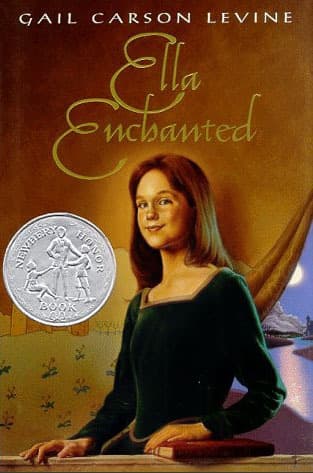
- Ella Enchanted
Gail Carson Levine
4.0 (387k) average on GoodreadsFantasyFeatures a strong female protagonist under a magical curse seeking to break it, with a similar fairy tale charm.
- Cinder
Marissa Meyer
4.1 (683k) average on GoodreadsFantasyA creative Cinderella retelling with a unique twist, though Cinder is sci-fi and Princess of Glass is traditional fantasy.
- A Court of Thorns and Roses
Sarah J. Maas
4.2 (476k) average on GoodreadsFantasyMaas's A Court of Thorns and Roses (2015), while targeting an older YA/New Adult audience, also draws heavily from 'Beauty and the Beast' and other fairy tales. It significantly diverges from George's work in its darker tone, complex world-building, and explicit romantic tension. While 'Princess of Glass' maintains a lighter, more traditional fairy tale romance, Maas injects political intrigue, darker magic, and morally ambiguous characters, creating a much higher-stakes narrative. George's work provides a gentle escape, while Maas aims for an immersive, often gritty, high-fantasy experience with mature themes, appealing to a different facet of the YA fantasy market.
- Harry Potter and the Sorcerer's Stone
J.K. Rowling
4.5 (7M) average on GoodreadsFantasyRescued from a miserable life under the stairs, an orphaned boy discovers he's a wizard destined for a magical school, where he uncovers a dangerous secret tied to the dark wizard who murdered his parents.
- The Hunger Games
Suzanne Collins
4.3 (6.4M) average on GoodreadsFantasyIn a future where children fight to the death on live television, Katniss Everdeen volunteers for the arena, turning a death sentence into a fight for survival and a spark of rebellion.
- 1984
George Orwell
4.2 (3.1M) average on GoodreadsPoliticsIn a future where surveillance and thought control are absolute, a man's search for truth clashes with the Party, showing that hope can be a form of rebellion.





Enjoyed the summary?
A summary gives you the shape of the book. The book itself has the detail, the examples and the voice.
Find Princess of Glass on AmazonAs an Amazon Associate, BookBrief earns from qualifying purchases. How we're funded