
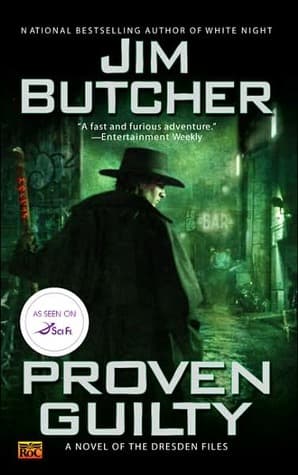
Synopsis
Covers the whole plot, including the ending.
- Difficulty
- Medium
- Pacing
- Fast
- Mood
- Gritty, Suspenseful, Action-packed, Witty, Dark
- Read it if
- You enjoy urban fantasy with a snarky wizard detective, intricate magical politics, and a blend of mystery and horror elements.
- Skip it if
- You dislike books with complex magical systems, morally grey characters, or a focus on escalating supernatural conflicts.
Proven Guilty Plot Summary
Covers the whole plot, including the ending.
The First Case and Molly's Arrival
Harry Dresden, now a Warden of the White Council, investigates a gruesome attack at the fictional Children's Winter Festival in Chicago's Millennium Park. The victim, Douglas, was found dismembered and drained of blood. His friend, Craig, is the only suspect. Harry senses a powerful, fear-based supernatural entity. Amidst this, Molly Carpenter, daughter of Harry's friend Michael Carpenter, arrives at his office. Molly, now a rebellious teenager, explains her boyfriend, Nelson, has been arrested for a similar attack. She believes Nelson is innocent and asks Harry for help, bringing him into a case that quickly connects with his own investigation.
Investigating the Fear-Based Attacks
Harry begins investigating the attacks, focusing on the university students. He learns that the victims and suspects were all involved in a student horror film project and used a specific computer lab. Consulting with Bob, his spirit of intellect, Harry identifies the entities as 'Nagas' or 'Fear-Feeders,' beings that grow stronger by creating terror. He suspects the students, unknowingly, conjured or attracted these entities through their horror film activities. Meanwhile, Molly's involvement grows as she helps Harry navigate the student world, showing her nascent magical abilities. Harry recognizes these as dangerously powerful and uncontrolled, putting her at risk from the White Council's strict laws against black magic.
Molly's Secret and the White Council's Scrutiny
While investigating the university, Harry discovers Molly has been secretly learning magic from Cowl, a notorious black wizard. He finds a magical focus hidden in her belongings. He confronts her, and Molly confesses she sought out Cowl after her powers manifested uncontrollably, believing Harry was too busy to help her. This deeply troubles Harry, as Cowl is dangerous, and Molly's unsupervised training could lead to her execution by the White Council. The Council, particularly the Blackstaff Ebenezar McCoy and Senior Council member Arthur Langtry, are already suspicious of Harry due to his previous actions and his connection with the controversial Winter Knight, Maeve. Molly's forbidden magic further complicates Harry's already difficult position within the magical community.
The Fae Intervention and the Winter Court
Harry's investigation is also complicated by the Winter Court of the Fae. Maeve, the Winter Lady, appears, offering Harry cryptic warnings and subtle manipulations, hinting at a larger game. She reveals the fear-feeders are connected to a ritual that could empower a powerful being. Later, Queen Mab, the formidable ruler of the Winter Court, makes her presence known, subtly reminding Harry of his debt to her and his role as her Winter Knight. Their interactions show the dangerous political landscape Harry navigates, where his duties as a Warden clash with his Fae obligations, and where powerful entities seek to exploit chaos for their own ends. These encounters show the alliances and rivalries that define the supernatural world.
The Scarecrow and the True Threat
Harry and Molly discover the fear-feeders are not random entities but constructs animated by the students' fear, especially through their horror film, 'The Scarecrow.' The film, originally a student project, has become a way for these entities to appear. Harry realizes the attacks are part of a larger, planned effort to collect fear and empower a more significant entity. He suspects a dark wizard is behind the scheme, manipulating the students and the fear-feeders for their own purposes. This discovery raises the stakes, as the threat is not just isolated supernatural attacks but a calculated magical assault with potentially devastating consequences for Chicago and its people.
Confrontation at the Festival
The fear-feeder attacks peak at the Children's Winter Festival, where thousands of innocent civilians are gathered. The entities, now powerful from the fear they've collected, launch a full assault, creating terrifying illusions and causing widespread panic. Harry, along with other Wardens, including Luccio and Ancient Mai, are present, having expected a confrontation. A chaotic battle begins, with Harry and the Wardens trying to protect civilians and fight the fear-feeders. The situation is dire, with the entities feeding on the crowd's terror, growing stronger with every scream. Molly, despite her inexperience, uses her growing magic to help, showing her raw power but also its danger.
Molly's Intervention and the Council's Judgment
During the chaotic battle at the festival, the fear-feeders overpower the Wardens, threatening to overwhelm the crowd. In a desperate act, Molly, seeing the danger to children, unleashes a powerful burst of illusion magic, creating a comforting, joyful scene to counteract the fear. While her intentions are good, her magic is beyond her training and dangerously close to mind-tampering, a severe violation of the White Council's Laws of Magic. Her actions, though effective in saving lives, are witnessed by Senior Council members, particularly Ancient Mai, who immediately recognizes the dark nature of her power. This sets the stage for Molly's judgment by the White Council, with Harry caught between protecting his friend and upholding the Council's strict laws.
The Senior Council Tribunal
Following the festival incident, Molly is apprehended by the White Council and put on trial for using black magic, specifically for violating the Third Law of Magic: 'Thou shalt not invade the mind of another.' Harry, despite his own difficult standing, strongly defends her, arguing her actions were out of desperation to save lives and that she was manipulated by Cowl. He exposes Cowl's involvement and Molly's lack of malicious intent. The tribunal is tense, with Ancient Mai pushing for Molly's execution. Harry's passionate defense, coupled with Ebenezar McCoy's subtle support, sways some members, but the outcome remains uncertain, showing the rigid and unforgiving nature of the Council's justice system.
The Verdict and Molly's Apprenticeship
After a long deliberation, the White Council delivers its verdict on Molly Carpenter. While she is found guilty of violating the Laws of Magic, her youth, lack of malicious intent, and Harry's intervention lead to a lighter sentence. Instead of execution, Molly is placed under Harry's direct apprenticeship for ten years. This means Harry is solely responsible for her magical training and for ensuring she never again uses forbidden magic. The decision is a heavy burden for Harry, who already struggles with his own magic and his duties as a Warden. It also puts Molly directly under the Council's watchful eye, with her life depending on Harry's ability to guide her.
The Aftermath and New Threats
After the trial, Harry reflects on the events. He recognizes the fear-feeder attacks were a deliberate act of war by the Black Council, a shadowy organization of dark wizards, to create chaos and test the White Council's defenses. He also understands that Molly's apprenticeship is both a lifeline and a leash, binding them together. The novel ends with Harry thinking about the escalating war with the Red Court vampires and the growing threat of the Black Council. He realizes the incidents in Chicago were merely a skirmish in a much larger conflict, and his new responsibilities, both to the White Council and to Molly, will put him further into the heart of these dangerous struggles. The seeds of future conflicts are clearly planted.
Proven Guilty Characters
Harry Dresden
Protagonist
A professional wizard and newly appointed Warden of the White Council.
Harry Dresden is a wizard operating out of Chicago, known for his snarky wit, strong moral compass, and often reckless approach to magic. He values justice and protecting the innocent above all else, frequently clashing with the rigid doctrines of the White Council. Despite his immense power, he often finds himself physically outmatched and reliant on his intellect and allies. He is fiercely loyal to his friends and takes on the responsibility of a protector, even when it puts him in danger. His past traumas, particularly concerning his mother and father, continue to shape his decisions and his fear of dark magic.
Relationships: Molly Carpenter (mentor/apprentice, protective friend); Michael Carpenter (loyal friend, spiritual advisor); Bob (intellectual partner, magical resource); Ebenezar McCoy (mentor, adoptive grandfather, White Council ally); Maeve (manipulative Fae ally/antagonist, Winter Knight obligation)
Molly Carpenter
Supporting
A young woman with powerful, untrained magical abilities.
Molly is the eldest daughter of Michael and Charity Carpenter. Initially appearing as a rebellious teenager with piercings and tattoos, she carries a deep-seated insecurity and a desperate desire for belonging and control over her burgeoning magical powers. She is compassionate and fiercely protective, especially of children, but her inexperience and fear lead her to make dangerous choices, seeking out forbidden knowledge. Her raw magical talent, particularly in illusion and mind magic, is immense but uncontrolled, making her a significant threat to herself and others if not properly guided. She struggles with the weight of her family's expectations and her own identity.
Relationships: Harry Dresden (apprentice/master, protective friend); Michael Carpenter (father, source of moral guidance); Charity Carpenter (mother, source of tension and love); Cowl (temporary, manipulative mentor)
Michael Carpenter
Supporting
A Knight of the Cross and Harry's devoutly Christian friend.
Michael Carpenter is a deeply religious man, a Knight of the Cross wielding the Sword Fidelacchius. He embodies unwavering faith, courage, and moral rectitude. He is a devoted husband and father, and a steadfast friend to Harry Dresden, often providing moral grounding and practical assistance. Despite his strong convictions, he is not judgmental but offers guidance and support. His physical and spiritual strength is immense, making him a formidable ally against supernatural evil. He struggles with his daughter Molly's rebellious phase and her dabbling in magic, fearing for her soul and safety.
Relationships: Harry Dresden (loyal friend, spiritual advisor); Charity Carpenter (wife, loving partner); Molly Carpenter (daughter, protective father)
Bob
Supporting
A spirit of intellect residing in a skull, Harry's magical reference.
Bob is a spirit of intellect bound to a skull, serving as Harry Dresden's primary magical research tool and confidant. He possesses vast knowledge of magical theory, history, and practice, often providing Harry with crucial information and insights. Despite his immense intellect, he has a lecherous personality and a dry, sarcastic wit, often serving as comic relief. He is amoral by nature, driven by curiosity and self-preservation, but also genuinely fond of Harry. His knowledge of dark magic makes him a dangerous resource, constantly requiring Harry to keep him in check.
Relationships: Harry Dresden (master/servant, intellectual partner)
Ebenezar McCoy
Supporting
The Blackstaff of the White Council and Harry's adoptive grandfather.
Ebenezar McCoy is one of the most powerful and ancient wizards on the White Council, holding the title of Blackstaff, which grants him permission to break the Laws of Magic in defense of humanity. He is Harry's adoptive grandfather and mentor, a gruff but deeply caring figure who often acts as Harry's protector within the Council. He is a formidable combatant and a shrewd politician, navigating the intricate power dynamics of the magical world. He holds immense power and influence, often secretly guiding Harry and manipulating events to protect him, while maintaining a stern facade.
Relationships: Harry Dresden (adoptive grandfather, mentor, protector); White Council (Senior Council member, Blackstaff)
Maeve
Supporting
The Winter Lady of the Fae, manipulative and powerful.
Maeve is the capricious and dangerous Winter Lady, a powerful Fae lord who embodies the wild, untamed nature of winter. She is beautiful, seductive, and deeply manipulative, often playing intricate games with mortals and other supernatural beings. She has a complex relationship with Harry Dresden, who is her Winter Knight, constantly testing his loyalties and using his debt to her for her own mysterious ends. She thrives on chaos and cold logic, possessing immense magical power and political influence within the Fae courts. Her motivations are often opaque, making her a dangerous and unpredictable ally.
Relationships: Harry Dresden (Winter Knight/Lady, manipulative superior); Queen Mab (mother, superior)
Queen Mab
Supporting
The formidable and ancient ruler of the Winter Court of the Fae.
Queen Mab is the terrifyingly powerful and ancient monarch of the Winter Court. She is the embodiment of brutal, uncaring winter, ruling with an iron will and an absolute sense of justice, as she perceives it. Her power is immense, capable of destroying worlds, and her word is law within her domain. She is cold, calculating, and deeply pragmatic, often using mortals as pawns in her grand schemes. She sees Harry Dresden as a valuable tool and holds him to his oath as her Winter Knight, extracting her due with chilling efficiency. Her motivations are vast and often incomprehensible to mortals, making her a force of nature.
Relationships: Harry Dresden (Winter Knight/Queen, absolute superior); Maeve (daughter, subordinate)
Ancient Mai
Supporting
A rigid and uncompromising Senior Council member of the White Council.
Ancient Mai is a powerful and ancient wizard, a member of the White Council's Senior Council. She is known for her strict adherence to the Laws of Magic and her unforgiving stance against any who would violate them, particularly those who dabble in black magic. She is highly intelligent, observant, and possesses formidable magical abilities. Her demeanor is severe and unyielding, often clashing with Harry Dresden's more flexible and compassionate approach. She represents the conservative, traditional faction of the Council, prioritizing the preservation of magical law above individual circumstances, making her a formidable antagonist during Molly's trial.
Relationships: White Council (Senior Council member); Harry Dresden (antagonist, professional rival)
Cowl
Mentioned
A notorious and powerful dark wizard.
Cowl is a shadowy and highly dangerous black wizard, known for his immense power and his willingness to break all the Laws of Magic. He is a master of necromancy and other forbidden arts, operating from the shadows and manipulating events for his own nefarious purposes. He is a significant threat to the White Council and to humanity. His true identity and motivations are largely unknown, but his influence is felt throughout the magical underworld. He preys on the vulnerable and those seeking power, as evidenced by his manipulation of Molly Carpenter.
Relationships: Molly Carpenter (manipulative mentor); White Council (enemy)
Proven Guilty Themes
The Peril of Uncontrolled Power
This theme is central to Molly Carpenter's story. Her growing, immense magical talent, especially in illusion and mind magic, is a double-edged sword. Without proper training and moral guidance, it becomes dangerous, leading her to accidentally violate the Laws of Magic. Her actions at the Winter Festival, though meant to save lives, show the destructive potential of untrained power. Harry himself constantly struggles to control his own immense magical abilities, recognizing the fine line between hero and villain, and the corrupting effect of power, especially when fueled by fear or desperation. The White Council's harsh laws are a direct response to this inherent danger, though often applied with little compassion.
“Power is dangerous. It's not a toy, it's not a game. It's a responsibility.”
Justice vs. Law
Harry Dresden often finds himself caught between the rigid, often unfeeling laws of the White Council and his own personal sense of justice and compassion. This is most clear in Molly's trial. While Molly technically violates the Laws of Magic, her intent was to save lives, not to cause harm. Harry argues for the spirit of the law, emphasizing intent and circumstance, while Ancient Mai and others rigidly adhere to the letter of the law. The novel explores whether strict adherence to rules always leads to true justice, especially when lives are at stake. Harry's role as a Warden also forces him to uphold laws he sometimes disagrees with.
“There are things in this world that are right, and things that are wrong. And sometimes, the law is on the side of wrong.”
Fear and Its Manipulation
The main villains of the novel, the fear-feeders, directly show this theme. These entities thrive on fear, growing stronger as they create terror in their victims. The entire plot revolves around a dark wizard's manipulation of fear through a horror film and a public festival to empower these creatures. The novel highlights how fear can be a strong weapon, capable of paralyzing individuals and entire crowds, making them vulnerable to manipulation and attack. It also explores the psychological impact of fear, showing how it can drive people to irrational actions, both in the victims and in those who react to the threat.
“Fear is a weapon. It's the oldest, the most powerful, and the most reliable. It works on everyone.”
Responsibility and Mentorship
Harry's new role as a Warden and, more significantly, as Molly's unwilling mentor, highlights the theme of responsibility. He is responsible not only for upholding the Council's laws but also for guiding Molly, whose life depends on his ability to teach her control and ethical magic. This forces Harry to mature and confront his own past failures and insecurities about mentorship. The burden of responsibility weighs heavily on him, as he recognizes the profound impact his guidance will have on Molly's future, and the potential consequences if he fails. Ebenezar McCoy also shows responsible mentorship, subtly guiding and protecting Harry.
“With great power comes great responsibility. And with great responsibility comes a hell of a lot of headaches.”
Plot Devices & Literary Techniques
The Laws of Magic
Seven fundamental prohibitions enforced by the White Council.
The Laws of Magic serve as the overarching legal and moral framework of the wizarding world. They are absolute prohibitions against certain magical practices, such as killing with magic, invading minds, or raising the dead. Violating these laws typically results in execution by the White Council. In 'Proven Guilty,' the Laws are a central conflict point, as Molly Carpenter unwittingly violates the Third Law (invading the mind of another) while attempting to save lives. This device creates immense dramatic tension, forcing Harry to defend Molly against a system that he himself is now sworn to uphold, highlighting the rigid and unforgiving nature of magical justice.
The Winter Knight's Oath
Harry's magical binding to Queen Mab of the Winter Court.
Harry's oath as the Winter Knight, made in a previous book, is a magical binding that compels him to serve Queen Mab. This device introduces a constant source of external conflict and moral compromise for Harry. It forces him into the political machinations of the Fae courts, often requiring him to perform morally ambiguous tasks or accept aid from dangerous entities like Maeve. In 'Proven Guilty,' Maeve's interventions and Mab's subtle reminders of his debt serve as a recurring pressure, complicating Harry's duties as a Warden and his personal moral code, and foreshadowing future, more demanding obligations to the Winter Court.
Fear-Feeders (Nagas)
Supernatural entities that grow in power by consuming fear.
The fear-feeders are the primary antagonists, serving as a magical manifestation of a human emotion. This device drives the main plot, as their attacks on students and the subsequent assault on the Winter Festival create the central mystery and threat. They are not merely monsters but a reflection of a deeper, more insidious magical plot orchestrated by a dark wizard to harvest power. Their nature allows the story to explore the themes of fear, its manipulation, and its psychological impact on victims, providing a concrete, visible threat that feeds on the very terror it creates in the civilian population.
The Black Council
A shadowy cabal of dark wizards working against the White Council.
The Black Council is a clandestine organization of powerful dark wizards, operating from the shadows to undermine the White Council and pursue their own nefarious agenda. This device serves as the overarching, long-term antagonist of the Dresden Files series. In 'Proven Guilty,' the fear-feeder attacks are revealed to be orchestrated by the Black Council, using the chaos to test the White Council's defenses and sow discord. The Black Council represents a hidden, systemic threat, suggesting a larger, more coordinated war brewing in the magical world, elevating the stakes beyond individual villains and hinting at a grander, more dangerous conspiracy.
Proven Guilty Quotes
“The building was on fire, and it wasn't my fault.”
“The truth is a powerful thing, and it can be used for good or ill. But it must be known, or it ceases to be truth.”
“Some things, once you've seen them, you can't unsee them. And some things, once you've done them, you can't undo them.”
“Fear is a living thing. It's born in the mind, and it feeds on doubt and uncertainty.”
“I'm a wizard. I solve problems. Usually with fire.”
“The world doesn't care what you meant to do. It cares what you do.”
“Sometimes the only way to save someone is to let them go.”
“Being a hero doesn't mean you're invincible. It just means you're brave enough to stand up and do what's needed.”
“There's a difference between being a victim and acting like one.”
“Every choice you make, every path you take, changes the person you are.”
“You can't always choose your battles, but you can always choose how you fight them.”
“Hope is a dangerous thing. It can drive a man to greatness, or it can drive him to madness.”
“The greatest trick the devil ever pulled was convincing the world he didn't exist. The second greatest was convincing people that monsters don't exist.”
“Power corrupts, and absolute power corrupts absolutely. But weakness can corrupt too. Weakness can make you betray your friends, your family, even yourself.”
Quiz
10 questions on the plot and the characters. Each answer comes with a short explanation.
Question 1
What new role has the White Council of Wizards assigned to Harry Dresden due to the war with the vampires?
- Senior Council Member
- Blackstaff
- Warden
- Emissary to the Winter Court
Show answer
C. Warden The White Council, thinned by war, drafted Harry Dresden as a Warden to investigate black magic.
Question 2
Which supernatural entity is mentioned as feeding on fear and being loose in Chicago?
- Red Court Vampires
- Ghouls
- Malevolent entities that feed on fear
- Fae from the Nevernever
Show answer
C. Malevolent entities that feed on fear The synopsis specifically states 'Malevolent entities that feed on fear are loose in Chicago.'
Question 3
Who is the 'tattooed and pierced daughter of an old friend' who arrives in trouble?
- Molly Carpenter
- Susan Rodriguez
- Murphy's niece
- Lara Raith
Show answer
A. Molly Carpenter While not explicitly named in the provided synopsis, in 'Proven Guilty', the character fitting this description is Molly Carpenter.
Question 4
What is the primary reason the White Council has a difficult relationship with Harry Dresden?
- He refuses to pay his Council dues.
- They find him brash and undisciplined.
- He frequently challenges their authority in public.
- He is a warlock, not a true wizard.
Show answer
B. They find him brash and undisciplined. The synopsis explicitly states the Council finds Harry 'brash and undisciplined'.
Question 5
What is the nature of the 'supernatural assault' that the daughter's boyfriend is suspected of?
- A curse that turned people to stone.
- An attack straight out of a horror film.
- A series of disappearances without a trace.
- Possession by a demonic entity.
Show answer
B. An attack straight out of a horror film. The synopsis describes the assault as 'a supernatural assault straight out of a horror film'.
Question 6
Who are Harry's two consistent companions mentioned in the synopsis?
- Karrin Murphy and Thomas Raith
- His faithful dog and a talking skull named Bob
- Butters and Michael Carpenter
- Leanansidhe and Mister the cat
Show answer
B. His faithful dog and a talking skull named Bob The synopsis concludes by mentioning 'a wizard, his faithful dog, and a talking skull named Bob'.
Question 7
What is the broader context or conflict that has led to the White Council drafting Harry as a Warden?
- A civil war within the White Council itself.
- An invasion by otherworldly beings from another dimension.
- A war with the vampires that has thinned their ranks.
- A series of assassinations targeting Council members.
Show answer
C. A war with the vampires that has thinned their ranks. The synopsis states, 'war with the vampires has thinned their ranks, so the Council has drafted Harry as a Warden'.
Question 8
What specific magical practice is Harry assigned to investigate in Chicago as a Warden?
- Illegal potion brewing
- Forbidden summoning rituals
- Rumors of black magic
- Unauthorized use of mind control spells
Show answer
C. Rumors of black magic Harry's assignment as a Warden is specifically 'to look into rumors of black magic in the Windy City'.
Question 9
Which of the following best describes the White Council's general attitude towards Harry Dresden, prior to his drafting?
- Appreciative of his unique talents.
- Supportive and mentoring.
- Distrustful and critical of his methods.
- Indifferent to his existence.
Show answer
C. Distrustful and critical of his methods. The synopsis states, 'There's no love lost between Harry Dresden... and the White Council of Wizards, who find him brash and undisciplined,' indicating a critical and distrustful relationship.
Question 10
What is the primary thematic tension established by Harry's new role as a Warden for the White Council?
- The conflict between personal ambition and duty.
- The struggle between order and chaos within magical society.
- The necessity of working with those you dislike for a greater good.
- The challenge of balancing magical power with mundane life.
Show answer
C. The necessity of working with those you dislike for a greater good. The synopsis highlights 'no love lost' between Harry and the Council, yet he is drafted due to necessity ('war with the vampires has thinned their ranks'), establishing a theme of grudging cooperation for a shared goal.
Proven Guilty FAQ
What is Harry Dresden's primary mission at the beginning of 'Proven Guilty'?
Harry Dresden, now a Warden of the White Council, is assigned to investigate rumors of black magic in Chicago. This new role comes after the White Council's ranks were thinned by the war with the Red Court vampires, forcing them to utilize less conventional wizards like Harry.
Who is Molly Carpenter and how does she become involved with Harry's case?
Molly Carpenter is the teenage daughter of Michael and Charity Carpenter, old friends of Harry's. She arrives in trouble because her boyfriend, Nelson, is the prime suspect in a supernatural assault, leading Harry to investigate the case at Charity's insistence.
What kind of supernatural threats are Harry and his allies facing in 'Proven Guilty'?
Harry and his allies confront malevolent entities that feed on fear, specifically N-Fears or 'nightmares.' These creatures manifest based on the deepest anxieties of their victims and are controlled by a darker force, causing widespread terror and chaos.
What is the significance of the Phobophages, or N-Fears, to the overall plot?
The Phobophages, or N-Fears, are central to the plot as they are the instruments of the true antagonist, the Leanansidhe. They are used to create a climate of fear in Chicago, specifically targeting the city's residents and ultimately attempting to corrupt Molly Carpenter.
How does Harry's new role as a Warden impact his relationship with the White Council?
Harry's new role as a Warden places him in a more direct, albeit still contentious, relationship with the White Council. He is now bound by their laws and expectations, which often clash with his independent methods, leading to increased scrutiny and friction with figures like Luccio and Captain Anastasia Luccio.
What is the true nature of the 'horror film' style assaults in the book?
The 'horror film' style assaults are manifestations of the N-Fears, specifically tailored to exploit the deep-seated fears of their victims. These creatures are not random monsters but rather controlled entities, orchestrated by the Leanansidhe to achieve her sinister goals.
What is the significance of the Winter Court and Leanansidhe's involvement in the story?
The Winter Court, particularly Leanansidhe, plays a crucial role as the orchestrator of the N-Fears and the corruption of Molly. Lea's actions are part of a larger plan to draw Molly into her service and to manipulate Harry, showcasing the dangerous influence of the Fae.
How does Bob the Skull contribute to solving the mystery of the N-Fears?
Bob the Skull, with his vast knowledge of arcane lore, provides Harry with crucial information about the nature of the N-Fears and how to combat them. His insights are indispensable in understanding their origins, weaknesses, and the identity of their controller.
What is the significance of the Carpenters' home and its magical defenses during the climax?
The Carpenters' home, consecrated by Michael's faith, becomes a critical sanctuary and battleground during the climax. Its inherent holiness provides a powerful defense against the encroaching N-Fears and Leanansidhe's magic, highlighting the strength of faith against dark forces.
Discuss the psychological impact of the N-Fears on the ordinary citizens of Chicago.
The N-Fears have a devastating psychological impact on Chicago's citizens, preying on their deepest anxieties and driving them to paranoia and terror. This widespread fear creates a feedback loop, strengthening the creatures and making the city fertile ground for their influence.
Analyze Molly Carpenter's psychological state and her susceptibility to dark magic.
Molly Carpenter is in a vulnerable psychological state, grappling with teenage angst, rebellion, and a desire for power. Her suppressed anger and fear make her susceptible to Leanansidhe's influence, who exploits these emotions to tempt her with dark magic and control over the N-Fears.
How does Harry's past trauma and fears influence his decisions throughout the book?
Harry's past traumas, particularly his experiences with dark magic and the loss of loved ones, heavily influence his decisions. His fear of failing Molly and seeing her fall to darkness, much like his mother or Justin DuMorne, drives his protective instincts and willingness to break rules.
Explore the psychological motivations behind Leanansidhe's actions in 'Proven Guilty'.
Leanansidhe's motivations are deeply rooted in her Fae nature, driven by a desire for power, amusement, and a twisted form of affection for Harry. She seeks to corrupt Molly as a means of gaining influence and also to 'play' with Harry, testing his limits and perhaps even seeking to bind him further to her.
To what extent is Molly Carpenter truly responsible for her actions under Leanansidhe's influence?
Molly's responsibility is a complex debate. While she makes choices that lead her down a dangerous path, she is also being heavily manipulated and tempted by Leanansidhe, who preys on her emotional vulnerabilities and inexperience. Her free will is compromised by powerful external forces.
Does Harry Dresden's decision to break the White Council's laws for Molly ultimately justify his actions?
This is a point of contention. Harry's actions, driven by a desire to protect Molly and prevent her from falling to dark magic, directly violate Council law. While his intentions are noble, the consequences of his rule-breaking often put him and others at risk, raising questions about whether the ends justify the means.
What is the broader implication of the White Council's rigid laws versus Harry's more pragmatic approach?
The conflict highlights the ongoing tension between rigid adherence to law and the necessity of pragmatic, sometimes rule-breaking, action in the face of complex threats. The Council prioritizes order and tradition, while Harry often prioritizes individual lives and immediate solutions, even if unconventional.
How does 'Proven Guilty' contribute to the ongoing theme of power and responsibility in the Dresden Files series?
'Proven Guilty' significantly reinforces the theme of power and responsibility by showing Molly's struggle with nascent magical abilities and the temptations of dark power. It also forces Harry to confront his own responsibilities as a mentor and Warden, demonstrating the heavy cost of wielding magic.
What is the moral message behind the use of fear as a weapon by the N-Fears and Leanansidhe?
The moral message underscores that fear is a potent and corrupting weapon, capable of turning people against themselves and each other. It shows how external entities can exploit internal anxieties, emphasizing the importance of confronting one's fears rather than succumbing to them.
About the author

Jim Butcher is an American author known for his work in the fantasy genre. He is best recognized for the Dresden Files series, which includes titles such as Storm Front, Fool Moon, Grave Peril, Summer Knight, Death Masks, and Dead Beat, featuring the adventures of a wizard detective in modern-day Chicago.
Similar books
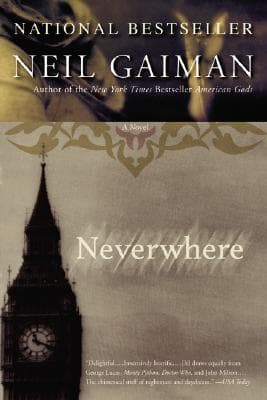
- Neverwhere
Neil Gaiman
4.2 (430k) average on GoodreadsFantasyFeatures a hidden magical world beneath a familiar city, with dark and fantastical elements.
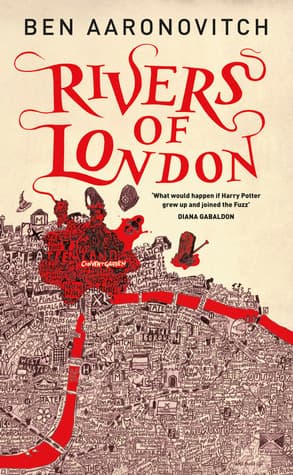
- Rivers of London
Ben Aaronovitch
3.9 (94k) average on GoodreadsFantasyFollows a magical detective solving supernatural crimes in a modern city, with a similar blend of magic and police procedural.
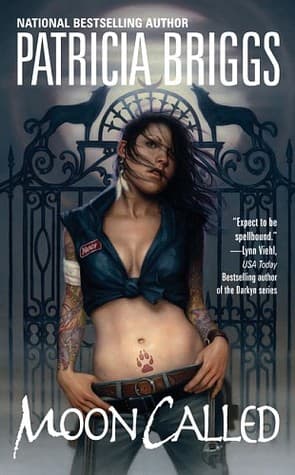
- Moon Called
Patricia Briggs
4.2 (176k) average on GoodreadsFantasyUrban fantasy with a strong protagonist navigating a complex supernatural society and political intrigue.
- Harry Potter and the Sorcerer's Stone
J.K. Rowling
4.5 (7M) average on GoodreadsFantasyRescued from a miserable life under the stairs, an orphaned boy discovers he's a wizard destined for a magical school, where he uncovers a dangerous secret tied to the dark wizard who murdered his parents.
- The Hunger Games
Suzanne Collins
4.3 (6.4M) average on GoodreadsFantasyIn a future where children fight to the death on live television, Katniss Everdeen volunteers for the arena, turning a death sentence into a fight for survival and a spark of rebellion.
- 1984
George Orwell
4.2 (3.1M) average on GoodreadsPoliticsIn a future where surveillance and thought control are absolute, a man's search for truth clashes with the Party, showing that hope can be a form of rebellion.



Enjoyed the summary?
A summary gives you the shape of the book. The book itself has the detail, the examples and the voice.
Find Proven Guilty on AmazonAs an Amazon Associate, BookBrief earns from qualifying purchases. How we're funded