
Estimated read time: 5 min read
One Sentence Summary
"Quit" explores the power and importance of knowing when to walk away from unproductive or harmful situations to achieve greater success and fulfillment.
Table of Contents
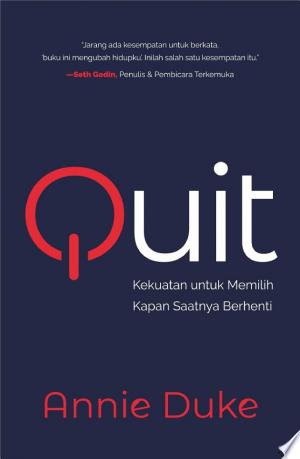
"Quit: The Power of Knowing When to Walk Away" is a compelling exploration of the art of quitting by Annie Duke, a former professional poker player turned author and decision strategist. In this insightful book, Duke delves into the often-overlooked skill of knowing when to quit, arguing that it is as crucial as perseverance in achieving success. The book is significant for its fresh perspective on decision-making, challenging the societal norms that always favor persistence.
Author's Expertise and Credibility
Annie Duke's Background
Annie Duke is renowned for her success in the world of professional poker, where strategic decision-making is paramount. Her academic background in cognitive psychology further bolsters her credibility, providing her with a deep understanding of human behavior and decision-making processes. Duke has authored several books on decision-making, including "Thinking in Bets," which was well-received for its insights into uncertainty and risk.
Core Concepts and Ideas
Summary of Main Ideas
- The Value of Quitting: Duke emphasizes that quitting is not synonymous with failure. Instead, it is a strategic decision that can prevent further losses and open up new opportunities.
- Cognitive Biases: The book explores how cognitive biases, such as loss aversion and the sunk cost fallacy, hinder our ability to quit at the right time.
- Opportunity Cost: Duke discusses the importance of considering opportunity costs, which are often overlooked when deciding whether to persist or quit.
Importance of the Topic
The ability to quit strategically is crucial in various aspects of life, from careers to personal relationships. By mastering the art of quitting, individuals can avoid prolonged struggles and redirect their efforts toward more rewarding pursuits. Duke's insights are particularly relevant in a world that often glorifies perseverance without considering its potential downsides.
Chapter-by-Chapter Summary
Chapter 1: The Myth of Perseverance
Summary
Duke begins by debunking the myth that perseverance is inherently virtuous. She highlights how societal narratives glorify persistence while stigmatizing quitting, often to the detriment of individual success.
Key Takeaways
- Challenge Societal Norms: Question the automatic association of quitting with failure.
- Evaluate Persistence: Understand when perseverance is beneficial and when it becomes a liability.
Chapter 2: Cognitive Biases and Quitting
Summary
This chapter delves into cognitive biases that affect decision-making, such as the sunk cost fallacy and loss aversion. Duke explains how these biases can cloud judgment and lead to poor outcomes.
Key Takeaways
- Recognize Biases: Identify cognitive biases that influence your decisions.
- Make Rational Choices: Strive for logical decision-making, free from emotional biases.
Chapter 3: Opportunity Cost and Quitting
Summary
Duke introduces the concept of opportunity cost, emphasizing its role in decision-making. She argues that failing to consider opportunity costs can lead to suboptimal outcomes.
Key Takeaways
- Assess Alternatives: Always evaluate what you're giving up by not quitting.
- Optimize Decisions: Use opportunity cost as a tool to make better choices.
Chapter 4: Case Studies in Strategic Quitting
Summary
Through various case studies, Duke illustrates how successful individuals and organizations have benefited from strategic quitting. These examples serve as practical applications of her theories.
Key Takeaways
- Learn from Success Stories: Observe how others have used quitting to their advantage.
- Apply Lessons: Integrate similar strategies into your decision-making process.
Chapter 5: Tools and Techniques for Quitting
Summary
In this chapter, Duke provides actionable tools and techniques to help individuals quit strategically. These include decision trees, pre-mortem analysis, and establishing quitting criteria.
Key Takeaways
- Utilize Tools: Implement decision-making tools to evaluate quitting options.
- Set Criteria: Establish clear criteria for when to quit in advance.
Practical Applications
Applying the Book's Advice
- Career Decisions: Use Duke's strategies to evaluate whether to stay in or leave a job.
- Personal Relationships: Assess when a relationship is no longer beneficial and consider quitting.
- Financial Investments: Apply her concepts to decide when to cut losses and reinvest elsewhere.
Supporting Evidence and Examples
Duke supports her arguments with a wealth of research studies and real-life examples. She draws from her poker career, illustrating how the principles of quitting apply in high-stakes environments. Additionally, she references academic studies on cognitive biases and opportunity cost, providing a solid foundation for her claims.
Critical Insights
Strengths
- Engaging Writing: Duke's writing is engaging, making complex concepts accessible.
- Practical Advice: The book offers actionable strategies, enhancing its real-world applicability.
Limitations
- Niche Audience: Some examples may resonate more with readers familiar with poker or decision theory.
Reader's Benefits
By embracing the concepts in "Quit," readers can improve their decision-making skills, leading to more successful outcomes in various life areas. The book empowers individuals to make informed choices, balancing perseverance with strategic quitting.
Conclusion
"Quit: The Power of Knowing When to Walk Away" is a thought-provoking exploration of quitting as a strategic tool. Annie Duke's insights challenge societal norms and provide readers with the knowledge to make better decisions. This book is a valuable resource for anyone seeking to optimize their personal and professional lives. By understanding the art of quitting, readers are encouraged to embrace change and pursue more fulfilling paths.
Quit FAQ
What is the main theme of the book 'Quit'?
The main theme of 'Quit' revolves around the importance and strategic value of knowing when to quit and the benefits of making timely decisions to stop pursuing unproductive paths.
Who is the author of 'Quit'?
The author of 'Quit' is Annie Duke, a former professional poker player and decision-making expert.
What type of book is 'Quit'?
'Quit' is a non-fiction book that falls under the category of self-help and personal development, focusing on decision-making strategies.
Does 'Quit' provide any practical advice?
Yes, 'Quit' offers practical advice on how to recognize when it's time to quit and how to make better decisions in both personal and professional contexts.
Is 'Quit' based on any particular research or studies?
Yes, 'Quit' is based on research in psychology, behavioral economics, and decision science, and includes insights from Annie Duke's experiences in poker and consulting.
Who would benefit most from reading 'Quit'?
Individuals facing difficult decisions, entrepreneurs, business leaders, and anyone interested in improving their decision-making skills would benefit from reading 'Quit'.
Does the book 'Quit' include real-life examples?
Yes, 'Quit' includes numerous real-life examples and case studies to illustrate the principles and strategies discussed in the book.
How does 'Quit' differ from other self-help books?
'Quit' focuses specifically on the often overlooked concept of quitting as a strategic choice rather than failure, offering a unique perspective compared to other self-help books that emphasize perseverance.
Can 'Quit' help with career decisions?
Yes, 'Quit' can help individuals make informed career decisions by providing tools and frameworks to assess when it is beneficial to leave a particular job or career path.