

Core Idea
- Difficulty
- Medium
- Read it if
- You struggle with letting go of projects, relationships, or investments that are no longer serving you, or you want to make more rational decisions about when to pivot versus persevere.
- Skip it if
- You are looking for a book that exclusively celebrates grit and perseverance without critical examination, or you believe quitting is inherently a moral failing.
Key Takeaways from Quit
The Sunk Cost Fallacy: Your Brain's Trap
Why past investments cloud future decisions, leading to irrational persistence.
The sunk cost fallacy is a common cognitive bias that makes us continue an action because of resources (time, money, effort) already spent, instead of focusing only on future possibilities. Our brains are set to avoid waste and loss, which makes it very hard to 'walk away' from something we have invested heavily in, even when logic says to quit. This bias leads to bad decisions, keeping us in failing projects, jobs, or relationships long after they should end. Duke argues that recognizing this fallacy is the first step toward making better quitting decisions, as it helps us separate past investments from future potential, allowing for a more objective review.
“The sunk cost fallacy describes our tendency to continue an endeavor once an investment has been made, even if further investment isn't rational.”
In the book: Duke frequently references behavioral economics studies and real-world examples, such as individuals over-investing in failing home renovations or companies pouring more money into doomed projects, purely because of prior expenditures.
Try this: Before making a decision to continue, explicitly list all resources already invested. Then, imagine you're starting from scratch today, with no prior investment. Would you make the same decision to start or continue? If not, it's a strong signal to quit.
Related ideas: sunk-cost-fallacy, cognitive-bias, decision-making
Quitting as a Strategic Advantage
Embrace quitting not as failure, but as a proactive strategy to reallocate resources to better opportunities.
Society often views quitting negatively, seeing it as failure or a lack of persistence. Duke questions this belief, reframing quitting as a strong strategic tool. In a world with limited resources (time, energy, money), continuing a less-than-ideal effort means missing the chance to invest in something potentially more rewarding. Quitting, when done strategically, is about improving your portfolio of life decisions. It is an active choice to stop wasting resources, to free up time, and to move toward options with higher expected value. This change in perspective is important for innovation, personal growth, and maximizing overall success.
“The decision to quit is not a sign of weakness; it’s a strategic choice to cut your losses and reallocate your resources to a more promising path.”
In the book: Duke highlights examples from venture capital, where successful firms are adept at 'killing' failing projects early to reallocate funds to promising startups, understanding that early quitting is key to their overall portfolio success.
Try this: Regularly conduct 'pre-mortems' on ongoing projects or commitments. Imagine it has failed in the future – what were the reasons? This helps identify potential pitfalls early and makes quitting a less emotionally charged decision.
Related ideas: strategic-quitting, opportunity-cost, resource-allocation
The Quitting Paradox: Too Late, Not Too Early
Most people quit too late, not too early, missing crucial windows for optimal pivots.
Common wisdom often praises 'grit' and 'persistence' above all else, leading people and organizations to continue long past the point where returns diminish. Duke says this cultural bias against quitting causes much harm. The true 'quitting paradox' is that while we fear giving up too soon, evidence suggests we usually hold on too long. This delay in quitting means wasted resources, missed chances, and prolonged suffering in less-than-ideal situations. The key is to create a way to know when to quit, rather than just always persisting. Quitting early, when the signs are clear, saves resources and opens doors to new, better paths.
“The problem isn’t that we quit too early; it’s that we quit too late.”
In the book: Duke cites research on startup failures, where many founders persist with failing business models for too long, burning through capital and personal resources, rather than pivoting or shutting down early.
Try this: Set 'kill criteria' or 'tripwires' at the outset of any new project or commitment. These are pre-defined objective metrics or conditions that, if met, automatically trigger a re-evaluation or a decision to quit. This removes emotional bias from the decision.
Related ideas: persistence-bias, grit, optimal-quitting-time
Tripwires: Your Pre-Set Exit Triggers
Establish objective, pre-defined conditions to signal when it's time to quit, removing emotional bias.
One of the most useful tools Duke offers is the idea of 'tripwires.' These are set, objective rules or conditions that, when met, automatically start a review of your current action, with the clear possibility of quitting. Tripwires help avoid the emotional and cognitive biases (like the sunk cost fallacy) that make quitting so hard at the moment. By setting these limits in advance, when emotions are not high, you create a logical safeguard against illogical persistence. They force you to face reality and make a decision based on facts, not just hope or past investment.
“A tripwire is a pre-committed decision point, a specific signal that tells you it’s time to pause, re-evaluate, and potentially quit.”
In the book: Duke illustrates tripwires with examples from personal finance (e.g., 'If my investment portfolio drops by X%, I will re-evaluate') or business (e.g., 'If we don't hit Y sales target by Z date, we will pivot or shut down this product line').
Try this: For any significant project or goal, identify 2-3 specific, measurable, and time-bound tripwires. What are the objective indicators that would tell you this isn't working? Write them down and commit to reviewing them.
Related ideas: tripwires, pre-commitment, objective-criteria
The 'Willpower Gap' and Fresh Starts
Recognize that willpower is finite; leverage 'fresh start' moments to overcome inertia and make big changes.
Quitting often needs a lot of willpower and self-control, especially when fighting internal resistance and external pressures. Duke points out the 'willpower gap,' where our resolve to make tough decisions (like quitting) often fails. However, she also introduces the idea of 'fresh start' moments – natural times like new years, birthdays, or the start of a new week or month. These moments create a psychological break from the past, making it easier to imagine a new future and commit to change. Using these 'fresh start' effects can give the psychological boost needed to overcome inertia and start difficult quitting decisions, offering a clean slate for new beginnings.
“Our ability to exert self-control is a finite resource, and it’s often depleted when we need it most.”
In the book: Duke references research showing that people are more likely to set and achieve goals (including quitting bad habits) immediately after a 'fresh start' moment, like the beginning of a new year or month.
Try this: If you're struggling to quit something, intentionally choose a 'fresh start' date (e.g., the first of the month, your birthday, a Monday) to make the decision. Use the psychological clean slate to your advantage.
Related ideas: willpower, fresh-start-effect, self-control
Think Like a Portfolio Manager
View your life decisions as a portfolio of investments, actively managing and divesting from underperforming assets.
Duke encourages readers to use a 'portfolio management' mindset for their life decisions. Just as an investor manages a portfolio of stocks, bonds, and other assets, we should manage our commitments (career, relationships, projects, hobbies) as a portfolio of investments of our limited resources. This approach helps make decisions less personal and brings an objective, strategic view to quitting. If an 'asset' (a job, a project) is consistently underperforming, using resources without enough returns, a portfolio manager would sell it. This does not mean you are a failure; it means you are improving your overall 'life portfolio' for better returns and greater well-being. It is about getting the most value from all your efforts.
“Think of your life as a portfolio of investments – your time, energy, and money are all capital you’re deploying. You wouldn’t keep a failing stock indefinitely, so why keep a failing job or relationship?”
In the book: Duke draws parallels to financial markets and venture capital, where constant evaluation and divesting from underperforming assets are standard practices for success.
Try this: Regularly review all your major commitments (work, relationships, hobbies). Assign an 'expected value' to each – what are the likely returns (happiness, growth, financial)? Identify the lowest-performing 'assets' and consider divesting to free up resources for higher-potential ones.
Related ideas: portfolio-management, expected-value, resource-optimization
The Danger of 'Near Misses'
Be wary of 'almost there' scenarios; they often compel irrational persistence despite diminishing returns.
One of the most dangerous traps that stops us from quitting is the 'near miss.' When we feel we are 'almost there,' just about to have a breakthrough, or very close to finishing a long-term goal, the psychological pull to continue becomes very strong. Being close to a perceived finish line increases the sunk cost fallacy and makes us ignore clear signs that the effort is no longer possible or valuable. Duke warns that these 'near miss' situations are especially dangerous because they create a powerful illusion of coming success, even when objective analysis suggests otherwise. It is a common reason why people stay too long in bad jobs or relationships, believing the 'next big thing' is just around the corner.
“The closer you get to a goal, the harder it is to quit, even if the goal itself isn't worth pursuing anymore.”
In the book: Duke discusses examples like gamblers continuing to play after a 'near miss' (e.g., two out of three symbols matching on a slot machine), or entrepreneurs persisting with a product that's 'almost ready' but continuously fails to launch or gain traction.
Try this: When you feel you're 'almost there' with a project, take a step back. Re-evaluate using your pre-set tripwires or a fresh perspective. Is the 'finish line' still worth crossing, or is it merely a mirage fueled by past effort?
Related ideas: near-miss-effect, goal-gradient-effect, perseverance-trap
The Power of a 'Quitting Coach'
Enlist an objective third party to help you identify when to quit and hold you accountable.
Our own cognitive biases, emotional attachment, and the sunk cost fallacy make it very hard to objectively judge when to quit. Duke strongly recommends using a 'quitting coach' – an objective, trusted third party who can help you evaluate your situation without personal bias. This could be a mentor, a therapist, a close friend (who is not emotionally invested in your project), or a professional coach. A quitting coach can ask hard questions, point out blind spots, help you state your tripwires, and provide accountability. Their outside view is very helpful in overcoming our natural resistance to quitting and making rational, future-focused decisions.
“The best way to make good quitting decisions is to get an objective third party to help you do it.”
In the book: Duke often refers to the benefits of 'decision groups' or 'truth-tellers' in high-stakes environments, such as poker players discussing hands or CEOs consulting their boards for unbiased advice.
Try this: Identify a trusted, objective person in your life. Explain your situation and ask them to act as your 'quitting coach.' Share your goals, your tripwires, and ask them to challenge your assumptions and help you stick to your pre-committed criteria.
Related ideas: quitting-coach, objective-feedback, accountability
Embrace Failure as Information
Reframe 'failure' from a judgment to valuable data for future success.
The fear of failure is a main reason for our unwillingness to quit. Duke argues that we need to change how we see failure. Instead of seeing it as a personal fault or the end of the road, we should see it as useful information. Every failed attempt, every project that must be abandoned, gives important facts that inform future decisions. When we quit something that is not working, we are not failing; we are learning and adapting. This mindset allows for trying new things, quick changes, and ultimately, greater long-term success. It is about 'failing fast' to learn faster, rather than 'failing slow' by holding on to doomed efforts.
“Failure is not the opposite of success; it's part of success. It's information.”
In the book: Duke highlights the scientific method, where hypotheses are constantly tested and disproven, with each 'failure' leading to new insights and refined understanding. She also points to Silicon Valley's 'fail fast, fail often' culture.
Try this: After deciding to quit something, conduct a 'post-mortem' analysis. What did you learn? What signals did you miss? How will this information inform your next endeavor? Document these lessons to reinforce the value of the 'failure'.
Related ideas: failure-mindset, learning-from-failure, adaptive-strategy
The Opportunity Cost of Persistence
Understand that holding onto one thing means giving up on countless better alternatives.
The idea of opportunity cost is central to Duke's argument for strategic quitting. Every minute, dollar, or unit of energy put into a current path is a minute, dollar, or unit of energy that cannot be put elsewhere. When we stubbornly continue in a less-than-ideal situation, we are not just wasting resources; we are actively giving up potentially much more rewarding alternatives. This hidden cost is often overlooked, yet it is very impactful. Recognizing the huge opportunity cost of illogical persistence helps us make bolder, more rational quitting decisions, freeing up our most valuable resources for efforts with higher potential for success and fulfillment.
“Every time you choose to persist in a failing endeavor, you are implicitly choosing to forgo all the other opportunities that could be more fruitful.”
In the book: Duke uses the example of someone staying in a dead-end job for years, missing out on opportunities to learn new skills, start a new business, or pursue a more fulfilling career path.
Try this: Whenever you're debating whether to continue or quit, explicitly list the top 3-5 alternative uses of your time, money, or energy. Compare the potential value of persisting versus pursuing those alternatives. This often clarifies the true cost of not quitting.
Related ideas: opportunity-cost, resource-allocation, alternative-paths
Quit Quotes
“The problem is that our brains are wired to keep us going, even when we should stop. This is the quitters' paradox.”
“We're terrible at distinguishing between a dip and a dead end. We often quit too early in the dip, and too late in the dead end.”
“Sunk costs are the money, time, or effort you've already invested that cannot be recovered. They are irrelevant to future decisions.”
“Pre-mortems are a powerful tool to help us identify potential failure points before we start, making it easier to quit when necessary.”
“Having a 'kill criteria' or 'tripwire' in advance allows you to make quitting an objective decision, rather than an emotional one.”
“The best time to quit is often when things are going well, before you hit rock bottom.”
“Our identity often becomes intertwined with our pursuits, making quitting feel like a personal failure.”
“Quitting is not giving up; it's making a strategic decision to reallocate resources to more promising endeavors.”
“The greatest cost of not quitting is the opportunity cost of what you could be doing instead.”
“We often suffer from 'planning fallacy,' overestimating our ability to predict the future and underestimating the time and resources required.”
“The fear of regret for quitting often outweighs the actual regret of continuing down a failing path.”
“Admitting you're wrong isn't a sign of weakness; it's a sign of intellectual honesty and strength.”
“When you're faced with a decision to quit, ask yourself: 'If I hadn't started this yet, knowing what I know now, would I start it?'”
“The ability to quit effectively is a superpower in a world that constantly tells us to 'never give up.'”
Quiz
10 questions on the main ideas. Each answer comes with a short explanation.
Question 1
According to Annie Duke in 'Quit,' what is the primary reason many people avoid quitting, even when it's the rational choice?
- Fear of the unknown future
- Lack of viable alternatives
- The social stigma and perception of quitting as failure
- Overconfidence in their ability to overcome challenges
Show answer
C. The social stigma and perception of quitting as failure Duke argues that society often equates quitting with failure, leading individuals to persist in losing endeavors rather than face this negative perception.
Question 2
Which of the following best describes the 'sunk cost fallacy' as discussed in 'Quit'?
- The tendency to invest more resources into a project because of past investments, even if it's no longer rational.
- The belief that future outcomes will mirror past successes.
- The psychological discomfort experienced when making a difficult decision.
- The tendency to attribute success to internal factors and failure to external factors.
Show answer
A. The tendency to invest more resources into a project because of past investments, even if it's no longer rational. The sunk cost fallacy is a core concept in 'Quit,' highlighting how past investments (sunk costs) irrationally influence future decisions to continue, even when it's detrimental.
Question 3
Annie Duke emphasizes that the ability to 'quit well' is a skill. What is a key component of developing this skill?
- Always having a backup plan before starting any new venture.
- Learning to recognize when the expected value of continuing is negative or significantly lower than alternatives.
- Consulting with at least three experts before making any major decision.
- Focusing solely on short-term gains to avoid long-term commitment.
Show answer
B. Learning to recognize when the expected value of continuing is negative or significantly lower than alternatives. Duke's strategy is heavily based on evaluating expected value and recognizing when a path is no longer optimal, making the decision to quit a rational one.
Question 4
In the context of 'Quit,' what does 'setting kill criteria' refer to?
- Defining specific, measurable conditions in advance that, if met, indicate it's time to quit.
- Identifying external factors that could unexpectedly force you to quit.
- Determining the maximum amount of money you are willing to lose on a project.
- Establishing a strict timeline for completing a task, after which it must be abandoned.
Show answer
A. Defining specific, measurable conditions in advance that, if met, indicate it's time to quit. Setting 'kill criteria' is a practical application Duke suggests to overcome biases. It involves pre-committing to quit if certain objective conditions are met, preventing emotional attachment from clouding judgment.
Question 5
Duke discusses the concept of 'resulting' – judging the quality of a decision based on its outcome. Why is 'resulting' detrimental to good quitting decisions?
- It discourages risk-taking and innovation.
- It focuses on past failures instead of future opportunities.
- It conflates the quality of a decision with the randomness of its outcome, making it harder to learn from experience and make rational future choices.
- It leads to excessive introspection and analysis paralysis.
Show answer
C. It conflates the quality of a decision with the randomness of its outcome, making it harder to learn from experience and make rational future choices. Resulting is a cognitive bias where we judge a decision by its outcome rather than the quality of the decision-making process at the time. This makes it difficult to objectively assess when a quit decision was good or bad, independent of the luck involved.
Question 6
According to Annie Duke, what role do 'premortems' play in making better quitting decisions?
- They help identify the exact point at which a project will inevitably fail.
- They allow a team to imagine a future where a project has failed and then work backward to identify potential causes, thus anticipating reasons to quit.
- They are used to celebrate small successes to build morale and reduce the likelihood of quitting.
- They are a technique for quickly recovering from a failed project and moving on.
Show answer
B. They allow a team to imagine a future where a project has failed and then work backward to identify potential causes, thus anticipating reasons to quit. Premortems are a powerful tool discussed by Duke, where you proactively imagine failure to uncover potential risks and create 'kill criteria' before you're emotionally invested.
Question 7
Duke argues that 'quitting' is often mislabeled. What does she suggest it often truly represents?
- An impulsive reaction to frustration.
- A strategic pivot or a rational decision to reallocate resources to better opportunities.
- A sign of weakness and lack of perseverance.
- An admission of defeat in the face of insurmountable odds.
Show answer
B. A strategic pivot or a rational decision to reallocate resources to better opportunities. A central theme of the book is reframing quitting from a negative failure to a positive, strategic choice that frees up resources for more promising endeavors.
Question 8
Why does Annie Duke advise against making 'quit' decisions solely based on how you 'feel' about a situation?
- Emotions are unreliable and can lead to impulsive, non-rational decisions influenced by temporary states.
- Feelings often contradict expert advice, which should always be prioritized.
- Focusing on feelings distracts from the quantitative data necessary for good decisions.
- Decisions based on feelings are harder to justify to others.
Show answer
A. Emotions are unreliable and can lead to impulsive, non-rational decisions influenced by temporary states. Duke frequently highlights cognitive biases and emotional traps. Relying solely on feelings can lead to irrational persistence or premature quitting, rather than an objective assessment of expected value.
Question 9
When faced with multiple options and the decision to quit one path, what concept does Duke emphasize to ensure you're making the best choice?
- The 'endowment effect' – valuing what you already possess more highly.
- Considering the 'opportunity cost' of continuing versus pursuing a better alternative.
- The 'bandwagon effect' – following the choices of the majority.
- The 'recency bias' – giving more weight to recent events.
Show answer
B. Considering the 'opportunity cost' of continuing versus pursuing a better alternative. Opportunity cost is crucial for rational quitting. It means recognizing what you're giving up by continuing on a current path, especially when a more valuable alternative exists.
Question 10
Imagine you've invested significant time and money into a failing business venture. According to 'Quit,' what is the most scientifically sound approach to decide whether to continue or stop?
- Double down on your efforts, as past investment indicates commitment and potential for future success.
- Ignore the time and money already spent, and objectively evaluate the future prospects and expected value of continuing versus alternative uses of your resources.
- Seek advice from mentors who have successfully turned around failing businesses.
- Wait for a clear external sign or event that forces your hand to quit.
Show answer
B. Ignore the time and money already spent, and objectively evaluate the future prospects and expected value of continuing versus alternative uses of your resources. This scenario directly addresses the sunk cost fallacy. Duke's core message is to disregard past investments and make forward-looking decisions based on the current and future expected value, weighing it against better opportunities.
Quit FAQ
What is the main idea of 'Quit' by Annie Duke?
The main idea of 'Quit' is to challenge the stigma associated with quitting and provide science-based strategies for recognizing when to quit, change direction, or persevere. It emphasizes that knowing when to quit can prevent wasted time, energy, and money on losing endeavors.
Does 'never give up' always work, according to Annie Duke?
No, Annie Duke argues that the 'never give up' mindset can often be detrimental. While persistence is valuable, blindly adhering to a failing path due to a fear of quitting can lead to significant losses in time, resources, and emotional well-being.
What is 'quitting' in the context of this book?
In 'Quit,' quitting is reframed not as failure, but as a strategic decision to disengage from a path that is no longer serving your goals. It involves a rational assessment of sunk costs and future potential, allowing for a pivot towards more productive endeavors.
How is 'Quit' different from other self-help books that emphasize perseverance?
'Quit' offers a counter-narrative to many self-help books by specifically focusing on the strategic advantages of quitting, rather than solely on persistence. It provides frameworks for identifying when perseverance becomes detrimental, using insights from decision science and psychology.
How can 'Quit' help me with my career decisions?
'Quit' offers practical strategies to evaluate career paths, projects, or even job roles to determine if they are still viable or if it's time to pivot. It helps you recognize the signs of a dead end and make informed decisions to optimize your professional growth and satisfaction.
Is 'Quit' only about big life changes, or does it apply to smaller decisions too?
While 'Quit' certainly applies to major life decisions like careers or relationships, its principles are also highly relevant to smaller, everyday choices. The strategies for evaluating sunk costs and future potential can be used to decide when to abandon a failing project, a bad habit, or even an unfulfilling hobby.
What is the 'pre-mortem' concept mentioned in the book?
The 'pre-mortem' is a decision-making tool where, before starting a project or making a big commitment, you imagine it has already failed and then work backward to identify all the potential reasons why. This helps in anticipating problems and making more robust 'quit points' or contingency plans.
How can I overcome the fear of quitting, according to Annie Duke?
Annie Duke suggests overcoming the fear of quitting by reframing it as a smart, strategic move rather than a personal failure. By using objective criteria and setting 'quit points' in advance, you can reduce emotional bias and make more rational decisions about when to disengage.
Does the book provide a step-by-step guide for quitting?
Yes, 'Quit' provides a strategic framework rather than a rigid step-by-step guide, offering tools and mental models to help readers identify their 'quit points' and make informed decisions. It equips you with the skills to assess situations and determine the best course of action.
About the author

Annie Duke is a former professional poker player and author known for her work in decision-making and strategic thinking. Her notable books, including 'Thinking in Bets' and 'Quit,' explore the intersection of luck, skill, and cognitive biases. Duke applies her extensive experience in high-stakes poker to provide practical frameworks for making better choices in both personal and professional life.
Similar books
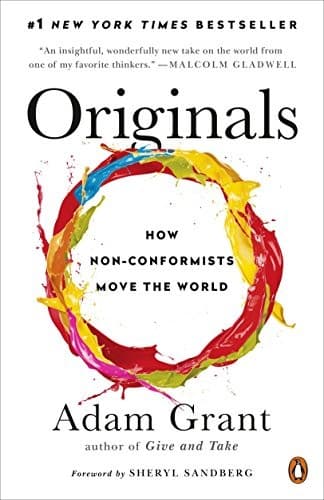
- Originals: How Non-Conformists Move the World
Adam Grant
4.0 (59k) average on GoodreadsWhile Grant's "Originals" encourages questioning the status quo and knowing when to pivot or refine ideas, Duke's "Quit" provides a more explicit, detailed, and psychologically grounded framework specifically for the act of strategic disengagement. Grant's focus is on generating new ideas and making them succeed, whereas Duke's is on the difficult but crucial decision to abandon failing ventures.
- Outliers: The Story of Success
Malcolm Gladwell
4.2 (556k) average on GoodreadsBusinessMalcolm Gladwell argues that true success is not just about individual talent, but about the hidden advantages of culture, opportunity, and unique experiences that shape extraordinary lives.
- The Subtle Art of Not Giving a F*ck: A Counterintuitive Approach to Living a Good Life
Mark Manson
3.9 (530k) average on GoodreadsBusinessEmbrace your flaws and stomach life's lemons, because true happiness isn't about relentless positivity, but about choosing what truly matters to give a f*ck about.
- The 7 Habits of Highly Effective People: Powerful Lessons in Personal Change
Stephen R. Covey
4.1 (524k) average on GoodreadsBusinessThis book presents seven habits that help people live more effective, purposeful lives.
- Blink: The Power of Thinking Without Thinking
Malcolm Gladwell
3.9 (487k) average on GoodreadsBusinessExplore the hidden power of quick judgments and how 'thin-slicing' information helps skilled decision-makers succeed instantly, often without conscious thought.
- Rich Dad, Poor Dad
Robert T. Kiyosaki
4.1 (369k) average on GoodreadsBusinessRobert Kiyosaki explains that financial literacy, owning assets instead of liabilities, and making money work for you are the real ways to build wealth, lessons he learned from his biological 'poor dad' and his best friend's entrepreneurial 'rich dad.'




Enjoyed the summary?
A summary gives you the shape of the book. The book itself has the detail, the examples and the voice.
Find Quit on AmazonAs an Amazon Associate, BookBrief earns from qualifying purchases. How we're funded