

Synopsis
Covers the whole plot, including the ending.
- Difficulty
- Easy
- Pacing
- Fast
- Mood
- Exciting, Mythic, Adventurous, Humorous
- Read it if
- You enjoy fast-paced, myth-driven adventures with strong cultural roots and a determined young protagonist.
- Skip it if
- You prefer slow-burn fantasy or stories without a clear hero's journey structure.
Race to the Sun Plot Summary
Covers the whole plot, including the ending.
A Monster in the Bleachers
Nizhoni Begay, a Navajo seventh-grader, plays in a basketball game. She senses a chilling presence in the bleachers. This man, later identified as Mr. Charles, her father's new boss, has an unnatural aura that only Nizhoni seems to perceive. Her brother, Mac, and best friend, Davery, do not notice anything amiss. Mr. Charles approaches their father, John Begay, showing an unsettling interest in the children and their Navajo heritage, particularly the legend of the Hero Twins. Nizhoni tries to warn her father that Mr. Charles is dangerous, but he dismisses her concerns, attributing them to her imagination. This first encounter establishes Nizhoni's unique ability and foreshadows the coming conflict, setting the stage for the adventure.
Dad's Disappearance and a Dire Warning
The day after the basketball game, Nizhoni wakes to find her father, John Begay, missing from their home. Instead, she discovers a hastily scrawled note on the refrigerator: 'Run!' Panic sets in as Nizhoni realizes her fears about Mr. Charles were justified. With her father gone, Nizhoni, her older brother Mac, and their loyal best friend Davery understand they are in grave danger. They are forced to flee their home, beginning a desperate journey to find their father and understand the true nature of the threat from Mr. Charles. This event marks the start of their quest, forcing the children to confront the supernatural world their father had tried to shield them from.
The First Holy Person: Spider Woman
Following their father's cryptic instructions, Nizhoni, Mac, and Davery make their way to a secluded trailer. There, they meet a peculiar old woman who introduces herself as Spider Woman. Initially skeptical, the children soon realize she is one of the Diné Holy People, a powerful spiritual being disguised in human form. Spider Woman confirms their father is in danger and reveals that Mr. Charles is actually a monstrous Yé'iitsoh, a giant from Navajo mythology. She explains that the children, descendants of the Hero Twins, are destined to stop him. Spider Woman gives them their first clue – a woven bracelet – and instructs them on the path they must take, emphasizing their heritage and inner strength.
Trial by Canyon: The Rock Slide
As Nizhoni, Mac, and Davery travel through the American Southwest, they face their first major trial. While navigating a narrow canyon, the ground beneath them rumbles, and a massive rock slide erupts, threatening to crush them. The children must react quickly, using their wits and cooperation to escape the falling boulders and treacherous terrain. Mac's practical knowledge and Davery's quick thinking prove valuable, while Nizhoni's growing intuition helps them anticipate dangers. This trial pushes their physical limits and strengthens their bond as a team, forcing them to rely on each other against overwhelming natural forces seemingly controlled by Mr. Charles.
Meeting the Coyote: Trickster or Guide?
Continuing their journey, the children stumble upon a quirky, fast-talking man who introduces himself as Coyote. He is another Diné Holy Person, known for his trickery and unpredictable nature. Coyote offers to help them by providing a shortcut across a dangerous expanse, but his assistance comes with riddles and demands for payment, testing their cleverness and trust. He gives them a magical pouch, but warns them it must not be opened until a specific time. Nizhoni is wary of Coyote's motives, but Mac and Davery are more open to his unconventional aid. Coyote's presence adds an element of humorous uncertainty and moral ambiguity to their quest, highlighting the complex nature of their supernatural allies.
The Desert's Fury: Sandstorm and Scorpions
Following Coyote's directions, Nizhoni, Mac, and Davery find themselves in a vast, unforgiving desert. A fierce sandstorm descends upon them, disorienting and threatening to bury them alive. As they struggle through the blinding wind and swirling sand, they are attacked by monstrous, magically enhanced scorpions, creatures Mr. Charles made. This trial pushes them to their physical and emotional breaking points. Nizhoni's developing powers begin to manifest more strongly, allowing her to sense and sometimes influence the environment. The children learn to fight back, relying on their combined strengths and the guidance from the Holy People to survive the desert's deadly embrace.
The House of the Sun
After enduring many trials and narrowly escaping death, Nizhoni, Mac, and Davery finally arrive at the fabled House of the Sun. This magnificent, otherworldly structure, hidden deep within the landscape, is a place of immense power and ancient magic. Here, they meet the Sun Bearer, a powerful Holy Person who is an ancestor of the Hero Twins. The Sun Bearer welcomes them and explains their true heritage and the gravity of their mission. He gives them crucial information about Mr. Charles (Yé'iitsoh) and the weaknesses of the monsters he controls. This is where they will be outfitted with the special weapons and sacred knowledge needed to confront the ultimate evil.
Training and Revelation
Inside the House of the Sun, Nizhoni and Mac undergo training under the guidance of the Sun Bearer and other Holy People. They learn to use their latent abilities, understanding their connection to the Hero Twins. Mac, with his logical mind, learns to wield ancient weapons and strategies, while Nizhoni focuses on developing her spiritual senses and her ability to perceive and manipulate the world around her. They discover that their powers are not just physical but rooted in their Navajo identity and the stories of their ancestors. This period of learning strengthens their resolve and prepares them for the battle against Mr. Charles and his monstrous forces.
The Confrontation with Mr. Charles
Armed with their new powers, ancient weapons, and the wisdom of the Holy People, Nizhoni, Mac, and Davery track Mr. Charles (Yé'iitsoh) to his lair, a corrupted oil rig that symbolizes his destructive influence. They discover their father, John Begay, is held captive there, his life force slowly draining. A fierce battle ensues, with Mr. Charles revealing his true monstrous form and unleashing an array of terrifying creatures. The children must use everything they have learned, combining their individual strengths – Nizhoni's spiritual insight, Mac's strategic prowess, and Davery's unwavering loyalty – to fight the ancient giant and his minions.
Defeating the Giant
The battle against Yé'iitsoh is grueling, and the children are pushed to their limits. Mac skillfully wields his weapons, and Davery bravely distracts smaller monsters. However, Nizhoni finds the key to defeating the giant. Remembering the legends and insights from the Holy People, she uses her developing spiritual powers to target Yé'iitsoh's true weakness. This is not through brute force but through understanding and connection to the land and its stories. With a final, powerful act, Nizhoni vanquishes Mr. Charles, freeing her father and dispelling the dark energy he brought. She fully embraces her role as a modern-day hero, demonstrating that true power comes from within and from one's heritage.
Reunion and Reflection
With Mr. Charles defeated, John Begay is freed and slowly recovers. The family is reunited, and the children are hailed as heroes by the Holy People. Although the immediate danger is over, Nizhoni, Mac, and Davery are changed by their adventure. Nizhoni has come to terms with her unique abilities and her heritage, understanding the responsibility that comes with them. Mac has grown in confidence and respect for the spiritual world, while Davery has proven his courage and loyalty. They return home, knowing that the world is more magical and dangerous than they once thought, but also that they possess the strength to protect it.
Race to the Sun Characters
Nizhoni Begay
Protagonist
A Navajo seventh-grader who discovers her ability to sense monsters and becomes a modern-day hero.
Nizhoni is an intuitive and observant seventh-grader who initially struggles with feeling different due to her burgeoning ability to sense monsters. She is fiercely protective of her family and friends, but also prone to self-doubt and feeling overwhelmed by the supernatural world thrust upon her. Her connection to her Navajo heritage, though initially a source of confusion, becomes her greatest strength. She is driven by the need to save her father and protect her loved ones from the monstrous threats unleashed by Mr. Charles.
Relationships: Mac Begay (Brother; often bickering but deeply caring and supportive.); Davery (Best friend; loyal, courageous, and a constant source of support.); John Begay (Father; initially dismissive of her claims, but she is driven to rescue him.); Mr. Charles (Yé'iitsoh) (Antagonist; the monstrous giant she must defeat.)
Mac Begay
Supporting
Nizhoni's older brother, a pragmatic and resourceful high schooler who provides practical skills.
Mac is Nizhoni's older brother, a high schooler who is initially skeptical of his sister's monster-sensing abilities. He is practical, logical, and often relies on scientific explanations. Despite his initial disbelief, he is fiercely protective of Nizhoni and Davery and quickly adapts to their extraordinary circumstances. Mac's resourcefulness, knowledge of survival skills, and ability to think strategically prove invaluable throughout their quest. He represents a grounded perspective amidst the supernatural chaos.
Relationships: Nizhoni Begay (Sister; often bickering but deeply caring and supportive.); Davery (Friend; shares a strong bond and teamwork with him and Nizhoni.)
Davery
Supporting
Nizhoni's loyal and brave best friend, a constant source of humor and unwavering support.
Davery is Nizhoni's best friend and an integral part of their quest. He is characterized by his unwavering loyalty, bravery, and often humorous perspective, even in the face of terrifying monsters. Despite not having supernatural abilities himself, Davery never hesitates to put himself in danger to help his friends. He provides emotional support, comic relief, and often surprising moments of insight. His courage and steadfastness highlight the importance of friendship and chosen family.
Relationships: Nizhoni Begay (Best friend; extremely loyal and supportive.); Mac Begay (Friend; shares a strong bond and teamwork with him and Nizhoni.)
Mr. Charles (Yé'iitsoh)
Antagonist
A monstrous giant from Navajo mythology disguised as a human, seeking to exploit the land and its people.
Mr. Charles is the primary antagonist, initially appearing as John Begay's slick, unsettling new boss. He is later revealed to be Yé'iitsoh, one of the monstrous giants from Navajo mythology, who has returned to wreak havoc and exploit the land's resources, particularly oil and gas. He is cunning, manipulative, and possesses immense destructive power, commanding other lesser monsters. His interest in Nizhoni and Mac stems from their lineage as descendants of the Hero Twins, whom he seeks to eliminate to prevent interference with his plans.
Relationships: Nizhoni Begay (Arch-nemesis; seeks to destroy her and her family.); John Begay (Captive; exploits him and his work for his own nefarious ends.)
John Begay
Supporting
Nizhoni and Mac's father, an oil and gas worker who becomes a victim of Mr. Charles.
John Begay is Nizhoni and Mac's father, a hardworking man who initially dismisses Nizhoni's claims about Mr. Charles as childish imagination. He is a loving father who tries to provide for his family, but his work in the oil and gas industry inadvertently puts him in contact with the antagonist. His disappearance at the beginning of the story serves as the catalyst for the children's quest. He represents the ordinary world that is suddenly disrupted by the supernatural.
Relationships: Nizhoni Begay (Daughter; he is the reason for her quest.); Mac Begay (Son; he is the reason for his quest.)
Spider Woman
Supporting
A powerful Diné Holy Person who guides and aids the children on their journey.
Spider Woman is the first Diné Holy Person the children encounter, appearing as a quirky old woman in a trailer. She is wise, ancient, and possesses significant magical power. She serves as an early mentor, confirming Nizhoni's abilities, explaining the threat of Mr. Charles (Yé'iitsoh), and providing the children with their initial guidance and a crucial magical item. Her character embodies the ancient wisdom and protective spirit of the Navajo people.
Relationships: Nizhoni Begay (Mentor; provides guidance and knowledge.); Mac Begay (Mentor; provides guidance and knowledge.); Davery (Recipient of guidance and aid.)
Coyote
Supporting
A trickster Diné Holy Person who offers ambiguous help, testing the children's wit and trust.
Coyote is another Diné Holy Person, known for his mischievous and unpredictable nature. He appears as a fast-talking, somewhat shifty individual who offers help to the children, but always with a catch or a riddle. While he is ultimately on the side of good, his methods are unconventional and often designed to test the children's cleverness and resourcefulness. He embodies the trickster archetype, reminding the protagonists that not all allies are straightforward.
Relationships: Nizhoni Begay (Ambiguous ally; tests her wit.); Mac Begay (Ambiguous ally; tests his logic.)
Sun Bearer
Supporting
A powerful Diné Holy Person and ancestor of the Hero Twins, who trains the children at the House of the Sun.
The Sun Bearer is a formidable and wise Diné Holy Person encountered at the House of the Sun. He is a direct ancestor of the original Hero Twins and serves as a crucial mentor for Nizhoni and Mac. He provides them with advanced training, helps them understand the full extent of their powers, and equips them with the ancient weapons and knowledge necessary to defeat Yé'iitsoh. He represents the pinnacle of spiritual power and ancestral heritage.
Relationships: Nizhoni Begay (Mentor; trains her in her powers.); Mac Begay (Mentor; trains him in ancient combat and strategy.)
Race to the Sun Themes
The Power of Heritage and Identity
The novel explores how Nizhoni and Mac's Navajo heritage is not just a cultural background but a source of spiritual power and guidance. Their connection to the Diné stories, legends, and Holy People gives them the knowledge, abilities, and resilience needed to face ancient monsters. Nizhoni's struggle to embrace her 'otherness' and her eventual acceptance of her role as a descendant of the Hero Twins is central to her development. The sacred sites and the land itself are integral to their power, reinforcing that identity is tied to place and ancestry. This is clear when Spider Woman explains their lineage and when they train at the House of the Sun, drawing strength from their ancestors.
“The stories are not just stories, Nizhoni. They are blueprints. They are maps. They are power.”
Environmentalism and Respect for the Land
A main theme is the importance of respecting the land and the consequences of exploiting natural resources. Mr. Charles, in his true form as Yé'iitsoh, is a monster who embodies greed and destruction, especially through his association with the oil and gas industry. His actions poison the earth and corrupt its creatures. The Holy People, conversely, are connected to and protective of the land. Nizhoni's quest becomes a fight not only to save her father but to defend the balance of nature against industrial exploitation. The corrupted oil rig as Yé'iitsoh's lair powerfully symbolizes this conflict.
“He doesn’t care about the land, Nizhoni. He only cares about what he can take from it.”
Family and Friendship
The bond between Nizhoni, Mac, and Davery forms the emotional core of the story. Their loyalty, support, and willingness to sacrifice for one another are crucial to their survival and success. Mac's protectiveness, Davery's courage, and Nizhoni's reliance on their combined strengths show that family, whether by blood or by choice, is an essential source of strength in adversity. The entire quest begins with the need to rescue their father, emphasizing the importance of familial ties. Their bickering and mutual support highlight the realistic dynamics of sibling relationships and deep friendships.
“We’re a team, Nizhoni. Always. We’ll figure this out together.”
Finding Inner Strength and Courage
Nizhoni's journey is one of self-discovery and finding courage within herself to face challenges. Initially hesitant and insecure about her abilities, she learns to trust her instincts and embrace her power. Each trial pushes her to grow, forcing her to confront her fears and develop resilience. The narrative shows that heroism comes not just from physical prowess or magical abilities, but from the bravery to stand up against evil and protect what is right. Her transformation is clear in her final confrontation with Yé'iitsoh, where she fully steps into her role as a hero.
“You have the strength, little warrior. It’s always been inside you.”
Plot Devices & Literary Techniques
The Hero's Journey
The classical monomyth structure guiding Nizhoni's transformation.
The novel adheres closely to the Hero's Journey archetype. Nizhoni receives a 'Call to Adventure' with her father's disappearance, 'Refuses the Call' initially through self-doubt, but is guided by 'Mentors' like Spider Woman and the Sun Bearer. She crosses the 'Threshold' into the supernatural world, faces numerous 'Tests, Allies, and Enemies' (the trials and monsters), and undergoes an 'Ordeal' in confronting Mr. Charles. Her 'Resurrection' occurs as she fully embraces her powers to defeat him, eventually returning with the 'Elixir' of self-knowledge and a stronger connection to her heritage.
Deus ex Machina (subverted)
Divine intervention from the Holy People, but with conditions and trials.
While the Diné Holy People (Spider Woman, Coyote, Sun Bearer) appear to offer 'divine' aid, their help is never without cost or effort on the part of the protagonists. They provide guidance, tools, and training, but the children must still face the dangers themselves and pass rigorous trials. This subverts a straightforward Deus ex Machina, as the solutions are earned through the children's own courage, wit, and growth, rather than simply being handed to them. The Holy People empower, but do not solve everything for them.
Symbolism of the Land
The American Southwest landscape as a living entity and reflection of spiritual power.
The landscape of the American Southwest is more than just a setting; it's a character and a powerful symbol. The canyons, deserts, and mountains are where the trials take place, testing the children's resilience. It is also the source of the Holy People's power and the very thing Mr. Charles seeks to corrupt. The land embodies the Navajo spiritual connection, providing guidance and strength when respected, and becoming a deadly threat when desecrated. The House of the Sun, hidden within the land, further emphasizes this deep connection.
Ancestral Powers and Legacy
The concept that the protagonists inherit specific abilities and responsibilities from their mythical ancestors.
Nizhoni and Mac are descendants of the Navajo Hero Twins, a crucial plot device that grants them latent abilities and a destined role in confronting Yé'iitsoh. This ancestral legacy provides a framework for their powers, explaining Nizhoni's monster-sensing ability and Mac's strategic mind. It grounds their supernatural abilities within their cultural heritage, making their quest not just a personal adventure but a continuation of an ancient struggle. The training at the House of the Sun explicitly focuses on unlocking and honing these inherited powers.
Race to the Sun Quotes
“There are always monsters, Nizhoni. You just have to decide which ones you're willing to face.”
“Magic isn't something you learn; it's something you remember.”
“Sometimes the most powerful things are the ones you can't see.”
“Your family is your strength, not your weakness.”
“The stories are not just stories. They are maps.”
“Fear can be a good thing. It tells you what's important.”
“Every step you take, you walk with your ancestors.”
“You don't have to be perfect to be powerful.”
“Sometimes the biggest battles are fought within yourself.”
“The world is full of beauty and danger, often in the same place.”
“When you know who you are, no one can tell you who you're not.”
“Even the smallest light can banish the greatest darkness.”
“Our traditions are not chains; they are roots.”
Quiz
10 questions on the plot and the characters. Each answer comes with a short explanation.
Question 1
What unusual ability does Nizhoni Begay develop at the beginning of the story?
- The ability to speak with animals.
- The ability to detect monsters.
- The ability to control the weather.
- The ability to see into the future.
Show answer
B. The ability to detect monsters. Nizhoni's new ability to detect monsters, like Mr. Charles, is what kicks off her realization of danger.
Question 2
Who is Mr. Charles to Nizhoni's father?
- A distant relative.
- A childhood friend.
- His new boss.
- A rival in business.
Show answer
C. His new boss. Mr. Charles is introduced as Nizhoni's dad's new boss at the oil and gas company.
Question 3
What message does Nizhoni's father leave behind when he disappears?
- 'I'll be back soon.'
- 'Run!'
- 'Don't worry.'
- 'Find me.'
Show answer
B. 'Run!' Dad's urgent message 'Run!' signals the immediate danger and the start of the adventure.
Question 4
Which of the following is NOT part of the trio embarking on the rescue mission?
- Nizhoni
- Mac
- Mr. Charles
- Davery
Show answer
C. Mr. Charles The rescue mission is undertaken by Nizhoni, her brother Mac, and her best friend Davery. Mr. Charles is the antagonist.
Question 5
What is the primary goal of the children's quest, according to the synopsis?
- To find a hidden treasure.
- To reach the House of the Sun to defeat Mr. Charles and rescue their father.
- To learn more about their Navajo heritage.
- To escape the American Southwest.
Show answer
B. To reach the House of the Sun to defeat Mr. Charles and rescue their father. The ultimate goal is to reach the House of the Sun to get what they need to defeat Mr. Charles and save their father.
Question 6
Who provides aid to the children, disguised as quirky characters?
- Other seventh graders.
- Diné Holy People.
- Ancestral spirits.
- Friendly monsters.
Show answer
B. Diné Holy People. The synopsis states that the children receive help from Diné Holy People disguised as quirky characters.
Question 7
What is the 'price' for the aid received from the Diné Holy People?
- They must give up their most prized possessions.
- They must swear an oath of loyalty.
- They must pass a series of trials.
- They must defeat a monster on their own.
Show answer
C. They must pass a series of trials. The aid from the Holy People comes at the price of the children needing to pass a series of trials.
Question 8
What specific legend is Mr. Charles alarmingly interested in, connecting to Nizhoni and Mac's heritage?
- The legend of the Spider Woman.
- The legend of Changing Woman.
- The legend of the Hero Twins.
- The legend of the Sacred Mountains.
Show answer
C. The legend of the Hero Twins. Mr. Charles is specifically interested in the legend of the Hero Twins, which ties into the children's Navajo heritage.
Question 9
Beyond acquiring weapons, what must Nizhoni ultimately do to become the hero she is destined to be?
- Convince her father of the dangers.
- Rely solely on her monster-detecting ability.
- It will take 'more than weapons' as implied by the story's themes.
- Master ancient Navajo spells.
Show answer
C. It will take 'more than weapons' as implied by the story's themes. The synopsis states, 'But it will take more than weapons for Nizhoni to become the hero she was destined to be,' hinting at personal growth and internal strength as key themes.
Question 10
Which of the following is highlighted as a timeless theme in 'Race to the Sun'?
- The pursuit of wealth and power.
- The importance of family and respect for the land.
- The dangers of modern technology.
- The struggle for academic success.
Show answer
B. The importance of family and respect for the land. The synopsis explicitly mentions 'Timeless themes such as the importance of family and respect for the land resonate in this funny, fast-paced, and exciting quest adventure.'
Race to the Sun FAQ
What is the central conflict that kicks off Nizhoni Begay's adventure?
Nizhoni discovers that her father's new boss, Mr. Charles, is a monster interested in her and her brother Mac's Navajo heritage and the Hero Twins legend. When her father disappears the next day, leaving a 'Run!' message, Nizhoni, Mac, and their friend Davery are forced to embark on a quest to rescue him and confront Mr. Charles.
Who are the primary protagonists on this quest and what are their key roles?
The protagonists are Nizhoni Begay, who can detect monsters and is destined to be a hero; her brother Mac, who is often more cautious but resourceful; and their best friend Davery, a loyal and brave companion. Together, they navigate trials and seek help from Diné Holy People to rescue Nizhoni and Mac's father.
What is the significance of the 'House of the Sun' in the narrative?
The House of the Sun is the ultimate destination for Nizhoni, Mac, and Davery on their initial quest. It is where they expect to be outfitted with the necessary tools and weapons to defeat Mr. Charles and the ancient monsters he has unleashed, symbolizing a critical turning point in their journey.
Who is Mr. Charles and what is his ultimate goal?
Mr. Charles is initially introduced as Nizhoni's father's new boss, but he is revealed to be a monstrous entity with a deep interest in the Begay children's Navajo heritage and the Hero Twins legend. His ultimate goal appears to be harnessing or corrupting this power to unleash ancient monsters and fulfill a malevolent purpose.
How do the Diné Holy People assist the children, and what is the cost?
The Diné Holy People, disguised as quirky characters, offer aid to Nizhoni, Mac, and Davery throughout their journey. However, their help is not without a price; the children must pass a series of challenging trials, often involving nature itself, to prove their worth and earn the assistance they need.
What specific Navajo legends or figures are central to the plot, beyond the Hero Twins?
Beyond the explicit mention of the Hero Twins, the story deeply integrates Diné Holy People, who appear in various guises to guide or test the protagonists. The trials themselves often reflect elements of Navajo mythology, and the monsters unleashed by Mr. Charles are likely rooted in traditional Diné lore.
Are there any subtle clues about Mr. Charles's true nature before his monstrous reveal?
Yes, Nizhoni can detect monsters, and she immediately senses something is off about Mr. Charles at her basketball game, even before his true identity is known. His alarming interest in her family's heritage and the Hero Twins legend also serves as an early red flag for the reader.
What is the significance of the 'Run!' message left by Nizhoni and Mac's father?
The 'Run!' message is a crucial catalyst, confirming Nizhoni's suspicions about Mr. Charles's danger and initiating the children's quest. It signifies the father's awareness of the threat and his desperate attempt to protect his children, even at the cost of his own safety.
How does Nizhoni's ability to detect monsters impact her relationships, particularly with her father?
Nizhoni's unique ability creates a rift with her father, who initially dismisses her concerns about Mr. Charles. This makes her feel isolated and unheard, but it also fuels her determination and independence, ultimately proving her instincts to be correct and essential for their survival.
What psychological challenges do the children face during the 'nature itself is out to kill them' trials?
The children face intense psychological pressure during the trials, including fear, doubt, and the burden of responsibility. They must overcome their personal anxieties, trust each other, and tap into inner strengths they didn't know they possessed to survive the seemingly insurmountable natural challenges.
How does the theme of family manifest in the dynamics between Nizhoni, Mac, and their father?
The theme of family is central, highlighted by Nizhoni's unwavering commitment to rescuing her father and the bond between her and Mac. Despite initial disagreements, their shared heritage and love for their father drive their actions, reinforcing the idea that family is a source of strength and motivation.
What is the psychological journey Nizhoni undergoes to become the hero she was destined to be?
Nizhoni's psychological journey involves moving from being a worried seventh-grader whose intuitions are doubted to a confident leader embracing her destiny. She must learn to trust her abilities, overcome self-doubt, and accept the responsibilities of her heritage, transforming from a child into a true hero.
How does the book address the theme of 'respect for the land' within its fantasy setting?
The book integrates 'respect for the land' by featuring trials where nature itself poses challenges, implying that harmony with the environment is crucial. The Diné Holy People, often associated with natural elements, also guide the children, reinforcing the indigenous perspective of reverence for the earth and its power.
What message does the story convey about listening to and trusting one's instincts, especially when others doubt you?
The story strongly advocates for trusting one's instincts, particularly through Nizhoni's initial dismissal by her father regarding Mr. Charles. Her ability to 'detect monsters' is not just a power but a metaphor for intuition, underscoring the importance of believing in oneself even when others are skeptical.
How does the book blend modern elements (basketball, oil and gas company) with traditional Navajo mythology?
The book seamlessly blends modern elements like basketball games and an oil and gas company with ancient Navajo mythology by grounding the fantasy within a contemporary setting. This juxtaposition highlights how traditional beliefs and dangers can persist and interact with the modern world, making the myths feel relevant and immediate.
What is the significance of the 'Hero Twins' legend specifically in relation to Nizhoni and Mac?
The 'Hero Twins' legend is significant because it directly foreshadows Nizhoni and Mac's roles as modern-day heroes. Mr. Charles's interest in them because of this legend implies that they embody or are connected to the power and destiny of these mythical figures, suggesting their quest is a continuation of an ancient struggle.
In what ways does Nizhoni's character arc challenge traditional notions of heroism?
Nizhoni's character arc challenges traditional notions of heroism by focusing on an ordinary seventh-grader who must grow into her power. Her heroism isn't just about physical prowess but also about her emotional resilience, her ability to lead, and her deep connection to her cultural heritage, making her a relatable and nuanced hero.
How does the 'Race to the Sun' title reflect the overall journey and themes of the book?
The title 'Race to the Sun' directly reflects the children's urgent quest to reach the House of the Sun, a symbolic destination for power and enlightenment. It also implies a race against time and darkness, symbolizing their journey to bring hope and light back after Mr. Charles's actions.
About the author

Rebecca Roanhorse is a contemporary author known for her contributions to speculative fiction. Her notable works include "Trail of Lightning," which explores Navajo mythology in a post-apocalyptic setting, and "Race to the Sun," a middle-grade adventure inspired by Native American folklore. Roanhorse's writing often reflects her Indigenous heritage and addresses themes of identity and culture.
Similar books
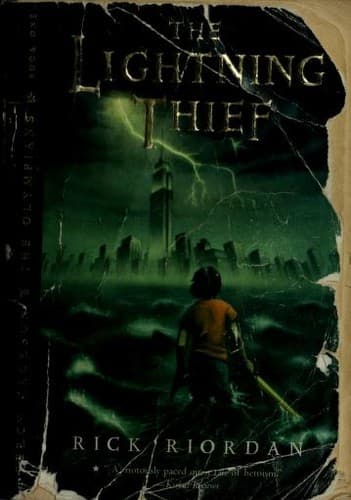
- The Lightning Thief
Rick Riordan
4.3 (2M) average on GoodreadsFantasyFeatures a young protagonist discovering their mythical heritage and embarking on a quest to save a parent, encountering gods/mythical figures along the way.
- Aru Shah and the End of Time
Roshani Chokshi
4.1 (13k) average on GoodreadsFantasyMiddle grade adventure rooted in mythology (Hindu in this case), with a relatable hero who makes mistakes and grows.
- Tristan Strong Punches a Hole in the Sky
Kwame Mbalia
4.3 (4k) average on GoodreadsFantasyCombines a contemporary protagonist with gods and monsters from a specific cultural mythology (African American folktales and West African legends).
- Harry Potter and the Sorcerer's Stone
J.K. Rowling
4.5 (7M) average on GoodreadsFantasyRescued from a miserable life under the stairs, an orphaned boy discovers he's a wizard destined for a magical school, where he uncovers a dangerous secret tied to the dark wizard who murdered his parents.
- The Hunger Games
Suzanne Collins
4.3 (6.4M) average on GoodreadsFantasyIn a future where children fight to the death on live television, Katniss Everdeen volunteers for the arena, turning a death sentence into a fight for survival and a spark of rebellion.
- 1984
George Orwell
4.2 (3.1M) average on GoodreadsPoliticsIn a future where surveillance and thought control are absolute, a man's search for truth clashes with the Party, showing that hope can be a form of rebellion.





Enjoyed the summary?
A summary gives you the shape of the book. The book itself has the detail, the examples and the voice.
Find Race to the Sun on AmazonAs an Amazon Associate, BookBrief earns from qualifying purchases. How we're funded