

Synopsis
Covers the whole plot, including the ending.
- Difficulty
- Medium
- Pacing
- Variable
- Mood
- Intense, Suspenseful, Action-packed, Gritty
- Read it if
- You enjoy detailed military thrillers with a focus on counter-terrorism operations, tactical realism, and complex global conspiracies.
- Skip it if
- You prefer character-driven narratives over plot and technical detail, or find extensive descriptions of military hardware and procedures tedious.
Rainbow Six Plot Summary
Covers the whole plot, including the ending.
Formation of Rainbow Six and Initial Incidents
John Clark, now a senior intelligence officer, is tasked by NATO with creating a new, specialized multinational counter-terrorism unit named Rainbow. Based at Hereford, UK, Rainbow consists of two primary assault teams led by Domingo 'Ding' Chavez and Peter Covington, supported by intelligence and logistics. The unit is immediately tested. Their first major operation involves rescuing hostages from a Swiss bank taken by German Red Army Faction terrorists. This is followed by a raid in Austria to recover the family of a kidnapped German industrialist, and an assault on a Spanish amusement park by Basque separatists. Each mission is successful, showing Rainbow's effectiveness, but the increasing frequency and random nature of these high-profile terrorist attacks make Clark and his intelligence chief, Alistair Stanley, uneasy. They suspect a deeper, more coordinated threat.
Olympic Village Hostage Crisis and Growing Suspicions
Rainbow is deployed to the Sydney Olympic Village where Irish Republican Army (IRA) terrorists have taken athletes hostage. The operation is complex and dangerous, but Rainbow's teams, led by Chavez and Covington, execute a precise assault, neutralizing the terrorists and saving the hostages with minimal casualties. While the world celebrates their successes, Clark and Stanley analyze the intelligence gathered from these incidents. They notice peculiar details: the terrorists, though from different groups, seem unusually well-equipped and trained, and their motives sometimes feel less about political ideology and more about causing maximum chaos. The scale and coordination suggest a hidden hand, but the 'why' remains elusive, prompting Clark to push his intelligence teams for deeper analysis.
The Rise of Project ODIN
Unknown to Rainbow, a radical environmentalist organization, 'The Six,' led by Dr. John Brightling, a brilliant but fanatical scientist and CEO of Horizon Corporation, is behind many of the recent terrorist attacks. Brightling and his inner circle, including Dr. Carol Brightling, Dr. Bill Henriksen, and Dr. Ben Farmer, believe humanity is a plague on the Earth and plan to reduce the global population to save the planet. Their strategy involves creating a highly contagious, weaponized strain of the Ebola virus, code-named 'Shiva,' and releasing it globally. They use the seemingly random terrorist attacks as a smokescreen, testing security protocols and diverting attention, while simultaneously funding and manipulating various extremist groups to sow chaos and weaken societal structures, preparing the world for their 'cleansing' event.
Unmasking the Conspiracy
As Rainbow continues to neutralize terrorist cells, the intelligence collected by Alistair Stanley's team, especially from the Olympic Village incident, begins to paint a disturbing picture. They discover financial links between seemingly unrelated terrorist groups and a mysterious shell corporation. Further investigation leads them to Horizon Corporation and its CEO, John Brightling, a prominent figure in the environmental movement. The pieces slowly fall into place, showing that the recent attacks were not isolated but orchestrated by a single, powerful entity. The motive, however, remains incomprehensible: why would a wealthy corporation fund global terrorism? Clark realizes they are facing an enemy unlike any they have encountered before, one with vast resources and a terrifying agenda.
The Biological Threat Emerges
Rainbow's intelligence operatives, including the CIA's Dr. Mary Bannister, intensify their investigation into Horizon Corporation. They uncover evidence of a clandestine biological weapons program, specifically the development of a highly virulent and engineered strain of Ebola. This revelation shocks Clark and his team, as it elevates the threat from conventional terrorism to a global biological catastrophe. They learn that Brightling's group, driven by an extreme Malthusian ideology, intends to unleash this virus, 'Shiva,' upon the world. The realization that the previous terrorist attacks were merely diversions for this ultimate goal galvanizes Rainbow, shifting their focus from reactive counter-terrorism to proactive prevention of an apocalypse. The race against time begins to locate the virus and its release mechanism.
Locating the Conspirators
Through meticulous intelligence gathering, including analysis of satellite imagery, intercepted communications, and financial trails, Rainbow's analysts narrow down the location of Brightling's primary operational base. They pinpoint a heavily fortified, isolated compound deep within the Amazon rainforest, disguised as an environmental research facility in Brazil. This remote location provides the perfect cover for Project ODIN's biological weapon development and the planned release of the Shiva virus. The discovery confirms the scale of the threat and the fanaticism of the conspirators. Clark and Stanley begin planning a complex, high-risk assault operation, knowing that failure would mean the extinction of most of humanity.
The Amazon Assault: Infiltration and Engagement
Rainbow deploys its two assault teams, led by Ding Chavez and Peter Covington, to the Amazon. The insertion is covert and challenging, navigating the dense jungle terrain. Their mission is to infiltrate the heavily guarded compound, neutralize the 'Six' leadership, and secure or destroy the Shiva virus. The Rainbow operators face heavily armed and well-trained security forces loyal to Brightling. The initial phases of the assault involve stealth and precision, but as they penetrate deeper, intense firefights erupt. Chavez and Covington's teams show their elite training and coordination, systematically breaching defenses and overcoming resistance, pushing towards the central research facility where the virus is housed and Brightling is believed to be.
Confrontation and Capture
As Rainbow's teams close in, they encounter the key members of 'The Six.' Dr. John Brightling, Dr. Carol Brightling, Dr. Bill Henriksen, and Dr. Ben Farmer are cornered within their control center, attempting to initiate the final stages of the Shiva virus release. A tense standoff occurs, but Rainbow's superior tactics and overwhelming force lead to their capture. The operators secure the vials of the Shiva virus, preventing its deployment. The operation is a success, ending the world's most dangerous ecoterrorist plot. The captured conspirators are taken into custody, their plans for global genocide thwarted at the last minute by the bravery and skill of Rainbow.
Aftermath and Justice
In the aftermath of the Amazon raid, the Shiva virus is secured and safely contained, and its existence is kept a top-secret international secret to prevent widespread panic. The captured members of 'The Six' are held and interrogated, facing justice for their plot. The public is largely unaware of the apocalyptic threat that was averted, attributing the cessation of terrorist attacks to Rainbow's previous successes. John Clark reflects on the immense danger they faced and the fragility of humanity. Rainbow continues its operations, remaining a silent guardian against future threats, knowing that while this specific danger was neutralized, the world will always have new shadows for them to fight. The novel concludes with the team's quiet return to duty, forever changed by their encounter with such extreme fanaticism.
Principal Figures
John Clark
Protagonist
Former Navy SEAL and CIA operative, now commander of Rainbow.
John Clark is the pragmatic, experienced, and morally grounded leader of Rainbow. A veteran of countless black operations, he possesses exceptional combat skills, strategic acumen, and an unwavering sense of duty. He is fiercely protective of his team and driven by a deep commitment to justice, often operating outside conventional rules to achieve his objectives. While he understands the need for force, he is also a thinking man, constantly analyzing threats and pushing his intelligence teams for deeper understanding. His personal history of violence and loss has hardened him, but also instilled a profound appreciation for life, making him the perfect foil to the extremist ideology of 'The Six.'
Relationships: Domingo Chavez (mentor and commander to his protégé and son-in-law); Alistair Stanley (trusted intelligence chief and confidant); Peter Covington (co-commander of Rainbow's assault teams); Mary Bannister (intelligence operative providing crucial support)
Domingo 'Ding' Chavez
Supporting
Team Leader for Rainbow Team Two, John Clark's son-in-law.
Ding Chavez is a highly skilled and courageous special forces operator, leading one of Rainbow's primary assault teams. He is intelligent, resourceful, and fiercely loyal to Clark, who is also his father-in-law. Ding is a natural leader, respected by his men for his tactical prowess and calm demeanor under pressure. He is deeply committed to Rainbow's mission and often finds himself on the sharp end of their most dangerous operations. His personal connection to Clark adds a layer of familial loyalty to his professional dedication, making him a central figure in the field operations.
Relationships: John Clark (son-in-law and trusted subordinate); Patsy Clark Chavez (wife (off-screen, but mentioned)); Peter Covington (peer and co-team leader)
Alistair Stanley
Supporting
Rainbow's British intelligence chief and Clark's strategic partner.
Alistair Stanley is the astute and methodical intelligence chief for Rainbow. He is a brilliant analyst, responsible for sifting through vast amounts of data to identify patterns and uncover the true nature of the threats Rainbow faces. Stanley provides the crucial strategic framework and intelligence backbone for Clark's operational decisions. His calm, intellectual approach complements Clark's more direct, action-oriented style. He is instrumental in piecing together the fragmented clues that ultimately expose the Project ODIN conspiracy, proving that the battle against terrorism requires as much brainpower as firepower.
Relationships: John Clark (trusted colleague and strategic partner); Mary Bannister (intelligence operative collaborating on the ODIN investigation)
Peter Covington
Supporting
Team Leader for Rainbow Team One, a former SAS officer.
Peter Covington is the British co-commander of Rainbow's assault teams, leading Team One. A former Special Air Service (SAS) officer, he brings extensive experience and a professional, disciplined approach to Rainbow's operations. Covington is a highly competent and respected leader, often working in tandem with Ding Chavez during complex assaults. His presence highlights the multinational nature of Rainbow and the diverse expertise within the unit. He is a man of few words, but his actions speak volumes about his dedication and skill.
Relationships: John Clark (subordinate team leader); Domingo Chavez (peer and co-team leader)
Dr. John Brightling
Antagonist
Brilliant scientist, CEO of Horizon Corporation, and leader of 'The Six.'
Dr. John Brightling is the primary antagonist, a charismatic and highly intelligent environmentalist who becomes a radical ecoterrorist. As the CEO of Horizon Corporation, he possesses immense wealth and influence, which he leverages to fund and orchestrate Project ODIN. Brightling holds a deeply cynical and Malthusian view of humanity, believing that humans are a cancer on the Earth and that a drastic population reduction is necessary for the planet's survival. He is a master manipulator, using his public persona as an environmental advocate to mask his genocidal intentions. His calm, intellectual demeanor belies a profound and dangerous fanaticism.
Relationships: Dr. Carol Brightling (colleague and fellow conspirator); Dr. Bill Henriksen (chief scientist for Project ODIN); Dr. Ben Farmer (biological weapons expert for Project ODIN)
Dr. Carol Brightling
Supporting
John Brightling's colleague and fellow conspirator in 'The Six.'
Dr. Carol Brightling is a key member of 'The Six,' sharing John Brightling's extreme environmentalist ideology. She is intelligent and committed to Project ODIN, playing a significant role in the logistical and operational aspects of their plan. While not as outwardly charismatic as John Brightling, she is equally dedicated to the cause of humanity's 'cleansing.' Her involvement underscores the intellectual and scientific backing behind the ecoterrorist plot, making the threat even more insidious. She is a true believer in their twisted vision for the planet.
Relationships: Dr. John Brightling (colleague and fellow conspirator)
Dr. Bill Henriksen
Supporting
Chief scientist for Project ODIN, responsible for the Shiva virus.
Dr. Bill Henriksen is the brilliant but morally bankrupt chief scientist behind the creation of the Shiva virus. He is a key member of 'The Six,' responsible for weaponizing the Ebola strain and making it highly contagious and lethal. Henriksen embodies the dangerous potential of scientific knowledge when divorced from ethical considerations. His expertise is crucial to Brightling's plan for global depopulation, and he works tirelessly in the Amazon compound to perfect the bioweapon. He sees his work as a scientific triumph, ignoring the horrific implications.
Relationships: Dr. John Brightling (employer and ideological leader); Dr. Ben Farmer (colleague in biological weapon development)
Dr. Ben Farmer
Supporting
Biological weapons expert for Project ODIN.
Dr. Ben Farmer is another key scientist within Project ODIN, working closely with Dr. Henriksen on the development and deployment of the Shiva virus. He is a specialist in epidemiology and viral delivery systems, ensuring the virus's maximum effectiveness. Farmer, like his colleagues, is driven by the extreme environmentalist ideology, believing in the necessity of a global 'reset.' His technical skills are vital to the practical execution of the ecoterrorist plot, making him a dangerous asset to 'The Six.'
Relationships: Dr. John Brightling (employer and ideological leader); Dr. Bill Henriksen (colleague in biological weapon development)
Mary Bannister
Supporting
CIA operative assisting Rainbow's intelligence efforts.
Mary Bannister is a sharp and dedicated CIA intelligence officer who provides crucial support to Rainbow. She works closely with Alistair Stanley, helping to piece together the complex financial and logistical trails that lead to Horizon Corporation and Project ODIN. Her expertise in intelligence analysis and her ability to navigate the bureaucratic landscape of international agencies are invaluable. Bannister represents the wider intelligence community's efforts to assist Rainbow in understanding and countering the unprecedented global threat.
Relationships: Alistair Stanley (colleague in intelligence analysis); John Clark (collaborator on the ODIN investigation)
Themes & Insights
The Nature of Terrorism and Extremism
The novel explores different forms of terrorism, from traditional political and separatist groups (Red Army Faction, IRA, Basque separatists) to the ultimate, unprecedented threat of ecoterrorism. It looks at the motivations behind such acts, how ideology, whether political or environmental, can be twisted into a justification for mass violence. 'The Six' group shows extreme ideological fanaticism, where a perceived 'greater good' (saving the planet) justifies genocide, pushing the boundaries of what is traditionally understood as terrorism. The book contrasts these with Rainbow's pragmatic, focused counter-terrorism efforts.
“These weren't just terrorists, Stanley realized. These were something new, something worse. They wanted to kill the world, not just change it.”
Ethical Implications of Science and Technology
A central theme is the dangerous potential of advanced scientific knowledge and technology when used by individuals with malicious intent. Dr. Brightling and his team, brilliant scientists, pervert their expertise in genetics and epidemiology to create a devastating biological weapon, the Shiva virus. The novel forces the reader to confront how scientific progress, intended for human betterment, can be weaponized for mass destruction. It shows the moral responsibility that comes with scientific power and the catastrophic consequences when that responsibility is abandoned for an extremist agenda.
“He was a scientist, not a philosopher. But the implications of his work were philosophical in the extreme, and his philosophy was simple: humanity was a plague.”
Global Interconnectedness and Vulnerability
The plot shows how interconnected the modern world is, both in terms of global threats and the multinational response needed to combat them. Terrorist attacks in Switzerland, Spain, and Australia are linked by a single, global conspiracy. Conversely, the formation of Rainbow, an international task force comprising elite operators from various nations, shows the necessity of global cooperation to address transnational threats. The Shiva virus itself represents the ultimate global threat, capable of spreading rapidly across borders and impacting all of humanity, showing the shared vulnerability of the world's population.
“Terrorism, like disease, knew no borders. And like disease, it had to be fought globally.”
Leadership and Moral Authority
John Clark's leadership is a key element, showing the qualities needed to command an elite unit against unprecedented threats. He operates with a strong moral compass, making difficult decisions under extreme pressure while maintaining the trust and loyalty of his diverse team. His authority is earned through experience, tactical brilliance, and a deep sense of justice, contrasting sharply with John Brightling's manipulative and self-serving leadership. The novel explores the burden of command and the personal sacrifices demanded by such a role, showing Clark's unwavering dedication to protecting innocent lives.
“A leader had to be willing to do the unpleasant things, to make the hard calls. That was the price of command.”
Environmentalism vs. Ecoterrorism
The novel draws a stark line between legitimate environmental concerns and extremist ecoterrorism. While acknowledging the importance of environmental protection, it exposes the dangerous radicalization that can occur when environmentalism becomes a genocidal ideology. John Brightling and 'The Six' represent this perversion, using environmental rhetoric to justify the mass murder of humanity. The book implicitly argues that true environmentalism seeks to protect life, not destroy it, and that any ideology that advocates for mass death, regardless of its initial premise, is inherently evil.
“They called themselves environmentalists. Clark called them murderers. There was a difference, a vast and bloody difference.”
Plot Devices & Literary Techniques
Misdirection and Red Herring
Initial terrorist attacks serve as a cover for the true global threat.
The novel cleverly uses a series of seemingly disparate terrorist attacks by various known extremist groups (Red Army Faction, IRA, Basque separatists) as a major plot device. These incidents, while real and dangerous, serve as red herrings, distracting Rainbow and the reader from the true, overarching conspiracy. John Clark and Alistair Stanley's growing unease about the lack of clear motivation and the unusual coordination among these groups eventually leads them to look beyond the surface, ultimately uncovering Project ODIN. This device effectively builds suspense and highlights the cunning of the antagonists.
The 'Ticking Clock' Scenario
The impending release of the Shiva virus creates intense urgency.
The development and imminent deployment of the Shiva virus by 'The Six' creates a powerful ticking clock scenario. Once Rainbow discovers the nature of the biological threat, the race against time becomes paramount. The narrative frequently emphasizes the dwindling window of opportunity to locate the virus and its perpetrators before a global pandemic is unleashed. This device heightens the tension, accelerates the plot, and underscores the high stakes of Rainbow's mission, driving the characters to their limits to prevent a worldwide catastrophe.
Technological Realism
Detailed descriptions of advanced weaponry, intelligence gathering, and bioweaponry.
Tom Clancy is renowned for his meticulous attention to detail regarding military hardware, intelligence operations, and scientific concepts. In 'Rainbow Six,' this manifests through realistic portrayals of Rainbow's specialized weapons, tactics, communication systems, and intelligence gathering methods. Crucially, the detailed description of the Shiva virus, its engineering, and its potential effects lends a chilling plausibility to the biological threat. This technological realism grounds the fantastical premise of global ecoterrorism in believable operational and scientific frameworks, making the threat feel more immediate and terrifying.
Juxtaposition of Ideologies
Contrasting the pragmatic heroism of Rainbow with the fanatical extremism of 'The Six.'
The novel constantly juxtaposes the clear-cut, duty-driven pragmatism of John Clark and Rainbow with the twisted, fanatical ideology of John Brightling and 'The Six.' Rainbow fights to protect innocent lives and uphold order, using force only when necessary. 'The Six,' however, believes humanity itself is the enemy and seeks to cleanse the planet through mass murder. This contrast highlights the moral battle at the heart of the story, emphasizing the stark difference between those who protect and those who destroy, and underscoring the inherent evil of Brightling's genocidal vision.
Rainbow Six Quotes
“There are no 'friends' in the intelligence business, just people whose interests coincide with yours for a while.”
“The price of freedom is eternal vigilance.”
“They were the good guys, and they were supposed to win. That was how it worked in the movies.”
“Killing people for a living was a strange thing, but somebody had to do it.”
“Terrorists were like snakes. You had to cut off their heads, or they'd just keep biting.”
“The problem with being a good guy was that sometimes you had to do bad things.”
“The world was a dangerous place, and getting more so every day.”
“Professionals were simply people who did what had to be done, regardless of how unpleasant it was.”
“You can't negotiate with people who want to kill you.”
“The worst kind of evil was the kind that thought it was doing good.”
“Sometimes the only way to save lives was to take them.”
“Fear was a tool, like any other, and it could be used against you or for you.”
“The mission was everything. Personal feelings had to be put aside.”
“The most dangerous thing in the world was a man with nothing left to lose.”
“It wasn't about hate, it was about doing the job.”
Quiz
10 questions on the plot and the characters. Each answer comes with a short explanation.
Question 1
Who is appointed as the head of the international task force dedicated to combating terrorism at the beginning of 'Rainbow Six'?
- Domingo Chavez
- Peter Covington
- John Clark
- Alistair Stanley
Show answer
C. John Clark John Clark, an ex-Navy SEAL and a recurring character in Clancy's novels, is newly named the head of the international task force known as Rainbow at the outset of the book.
Question 2
What is the name of the international anti-terrorism task force led by John Clark?
- Black Arrow
- Rainbow Six
- Phoenix Team
- Ghost Recon
Show answer
B. Rainbow Six The book itself is titled 'Rainbow Six' because John Clark is designated 'Rainbow Six', the commander of the elite counter-terrorism unit named Rainbow.
Question 3
Which of these initial incidents is NOT mentioned as an early challenge for the Rainbow team?
- An incident at a Swiss bank
- A kidnapping in Germany
- A raid on an amusement park in Spain
- A hostage situation on a plane in London
Show answer
D. A hostage situation on a plane in London The synopsis specifically mentions an incident at a Swiss bank, the kidnapping of an international trader in Germany, and a terrible raid on an amusement park in Spain as early challenges. A plane hostage situation is not listed among these initial events.
Question 4
Who serves as John Clark's executive officer in the Rainbow task force?
- Domingo Chavez
- Peter Covington
- Alistair Stanley
- Jack Ryan
Show answer
C. Alistair Stanley The synopsis states that John Clark receives help from his close associates, including executive officer Alistair Stanley.
Question 5
What is the primary concern that disturbs John Clark about the seemingly separate terrorist incidents?
- The lack of casualties in some attacks
- The random nature of the targets
- The timing of the incidents
- The unusual weaponry used by the terrorists
Show answer
C. The timing of the incidents Clark is disturbed by the 'timing' of the incidents, suspecting a connection despite their apparent separation, rather than the nature of the targets or weapons.
Question 6
What kind of past experiences does the synopsis mention John Clark has had, making him suitable for his new role?
- Hunting warlords in Japan, druglords in Colombia, and nuclear terrorists in the United States
- Negotiating peace treaties, training foreign armies, and advising presidents
- Leading conventional military invasions, developing new weapons, and commanding naval fleets
- Analyzing financial markets, designing secure networks, and managing intelligence agencies
Show answer
A. Hunting warlords in Japan, druglords in Colombia, and nuclear terrorists in the United States The text explicitly states Clark's past involves 'hunting warlords in Japan, druglords in Colombia, or nuclear terrorists in the United States,' showcasing his operational mission experience.
Question 7
What unique characteristic defines the terrorist group Rainbow Six ultimately faces?
- They are funded by a rogue nation-state
- They consist solely of former military special forces operatives
- They are so extreme that their success could mean the end of life on Earth as we know it
- They utilize advanced cyber warfare tactics exclusively
Show answer
C. They are so extreme that their success could mean the end of life on Earth as we know it The synopsis describes the ultimate threat as 'a band of men and women so extreme that their success could literally mean the end of life on this earth as we know it,' highlighting their unprecedented, existential threat.
Question 8
The synopsis describes John Clark as having 'ghosts in his past, demons that must be exorcised.' How does this detail contribute to his characterization in 'Rainbow Six'?
- It suggests he is prone to making reckless decisions under pressure.
- It implies he has a personal vendetta against specific terrorists, driving his motivation.
- It hints at a deeper psychological complexity and vulnerability beneath his 'efficient and deadly' exterior, making the stakes more personal.
- It indicates he is nearing retirement and struggling with his past career choices.
Show answer
C. It hints at a deeper psychological complexity and vulnerability beneath his 'efficient and deadly' exterior, making the stakes more personal. This detail adds depth to Clark's character, suggesting that despite his operational prowess, he carries personal burdens, making him more complex than a simple action hero and potentially influencing his approach to the 'demonic' peril.
Question 9
What is the broader implication if the extreme terrorist group succeeds in their objective, according to the book's description?
- A major global economic collapse
- The establishment of a new world government
- The end of life on Earth as we know it
- A conventional global war between superpowers
Show answer
C. The end of life on Earth as we know it The synopsis explicitly states that the terrorist group's success 'could literally mean the end of life on this earth as we know it,' emphasizing the apocalyptic scale of the threat.
Question 10
The description notes that 'Rainbow Six, however, goes beyond anything he has done before.' What aspect of the book is this statement primarily highlighting?
- The focus on international diplomacy over direct action.
- The unprecedented nature and existential threat posed by the antagonist.
- The shift to a historical fiction setting.
- The introduction of supernatural elements into the plot.
Show answer
B. The unprecedented nature and existential threat posed by the antagonist. This statement refers to the extreme and global scale of the threat presented by the new type of terrorists, whose success could mean the 'end of life on this earth as we know it,' escalating the stakes beyond previous Clancy novels.
Rainbow Six FAQ
What is Rainbow Six about?
Rainbow Six follows John Clark, newly appointed head of an elite international counter-terrorism unit called Rainbow. The team initially responds to seemingly disparate terrorist incidents across Europe, but soon uncovers a global eco-terrorist conspiracy by a group named 'The Covenant' aiming to unleash a deadly bioweapon to 'cleanse' the Earth of humanity.
Why should I read Rainbow Six?
You should read Rainbow Six for its intricate plot, detailed tactical operations, and the high stakes involved in preventing a global catastrophe. It offers deep dives into counter-terrorism strategies and the psychological toll on its operators, led by the experienced and morally complex John Clark, making it a gripping and thought-provoking thriller.
What is the background/setting of Rainbow Six?
The story is set in the late 1990s, against a backdrop of increasing international terrorism. The primary settings shift between the newly established Rainbow headquarters in Hereford, England, and various European locations like Austria, Spain, and Germany, where the initial terrorist attacks occur, culminating in a remote compound in the United States.
What are the most memorable quotes?
While Tom Clancy novels are more known for their detailed action than pithy quotes, John Clark's pragmatism often shines through. A memorable sentiment is his constant internal struggle with the necessity of violence for peace, often reflected in his grim determination to do 'what needs to be done,' even if it's unpleasant.
What writing style does the author use?
Tom Clancy employs a highly detailed and realistic writing style, characterized by extensive technical descriptions of weaponry, tactics, and intelligence operations. The narrative is often told from multiple perspectives, providing insight into both the heroes and the villains, building tension through meticulous procedural detail.
What minor details add significant meaning?
The detailed descriptions of 'The Covenant's' research into the 'Shiva' virus underscore the depth of their fanaticism and the scientific plausibility of their threat. Also, the meticulous planning of each Rainbow operation, down to individual bullet counts and breach methods, highlights the professional competence required to face such danger.
What are some subtle foreshadowing moments?
The initial seemingly random terrorist attacks, while appearing unconnected, subtly hint at a larger, coordinated effort. The increasing brutality and calculated nature of these incidents, such as the amusement park raid, foreshadow the extreme ideology and global scale of 'The Covenant's' ultimate plan.
What unexpected character connections exist?
Beyond the formation of Rainbow, an unexpected connection is the ideological link between the seemingly disparate 'eco-warriors' and their wealthy benefactors. The revelation that the scientific mastermind, Dr. John Brightling, is the true leader and orchestrator of 'The Covenant' connects the environmental extremist ideology with high-level scientific and financial resources.
What are unspoken character motivations?
For John Clark, an unspoken motivation is his deep-seated desire for a stable world for his family, particularly his daughter, driving his relentless pursuit of terrorists. For Domingo Chavez, his eagerness to prove himself as a leader within Rainbow stems from a blend of professional ambition and a desire to live up to the high standards set by Clark.
What psychological complexities do characters exhibit?
John Clark grapples with the moral ambiguity of his work, constantly making life-or-death decisions that blur the lines between soldier and executioner. Dr. John Brightling, the antagonist, exhibits a chilling psychological complexity, genuinely believing his genocidal plan is a benevolent act to save the planet from humanity itself.
What are the major emotional turning points?
A major emotional turning point is the discovery of 'The Covenant's' true objective: the release of the Shiva virus to wipe out most of humanity. This revelation transforms the mission from counter-terrorism into a desperate race against time to prevent global genocide, intensifying the emotional stakes for Clark and his team.
How do relationship dynamics evolve?
The relationship dynamics within Rainbow evolve from a collection of skilled operators into a cohesive, trusting unit. John Clark's leadership style, combining sternness with paternal concern, fosters deep loyalty from officers like Domingo Chavez and Peter Covington, transforming them into a highly effective and interdependent team.
Which parts remain ambiguous or open-ended?
While the immediate threat of the Shiva virus is neutralized, the underlying philosophical debate about humanity's impact on the environment and the potential for similar extremist ideologies to emerge remains open-ended. The book doesn't definitively solve the root causes of such fanaticism, suggesting it's an ongoing struggle.
What are controversial scenes or decisions?
A controversial decision is Rainbow's final assault on 'The Covenant's' compound, where the line between capture and lethal elimination of the terrorists, especially those involved in the virus plot, is very thin. The narrative implies that in such extreme circumstances, the preservation of humanity justifies extreme measures against those who threaten it.
Rainbow Six ending explained: how it ends & what it means
The book ends with Rainbow successfully infiltrating 'The Covenant's' remote compound in the United States, neutralizing the terrorists and preventing the global release of the Shiva virus. The core members of 'The Covenant,' including Dr. Brightling, are killed or captured. The ending signifies a victory for humanity against an existential threat, but also a sober reminder of the extreme ideologies that can emerge, reinforcing the ongoing need for units like Rainbow to protect civilization.
About the author

Tom Clancy was an American author known for his military and espionage-themed novels. His notable works include The Hunt for Red October, Patriot Games, Clear and Present Danger, Red Storm Rising, Rainbow Six, and Executive Orders, which often feature intricate plots and detailed technical descriptions. Clancy's writing has significantly influenced the genre of techno-thrillers.
Similar books
- Clear and Present Danger
Tom Clancy
4.1 (131k) average on GoodreadsThrillerFeatures John Clark and Domingo Chavez in large-scale military operations against a global threat.
- Debt of Honor
Tom Clancy
4.0 (45k) average on GoodreadsThrillerAnother high-stakes Tom Clancy thriller with geopolitical intrigue and military action.
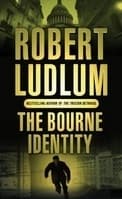
- The Bourne Identity
Robert Ludlum
4.0 (397k) average on GoodreadsThrillerUnlike "Rainbow Six," which focuses on collective military operations and technical detail, "The Bourne Identity" delves deeply into psychological mystery, individual identity, and memory loss within an espionage framework. Ludlum prioritizes internal character conflict and personal survival, whereas Clancy emphasizes external operational challenges and team effectiveness.
- The Day of the Jackal
Frederick Forsyth
4.3 (118k) average on GoodreadsThrillerWhile both are meticulously researched thrillers, Forsyth's "The Day of the Jackal" centers on a single assassin's detailed planning and the methodical, detached pursuit by authorities, building tension through a cat-and-mouse game. Clancy's "Rainbow Six" focuses more on the proactive operational capabilities of an elite counter-terrorist unit, often immersing the reader directly into the protagonists' tactical mindset rather than maintaining Forsyth's more journalistic distance.
- Angels & Demons
Dan Brown
3.9 (2.7M) average on GoodreadsThrillerA Harvard symbologist races through Rome's ancient sites, deciphering cryptic clues to unmask the Illuminati and stop a vengeful plot to destroy the Vatican with a stolen antimatter weapon.
- Gone Girl
Gillian Flynn
4.1 (2.3M) average on GoodreadsThrillerA wife's sudden disappearance on her fifth anniversary reveals a web of lies and psychological warfare, exposing the secrets within a seemingly perfect marriage.





Enjoyed the summary?
A summary gives you the shape of the book. The book itself has the detail, the examples and the voice.
Find Rainbow Six on AmazonAs an Amazon Associate, BookBrief earns from qualifying purchases. How we're funded