
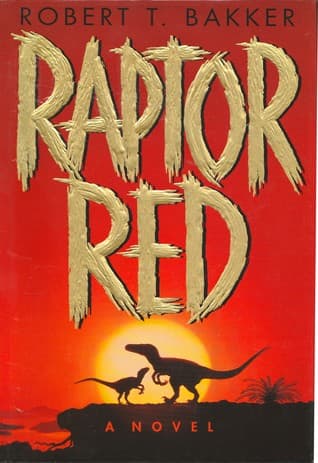
Synopsis
Covers the whole plot, including the ending.
- Difficulty
- Medium
- Pacing
- Moderate
- Mood
- Immersive, Primal, Educational, Survivalist
- Read it if
- You are fascinated by dinosaurs and want a unique, immersive perspective on prehistoric life from a dinosaur's point of view, grounded in paleontological theory.
- Skip it if
- You prefer human-centric narratives or are put off by animal protagonists and the lack of human dialogue/interaction.
Raptor Red Plot Summary
Covers the whole plot, including the ending.
The Loss of the Mate
The story begins with Raptor Red, a female Utahraptor, and her mate hunting Iguanodon in prehistoric Utah's conifer forests. A large Acrocanthosaurus, a much bigger theropod, suddenly appears. The Acrocanthosaurus ambushes and kills Red's mate, leaving her shocked. Red's sister, also in their pack, sees this happen. This event changes Red, forcing her to face survival and the grief of losing her partner, a bond important for a social predator. The sisters must now rely only on each other for protection and hunting in a dangerous world.
A New Pack of Two
After her mate's death, Raptor Red and her younger sister must learn to hunt and survive as a pair. They create new strategies, focusing on smaller prey and using their coordinated movements and communication. They face various problems, including territorial fights with other predators and scavenging alongside larger carnivores. Red, wanting to protect her sister and ensure their survival, takes on a more leading role. This time is marked by constant alertness and a stronger sisterly bond, as they navigate their dangerous environment, always seeking food and safety.
Encounter with the Old Male
While hunting, Raptor Red and her sister find an old, solitary male Utahraptor, scarred from many fights. The sisters watch him carefully, seeing him as a possible threat or ally. The male, despite his age, shows skill and experience, especially in hunting. Red, wanting to form a pack, carefully approaches him. No new pack forms immediately, but his presence changes their understanding of their species' social rules. He shows them a different way to survive, which Red might consider for herself and her sister. His quiet wisdom subtly influences Red's planning.
The Arrival of the New Predator
A new, terrifying predator, a large Giganotosaurus, enters the Utahraptors' territory. This new arrival is bigger, more aggressive, and more dangerous than any threat Raptor Red and her sister have met, even more so than the Acrocanthosaurus. The Giganotosaurus quickly takes control, changing the predator-prey balance and making hunting much riskier for the raptors. Its presence makes Red constantly rethink their survival plans, as their usual hunting grounds become too dangerous. The sisters see the power of this new beast, understanding that staying in their territory means almost certain death. This event starts their desperate migration.
The Great Migration Begins
Because of the Giganotosaurus, Raptor Red decides to leave their territory and begin a dangerous migration west. Her sister follows, trusting Red's leadership. Their journey is full of danger, as they cross unknown lands, including vast plains and old forests. They meet new dinosaur species, some peaceful, others aggressive, and must constantly adapt their hunting and defense. The migration tests their endurance, pushing the sisters to their limits. Red's intelligence and instincts are most important in navigating the unknown and keeping them both alive.
Challenges on the Journey
During their hard migration, Raptor Red and her sister face many problems. Food becomes scarce in some areas, leading to hunger and desperate hunting. They encounter aggressive packs of other dromaeosaurs, leading to tense standoffs and fights. Environmental dangers also plague their journey, including dangerous river crossings and navigating through volcanic ash. Red's leadership is tested as she makes important decisions about when to fight, when to run, and where to find food and shelter. Her sister, though younger, is a loyal and capable companion, strengthening their bond through shared hardship. Each challenge overcome makes them more determined to reach their goal.
Encounter with the Troodon Pack
While migrating, Raptor Red and her sister enter the territory of a smart and opportunistic pack of Troodon. These smaller, night-hunting dromaeosaurs are known for their cleverness and pack hunting, posing a different kind of threat than larger predators. The Troodon try to ambush and outsmart the Utahraptors, using their numbers and stealth. Red, seeing their intelligence and coordinated attacks, must use her own strategic thinking to defend herself and her sister. This encounter shows the diverse predatory challenges of their world and forces Red to adapt her defense against a smaller, but equally dangerous, foe. They escape, but it is a close call.
Reaching the Pacific Coast
After months of difficult travel, Raptor Red and her sister finally reach their destination: the vast Pacific Ocean. The sight of the endless water and the different coastal environment is a new experience for them. The landscape is very different from the forests and plains they left, bringing new challenges and chances. They must learn to hunt marine prey and adapt to the coastal ecosystem. This new environment offers an escape from the Giganotosaurus, but also brings new, unknown dangers. The ocean is both a safe place and a new frontier, marking the end of their journey and the start of a new part of their lives.
A New Life by the Sea
Settling by the Pacific coast, Raptor Red and her sister begin to adapt to their new environment. They learn to hunt along the shore, preying on marine reptiles, fish, and coastal birds, a big change from their previous land hunting. They also meet new dinosaur species unique to the coast. Red's intelligence helps her develop new hunting strategies for the ocean's rich resources. Coastal life is different, with fewer large land predators, offering a sense of peace and plenty. This period focuses on their cleverness and resilience in building a new life away from their old home's dangers.
The Old Male Returns
As Raptor Red and her sister thrive in their new coastal home, the old, solitary male Utahraptor they met earlier reappears. He has followed their path, drawn by instinct or their faint scent. His arrival changes things, as he begins to court Red, wanting to form a new pack and mate. Red, having recovered from her mate's loss and now secure in her territory, is careful at first but eventually considers him. This suggests a new beginning for Red, fulfilling her biological need to continue her species and perhaps rebuild a larger social group.
Establishing a New Pack
After a time of courtship and careful interaction, Raptor Red accepts the old male Utahraptor as her new mate. With her sister, they begin to form a new pack along the Pacific coast. This marks an emotional and social recovery for Red, as she again experiences the group bonds of a larger unit. The old male brings his experience and strength to the pack, adding to Red's intelligence and leadership. The focus shifts to this new family's dynamics, their hunting together, and defending their territory, promising a future of continuity and survival for their species in this new, rich environment.
Principal Figures
Raptor Red
Protagonist
A female Utahraptor, intelligent and resilient.
Raptor Red is the central figure of the narrative, a highly intelligent and adaptable female Utahraptor. She is characterized by her keen hunting instincts, strategic thinking, and deep emotional capacity, particularly her grief over her lost mate and her fierce protectiveness of her sister. Red is a natural leader, constantly analyzing her environment and making critical decisions for survival. Her mind is depicted as complex, capable of learning, remembering, and experiencing a wide range of emotions, from sorrow to triumph. She embodies the pinnacle of dromaeosaur intelligence and predatory prowess.
Relationships: Red's Mate (Deceased partner, deeply loved and missed.); Red's Sister (Loyal companion and pack member, protected by Red.); Old Male Utahraptor (Potential new mate and pack leader.)
Red's Sister
Supporting
Raptor Red's younger, loyal sibling and pack member.
Red's sister is a younger, but capable, female Utahraptor who forms an inseparable bond with Red after the death of Red's mate. She is loyal and follows Red's lead, contributing to their hunting efforts and providing companionship. While not as dominant or strategic as Red, she learns quickly and proves to be a reliable partner. Her presence is crucial for Red's emotional well-being and their shared survival, as social bonds are vital for Utahraptors. She represents the continuity of their lineage and the strength found in kinship.
Relationships: Raptor Red (Older sister and pack leader, her protector and guide.)
Red's Mate
Mentioned
Raptor Red's initial partner, tragically killed early in the story.
Red's mate is a male Utahraptor, an integral part of her original pack. He is depicted as a strong and capable hunter, sharing a deep bond with Red. His sudden and brutal death at the jaws of an Acrocanthosaurus serves as the inciting incident for the entire narrative, profoundly impacting Red and setting her on her journey of survival and migration. Though his physical presence is brief, his memory and the void he leaves behind drive much of Red's actions and emotional landscape throughout the story.
Relationships: Raptor Red (Beloved mate, deeply grieved.); Red's Sister (Pack member and brother-in-law.)
Old Male Utahraptor
Supporting
A solitary, experienced male Utahraptor who later joins Red's pack.
The old male Utahraptor is a seasoned survivor, scarred from countless battles and years of experience. He is initially encountered as a solitary figure, embodying a different, more isolated way of life for his species. Despite his age, he demonstrates cunning and strength, eventually seeking out Red to form a new pack. His wisdom and battle-hardened demeanor make him a suitable partner for Red, bringing a different kind of strength to their new family unit. He represents the potential for new beginnings and the enduring drive for procreation and social bonding.
Relationships: Raptor Red (Potential new mate and pack leader.); Red's Sister (Future pack member.)
Acrocanthosaurus
Antagonist
A large, formidable theropod responsible for killing Red's mate.
The Acrocanthosaurus is a massive, powerful predatory dinosaur, a significant threat in Red's initial territory. Its raw strength and aggressive nature are vividly portrayed in the brutal scene where it ambushes and kills Red's mate. It represents the immediate, overwhelming dangers of the prehistoric world, a force of nature that dictates life and death. While not a recurring character, its singular act of violence is a pivotal moment, forcing Red into her journey and shaping her understanding of survival.
Relationships: Raptor Red (Mortal enemy, killer of her mate.); Red's Mate (Its victim.)
Giganotosaurus
Antagonist
A colossal, highly aggressive new predator that drives Red from her territory.
The Giganotosaurus is introduced as an even greater threat than the Acrocanthosaurus, a truly colossal and immensely powerful predator. Its arrival in Red's territory disrupts the entire ecosystem and poses an existential threat to the Utahraptors. It is depicted as relentlessly aggressive and dominant, forcing Red to make the desperate decision to migrate. The Giganotosaurus embodies the ultimate, insurmountable danger that pushes Red to adapt and seek a new life, representing the unpredictable and often overwhelming forces of nature in the prehistoric world.
Relationships: Raptor Red (The ultimate threat, forcing her to flee.)
Troodon Pack
Supporting
A group of smaller, intelligent, and cunning dromaeosaurs.
The Troodon pack represents a different kind of predatory challenge. While smaller than Utahraptors, they are characterized by their superior intelligence, cunning, and coordinated pack hunting strategies. They are opportunistic and attempt to outmaneuver Red and her sister during their migration. Their encounter highlights the diverse forms of intelligence and predation in the prehistoric world, forcing Red to adapt her defensive tactics against a foe that relies more on brains than brawn. They are a temporary but memorable obstacle.
Relationships: Raptor Red (Opponent in a territorial and hunting dispute.)
Iguanodon
Mentioned
A common herbivorous dinosaur, primary prey for Utahraptors.
Iguanodon are large, herbivorous dinosaurs that form a significant part of the Utahraptor diet. They are depicted in herds, providing a challenging but rewarding hunt for predators. Their presence signifies the abundance of prey in Red's original territory and their behavior (herding, defense) influences the hunting strategies of the raptors. They represent the fundamental food source that sustains the ecosystem and drives predator-prey interactions.
Relationships: Raptor Red (Primary prey.)
Themes & Insights
Survival and Adaptation
The main theme is the constant struggle for survival in a harsh, unforgiving prehistoric world. Raptor Red always faces threats from larger predators, hunger, environmental dangers, and rivals. Her intelligence and ability to adapt help her overcome these challenges, whether it's creating new hunting strategies after losing her mate, migrating to escape a stronger predator, or learning to hunt in a new coastal environment. The story shows the constant need for cleverness and resilience to survive.
“The world was a place of endless hunger, and only the cleverest, the swiftest, the most savage, could survive.”
Grief and Loss
The story starts with Raptor Red's mate's death, an event that deeply affects her. Her grief is shown as a real emotion, guiding her actions and her initial need to protect her sister and secure their future. This theme explores how even intelligent dinosaurs feel emotional pain and how they deal with such losses. Red's journey is partly about healing and moving forward while remembering her lost companion, eventually leading to the chance for new bonds.
“The emptiness where his presence had been was a cold ache in her chest.”
Social Bonds and Kinship
The importance of social structures and family bonds is central to the Utahraptors' survival. Raptor Red's relationship with her sister is a key part of the story, showing their need for each other for hunting, defense, and emotional support. The loss of her mate highlights how vulnerable a lone raptor is, reinforcing the need for pack formation. The eventual rebuilding of a pack with the old male shows the final success of this theme, proving that cooperation and kinship are vital for both individuals and their species against big challenges.
“Alone, a raptor was vulnerable. Together, they were a force.”
Intelligence and Instinct
The novel looks at the complex mix of natural predatory instincts and learned intelligence in dinosaurs. Raptor Red is shown as very intelligent, able to plan, solve problems, and change her behavior based on experience. Her intelligence helps her outsmart prey and predators, navigate unknown areas, and make careful decisions. However, her actions are also guided by strong instincts, like the drive to hunt, protect her family, and reproduce. This theme explores the complexity of dinosaur thought, blurring the lines between raw instinct and conscious thinking.
“Her mind, a complex tapestry of instinct and learned wisdom, whirred, calculating every variable.”
The Circle of Life and Death
The prehistoric world is shown as a brutal but balanced ecosystem where life and death are always interacting. Predator-prey relationships are central, with raptors hunting Iguanodon, and larger carnivores hunting raptors. The story does not avoid the violence and harshness of this cycle, presenting it as a natural and necessary part of existence. Every creature has a role, and death fuels new life. This theme shows the raw, unfiltered reality of nature, where every moment is a part of the ongoing, connected struggle for existence.
“The forest was a vast, breathing stomach, consuming and creating, endlessly.”
Plot Devices & Literary Techniques
Anthropomorphism (Limited)
Attributing human-like thoughts and emotions to dinosaurs.
The novel utilizes limited anthropomorphism to allow readers to connect with Raptor Red's internal world. While Bakker is a paleontologist and grounds the behavior in scientific theory, Red's experiences of grief, strategizing, and her bond with her sister are presented in a way that evokes human empathy. This device makes the dinosaurs relatable and their struggles compelling, translating complex scientific understanding of animal behavior into an accessible narrative without fully humanizing them. It provides insight into what a highly intelligent, social predator's 'mind' might entail, based on current paleontological understanding.
The Journey/Quest
Raptor Red's migration as a physical and emotional quest.
The central plot is structured around Raptor Red's arduous migration westward to the Pacific Ocean. This journey serves as a classic quest narrative, driven by the need to escape a deadly threat (the Giganotosaurus) and find a new home. It is not just a physical movement across the landscape but also an emotional and developmental journey for Red, as she faces numerous challenges, learns new skills, and ultimately finds a path to recovery and renewal. The journey allows for encounters with diverse environments and species, expanding the scope of the prehistoric world depicted.
Foreshadowing (of the Giganotosaurus)
Subtle hints of a greater threat before its full reveal.
While the Acrocanthosaurus is an immediate and devastating threat, the narrative subtly foreshadows the arrival of an even larger, more dangerous predator – the Giganotosaurus. This is done through observations of unusual behavior in other animals, changes in the ecosystem, or unexplained disturbances that hint at a truly colossal presence. This builds suspense and dread, making the eventual appearance of the Giganotosaurus even more impactful and solidifying its role as the ultimate catalyst for Red's migration, justifying the extreme measures she takes.
Sensory Detail and Perspective
Experiencing the world through a dinosaur's senses.
The novel consistently places the reader within Raptor Red's sensory experience. Descriptions often focus on scents, sounds, and visual cues as perceived by a Utahraptor, such as the detailed tracking of prey by smell, the interpretation of distant roars, or the distinctive visual patterns of different species. This device immerses the reader in the prehistoric environment from a unique, non-human perspective, enhancing the realism and allowing for a deeper understanding of how these creatures navigated and understood their world. It highlights their acute senses and their reliance on them for survival.
Raptor Red Quotes
“The wind was a living thing, a giant's breath across the plains, carrying the scent of rain and the promise of change.”
“Every creature, from the smallest beetle to the greatest Tyrannosaur, lived under the shadow of the unknown.”
“A good hunt was not just about the kill; it was about the dance, the pursuit, the testing of limits.”
“The pack was more than just individuals; it was a single mind, a collective will, bound by blood and instinct.”
“Fear was a tool, a sharpened claw, to be used against the weak and to hone the strong.”
“The world was a vast, sprawling tapestry of life and death, woven with threads of struggle and triumph.”
“To hesitate was to die. To charge was to live, or to die gloriously.”
“The scent of blood was a language, understood by all, speaking of victory and loss.”
“Even the mightiest predator could be brought low by a careless step, a moment of inattention.”
“The sky was a canvas, painted with the endless migrations of clouds, mirroring the endless migrations of life below.”
“Memory was a treasure, a collection of hunts, of triumphs, of shared warmth in the den.”
“The roar of a Tyrannosaur was not just sound; it was a physical blow, a wave of terror that vibrated through the very bones.”
“There was no cruelty in nature, only necessity. The land demanded its due, and life paid the price.”
“The warmth of a sister's flank in the night was a comfort stronger than any fear.”
“To understand the prey was to become the prey, to anticipate its every move, its every desperate hope.”
Quiz
10 questions on the plot and the characters. Each answer comes with a short explanation.
Question 1
What is the primary setting for the beginning of Raptor Red's story?
- The deserts of present-day Mongolia
- The plains of prehistoric Utah
- The forests of ancient South America
- The swamps of primeval Europe
Show answer
B. The plains of prehistoric Utah The book explicitly states the setting is 'the plains of prehistoric Utah' 120 million years ago.
Question 2
What tragic event occurs early in the story that significantly impacts Raptor Red?
- Her nest is destroyed by a volcanic eruption.
- Her mate is killed by a larger predator.
- She loses her sense of smell after a territorial fight.
- Her pack abandons her during a harsh winter.
Show answer
B. Her mate is killed by a larger predator. The synopsis mentions 'a tragic loss' which, within the narrative, refers to the death of her mate, leaving her to raise their hatchlings alone.
Question 3
What type of dinosaur is Raptor Red?
- Tyrannosaurus
- Triceratops
- Raptor (specifically Utahraptor ostrommaysorum)
- Stegosaurus
Show answer
C. Raptor (specifically Utahraptor ostrommaysorum) Her name, Raptor Red, directly indicates she is a raptor dinosaur. The specific species, Utahraptor, is implied through the Utah setting and Bakker's known work.
Question 4
What is the primary motivation for Raptor Red and her pack's daring migration in the latter part of the story?
- To find a new nesting ground for their young.
- To escape a deadly new predator.
- To follow a seasonal migration of prey animals.
- To explore new territories out of curiosity.
Show answer
B. To escape a deadly new predator. The synopsis states the migration is 'to escape a deadly new predator,' driving them towards the Pacific Ocean.
Question 5
Which of the following best describes the author's approach to depicting dinosaur intelligence and emotion?
- He portrays them as purely instinct-driven, lacking complex thought.
- He attributes human-like speech and abstract reasoning to them.
- He dramatizes his theories from within Raptor Red's mind, capturing thoughts, emotions, and behaviors.
- He avoids any depiction of internal dinosaur thought, focusing only on external actions.
Show answer
C. He dramatizes his theories from within Raptor Red's mind, capturing thoughts, emotions, and behaviors. The synopsis highlights Bakker 'telling his story from within Raptor Red's extraordinary mind, dramatizing his revolutionary theories' and capturing 'thoughts, emotions, and behaviors.'
Question 6
What significant geographical feature do Raptor Red and her pack migrate towards to escape the new predator?
- A vast mountain range
- The Pacific Ocean
- An inland sea
- A dense, unexplored jungle
Show answer
B. The Pacific Ocean The synopsis explicitly mentions 'a daring migration to the Pacific Ocean to escape a deadly new predator.'
Question 7
What is the approximate geological period in which the story of Raptor Red is set?
- Triassic Period
- Jurassic Period
- Early Cretaceous Period
- Paleogene Period
Show answer
C. Early Cretaceous Period The book states the time is '120 million years ago,' which falls within the Early Cretaceous Period.
Question 8
How does Robert T. Bakker's background influence the scientific accuracy and theories presented in 'Raptor Red'?
- As a novelist, he prioritizes dramatic storytelling over scientific accuracy.
- As a leading paleontologist, he dramatizes his revolutionary theories within the narrative.
- His background as an archaeologist leads him to focus on ancient human interaction with dinosaurs.
- He incorporates fantastical elements from mythology, diverging from scientific consensus.
Show answer
B. As a leading paleontologist, he dramatizes his revolutionary theories within the narrative. The synopsis identifies Bakker as a 'leading paleontologist' who 'dramatizes his revolutionary theories' in the story, blending fact and fiction.
Question 9
Beyond simple survival, what deeper theme is explored through Raptor Red's experiences and interactions?
- The futility of life in a harsh, uncaring world.
- The complex social structures, intelligence, and emotional depth of dinosaurs.
- The inevitable extinction of all prehistoric life.
- The dominance of individual strength over communal cooperation.
Show answer
B. The complex social structures, intelligence, and emotional depth of dinosaurs. The book aims to capture 'the thoughts, emotions, and behaviors' of these creatures, suggesting a deeper exploration of their inner lives and social dynamics beyond mere 'fierce struggle for survival.'
Question 10
What is unique about the narrative perspective chosen by Robert T. Bakker for 'Raptor Red'?
- It is told through the perspective of a human time-traveler observing the dinosaurs.
- It is narrated by an omniscient third-person voice with no character focus.
- It is told from within the mind of a dinosaur, Raptor Red, offering an internal perspective.
- It is presented as a series of scientific field notes and observations.
Show answer
C. It is told from within the mind of a dinosaur, Raptor Red, offering an internal perspective. The synopsis clearly states Bakker 'tells his story from within Raptor Red's extraordinary mind,' making the dinosaur the focal point of the narrative's internal perspective.
Raptor Red FAQ
What is the central premise of 'Raptor Red'?
'Raptor Red' tells the story of a female Utahraptor's life in prehistoric Utah, approximately 120 million years ago. It explores her experiences of survival, loss, and migration, all from her own perspective, as she navigates a world filled with other dinosaurs and environmental challenges.
Who is Raptor Red, and what makes her unique as a protagonist?
Raptor Red is a female Utahraptor, an intelligent and formidable dromaeosaurid. Her uniqueness lies in the novel's narrative choice to portray the world and events through her sensory experiences and thought processes, offering a speculative but scientifically informed look into a dinosaur's mind.
What significant tragedy does Raptor Red experience early in the story?
Early in the narrative, Raptor Red suffers the devastating loss of her mate, a pivotal event that sets the tone for her journey. This tragedy forces her to confront survival as a solitary individual before eventually finding a new social structure.
What is the primary motivation for Raptor Red and her new pack's migration?
The primary motivation for Raptor Red and her pack's daring migration to the Pacific Ocean is to escape a deadly new predator: the Acrocanthosaurus. This larger, more formidable carnivore poses an existential threat to their survival in their established territory.
How does the book blend scientific fact with fictional narrative?
Robert T. Bakker, a renowned paleontologist, weaves revolutionary paleontological theories and known fossil evidence into the fictional narrative. He speculates on dinosaur behavior, intelligence, and social structures based on current scientific understanding, grounding the story in a plausible prehistoric reality.
Are there any subtle indications of future evolutionary paths or connections within the dinosaur species depicted?
The book subtly hints at the evolutionary relationship between dromaeosaurs like Utahraptor and modern birds through their intelligence, hunting strategies, and social behaviors. Bakker often emphasizes their agility and keen senses, traits that would be further refined in avian descendants.
What is the significance of the 'bone house' mentioned in the story?
The 'bone house' refers to a fossil graveyard, a place where many dinosaurs met their end and their remains accumulated. It serves as a stark reminder of the harsh realities of prehistoric life and the ever-present specter of death, but also a potential source of food for scavengers.
Does the novel include any specific geological or environmental events that impact the plot?
Yes, the novel features significant environmental events, such as changes in water levels and the emergence of new volcanic activity or geological shifts, which directly influence migration patterns and resource availability for the dinosaurs. These events often trigger critical decisions for Raptor Red and her pack.
How does Raptor Red's experience with her mate's death shape her subsequent behavior and relationships?
Her mate's death profoundly impacts Raptor Red, leading to initial isolation and a heightened sense of caution. However, it also drives her to seek out and eventually form a new, strong bond with her sister and a new pack, demonstrating resilience and an adaptive capacity for social connection.
What psychological traits are attributed to the Utahraptors in the book, and how do they differ from other predators?
Utahraptors in the book are depicted with high intelligence, complex problem-solving abilities, and strong social bonds, including empathy and cooperative hunting strategies. This contrasts with more solitary or instinct-driven predators like the Acrocanthosaurus, highlighting their advanced cognitive capabilities.
How does the concept of 'fear' manifest in Raptor Red and other dinosaurs?
Fear manifests in Raptor Red as a primal survival instinct, driving her flight from danger or intense caution. It's not just a simple reflex; she demonstrates a learned fear of specific threats like the Acrocanthosaurus and a strategic awareness of risks, showcasing a more complex emotional range than often attributed to dinosaurs.
In what ways does Raptor Red demonstrate leadership and adaptability throughout her journey?
Raptor Red demonstrates leadership through her strategic hunting, her ability to guide her pack during migration, and her resilience in adapting to new environments and challenges, such as finding food in unfamiliar territories. Her problem-solving skills are crucial for the pack's survival.
Is the novel suggesting that dinosaurs possessed a level of consciousness or emotional depth comparable to some modern animals?
Yes, the novel strongly suggests that dinosaurs, particularly dromaeosaurs like Utahraptor, possessed significant consciousness and emotional depth, including grief, joy, frustration, and complex social bonds. Bakker's portrayal challenges traditional views of dinosaurs as mere instinct-driven reptiles.
How does the book challenge or reinforce common perceptions of dinosaurs?
The book challenges the perception of dinosaurs as slow, dim-witted, or purely reptilian creatures by portraying them as intelligent, agile, and emotionally complex. It reinforces the idea of their ferocity and power but reframes it within a sophisticated social and psychological context.
What message might the author be conveying about survival and adaptation in harsh environments?
Bakker conveys a powerful message about the relentless nature of survival and the necessity of adaptation in harsh, ever-changing environments. Raptor Red's journey underscores that intelligence, cooperation, and resilience are key to enduring even the most formidable challenges life throws at you.
How does the ending of the novel, particularly the arrival at the Pacific Ocean, symbolize Raptor Red's journey?
The arrival at the Pacific Ocean symbolizes the culmination of Raptor Red's arduous journey of survival, loss, and perseverance. It represents a new beginning and a sanctuary from the immediate threats, signifying both triumph and the continuous cycle of life in a vast, indifferent world.
Could the 'Acrocanthosaurus' be interpreted as a metaphor for an unstoppable force of nature or change?
The Acrocanthosaurus can indeed be interpreted as a metaphor for an unstoppable force of nature or change, representing an existential threat that compels profound shifts in behavior and location. Its relentless pursuit forces Raptor Red and her pack to undertake a monumental migration, symbolizing the necessity of adaptation in the face of overwhelming odds.
About the author
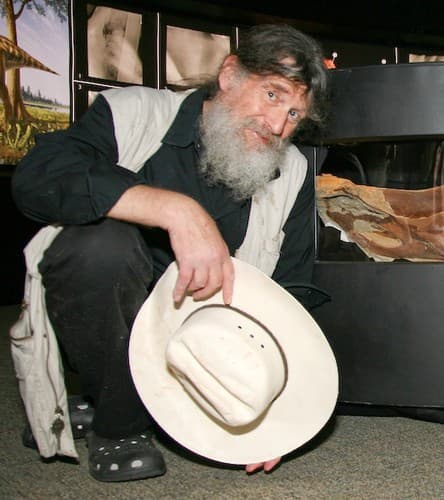
Robert T. Bakker is an American author and paleontologist known for his work in popularizing dinosaur science through fiction. His notable work, "Raptor Red," presents a narrative centered around a Velociraptor's life, blending scientific insights with storytelling. Bakker's contributions have influenced both literature and the public's understanding of dinosaurs.
Similar books
- The Clan of the Cave Bear
Jean M. Auel
4.0 (229k) average on GoodreadsFantasyExplores prehistoric life and survival from a non-human perspective (early hominids).
- Watership Down
Richard Adams
4.1 (434k) average on GoodreadsFantasyFeatures animal protagonists with complex societies and a perilous journey for survival.
- Jurassic Park
Michael Crichton
4.0 (803k) average on GoodreadsThrillerDeals with dinosaurs and scientific theories, though from a human perspective.
- Harry Potter and the Sorcerer's Stone
J.K. Rowling
4.5 (7M) average on GoodreadsFantasyRescued from a miserable life under the stairs, an orphaned boy discovers he's a wizard destined for a magical school, where he uncovers a dangerous secret tied to the dark wizard who murdered his parents.
- The Hunger Games
Suzanne Collins
4.3 (6.4M) average on GoodreadsFantasyIn a future where children fight to the death on live television, Katniss Everdeen volunteers for the arena, turning a death sentence into a fight for survival and a spark of rebellion.
- 1984
George Orwell
4.2 (3.1M) average on GoodreadsPoliticsIn a future where surveillance and thought control are absolute, a man's search for truth clashes with the Party, showing that hope can be a form of rebellion.






Enjoyed the summary?
A summary gives you the shape of the book. The book itself has the detail, the examples and the voice.
Find Raptor Red on AmazonAs an Amazon Associate, BookBrief earns from qualifying purchases. How we're funded