
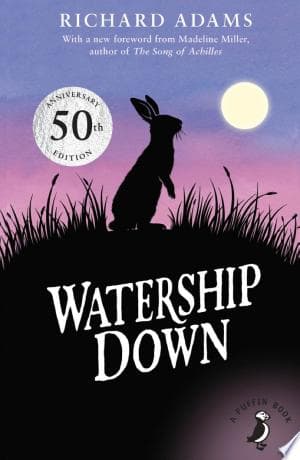
Synopsis
Covers the whole plot, including the ending.
- Difficulty
- Medium
- Pacing
- Variable
- Mood
- Epic, Adventurous, Suspenseful, Philosophical, Melancholy
- Read it if
- You enjoy epic adventure stories, allegories, or tales of survival and leadership against overwhelming odds, with a deep dive into animal societies and folklore.
- Skip it if
- You dislike anthropomorphic animal stories, long descriptive passages, or scenes of animal violence and struggle.
Watership Down Plot Summary
Covers the whole plot, including the ending.
The Vision and the Warning
In the Sandleford warren, Fiver, a small rabbit, has a vivid and scary vision of his home being destroyed by a mysterious, bloody force. He tells his older brother, Hazel, a clever but ordinary rabbit. Though Hazel is at first doubtful, Fiver's seriousness and past accuracy convince him the danger is real. Hazel tries to warn the Chief Rabbit, Threarah, but the Owsla, the warren's military leaders, especially Captain Holly, dismiss his concerns and see Hazel as a troublemaker. Hazel decides to gather a small group of rabbits to escape the coming disaster, trusting Fiver's unsettling prediction.
The Escape from Sandleford
Hazel, Fiver, and a small group of rabbits – including Bigwig, a strong but rebellious former Owsla officer; the loyal Blackberry; the smart Dandelion; and the clever Pipkin – begin their dangerous journey. Their escape is risky, as they are not used to life outside the warren's burrows. They face predators like a dog and a fox, and the constant threat of hunger and exposure. Conflicts also arise, especially between Bigwig, who struggles with leaving his Owsla past, and Hazel, who is still finding his leadership style. Fiver's ability to sense danger often guides them, proving very helpful as they travel through the unfamiliar and hostile world.
The Warren of the Snares
The traveling rabbits find a seemingly perfect warren, full of food, led by the charming Chief Rabbit Cowslip. The Sandleford rabbits are at first relieved by the easy life, but Fiver quickly senses a deep unease and an unnatural quiet. He warns Hazel that something is wrong, but the others are drawn to the comfort. Bigwig is almost caught by a wire trap, a discovery that confirms Fiver's fears. Cowslip's rabbits are well-fed because humans regularly set snares and provide food, sacrificing a few individuals for the safety of the rest. Horrified by this grim agreement, Hazel's group decides to leave, barely escaping the same fate.
Arrival at Watership Down
After more travel and hardships, Fiver has another vision, leading the tired group towards a high, open hill. They eventually arrive at Watership Down, a beautiful, isolated hill with good natural defenses, lush grass, and many burrows. The rabbits are overjoyed, seeing it as the safe home Fiver had promised. They begin to build their new warren, digging and settling in. Hazel, now their clear leader, organizes the group, assigning tasks and ensuring the safety and well-being of his followers. The future looks good, but the lack of does (female rabbits) quickly becomes a serious problem for their new warren's survival.
The Search for Does
With their new warren established on Watership Down, the rabbits face a critical problem: their group is all male. Without females, their warren cannot reproduce and will eventually die out. Hazel recognizes this threat and organizes trips to find female rabbits. Captain Holly, who survived the destruction of Sandleford warren and joined them, brings news of nearby human-kept hutches with females. Hazel plans to free them, showing his growing strategic mind and dedication to his warren's future. This quest shows their cleverness and determination, as well as the dangers of dealing with the human world.
The Raid on Nuthanger Farm
Hazel, Bigwig, Blackberry, and other rabbits carry out a daring raid on Nuthanger Farm, where they believe females are kept in hutches. The plan is dangerous, involving moving through human territory and outsmarting a cat and a dog. Bigwig, with his strength, helps open the hutch. They manage to free three females – Thethuthinnang, Hyzenthlay, and Vilthuril – but the escape is chaotic. Hazel is shot and badly wounded by the farmer, seeming to die. Fiver, however, refuses to believe his brother is dead and eventually finds him, showing his deep bond and connection with Hazel. The females are brought back to Watership Down, securing the warren's immediate future, though Hazel's injury is serious.
The Discovery of Efrafa
While searching for more females, Bigwig and other rabbits find Efrafa, a large warren ruled by the harsh General Woundwort. Efrafa is a highly organized, military society where rabbits are treated like prisoners, constantly watched by the Owslafa (their Owsla). Bigwig, disgusted by their oppressive ways, volunteers to go into Efrafa to rescue females. He pretends to be an aspiring Owslafa officer, enduring tough training and surveillance. His bravery and cleverness are tested as he navigates Woundwort's brutal system, befriending a few sympathetic Efrafan females, especially Hyzenthlay, who also wants freedom. This mission is very risky, with the constant threat of being discovered and killed.
The Escape from Efrafa
Bigwig, with help from Hyzenthlay and other brave Efrafan females, carefully plans their escape. He communicates with Hazel and the Watership Down rabbits using the clever seagull, Kehaar, who acts as a scout and messenger. The escape is a tense, nighttime operation, involving a carefully timed breakout from Efrafa. Bigwig uses his strength and courage to fight off pursuing Owslafa, while the females, guided by him, make a desperate run for freedom. The escape is difficult, with several close calls, but Bigwig's leadership and the females' determination lead to a successful, though costly, exit from Woundwort's control.
The Battle of Watership Down
Angry about the escape of the females and Bigwig's defiance, General Woundwort leads his entire Efrafan Owsla in a brutal attack on Watership Down. The Watership Down rabbits, though outnumbered, prepare their defenses under Hazel's command. They use their knowledge of the land, their burrows, and their cleverness to resist the Efrafans. Bigwig faces Woundwort in a fierce, personal fight inside a burrow, a desperate struggle for survival. The battle is savage and long, with both sides losing rabbits. The Watership Down rabbits, fighting for their freedom and home, show great courage and strength against Woundwort's relentless attack.
The Trick with the Dog
As the battle continues and the Watership Down rabbits are pushed to their limits, Hazel creates a desperate, brilliant plan. He races to Nuthanger Farm, where he knows a fierce dog is kept. He lures the dog back to Watership Down, leading it directly into the battle. The dog, unleashed and confused, attacks both Efrafan and Watership Down rabbits, causing chaos. Woundwort, unable to understand or control this new, terrifying enemy, is last seen charging the dog, a final act of suicidal defiance. The dog's intervention breaks the Efrafan attack, scattering their forces and allowing the Watership Down rabbits to win and secure their future.
Peace and Prosperity
With Woundwort defeated and the Efrafan threat gone, Watership Down enters a time of peace and growth. The females from Efrafa join the warren, and new kits are born, ensuring the community's survival and expansion. Hazel, now a respected Chief Rabbit, rules with wisdom and kindness, building a society based on cooperation and individual freedom, a stark contrast to Efrafa. The warren becomes a symbol of hope and a testament to the courage and strength of its founders. The rabbits live out their lives, telling stories of their journey and the challenges they overcame, cementing their history.
Hazel's Final Journey
Many years pass, and Hazel grows old and weak. One peaceful evening, as he rests outside his burrow, he is visited by the Black Rabbit of Inlé, the rabbit version of the grim reaper, who appears as a kind, shining figure. The Black Rabbit invites Hazel to join his Owsla, to leave his body and join the spirit world, where he will no longer suffer. Hazel, having lived a long and full life, accepts his fate calmly. He dies peacefully, his spirit leaving his body to join the Black Rabbit, leaving behind a thriving warren and a history of brave leadership.
Principal Figures
Hazel
Protagonist
The unassuming rabbit who rises to become the wise and courageous Chief Rabbit of Watership Down.
Hazel begins as an ordinary, somewhat unremarkable rabbit, overshadowed by his stronger brother, Fiver's visions. However, he possesses an innate leadership quality, a practical mind, and a deep sense of responsibility for his companions. He is not the strongest or the fastest, but his courage, ingenuity, and ability to inspire loyalty make him an exceptional leader. He prioritizes the well-being of his warren above all else, always seeking peaceful solutions but willing to fight fiercely when necessary. He learns from experience, adapting to new challenges with remarkable resilience.
Relationships: Fiver (Devoted brother and confidant; Hazel trusts Fiver's visions implicitly.); Bigwig (Loyal, powerful subordinate; Hazel respects Bigwig's strength and courage, and Bigwig eventually recognizes Hazel's wisdom.); Blackberry (Intelligent and resourceful advisor; Hazel relies on Blackberry's cleverness.); Hyzenthlay (Mate and respected doe, one of the first to join the new warren.)
Fiver
Protagonist/Visionary
A small, runt rabbit with powerful psychic abilities, whose visions guide the warren.
Fiver is a small, timid, and often anxious rabbit, but he possesses a unique and invaluable gift: precognition. He experiences vivid, unsettling visions of future events, which, though often terrifying, are always accurate. His sensitivity makes him vulnerable, but his unwavering conviction in his visions provides crucial guidance for the group. He is deeply connected to nature and the spiritual world of rabbits, often sensing danger or opportunity long before others. His bond with Hazel is central to his role, as Hazel is the only one who consistently believes and acts upon Fiver's warnings.
Relationships: Hazel (Devoted brother and protector; Fiver relies on Hazel's leadership to act on his visions.); Bigwig (Initially skeptical, Bigwig comes to respect Fiver's abilities.)
Bigwig
Supporting/Protector
A powerful, brave, and initially rebellious former Owsla rabbit who becomes Hazel's loyal enforcer.
Bigwig is a large, strong, and fiercely brave rabbit, a former officer in the Sandleford Owsla. He is prone to impulsiveness and can be headstrong, but his loyalty, once given, is absolute. He is the primary fighter and protector of the group, always willing to put himself in harm's way for the sake of his companions. His strength and courage are indispensable, particularly in confrontations with predators or rival rabbits. Despite his physical prowess, he learns to value Hazel's wisdom and Fiver's insights, maturing into a more disciplined and thoughtful warrior.
Relationships: Hazel (Loyal subordinate and trusted friend; Bigwig respects Hazel's leadership despite their initial clashes.); Fiver (Initially dismissive, Bigwig comes to understand and respect Fiver's unique abilities.); General Woundwort (Mortal enemy and ideological opposite.)
General Woundwort
Antagonist
The tyrannical, scarred Chief Rabbit of Efrafa, who rules through fear and brutal force.
General Woundwort is the formidable and utterly ruthless Chief Rabbit of Efrafa. He is unusually large, scarred, and possesses unmatched ferocity and a complete lack of fear. Having survived extreme hardship alone, he developed a totalitarian system for his warren, believing that only absolute control and militaristic discipline can ensure survival. He is intelligent and cunning but utterly devoid of empathy, ruling through terror and brutal enforcement by his Owslafa. His greatest weakness is his inability to comprehend freedom or a different way of life, leading to his downfall. He represents the dark side of leadership, driven by power and paranoia.
Relationships: Bigwig (Arch-nemesis; Woundwort sees Bigwig as a traitor and a threat to his authority.); Hazel (Opposing leader; Woundwort despises Hazel's 'weak' leadership style.)
Blackberry
Supporting/Intellectual
An intelligent and resourceful rabbit, whose cleverness often provides solutions to the group's problems.
Blackberry is one of the most intelligent rabbits in Hazel's group, characterized by his quick wit and ability to think outside the box. He is often the one who suggests ingenious solutions to problems, such as using a piece of wood as a raft or digging a tunnel to release hutch rabbits. While not physically strong, his mental acuity is invaluable to the warren's survival. He represents the power of intellect and strategic thinking in overcoming obstacles, complementing Hazel's leadership and Bigwig's strength.
Relationships: Hazel (Trusted advisor; Hazel often consults Blackberry for his clever ideas.)
Holly
Supporting/Messenger
A former Captain of the Sandleford Owsla, who joins Hazel's group after surviving the destruction of his warren.
Captain Holly initially appears as a rigid, authoritarian Owsla officer who dismisses Hazel's warnings. However, after the catastrophic destruction of Sandleford, he survives a harrowing journey and eventually finds Hazel's warren. His experiences transform him; he sheds his former arrogance and becomes a loyal and valuable member of the Watership Down community. He brings crucial information about the outside world and other warrens, and his past experience as an Owsla officer proves useful in planning defenses and understanding the threats posed by Efrafa. He embodies resilience and the capacity for change.
Relationships: Hazel (Initially dismissive, later a loyal follower and ally.)
Kehaar
Supporting/Ally
A boisterous and pragmatic black-headed gull who becomes an unlikely ally and scout for the rabbits.
Kehaar is a large, loud, and somewhat cantankerous black-headed gull who is injured and cared for by the Watership Down rabbits. Despite his gruff exterior and often impatient nature, he develops a genuine affection for the rabbits. His ability to fly makes him an invaluable asset as a scout and messenger, providing aerial reconnaissance and information about distant lands and warrens, including Efrafa. He speaks in broken English and is a practical, no-nonsense character, representing the idea that allies can come from unexpected places and species.
Relationships: Hazel (Respectful and mutually beneficial alliance.); Bigwig (Shared sense of pragmatism and courage.)
Cowslip
Mentioned/Antagonist
The Chief Rabbit of the Warren of the Snares, who leads his warren in a grim pact with humans.
Cowslip is the Chief Rabbit of a warren discovered by Hazel's group early in their journey. He is outwardly welcoming and offers an abundance of food, but his demeanor is subtly unsettling. He represents a corrupted form of leadership, where comfort is bought at the price of freedom and life. His warren has a tacit agreement with humans: in exchange for food and protection from some predators, they allow humans to periodically snare and kill some of their members. Cowslip is a philosophical, almost artistic rabbit, but his philosophical justifications mask a profound moral compromise and a chilling acceptance of a sacrificial system.
Relationships: Hazel (Deceptive host; Hazel quickly discerns Cowslip's sinister nature.)
Hyzenthlay
Supporting/Doe
A brave and intelligent doe from Efrafa who helps Bigwig's escape.
Hyzenthlay is one of the Efrafan does who yearns for freedom from General Woundwort's oppressive rule. She is intelligent, brave, and possesses a strong will, having previously attempted to convince Woundwort to allow some rabbits to leave Efrafa. She quickly recognizes Bigwig's sincerity and courage and becomes his main accomplice in orchestrating the mass escape of the does. Her desire for a better life and her willingness to take risks make her a vital figure in the liberation of the Efrafan does. She later becomes a valued member of the Watership Down warren.
Relationships: Bigwig (Co-conspirator and ally in the escape from Efrafa.); Hazel (Respected Chief Rabbit and mate.)
Themes & Insights
The Nature of Leadership
The novel explores different kinds of leadership through Hazel and General Woundwort. Hazel shows democratic, caring leadership, valuing everyone's input, adapting to problems, and putting his warren's well-being first. He leads by example, inspiring loyalty through trust and courage. Woundwort, in contrast, represents harsh, autocratic rule, maintaining control through fear, brutal force, and strict order. The clear difference between their styles ultimately decides their warrens' fates, showing that real leadership means service and wisdom, not just power. This is clear in Hazel's willingness to risk his life for the females at Nuthanger Farm, versus Woundwort's willingness to sacrifice his own rabbits for control.
“All he'd ever done was to use his strength and cunning to survive. And, for the first time, he felt that he had a purpose, a reason for being alive. He would lead them.”
Survival and Adaptation
The rabbits' journey is a constant fight for survival against natural predators, human threats, and harsh environments. They must always change their plans, learn new skills, and overcome huge difficulties. From understanding human objects like roads and snares to creating new ways of defense and social organization, their ability to adapt is vital. Their success at Watership Down shows their strength and cleverness. The contrast with the Sandleford rabbits, who failed to adapt to change, and the Efrafan rabbits, who adapted to a rigid, unsustainable system, highlights how important flexible thinking and resourcefulness are.
“Rabbits are not like other creatures. They are resourceful. They are brave. They will find a way.”
Freedom vs. Security
This theme is central to the novel, especially in the contrast between Watership Down and Efrafa, and the Warren of the Snares. The Warren of the Snares offers safety and food but at the cost of individual freedom and life, a grim deal with humans. Efrafa, under Woundwort, provides a kind of 'security' through extreme order and military discipline, but at the expense of all personal freedom, joy, and natural rabbit behavior. The Watership Down rabbits, in contrast, choose the difficult path to freedom, prioritizing self-determination and a natural way of life, even if it means more danger. Their eventual success proves their choice was right, showing that true security comes from freedom and self-reliance.
“A rabbit has to be quick and bright and ready to make a dash for it. But not in Efrafa. In Efrafa, a rabbit has to be slow and dull and ready to wait for orders.”
The Power of Myth and Storytelling
The rabbits' culture is rich with myths and legends, especially those of El-ahrairah, the Prince with a Thousand Enemies. These stories are not just for entertainment but also serve as moral lessons, guides for behavior, and sources of inspiration and hope. They provide a way to understand their world, their place in it, and the problems they face. Dandelion and Bluebell often tell these tales, boosting morale and teaching important lessons about cleverness, courage, and survival. The stories strengthen their identity and heritage, uniting them as a community and giving them strength in hard times, such as during the siege of Watership Down.
“It was the stories, of course, that made them feel they belonged. The stories of El-ahrairah, their folk hero, who always outwitted his enemies.”
The Interconnectedness of Nature
The novel emphasizes the complex connections within the natural world. The rabbits constantly interact with their environment and other species, from predators like stoats and foxes to allies like the seagull Kehaar. The health of their warren is directly linked to the health of the ecosystem around them. Fiver's visions often show this interconnectedness, sensing imbalances or dangers. The rabbits' understanding of nature's cycles, the behavior of other animals, and the lay of the land is essential for their survival. This theme highlights the delicate balance of ecosystems and the importance of living in harmony with the natural world.
“The whole world was in the sky. All the birds, all the leaves, all the grass and the flowers, all the earth and the water. It was all one, and it was all going to change.”
Plot Devices & Literary Techniques
Fiver's Visions
Precognitive dreams and feelings that warn of danger and guide the rabbits' journey.
Fiver's psychic abilities serve as a crucial plot device, driving the initial exodus from Sandleford and guiding the rabbits throughout their journey. His visions, though often vague and disturbing, consistently prove accurate, forcing the other rabbits, particularly Hazel, to trust his intuition. This device creates suspense, foreshadows impending dangers (like the Warren of the Snares or the destruction of Sandleford), and provides a mystical element to the narrative, emphasizing the rabbits' deep connection to their world and an unseen spiritual dimension.
The Journey/Quest
The physical and spiritual journey of the rabbits to find a new, safe home.
The entire novel is structured as a quest narrative. The rabbits' journey from Sandleford to Watership Down, and then the subsequent quests for does, serve as the primary engine of the plot. This device allows for episodic encounters with various dangers and different rabbit societies, providing opportunities for character development, moral dilemmas, and the exploration of different themes (e.g., leadership, freedom, survival). The journey is both literal and metaphorical, representing the search for belonging, purpose, and a sustainable way of life.
Storytelling and Mythology (El-ahrairah Tales)
The embedded folk tales of El-ahrairah that serve as moral lessons and sources of inspiration.
The stories of El-ahrairah, the cunning rabbit folk hero, are frequently recounted by Dandelion and Bluebell throughout the narrative. These myths function as a form of cultural memory and a practical guide for survival. They parallel the rabbits' own struggles, offering examples of cleverness, courage, and resilience against overwhelming odds. This device not only enriches the rabbits' culture but also provides thematic depth, reinforcing the idea that wisdom and cunning can overcome brute force, and that stories are vital for identity and morale, especially during difficult times.
The Black Rabbit of Inlé
The rabbit personification of death, who appears at the end of life.
The Black Rabbit of Inlé acts as a symbolic personification of death, specifically the benevolent and natural end of life for rabbits. This device introduces a spiritual dimension to the rabbits' world, presenting death not as a terrifying void but as a peaceful transition to another state, a joining of El-ahrairah's Owsla. His appearance at Hazel's peaceful passing provides a poignant and comforting conclusion to Hazel's life, reinforcing the natural cycle of life and death within their world and offering a sense of spiritual continuity.
Anthropomorphism
Attributing human-like thoughts, emotions, and social structures to animals.
The novel uses anthropomorphism to allow readers to connect deeply with the rabbits' experiences, struggles, and triumphs. While maintaining their essential 'rabbitness' (e.g., their instincts, fears of predators, reliance on burrows), Adams imbues them with complex social structures, language (Lapine), moral codes, and individual personalities. This device allows for the exploration of complex themes like leadership, tyranny, and freedom through the accessible lens of animal characters, making the story both a compelling adventure and a profound allegory for human society.
Quiz
10 questions on the plot and the characters. Each answer comes with a short explanation.
Question 1
What is the name of the rabbit with the prophetic visions who instigates the rabbits' departure from their original warren?
- Hazel
- Bigwig
- Fiver
- Pipkin
Show answer
C. Fiver Fiver is the small rabbit with the 'sixth sense' who foresees the destruction of the Sandleford warren.
Question 2
What kind of animal is Cowslip, who leads the rabbits of the Efrafa warren?
- A stoat
- A rabbit
- A badger
- A fox
Show answer
B. A rabbit Cowslip is one of the rabbits from the highly unusual and dangerous warren the protagonists encounter before reaching Watership Down.
Question 3
What is the name of the bird that assists the Watership Down rabbits with scouting and communication?
- Keehar
- Blackavar
- Thlayli
- El-ahrairah
Show answer
A. Keehar Keehar is the black-headed gull who becomes an invaluable ally to the Watership Down rabbits, particularly during their conflict with Efrafa.
Question 4
What is the primary reason the rabbits decide to leave their original warren?
- They are seeking better food sources.
- Fiver has a vision of the warren's destruction.
- They are being hunted by a pack of dogs.
- The Chief Rabbit banishes them.
Show answer
B. Fiver has a vision of the warren's destruction. Fiver's premonition of danger and destruction leads Hazel and the small band to flee their home.
Question 5
What is the name of the main antagonist, the tyrannical Chief Rabbit of the Efrafa warren?
- Woundwort
- Vervain
- Campion
- Buckthorn
Show answer
A. Woundwort General Woundwort is the formidable and cruel leader of Efrafa, who poses the greatest threat to the Watership Down rabbits.
Question 6
What is the name of the rabbit folk hero whose tales are often recounted throughout the book?
- Prince Rainbow
- King Thistle
- El-ahrairah
- Lord Frith
Show answer
C. El-ahrairah El-ahrairah is the trickster rabbit hero in the traditional rabbit folklore, whose stories often parallel the events and challenges faced by Hazel's group.
Question 7
What is the significance of the 'hrududu' to the rabbits?
- It is a type of bird that brings good omens.
- It is their word for a motor vehicle, often associated with danger.
- It refers to a specific type of burrowing technique.
- It is a rare edible plant.
Show answer
B. It is their word for a motor vehicle, often associated with danger. In Lapine, the rabbits' language, 'hrududu' refers to any motor vehicle, such as cars or trains, which they perceive as fast and dangerous.
Question 8
What is the ultimate fate of General Woundwort?
- He is captured by humans and taken away.
- He is killed in a fight with Bigwig.
- He is attacked and killed by a dog during the final confrontation.
- He escapes and is never seen again, becoming a legend.
Show answer
C. He is attacked and killed by a dog during the final confrontation. During the final battle at Watership Down, Woundwort refuses to flee and is ultimately killed by the dog Hazel brings to the warren.
Question 9
Which of these is NOT a core theme explored in 'Watership Down'?
- The importance of leadership and community
- The dangers of totalitarianism and oppressive societies
- The pursuit of technological advancement
- Survival against overwhelming odds and the natural world
Show answer
C. The pursuit of technological advancement While the rabbits face many challenges, the story focuses on their natural instincts for survival, community, and freedom, not on technological advancement.
Question 10
What vital resource do the Watership Down rabbits lack, leading to their desperate mission to Efrafa?
- Water
- Food
- Does (female rabbits)
- Safe burrowing sites
Show answer
C. Does (female rabbits) After establishing their warren, the rabbits realize they have no does, which is essential for the survival and growth of their community, leading to the dangerous plan to recruit them from Efrafa.
Watership Down FAQ
What prompts Hazel and Fiver to leave the Sandleford Warren?
Fiver, a runt rabbit with a strong psychic ability, experiences a terrifying vision of blood covering their home field, foreshadowing a devastating destruction of the Sandleford Warren by humans. He convinces his brother Hazel, who trusts Fiver's premonitions implicitly, that they must gather a small group and escape immediately before the impending danger materializes.
Who are the key members of the initial group that leaves Sandleford Warren?
The initial band includes Hazel (the emerging leader), Fiver (the seer), Bigwig (the strong, former Owsla officer), Blackberry (the intelligent problem-solver), Dandelion (the storyteller), Pipkin (a small, timid rabbit), and several others like Buckthorn and Speedwell. This diverse group forms the core of the new warren at Watership Down.
What major challenges do the rabbits face on their journey to Watership Down?
Their journey is fraught with peril, including encounters with predators like cats and stoats, the danger of human roads and traps, and the struggle for food and shelter. They also face internal conflicts, such as the initial skepticism of some rabbits about Fiver's visions and the daunting task of finding a truly safe and suitable new home.
What is the significance of the stories of El-ahrairah within the novel?
The tales of El-ahrairah, the Prince with a Thousand Enemies, serve as a rich mythological backdrop for the rabbits, providing moral lessons, explaining their world, and inspiring courage and cunning. Dandelion and Bluebell often recount these stories, which frequently parallel the challenges and solutions faced by Hazel's group, reinforcing their cultural identity.
How do the rabbits eventually establish their warren at Watership Down?
Upon reaching Watership Down, the rabbits, led by Hazel, work collectively to dig burrows, establish patrols, and forage for food. Their ingenuity, particularly Blackberry's idea to use a piece of wood as a raft, and Bigwig's strength in digging, are crucial in transforming the desolate hill into a secure and thriving new home.
What is the true nature of the 'pleasant' warren the rabbits encounter early in their journey, and what does it represent?
The 'pleasant' warren is Cowslip's warren, which appears idyllic but is in fact a death trap. The rabbits there are regularly fed by a human farmer but are also systematically snared and killed. It represents the seductive danger of comfort at the cost of freedom and instinct, highlighting the importance of self-reliance and awareness of hidden threats.
How does the character of Holly from Sandleford Warren contribute to the narrative?
Captain Holly, a survivor of the Sandleford Warren's destruction, later finds Hazel's group and confirms Fiver's premonition, providing a harrowing eyewitness account of the human attack. His testimony validates Fiver's vision and reinforces the group's decision to leave, adding a layer of grim realism to their escape.
What is the purpose of Hazel's audacious plan to free the hutch rabbits from Nuthanger Farm?
Hazel devises the daring plan to free the hutch rabbits to address the severe lack of does (female rabbits) in their new warren at Watership Down, which threatens their long-term survival. This bold move demonstrates his growing leadership, strategic thinking, and willingness to take extreme risks for the good of his community.
How does the character of Kehaar, the black-headed gull, assist the Watership Down rabbits?
Kehaar, a gruff but loyal black-headed gull, becomes an unlikely ally. He provides invaluable aerial reconnaissance, scouting for other rabbit warrens and helping the Watership Down rabbits locate Efrafa. His unique perspective and ability to fly over vast distances are crucial for gathering information that ground-bound rabbits cannot obtain.
Analyze Fiver's role as a prophet and his psychological burden.
Fiver bears the heavy psychological burden of his prophetic visions, which often manifest as disturbing and overwhelming experiences. He struggles with communicating these abstract feelings to others, often appearing timid or strange, yet his unwavering conviction and accuracy are vital for the group's survival, making him the spiritual compass of the warren.
Discuss Bigwig's transformation from a disgruntled Owsla officer to a loyal leader.
Bigwig begins as a strong but somewhat rebellious Owsla officer, frustrated by the Sandleford Warren's complacent leadership. His journey with Hazel's group, particularly his experiences in Cowslip's warren and Efrafa, forge him into a fiercely loyal and courageous leader. He learns to temper his strength with strategy and dedication to his comrades, becoming Hazel's indispensable right-hand rabbit.
How does Hazel's leadership style evolve throughout the book?
Hazel starts as an ordinary rabbit, initially underestimated, but quickly develops into a wise, empathetic, and strategic leader. He excels at delegation, recognizing the unique talents of his companions (Fiver's vision, Blackberry's intelligence, Bigwig's strength), and fosters a sense of community and mutual respect, prioritizing the well-being of his entire group over individual glory.
What psychological impact does the Efrafa warren have on its inhabitants, particularly Bigwig?
Efrafa, under General Woundwort's tyrannical rule, psychologically oppresses its inhabitants through strict discipline, constant surveillance, and the suppression of individuality and natural instincts. Bigwig, while undercover, experiences the suffocating fear and dehumanization firsthand, which strengthens his resolve to fight for freedom and highlights the psychological toll of authoritarianism.
What allegorical interpretations can be drawn from the conflict between Watership Down and Efrafa?
The conflict between Watership Down and Efrafa can be interpreted as an allegory for the struggle between freedom and totalitarianism, or democracy versus dictatorship. Watership Down represents a society built on cooperation, individual liberty, and natural instincts, while Efrafa embodies a rigid, fear-driven, and oppressive regime that prioritizes control over well-being.
Is General Woundwort a purely evil antagonist, or is there a more nuanced interpretation of his character?
While General Woundwort is undeniably a ruthless and tyrannical antagonist, his character can be seen with some nuance. His extreme paranoia and desire for absolute control stem from a traumatic past of being a lone survivor against overwhelming odds, fostering a deep-seated fear that drives his need for an unyielding, militaristic society, albeit a cruel one.
How does the novel explore themes of nature vs. civilization?
The novel subtly explores nature vs. civilization through the rabbits' interactions with humans and their own evolving societies. Sandleford's destruction by human development and Cowslip's warren's dependence on humans show the dangers of human 'civilization.' Watership Down, in contrast, strives for a natural balance, while Efrafa represents a 'civilization' that has become unnaturally rigid and oppressive.
What is the ultimate message about leadership conveyed through Hazel's journey?
The novel's ultimate message about leadership, exemplified by Hazel, is that true leadership is not about strength or dominance, but about empathy, wisdom, courage, and the ability to inspire and unite others. Hazel's success comes from his understanding of his followers, his strategic mind, and his unwavering commitment to their collective survival and freedom.
Does the ending of the book, particularly Hazel's peaceful death, offer a sense of closure or melancholy?
The ending, with Hazel's peaceful passing into the 'Owsla of El-ahrairah' guided by the Black Rabbit of Inlé, offers a profound sense of closure and natural completion rather than melancholy. It portrays death not as an end, but as a gentle transition, reinforcing the cyclical nature of life and the continuity of the rabbit spirit and their enduring mythology.
About the author
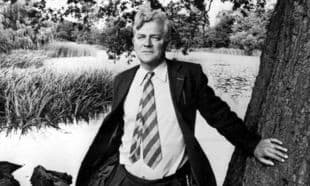
Richard George Adams was an English novelist and writer of the books Watership Down, Maia, Shardik and The Plague Dogs. He studied modern history at university before serving in the British Army during World War II. Afterwards, he completed his studies, and then joined the British Civil Service. In 1974, two years after Watership Down was published, Adams became a full-time author.
Similar books
- Animal Farm
George Orwell
4.0 (2.7M) average on GoodreadsPoliticsAllegorical tale using animals to explore themes of society, leadership, and tyranny.
- The Call of the Wild
Jack London
3.9 (341k) average on GoodreadsChildren'sFocus on animal instinct, survival in the wilderness, and the challenges of the natural world.
- Harry Potter and the Sorcerer's Stone
J.K. Rowling
4.5 (7M) average on GoodreadsFantasyRescued from a miserable life under the stairs, an orphaned boy discovers he's a wizard destined for a magical school, where he uncovers a dangerous secret tied to the dark wizard who murdered his parents.
- The Hunger Games
Suzanne Collins
4.3 (6.4M) average on GoodreadsFantasyIn a future where children fight to the death on live television, Katniss Everdeen volunteers for the arena, turning a death sentence into a fight for survival and a spark of rebellion.
- 1984
George Orwell
4.2 (3.1M) average on GoodreadsPoliticsIn a future where surveillance and thought control are absolute, a man's search for truth clashes with the Party, showing that hope can be a form of rebellion.
- Divergent
Veronica Roth
4.2 (2.9M) average on GoodreadsFantasyIn a society divided by virtues, a sixteen-year-old's difference from the norm starts a rebellion that threatens her world.






Enjoyed the summary?
A summary gives you the shape of the book. The book itself has the detail, the examples and the voice.
Find Watership Down on AmazonAs an Amazon Associate, BookBrief earns from qualifying purchases. How we're funded