
Synopsis
Covers the whole plot, including the ending.
- Difficulty
- Easy
- Pacing
- Fast
- Mood
- Action-packed, Romantic, Suspenseful, Rebellious
- Read it if
- You enjoy dystopian YA with unique powers, a strong female protagonist, and a developing romance.
- Skip it if
- You dislike predictable YA tropes or a focus on action over deep world-building.
Reboot Plot Summary
Covers the whole plot, including the ending.
A Deadly Introduction
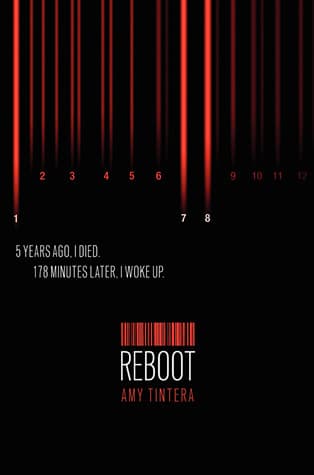
Wren Connolly, a 17-year-old Reboot who was dead for 178 minutes, is a top soldier for HARC (Human Advancement and Repopulation Corporation) in the Republic of Texas. Known for her efficiency and lack of emotion, she trains new Reboots. Her newest trainee is Callum Reyes, a '22' – meaning he was dead for only 22 minutes. Callum is unusually human, showing emotions, asking questions, and struggling with basic combat drills. Wren finds him frustratingly slow and empathetic, a stark contrast to her own hardened nature. Despite his shortcomings, she feels an inexplicable pull towards him, which she struggles to understand given her emotional detachment. She is assigned to get him to HARC standards.
First Mission and a Glimmer of Humanity
Wren and Callum are sent on a mission to capture a rogue Reboot, a '900' named Everett, hiding in the ruins of what was once San Antonio. During the mission, Callum's inexperience and empathy become clear. He questions the need for violence and shows concern for human casualties, which baffles Wren. Wren, following HARC's orders, efficiently eliminates threats. She is disturbed by Callum's constant smile and his ability to connect with people, even the target. This mission makes Wren confront the differences between her desensitized life and Callum's persistent humanity, causing her to question the HARC rules she has always followed.
The Threat of Elimination
Callum's continued failure to meet HARC's standards and his refusal to blindly follow orders puts him in danger of 'elimination' – permanent termination. Wren's supervisor, Commander Moria, gives Wren a final order: either get Callum in line and make him a compliant soldier, or Wren must eliminate him herself. This order creates an internal conflict for Wren, as she feels increasingly drawn to Callum despite his perceived weaknesses. The thought of executing him is unsettling, a feeling she hasn't had since becoming a Reboot. She realizes her emotional detachment is slowly fading around him.
A Hidden Connection
As Wren spends more time with Callum, she starts to understand his seemingly simple personality. She discovers that Callum has been intentionally underperforming to avoid being fully integrated into HARC's brutal system. He reveals that his family members were also Reboots who were eliminated by HARC for non-compliance, which fuels his distrust. More importantly, Callum recognizes Wren from before their deaths, specifically from the hospital where they both died. He remembers her name and face, a detail that deeply unsettles Wren, as her memories of her pre-Reboot life are almost entirely gone. This shared past creates a deeper, more personal connection between them.
The First Disobedience
During a training exercise meant to test Callum's ruthlessness, he hesitates to kill a human 'target' (a condemned criminal). Commander Moria orders Wren to execute Callum for his insubordination. In a crucial moment, Wren, for the first time in her Reboot life, disobeys a direct order. She protects Callum, showing her shift in loyalty and her growing emotional connection to him. This act of defiance marks a major turning point, not only in their relationship but also in Wren's own journey of rediscovering her humanity. Her action also makes her a target for HARC's retaliation.
Escape and the Outside World
Having defied HARC, Wren and Callum become fugitives. They escape the HARC facility, navigating the heavily guarded perimeter and the desolate, post-apocalyptic landscape of Texas. Outside HARC's controlled environment, they encounter the harsh realities of a society ruined by the virus and its aftermath. They must evade HARC patrols and scavenge for supplies, relying on each other for survival. This journey into the unknown strengthens their bond and forces Wren to adapt to a life without HARC's rules, rediscovering her own survival instincts beyond combat.
The Rebellion's Hideout
Wren and Callum eventually find a hidden community of rogue Reboots and humans who oppose HARC. This group, led by a charismatic human named Micah, offers them refuge and reveals the true extent of HARC's manipulative and oppressive rule. Wren learns that HARC has been systematically eliminating Reboots who show too much humanity, fearing their potential to lead a rebellion. The community is planning an uprising, and Wren, with her knowledge of HARC's operations and combat skills, becomes a valuable asset, though reluctant at first. She begins to trust others beyond Callum.
Unveiling HARC's True Motives
As Wren becomes part of the rebel community, she learns more about HARC's true, sinister plan. They discover that HARC isn't just controlling Reboots; they are actively developing a new, more compliant generation of Reboots, without independent thought and emotion, to serve as an unquestioning army. The 'elimination' of 'defective' Reboots like Callum's family was not just about control, but about genetic culling to perfect this new breed. This discovery makes Wren determined to fight against the corporation she once served, understanding the full scope of their dehumanizing project.
The Plan of Attack
Using Wren's detailed knowledge of HARC's facility layouts, security protocols, and operational procedures, the rebel group plans a daring infiltration of the main HARC headquarters. Their goal is to expose HARC's unethical experiments, rescue any Reboots being held, and dismantle their control over the population. Wren's expertise is vital in planning the attack, as she knows the weaknesses and strengths of HARC's defenses. The stakes are incredibly high; failure means certain death for all involved, but the desire for freedom and justice outweighs the risks.
Infiltration and Confrontation
The rebels launch their coordinated attack on the HARC facility. Wren, leading a strike team, uses her combat skills to navigate the complex, fighting off former comrades and HARC soldiers. Callum, despite his lower Reboot level, proves valuable with his tactical thinking and unwavering moral compass, protecting Wren and others. They confront Commander Moria, who reveals the depth of HARC's control and her own twisted loyalty to the corporation's vision. The battle is intense, forcing Wren to make difficult choices and push her abilities to their limit.
The Truth About the Virus
Deep within the HARC facility, Wren and Callum discover classified information that exposes the true origin of the virus that created Reboots. It was not a natural occurrence but a bio-engineered weapon, intentionally released by HARC's predecessors to control the population and create a subservient class of enhanced individuals. This discovery is a shocking blow, as it means their entire existence is a fabrication, a tool in a larger, sinister scheme. The implications are enormous, further strengthening their resolve to dismantle HARC and prevent future generations from suffering the same fate.
A Sacrifice and a New Beginning
In the battle's climax, a significant sacrifice is made to ensure the success of the mission and the survival of the rebels. This act of heroism deeply impacts Wren, reinforcing the value of life and the strength found in human connection. Though HARC's power is not entirely destroyed, their operations are severely crippled, and their secrets are exposed to the world. Wren, no longer the emotionless soldier, stands with Callum and the surviving rebels, ready to face an uncertain future but with newfound purpose and humanity. The fight for freedom, they realize, is far from over.
Principal Figures
Wren Connolly (Wren 178)
Protagonist
A highly efficient, emotionally detached Reboot soldier who rediscovers her humanity.
Wren is a 17-year-old Reboot, dead for 178 minutes, making her exceptionally strong, fast, and resilient, but also largely devoid of human emotion. She is a top-tier HARC soldier, known for her precision and obedience. Her life is defined by duty and efficiency, with little room for personal feelings or questions. She initially views Callum's humanity as a weakness, a flaw to be corrected. However, her interactions with him gradually chip away at her emotional armor, forcing her to confront her own suppressed memories and feelings, leading to a profound internal transformation.
Relationships: Callum Reyes (Love interest, partner in rebellion, catalyst for her emotional awakening.); Commander Moria (Superior officer, later antagonist, represents HARC's dehumanizing ideology.); Everett (Rogue Reboot, initial target, represents the 'threat' to HARC's control.)
Callum Reyes (Callum 22)
Protagonist/Love Interest
A newly Rebooted '22' who retains his humanity and challenges Wren's worldview.
Callum is a 17-year-old Reboot, dead for only 22 minutes, making him almost entirely human, complete with emotions, empathy, and a persistent smile. He struggles with HARC's brutal training and questions their methods. Callum is intelligent, observant, and possesses a strong moral compass. He intentionally underperforms to avoid becoming a compliant soldier, fueled by the tragic loss of his family to HARC. He acts as a catalyst for Wren's emotional awakening, reminding her of what it means to be human and inspiring her to defy HARC.
Relationships: Wren Connolly (Love interest, partner in rebellion, his humanity helps her rediscover her own.); Commander Moria (Antagonist, represents the oppressive force he resists.)
Commander Moria
Antagonist
Wren's ruthless superior officer, embodying HARC's cold, controlling ideology.
Commander Moria is a high-ranking HARC officer, responsible for overseeing Reboot training and operations. She is cold, calculating, and utterly devoted to HARC's mission of creating a compliant Reboot army. Moria views emotions as weaknesses and sees Reboots as tools to be controlled or eliminated if they deviate. She is a formidable opponent, representing the oppressive system Wren and Callum fight against. Her unwavering belief in HARC's methods makes her a dangerous and uncompromising adversary, willing to sacrifice any individual for the 'greater good' of the corporation.
Relationships: Wren Connolly (Superior officer, later antagonist, symbol of HARC's control.); Callum Reyes (Target for elimination due to his non-compliance.)
Micah
Supporting
Leader of the rebel group, offering refuge and guidance to Wren and Callum.
Micah is a charismatic and resourceful human leader of a hidden community of rogue Reboots and humans. He is a strategic thinker and a passionate advocate for freedom from HARC's tyranny. Micah provides sanctuary and direction to Wren and Callum after their escape, helping them understand the broader context of HARC's oppression. He plays a crucial role in organizing the rebellion and utilizing Wren's knowledge to plan their attack. Micah embodies hope and resistance in a world dominated by HARC's control, offering an alternative vision for the future.
Relationships: Wren Connolly (Ally, leader of the rebellion she joins.); Callum Reyes (Ally, fellow rebel.)
Everett (Everett 900)
Mentioned/Supporting
A rogue '900' Reboot, illustrating the dangers of non-compliance.
Everett is a '900' Reboot, meaning he was dead for 900 minutes, making him highly Rebooted and largely devoid of emotion, similar to Wren, but he has gone rogue. He is the target of Wren and Callum's first mission. Everett's existence demonstrates the extreme consequences of defying HARC, as he lives a solitary, violent life outside their control. He represents the kind of 'defective' Reboot that HARC seeks to eliminate, providing an early glimpse into the harsh realities of their world and the fate that awaits non-compliant Reboots.
Relationships: Wren Connolly (Initial target of Wren's mission.); Callum Reyes (Witness to his capture.)
Dax
Supporting
A fellow HARC soldier and Wren's former friend/rival.
Dax is another HARC soldier, a peer of Wren's. He is highly skilled and loyal to HARC, embodying the ideal Reboot soldier. Dax serves as a point of comparison for Wren, showing what she was and what she could have remained. He initially views Callum with suspicion and disdain, reflecting HARC's intolerance for 'weakness.' While not a primary antagonist, his loyalty to HARC puts him in opposition to Wren and Callum once they rebel, symbolizing the internal conflict Wren faces when choosing between her past and her future.
Relationships: Wren Connolly (Former comrade, later adversary.); Callum Reyes (Viewed with suspicion as a 'weak' Reboot.)
Dr. Elara
Mentioned/Supporting
The scientist behind the Reboot program and the virus.
Dr. Elara is the brilliant but morally ambiguous scientist responsible for developing the Reboot virus and the entire HARC program. Her work underpins the world's current state, creating both the enhanced Reboots and the oppressive system that controls them. She represents the scientific hubris and ethical compromises that led to the dystopian society. While not a direct on-screen character for much of the story, her influence is pervasive, and her motivations are gradually revealed to be far more sinister than initially perceived, linking to the broader conspiracy behind HARC.
Relationships: HARC (Creator of their foundational technology.); Reboots (Their creator and manipulator.)
Themes & Insights
The Nature of Humanity and Identity
The novel explores what it means to be human, especially through Reboots who have lost much of their emotional capacity. Wren's journey from an emotionless soldier to someone capable of love and empathy highlights that humanity is about connection, choice, and feeling, not just physical form. Callum, as a '22,' constantly challenges the idea that being a Reboot means being less human. The contrast between Wren's initial detachment and Callum's persistent kindness, and the rebels' fight for a life beyond HARC's control, all show that identity is self-determined, not dictated by outside forces or biological enhancements. This is clear when Wren chooses to protect Callum, defying her programming.
“I’m not a human. I’m a Reboot. We don’t have feelings.”
Rebellion Against Oppression
A main theme is the fight against a totalitarian regime. HARC is an oppressive force that seeks to control and dehumanize individuals for its own goals. The story follows Wren's change from a loyal enforcer of this system to a key figure in the rebellion against it. The existence of rogue Reboots, the formation of Micah's community, and the plan to infiltrate HARC all show the strong desire for freedom and self-determination. The rebellion is not just about survival, but about reclaiming dignity and the right to choose one's own path, as seen when Wren chooses to disobey Commander Moria.
“HARC doesn’t give you choices. They give you orders. But you can choose not to follow them.”
Love and Connection as a Catalyst for Change
The romantic relationship between Wren and Callum helps trigger Wren's emotional awakening and her decision to rebel. Callum's constant empathy and his ability to see Wren beyond her '178' status gradually break down her emotional barriers. Their developing bond teaches Wren the value of connection, trust, and vulnerability, feelings she believed were gone after her Reboot process. This close relationship provides the emotional core of the story, showing how love can inspire courage, challenge old beliefs, and fuel the fight for a better world, as shown by Wren's willingness to risk everything for Callum.
“He makes me feel like I’m alive, even though I’m dead.”
Memory and the Past
The novel explores the impact of memory loss and the struggle to reclaim one's past. Reboots generally lose most of their pre-death memories, a deliberate side effect of their resurrection. Wren initially has no memory of her past, making her a perfect blank slate for HARC's indoctrination. Callum, with his clear memories, acts as a bridge to her forgotten life, forcing her to confront the person she once was. The gradual return of Wren's memories, especially those shared with Callum, is important for her understanding of her true identity and her reasons for fighting HARC. This theme highlights how our past shapes who we are and the importance of remembering.
“They want us to forget who we were. Because if we remember, we might remember why we should fight.”
Plot Devices & Literary Techniques
The Reboot Process/Death Time
The mechanism of resurrection that dictates a Reboot's abilities and humanity.
The Reboot process is the central plot device, defining the characters and their world. The 'death time' (minutes dead before rebooting) directly correlates to a Reboot's physical enhancements (strength, speed, healing) and their loss of emotions/humanity. This creates a clear hierarchy and a source of conflict: higher death times like Wren's '178' mean greater physical prowess but less humanity, while lower death times like Callum's '22' mean more retained humanity but fewer physical advantages. This device establishes the core conflict of identity and provides a tangible measure of the characters' internal struggles and HARC's control.
HARC (Human Advancement and Repopulation Corporation)
The governing body that controls Reboots and the remnants of society.
HARC serves as the primary antagonistic force and the overarching structure of the dystopian world. It controls the Reboot population, dictating their purpose, training, and ultimate fate. HARC's strict rules, surveillance, and 'elimination' policy are the driving force behind the characters' actions and the rebellion. The corporation represents unchecked power and the dangers of a society that prioritizes control over individual freedom. Unveiling HARC's true, sinister motives, particularly regarding the virus and the future of Reboots, is a key element of the plot's progression and the rebels' motivation.
Suppressed Memories
The deliberate erasure of pre-Reboot memories, used by HARC for control.
The systematic suppression of pre-Reboot memories is a crucial plot device. HARC intentionally obscures Reboots' pasts to prevent them from remembering their former lives, thus making them easier to control and mold into obedient soldiers. Wren's lack of memories, contrasted with Callum's ability to recall details of their shared past, creates a personal mystery and a bond between them. As Wren's memories gradually return, they serve as revelations, pushing her to question HARC's narrative and reclaim her true identity, driving her transformation and fueling her rebellion.
The 'Elimination' Protocol
HARC's policy of terminating non-compliant or 'defective' Reboots.
The 'elimination' protocol is a constant threat and a powerful motivator. It refers to HARC's practice of permanently terminating Reboots who fail to meet standards, show too much emotion, or disobey orders. This device instills fear and enforces compliance within the Reboot ranks. Callum's family was eliminated, and he himself faces this threat, directly leading to Wren's first act of defiance. The protocol highlights the ruthlessness of HARC and raises the stakes for Wren and Callum, making their rebellion a matter of life and death and underscoring the value of their individual choices.
Reboot Quotes
“I was a good soldier. I followed orders. I died for my country. I came back. And I'm still a good soldier.”
“The longer you're dead, the less human you are when you come back.”
“Sometimes, the only way to save someone is to let them go.”
“We're not just weapons. We're people. We deserve to be treated like it.”
“Fear can make you do terrible things, but it can also make you brave.”
“He didn't look at me like I was a thing. He looked at me like I was a person.”
“The past is dead. Let it stay that way.”
“You can't choose your family, but you can choose who you fight for.”
“Every time I died, I came back a little bit stronger. A little bit faster. A little bit less human.”
“Sometimes, the hardest battles are the ones you fight inside your own head.”
“He was the first person who ever made me feel like I wasn't just a number.”
“We're all just trying to survive, one way or another.”
“The rules are only there to keep us in line. They're not always right.”
“Love isn't supposed to be easy. It's supposed to be worth it.”
Quiz
10 questions on the plot and the characters. Each answer comes with a short explanation.
Question 1
What is Wren Connolly's Reboot number, indicating how long she was dead before reanimating?
- Wren 22
- Wren 178
- Wren 5
- Wren 17
Show answer
B. Wren 178 Wren was dead for 178 minutes, making her Reboot number 178.
Question 2
What organization does Wren serve as a soldier for?
- The Republic of Texas Military
- Reboot Advancement and Containment
- Human Advancement and Repopulation Corporation (HARC)
- The United Human Front
Show answer
C. Human Advancement and Repopulation Corporation (HARC) Wren serves as a soldier for HARC, the Human Advancement and Repopulation Corporation.
Question 3
What is Callum Reyes's Reboot number, and what does it signify about his reanimation?
- Callum 178, meaning he is as strong as Wren.
- Callum 22, meaning he was dead for a short time and is more human-like.
- Callum 5, meaning he is one of the oldest Reboots.
- Callum 17, meaning he is very emotional.
Show answer
B. Callum 22, meaning he was dead for a short time and is more human-like. Callum is a 22, meaning he was dead for only 22 minutes, making him 'practically human' with slower reflexes and more emotions.
Question 4
What is Wren's primary task concerning Callum when he is assigned to her?
- To teach him advanced combat techniques for infiltration missions.
- To eliminate him immediately due to his low Reboot number.
- To train him and get him in line, or she will have to eliminate him.
- To assess his potential for leadership within HARC.
Show answer
C. To train him and get him in line, or she will have to eliminate him. Wren is given one last chance to get Callum in line as a soldier, with the consequence of having to eliminate him if she fails.
Question 5
What is a key characteristic that sets Callum apart from other Reboots Wren has trained, particularly those with higher numbers?
- His superior strength and healing abilities.
- His constant questioning and ever-present smile.
- His ability to communicate telepathically with other Reboots.
- His complete lack of emotion or empathy.
Show answer
B. His constant questioning and ever-present smile. Callum's 'ever-present smile' and habit of 'always asking questions' are explicitly mentioned as unusual for a Reboot, especially for Wren who is much less emotional.
Question 6
What does the phrase 'less emotional' signify about Reboots like Wren 178?
- They are completely incapable of feeling any emotion whatsoever.
- They experience emotions in a muted or detached way compared to humans.
- They are highly susceptible to emotional manipulation.
- They only feel negative emotions like anger and fear.
Show answer
B. They experience emotions in a muted or detached way compared to humans. The description states Reboots are 'less emotional,' implying a reduction or blunting of emotional responses rather than a complete absence, especially for those with higher numbers like Wren.
Question 7
What is the ultimate consequence Wren faces if she disobeys an order from HARC?
- She will be demoted to a lower rank.
- She will be reassigned to a different sector.
- She will be eliminated.
- She will be forced to undergo re-education.
Show answer
C. She will be eliminated. The text explicitly states that if Wren disobeys, 'she’ll be eliminated, too.'
Question 8
What core theme is introduced by Wren's internal conflict regarding Callum and her orders?
- The struggle between loyalty and ambition.
- The conflict between duty and personal connection/humanity.
- The importance of strict adherence to military protocols.
- The benefits of emotional suppression in leadership.
Show answer
B. The conflict between duty and personal connection/humanity. Wren's struggle between her programming as 'the perfect soldier' and the 'alive' feelings Callum evokes highlights the conflict between her duty to HARC and her emerging personal emotions/humanity.
Question 9
How does the premise of Reboots, particularly the 'longer dead, less human' aspect, contribute to the world-building and potential conflict?
- It suggests a clear hierarchy and social tension between different Reboot types.
- It implies that all Reboots eventually become fully human again over time.
- It ensures complete uniformity and predictability among the Reboot population.
- It means that the oldest Reboots are the weakest and most vulnerable.
Show answer
A. It suggests a clear hierarchy and social tension between different Reboot types. The varying degrees of 'humanity' based on time dead creates a natural division and potential for conflict, with higher-numbered Reboots like Wren being 'deadliest' and less emotional, while lower-numbered Reboots like Callum are 'practically human.' This leads to a clear hierarchy and social tension.
Question 10
What specific detail about Wren's past highlights her effectiveness and reputation within HARC?
- She was the first Reboot ever created by HARC.
- She has never disobeyed an order before.
- She designed the training program for all new Reboots.
- She has a unique ability to sense human emotions.
Show answer
B. She has never disobeyed an order before. The text states, 'Wren has never disobeyed before,' emphasizing her perfect soldier persona and adherence to HARC's rules, making her a highly effective and reliable operative.
Reboot FAQ
What is the core premise of 'Reboot' and how do Reboots differ from humans?
In 'Reboot', individuals like Wren Connolly return to life as 'Reboots' after being clinically dead for a certain period. They possess enhanced strength, speed, and healing abilities, but the longer they are dead, the more their human emotions diminish, making them less empathetic and more efficient soldiers for HARC.
Who is Wren Connolly and what is her significance within HARC?
Wren Connolly is a '178' Reboot, meaning she was dead for 178 minutes, making her one of the most powerful and unemotional Reboots. She is HARC's deadliest soldier, highly skilled in combat, and serves as a trainer for newly 'rebooted' individuals, embodying the ideal HARC operative.
Who is Callum Reyes and why is his '22' status so unusual?
Callum Reyes is a '22' Reboot, meaning he was dead for only 22 minutes, making him significantly more human and emotional than most Reboots. His slow reflexes, questioning nature, and persistent smile make him an anomaly in HARC's training program, posing a challenge to Wren's disciplined worldview.
What is the central conflict that arises between Wren and Callum?
The central conflict revolves around Wren's duty to train Callum, a '22' Reboot who struggles to conform to HARC's brutal standards, and her growing emotional connection to him. When Callum refuses a direct order, Wren is forced to choose between eliminating him, as per her programming, or disobeying HARC, risking her own life.
What role does HARC play in the Republic of Texas and in the lives of Reboots?
HARC (Human Advancement and Repopulation Corporation) is the governing body in the Republic of Texas responsible for controlling and utilizing Reboots. They train Reboots as soldiers, enforce strict obedience, and manipulate public perception to maintain their authority, seeing Reboots as expendable assets.
How does the 'minute count' of a Reboot subtly influence their personality beyond just emotions?
The 'minute count' not only dictates a Reboot's emotional capacity but also influences their physical resilience and mental adaptability. Higher-minute Reboots like Wren are not only less emotional but also heal faster and adapt more readily to HARC's brutal training, while lower-minute Reboots like Callum retain more human vulnerabilities and thought patterns.
Are there any subtle hints about the true nature or origin of the Reboot phenomenon that aren't immediately obvious?
The book hints that the Reboot phenomenon might not be a natural occurrence but potentially a controlled event or a consequence of environmental factors, given HARC's structured response and their meticulous tracking of minute counts. The absence of a clear explanation from HARC suggests a deeper, possibly sinister, origin.
Beyond their physical abilities, what unique 'skills' or advantages do higher-minute Reboots like Wren develop?
Higher-minute Reboots like Wren develop an almost instinctual understanding of combat and strategy, bordering on precognition in battle, due to their heightened senses and reduced emotional interference. They also possess an uncanny ability to read and anticipate human behavior, making them exceptional interrogators and trackers.
How does Wren's '178' status psychologically impact her perception of humanity and her past life?
Wren's '178' status has largely stripped her of her human emotions, causing her to view her past life with detachment and humans as inherently flawed and weak. This emotional void initially makes her an ideal soldier, but it also creates a deep internal conflict when she starts to re-experience emotions through Callum, challenging her entire worldview.
What psychological coping mechanisms has Callum developed to survive in HARC despite his '22' humanity?
Callum copes with HARC's brutality by maintaining an almost defiant optimism and a constant smile, which serves as both a psychological shield and a subtle act of rebellion. He uses his intelligence and empathy to navigate dangerous situations, often relying on his ability to connect with others, even the seemingly emotionless Wren.
How does the training process in HARC psychologically manipulate Reboots into obedience?
HARC's training process psychologically manipulates Reboots through brutal conditioning, constant threat of elimination, and the systematic suppression of individuality. They are taught to prioritize orders above all else, to view emotions as weaknesses, and to see their fellow Reboots as either allies in the HARC system or threats to be eliminated, fostering a culture of fear and absolute obedience.
How does Wren's internal struggle with her 'rebooted' self and her re-emerging emotions reflect a broader theme?
Wren's internal struggle reflects the broader theme of what it means to be human and the conflict between duty and personal freedom. Her journey from an emotionless soldier to someone capable of love and defiance questions whether humanity is defined by biology or by the capacity for connection and choice, even in the face of immense danger.
Is the 'less emotional' aspect of Reboots an irreversible biological change, or can emotions be 'relearned' or reawakened?
The book suggests that while the 'less emotional' aspect is a biological consequence of the Reboot process, emotions are not entirely irreversible. Through significant emotional stimuli, particularly strong connections like the one between Wren and Callum, dormant emotional capacities can be reawakened, implying that the human spirit can persist even in altered forms.
To what extent is HARC genuinely concerned with 'Human Advancement and Repopulation,' or are they driven by other motives?
The narrative strongly suggests that HARC's stated mission of 'Human Advancement and Repopulation' is largely a facade. Their actions, which include exploiting Reboots as disposable soldiers and ruthlessly suppressing dissent, indicate that their primary motives are power, control, and the preservation of their own authority, rather than true humanitarian goals.
Could Wren's ultimate decision to defy HARC be seen as a form of 'rebooting' her own humanity?
Yes, Wren's decision to defy HARC can absolutely be seen as a profound 'rebooting' of her own humanity. By choosing empathy, love, and personal freedom over her programmed obedience, she essentially sheds her HARC-assigned identity and reclaims her agency and emotional capacity, fundamentally transforming her 'rebooted' self.
How does the setting of the 'Republic of Texas' contribute to the novel's themes of control and rebellion?
The setting of the 'Republic of Texas' reinforces themes of control and rebellion by evoking a sense of a fractured, post-cataclysmic society where a powerful entity like HARC has seized absolute control. This isolated, militaristic state allows for the unchallenged exploitation of Reboots and creates a stark backdrop for the emergence of individual defiance against an oppressive regime.
What is the implied fate of Reboots who refuse to conform or are deemed 'failures' by HARC?
The implied fate for Reboots who refuse to conform or are deemed 'failures' by HARC is elimination. The narrative consistently highlights the ruthlessness of HARC and the constant threat of being 'terminated' or 'disposed of' for any disobedience or inability to meet their strict standards, emphasizing the Reboots' expendable status.
Is there a deeper meaning behind Callum's constant smile, or is it simply a character quirk?
Callum's constant smile carries a deeper meaning beyond a mere quirk; it's a profound act of defiance and a symbol of his retained humanity. In a world designed to strip Reboots of emotion, his smile is a persistent reminder of joy, empathy, and hope, serving as a psychological weapon against HARC's dehumanizing agenda and a beacon for Wren.
About the author

Amy Tintera is a young adult author known for her fast-paced, action-packed thrillers. Her debut novel, Reboot, features a unique take on zombies and has been praised for its compelling plot and strong female protagonist. Tintera's work often explores themes of survival and identity within high-stakes scenarios.
Similar books
- Divergent
Veronica Roth
4.2 (2.9M) average on GoodreadsFantasyFeatures a dystopian society, a strong female protagonist who challenges the system, and a romantic subplot.
- The Hunger Games
Suzanne Collins
4.3 (6.4M) average on GoodreadsFantasyInvolves a government-controlled society, a fight for survival, and a protagonist who becomes a symbol of rebellion.
- Shatter Me
Tahereh Mafi
4.0 (291k) average on GoodreadsFantasyExplores characters with unique abilities in a dystopian setting and a central romance with a dangerous edge.
- Legend
Marie Lu
4.0 (7k) average on GoodreadsFantasyBoth feature genetically enhanced protagonists in a dystopian future. Reboot distinguishes itself with its unique reanimation process and the varying degrees of 'humanity' based on death duration, offering a more biological and psychological twist compared to Legend's focus on genetic engineering and social class disparity.
- Harry Potter and the Sorcerer's Stone
J.K. Rowling
4.5 (7M) average on GoodreadsFantasyRescued from a miserable life under the stairs, an orphaned boy discovers he's a wizard destined for a magical school, where he uncovers a dangerous secret tied to the dark wizard who murdered his parents.
- 1984
George Orwell
4.2 (3.1M) average on GoodreadsPoliticsIn a future where surveillance and thought control are absolute, a man's search for truth clashes with the Party, showing that hope can be a form of rebellion.






Enjoyed the summary?
A summary gives you the shape of the book. The book itself has the detail, the examples and the voice.
Find Reboot on AmazonAs an Amazon Associate, BookBrief earns from qualifying purchases. How we're funded