

Synopsis
Covers the whole plot, including the ending.
- Difficulty
- Hard
- Pacing
- Slow
- Mood
- Thought-provoking, Ambitious, Detailed, Epic, Scientific
- Read it if
- You want a highly detailed, scientifically rigorous hard science fiction epic about the colonization and terraforming of Mars, complete with political intrigue, philosophical debates, and a deep dive into human nature under extreme conditions.
- Skip it if
- You prefer fast-paced, character-driven narratives over extensive world-building and scientific exposition, or are looking for high fantasy rather than hard sci-fi.
Red Mars Plot Summary
Covers the whole plot, including the ending.
The First Hundred Arrive
In 2026, the Ares arrives, carrying the first one hundred colonists to Mars. Among them are the American John Boone, the Russian engineer Arkady Bogdanov, the Japanese politician Maya Toitavna, and the American diplomat Frank Chalmers. They establish their first habitat, Underhill, near the Candor Chasma. The diverse group, from various nations, immediately faces the harsh realities of Mars's environment. Initial tasks include setting up life support, exploring their surroundings, and starting scientific research. Tensions build as different ideas about Martian development emerge, especially between those wanting minimal intervention and those pushing for rapid terraforming.
The First Years and Ideological Splits
As the First Hundred settle into their routines, initial camaraderie gives way to ideological differences. Arkady Bogdanov supports 'Areophany,' a philosophy that advocates preserving Mars's natural state and slowly adapting to it, while Sax Russell, a physicist, pushes for aggressive terraforming. John Boone, first seen as a unifying figure, struggles to mediate. Frank Chalmers subtly manipulates relationships and politics, often pitting individuals against each other to gain influence. The colonists begin to establish more permanent settlements, drill into the planet, and conduct experiments, but the underlying philosophical conflicts grow, setting the stage for future confrontations.
John Boone's Assassination and its Aftermath
Years into the colonization, John Boone, the beloved leader of the First Hundred, is assassinated. The murder happens during a time of increasing political unrest and disputes over resource allocation between factions and Earth-based corporations. The immediate aftermath is chaotic, sending Martian society into a crisis of leadership and trust. Frank Chalmers is quickly implicated and arrested, though the evidence is circumstantial. The assassination acts as a catalyst, deepening existing divisions and forcing the colonists to confront their fractured governance and the true cost of their utopian dreams.
The Rise of Transnational Corporations and Earth's Influence
Following Boone's death, Earth's influence over Mars grows significantly. Powerful corporations, driven by the demand for Martian resources and new scientific discoveries, begin to assert their authority more forcefully. They establish their own settlements and operations, often overriding the First Hundred's decisions. This corporate expansion worsens resource scarcity and social tensions, leading to a clear division between the original colonists and the newly arriving corporate personnel. The First Hundred find their autonomy shrinking as Mars becomes a pawn in Earth's economic and political games, further fueling the desire for Martian independence.
The Development of Martian Society and Infrastructure
Amidst the political infighting and Earth's increasing control, the First Hundred and later waves of colonists continue to develop Martian infrastructure. Large projects are undertaken, including deploying orbital mirrors to increase surface temperature, building subterranean cities, and starting atmospheric modifications. Sax Russell leads many of these terraforming efforts, passionately pursuing the goal of making Mars habitable. These major engineering feats show human ingenuity but also highlight the growing environmental impact on the planet, intensifying the debate between the 'Red' (preservationist) and 'Green' (terraforming) factions.
The Unveiling of the Martian Anomaly
During their extensive explorations and drilling operations, the colonists find an enigmatic geological anomaly deep within the Martian crust. This discovery, first studied by Sax Russell and other scientists, suggests an ancient, non-biological phenomenon or structure. The nature of this anomaly becomes a subject of intense scientific debate and speculation, captivating some while alarming others. It adds another layer of complexity to the colonization effort, raising questions about Mars's true history and potential for indigenous life, further supporting the 'Red' faction's argument against aggressive terraforming and exploitation.
The Growing Resistance and Arkady's Vision
As Earth's corporations tighten their grip on Mars, Arkady Bogdanov becomes a prominent figure in the growing resistance movement. He advocates for Martian independence and a more sustainable, less exploitative approach to colonization, rallying those who feel disenfranchised by Earth's policies. Arkady envisions developing a unique Martian culture and society, free from Earth's political and economic dominance. His words resonate with many, especially younger generations born on Mars, leading to the formation of underground networks and a growing desire for revolution against perceived colonial rule from Earth.
The First Martian Revolution
The simmering discontent and political tensions finally erupt into open conflict. The resistance, led by Arkady and supported by many of the First Hundred and subsequent Martian-born generations, launches a full-scale revolution against the corporate and U.N. authorities. This conflict involves sabotage, armed confrontations, and widespread civil disobedience. The revolution is brutal and costly, with significant casualties on both sides. The First Hundred find themselves caught in the middle, forced to choose sides or navigate the dangerous political landscape, as Mars descends into chaos in its fight for self-determination.
The Fate of Arkady and the Aftermath of the Revolution
During the height of the Martian Revolution, Arkady Bogdanov, a leader of the independence movement, is killed in a violent incident. His death is a devastating blow to the revolutionaries and leaves a significant power vacuum. The revolution, while initially successful in disrupting Earth's control, becomes fractured without his unifying presence. The aftermath is marked by continued instability, power struggles among the remaining factions, and a desperate search for a new direction for Martian society. The First Hundred, now older and scarred by the conflicts, deal with the profound changes and the uncertain future of the planet they helped colonize.
The Enduring Legacy and the Unfolding Future
After the revolution and Arkady's death, the surviving members of the First Hundred, now aged and weary, continue to influence Mars. Their initial dreams and later conflicts have shaped the planet's destiny. The political landscape remains volatile, with ongoing debates about terraforming, independence, and the relationship with Earth. The novel ends with the long-term consequences of their pioneering efforts becoming clear, hinting at the future struggles and transformations Mars will undergo. The First Hundred's legacy is a complex mix of scientific achievement, political strife, and the enduring human spirit of exploration and adaptation.
Principal Figures
John Boone
Protagonist
The charismatic American astronaut and first man on Mars, a unifying but ultimately tragic figure.
John Boone is an American astronaut, celebrated as the first human to set foot on Mars. He possesses immense charisma and a natural ability to inspire and unify people, making him the de facto leader of the First Hundred. Boone is an idealist, driven by a genuine love for Mars and a vision of humanity's future among the stars. He often acts as a mediator between the warring factions, though his non-confrontational style sometimes leads to inaction. Despite his popularity, he remains somewhat enigmatic, carrying a quiet burden and a deep connection to the planet.
Relationships: Frank Chalmers (Rival, political adversary, and perceived friend, with deep-seated resentment); Maya Toitavna (Complex romantic and political relationship, often strained by his idealism and her pragmatism); Phyllis Boyle (Professional colleague and scientific collaborator)
Frank Chalmers
Antagonist/Protagonist
The cunning American diplomat, master manipulator, and political pragmatist.
Frank Chalmers is an American diplomat, characterized by his sharp intellect, cynical worldview, and unparalleled skill in political maneuvering. He is a master of manipulation, often playing individuals and factions against each other to advance his own agenda and that of Earth's corporate interests. Chalmers is driven by a desire for power and control, believing that strong, centralized governance is necessary for the success of the Martian project. He views John Boone with a mixture of admiration and resentment, seeing Boone's idealism as a weakness. His actions are often morally ambiguous, making him a complex and often detested character.
Relationships: John Boone (Intense rivalry, political adversary, and a deep-seated personal animosity); Maya Toitavna (Romantic and political partner, a relationship built on shared ambition and pragmatism); Arkady Bogdanov (Ideological and political opponent)
Maya Toitavna
Protagonist
The brilliant and ambitious Japanese politician, a survivor and a leader.
Maya Toitavna is a Japanese politician, one of the First Hundred. She is intelligent, pragmatic, and highly ambitious, with a keen understanding of human nature and political power dynamics. Maya is a survivor, adapting to the harsh Martian environment and the even harsher political landscape. She navigates complex relationships, often finding herself caught between conflicting loyalties and ideologies. Her journey on Mars is one of constant evolution, as she strives to maintain influence and shape the future of the planet, often through strategic alliances and calculated decisions.
Relationships: John Boone (Complex romantic and political relationship, marked by affection and conflicting philosophies); Frank Chalmers (Romantic and political partner, a relationship of convenience and shared ambition); Sax Russell (Professional colleague and sometimes ally in terraforming efforts)
Arkady Bogdanov
Protagonist
The radical Russian engineer and philosopher, champion of Martian independence and preservation.
Arkady Bogdanov is a Russian engineer and philosopher, a passionate advocate for Martian independence and the preservation of its unique environment. He is a charismatic and outspoken figure, deeply committed to his 'Areophany' philosophy, which opposes aggressive terraforming and exploitation by Earth-based corporations. Arkady is a natural leader of the 'Red' faction, inspiring loyalty and revolutionary fervor among those who share his vision of a free and unmolested Mars. He is fiercely independent and often clashes with those who prioritize Earth's interests or rapid terraforming. His idealism and revolutionary spirit make him a formidable force.
Relationships: Sax Russell (Ideological opponent on terraforming, but with a complex mutual respect); Frank Chalmers (Bitter political and ideological adversary); Nadia Cherneshevsky (Close colleague and fellow engineer, sharing many ideals)
Sax Russell
Protagonist
The brilliant and socially awkward American physicist, leading the terraforming effort.
Sax Russell is an American physicist, renowned for his brilliance and his relentless pursuit of terraforming Mars. He is a scientific genius, but often socially awkward and detached from interpersonal politics, preferring the company of equations and experiments. Sax is driven by a deep intellectual curiosity and a profound belief in humanity's ability to reshape worlds. He leads many of the ambitious engineering projects designed to make Mars habitable, often clashing with Arkady Bogdanov's preservationist views. Despite his scientific focus, he is not immune to the political currents, and his decisions have immense consequences for the planet.
Relationships: Arkady Bogdanov (Ideological opponent on terraforming, but with a complex mutual respect); Phyllis Boyle (Scientific collaborator and sometimes rival in geological research); Ann Clayborne (Scientific colleague and fellow terraforming advocate)
Nadia Cherneshevsky
Supporting
The Russian engineer, practical and resilient, a key figure in construction and infrastructure.
Nadia Cherneshevsky is a Russian engineer, one of the First Hundred. She is highly competent, practical, and resilient, playing a crucial role in the construction and maintenance of Martian infrastructure. Nadia is less concerned with grand philosophical debates and more focused on the tangible challenges of survival and building a functioning society. She is a loyal friend and colleague, often providing a grounded perspective amidst the political turmoil. She is particularly close to Arkady Bogdanov, sharing many of his ideals regarding Martian autonomy and sustainable development, and becomes an important figure in the resistance.
Relationships: Arkady Bogdanov (Close colleague, friend, and fellow revolutionary); Maya Toitavna (Professional acquaintance, sometimes ally in practical matters); Frank Chalmers (Political adversary, viewed with suspicion)
Ann Clayborne
Supporting
The American geologist and environmentalist, advocating for the preservation of Mars's unique geology.
Ann Clayborne is an American geologist, one of the First Hundred. She is deeply passionate about the preservation of Mars's natural geological features and its unique environment. Ann is a leading voice among the 'Red' faction, arguing vehemently against aggressive terraforming and the potential destruction of Martian ecosystems. She is often seen as uncompromising in her views, driven by a profound respect for the planet's intrinsic value. Her scientific expertise provides a crucial counterpoint to the terraforming advocates, highlighting the irreversible changes being wrought upon Mars.
Relationships: Sax Russell (Ideological opponent on terraforming, leading to frequent scientific and philosophical clashes); Arkady Bogdanov (Ally in the 'Red' faction, sharing preservationist ideals); Phyllis Boyle (Scientific colleague, often in disagreement over geological approaches)
Phyllis Boyle
Supporting
The American geologist, ambitious and practical, often at odds with environmentalists.
Phyllis Boyle is an American geologist, a member of the First Hundred. She is highly intelligent and ambitious, driven by a desire for scientific discovery and professional recognition. Unlike Ann Clayborne, Phyllis is more pragmatic and less sentimental about the Martian environment, often prioritizing scientific and resource extraction over preservation. She is a skilled researcher and administrator, but her competitive nature and willingness to compromise on environmental ethics often put her at odds with the 'Red' faction. Her work on Martian geology is crucial, but her methods are frequently controversial.
Relationships: Sax Russell (Scientific collaborator and sometimes rival); Ann Clayborne (Ideological opponent on geological preservation); John Boone (Professional colleague)
Themes & Insights
Terraforming vs. Preservation
This is the main ideological conflict of the novel, seen in the 'Green' (terraforming) and 'Red' (preservationist) factions. Characters like Sax Russell passionately support terraforming Mars to make it Earth-like, believing it is humanity's destiny and a solution to Earth's overpopulation. Conversely, Arkady Bogdanov and Ann Clayborne argue for preserving Mars's unique environment, seeing its intrinsic value and warning against human arrogance. This theme explores the ethical implications of altering an entire planet, the definition of 'wilderness,' and humanity's relationship with nature. The debate is not just scientific but deeply philosophical, shaping political alliances and leading to violent conflict, such as the First Martian Revolution, where the very identity of Mars is at stake.
“What is Mars? It is not Earth. It is a new world, a new beginning. We should not make it into something it isn't, or something it used to be. We should let it be Mars.”
Colonialism and Independence
Red Mars deeply explores colonialism as Earth's corporations and political bodies gain control over the Martian colony. The First Hundred, initially pioneers, gradually find themselves under the thumb of Earth-based powers, leading to exploitation of Martian resources and suppression of local autonomy. This sparks an independence movement, championed by figures like Arkady Bogdanov, who advocate for a distinct Martian identity and self-governance. The novel mirrors historical colonial struggles, examining the quest for freedom, the right to self-determination, and the violence often involved in breaking free from an imperial power, culminating in the First Martian Revolution.
“Mars for the Martians! Not for Earth's corporations, not for its governments! For us, the ones who live here, who built this world!”
The Nature of Leadership and Power
The novel carefully examines different forms of leadership and how power corrupts. John Boone represents charismatic, unifying leadership, but his idealism is not enough against the harsh realities of Martian politics. Frank Chalmers embodies manipulative power, driven by personal ambition and Earth's corporate interests. Maya Toitavna shows adaptable, pragmatic leadership, often making difficult choices for survival and influence. The struggles for power among the First Hundred and between Mars and Earth reveal the complexities of governance, the fragility of consensus, and how personal flaws and ideological differences can undermine even the most ambitious projects. Boone's assassination is a stark reminder of the deadly stakes involved.
“Power is not given, it is taken. And once taken, it must be held, by whatever means necessary.”
Humanity's Future and Adaptation
Red Mars explores the fundamental question of humanity's future beyond Earth and its ability to adapt, both physically and culturally. The First Hundred are pioneers, facing extreme challenges in an alien environment. The novel looks at the scientific and technological innovations needed for survival and terraforming, but also at the psychological and social transformations of the colonists. The emergence of a distinct Martian culture, with its own values and political aspirations, highlights humanity's ability to evolve and create new societies. This theme considers whether humanity can overcome its destructive tendencies to build a truly sustainable and equitable future on a new world.
“We are the first. We are the ones who will make Mars live. And in doing so, we will become something new ourselves.”
Plot Devices & Literary Techniques
The First Hundred
A diverse group of 100 pioneering scientists and engineers who are the initial colonists of Mars.
The First Hundred serve as a microcosm of humanity, representing diverse nationalities, ideologies, and scientific disciplines. Their interactions, alliances, and conflicts drive the narrative, illustrating the challenges of building a new society from scratch. Their individual stories and relationships form the emotional core of the book, as they grapple with leadership, love, betrayal, and the immense responsibility of shaping a new world. They embody both humanity's greatest hopes and its enduring flaws, making their journey a central focus of the novel.
Terraforming Technology
Advanced scientific and engineering methods used to transform Mars into a habitable planet.
Terraforming technology, including orbital mirrors, atmospheric processors, and geothermal drilling, is a crucial plot device. It not only provides the scientific backdrop for the novel but also fuels the central conflict between the 'Green' (pro-terraforming) and 'Red' (anti-terraforming) factions. The progress and consequences of these technologies drive much of the plot, from the initial establishment of bases to the eventual planetary-scale changes, constantly raising ethical and environmental questions about humanity's right to alter another world.
The Martian Anomaly
A mysterious geological structure discovered deep within Mars, hinting at an unknown history.
The Martian Anomaly serves as a plot device to introduce an element of cosmic mystery and to further deepen the 'Red' faction's arguments against aggressive terraforming. Its discovery raises profound questions about Mars's past, potential indigenous life, and humanity's place in the universe. It adds a layer of scientific intrigue and philosophical depth, suggesting that Mars holds secrets beyond human understanding and reinforcing the idea that the planet should be respected and studied, not simply remade in humanity's image.
Political Assassination
The murder of John Boone, a pivotal event that shatters the fragile peace and accelerates conflict.
The assassination of John Boone is a critical turning point in the novel. It serves as a powerful catalyst, immediately plunging the Martian colony into political chaos and accelerating the ideological conflicts that had been simmering beneath the surface. The mystery surrounding the killer and the subsequent implications for Frank Chalmers create intense drama and distrust, fundamentally altering the power dynamics and relationships among the First Hundred. This event underscores the brutal realities of power struggles and the fragility of utopian dreams.
Red Mars Quotes
“Mars is a stone. It is a world of rock and dust and ice, and it has been waiting for us.”
“The secret to terraforming Mars is not to make it like Earth. It is to make it like Mars, but better.”
“We are not just building a colony; we are building a new humanity.”
“The first generation on Mars will be the most important. They will set the tone for everything that follows.”
“You can't have a revolution without a theory of revolution.”
“The wind is the most Martian thing. It is always there, shaping everything.”
“To live on Mars is to live with the knowledge that you are changing it, and it is changing you.”
“There are two kinds of people on Mars: those who want to make it like Earth, and those who want to make it Mars.”
“The long view, Arkady always said, was the only view that mattered on Mars.”
“Every breath you take here is a miracle, a testament to human ingenuity.”
“History is not what happened, but what we say happened.”
“The greatest freedom is to choose your own environment.”
“We are the First Hundred. We are the beginning of something new, something vast.”
“To live on Mars is to be constantly aware of the thinness of the line between life and death.”
Quiz
10 questions on the plot and the characters. Each answer comes with a short explanation.
Question 1
Which year marks the beginning of the colonization mission to Mars, as described in the book's premise?
- 2000
- 2026
- 2050
- 2100
Show answer
B. 2026 The premise explicitly states that the group of 100 colonists is about to fulfill their destiny in 2026.
Question 2
Which of the following is NOT listed as a leader of the terraforming mission?
- John Boone
- Maya Toitavna
- Hiroko Ai
- Arkady Bogdanov
Show answer
C. Hiroko Ai The text lists John Boone, Maya Toitavna, Frank Chalmers, and Arkady Bogdanov as leaders. Hiroko Ai is not mentioned among them.
Question 3
What is one of the methods proposed for warming Mars, according to the book's description?
- Igniting the atmosphere
- Sprinkling black dust on polar caps
- Building giant greenhouses
- Launching volcanic eruptions
Show answer
B. Sprinkling black dust on polar caps The description specifically mentions that 'Black dust sprinkled on the polar caps will capture warmth' as a terraforming method.
Question 4
What is the primary motivation for the 'genetic alchemists' among the colonists?
- To exploit Mars's mineral resources
- To create a biomedical miracle
- To establish a new political system
- To study Martian geology
Show answer
B. To create a biomedical miracle The text states, 'For the genetic alchemists, it presents a chance to create a biomedical miracle, a breakthrough that could change all we know about life & death.'
Question 5
What is the total number of initial colonists on the mission to Mars?
- 50
- 100
- 200
- 500
Show answer
B. 100 The synopsis clearly states, 'Now, in 2026, a group of 100 colonists is about to fulfill that destiny.'
Question 6
What significant geological engineering task is mentioned for creating 'stupendous vents of hot gases'?
- Building massive atmospheric processors
- Drilling massive tunnels kilometers deep into the mantle
- Diverting comets to impact the surface
- Constructing giant solar arrays on the surface
Show answer
B. Drilling massive tunnels kilometers deep into the mantle The text describes, 'Massive tunnels, kilometers deep, will be drilled into the mantle to create stupendous vents of hot gases.'
Question 7
What is the underlying conflict hinted at regarding the future of Mars?
- Conflict between different national factions over resource allocation.
- Conflict between those who want to terraform Mars and those who want to preserve it.
- Conflict with an indigenous Martian life form.
- Conflict arising from a catastrophic equipment failure.
Show answer
B. Conflict between those who want to terraform Mars and those who want to preserve it. The summary explicitly states, 'for there are those who will fight to the death to prevent Mars from ever being changed,' indicating a conflict over terraforming versus preservation.
Question 8
What specific object do the colonists orbit around Mars to reflect light to its surface?
- Giant satellite mirrors
- Large orbital lasers
- Massive atmospheric lenses
- Reflective space stations
Show answer
A. Giant satellite mirrors The text states, 'The colonists orbit giant satellite mirrors to reflect light to the surface.'
Question 9
Beyond the scientific and engineering challenges, what personal and social dynamics are promised to unfold among the colonists?
- Only scientific collaborations and professional achievements.
- Rivalries, loves, and friendships that will form and fall to pieces.
- Constant peace and harmony due to shared goals.
- Interstellar communication with alien species.
Show answer
B. Rivalries, loves, and friendships that will form and fall to pieces. The summary notes, 'Against this backdrop of epic upheaval, rivalries, loves & friendships will form & fall to pieces.'
Question 10
What does the phrase 'strip the planet of its riches' imply about some colonists' intentions for Mars?
- Their desire to cultivate new agricultural products.
- Their intention to extract valuable resources for profit.
- Their goal to remove harmful elements from the Martian soil.
- Their plan to create new forms of Martian art.
Show answer
B. Their intention to extract valuable resources for profit. The phrase 'strip the planet of its riches' directly suggests an exploitative motive, implying the extraction of valuable resources, likely for economic gain.
Red Mars FAQ
What is the primary goal of the First Hundred colonists on Mars?
The primary goal of the First Hundred is to establish a permanent human presence on Mars and initiate the terraforming process. This involves a long-term plan to make the planet habitable, including manipulating its atmosphere, temperature, and geology to support life.
Who are some of the key leaders among the First Hundred, and what are their initial roles?
John Boone is the charismatic American hero who first walked on Mars and advocates for slow, organic terraforming. Frank Chalmers is a cunning political operative, often at odds with Boone, who represents Earth's interests. Maya Toitavna is a Russian psychologist and administrator, striving to maintain order and cohesion among the diverse group. Arkady Bogdanov is a radical Russian engineer and ideologue, pushing for rapid, transformative changes to Mars and a new, independent society.
What is 'terraforming' in the context of 'Red Mars'?
Terraforming in 'Red Mars' refers to the deliberate, large-scale alteration of Mars's environment to make it more Earth-like and capable of sustaining human life without artificial habitats. This includes increasing atmospheric pressure, raising the temperature, creating liquid water, and eventually introducing plant life.
What major political factions emerge among the colonists?
Two primary factions emerge: the 'Reds' and the 'Greens.' The Greens, led by figures like Ann Clayborne, advocate for minimal terraforming, preserving Mars's natural, desolate beauty. The Reds, spearheaded by Arkady Bogdanov and later championed by others, push for aggressive, rapid terraforming to make Mars fully habitable for humanity.
What catastrophic event marks a turning point in the early colonization efforts?
The first major catastrophic event is the assassination of John Boone. This act of violence not only removes a key unifying figure but also ignites deep-seated political tensions and rivalries, leading to greater factionalism and setting the stage for future conflicts and rebellions.
How does the 'Areophany' influence the colonists' perception of Mars?
The 'Areophany' is a profound, almost spiritual experience felt by some colonists, particularly John Boone, where they feel a deep connection to Mars as a living entity. This experience often fuels the 'Green' desire to protect the planet from extensive terraforming, viewing it as sacred rather than merely a resource to be exploited.
What is the significance of the 'underground' cities and habitats developed by the colonists?
The underground cities and habitats serve multiple purposes: protection from radiation and the harsh Martian surface environment, heat retention, and a symbol of humanity's initial, cautious encroachment. They also represent the early stages of building a self-sufficient society, distinct from Earth's immediate influence.
How do the 'extending' treatments affect the First Hundred, and what are the long-term implications?
The 'extending' treatments, pioneered by Sax Russell, significantly slow down the aging process, effectively granting the First Hundred extended lifespans. This creates a generation of 'immortals' who live through centuries of Martian development, leading to unique psychological challenges and a growing disconnect from later generations of 'Martians' born on the planet.
What role does the 'transnational' corporate influence play in the colonization of Mars?
Transnational corporations exert significant control over resources, technology, and political decisions related to Mars, often prioritizing profit and Earth's interests over the colonists' autonomy. This corporate dominance is a constant source of tension and a major driving force behind the Martian desire for independence and self-governance.
How does the isolation of Mars affect the psychological well-being of the First Hundred?
The extreme isolation on Mars leads to significant psychological strain, manifesting in various ways such as heightened anxieties, depression, conflicts over resources and ideology, and the development of unique social norms. The long-term effects contribute to the formation of distinct Martian identities and a growing sense of alienation from Earth.
Discuss the psychological motivations behind Frank Chalmers's actions and his rivalry with John Boone.
Frank Chalmers is driven by a desire for control and recognition, often feeling overshadowed by John Boone's natural charisma. His actions are frequently calculated and politically motivated, stemming from a deep-seated insecurity and a need to assert dominance, which fuels his complex and often antagonistic relationship with Boone.
How does Maya Toitavna's role as a psychologist evolve as the colony faces increasing internal conflicts?
Initially, Maya attempts to mediate conflicts and maintain psychological stability among the First Hundred, using her expertise to foster group cohesion. As tensions escalate and violence erupts, her role shifts from a therapist to a more pragmatic administrator and political leader, forced to make difficult decisions to preserve the colony's survival, often at personal cost.
What psychological impact does the concept of 'Martian' identity have on the colonists, particularly the second generation?
The development of a distinct 'Martian' identity fosters a sense of belonging and shared purpose, but also creates a psychological separation from Earth. For the second generation, born on Mars, this identity is more ingrained, leading to a stronger desire for independence and a unique cultural perspective that clashes with Earth-centric views.
Was John Boone's assassination a necessary catalyst for Martian independence, or an avoidable tragedy?
John Boone's assassination is debatable. While it undeniably galvanized the Martian independence movement and exposed deep political fault lines, some argue that his unifying presence might have facilitated a more peaceful transition. Others contend that his death was an inevitable outcome of the escalating tensions, a spark needed to ignite the revolution.
Is the terraforming of Mars an ethical imperative for humanity's expansion, or an act of ecological destruction?
This is a central ethical dilemma. Proponents argue terraforming is essential for human survival and expansion, creating new homes and resources. Opponents, like the Greens, view it as an arrogant act of ecological destruction, obliterating the unique Martian environment and its potential for indigenous life, however microscopic.
How does the novel portray the balance between scientific progress and the preservation of nature?
The novel portrays a constant, often violent, struggle between scientific progress and nature preservation. While characters like Sax Russell champion scientific advancement for human benefit, others like Ann Clayborne advocate fiercely for the preservation of Mars's pristine state, highlighting the inherent conflict in humanity's drive to reshape its environment.
What is the ultimate message of 'Red Mars' regarding humanity's place in the cosmos?
'Red Mars' suggests that humanity's place in the cosmos is one of both immense potential and profound responsibility. It explores our capacity for creation and destruction, our drive to explore and settle, and the complex ethical challenges we face when confronting new worlds, ultimately questioning what it means to be human on a cosmic scale.
To what extent is the 'Red Mars' narrative a critique of Earth's political and economic systems?
'Red Mars' offers a strong critique of Earth's political and economic systems, particularly the dominance of transnational corporations and the tendency towards exploitation and inequality. The struggle for Martian independence is, in many ways, a rebellion against these oppressive Earth-based structures, seeking to forge a more equitable and sustainable society.
About the author
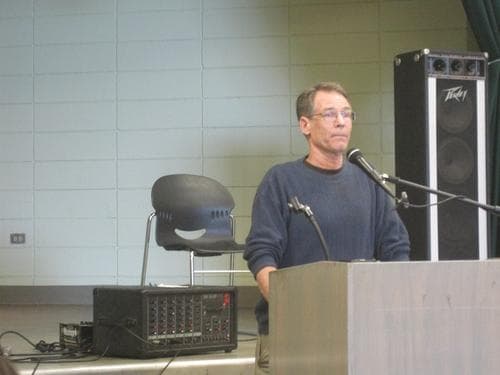
Kim Stanley Robinson is an American science fiction author known for his exploration of ecological and social themes. His notable works include the Mars Trilogy, comprising "Red Mars" and "Green Mars," as well as "Aurora" and "The Years of Rice and Salt." Robinson's writing often delves into the complexities of human interaction with the environment and the future of civilization.
Similar books
- The Martian
Andy Weir
4.4 (817k) average on GoodreadsThrillerFocuses on scientific problem-solving and survival on Mars, though 'Red Mars' is far grander in scope.
- Leviathan Wakes
James S.A. Corey
4.3 (171k) average on GoodreadsFantasyExplores the political tensions and conflicts between Earth, Mars, and the Outer Planets in a colonized solar system.
- Seveneves
Neal Stephenson
4.0 (95k) average on GoodreadsFantasyA sprawling hard science fiction epic with a focus on humanity's survival and rebuilding in space.
- The Martian Chronicles
Ray Bradbury
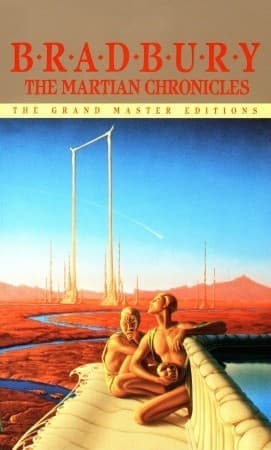
4.1 (210k) average on GoodreadsFantasyWhile both 'Red Mars' and 'The Martian Chronicles' explore humanity's relationship with Mars, their approaches differ significantly. Bradbury's work is largely allegorical and poetic, using Mars as a canvas for human folly, fear, and longing, often with a melancholic and mystical tone. Robinson, in contrast, offers a hard science fiction perspective, meticulously detailing the scientific and engineering challenges of colonization. Bradbury focuses on the psychological and cultural impact of human arrival on a supposedly 'empty' or already inhabited Mars, often through episodic vignettes, whereas Robinson constructs a grand, linear narrative focusing on the practicalities of building a new society from scratch, complete with political factions, economic struggles, and technological innovations. Bradbury’s Mars is a place of wonder and loss; Robinson’s is a place of arduous construction and ideological struggle.
- Harry Potter and the Sorcerer's Stone
J.K. Rowling
4.5 (7M) average on GoodreadsFantasyRescued from a miserable life under the stairs, an orphaned boy discovers he's a wizard destined for a magical school, where he uncovers a dangerous secret tied to the dark wizard who murdered his parents.
- The Hunger Games
Suzanne Collins
4.3 (6.4M) average on GoodreadsFantasyIn a future where children fight to the death on live television, Katniss Everdeen volunteers for the arena, turning a death sentence into a fight for survival and a spark of rebellion.





Enjoyed the summary?
A summary gives you the shape of the book. The book itself has the detail, the examples and the voice.
Find Red Mars on AmazonAs an Amazon Associate, BookBrief earns from qualifying purchases. How we're funded