
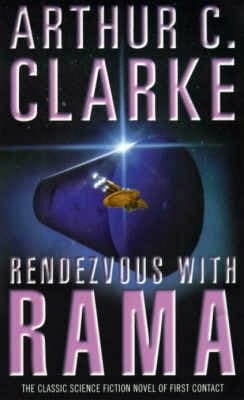
Synopsis
Covers the whole plot, including the ending.
- Difficulty
- Medium
- Pacing
- Moderate
- Mood
- Mysterious, Awe-inspiring, Contemplative, Scientific
- Read it if
- You love classic hard science fiction, detailed exploration of alien artifacts, and a sense of cosmic mystery without direct alien contact.
- Skip it if
- You prefer character-driven stories, action-packed plots, or expect a definitive explanation and interaction with alien intelligence.
Rendezvous with Rama Plot Summary
Covers the whole plot, including the ending.
The Discovery of Rama
In 2130, humanity's Spaceguard system, set up after a large asteroid hit in the 2070s, finds an unusual object entering the solar system from space. First called 31/439, it is quickly confirmed to be a huge, perfectly cylindrical asteroid, too regular to be natural. Astronomers rename it 'Rama' after a Hindu god. Its immense size – 20 kilometers long and 8 kilometers wide – and unusual path immediately create scientific and public interest. The United Planets' Advisory Council sends the survey vessel *Endeavour*, led by Commander Bill Norton, from the Mars orbital base to investigate this visitor. The trip will take several weeks, during which humanity guesses about Rama's origins and purpose.
Initial Exploration of the Raman Cylinder
The *Endeavour* reaches Rama as it gets closer to the Sun. After careful scouting, the crew finds three large airlocks at one end of the cylinder. Commander Norton, with Lieutenant Boris Rodrigo, makes the first entry into Rama through a partly open airlock. They find an antechamber that leads to a vast, dark interior. Using bright floodlights, they light up an incredible view: a perfectly cylindrical world with a 'sky' on one side and a flat plain on the other, divided by a deep trench. Rama's size and alien design are overwhelming, confirming it is an artificial, interstellar vessel of unknown origin and purpose. Their first exploration is limited by the darkness and the environment's unknown nature.
The Awakening of Rama
As Rama continues its journey closer to the Sun, its internal environment starts to change greatly. Commander Norton and his crew see a gradual increase in light as six large, linear 'strips' running the length of the cylinder slowly light up, like sunlight. Air begins to form, and the temperature rises to a comfortable level. Most surprisingly, three huge 'seas' of liquid, at first frozen, begin to melt. The central trench, now seen as the 'Cylindrical Sea,' also melts, creating a large body of water. This activation suggests Rama is not just an abandoned ship but a working vessel, now getting ready for its own internal operations, making the mystery of its creators and their intentions even deeper.
Exploring the Cylindrical Sea and New York
With Rama's interior now lit and warm, exploration increases. The *Endeavour* crew builds a small, inflatable catamaran, called a 'sea-cat,' to cross the large Cylindrical Sea. During their trip, they find strange, geometric 'islands' and structures. On the far side of the Cylindrical Sea, they discover a large, complex arrangement of buildings and towers, which they call 'New York' because it looks like a city on Earth. This 'city' seems designed for beings of a different size and body, with unusual ramps and many levels. Finding such an intricate and seemingly working urban environment inside Rama raises questions about its inhabitants and if they are still there.
Encountering the Biots
As the *Endeavour* crew explores New York, they start to find strange, robotic-like creatures. These 'biots' come in different shapes and functions, looking like crabs, spiders, and other insects, but they are clearly mechanical or bio-mechanical creations. They do various maintenance tasks, repairing structures and collecting materials, seeming unaware of the humans unless directly bothered. The biots appear to be Rama's 'workers' or 'drones,' suggesting a higher intelligence designed and programmed them. The humans watch them with awe and caution, realizing these are not the creators themselves but their tools, which further shows the Ramans' advanced nature.
The Southern Continent and Spider-Bots
A small team, including Lieutenant Karl Mercer, goes to the 'Southern Continent' – the landmass opposite the original entry point. Here, they find a different type of biot: the 'spider-bots.' These biots hunt, are drawn to biological heat, and are a direct danger. During an encounter, Mercer accidentally damages one of the spider-bots, causing it to break down and attack him. He is hurt, and the incident shows the possible dangers of interacting with Rama's systems and its inhabitants, even if they are only machines. This event makes the crew more cautious and respect the alien nature of their surroundings, reinforcing the idea that Rama is not a museum but an active, alien place.
The Hermian Mission and the Bomb
News of the biots and the possibility of a hostile encounter reaches the Mercury colony. Out of fear and worry, and without talking to the United Planets, the Mercury High Council decides that Rama is a threat. They send a missile with a nuclear warhead, meant to destroy Rama before it can harm humanity. Commander Norton is shocked by this sudden and aggressive action, understanding it is a serious mistake and a lost chance for peaceful contact. He immediately orders the *Endeavour* crew to try to stop and disarm the missile, a desperate race against time to prevent an act of war against an unknown, possibly peaceful, intelligence.
Interception and Disarmament
In a tense and dangerous operation, the *Endeavour* crew, led by Norton, races to stop the Mercury missile. They reach it and, using remote control and a daring spacewalk, successfully disarm the nuclear warhead just moments before it would have hit Rama. This act of going against the Mercury Council's orders saves humanity from committing an act of aggression and keeps open the chance for peaceful study and possible communication with the Ramans. The incident shows humanity's different reactions to the unknown: fear versus curiosity and respect.
The Raman Departure
As Rama nears the Sun's closest point, it performs a complex move, using the Sun's gravity to slingshot itself out of the solar system. Before it leaves, a final, fascinating discovery is made: a 'biological ark' containing samples of various Raman plants and animals, kept in suspended animation. The biots continue their work, preparing the vessel for its next part of the journey. The humans realize that Rama is not a warship or an invasion craft, but a large, self-sustaining biological research vessel or ark, collecting and listing life forms. The *Endeavour* crew watches as Rama speeds away, leaving more questions than answers, but also a great sense of wonder and a new understanding of the vastness and diversity of the cosmos.
A Second Rendezvous
Rama leaves the solar system, heading towards the Greater Magellanic Cloud, its original destination or perhaps just a stop on a much longer journey. The *Endeavour* crew, having spent weeks inside the alien artifact, returns to their base, changed by their experience. Humanity is left to deal with what Rama's visit means: the confirmation of intelligent alien life, the advanced technology, and the realization of their own place in a much larger universe. The novel ends with the hint of future encounters, as astronomers detect 'Rama II' and 'Rama III' following the same path, suggesting this was not a unique event but part of a recurring pattern, promising more mysteries and discoveries for humankind.
Rendezvous with Rama Characters
Commander Bill Norton
Protagonist
Commander of the *Endeavour*, leading the first human mission to Rama.
Commander Bill Norton is the seasoned and pragmatic captain of the *Endeavour*, a deep-space survey vessel. He is characterized by his calm demeanor, sharp intellect, and strong sense of responsibility. Norton prioritizes scientific discovery and cautious exploration over fear or aggression. He makes difficult decisions under pressure, such as leading the first entry into Rama and later defying the Hermian Council to disarm the nuclear missile. His leadership style is collaborative, valuing the expertise of his diverse crew. He is driven by a profound curiosity about the unknown and a desire to understand Rama rather than to destroy it, representing humanity's best qualities in the face of the alien.
Relationships: Lieutenant Boris Rodrigo (trusted subordinate and first partner in exploration); Dr. Perera (scientific advisor and colleague); Lieutenant Karl Mercer (crew member, whose injury highlights danger)
Lieutenant Boris Rodrigo
Supporting
First Officer of the *Endeavour* and Norton's second-in-command.
Lieutenant Boris Rodrigo is Commander Norton's reliable and capable First Officer. He is often the first to assist Norton in risky endeavors, including the initial entry into Rama. Rodrigo is practical and resourceful, frequently involved in the technical aspects of exploration and problem-solving. He demonstrates bravery and loyalty, supporting Norton's decisions even when they are controversial. His role is crucial in implementing the commander's orders and ensuring the safety and efficiency of the *Endeavour*'s operations within Rama. He represents the competent and dedicated personnel essential for such an unprecedented mission.
Relationships: Commander Bill Norton (superior officer and trusted colleague)
Dr. Perera
Supporting
Chief Science Officer aboard the *Endeavour*.
Dr. Perera is the Chief Science Officer on the *Endeavour*, representing the scientific curiosity and analytical mind of humanity. He is instrumental in interpreting the initial data from Rama and guiding the scientific aspects of the exploration. Perera often provides theoretical insights and scientific context for the strange phenomena encountered within Rama. He is driven by the pursuit of knowledge and plays a key role in understanding the nature of the biots and the overall function of the alien vessel. His character embodies the scientific community's excitement and dedication to unraveling the mysteries of Rama.
Relationships: Commander Bill Norton (colleague and scientific advisor)
Lieutenant Karl Mercer
Supporting
Crew member injured by a Raman biot.
Lieutenant Karl Mercer is a member of the *Endeavour* crew who is part of the exploration teams venturing into Rama. His most notable role is during the encounter with the 'spider-bots' on the Southern Continent. Mercer's accidental injury by a malfunctioning biot serves as a stark reminder of the inherent dangers and unpredictable nature of interacting with alien technology and life forms. His experience highlights the caution required and the potential for misunderstanding, even with seemingly benign alien constructs. He represents the human vulnerability and the learning curve involved in first contact.
Relationships: Commander Bill Norton (superior officer)
Sergeant Ruby Barnes
Supporting
Security Chief and expert in zero-G maneuvering.
Sergeant Ruby Barnes is the security chief and an expert in EVA (Extra-Vehicular Activity) and zero-gravity operations aboard the *Endeavour*. Her skills are particularly critical during the challenging mission to disarm the Hermian missile. Barnes demonstrates exceptional courage, precision, and physical prowess in a high-stakes situation. She is a reliable and highly competent member of the crew, representing the specialized skills necessary for deep-space exploration and crisis management. Her role in preventing the destruction of Rama is pivotal, showcasing her dedication and bravery.
Relationships: Commander Bill Norton (superior officer)
Dr. Laura Ernst
Supporting
Medical Officer aboard the *Endeavour*.
Dr. Laura Ernst is the medical officer of the *Endeavour*. Her primary role is to ensure the health and safety of the crew during their unprecedented mission. She is responsible for treating Lieutenant Mercer's injuries after his encounter with the spider-bot, demonstrating her medical expertise in an alien environment. Dr. Ernst represents the essential support services on a deep-space mission and the human element of care and concern amidst the alien wonders. Her presence underscores the realism of the expedition, where even the most advanced missions require basic human needs and medical attention.
Relationships: Commander Bill Norton (colleague); Lieutenant Karl Mercer (patient)
The Ramans
Mentioned
The unseen, highly advanced creators of Rama.
The Ramans are the enigmatic, unseen alien intelligence responsible for constructing and operating Rama. Their existence is only inferred through their colossal spacecraft and its intricate, automated systems, including the biots. Humanity never directly encounters the Ramans, leading to much speculation about their appearance, motivations, and level of intelligence. They represent the ultimate 'other' – a highly advanced civilization whose purpose and nature remain largely mysterious, challenging human assumptions about alien life and contact. Their technological prowess is evident in every aspect of Rama, from its self-sustaining environment to its complex biots and navigation systems.
The Hermian High Council
Antagonist
The governing body of Mercury, driven by fear and suspicion of Rama.
The Hermian High Council is the governing body of the Mercury colony. Driven by fear, paranoia, and a sense of self-preservation, they act as an antagonist by unilaterally deciding to destroy Rama with a nuclear missile. Their actions stem from a deep-seated distrust of the unknown and a belief that any alien presence must be inherently hostile. The Council represents the darker, more fearful side of humanity's reaction to first contact, contrasting sharply with Commander Norton's approach. Their decision highlights the political and ethical challenges inherent in humanity's encounter with alien intelligence.
Relationships: Commander Bill Norton (opposing viewpoint, as Norton thwarts their plan)
Rendezvous with Rama Themes
First Contact and the Unknown
The main theme is humanity's first meeting with an alien intelligence, Rama. The book explores human reactions: from scientific curiosity and wonder, shown by Commander Norton and his crew, to fear, paranoia, and aggression, seen in the Mercury High Council's decision to launch a nuclear missile. Clarke describes the process of careful exploration, observation, and forming ideas, showing the challenges of understanding an intelligence so different from our own. The lack of direct contact with the Ramans highlights the deep mystery and the limits of human understanding.
“For a long time, nothing happened. Then, a single airlock iris slowly opened. Humanity took its first hesitant step into the unknown.”
Humanity's Place in the Cosmos
Rama's arrival makes humanity face its place in a vast, populated universe. Rama's sheer size and technology make human achievements seem small, reminding us that humanity is likely not alone, nor necessarily the most advanced civilization. The book subtly changes humanity's view from being the main intelligence in the solar system to being a curious observer of a much larger cosmic effort. The realization that Rama is a working biological ark, not a warship, further shows the diversity of life and purpose beyond Earth, making us think about humanity's relative importance.
“It was impossible to look at Rama and not feel a profound sense of awe, and a corresponding sense of humanity's own insignificance.”
Exploration and Discovery
At its core, the novel celebrates exploration and the scientific method. The *Endeavour* crew's careful way of investigating Rama, from first scouting to detailed internal mapping and observing the biots, shows the spirit of discovery. Each new finding about Rama – its awakening, the Cylindrical Sea, New York, and the biots – moves the story forward and deepens the mystery. The book praises human cleverness and bravery in going into dangerous and unknown places for knowledge, emphasizing the human desire to explore and understand the universe.
“There was no fear here, only a hunger for knowledge, a burning need to understand.”
The Nature of Intelligence and Communication
Not directly talking with the Ramans brings up big questions about what intelligence is and if different species can understand each other. Humanity only meets the Ramans' automated creations – the biots – which do their jobs without seeming to notice or interact with humans. This makes the *Endeavour* crew 'read' the Ramans through their technology and their ship, much like archaeologists studying an old civilization. The theme explores if true communication is possible when the basic biological and psychological ways of thinking are so different, and if advanced intelligence always means a desire for contact.
“They were dealing with a mind so utterly alien that even its tools were beyond full comprehension.”
Plot Devices & Literary Techniques
The Big Dumb Object (BDO)
A massive, mysterious, and often automated alien artifact that serves as the central enigma.
Rama itself is the quintessential 'Big Dumb Object.' It is an enormous, self-contained artificial world whose purpose and origins are largely unknown to humanity. The BDO device allows Clarke to create a sense of wonder and mystery, as the focus is on humanity's exploration and interpretation of the object rather than direct interaction with its creators. Rama's sheer scale and the gradual revelation of its internal mechanisms – the lighting, atmosphere, seas, and biots – create continuous suspense and discovery, making the object a character in itself and a catalyst for human reactions and scientific inquiry.
The Unseen Alien
The intelligent alien creators are never directly encountered, only inferred through their technology.
Clarke deliberately keeps the Ramans themselves hidden, only showcasing their advanced technology and their automated 'biots.' This device magnifies the sense of mystery and prevents the story from becoming a typical 'alien invasion' or 'first contact' narrative with dialogue. By denying direct interaction, Clarke emphasizes the vast differences between species and the challenges of understanding a truly alien intelligence. It forces the human characters, and the reader, to speculate and interpret, making Rama's exploration an exercise in cosmic archaeology rather than diplomacy or conflict. This enhances the feeling of profound alienness and wonder.
The Scientific Method as Narrative Drive
The plot progresses through a methodical process of observation, hypothesis, and experimentation.
The narrative structure of *Rendezvous with Rama* is driven by the scientific method. Commander Norton and his crew approach Rama not with weapons, but with instruments and cautious exploration. Each discovery, from the airlocks to the Cylindrical Sea, New York, and the biots, is met with careful observation, data collection, and the formulation of hypotheses. The plot unfolds as a series of scientific investigations and problem-solving challenges, mirroring actual scientific discovery. This device grounds the fantastical elements in a sense of realism and celebrates human intellect and curiosity as the primary tools for confronting the unknown.
The 'Biological Ark' Revelation
The final discovery of Rama's true purpose as a vessel for life specimens.
The revelation that Rama is a 'biological ark' containing diverse Raman flora and fauna serves as a powerful plot twist and thematic culmination. It subverts expectations of either a warship or a derelict, instead presenting a more benign and scientific purpose. This device fundamentally alters humanity's understanding of the Ramans, shifting perceptions from potential invaders to advanced researchers or custodians of life. It provides a satisfying, albeit incomplete, answer to Rama's purpose, while simultaneously raising new questions about the scope of Raman civilization and their cosmic journey. It reinforces the theme of humanity's evolving understanding of alien intentions.
Rendezvous with Rama Quotes
“The Ramans do everything in threes.”
“The human race had to face the fact that it was no longer alone in the universe.”
“There are times when a man has to abandon logic and accept the improbable.”
“The only thing we can be sure of is that nothing is as it seems.”
“It is not the destination that matters, but the journey.”
“The universe is not only stranger than we imagine, it is stranger than we can imagine.”
“We are like children playing on the shore of a vast ocean.”
“Curiosity is the engine of civilization.”
“In space, all directions are equally meaningless until you choose one.”
“The past is a foreign country; they do things differently there.”
“Fear is the mind-killer, but in Rama, it was wonder that paralyzed.”
“Every answer only leads to more questions.”
“The stars are not for man, but man must reach for them anyway.”
“Silence is the most perfect expression of scorn.”
Quiz
10 questions on the plot and the characters. Each answer comes with a short explanation.
Question 1
What is the name of the spaceship sent to investigate Rama?
- Endeavour
- Discovery
- Enterprise
- Endeavour
Show answer
D. Endeavour The spaceship Endeavour is dispatched from Earth to rendezvous with Rama and explore its interior, carrying a crew of astronauts led by Commander Norton.
Question 2
What is the approximate weight of Rama as initially measured by astronomers?
- One billion tons
- Ten trillion tons
- One hundred million tons
- One quadrillion tons
Show answer
B. Ten trillion tons Early observations reveal Rama's immense mass of over ten trillion tons, indicating it is far too large and dense to be a natural asteroid.
Question 3
What is the shape of Rama?
- Spherical
- Cylindrical
- Cubical
- Pyramidal
Show answer
B. Cylindrical Rama is described as a perfect cylinder, approximately 50 kilometers long and 20 kilometers in diameter, rotating to create artificial gravity on its inner surface.
Question 4
Who is the commander of the Endeavour mission to Rama?
- Captain James Kirk
- Commander William Norton
- Captain David Bowman
- Commander Ellen Ripley
Show answer
B. Commander William Norton Commander William Norton leads the crew of the Endeavour, making critical decisions during the exploration of Rama's mysterious interior.
Question 5
What is the name of the sea found inside Rama?
- The Cylindrical Sea
- The Raman Ocean
- The Inner Sea
- The Artificial Sea
Show answer
A. The Cylindrical Sea The Cylindrical Sea is a circular body of water that spans the interior circumference of Rama, dividing the cylindrical world into two main regions.
Question 6
What phenomenon occurs as Rama approaches perihelion (closest point to the Sun)?
- It begins to decelerate
- It changes direction toward Earth
- It activates internal systems and lifeforms
- It sends a radio message to humanity
Show answer
C. It activates internal systems and lifeforms As Rama nears the Sun, its internal systems power up, including lighting, weather, and biological entities, suggesting it is a dormant spacecraft reactivating for its mission.
Question 7
What is the primary theme explored in 'Rendezvous with Rama' regarding alien contact?
- Humanity's readiness for interstellar war
- The impossibility of understanding alien minds
- The inevitability of human-alien conflict
- The superiority of alien technology
Show answer
B. The impossibility of understanding alien minds The novel emphasizes the vast gulf between human and alien intelligence, as the Ramans remain completely enigmatic, with their motives and nature beyond human comprehension.
Question 8
Which of these is NOT a type of entity or phenomenon encountered inside Rama?
- Biots (biological robots)
- The Ramans themselves
- A giant hornet-like creature
- A city-like structure called 'New York'
Show answer
B. The Ramans themselves Despite extensive exploration, the human crew never encounters the actual Ramans; they only find evidence of their technology and automated systems, such as biots and structures.
Question 9
What is the fate of Rama after its passage through the solar system?
- It is destroyed by human weapons
- It enters orbit around Jupiter
- It continues on its trajectory out of the solar system
- It lands on Mars to establish a colony
Show answer
C. It continues on its trajectory out of the solar system Rama uses a gravity assist from the Sun to accelerate and leaves the solar system as mysteriously as it arrived, with its purpose and destination remaining unknown.
Question 10
What does the novel suggest about the Ramans' interest in humanity?
- They are actively hostile and planning an invasion
- They are completely indifferent to human existence
- They seek to establish diplomatic relations
- They are studying humans for scientific research
Show answer
B. They are completely indifferent to human existence Rama shows no signs of acknowledging or interacting with humanity, implying that advanced alien civilizations might be so focused on their own goals that they regard humans as insignificant.
Rendezvous with Rama FAQ
What is 'Rendezvous with Rama' about?
The novel follows the crew of the spaceship Endeavour as they investigate Rama, a massive cylindrical alien spacecraft that enters the solar system. Led by Commander Bill Norton, they explore its mysterious interior filled with artificial landscapes, strange machines, and biological entities, trying to understand its purpose and the nature of its creators before it leaves the solar system.
Why should I read 'Rendezvous with Rama'?
It's a classic of hard science fiction that masterfully builds tension through scientific discovery rather than conflict, focusing on humanity's awe and curiosity when confronting the truly alien. Clarke's meticulous attention to plausible physics and engineering makes the exploration of Rama feel breathtakingly real and immersive.
What is the background/setting of 'Rendezvous with Rama'?
Set in the 22nd century, humanity has colonized parts of the solar system but hasn't encountered alien life. When Rama is detected approaching from interstellar space, the United Planets organization sends the Endeavour from Mars to intercept it near the orbit of Venus, creating a race against time as the spacecraft continues its trajectory.
What are the most memorable quotes from 'Rendezvous with Rama'?
Notable quotes include 'The Ramans do everything in threes,' highlighting a recurring pattern in Rama's design, and 'The universe is not only stranger than we imagine, it is stranger than we can imagine,' reflecting the crew's humbling realization about alien intelligence. Another is 'There goes Newton's Third Law,' uttered during Rama's mysterious acceleration.
What writing style does Arthur C. Clarke use in this book?
Clarke employs a clear, precise, and descriptive prose style that emphasizes scientific realism and logical deduction. The narrative is driven by observation and problem-solving rather than character drama, creating a sense of clinical wonder as the crew methodically uncovers Rama's secrets.
What minor details add significant meaning in 'Rendezvous with Rama'?
Small details like the three stairways in Rama's central plain, the identical cities at each end, and the biots' specialized functions subtly reinforce the theme of symmetry and efficiency in alien design. The absence of any living Ramans, contrasted with the active machinery, hints at a civilization that has transcended biological form or left only automated systems.
What are some subtle foreshadowing moments in the book?
Early mentions of Rama's perfect symmetry and clockwork-like operations foreshadow its nature as an automated vessel rather than one crewed by biological beings. The gradual awakening of systems as Rama approaches the sun hints at its use of solar energy, culminating in the dramatic 'lighting' of the Cylindrical Sea and the biots' reactivation.
What unexpected character connections exist in the story?
While character interactions are minimal, the connection between the scientific team on Earth (like Dr. Perera) and the Endeavour crew creates tension, as remote experts interpret data differently from those on-site. The Hermians' aggressive interest in Rama's technology also unexpectedly links political factions on Mars to the mission's stakes.
What are unspoken character motivations in 'Rendezvous with Rama'?
Commander Norton is driven by a deep curiosity to understand Rama beyond mere duty, while crew members like Jimmy Pak seek personal glory through exploration. The Hermians' desire to claim Rama's technology stems from unspoken economic and military ambitions, contrasting with the scientists' pure thirst for knowledge.
What psychological complexities do characters exhibit?
The crew balances professional detachment with moments of awe and existential unease, such as when facing Rama's sheer scale or the biots' indifference. Norton grapples with the responsibility of representing humanity to a possibly superior intelligence, while others like Surgeon-Commander Laura Ernst manage the stress of isolation and unknown dangers.
What are the major emotional turning points in the novel?
Key moments include the first entry into Rama, evoking wonder and fear; the discovery of the Cylindrical Sea, which deepens the mystery; the awakening of biots, causing tension; and Rama's acceleration away from the sun, leading to a mix of relief and disappointment as the crew realizes they may never fully understand its purpose.
How do relationship dynamics evolve among the crew?
Initially focused on protocol and hierarchy, the crew bonds through shared danger and discovery, such as during the expedition across the Cylindrical Sea. Conflicts arise over risk-taking versus caution, but mutual respect grows as they rely on each other's expertise, culminating in a cohesive team facing Rama's departure together.
Which parts of 'Rendezvous with Rama' remain ambiguous or open-ended?
The ultimate purpose of Rama is never revealed—whether it's a colony ship, probe, or something else—and the nature of the Ramans themselves remains entirely unknown. The biots' functions and the significance of Rama's precise trajectory are left unexplained, emphasizing the theme of humanity's limited understanding.
What are controversial scenes or decisions in the book?
Some readers debate the crew's decision to split up and explore Rama extensively despite unknown risks, or the Hermians' aggressive stance on claiming alien technology. The lack of direct alien contact has also sparked discussion about whether the novel's avoidance of conflict is a strength or a narrative shortcoming.
'Rendezvous with Rama' ending explained: how it ends & what it means
The novel ends with Rama using solar energy to accelerate out of the solar system, leaving humanity with more questions than answers. This underscores themes of cosmic indifference and the limits of human knowledge—the Ramans may be so advanced that they barely notice humanity, and the encounter serves as a humbling reminder of our small place in the universe.
What is the significance of Rama's cylindrical design?
Rama's rotating cylindrical shape creates artificial gravity on its inner surface, allowing for a habitable landscape with a 'Cylindrical Sea' and cities. This design showcases Clarke's hard SF approach, using plausible physics to imagine an alien environment, while also symbolizing the self-contained, enigmatic nature of the vessel as a world unto itself.
How does the book handle the theme of first contact?
Unlike typical first-contact stories, 'Rendezvous with Rama' presents a one-sided encounter where humanity observes but never interacts with the Ramans. This shifts focus from conflict to pure exploration and speculation, highlighting the anxiety and wonder of confronting something utterly alien and incomprehensible.
What role do the biots play in the story?
The biots—robotic biological entities like crab-like cleaners and spider-like builders—maintain Rama's systems and reactivate as it nears the sun. They represent the only 'life' the crew encounters, emphasizing the Ramans' advanced automation and adding tension as the crew tries to avoid or study them without understanding their purposes.
How does Clarke build suspense without traditional villains?
Suspense arises from environmental hazards like Rama's sudden temperature changes, the mystery of its systems activating, and the race against time as it approaches perihelion. The unknown intentions of the Ramans and the crew's own limitations create a pervasive sense of danger rooted in exploration rather than antagonism.
About the author
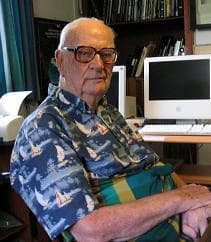
Sir Arthur Charles Clarke was an English science fiction writer, science writer, futurist, inventor, undersea explorer, and television series host.
Similar books
- Ringworld
Larry Niven
4.0 (104k) average on GoodreadsFantasyHuman exploration of a massive, enigmatic artificial alien structure.
- Blindsight
Peter Watts
4.0 (27k) average on GoodreadsFantasyFirst contact with an utterly alien intelligence and a focus on scientific discovery.
- Dune
Frank Herbert
4.2 (766k) average on GoodreadsFantasyDune focuses on complex political intrigue, ecological themes, philosophical depth, and intricate character development within a galactic empire, exploring human power and belief systems. Rendezvous with Rama, conversely, strips away much of this human-centric drama to concentrate solely on the scientific exploration of a single, enigmatic alien artifact and humanity's reaction to the utterly unknown.
- The Hunger Games
Suzanne Collins
4.3 (6.4M) average on GoodreadsFantasyIn a future where children fight to the death on live television, Katniss Everdeen volunteers for the arena, turning a death sentence into a fight for survival and a spark of rebellion.
- 1984
George Orwell
4.2 (3.1M) average on GoodreadsPoliticsIn a future where surveillance and thought control are absolute, a man's search for truth clashes with the Party, showing that hope can be a form of rebellion.
- Divergent
Veronica Roth
4.2 (2.9M) average on GoodreadsFantasyIn a society divided by virtues, a sixteen-year-old's difference from the norm starts a rebellion that threatens her world.




Enjoyed the summary?
A summary gives you the shape of the book. The book itself has the detail, the examples and the voice.
Find Rendezvous with Rama on AmazonAs an Amazon Associate, BookBrief earns from qualifying purchases. How we're funded