
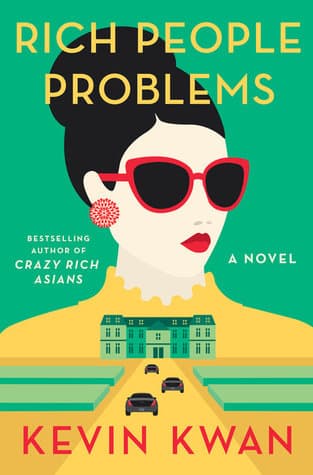
Synopsis
Covers the whole plot, including the ending.
- Difficulty
- Easy
- Pacing
- Fast
- Mood
- Humorous, Dramatic, Lavish, Satirical
- Read it if
- You love over-the-top drama, intricate family sagas, and a hilarious peek into the lives of the ultra-rich.
- Skip it if
- You prefer subtle character studies or stories with grounded, realistic stakes.
Rich People Problems Plot Summary
Covers the whole plot, including the ending.
The Matriarch's Decline
The novel opens with the impending death of Su Yi, the matriarch of the wealthy Shang-Young family, at her ancestral estate, Tyersall Park, in Singapore. Nicholas Young, her favorite grandson, learns of her critical condition from his mother, Kerry. Nicholas and his wife, Rachel Chu, immediately prepare to fly from New York to Singapore, understanding the moment's significance for the entire family. The news spreads through the Shang-Young and Leong clans, as relatives from around the world gather at Tyersall Park, not only to pay respects but also to position themselves for the inevitable distribution of Su Yi's fortune and the estate. This sets the stage for a dramatic power struggle among the super-rich.
The Gathering Storm at Tyersall Park
Upon arrival at Tyersall Park, Nicholas and Rachel enter the chaotic atmosphere of the Shang-Young family's gathering. Various cousins, aunts, and uncles, many of whom Nicholas hasn't seen in years, are already present, each subtly or overtly vying for Su Yi's attention. The air is thick with animosity and competitive displays of affection for the dying matriarch. Secrets and old grievances resurface, particularly concerning Su Yi's will and the future of Tyersall Park, a sixty-four-acre property in prime Singapore real estate. Nicholas quickly realizes that his grandmother's final days will not be peaceful, as the family's problems escalate into a battle for inheritance.
Astrid's Torment and Charlie's Return
Away from Tyersall Park, Astrid Leong is dealing with her own problems. Her ex-husband, Michael Teo, driven by jealousy, works to sabotage her relationship with her childhood sweetheart, Charlie Wu. Michael uses a smear campaign, leaking fabricated stories to the press and manipulating social media to damage Astrid's reputation and business. Despite these attacks, Astrid and Charlie's bond strengthens, and Charlie is a supportive partner. However, Michael's relentless pursuit creates significant stress, threatening Astrid's peace and public image, and forcing her to confront his bitterness and the lengths he will go to hurt her.
Kitty Pong's Social Climb
Kitty Pong, now married to Jack Bing, China's second-richest man, finds herself in a new social stratum but still insecure. Despite her wealth and status, she feels overshadowed by Jack's famous fashionista daughter, Colette Bing. Kitty's attempts to impress Colette often backfire, leading to awkward situations. She tries to assert her position, especially in fashion and social events, but Colette's natural elegance and existing network make it difficult. Kitty's problems show up as a relentless, often comical, struggle for acceptance within her new, elite family, highlighting the endless pursuit of status even at the highest levels.
The Will and the Secret Heirs
After Su Yi's death, the family gathers for the reading of her will, a tense event. The will's contents cause drama, as many relatives are disappointed by their allocations, especially those who felt entitled. The most contentious point is the disposition of Tyersall Park. Amidst the revelations, a shocking secret comes to light: Su Yi had a long-lost son, an illegitimate child named Christopher, who was given up for adoption decades ago. This revelation questions the entire inheritance, as Christopher, if found, would have a claim to a significant portion of the estate, including Tyersall Park, much to the dismay of the family.
The Search for Christopher
Nicholas, guided by duty and a desire to honor his grandmother's wishes, takes on the responsibility of finding Christopher. Rachel, with her intellect and research skills, assists him. Their investigation leads them through old family records, obscure connections, and a journey that spans continents, from Singapore to London and beyond. They uncover fragments of Christopher's life, piecing together his history after he was given up for adoption. The search is challenging, as many family members, particularly those who stand to lose inheritance, try to obstruct their efforts, fearing the implications of Christopher's discovery for their own claims.
Michael's Escalating Vengeance
Michael Teo's vendetta against Astrid and Charlie reaches a dangerous peak. He orchestrates a public humiliation for Astrid, involving a fabricated scandal that goes viral. More alarmingly, he arranges for Charlie Wu's teenage son, Cassian, to be kidnapped from his elite Hong Kong private school, believing this will force Charlie to retreat and leave Astrid. The kidnapping sends shockwaves through their lives, forcing Astrid and Charlie to navigate a terrifying ordeal while trying to protect Cassian. This extreme act shows Michael's depravity and the severe consequences of his jealous rage, putting the lives of those Astrid loves at risk.
Tyersall Park's Fate
The fate of Tyersall Park remains a central point of contention. With Christopher's revelation and the complexities of Su Yi's will, the family is divided on whether to sell the valuable property for a massive profit or preserve it as a family legacy. Nicholas, along with a few others, advocates for its preservation, seeing it as more than just real estate but a symbol of their heritage. However, the allure of billions of dollars from a potential sale is too strong for many of the more greedy relatives. Heated arguments and backroom dealings ensue, highlighting the deep rift between those who prioritize tradition and those driven by financial gain.
Resolution and New Beginnings
Ultimately, many of the conflicts find resolution. Nicholas and Rachel successfully locate Christopher, who, surprisingly, is not interested in the vast fortune, having built a fulfilling life of his own. His disinterest defuses much of the tension around the inheritance. Astrid and Charlie rescue Cassian, and Michael Teo is brought to justice for his crimes, allowing Astrid and Charlie to formalize their relationship with a surprise, star-studded wedding proposal in India. Kitty Pong, through a series of unexpected events, gains some respect and finds her place within her new family, in her own unique, often comical, way. The various plotlines converge, bringing closure and new beginnings for the main characters.
The Legacy of Su Yi
The novel concludes with the final disposition of Su Yi's estate. Tyersall Park is preserved, fulfilling Su Yi's deepest wish, thanks in part to Christopher's decision and Nicholas's efforts. The immense wealth is distributed, but not without further squabbles and the family's problems. The events around Su Yi's death and will cause significant change within the Shang-Young and Leong families. Nicholas and Rachel solidify their positions as moral anchors, Astrid finds true happiness, and even characters like Kitty Pong experience growth. Su Yi's legacy is honored, and while the family remains imperfect, a new chapter begins, with both continuity and transformation.
Principal Figures
Nicholas Young
Protagonist
The unassuming, morally grounded heir to the Young family fortune.
Nicholas Young is the beloved grandson of Su Yi and a professor in New York. Despite his immense family wealth, he remains humble, intelligent, and deeply principled, often serving as the moral compass for his often-avaricious family. He values tradition, family legacy, and genuine human connection over material possessions and social status. His love for his grandmother and his desire to do what is right drive many of his actions throughout the story, particularly in navigating the complexities of her will.
Relationships: Rachel Chu (Devoted and loving husband-wife relationship); Su Yi (Doting grandson, favorite of his grandmother); Kerry Young (Loving son-mother relationship)
Rachel Chu
Protagonist
Nicholas's intelligent and supportive wife, an economics professor.
Rachel Chu is Nicholas's brilliant and pragmatic wife, an economics professor. She is an outsider to the extreme wealth of the Shang-Young family, which gives her a unique, often insightful, perspective on their 'rich people problems.' She is fiercely loyal to Nicholas, intelligent, and possesses a strong moral compass. Rachel's sharp mind and resourceful nature are invaluable in navigating the family's intricate politics and uncovering secrets, particularly during the search for Christopher.
Relationships: Nicholas Young (Devoted and loving wife-husband relationship); Su Yi (Respected daughter-in-law, though initially met with some resistance)
Su Yi
Central Figure (Deceased)
The formidable and beloved matriarch of the Shang-Young family.
Su Yi is the dying matriarch whose vast fortune and ancestral estate, Tyersall Park, become the focal point of the family's conflicts. Though she spends most of the book on her deathbed, her presence and decisions, particularly regarding her will, drive the entire plot. She is portrayed as a woman of immense power, tradition, and a deep, if sometimes hidden, capacity for love. Her life's secrets and her final wishes ultimately shape the destinies of her descendants.
Relationships: Nicholas Young (Her favorite grandson); Christopher (Her long-lost illegitimate son)
Astrid Leong
Supporting Protagonist
The 'goddess' of Singapore society, known for her beauty, style, and kindness.
Astrid Leong is Nicholas's cousin, renowned for her impeccable taste, stunning beauty, and compassionate nature. Despite her immense wealth and social status, she remains grounded and kind. Her storyline primarily revolves around her rekindled romance with Charlie Wu and her struggles with her vindictive ex-husband, Michael Teo, who seeks to destroy her. Astrid embodies grace under pressure, enduring malicious attacks with dignity while fighting for her happiness.
Relationships: Charlie Wu (Childhood sweethearts, rekindled romance, eventual husband); Michael Teo (Bitter and vengeful ex-husband); Nicholas Young (Cousins, close friends)
Charlie Wu
Supporting Character
Astrid's kind and devoted childhood sweetheart, a tech billionaire.
Charlie Wu is Astrid Leong's childhood sweetheart and a self-made tech billionaire. He is intelligent, stable, and deeply devoted to Astrid. Despite his wealth, he is unassuming and genuine, offering Astrid unwavering support and protection against her ex-husband's machinations. Charlie represents a healthy, loving relationship built on mutual respect and understanding, contrasting sharply with Astrid's previous tumultuous marriage.
Relationships: Astrid Leong (Childhood sweethearts, rekindled romance, eventual wife); Cassian Wu (Loving father-son relationship)
Kitty Pong
Supporting Character / Comic Relief
The social-climbing ex-actress, now married to China's second richest man.
Kitty Pong is a former soap opera actress who has married Jack Bing, China's second-richest man. Despite her new immense wealth, she remains insecure, socially awkward, and desperate for acceptance in the highest echelons of society. Her attempts to fit in, particularly with her sophisticated stepdaughter Colette Bing, often result in hilarious social blunders. Kitty is driven by a relentless desire for status and recognition, often resorting to comical and misguided schemes.
Relationships: Jack Bing (Husband); Colette Bing (Stepdaughter, rival for social status)
Michael Teo
Antagonist
Astrid's jealous and vindictive ex-husband.
Michael Teo is Astrid Leong's ex-husband, a man consumed by jealousy and bitterness over Astrid's wealth and their failed marriage. He is cunning, manipulative, and resorts to extreme measures, including smear campaigns and kidnapping, to hurt Astrid and Charlie Wu. His character embodies the destructive power of envy and insecurity, acting as a significant antagonist in Astrid's storyline.
Relationships: Astrid Leong (Ex-husband, tormentor); Charlie Wu (Rival, target of his schemes)
Colette Bing
Supporting Character
Jack Bing's elegant and famous fashionista daughter.
Colette Bing is Jack Bing's daughter and a prominent fashion influencer and socialite. She is sophisticated, effortlessly chic, and possesses a natural charisma that contrasts sharply with her stepmother Kitty Pong's awkward attempts at social climbing. Colette is generally kind but can be oblivious to Kitty's struggles, often unintentionally making Kitty feel more inadequate.
Relationships: Jack Bing (Father); Kitty Pong (Stepmother, social rival)
Christopher
Mentioned / Pivotal Figure
Su Yi's long-lost illegitimate son.
Christopher is Su Yi's secret illegitimate son, given up for adoption decades ago. His existence, revealed in Su Yi's will, throws the entire inheritance into disarray as he has a legitimate claim to a significant portion of the estate. When found, he is revealed to be a grounded, humble individual who has built a fulfilling life for himself, completely uninterested in the vast wealth and social drama of his birth family. His character serves as a stark contrast to the avarice of the Shang-Young clan.
Relationships: Su Yi (Biological mother); Nicholas Young (Half-nephew, the one who finds him)
Themes & Insights
The Corrupting Influence of Extreme Wealth
The novel shows how vast fortunes breed greed, jealousy, and social dysfunction within families. The Shang-Young clan's scramble for Su Yi's inheritance highlights how money distorts relationships, turning relatives into rivals. Characters like Michael Teo show how wealth amplifies existing insecurities and fuels destructive behavior, as he uses his resources to exact revenge on Astrid. The constant pursuit of status, exemplified by Kitty Pong, shows that even immense wealth does not guarantee happiness, but often creates new problems. The book satirizes the idea that money solves everything, instead showing it often complicates and corrupts.
“The only thing more expensive than being rich is being poor.”
Family Legacy vs. Personal Happiness
A core tension is the conflict between upholding family traditions and securing individual happiness. Nicholas and Rachel are often caught between the expectations of the Shang-Young dynasty and their desire for a simpler life. The battle over Tyersall Park shows this, with some family members valuing the property as heritage and others seeing it as a financial asset. Astrid's struggle to pursue her love for Charlie Wu while battling societal judgment and her ex-husband's attacks also reflects this theme, showing the pressure to conform to family and social expectations even at the cost of personal fulfillment.
“In Asia, family is everything. But sometimes, everything is too much.”
Identity and Belonging
Many characters deal with their sense of identity and where they belong within their social circles. Rachel Chu, as an American-born Chinese outsider, navigates the world of Asian high society. Kitty Pong, despite marrying into extreme wealth, struggles to gain acceptance from her stepdaughter Colette and the wider elite. Even Astrid faces an identity crisis as she tries to shed the shadow of her past marriage and forge a new path with Charlie. The search for Christopher also touches on this, exploring how one's origins and family ties shape, or fail to shape, one's sense of self and belonging.
“No matter how rich you are, you still have to figure out who you are.”
The Power of Love and Loyalty
Amidst the opulence and drama, the novel celebrates genuine love and loyalty. Nicholas and Rachel's bond provides a stable, moral center. Astrid and Charlie's rekindled romance, tested by Michael's malice, triumphs, highlighting love's resilience. The loyalty Nicholas shows to his grandmother's memory and his determination to fulfill her wishes, even when confronting his greedy relatives, underscores the importance of familial love beyond material gain. These relationships offer a contrast to the superficiality and avarice that often characterize the 'crazy rich' world.
“Love was the one thing money couldn’t buy, and ironically, it was the only thing that truly mattered.”
Plot Devices & Literary Techniques
Inheritance Plot
A dying matriarch's will sparks a battle for vast wealth and property.
The entire novel is driven by the classic inheritance plot, centered around Su Yi's impending death and the subsequent reading of her will. This device serves as the primary catalyst for conflict, bringing together disparate family members and exposing their true characters and motivations. The immense value of Tyersall Park and Su Yi's other assets creates a high-stakes environment where greed, manipulation, and long-buried secrets come to the forefront. The unexpected revelation of Christopher, Su Yi's illegitimate son, further complicates the inheritance, serving as a major plot twist that reshapes the family's future and the distribution of wealth.
Parallel Storylines
Multiple concurrent narratives follow different characters' 'rich people problems.'
The novel employs parallel storylines, weaving together the separate but interconnected narratives of Nicholas and Rachel at Tyersall Park, Astrid's romantic travails, and Kitty Pong's social climbing. This device allows the author to showcase the diverse manifestations of 'rich people problems' across different segments of the ultra-wealthy. While Nicholas's story focuses on the family inheritance, Astrid's explores the destructive power of jealousy and the pursuit of true love, and Kitty's provides comic relief through her social insecurities. These parallel plots occasionally intersect, enriching the overall tapestry of the crazy rich world and offering varied perspectives on its challenges.
Social Satire
Exaggerated portrayals of the wealthy to critique their excesses and absurdities.
Kevin Kwan utilizes social satire throughout the novel to highlight and critique the absurdities, excesses, and often superficial concerns of the ultra-rich. This is evident in the extravagant descriptions of fashion, homes, and lifestyles, as well as the characters' often self-important dialogue and petty squabbles. Kitty Pong's character, in particular, serves as a vehicle for much of the comic satire, with her misguided attempts at social climbing and her desperate need for validation. The satire often serves to underscore the moral emptiness that can accompany immense wealth, contrasting it with the grounded values of characters like Nicholas and Rachel.
Deus ex Machina (subverted)
An unexpected character or event resolves a seemingly insurmountable problem, often humorously.
While not a pure deus ex machina in the traditional sense, the discovery of Christopher, Su Yi's long-lost son, functions as a subverted version of this device. His existence is a complete surprise, and his unexpected lack of interest in the vast inheritance provides a convenient and somewhat humorous resolution to the intense family conflict over Tyersall Park. Instead of a divine intervention, it's a very human, un-rich-person-like decision that defuses the central tension, allowing for a resolution that might have otherwise been impossible given the family's greed. This twist provides both comedic relief and a satisfying, albeit unexpected, narrative shortcut.
Rich People Problems Quotes
“There are three things in life that are truly important: family, friends, and shopping.”
“Money doesn't buy happiness, but it does buy a private jet, and that's pretty close.”
“The only thing better than inheriting a fortune is inheriting a fortune and a scandal.”
“Never underestimate the power of a woman with a good tailor and an even better lawyer.”
“True love is not about finding someone to live with, it's about finding someone you can't live without.”
“Sometimes the greatest luxury is having no one know what you own.”
“It's not about how much money you have, it's about how much money you can spend without anyone noticing.”
“The best way to get over a man is to get under a new one. Or, failing that, to buy a new Birkin.”
“You can take the girl out of the kampung, but you can't take the kampung out of the girl.”
“Being rich isn't about having a lot of money; it's about having the freedom to do whatever you want, whenever you want.”
“In the world of the super-rich, a divorce is merely a strategic reallocation of assets.”
“The only thing more expensive than being poor is being rich and trying to hide it.”
“Life is too short to wear boring jewelry.”
“Sometimes the greatest love stories are the ones that are never fully told.”
Quiz
10 questions on the plot and the characters. Each answer comes with a short explanation.
Question 1
What is the primary reason Nicholas Young rushes to Singapore at the beginning of the novel?
- To attend a major family wedding
- To be by his grandmother Su Yi's bedside as she is on her deathbed
- To escape a scandal in New York
- To finalize a business deal for his family
Show answer
B. To be by his grandmother Su Yi's bedside as she is on her deathbed Nicholas rushes to Singapore because his grandmother, Su Yi, is on her deathbed, and the entire Shang-Young clan has gathered.
Question 2
Which significant property is the focus of the family's inheritance battle in 'Rich People Problems'?
- The Shang-Young family's private island in the Sulu Sea
- An opulent penthouse in Hong Kong
- Tyersall Park, a trophy estate in Singapore
- A chain of luxury hotels across Asia
Show answer
C. Tyersall Park, a trophy estate in Singapore The primary object of the inheritance battle is Tyersall Park, Su Yi's ancestral home in Singapore.
Question 3
Who is Astrid Leong desperately in love with, despite interference from her ex-husband?
- Michael Teo
- Charlie Wu
- Bernard Tai
- Nick Young
Show answer
B. Charlie Wu Astrid Leong is trying to rekindle her romance with her old sweetheart, Charlie Wu, while dealing with her vindictive ex-husband.
Question 4
What is Kitty Pong's primary motivation or source of insecurity in 'Rich People Problems'?
- Her desire to become a renowned chef
- Her feeling of being upstaged by her stepdaughter, Colette Bing
- Her ambition to run for political office in China
- Her fear of losing her husband's fortune due to a bad investment
Show answer
B. Her feeling of being upstaged by her stepdaughter, Colette Bing Kitty Pong, despite being married to Jack Bing, is still insecure and feels overshadowed by her famous fashionista stepdaughter, Colette Bing.
Question 5
Which character is described as being 'hell-bent on destroying Astrid's reputation and relationship'?
- Nicholas Young
- Charlie Wu
- Astrid's ex-husband
- Kitty Pong
Show answer
C. Astrid's ex-husband Astrid's ex-husband is portrayed as being consumed by jealousy and actively trying to sabotage her life and relationship with Charlie Wu.
Question 6
What is one of the key themes explored through the 'backbiting and intrigue' surrounding Su Yi's deathbed?
- The importance of family unity above all else
- The corrupting influence of immense wealth and inheritance disputes
- The cultural significance of traditional mourning rituals
- The simplicity of life among Asia's wealthiest families
Show answer
B. The corrupting influence of immense wealth and inheritance disputes The gathering of the Shang-Young clan to stake claim to Su Yi's fortune highlights the theme of how vast wealth can lead to greed, backbiting, and family disunity.
Question 7
The synopsis mentions a 'surprise marriage proposal' occurring at what type of location?
- A secluded private island in the Sulu Sea
- A high-fashion runway show in Milan
- An Indian palace
- The top of the Empire State Building
Show answer
C. An Indian palace The synopsis explicitly states the surprise marriage proposal takes place 'at an Indian palace that is caught on camera by the telephoto lenses of paparazzi'.
Question 8
What is the significance of the couture-gown sabotage mentioned in the synopsis?
- It is a metaphor for the family's declining fashion sense.
- It represents a 'battle royal' driven by an ex-wife's psychotic jealousy.
- It's a misunderstanding that accidentally leads to a new fashion trend.
- It highlights the challenges of maintaining high-end garments.
Show answer
B. It represents a 'battle royal' driven by an ex-wife's psychotic jealousy. The couture-gown sabotage is described as part of a 'battle royal fought through couture-gown sabotage' by an ex-wife driven psychotic with jealousy, indicating the extreme measures taken in family feuds.
Question 9
Beyond the inheritance of Tyersall Park, what broader 'problem' does the novel hilariously reveal about Asia's most privileged families?
- Their struggle with adapting to modern technology.
- Their inability to manage their vast financial portfolios.
- The long-buried secrets and absurdities that come with their immense wealth.
- Their constant search for new philanthropic causes.
Show answer
C. The long-buried secrets and absurdities that come with their immense wealth. The book 'hilariously reveals the long-buried secrets of Asia's most privileged families and their rich people problems,' suggesting that despite their wealth, they face unique and often absurd challenges.
Question 10
What is one of the specific locations mentioned in the synopsis that showcases the global reach of the story?
- The bustling markets of Bangkok
- The elegantly appointed mansions of Manila
- The ski resorts of Japan
- The ancient temples of Cambodia
Show answer
B. The elegantly appointed mansions of Manila The synopsis states the tale 'takes us from the elegantly appointed mansions of Manila to the secluded private islands in the Sulu Sea,' highlighting the diverse and luxurious settings.
Rich People Problems FAQ
What is the central conflict driving the plot of 'Rich People Problems'?
The primary conflict revolves around the impending death of Su Yi, the matriarch of the Shang-Young family, and the subsequent scramble among her numerous relatives to inherit her vast fortune, particularly Tyersall Park, her ancestral home in Singapore. This sets off a chain of backbiting, intrigue, and dramatic revelations as family members vie for control.
Who is Nicholas Young and what is his role in the story?
Nicholas Young is Su Yi's grandson and the protagonist from the previous books. He rushes to be by his grandmother's side, but his presence also makes him a potential heir, putting him at odds with other family members despite his initial disinterest in the inheritance itself. He often acts as an observer and moral compass amidst the family's avarice.
What personal struggle does Astrid Leong face in this book?
Astrid Leong is deeply in love with her old sweetheart, Charlie Wu, but her happiness is jeopardized by her vindictive ex-husband, Michael Teo. Michael is consumed by jealousy and actively tries to destroy Astrid's reputation and relationship with Charlie, leading to significant emotional turmoil and public scandal for Astrid.
How does Kitty Pong contribute to the 'rich people problems' theme?
Kitty Pong, now married to Jack Bing, China's second richest man, continues to be driven by insecurity and social climbing. She feels constantly upstaged by her famous fashionista stepdaughter, Colette Bing, and resorts to various schemes and manipulations to assert her status, often with disastrous and comedic results.
What is the significance of Tyersall Park in the narrative?
Tyersall Park is Su Yi's ancestral estate on sixty-four prime acres in Singapore and represents the ultimate prize for the Shang-Young clan. It is not just a house but a symbol of their family's history, wealth, and status, making its inheritance the focal point of intense family disputes and machinations.
What role does Oliver T'sien play in Su Yi's final wishes?
Oliver T'sien, Su Yi's trusted lawyer and confidant, is instrumental in executing Su Yi's complex will. He meticulously carries out her instructions, including the dramatic reading of the will and the subsequent distribution of assets, which often involves surprising conditions and reveals Su Yi's cunning foresight.
How does Kitty Pong attempt to sabotage Colette Bing?
Kitty Pong, in her attempts to upstage Colette, orchestrates a couture-gown sabotage. She secretly tampers with one of Colette's designer gowns for a high-profile event, hoping to embarrass her, but the plan backfires spectacularly, further highlighting Kitty's immaturity and spite.
What is the 'surprise marriage proposal at an Indian palace' mentioned in the synopsis?
The surprise marriage proposal refers to Charlie Wu's grand proposal to Astrid Leong, which takes place at an Indian palace and is caught by paparazzi. This public display of affection and commitment is a significant turning point for Astrid, cementing her future with Charlie despite Michael's machinations.
How does Su Yi's will reveal her true feelings about her family?
Su Yi's will is meticulously crafted with specific conditions and bequests that serve to expose the true characters of her relatives and subtly reward those who genuinely cared for her. Her decisions reveal a deep understanding of her family's flaws and virtues, often surprising them and challenging their materialistic motives.
Analyze Michael Teo's psychological motivations for tormenting Astrid.
Michael Teo is driven by profound insecurity, resentment, and a deep-seated inferiority complex stemming from his failed marriage to Astrid and his inability to match her family's wealth and status. His torment of Astrid is a desperate attempt to regain control, punish her for leaving him, and project his own failures onto her happiness.
What psychological impact does the fight for inheritance have on the Shang-Young family members?
The fight for inheritance amplifies existing family rivalries, paranoia, and greed. It strips away any pretense of familial affection, revealing the raw avarice and entitlement beneath, leading to increased stress, betrayal, and a breakdown of relationships as they turn on each other for financial gain.
How does Kitty Pong's desire for social validation manifest psychologically?
Kitty Pong's constant need to upstage Colette and her obsession with designer brands and high society stem from a deep insecurity and a desperate need for external validation. Despite her wealth, she remains psychologically unfulfilled, constantly seeking approval and status to compensate for her perceived lack of inherent worth.
Discuss Nicholas Young's internal conflict regarding his family's wealth and values.
Nicholas consistently struggles with the extravagant and often superficial values of his wealthy family, preferring a more grounded and ethical life with Rachel. He feels a moral disconnect from the avarice displayed during the inheritance battle, highlighting his role as an outsider who critiques the 'rich people problems' from a more principled perspective.
Is Su Yi's will a benevolent act or a final act of manipulation?
Su Yi's will can be interpreted as both. While it ultimately provides for her family, the intricate conditions and surprising beneficiaries suggest a final, masterful act of manipulation designed to teach lessons, expose truths, and perhaps even entertain herself from beyond the grave. It forces her family to confront their true motives.
Does the novel suggest that money corrupts, or merely reveals existing character flaws?
The novel strongly suggests that immense wealth doesn't necessarily corrupt but rather amplifies and reveals pre-existing character flaws. The inheritance battle acts as a crucible, stripping away social graces and exposing the underlying greed, insecurity, and entitlement that many characters harbored all along, rather than creating new vices.
How does Astrid's journey with Charlie Wu challenge traditional notions of wealth and marriage in the book?
Astrid's choice to pursue a relationship with Charlie Wu, despite Michael's attempts to ruin her, challenges the idea that wealthy women must marry for status or maintain appearances at all costs. Her decision prioritizes genuine love and happiness over societal expectations and financial prestige, advocating for personal fulfillment.
What message does the novel convey about the pursuit of happiness among the ultra-rich?
The novel suggests that for the ultra-rich, true happiness is elusive and often overshadowed by materialism, social climbing, and family drama. Characters like Kitty Pong demonstrate that immense wealth doesn't guarantee contentment, while Nicholas and Astrid's arcs imply that genuine happiness comes from authentic relationships and personal integrity, not just fortune.
How does the ending of the novel resolve the various character arcs and themes?
The ending provides resolution for several characters: Nicholas finds peace away from the family drama, Astrid secures her happiness with Charlie, and the inheritance dispute is settled, albeit with surprising twists. It reinforces the themes of love, family, and the often-comedic absurdities of extreme wealth, leaving some characters reformed and others still trapped by their 'rich people problems.'
About the author

Kevin Kwan is a Singaporean author known for his satirical fiction that explores the lives of Asia's ultra-wealthy. His notable works include "Crazy Rich Asians," "China Rich Girlfriend," and "Rich People Problems," which collectively delve into themes of wealth, family, and cultural identity. Kwan's writing has gained significant attention for its humor and insight into the extravagant lifestyles of the rich.
Similar books
- Crazy Rich Asians
Kevin Kwan
3.9 (335k) average on GoodreadsRomanceIt's the direct prequel and shares the same characters, humor, and opulent setting.
- China Rich Girlfriend
Kevin Kwan
3.8 (153k) average on GoodreadsRomanceThe second book in the series, featuring the same beloved characters and their extravagant lives.
- The Nest
Cynthia D'Aprix Sweeney
3.4 (155k) average on GoodreadsLiterary FictionExplores family greed and inheritance battles among siblings, albeit in a different social strata.
- Pride and Prejudice
Jane Austen
4.3 (3M) average on GoodreadsHistorical FictionBoth novels critique societal norms and the pursuit of advantageous marriages within a specific social class. However, Austen's satire in 'Pride and Prejudice' is more subtle and focused on the limited opportunities for women in Regency England, with a primary emphasis on wit and dialogue. Kwan's 'Rich People Problems' is a maximalist, globalized satire of extreme wealth, brand obsession, and the modern Asian diaspora, using broad strokes of humor and often outlandish scenarios to make its points, rather than Austen's more contained, character-driven social commentary. While both offer social critique, their scales and stylistic approaches differ significantly.
- The Hunger Games
Suzanne Collins
4.3 (6.4M) average on GoodreadsFantasyIn a future where children fight to the death on live television, Katniss Everdeen volunteers for the arena, turning a death sentence into a fight for survival and a spark of rebellion.
- The Great Gatsby
F. Scott Fitzgerald
3.9 (3.8M) average on GoodreadsHistorical FictionIn the opulent Roaring Twenties, a mysterious millionaire's lavish parties hide his desperate, tragic pursuit of a lost love, exposing the emptiness within the American Dream.



Enjoyed the summary?
A summary gives you the shape of the book. The book itself has the detail, the examples and the voice.
Find Rich People Problems on AmazonAs an Amazon Associate, BookBrief earns from qualifying purchases. How we're funded