

Synopsis
Covers the whole plot, including the ending.
- Difficulty
- Easy
- Pacing
- Moderate
- Mood
- Hopeful, Resilient, Reflective, Dark at times
- Read it if
- You enjoy powerful stories of hope, resilience, and justice prevailing against systemic corruption, with a focus on character development and long-term planning.
- Skip it if
- You prefer fast-paced thrillers with constant action or shy away from stories set in bleak, confined environments.
Rita Hayworth and Shawshank Redemption Plot Summary
Covers the whole plot, including the ending.
Arrival at Shawshank
In 1947, Andy Dufresne, a successful young banker, is convicted of the murders of his wife and her lover, despite his persistent claims of innocence. He is sentenced to two life sentences at Shawshank State Penitentiary in Maine. Upon his arrival, Andy experiences the brutal realities of prison life firsthand. He witnesses new inmates, dubbed 'fresh fish,' being tormented and beaten by guards and older prisoners. The corrupt warden, Samuel Norton, and the sadistic chief guard, Byron Hadley, immediately establish their authority through fear and violence. Andy observes the systemic cruelty and the loss of hope among his fellow inmates, a stark contrast to his ordered life outside.
The Sisters and Early Struggles
During his initial years at Shawshank, Andy becomes a target for 'The Sisters,' a violent gang of inmates led by Bogs Diamond, who repeatedly sexually assault and beat him. Despite the horrific abuse, Andy refuses to break, never crying out or giving his attackers the satisfaction they seek. He learns to navigate the dangerous social hierarchy of the prison, keeping to himself and observing. He also begins to notice the small ways inmates carve out their existence and the illicit goods that flow through the prison. It is during this time that he first encounters Ellis 'Red' Redding, the prison's primary smuggler, though their friendship has not yet fully formed.
A Deal with Hadley
One day, Andy overhears Byron Hadley complaining about taxes on an inheritance. Andy, a former banker, cautiously approaches Hadley and offers to help him legally shelter the money. Despite initial skepticism and a violent threat from Hadley, Andy's advice proves sound, saving Hadley a significant sum. This incident marks a turning point for Andy. He gains a measure of protection from Hadley and the other guards, who begin to see him as useful. The Sisters' attacks decrease, and Andy starts to build a reputation as a quiet, intelligent man, distinct from the typical inmate. This small act of defiance through intellect begins to chip away at the monolithic power structure of Shawshank.
The Prison Bank
Following the success with Hadley, Andy's financial expertise spreads among the Shawshank guards. Soon, he is managing tax returns, investments, and financial planning for almost all the staff. His reputation eventually reaches Warden Norton, who is running a vast money-laundering scheme involving kickbacks from state contracts for prison labor and supplies. Norton forces Andy to manage his illegal finances, creating a complex set of dummy accounts and shell corporations under the alias 'Randall Stephens.' Andy, while seemingly complicit, meticulously records every transaction, becoming indispensable to Norton's corrupt enterprise and gaining an intimate knowledge of its workings.
Developing Friendships and the Library
Andy and Red's friendship deepens considerably over the years. Red, initially wary, comes to respect Andy's resilience and quiet strength. Andy commissions Red to smuggle in various items, including a rock hammer and a large poster of Rita Hayworth. Andy also takes on the task of building and expanding the dilapidated prison library. He tirelessly writes letters to the state legislature, eventually securing a small annual grant. He transforms the library into a center for education and literacy, helping inmates get their GEDs and a sense of hope and intellectual engagement, much to the chagrin of Warden Norton who views it as a waste of resources.
Tommy Williams Arrives
In 1963, a young, talkative inmate named Tommy Williams is incarcerated at Shawshank for burglary. Andy takes Tommy under his wing, helping him study for his GED. During their lessons, Tommy casually reveals details about a former cellmate at another prison who bragged about committing the exact murders for which Andy was convicted. This cellmate had intimate knowledge of the crime scene and the victims, information only the true killer would possess. Tommy's testimony offers Andy a genuine, credible path to appeal his conviction and finally prove his innocence, igniting a spark of hope he had long suppressed.
Norton's Betrayal and Tommy's Death
Andy immediately brings Tommy's story to Warden Norton, pleading for help in securing a retrial. However, Norton, fearing that Andy's release would expose his vast money-laundering operation, refuses to help. He threatens Andy, reminding him of his indispensable role in the illicit scheme. To silence Tommy and eliminate any threat to his empire, Norton orders Byron Hadley to murder Tommy, staging it as an escape attempt. Devastated by this betrayal and the murder of his young friend, Andy realizes that Norton will never allow him to leave Shawshank alive. This act solidifies Andy's resolve to escape.
The Escape Plan
Following Tommy's death, Andy becomes withdrawn and quiet. One day, he confides in Red, revealing the astonishing truth: for nearly two decades, he has been meticulously digging a tunnel out of Shawshank using the small rock hammer Red smuggled in. He describes how he concealed the tunnel behind the large posters in his cell, disposing of the excavated rock dust in the prison yard during his daily walks. He also explains his plan to expose Warden Norton's corruption by accessing the illicit funds he managed under the 'Randall Stephens' alias. Red is awestruck and filled with a mixture of disbelief and admiration for Andy's unwavering hope and ingenuity.
Andy's Escape
One rainy night in 1966, after 27 years of incarceration, Andy Dufresne puts his elaborate plan into motion. He crawls through the sewage pipe he has been digging, emerging into a field outside the prison walls. He then enacts the second part of his plan: using the identity of Randall Stephens, the fictitious persona he created for Norton's illegal accounts, Andy visits several banks. He withdraws all of Norton's laundered money, millions of dollars, and mails evidence of Norton's corruption to a newspaper. The next morning, the guards discover Andy's empty cell and the tunnel behind the poster, confirming his miraculous escape.
The Aftermath
The newspaper exposé detailing Warden Norton's corruption becomes a national scandal. State police raid Shawshank, and Norton, cornered and facing arrest, commits suicide in his office. Byron Hadley is arrested for Tommy Williams's murder and other abuses. The corrupt system of Shawshank begins to crumble. The news of Andy's escape and the subsequent fallout sends shockwaves through the prison population, inspiring a sense of vindication and wonder among the inmates who had known him. Red, having known about the escape, feels a profound mix of relief and longing, knowing his friend is finally free.
Red's Parole
Years later, after his third parole hearing, Red is finally released from Shawshank, having served forty years. He struggles immensely with the transition to the outside world, finding it overwhelming and alienating. He works at a grocery store, but the routines and responsibilities feel meaningless. He frequently considers violating his parole to return to the familiar confines of prison. The freedom he always longed for now feels like a burden, and he grapples with the institutionalization that has become his identity. He often thinks of Andy and the promise they made.
Zihuatanejo
Recalling a conversation with Andy many years prior, Red remembers Andy's dream of living in Zihuatanejo, a small Mexican coastal town. He also remembers Andy instructing him to look under a specific rock in a field near Buxton, Maine, a place they had talked about. Red, driven by a renewed sense of purpose, violates his parole and hitchhikes to Buxton. He finds a small box containing cash and a letter from Andy, inviting him to join him in Zihuatanejo. Red crosses the border into Mexico, a free man, and eventually finds Andy on a beach, fulfilling their shared dream of freedom and friendship.
Rita Hayworth and Shawshank Redemption Characters
Andy Dufresne
Protagonist
A quiet, intelligent banker wrongly convicted of murder who maintains hope and seeks freedom.
Andy Dufresne is a man of immense inner strength and intellect. He enters Shawshank a naive, dignified banker, but over decades, he transforms into a symbol of resilience. He is characterized by his calm demeanor, his sharp mind, and his unwavering belief in his own innocence and the possibility of freedom. Despite enduring brutal physical and psychological abuse, he never loses hope, meticulously planning his escape for nearly two decades. His actions are driven by a deep desire for justice and a refusal to allow the prison system to break his spirit.
Relationships: Ellis 'Red' Redding (Best friend and confidant, a bond forged through shared experience and mutual respect.); Warden Samuel Norton (Antagonist, Andy's corrupt oppressor whose illicit activities Andy manages and eventually exposes.); Byron Hadley (Abusive chief guard, initially a tormentor, later a recipient of Andy's financial advice and an enforcer for Norton.)
Ellis 'Red' Redding
Narrator and Supporting Character
A pragmatic, long-term inmate and the 'man who can get things' inside Shawshank, who becomes Andy's closest friend.
Red is the quintessential institutionalized man, serving a life sentence for murder. He is known as 'the man who can get things' – contraband, comforts, or anything an inmate might need. Initially cynical and resigned to his fate, Red's perspective on life and hope is profoundly changed by his friendship with Andy. He is a keen observer of human nature and prison life, providing the narrative voice and much of the story's emotional depth. Despite his pragmatism, he secretly yearns for freedom and connection, which Andy ultimately helps him rediscover.
Relationships: Andy Dufresne (Best friend and a source of inspiration, Andy rekindles Red's hope and ultimately leads him to freedom.); Brooks Hatlen (Fellow long-term inmate, a cautionary tale of institutionalization and a friend.); Warden Samuel Norton (An oppressive authority figure, part of the system Red navigates and fears.)
Warden Samuel Norton
Antagonist
The hypocritical and corrupt warden of Shawshank, who exploits inmates for personal gain.
Warden Norton presents himself as a pious, moral leader, often quoting scripture and promoting rehabilitation programs. In reality, he is a deeply corrupt and ruthless man who uses his position to enrich himself through a vast money-laundering scheme involving prison labor and kickbacks. He exploits Andy's financial skills for his illegal operations and will stop at nothing, including murder, to protect his empire and reputation. His outward piety is a facade for his inner depravity, making him a symbol of institutional corruption and hypocrisy.
Relationships: Andy Dufresne (His indispensable financial manager and later, the inmate who orchestrates his downfall.); Byron Hadley (His brutal chief enforcer, loyal to Norton and complicit in his crimes.); Tommy Williams (His victim, murdered on Norton's orders to maintain the prison's secrets.)
Byron Hadley
Supporting Antagonist
The sadistic chief guard at Shawshank, who enforces the warden's will through violence.
Byron Hadley is the embodiment of the brutal, oppressive force within Shawshank Prison. He is a large, intimidating man who uses physical violence and intimidation to maintain control over the inmates. He derives pleasure from inflicting pain and fear, particularly on new arrivals. While initially a tormentor of Andy, he later benefits from Andy's financial advice, which grants Andy a degree of protection. However, his loyalty to Warden Norton and his inherent cruelty lead him to commit heinous acts, including murder, without remorse.
Relationships: Warden Samuel Norton (His superior and accomplice in corruption and violence.); Andy Dufresne (Initially a victim of his brutality, later a source of financial gain, but always under Hadley's oppressive watch.); Tommy Williams (His murder victim, ordered by Norton.)
Tommy Williams
Supporting Character
A young, talkative inmate who unwittingly holds the key to Andy's exoneration.
Tommy Williams is a young, somewhat naive, and boastful inmate who arrives at Shawshank in 1963. He is a petty criminal but possesses a good heart and a desire to improve himself. Andy takes him under his wing, helping him study for his GED. It is Tommy's casual revelation about a former cellmate who confessed to the murders Andy was convicted of that sparks a new hope for Andy's freedom. Tommy represents the potential for change and redemption, but also the vulnerability of individuals against the corrupt power structure of Shawshank.
Relationships: Andy Dufresne (His mentor and friend, whose innocence he unwittingly confirms.); Warden Samuel Norton (His murderer, who silences him to protect his illicit empire.)
Brooks Hatlen
Supporting Character
The elderly prison librarian, a symbol of institutionalization and the fear of freedom.
Brooks Hatlen is an elderly inmate who has spent almost his entire adult life in Shawshank, serving as the prison librarian. He is a quiet, gentle man who has become completely institutionalized, to the point where the outside world terrifies him. When he is finally paroled, he struggles immensely to adapt, feeling lost and overwhelmed by his freedom. His tragic fate serves as a stark warning to Red about the dangers of losing oneself within the prison system and the profound difficulty of adjusting to life outside after decades of incarceration.
Relationships: Andy Dufresne (His successor as librarian, whom he initially resents but later supports.); Ellis 'Red' Redding (A fellow long-term inmate and friend, who witnesses Brooks's struggle and learns from it.)
Rita Hayworth and Shawshank Redemption Themes
Hope and Perseverance
The central theme of the novella is the enduring power of hope and the human spirit's capacity for perseverance, even in the face of unimaginable adversity. Andy Dufresne embodies this theme, maintaining a quiet, unwavering hope for freedom and justice throughout his 27 years of wrongful imprisonment. His meticulous, nearly two-decade-long tunneling project, hidden behind the poster of Rita Hayworth, is a powerful metaphor for this sustained hope. Even when faced with brutal assaults, the murder of Tommy Williams, and the warden's corruption, Andy never truly gives up. His actions ultimately inspire Red to find his own hope and pursue freedom.
“Hope is a good thing, maybe the best of things, and no good thing ever dies.”
Justice and Injustice
The story explores the themes of justice and injustice, particularly within the flawed legal and penal systems. Andy Dufresne is a victim of a miscarriage of justice, wrongly convicted and sentenced to life. Inside Shawshank, he faces further injustice at the hands of corrupt guards like Hadley and the hypocritical Warden Norton, who exploits and abuses his power. Andy's ultimate escape and his exposure of Norton's crimes represent a powerful act of self-administered justice, revealing that true justice can sometimes only be found outside the established, corrupt systems. The novella critiques the idea that incarceration inherently brings justice or rehabilitation.
“The first thing you learn in a place like this is that the walls don't just keep the bad guys in, they keep the good guys out.”
Institutionalization vs. Freedom
The novella explores the psychological impact of long-term incarceration, contrasting the comfort of institutionalization with the daunting prospect of true freedom. Characters like Brooks Hatlen and, initially, Red, exemplify the dangers of becoming so accustomed to prison life that the outside world becomes terrifying and alien. Brooks's tragic suicide highlights the profound difficulty of adjusting to freedom after decades within the system. Andy, however, represents the refusal to be institutionalized; his mind remains free, and he actively works towards physical freedom. Red's eventual journey to Mexico signifies his triumph over institutionalization, choosing the uncertainty of freedom over the false security of the prison.
“These walls are funny. First you hate 'em, then you get used to 'em. Enough time passes, gets so you depend on 'em. That's institutionalized.”
Friendship and Loyalty
The deep friendship between Andy Dufresne and Ellis 'Red' Redding forms the emotional core of the story, illustrating the power of human connection in the most desolate circumstances. Their bond, forged over decades, provides mutual support, understanding, and, most importantly, hope. Red's initial cynicism is gradually chipped away by Andy's unwavering spirit, and Andy finds a confidant in Red. Their loyalty is tested but never broken, culminating in Andy's final act of inviting Red to join him in Mexico, demonstrating that true friendship can transcend prison walls and even death (metaphorically, for their old lives). This relationship offers a beacon of humanity within the dehumanizing prison environment.
“I find I'm so excited, I can barely sit still or hold a thought in my head. I think it's the excitement only a free man can feel, a free man at the start of a long journey whose conclusion is uncertain. I hope I can make it across the border. I hope to see my friend and shake his hand. I hope the Pacific is as blue as it has been in my dreams. I hope.”
Plot Devices & Literary Techniques
The Rock Hammer
A seemingly innocuous tool that becomes the means of Andy's escape.
The small rock hammer, initially smuggled in by Red for Andy's rock-polishing hobby, serves as a crucial plot device. It symbolizes Andy's long-term planning and patience, as he uses it over nearly two decades to dig his escape tunnel. Its small size allows it to be easily concealed, underscoring Andy's meticulousness and the hidden nature of his rebellion. The hammer's perceived harmlessness by the guards further highlights their underestimation of Andy's resolve and intellect, making his eventual escape all the more shocking and impressive.
The Posters
Large pin-up posters that conceal Andy's escape tunnel.
The series of large pin-up posters, starting with Rita Hayworth, then Marilyn Monroe, and finally Raquel Welch, serve as a clever and ironic plot device. They are ostensibly decor, a small comfort in a bleak cell, but their true purpose is to conceal the ever-growing hole in Andy's wall. The posters represent Andy's ability to create an illusion, hiding his immense secret in plain sight. They also symbolize the outside world and the beauty he longs for, making their dual function as a cover for his escape even more poignant. The shift in actresses over the years subtly marks the passage of time.
Randall Stephens
The fictitious identity Andy creates for Warden Norton's illicit funds.
Randall Stephens is a crucial plot device that allows Andy to execute the second phase of his escape plan. This alias, created by Andy to launder Warden Norton's dirty money, becomes Andy's new identity upon his escape. By meticulously setting up bank accounts and investments under this name, Andy not only facilitates Norton's corruption but also creates a financial escape route for himself. This device demonstrates Andy's foresight, his deep understanding of financial systems, and his ability to turn the tools of his oppression into instruments of his liberation and ultimate revenge against Norton.
Rita Hayworth and Shawshank Redemption Quotes
“Get busy living, or get busy dying.”
“Hope is a good thing, maybe the best of things, and no good thing ever dies.”
“The first rule of the prison is to remember that you're there for a reason, and that reason is to be punished.”
“I have to remind myself that some birds aren't meant to be caged. Their feathers are just too bright.”
“These walls are funny. First you hate 'em, then you get used to 'em. Enough time passes, gets so you depend on 'em. That's institutionalized.”
“Fear can hold you prisoner. Hope can set you free.”
“I find I'm so excited, I can barely sit still or hold a thought in my head. I think it's the excitement only a free man can feel, a free man at the start of a long journey whose conclusion is uncertain.”
“Every man has his breaking point.”
“They send you here for life, and that's exactly what they take.”
“Andy Dufresne, who crawled through a river of shit and came out clean on the other side.”
“I could use a good man to help me get my project off the ground.”
“It was just a small stone hammer, no bigger than my hand. It was a geological hammer, the kind rockhounds use.”
“Some places are like people: they can be either good or bad, and sometimes they can be both.”
“I remember thinking it was a cruel joke, to put a man who loved rocks in a place made of them.”
Quiz
10 questions on the plot and the characters. Each answer comes with a short explanation.
Question 1
What was Andy Dufresne's profession before he was convicted and sent to Shawshank Prison?
- A lawyer
- A teacher
- A banker
- An accountant
Show answer
C. A banker Andy Dufresne was a successful banker before his wrongful conviction for the murders of his wife and her lover.
Question 2
What item did Andy Dufresne initially request from Red that started their long-standing relationship and ultimately aided his escape?
- A rock hammer
- A deck of cards
- A pack of cigarettes
- A Bible
Show answer
A. A rock hammer Andy asked Red to procure a small rock hammer, which he claimed to use for his hobby of carving rocks, but secretly used to chip away at the prison wall.
Question 3
What was the specific name of the movie star whose poster Andy used to conceal his escape tunnel?
- Marilyn Monroe
- Elizabeth Taylor
- Rita Hayworth
- Ava Gardner
Show answer
C. Rita Hayworth Andy used a large poster of Rita Hayworth, and later other stars, to cover the hole he was digging in his cell wall, giving the novella its title.
Question 4
How did Andy Dufresne help the prison guards with their financial affairs?
- He taught them how to play the stock market.
- He prepared their tax returns and offered financial advice.
- He managed their personal bank accounts outside of prison.
- He laundered money for them through his old banking contacts.
Show answer
B. He prepared their tax returns and offered financial advice. Andy's banking expertise allowed him to become indispensable to the guards, preparing their tax returns and offering financial advice, which earned him protection and privileges.
Question 5
What was the name of the corrupt warden who exploited Andy's financial skills and eventually became the target of his revenge?
- Warden Norton
- Warden Hadley
- Warden Stammas
- Warden Brooks
Show answer
A. Warden Norton Warden Samuel Norton was the primary antagonist, a hypocritical and corrupt man who used Andy to manage his illegal money-laundering operation.
Question 6
What specific illegal activity was Warden Norton involved in that Andy helped him manage?
- Drug trafficking within the prison.
- Extortion of local businesses.
- Money laundering through fictitious accounts and kickbacks from prison labor.
- Illegal gambling rings among the inmates.
Show answer
C. Money laundering through fictitious accounts and kickbacks from prison labor. Warden Norton ran a vast money-laundering scheme, taking kickbacks from prison labor contracts and other illicit activities, which Andy expertly managed under a false identity.
Question 7
What significant event caused Andy to realize that staying silent about the warden's corruption was no longer an option?
- Red's parole was denied for the tenth time.
- The murder of Tommy Williams, who could corroborate Andy's innocence.
- He was denied access to the prison library.
- His request for a transfer to another prison was rejected.
Show answer
B. The murder of Tommy Williams, who could corroborate Andy's innocence. The murder of Tommy Williams, who knew the real killer of Andy's wife and her lover, was the turning point. When Warden Norton had Tommy killed to prevent Andy's exoneration, Andy knew he had to act.
Question 8
Beyond physical escape, what was the primary symbolic freedom Andy achieved by exposing Warden Norton's corruption?
- He proved his innocence in the eyes of the law.
- He regained his status as a respected banker.
- He liberated himself from the moral burden of complicity and asserted his integrity.
- He secured a new identity and a comfortable life.
Show answer
C. He liberated himself from the moral burden of complicity and asserted his integrity. While Andy did escape and secure a new life, the deeper freedom was his moral victory over the corrupt system. By exposing Norton, he shed the burden of being forced to participate in evil and reclaimed his dignity and integrity.
Question 9
After his escape, what specific actions did Andy take to expose Warden Norton and retrieve the laundered money?
- He sent an anonymous tip to the FBI and provided evidence to a newspaper.
- He mailed a letter containing financial ledgers and details of the operation to a newspaper, and then visited several banks to withdraw the laundered money under the pseudonym 'Randall Stephens'.
- He called the state attorney general and testified against the warden.
- He hired a private investigator to gather evidence against Norton.
Show answer
B. He mailed a letter containing financial ledgers and details of the operation to a newspaper, and then visited several banks to withdraw the laundered money under the pseudonym 'Randall Stephens'. Andy mailed the detailed ledgers and information about the corruption to a newspaper, then, using the identity of 'Randall Stephens' which he had meticulously created, he systematically withdrew the laundered money from various banks.
Question 10
What is the primary theme explored through Red's character arc, particularly in his journey after parole?
- The difficulty of adapting to modern society after long-term incarceration.
- The importance of finding hope and purpose, even after years of institutionalization, and the power of friendship.
- The inevitability of recidivism for career criminals.
- The psychological trauma of witnessing violence in prison.
Show answer
B. The importance of finding hope and purpose, even after years of institutionalization, and the power of friendship. Red's journey, especially after his parole, highlights the struggle of adjusting to freedom after decades in an institution. However, it's Andy's enduring message of hope and their eventual reunion that gives Red the purpose and courage to truly live again, emphasizing the transformative power of friendship and hope.
Rita Hayworth and Shawshank Redemption FAQ
What is the central premise of 'Rita Hayworth and Shawshank Redemption'?
The novella centers on Andy Dufresne, a successful banker wrongly convicted of murdering his wife and her lover, who navigates the brutal realities of Shawshank Prison. Over nearly two decades, Andy maintains his innocence while quietly planning his escape, all while befriending fellow inmate Ellis 'Red' Redding and subtly improving the lives of those around him.
Who is Andy Dufresne and what crime was he convicted of?
Andy Dufresne is a highly intelligent and reserved banker who is convicted of the double murder of his wife and her golf pro lover. Despite overwhelming circumstantial evidence and a perceived lack of emotion during his trial, Andy consistently maintains his innocence throughout his incarceration at Shawshank.
Who is Red and what is his role in Andy's story?
Ellis 'Red' Redding is a long-serving inmate at Shawshank known for his ability to procure contraband items from the outside world. He becomes Andy's closest friend and confidant, narrating much of the story and bearing witness to Andy's resilience, quiet rebellion, and eventual escape.
What significant impact did Andy have on the Shawshank library?
Andy tirelessly wrote letters to the state legislature for years, eventually securing a small budget and a collection of old books for the prison library. He then took on the role of librarian, expanding its collection and providing inmates with access to education and a sense of intellectual dignity, which was a profound act of resistance.
How did Andy use his financial skills within Shawshank?
Andy's background as a banker became invaluable when he started doing tax returns and financial planning for the guards, and eventually for Warden Norton himself. This made him indispensable to the prison's corrupt hierarchy, providing him with a degree of protection and access, while also giving him insight into Norton's illicit financial dealings.
What was the significance of the rock hammer Andy acquired from Red?
The small rock hammer, initially purchased from Red for Andy's hobby of shaping rocks, was Andy's primary tool for digging his escape tunnel. Its diminutive size allowed him to conceal his work for nearly two decades, chipping away at the wall behind the Rita Hayworth poster without detection.
How did the posters of pin-up girls (Rita Hayworth, Marilyn Monroe, Raquel Welch) serve a dual purpose for Andy?
The pin-up posters served both as a psychological escape, offering Andy a connection to beauty and the outside world, and as a crucial physical concealment for his escape tunnel. Each new poster replaced the previous one as the tunnel grew, ensuring his progress remained hidden from the guards during inspections.
What was the specific detail about Warden Norton's corruption that Andy exploited?
Andy discovered and meticulously documented Warden Norton's elaborate money laundering scheme, which involved siphoning funds from state contracts and inmate labor, specifically 'Project Open Road.' He created a separate identity, 'Randall Stephens,' and established a legitimate paper trail for Norton's illicit gains, which he later used to expose the warden.
How did Andy use the prison's own mailing system against Warden Norton?
Andy mailed the incriminating evidence of Warden Norton's corruption, along with the details of his own escape, to various newspapers and the state police using the prison's internal mail system, timed to be sent after his escape. This ensured the information would be released immediately following his disappearance, triggering the investigation.
What psychological impact did Brooks Hatlen's release have on the other inmates, particularly Red?
Brooks's release highlighted the devastating psychological toll of institutionalization, demonstrating how an inmate can become so 'rehabilitated' to prison life that freedom becomes terrifying. His suicide deeply affected Red, fostering a profound fear of his own potential inability to adapt to the outside world, a fear he grappled with until his own release.
How does Andy Dufresne embody the concept of 'hope' within the grim reality of Shawshank?
Andy embodies hope by refusing to surrender his inner life, intellect, and sense of self, even when physically confined. His long-term planning, dedication to the library, and his eventual escape demonstrate a profound belief in a future beyond his present circumstances, inspiring other inmates like Red through his unwavering spirit.
Discuss the psychological significance of Andy playing the opera music over the P.A. system.
Playing the opera music, 'The Marriage of Figaro,' was a profound act of defiance and a moment of pure, transcendent freedom for Andy and the other inmates. It momentarily transformed the oppressive prison environment, reminding everyone of beauty and a world beyond their walls, even though it earned Andy a brutal punishment.
How does Red's narrative perspective influence the reader's understanding of Andy?
Red's first-person narration provides an external, yet intimately observed, perspective on Andy, highlighting his enigmatic nature and profound resilience. Through Red's initial skepticism, growing admiration, and eventual deep friendship, the reader gains insight into Andy's character and the slow, powerful impact he had on Shawshank, making Andy seem almost mythical.
Is Andy's perceived lack of emotion during his trial a sign of guilt or something else?
Andy's calm demeanor during his trial, interpreted as coldness by the jury, is more likely a manifestation of his reserved personality and deep internal processing rather than guilt. His quiet strength and focus, which serve him well in prison, were tragically misconstrued as indifference to his wife's death, contributing to his wrongful conviction.
What does the ending suggest about the nature of true freedom?
The ending suggests that true freedom isn't just physical liberation but also psychological and spiritual. Andy achieves this by reclaiming his identity and purpose, while Red finds it by overcoming his institutionalized fear and embracing the unknown. Their reunion in Zihuatanejo symbolizes a freedom earned through perseverance and hope, transcending mere escape.
Was Andy's decision to expose Warden Norton primarily an act of justice or personal revenge?
Andy's exposure of Warden Norton was a complex act driven by both justice and personal revenge. While he wanted to bring down a corrupt system and avenge the murder of Tommy Williams, who could have proven his innocence, it was also a deeply personal triumph over the man who had tormented and exploited him for years. It was a calculated, satisfying retribution.
What is the metaphorical significance of the Pacific ocean and Zihuatanejo for Andy?
The Pacific Ocean and specifically Zihuatanejo symbolize ultimate freedom, purity, and a fresh start for Andy. He dreams of a place 'with no memory' of his past, a vast, clean expanse representing the antithesis of the confined, dirty, and corrupt Shawshank. It's his personal paradise, a tangible goal that fuels his decades-long escape plan.
How does the novella challenge conventional notions of 'rehabilitation' in the prison system?
The novella challenges rehabilitation by showing how the system often breaks inmates like Brooks, making them incapable of functioning outside. It suggests that true rehabilitation comes from within, as seen with Andy's self-improvement and Red's eventual self-awareness, rather than from the punitive and dehumanizing processes of institutions like Shawshank.
About the author

Stephen Edwin King is an American author of horror, supernatural fiction, suspense, crime, science-fiction, and fantasy novels. Described as the "King of Horror", his books have sold more than 350 million copies as of 2006, and many have been adapted into films, television series, miniseries, and comic books. King has published over 65 novels/novellas, including seven under the pen name Richard Bachman, and five non-fiction books. He has also written approximately 200 short stories, most of which have been published in book collections.
Similar books
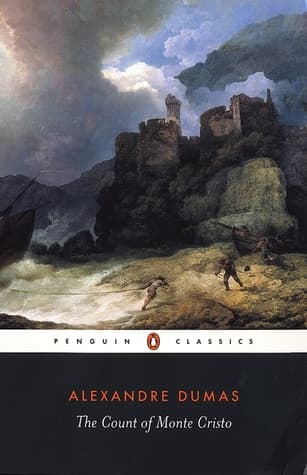
- The Count of Monte Cristo
Alexandre Dumas
4.3 (746k) average on GoodreadsHistorical FictionFeatures a wrongly imprisoned man's meticulous plan for revenge and freedom.
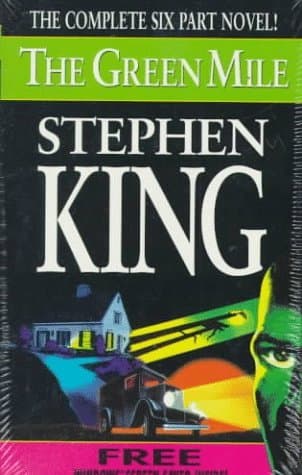
- The Green Mile
Stephen King
4.5 (249k) average on GoodreadsThrillerAnother King novella set in a prison, exploring themes of injustice and the supernatural.
- One Flew Over the Cuckoo's Nest
Ken Kesey
4.2 (631k) average on GoodreadsPsychologyBoth novels explore the individual's struggle against oppressive institutions—a prison in Shawshank and a mental asylum in Cuckoo's Nest. Both feature charismatic protagonists (Andy Dufresne and Randle McMurphy) who challenge the established order and inspire fellow inmates/patients. However, Kesey's novel, as analyzed by scholars such as Leslie Fiedler, focuses more on the destructive nature of conformity and the tragic sacrifice of the individual for the collective's awakening. Shawshank ultimately offers a more optimistic outcome for its protagonist, emphasizing enduring hope and personal liberation, while Cuckoo's Nest concludes with a more poignant, albeit liberating, tragedy.
- Angels & Demons
Dan Brown
3.9 (2.7M) average on GoodreadsThrillerA Harvard symbologist races through Rome's ancient sites, deciphering cryptic clues to unmask the Illuminati and stop a vengeful plot to destroy the Vatican with a stolen antimatter weapon.
- Gone Girl
Gillian Flynn
4.1 (2.3M) average on GoodreadsThrillerA wife's sudden disappearance on her fifth anniversary reveals a web of lies and psychological warfare, exposing the secrets within a seemingly perfect marriage.
- The Girl on the Train
Paula Hawkins
3.9 (2.1M) average on GoodreadsThrillerA woman’s fascination with a seemingly perfect couple she watches from her daily train commute leads her into a dark investigation when she witnesses something that shatters their idyllic image.




Enjoyed the summary?
A summary gives you the shape of the book. The book itself has the detail, the examples and the voice.
Find Rita Hayworth and Shawshank Redemption on AmazonAs an Amazon Associate, BookBrief earns from qualifying purchases. How we're funded