

Synopsis
Covers the whole plot, including the ending.
- Difficulty
- Medium
- Read it if
- You are interested in exploring themes of institutional oppression, individual rebellion, the nature of sanity, and the psychological effects of conformity, presented through a powerful allegorical narrative.
- Skip it if
- You prefer books with clear-cut happy endings, or find themes of mental illness, forced conformity, and intense psychological struggle too disturbing.
One Flew Over the Cuckoo's Nest Quotes
“But it's the truth even if it didn't happen.”
“He's not just talking, he's preaching.”
“You're not a goddamn loony now. Don't act like one.”
“The Combine. It's a huge organization that aims to adjust the Outside as well as she has the Inside.”
“I'm a goddamn marvel of modern science.”
“She's able to set the wall clock at whatever speed she wants by just turning one of those dials in the steel door.”
“He's not just a patient, he's a man.”
“You have to laugh at the things that hurt you just to keep yourself in balance, just to keep the world from running you plumb crazy.”
“The fog comes in and hides the world.”
“She's a bitch and a buzzard and a ball-cutter.”
“I tried and I lost, but I tried.”
“He's not a machine, he's a man.”
“The ward is a factory for the Combine. It's for fixing up mistakes made in the neighborhoods and in the schools and in the churches.”
“You're not a rabbit, you're a man.”
Quiz
10 questions on the plot and the characters. Each answer comes with a short explanation.
Question 1
Who is the narrator of 'One Flew Over the Cuckoo's Nest'?
- Randle Patrick McMurphy
- Nurse Ratched
- Chief Bromden
- Dr. Spivey
Show answer
C. Chief Bromden The story is told through the perspective of Chief Bromden, a half-Native American patient who pretends to be deaf and mute but secretly observes and understands the events on the ward.
Question 2
What is the primary setting of the novel?
- A prison in Oregon
- A mental hospital ward
- A boarding school
- A military base
Show answer
B. A mental hospital ward The story takes place in a psychiatric ward of a mental hospital, which serves as a microcosm for societal control and conformity.
Question 3
Why does Randle McMurphy initially come to the mental ward?
- He is genuinely mentally ill
- He wants to escape prison work duty
- He is seeking psychiatric help
- He was committed by his family
Show answer
B. He wants to escape prison work duty McMurphy is a convict who fakes insanity to avoid hard labor in prison, believing the mental ward will be an easier alternative.
Question 4
What does Nurse Ratched use to maintain control over the patients?
- Physical restraints and isolation
- Group therapy sessions and medication
- Psychological manipulation and humiliation
- Bribes and rewards
Show answer
C. Psychological manipulation and humiliation Nurse Ratched employs subtle psychological tactics, such as group therapy sessions where she encourages patients to betray each other's weaknesses, to enforce conformity and break their spirits.
Question 5
What symbolic event marks McMurphy's ultimate rebellion against the system?
- Organizing a fishing trip
- Throwing a party in the ward
- Attempting to strangle Nurse Ratched
- Escaping from the hospital
Show answer
C. Attempting to strangle Nurse Ratched After witnessing the system's destruction of Billy Bibbit, McMurphy attacks Nurse Ratched in a violent act of defiance, which leads to his lobotomy and represents his final stand against oppression.
Question 6
How does Chief Bromden's perception of the 'Combine' relate to the novel's themes?
- It represents his delusional fear of machinery
- It symbolizes the oppressive forces of society and conformity
- It refers to a farming tool from his childhood
- It is a nickname for the hospital staff
Show answer
B. It symbolizes the oppressive forces of society and conformity The 'Combine' is Chief Bromden's metaphor for the dehumanizing, mechanized forces of society that enforce conformity, linking to themes of institutional control and individual freedom.
Question 7
What happens to Billy Bibbit after the party in the ward?
- He escapes with McMurphy
- He is rewarded for good behavior
- He commits suicide after being shamed by Nurse Ratched
- He is transferred to another ward
Show answer
C. He commits suicide after being shamed by Nurse Ratched After being found with a prostitute during the party, Billy is humiliated by Nurse Ratched's threats to tell his mother, leading him to slit his throat, highlighting the destructive power of the system.
Question 8
What is the significance of Chief Bromden's act of lifting the control panel?
- It proves his physical strength to the other patients
- It symbolizes his reclaiming of power and identity
- It is a failed attempt to escape the ward
- It is a hallucination caused by medication
Show answer
B. It symbolizes his reclaiming of power and identity After McMurphy's lobotomy, Bromden lifts a heavy control panel to throw through a window and escape, representing his breakthrough from passivity to action and his rejection of the Combine's control.
Question 9
How does the novel critique institutional psychiatry of the 1960s?
- By advocating for more medication-based treatments
- By showing it as a tool for social control rather than healing
- By praising its advancements in therapy techniques
- By focusing on the economic benefits of mental hospitals
Show answer
B. By showing it as a tool for social control rather than healing Kesey portrays the mental institution as a mechanism for enforcing conformity, where treatments like electroshock therapy and lobotomy are used to suppress individuality, critiquing psychiatry's role in maintaining societal norms.
Question 10
What does McMurphy's fate ultimately suggest about rebellion in the novel?
- Rebellion is always successful and liberating
- Rebellion is futile and leads to destruction
- Rebellion can inspire others even if it fails personally
- Rebellion should be avoided for one's safety
Show answer
C. Rebellion can inspire others even if it fails personally Although McMurphy is lobotomized and killed by Bromden, his rebellion awakens the other patients, particularly Bromden, who escapes, suggesting that acts of defiance can empower others against oppression.
One Flew Over the Cuckoo's Nest FAQ
What is 'One Flew Over the Cuckoo's Nest' about?
The novel follows Randle Patrick McMurphy, a rebellious new patient in a mental ward who challenges the oppressive authority of Nurse Ratched. Through the eyes of Chief Bromden, a seemingly mute patient, it explores themes of individuality, institutional control, and the human spirit's resistance against conformity.
How does the book differ from the movie adaptation?
While both share the core narrative, the book is narrated by Chief Bromden, providing deep insight into his thoughts and hallucinations, which the film cannot fully capture. The movie focuses more on McMurphy's perspective and condenses some plot elements, but both are critically acclaimed.
What is the significance of Chief Bromden as the narrator?
Chief Bromden's narration offers a unique, often hallucinatory perspective that blurs reality and paranoia, reflecting the dehumanizing effects of the institution. His 'muteness' symbolizes the voicelessness of patients, and his growth parallels the themes of awakening and resistance.
Does the book critique mental health institutions?
Yes, it sharply critiques mid-20th century mental health institutions as oppressive systems that enforce conformity and suppress individuality. Nurse Ratched represents institutional control, while McMurphy's rebellion highlights the conflict between personal freedom and societal norms.
How different is it from other psychological novels like 'The Bell Jar'?
Unlike 'The Bell Jar,' which focuses on internal psychological struggle from a first-person female perspective, 'One Flew Over the Cuckoo's Nest' uses a male-dominated setting to explore external institutional oppression and collective rebellion, with a more satirical and chaotic tone.
What is the 'Combine' in the book?
The 'Combine' is Chief Bromden's metaphorical term for the oppressive, mechanized societal system that enforces conformity and control, represented by the mental ward and figures like Nurse Ratched. It symbolizes dehumanizing forces in modern society.
Does the book work as a commentary on counterculture?
Absolutely, as a counterculture classic from the 1960s, it champions nonconformity and rebellion against authoritarian structures. McMurphy embodies the free-spirited, anti-establishment ideals of the era, making it a timeless critique of oppressive systems.
What is the role of Nurse Ratched?
Nurse Ratched is the antagonist who represents institutional authority and psychological manipulation. She maintains control through subtle tyranny, symbolizing how power can be abused in systems meant to care, ultimately provoking McMurphy's defiance.
How does the Penguin Classics Deluxe Edition enhance the reading experience?
This edition includes a foreword by Chuck Palahniuk, offering modern insights, and cover art by Joe Sacco, adding visual depth. As part of Penguin's authoritative series, it provides scholarly context, making it a valuable version for both new and returning readers.
Is the book suitable for psychology students?
Yes, it offers a dramatic exploration of mental health, institutional dynamics, and human behavior, though it is a fictional critique rather than a clinical text. It can spark discussions on ethics, power, and the history of mental health care.
About the author

Ken Elton Kesey was an American novelist, essayist and countercultural figure. He considered himself a link between the Beat Generation of the 1950s and the hippies of the 1960s.
Similar books
- 1984
George Orwell
4.2 (3.1M) average on GoodreadsPoliticsExplores themes of totalitarian control, individual rebellion against an oppressive system, and the psychological impact of surveillance and manipulation.
- Brave New World
Aldous Huxley
4.0 (1.4M) average on GoodreadsFantasyExamines a dystopian society where individuals are controlled and conditioned for conformity, and the struggle of an outsider to assert individuality.
- The Handmaid's Tale
Margaret Atwood
4.1 (1.5M) average on GoodreadsFantasyDepicts a society where individuals, particularly women, are stripped of their rights and identity, and the quiet acts of rebellion against an authoritarian regime.
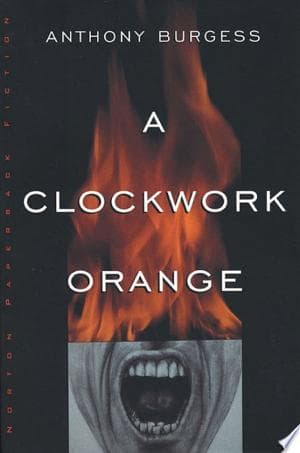
- A Clockwork Orange
Anthony Burgess
4.0 (601k) average on GoodreadsThrillerBoth One Flew Over the Cuckoo's Nest and A Clockwork Orange (1962) explore themes of individual freedom versus state control, and the ethics of psychological manipulation. However, Burgess's novel focuses more on the philosophical implications of free will and forced moral choice through aversion therapy, while Kesey's work emphasizes the dehumanizing effects of institutional power on existing mental states and the power of natural rebellion. Kesey's critique is more rooted in the 'anti-psychiatry' movement, whereas Burgess delves into broader questions of societal attempts to 'cure' deviance.
- Catch-22
Joseph Heller
4.0 (723k) average on GoodreadsHistorical FictionCatch-22 (1961) shares Kesey's satirical approach to institutional absurdity and the dehumanizing effects of bureaucratic systems. Both novels feature protagonists who attempt to subvert illogical rules through cleverness and rebellion. However, Heller's focus is on the absurdity and futility of war and military bureaucracy, using dark humor to expose the 'catch-22' logic that traps individuals. Kesey's novel, while also humorous, is more directly concerned with the psychological impact of power dynamics within a specific care institution and the definition of sanity itself, making its critique more focused on mental health and individual agency against medical authority rather than military strategy.
- The Perks of Being a Wallflower
Stephen Chbosky
4.2 (1.3M) average on GoodreadsPsychologyThrough letters, a shy high school freshman learns to navigate first love, trauma, and self-discovery, stepping off the sidelines and into life.




Enjoyed the summary?
A summary gives you the shape of the book. The book itself has the detail, the examples and the voice.
Find One Flew Over the Cuckoo's Nest on AmazonAs an Amazon Associate, BookBrief earns from qualifying purchases. How we're funded