
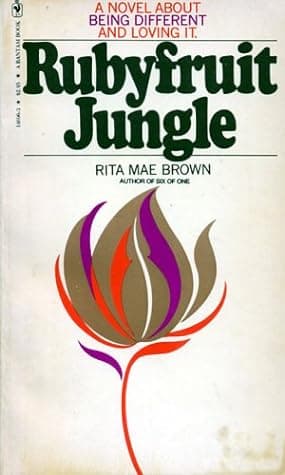
Synopsis
Covers the whole plot, including the ending.
- Difficulty
- Easy
- Pacing
- Fast
- Mood
- Rebellious, Humorous, Empowering, Candid, Liberating
- Read it if
- You want a groundbreaking, unapologetic, and humorous coming-of-age story about a young lesbian woman's journey of self-discovery and resilience.
- Skip it if
- You prefer traditional narratives, are uncomfortable with explicit sexual content, or are looking for a story with a more conventional plot structure.
Rubyfruit Jungle Plot Summary
Covers the whole plot, including the ending.
Early Years in Pennsylvania
Molly Bolt, adopted by working-class Pennsylvanian parents, Carrie and Carl, has an unusual and often difficult childhood. From a young age, Molly shows a strong independence and sense of self that conflicts with societal expectations, especially regarding gender roles. She discovers her attraction to other girls early on, having innocent but important sexual experiences with her friend, Patsy. Her outspoken nature and refusal to conform often cause problems at school and with her adoptive parents, who struggle to understand her. Carl, her adoptive father, is often harsh, while Carrie, her adoptive mother, is more understanding but still limited by traditional views. Molly's early life is a series of adventures, showing her rebellious spirit and developing identity as a lesbian in a conservative environment.
High School and First Love
As Molly enters high school, her rebellious nature continues, but she also finds her first serious love with Leona, the popular head cheerleader. Their secret relationship becomes central to Molly's life. However, their affair is eventually discovered, leading to a quick and harsh social backlash. Leona, fearing for her reputation and future, gives in to pressure and publicly rejects Molly, denying their relationship. This betrayal hurts Molly deeply. She is then excluded by her peers and becomes the target of rumors and ridicule. Despite the pain, this experience strengthens Molly's decision to live honestly and reinforces her understanding that her love for women is a part of her identity, even if it means facing societal disapproval.
College and New York City
After graduating high school, Molly gets a scholarship to a local college, but she constantly struggles financially. She takes on various odd jobs, often finding herself in difficult situations because of her outspoken nature and lack of respect for authority. Her college experiences mix academic pursuits with further explorations of her sexuality, though she remains cautious after her heartbreak with Leona. Eventually, feeling restricted by the small-town thinking and wanting a more open environment, Molly decides to drop out of college and moves to New York City with little money but great ambition. She sees New York as a place where she can truly be herself and pursue her dream of becoming a filmmaker.
Struggles and Survival in NYC
In New York City, Molly faces immediate and harsh realities. She lives in poverty, struggling to find stable housing and work. She takes on a series of unusual and often exploitative jobs, from working as a nude model to a delivery person, constantly seeing the city's rough side. These experiences expose her to many different people, both kind and cruel, and further develop her street smarts and resilience. Despite the difficulties, Molly keeps her optimistic and determined spirit, refusing to be broken by her circumstances. She learns to rely on her wit and charm to survive, always keeping her long-term goal of making films in mind, even as it seems increasingly distant.
Relationships in the City
Molly's time in New York City is also marked by new relationships. She becomes involved with Holly, a wealthy and older woman who initially provides some financial stability and a look into a different lifestyle. However, Molly soon realizes that Holly's expectations and possessiveness are stifling, and she eventually leaves, unwilling to trade her independence for comfort. She also forms a strong friendship with another struggling artist, which provides needed emotional support and companionship. These relationships, though sometimes challenging, help Molly understand herself and her desires, reinforcing her need for real connection and freedom in her romantic and personal life.
Political Awakening and Activism
While in New York, Molly's experiences and observations lead her to a deeper political awareness. She meets various feminist and lesbian activist groups, finding a sense of community and purpose among like-minded individuals. She participates in protests and discussions, lending her outspoken voice to the growing movements for women's rights and gay liberation. These interactions give Molly a way to understand her own life and struggles within a broader social and political context. Her involvement in activism strengthens her commitment to fighting for justice and equality, solidifying her identity not just as a lesbian, but as a politically aware person.
The Film School Dream
Driven by her lifelong ambition, Molly decides to apply to film school, seeing it as a step toward her dream of making movies. However, she quickly faces significant obstacles, mainly due to institutional sexism and prejudice against her unusual background and outspoken personality. The male-dominated film industry and academic world are unwelcoming, and Molly faces skepticism and dismissal from admissions committees. Despite these setbacks, she remains determined, turning her frustration into an even stronger resolve to prove herself. This period highlights the systemic challenges women and lesbians faced in creative careers during that era, but also Molly's refusal to be intimidated by them.
Creative Expression and Resilience
When traditional paths for film school prove difficult, Molly does not give up on her creative goals. Instead, she finds other ways to express herself and tell the stories she believes are important. She starts writing, documenting her experiences and observations in a raw, honest style. This shift from aspiring filmmaker to writer allows her to process her life and share her unique perspective. Her writing becomes a powerful outlet for her voice, showing her strength and her determination to create art that reflects the realities of her life as a lesbian woman, regardless of whether it fits mainstream expectations or structures.
Reconnecting with Family
After some time in New York, Molly decides to return to Pennsylvania to reconnect with her adoptive parents, Carrie and Carl. This visit has tension as Molly, now more confident in her identity, confronts the lingering resentments and misunderstandings from her childhood. She tries to explain her life and choices to them, particularly her lesbianism, hoping for acceptance and understanding. While Carl remains mostly unyielding, Carrie shows glimpses of a deeper, though still limited, acceptance. This reunion is an important step for Molly in coming to terms with her past and strengthening her sense of self, understanding that she can love her parents even if they do not fully understand her.
Finding Her Place and Voice
By the end of the novel, Molly has fully accepted her identity as a lesbian woman and an artist. She has navigated a challenging world, faced prejudice and poverty, but emerged with her spirit intact. She continues to write, using her experiences to create stories that are truthful and authentic. Molly's journey is not about finding a conventional happy ending, but about making her own. She is confident, self-reliant, and unapologetically herself, showing that living authentically is the ultimate success. Her story ends with her firmly on her artistic path, ready to face whatever comes next with her characteristic wit and strength.
Rubyfruit Jungle Characters
Molly Bolt
Protagonist
An independent, witty, and unapologetically lesbian woman navigating life and pursuing her artistic dreams.
Molly Bolt is the fiercely independent and quick-witted protagonist of the novel. From a young age, she challenges societal norms, particularly regarding gender and sexuality. She is observant, intelligent, and possesses a sharp tongue, often getting her into trouble but also serving as her primary defense mechanism. Molly is driven by a deep desire for self-expression and authenticity, refusing to compromise her identity or her love for women for anyone. She is resilient, optimistic, and possesses an unshakeable belief in her own worth, even in the face of constant adversity. Her experiences shape her into a strong, self-aware individual who finds joy and meaning in living truthfully.
Relationships: Carrie Bolt (Adoptive mother, conflicted but ultimately loving); Carl Bolt (Adoptive father, often harsh and unaccepting); Patsy (Childhood friend and first sexual experience); Leona (First serious girlfriend, popular and ultimately betraying); Holly (Wealthy older girlfriend in NYC, possessive); Unnamed Friend (Supportive female friend in NYC)
Carrie Bolt
Supporting
Molly's adoptive mother, a traditional woman who struggles to understand her daughter.
Carrie Bolt is Molly's adoptive mother, a working-class woman who embodies many traditional values. She loves Molly but struggles deeply with her daughter's unconventional behavior, particularly her defiance of gender roles and her lesbianism. Carrie often tries to 'fix' Molly or make her conform, driven by a desire for Molly to have an easier life within societal norms. Despite her limitations and occasional harshness, there is a vein of genuine love and concern for Molly, though it is often expressed through worry and misunderstanding. She represents the societal expectations and pressures that Molly constantly pushes against.
Relationships: Molly Bolt (Adoptive daughter, complex and often strained); Carl Bolt (Husband, sharing traditional values)
Carl Bolt
Supporting
Molly's adoptive father, a stern and often unaccepting figure.
Carl Bolt is Molly's adoptive father, a gruff and often unsympathetic character. He is a man of few words, prone to anger, and deeply rooted in traditional masculinity. Carl is even less understanding of Molly's rebellious nature and sexuality than Carrie, often reacting with anger or dismissal. He represents the patriarchal authority and narrow-mindedness that Molly actively rebels against. While he provides for his family, his emotional distance and judgment contribute to Molly's feeling of being an outsider in her own home. He struggles to connect with Molly on any deep level, seeing her as a perpetual disappointment.
Relationships: Molly Bolt (Adoptive daughter, distant and conflict-ridden); Carrie Bolt (Wife, sharing a traditional household)
Leona
Supporting
Molly's first serious girlfriend, a popular high school cheerleader who betrays Molly.
Leona is Molly's first significant girlfriend in high school. She is popular, beautiful, and initially seems to reciprocate Molly's intense feelings. Their secret relationship is passionate and deeply meaningful to Molly. However, when their affair is exposed, Leona succumbs to social pressure and public humiliation, denying her relationship with Molly and effectively abandoning her. Her actions, while understandable from a place of fear in a conservative environment, cause Molly profound heartbreak and serve as a harsh lesson about the dangers of societal judgment and the fragility of hidden love. Leona represents the allure and the peril of conventional acceptance.
Relationships: Molly Bolt (Romantic partner, then betrayer)
Holly
Supporting
A wealthy, older woman in New York City with whom Molly has a relationship.
Holly is an older, wealthy woman whom Molly meets in New York City. She provides Molly with a temporary reprieve from poverty, offering a lavish apartment and a glimpse into a more comfortable lifestyle. Their relationship is complex; while Holly is attracted to Molly's spirit and independence, she also tries to exert control and mold Molly to fit her expectations. Molly eventually realizes that this relationship, despite its material benefits, is stifling her freedom and authenticity. Holly represents a seductive but ultimately restrictive path that Molly rejects in favor of her own, more challenging, but more genuine, journey.
Relationships: Molly Bolt (Romantic partner, then rejected)
Patsy
Mentioned
Molly's childhood friend and first sexual experience.
Patsy is Molly's childhood friend with whom she shares her earliest sexual explorations. Their innocent but significant encounters are formative for Molly, solidifying her early understanding of her attraction to girls. Patsy is not a deeply developed character but serves as a crucial figure in Molly's formative years, representing the natural, uninhibited curiosity of childhood before societal judgments set in. Her presence highlights Molly's innate lesbian identity from a very young age.
Relationships: Molly Bolt (Childhood friend and sexual partner)
Rubyfruit Jungle Themes
Authenticity and Self-Acceptance
The novel's main theme is Molly's strong commitment to living authentically and accepting her true self, especially her lesbian identity. From a young age, Molly refuses to fit into societal expectations of gender and sexuality, leading to constant clashes with her adoptive parents and peers. Her experiences, such as Leona's betrayal in high school, only strengthen her decision to be true to herself, even if it means facing exclusion and hardship. In New York, despite poverty and exploitation, Molly never compromises her identity, always striving for a life that matches her inner truth. Her journey shows the importance of self-love and integrity above all else.
“I was a lesbian and I was going to be an artist. This was not a choice. It was a condition.”
Rebellion Against Societal Norms
Molly Bolt is a constant rebel, always pushing against the restrictive societal norms of her time, especially those concerning women and sexuality. Her defiance begins in childhood, challenging traditional gender roles and expectations for 'nice girls.' As she grows, her open lesbianism and outspoken nature directly confront the heteronormative and patriarchal structures of small-town Pennsylvania and, later, the exploitative aspects of New York City. Her refusal to be silent, to be a 'lady,' or to hide her relationships is a direct act of rebellion, asserting her right to exist and thrive on her own terms. This theme highlights the courage needed to challenge deeply ingrained social conventions.
“I was not a lady. I was a person, and I had a right to be me.”
The Search for Home and Belonging
Throughout her journey, Molly looks for a place where she can truly belong and feel at home, both physically and emotionally. Her adoptive home in Pennsylvania, while providing basic needs, never feels like a true home due to the lack of understanding and acceptance from her parents. This drives her to seek community elsewhere. In New York, despite the initial struggles, she finds a sense of belonging among other artists, activists, and queer individuals who share her values and experiences. The 'home' she ultimately finds is not a physical place but an internal state of self-acceptance and a community of like-minded people who affirm her identity. Her journey shows that home is where one can be authentically oneself.
“I went to New York to find out who I was, and I found out I was a lesbian. And I was glad.”
Art as Self-Expression and Survival
Art, particularly filmmaking and later writing, is Molly's main way of expressing herself and a key survival tool. From her early interest in movies to her later goal of becoming a filmmaker, Molly sees art as a way to tell her own stories and challenge common narratives. When traditional paths like film school are difficult due to prejudice, she turns to writing, finding power in creating her own story. Her creative pursuits are not just hobbies; they are essential to her identity, allowing her to process her experiences, assert her voice, and create a world where her life and love are visible and valid. Art becomes her weapon, her shield, and her legacy.
“I wanted to make movies, not because I wanted to be a star, but because I wanted to tell stories. My stories.”
The Resilience of the Human Spirit
Molly Bolt's journey shows the strength of the human spirit in difficult times. She endures poverty, social exclusion, heartbreak, and systemic prejudice, yet she never loses her optimism, wit, or determination. Each setback, from Leona's betrayal to the struggles in New York, only strengthens her resolve and sharpens her spirit. Her ability to recover, to find humor in difficult situations, and to maintain a strong belief in herself is central to her character. This theme emphasizes how much individuals can not only survive but thrive despite overwhelming challenges, especially when driven by a strong sense of self and purpose.
“I was a survivor. I had always been a survivor. And I always would be.”
Plot Devices & Literary Techniques
First-Person Narrative
Molly Bolt narrates her own story, offering direct access to her thoughts and experiences.
The entire novel is told from Molly Bolt's first-person perspective. This device allows readers to experience Molly's life, emotions, and unfiltered opinions directly, fostering a strong sense of intimacy and empathy. Her distinctive voice—witty, defiant, and honest—shines through, making her experiences feel immediate and personal. The first-person narrative is crucial for conveying Molly's internal struggles and triumphs, particularly her journey of self-acceptance and her unique way of viewing the world, which often clashes with external norms. It ensures that her story is told on her own terms, reinforcing the theme of authenticity.
Episodic Structure
The plot unfolds as a series of distinct, often humorous or poignant, episodes from Molly's life.
Rubyfruit Jungle employs an episodic structure, presenting Molly's life as a collection of vignettes and distinct experiences rather than a tightly linear, cause-and-effect plot. Each chapter or section often focuses on a particular adventure, relationship, or challenge Molly faces, from her childhood escapades to her various jobs in New York. This structure mirrors the often chaotic and unpredictable nature of Molly's life, emphasizing her resilience and adaptability. It also allows the author to highlight key moments of self-discovery and social commentary without being constrained by a rigid plot, giving the narrative a feeling of spontaneity and lived experience.
Humor and Wit
Molly's sharp wit and humorous observations provide levity and insight into her character.
Molly Bolt's defining characteristic is her pervasive humor and sharp wit, which serves as a significant plot device. Her sarcastic remarks, clever comebacks, and often outrageous observations inject levity into even the most challenging situations, preventing the narrative from becoming overly bleak despite the hardships Molly faces. This humor is not merely for comedic effect; it's a coping mechanism for Molly, a way to assert control and maintain her dignity in the face of adversity and prejudice. It also highlights her intelligence and resilience, allowing her to disarm opponents and connect with readers, making her an endearing and unforgettable character.
Bildungsroman (Coming-of-Age Story)
The novel traces Molly's development from childhood to adulthood, focusing on her moral and psychological growth.
Rubyfruit Jungle is fundamentally a bildungsroman, a coming-of-age story that meticulously details Molly Bolt's journey from her unconventional childhood through adolescence and into young adulthood. The narrative focuses on her moral, psychological, and social development as she navigates her identity as a lesbian in a heteronormative society. Key events, relationships, and challenges serve as catalysts for her growth, shaping her understanding of herself and the world. The device allows readers to witness Molly's evolution, her struggles with self-discovery, and her ultimate triumph in embracing her authentic self, making her story a powerful example of personal liberation and self-realization.
Rubyfruit Jungle Quotes
“I was born in 1944 in a small town in Pennsylvania. My mother was a waitress and my father was a factory worker. They were both poor and uneducated, and they both died young.”
“From childhood, I was afflicted with the curse of curiosity. I wanted to know everything, and I wanted to do everything. This, of course, led to a great deal of trouble.”
“I was a lesbian before I knew what a lesbian was.”
“It was a strange feeling, being in love with a girl. It was like I had found a missing piece of myself.”
“The world was not ready for me, and I was not ready for the world.”
“The only way to get rid of a temptation is to yield to it.”
“I never met a man I didn't like, but I never met one I couldn't live without either.”
“They called me a rebel. I called myself a survivor.”
“Life is a constant struggle, but it's a beautiful struggle.”
“I wasn't looking for trouble, but trouble always seemed to find me.”
“To be truly free, you have to be willing to lose everything.”
“People always want to put you in a box. But I wasn't made for a box.”
“I wasn't afraid of anything, except being bored.”
“The only true wisdom consists of knowing that you know nothing.”
Quiz
10 questions on the plot and the characters. Each answer comes with a short explanation.
Question 1
Where does Molly Bolt spend her early childhood before moving to Hollywood, Florida?
- New York City, New York
- Wilton, Pennsylvania
- Charleston, South Carolina
- San Francisco, California
Show answer
B. Wilton, Pennsylvania Molly grows up in Wilton, Pennsylvania, with her adoptive parents, Carrie and Carl, before they move to Florida.
Question 2
What is Molly's relationship with her adoptive mother, Carrie?
- They have a close and understanding bond.
- Carrie is consistently disapproving and critical of Molly's unconventional behavior.
- Carrie is largely indifferent to Molly's life choices.
- They are estranged for most of Molly's life.
Show answer
B. Carrie is consistently disapproving and critical of Molly's unconventional behavior. Carrie constantly criticizes Molly's tomboyish ways, her lack of interest in boys, and her general nonconformity, leading to a strained relationship.
Question 3
What significant event leads to Molly's expulsion from her first college in Florida?
- She was caught cheating on an exam.
- She was discovered having a sexual relationship with a female professor.
- She organized a student protest that turned violent.
- She stole money from the university bookstore.
Show answer
B. She was discovered having a sexual relationship with a female professor. Molly is expelled from the University of Florida after her affair with a female professor, Dr. Evelyn Stark, is discovered.
Question 4
Which of the following best describes Molly Bolt's overall approach to life and her sexuality?
- She attempts to hide her true self to conform to societal expectations.
- She is unapologetically herself, embracing her lesbianism and pursuing her desires freely.
- She struggles with internal conflict and self-doubt about her identity.
- She primarily focuses on achieving financial stability and traditional success.
Show answer
B. She is unapologetically herself, embracing her lesbianism and pursuing her desires freely. A central theme of the novel is Molly's unyielding self-acceptance and defiance of societal norms regarding her sexuality and independence.
Question 5
What career path does Molly pursue in New York City with varying degrees of success?
- Journalism and investigative reporting
- Filmmaking and screenwriting
- Law and political activism
- Teaching and academic research
Show answer
B. Filmmaking and screenwriting Molly moves to New York to attend NYU film school and attempts to make a living as a filmmaker, often struggling but always determined.
Question 6
What is the significance of the 'rubyfruit jungle' metaphor in the novel's title?
- It refers to a specific hidden location where Molly finds solace.
- It symbolizes the vibrant, rich, and often wild landscape of female sexuality and desire.
- It represents the confusing and dangerous urban environment of New York City.
- It is a literal description of a place Molly visits in her travels.
Show answer
B. It symbolizes the vibrant, rich, and often wild landscape of female sexuality and desire. The 'rubyfruit jungle' is a metaphorical representation of female genitalia and the lush, untamed nature of lesbian desire and experience, central to Molly's identity.
Question 7
Who is Holly, and what is her role in Molly's life in New York?
- She is Molly's estranged biological sister who reconnects with her.
- She is a wealthy benefactor who funds Molly's film projects.
- She is Molly's long-term girlfriend and a significant emotional support.
- She is a rival filmmaker who constantly competes with Molly.
Show answer
C. She is Molly's long-term girlfriend and a significant emotional support. Holly is Molly's girlfriend in New York, providing a stable and loving relationship that contrasts with Molly's earlier, more tumultuous affairs.
Question 8
Molly is eventually able to track down her biological mother. What is her biological mother's name?
- Evelyn Stark
- Carrie Bolt
- Ann Bolt
- Leonie Bolt
Show answer
C. Ann Bolt Molly eventually finds her biological mother, Ann Bolt, who turns out to be a kind and accepting woman, offering Molly a sense of belonging.
Question 9
What societal attitudes towards lesbianism does Molly frequently encounter and challenge throughout the novel?
- Widespread acceptance and celebration.
- Indifference and lack of awareness.
- Condemnation, pathologizing, and attempts to 'cure' her.
- Mild curiosity but no significant prejudice.
Show answer
C. Condemnation, pathologizing, and attempts to 'cure' her. Molly constantly faces homophobia, from her mother's disapproval to being expelled from college and encountering judgmental attitudes from various individuals, all of which she defiantly pushes back against.
Question 10
Which of the following literary movements or styles does 'Rubyfruit Jungle' most closely align with, given its focus on personal liberation and unconventional narrative?
- Postmodernism
- Feminist literature and the burgeoning lesbian literary movement of the 1970s.
- Magical Realism
- Beat Generation literature
Show answer
B. Feminist literature and the burgeoning lesbian literary movement of the 1970s. 'Rubyfruit Jungle' is a seminal work in feminist and lesbian literature, celebrated for its frank portrayal of female sexuality and its challenge to patriarchal norms, aligning perfectly with the burgeoning movements of its time.
Rubyfruit Jungle FAQ
What is the central premise of Rubyfruit Jungle?
Rubyfruit Jungle follows the life of Molly Bolt from her childhood in rural Pennsylvania to her young adulthood in New York City, as she navigates her identity as a lesbian and an aspiring filmmaker. The novel chronicles her various relationships, adventures, and struggles against societal norms and expectations, always maintaining a defiant and optimistic spirit.
Who are Molly Bolt's adoptive parents, and how do they influence her early life?
Molly Bolt is adopted by Carrie and Carl Bolt, a working-class couple in Pennsylvania. Carrie is often critical and disapproving of Molly's tomboyish nature and rebellious spirit, leading to frequent clashes, while Carl is more passive but occasionally offers quiet support or observation. Their traditional views and lack of understanding significantly shape Molly's early feelings of being an outsider.
How does Molly Bolt's relationship with Leroy exemplify her early understanding of love and sexuality?
Molly's relationship with Leroy, a childhood friend, is her first significant sexual experience, even though it's brief and she immediately realizes it's not what she truly desires. This encounter serves to solidify her understanding that her attractions lie with women, rather than men, and reinforces her innate sense of her own sexual identity from a young age.
What role does New York City play in Molly's development?
New York City serves as a crucible for Molly's adult identity, offering both opportunities and significant challenges. It's where she pursues her film studies at NYU, experiences various relationships, and confronts the realities of poverty and discrimination while striving to make her mark as a filmmaker. The city represents a place of freedom and self-discovery, despite its hardships.
What is the significance of the 'rubyfruit jungle' metaphor in the book's title?
The 'rubyfruit jungle' metaphor, while not explicitly defined in the text, is widely interpreted as a playful and sensual reference to female sexuality and the vibrant, rich, and sometimes wild inner world of lesbian desire. It embodies the joy, naturalness, and unapologetic nature of Molly's identity and experiences, contrasting with societal taboos.
Are there any subtle indications of Molly's future career as a filmmaker during her childhood?
Yes, even as a child, Molly demonstrates a keen observational eye and a desire to tell stories. Her detailed descriptions of people and situations, her imaginative play, and her often critical but insightful commentary on the world around her foreshadow her later ambition to capture life through the lens of a camera and create films.
How does the author use humor to address serious themes like poverty and homophobia?
Rita Mae Brown employs a distinctive, often irreverent and bawdy humor throughout the novel to tackle serious issues like Molly's poverty, her experiences with homophobia, and the societal pressures she faces. This humor serves to lighten the tone, make Molly's struggles more relatable, and underscore her resilient, defiant spirit in the face of adversity, preventing the narrative from becoming overly bleak.
Is there any symbolism in the recurring motif of Molly leaving or being expelled from institutions (schools, homes)?
The recurring motif of Molly being expelled from schools or leaving various homes symbolizes her inherent inability to conform to societal expectations and institutional norms. It highlights her independent spirit and her refusal to compromise her authentic self, ultimately pushing her towards a path of self-reliance and forging her own destiny outside conventional structures.
What is the psychological impact of Molly's strained relationship with her adoptive mother, Carrie?
Molly's strained relationship with Carrie creates a deep-seated feeling of being misunderstood and unloved, fostering her independence and defiance. Psychologically, it fuels her drive to prove herself and find acceptance on her own terms, while also contributing to a certain emotional guardedness, even as she yearns for genuine connection.
How does Molly's self-acceptance of her sexuality contribute to her overall resilience?
Molly's unwavering self-acceptance of her sexuality from a very young age is a cornerstone of her resilience. Because she never questions or internalizes shame about being a lesbian, she is able to direct her energy outwards, fighting against external prejudice rather than internal conflict, allowing her to face challenges with an unshakeable sense of self-worth.
What psychological defense mechanisms does Molly employ to cope with societal rejection and hardship?
Molly primarily uses humor, defiance, and a strong sense of self-worth as psychological defense mechanisms. She often deflects criticism with wit, directly challenges authority, and refuses to internalize negative judgments, consistently affirming her identity and desires despite external pressures and hardships, which helps her maintain her mental fortitude.
How does the novel challenge traditional notions of 'happily ever after' for queer characters?
The novel radically challenges traditional 'happily ever after' tropes by presenting Molly's journey not as finding a Prince Charming or conforming to societal expectations, but as achieving self-acceptance, creative fulfillment, and living authentically as a lesbian. Her happiness is self-defined, independent of marriage or conventional success, emphasizing personal freedom and joy in one's identity.
Is Molly Bolt a feminist icon, and why or why not?
Molly Bolt is widely considered a feminist icon because she embodies radical independence, defies patriarchal and heteronormative norms, and unapologetically pursues her own desires and career ambitions. Her refusal to be defined by men, her celebration of female relationships, and her resilience in the face of sexism and homophobia align strongly with feminist ideals of autonomy and liberation.
How does Rubyfruit Jungle contribute to lesbian literature and the broader LGBTQ+ canon?
Rubyfruit Jungle is a landmark in lesbian literature for its groundbreaking portrayal of a lesbian protagonist who is unequivocally happy, confident, and unashamed of her identity. It offered a rare positive and celebratory narrative at a time when queer stories were often tragic or marginalized, paving the way for more diverse and affirming LGBTQ+ representation in literature.
What is the significance of Molly's final decision to pursue filmmaking independently, rather than seeking traditional employment?
Molly's decision to pursue filmmaking independently signifies her ultimate rejection of conventional paths and her commitment to artistic integrity and self-determination. It underscores her belief in her own vision and talent, choosing to carve out a living on her own terms rather than compromising her creative aspirations for financial security or societal approval, representing her triumph of spirit.
How does the novel address the themes of class and privilege through Molly's experiences?
The novel addresses themes of class and privilege by consistently highlighting Molly's working-class background and the struggles it entails, from her adoptive parents' financial anxieties to her own battles with poverty in New York. Her lack of inherited wealth or social connections means she must work harder and face more obstacles than her more privileged peers, emphasizing the impact of class on opportunity.
What is the role of Molly's various lovers in her journey of self-discovery?
Molly's various lovers, such as Carolyn, Holly, and Faye, each contribute to her journey of self-discovery by offering different experiences of intimacy, love, and conflict. These relationships help her refine her understanding of what she seeks in partnership, solidify her sexual identity, and challenge her emotionally, ultimately contributing to her growth and self-awareness.
In what ways does Molly's narrative voice contribute to the book's unique charm and impact?
Molly's narrative voice is characterized by its irreverence, wit, honesty, and an undeniable zest for life, even in the face of adversity. Her direct, unfiltered observations and humorous commentary create an intimate connection with the reader, making her struggles relatable and her triumphs all the more resonant, solidifying the book's unique charm and lasting impact.
About the author
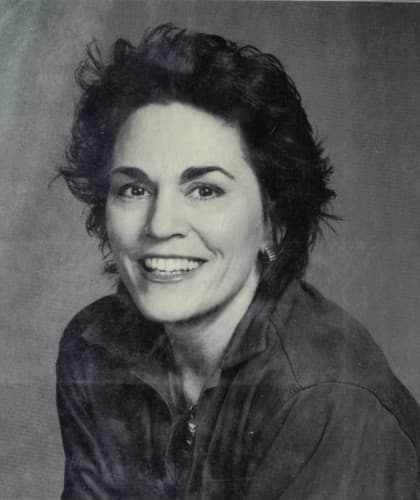
Rita Mae Brown is an American author known for her contributions to fiction, particularly in the realm of LGBTQ+ literature. Her notable work, Rubyfruit Jungle, is recognized for its groundbreaking portrayal of a lesbian coming-of-age story. Brown's writing often explores themes of identity and social issues, establishing her as a significant voice in contemporary literature.
Similar books
- Orlando
Virginia Woolf
3.9 (61k) average on GoodreadsFantasyExplores gender identity and societal roles with a fluid, unconventional narrative.
- The Well of Loneliness
Radclyffe Hall
3.7 (13k) average on GoodreadsHistorical FictionRubyfruit Jungle contrasts sharply with Hall's novel, which presents lesbianism as an inherent tragedy and burden, often framed with a plea for societal tolerance. Brown's work, in stark opposition, celebrates lesbian identity as a source of joy, strength, and defiance, with Molly Bolt embracing her sexuality without shame or regret, fundamentally shifting the narrative from pity to pride.
- Nineteen Eighty-Four
George Orwell
4.2 (5.5M) average on GoodreadsFictionWinston Smith dreams of truth and rebellion in a world where Big Brother watches all, but he confronts the terrifying power of a regime that controls not just actions, but thoughts.
- The Frozen River
Ariel Lawhon
4.4 (600k) average on GoodreadsFictionIn 1789 Maine, a heroic midwife's diary helps her expose a murder and get justice in a town that wants to silence her.
- A Man Called Ove
Fredrik Backman
4.4 (569k) average on GoodreadsFictionA stubborn widower, who lives by strict rules, finds his quiet world changed by a lively new family next door, making him face his past and find happiness in human connection.
- The Art of Racing in the Rain
Garth Stein
4.2 (452k) average on GoodreadsFictionThrough the eyes of Enzo, a wise and observant dog, a race car driver's family navigates a journey of love, loss, and resilience, learning that life's most important lessons often come in the curves, not just on the straightaways.




Enjoyed the summary?
A summary gives you the shape of the book. The book itself has the detail, the examples and the voice.
Find Rubyfruit Jungle on AmazonAs an Amazon Associate, BookBrief earns from qualifying purchases. How we're funded