
Synopsis
Covers the whole plot, including the ending.
- Difficulty
- Medium
- Pacing
- Slow
- Mood
- Melancholy, Thought-provoking, Poignant, Reflective
- Read it if
- You are interested in classic LGBTQ+ literature, historical fiction exploring themes of identity and societal prejudice, or a poignant, character-driven romance.
- Skip it if
- You prefer fast-paced plots, lighthearted stories, or find themes of societal oppression and sacrifice too disheartening.
The Well of Loneliness Plot Summary
Covers the whole plot, including the ending.
Stephen Gordon's Unconventional Birth and Childhood
Stephen Gordon is born to Sir Philip and Lady Anna Gordon, wealthy landowners at Morton, a large estate in Worcestershire. From birth, Stephen shows masculine traits. She prefers trousers and outdoor activities over dresses and traditional feminine pursuits. Sir Philip, a loving father, sees Stephen's unique nature and supports her individuality. He even names her Stephen, a traditionally male name. Lady Anna, however, finds it hard to accept her daughter's difference from social norms. She wants a conventionally feminine child. Stephen's childhood is marked by a close bond with her father and a growing feeling of being alone from her mother and other girls. She feels a difference she cannot explain.
The First Crushes and a Father's Understanding
As Stephen becomes an adolescent, she feels her first strong emotional connections, directed towards women. She falls in love with Collins, a young maid at Morton, and later with Puddle, the governess. These crushes are passionate for Stephen, though not returned or understood by the women. Sir Philip watches his daughter's affections with quiet understanding and compassion. He sees the nature of her desires without naming them. Lady Anna, however, becomes more worried by Stephen's 'unnatural' tendencies and her lack of interest in male suitors. The gap between mother and daughter grows. Stephen feels more alone in her own home, despite her father's quiet support.
Tragedy Strikes and Stephen's Exile from Morton
A great tragedy happens when Sir Philip Gordon dies suddenly from a riding accident. His death leaves Stephen completely without her main source of understanding and protection. With Sir Philip gone, Lady Anna's long-held worries and disapproval of Stephen's 'inversion' come out. Unable to stand Stephen's presence and fearing the social judgment her daughter's nature might bring on the family, Lady Anna sends Stephen away from Morton. Stephen goes to live in London with her former governess, Miss Puddle. This feels like an exile from the only home she has known and a deep rejection from her mother. This event is a turning point, forcing Stephen to face her identity in the wider world.
London Life and the Pursuit of Authorship
In London, Stephen finds a new kind of freedom and intellectual challenge. Living with Miss Puddle, she writes, a passion she had since childhood. She publishes her first novel, which is successful and gets good reviews. This makes her a serious author. Writing gives Stephen purpose and a way to express her unique view on life. While her work life does well, her personal life is still marked by loneliness and a search for connection. She watches the social world around her, often feeling like an outsider, but finds some acceptance in intellectual groups where her unconventional nature is more easily tolerated.
Paris and the Bohemian World
Seeking a more open place, Stephen moves to Paris, a city known for its bohemian culture and tolerance for unconventional ways of life. There, she meets a community of artists, writers, and other 'inverts' – a term used at the time for homosexual people. For the first time, Stephen feels she belongs among people who share similar experiences and understandings of identity. She goes to salons and cafes, having deep conversations and making friends with those who accept her without judgment. This time in Paris changes her. It allows Stephen to fully embrace her identity and find some peace and community she had long wanted.
Meeting Angela Crossby and Heartbreak
In Paris, Stephen meets Angela Crossby, a beautiful married woman. Stephen falls deeply in love with Angela, believing she has found the deep, mutual connection she has always wanted. Their affair is intense for Stephen. However, Angela, despite her feelings for Stephen, cannot commit to a relationship that goes against social expectations. She gives in to the pressures of convention and leaves Stephen to go back to her husband. This devastates Stephen. This heartbreak makes Stephen feel more like an 'unnatural' outsider, meant for loneliness and pain in love. It deeply affects her emotional state.
The War Years and Valérie Martin
When World War I starts, Stephen, wanting to serve, joins an ambulance unit on the Western Front. The harsh realities of war show her great suffering but also strong human connection. It is then that she meets Valérie Martin, a young and initially fragile Frenchwoman. Stephen, through her strength and care, forms a deep bond with Valérie. Valérie, orphaned and traumatized by the war, looks to Stephen for comfort and safety. Their relationship becomes a deep and loving partnership, giving Stephen purpose and belonging she had not found before.
A Life Together in Paris
After the war, Stephen and Valérie return to Paris and make a life together. They create a comfortable and loving home, a safe place where they can be themselves away from the judging eyes of society. Stephen continues her successful writing career, and Valérie finds joy in their shared life. Their relationship has deep affection, mutual respect, and a quiet home life. They deal with social prejudice and the lingering trauma of war, finding strength and comfort in each other. This time is a rare stretch of happiness and stability for Stephen. She finally experiences the lasting love and companionship she had always wanted.
The Arrival of Martin Hallam
The peaceful life of Stephen and Valérie is broken by Martin Hallam, a charming and conventionally attractive young man. Martin, a friend of Stephen's, becomes drawn to Valérie. He falls in love with her, seeing her as a woman he could marry and have a traditional family with. Valérie, despite loving Stephen, is also attracted to the idea of social acceptance and the possibility of a 'normal' life that Martin represents. His presence creates tension in Stephen and Valérie's relationship, forcing them to face the outside pressures and inner desires that challenge their non-traditional bond.
Stephen's Ultimate Sacrifice
Stephen sees Valérie's growing attraction to Martin and her desire for a life society calls 'normal.' Convinced that her own 'inversion' will always condemn Valérie to an excluded existence and deny her the happiness she deserves, Stephen makes the ultimate sacrifice. In a selfless act, she arranges her own departure, pushing Valérie towards Martin. Stephen believes that by removing herself, she gives Valérie a chance at a conventional, unburdened life. This decision is agonizing for Stephen. She is left alone, sacrificing her own happiness for the perceived well-being of the woman she loves. This reinforces her lifelong feeling of being alone.
A Plea for Understanding
After Valérie leaves with Martin, Stephen is left in despair and loneliness. She understands that her sacrifice, meant to free Valérie, has condemned her to a solitary life. In the novel's ending, Stephen makes a desperate plea. She addresses God and society, not for herself, but for all 'inverts' like her. She asks for understanding, tolerance, and the right to exist and love without persecution or the need for self-sacrifice. Her cry comes from deep loneliness, a demand for a world where she and others like her might not be condemned to solitary lives.
The Well of Loneliness Characters
Stephen Gordon
Protagonist
An intersex woman, struggling for identity and acceptance in a heteronormative society.
Stephen is the central character, born with masculine attributes and deeply identifying as an 'invert' (a term for homosexual individuals at the time). From childhood, she feels a profound sense of difference, exacerbated by her mother's rejection and her father's silent understanding. She is intelligent, sensitive, fiercely loyal, and possesses a strong sense of honor. Despite her successes as a writer, she constantly battles societal prejudice and internalizes the belief that her nature is 'unnatural.' Her primary drive is to find love and acceptance, and to understand her place in the world.
Relationships: Sir Philip Gordon (Loving, understanding father); Lady Anna Gordon (Disapproving, emotionally distant mother); Angela Crossby (First intense love interest, ultimately unfaithful); Valérie Martin (Deep and enduring love interest, sacrificed for her perceived happiness); Martin Hallam (Friend who falls in love with Valérie, leading to Stephen's sacrifice)
Sir Philip Gordon
Supporting
Stephen's kind and understanding father, who quietly accepts her true nature.
Sir Philip is Stephen's loving father and her primary source of support and understanding during her childhood. He recognizes and accepts Stephen's unconventional nature, even naming her Stephen and encouraging her to be herself. He provides a buffer against Lady Anna's disapproval and societal expectations. His death is a catastrophic loss for Stephen, leaving her vulnerable and isolated. He represents a rare bastion of unconditional love and acceptance in Stephen's early life, providing her with the initial strength to navigate her identity.
Relationships: Stephen Gordon (Loving, supportive father-daughter bond); Lady Anna Gordon (Husband, but with underlying tension regarding Stephen)
Lady Anna Gordon
Antagonist/Supporting
Stephen's mother, who struggles to accept her daughter's 'unnatural' tendencies.
Lady Anna is Stephen's mother, who embodies the societal disapproval and fear surrounding Stephen's 'inversion.' She longs for a conventionally feminine daughter and is deeply disturbed by Stephen's masculine traits and affections. While not malicious, her inability to understand or accept Stephen leads to emotional distance and ultimately, Stephen's effective banishment from Morton after Sir Philip's death. She represents the restrictive social norms and prejudices that Stephen must constantly battle, and her rejection deeply wounds Stephen.
Relationships: Stephen Gordon (Distant, disapproving mother-daughter relationship); Sir Philip Gordon (Wife, but with underlying tension regarding Stephen)
Miss Puddle
Supporting
Stephen's governess and later loyal companion in London.
Miss Puddle is Stephen's governess and a constant, if somewhat eccentric, presence in her life. She is a kind and loyal woman who provides Stephen with a stable home in London after her father's death. Though perhaps not fully understanding the depth of Stephen's identity, she offers a quiet acceptance and companionship. She is practical and devoted, supporting Stephen's literary ambitions and providing a sense of continuity from Stephen's childhood. Miss Puddle represents a form of stable, if somewhat limited, support for Stephen.
Relationships: Stephen Gordon (Governess and loyal companion)
Angela Crossby
Supporting
Stephen's first major love interest in Paris, who ultimately chooses societal convention.
Angela Crossby is a beautiful and charming married woman whom Stephen falls deeply in love with in Paris. Their affair is passionate, and Angela initially reciprocates Stephen's intense affection. However, Angela is ultimately unable to withstand the pressures of society and the implications of an unconventional relationship. She leaves Stephen to return to her husband, choosing the path of least resistance and societal acceptance. Angela's betrayal profoundly wounds Stephen and reinforces her fears about the impossibility of lasting love for 'inverts.'
Relationships: Stephen Gordon (Love interest, ultimately unfaithful); Roger Crossby (Husband)
Valérie Martin
Supporting
Stephen's enduring love during and after the war, for whom Stephen makes a great sacrifice.
Valérie Martin is a young Frenchwoman Stephen meets during World War I, where Valérie is traumatized and vulnerable. Stephen's strength and compassion draw them together, and they form a deep, loving partnership that lasts for years. Valérie offers Stephen profound companionship and a sense of shared domesticity. However, Valérie also harbors a desire for societal acceptance and the 'normalcy' of marriage and family, which is stirred by Martin Hallam. Her internal conflict and eventual choice, though influenced by Stephen's sacrifice, highlight the immense societal pressures faced by women in unconventional relationships.
Relationships: Stephen Gordon (Deep and enduring love interest); Martin Hallam (Love interest, represents conventional life)
Martin Hallam
Supporting
A friend of Stephen's who falls in love with Valérie, leading to Stephen's sacrifice.
Martin Hallam is a kind and conventionally attractive young man who becomes a friend of Stephen's. He falls deeply in love with Valérie Martin, seeing her as a woman he could marry and build a traditional life with. Martin represents the allure of societal acceptance and conventional happiness that Valérie, despite her love for Stephen, finds difficult to resist. He is not malicious but rather an unwitting catalyst for Stephen's ultimate sacrifice, embodying the heteronormative ideal that Stephen believes she cannot provide for Valérie.
Relationships: Stephen Gordon (Friend); Valérie Martin (Love interest, eventually marries her)
Jamie
Mentioned
Stephen's loyal stableman at Morton.
Jamie is the loyal stableman at Morton during Stephen's childhood. He is one of the few male figures who understands and accepts Stephen's unconventional nature, particularly her love for horses and outdoor pursuits. He treats her with respect and camaraderie, seeing her for who she is rather than trying to force her into a feminine mold. Jamie represents an early, uncomplicated acceptance for Stephen.
Relationships: Stephen Gordon (Loyal stableman, friend)
The Well of Loneliness Themes
Identity and Self-Discovery
The novel shows Stephen's lifelong journey to understand and accept her 'inversion.' From her childhood confusion and feeling 'different' at Morton, through her search for belonging in London and Paris, to her eventual self-identification and plea for others like her, Stephen struggles with who she is in a world that denies her existence. Her struggle is not just about sexual orientation but about embracing an identity that goes against strict gender norms. This often leads to deep loneliness as she tries to fit her inner self with social expectations. Her writing is also a way she expresses herself and forms her identity.
“For she was an outcast, a pariah, a thing unclean; she was an invert. And she knew it, knew it in every fibre of her being.”
Societal Prejudice and Discrimination
Prejudice against 'inverts' is a main theme in the novel. Stephen is rejected by her mother, left by Angela, and ultimately gives up her love for Valérie because of strong social pressure. She fears condemning Valérie to a life of exclusion. The novel shows the psychological cost of living in a society that calls one's nature 'unnatural' or immoral. It criticizes the lack of understanding and the cruelty of judgment faced by people whose identities fall outside of straight expectations. It shows the loneliness and suffering this discrimination causes.
“And it was as though Stephen had been born with a cross to carry, a cross that was not of her making, and which she must bear through life to the very end.”
The Nature of Love and Sacrifice
The novel explores different kinds of love, from Stephen's passionate feelings for Angela and Valérie, to her father's quiet understanding. It looks at selfless love through Stephen's sacrifice for Valérie. Believing her identity will only bring Valérie suffering and deny her a 'normal' life, Stephen makes herself leave. This shows a deep, though sad, form of love. This sacrifice makes one wonder if true love sometimes requires personal suffering for the beloved's perceived happiness, especially when limited by social prejudice.
“Give us also the right to our existence!”
Gender Non-Conformity and Androgyny
From birth, Stephen's physical and psychological traits go against usual gender categories. She has masculine features and prefers male clothes and activities. Her struggle is not just about her sexual orientation but also her gender non-conformity in a society with strict gender roles. The novel shows Stephen as an androgynous figure. This shows society's discomfort with ambiguity and difference, forcing Stephen to always be an outsider.
“She was an invert – she was a man born in a woman's body.”
Loneliness and Isolation
Loneliness is present throughout Stephen's life. From her childhood at Morton, feeling different from her mother and peers, to her repeated heartbreaks and ultimate self-sacrifice, Stephen feels deep isolation. Even when she finds community in Paris or love with Valérie, the fear of social judgment and of being 'unnatural' often leaves her feeling alone. Her final plea comes from this deep loneliness, a cry for a world where she and others like her might not be condemned to solitary lives.
“And Stephen knew that she must go, because her love was too great to hold Valérie in a world that would always condemn them.”
Plot Devices & Literary Techniques
The 'Invert' Label
A term used to define and pathologize homosexual individuals.
The term 'invert' is a crucial plot device and thematic anchor. It is used throughout the novel as a clinical, yet deeply stigmatizing, label for Stephen's sexual and gender identity. This term, prevalent in early 20th-century sexology, frames Stephen's existence as a deviation or medical condition rather than a natural variation. Its repeated use highlights the societal attempt to categorize and control non-normative identities, contributing directly to Stephen's internalized shame, her mother's rejection, and the overall tragic trajectory of her relationships. The novel itself is a plea against the dehumanizing implications of such labels.
Morton (The Estate)
Symbol of Stephen's childhood, privilege, and eventual exile.
Morton, the grand family estate, functions as a powerful symbol. In Stephen's childhood, it represents a sheltered, privileged world where her father's love provides a degree of acceptance. It is a place of innocence and early self-discovery. However, after Sir Philip's death, Morton transforms into a symbol of her mother's disapproval and societal constraint, ultimately becoming the site of her effective banishment. Her longing for Morton throughout the book symbolizes her yearning for an idealized past and a lost sense of belonging and acceptance that she never fully regains.
Stephen's Masculine Attire and Appearance
Visual representation of her gender non-conformity and identity.
Stephen's consistent preference for masculine clothing (breeches, tailored suits) and her physically masculine features (strong build, deep voice) are not merely descriptive details but crucial plot devices. They serve as a constant visual manifestation of her 'inversion' and gender non-conformity, instantly setting her apart from other women in the narrative. This visual difference is often the first thing noticed about her, triggering societal judgment and her own self-consciousness. It's a direct challenge to the gender norms of the era and underscores her internal identity in an outward, undeniable way.
The Writing Career
A means of self-expression, financial independence, and a search for understanding.
Stephen's career as a successful author is a significant plot device. It provides her with financial independence, allowing her to live an unconventional life in London and Paris, free from direct reliance on family. More importantly, it serves as her primary means of self-expression and intellectual engagement. Through her writing, Stephen attempts to articulate her experiences and perspectives, implicitly seeking to bridge the gap between her inner world and a misunderstanding society. Her literary success stands in stark contrast to her personal struggles, highlighting the societal acceptance of her intellect but not her identity.
The Well of Loneliness Quotes
“For she was a rebel, and could not be broken. She was a woman, and therefore she must suffer.”
“And so, in the end, she was thrown back on herself, that most terrible of all experiences.”
“Give us also the right to our existence!”
“God, make me a boy!”
“She was an invert, and she knew it. She was an invert, and she was damned.”
“Love was not made for such as she.”
“But she was not a man, nor was she a woman, and so she must walk alone.”
“For Stephen Gordon was one of those who are born with a difference.”
“She loved her with a love that was clean and strong, and as beautiful as the dawn.”
“It was a book that she had lived, not written.”
“We are not evil, we are only unhappy.”
“She was a pariah, and she knew it.”
“The greatest tragedy of life is not that men are monsters, but that they are indifferent.”
“She had given her all, and it was not enough.”
Quiz
10 questions on the plot and the characters. Each answer comes with a short explanation.
Question 1
What is the name of Stephen Gordon's childhood home, a significant setting throughout the novel?
- The Manor House
- Morton Hall
- The Well
- Morton
Show answer
D. Morton Stephen Gordon's ancestral home, where she spends her childhood and early adulthood, is named Morton. It's a place of both comfort and early realization of her difference.
Question 2
Who is Stephen Gordon's first significant love interest, whom she meets while serving in the ambulance corps during World War I?
- Angela Crossby
- Mary Llewellyn
- Puddle
- Valerie Seymour
Show answer
B. Mary Llewellyn Stephen meets Mary Llewellyn, a young, vulnerable Welsh girl, while they are both serving in the ambulance corps in France during the war. Their relationship marks Stephen's first deep romantic connection.
Question 3
What is the primary reason Stephen's mother, Lady Anna, initially struggles to accept Stephen, even before understanding her sexuality?
- Stephen's disinterest in traditional female pursuits.
- Stephen's physical appearance and 'masculine' traits.
- Stephen's rebellious and defiant attitude.
- Stephen's lack of interest in inheriting the estate.
Show answer
B. Stephen's physical appearance and 'masculine' traits. Lady Anna is disturbed by Stephen's 'man-like' appearance from birth, perceiving it as an affront to her own femininity and a source of shame, long before Stephen's sexual identity becomes explicit.
Question 4
Which of these characters represents a more traditional, 'feminine' woman who ultimately leaves Stephen for a man?
- Puddle
- Valerie Seymour
- Mary Llewellyn
- Angela Crossby
Show answer
C. Mary Llewellyn Mary Llewellyn, after years with Stephen, eventually leaves her to marry a man, driven by societal pressures and a desire for a more conventional life, highlighting the societal challenges faced by same-sex couples.
Question 5
What is the significance of the 'well of loneliness' metaphor in the novel?
- It refers to the isolated country estate where Stephen lives.
- It describes the deep emotional void Stephen feels after being rejected by her family.
- It symbolizes the inherent isolation and lack of understanding experienced by 'inverts' in society.
- It is the name of a specific club or gathering place for homosexual individuals.
Show answer
C. It symbolizes the inherent isolation and lack of understanding experienced by 'inverts' in society. The 'well of loneliness' is a central metaphor for the profound, inescapable isolation felt by those like Stephen, who are 'inverts' (Radclyffe Hall's term for homosexuals) in a society that doesn't understand or accept them. They are forever set apart.
Question 6
Why does Stephen's father, Sir Philip Gordon, encourage her to pursue traditionally masculine activities like riding and fencing?
- He hopes it will make her more appealing to potential male suitors.
- He sees and accepts her 'difference' and wants her to develop her natural inclinations.
- He believes it will strengthen her character and make her a better estate manager.
- He is trying to compensate for his wife's disapproval of Stephen.
Show answer
B. He sees and accepts her 'difference' and wants her to develop her natural inclinations. Sir Philip Gordon is the only character who truly understands and accepts Stephen for who she is, recognizing her 'difference' early on. He encourages her masculine pursuits, hoping to provide an outlet for her true nature and prepare her for a life outside conventional female roles.
Question 7
What is the ultimate sacrifice Stephen makes at the end of the novel for the sake of Mary Llewellyn?
- She gives up her inheritance to allow Mary to marry a man.
- She allows Mary to leave her and go with a man, believing it will give Mary a 'normal' life.
- She moves back to Morton to care for her ailing mother, leaving Mary behind.
- She publicly denounces her own sexuality to protect Mary's reputation.
Show answer
B. She allows Mary to leave her and go with a man, believing it will give Mary a 'normal' life. In a climactic act of self-sacrifice, Stephen deliberately pushes Mary towards a relationship with Martin Hallam, believing that by removing herself, she is giving Mary the chance at a socially acceptable and happier life, free from the stigma of their relationship.
Question 8
How does the author, Radclyffe Hall, present the concept of 'inversion' throughout the novel?
- As a lifestyle choice that can be changed with effort.
- As a natural, inborn condition, though often misunderstood and stigmatized.
- As a tragic flaw that leads to inevitable unhappiness.
- As a temporary phase of youthful rebellion.
Show answer
B. As a natural, inborn condition, though often misunderstood and stigmatized. Hall consistently portrays 'inversion' (homosexuality) as an inborn, unchangeable trait, a 'condition' rather than a choice. She uses this perspective to argue for understanding, tolerance, and the right to exist for those born this way.
Question 9
Which character serves as a mentor figure to Stephen in Paris, introducing her to a community of fellow 'inverts' and offering intellectual companionship?
- Angela Crossby
- Puddle
- Valerie Seymour
- Roger Gordon
Show answer
C. Valerie Seymour Valerie Seymour, an older, sophisticated lesbian, becomes a crucial mentor and friend to Stephen in Paris. She helps Stephen navigate the 'invert' community and provides intellectual and emotional support, offering a sense of belonging Stephen rarely finds elsewhere.
Question 10
The novel concludes with Stephen's impassioned plea. What is she primarily asking for on behalf of 'inverts'?
- The right to marry and have children.
- Forgiveness for their 'sins' and acceptance into religious institutions.
- The right to exist, to live their lives openly, and to be understood by society.
- Financial support and protection from discrimination in employment.
Show answer
C. The right to exist, to live their lives openly, and to be understood by society. Stephen's final, desperate cry is 'Give us also the right to our existence!' This powerful plea encapsulates the novel's central theme: a demand for basic human rights, understanding, and the freedom to live authentically for those who are 'different' in their love.
The Well of Loneliness FAQ
What is 'The Well of Loneliness' about?
'The Well of Loneliness' chronicles the life of Stephen Gordon, an 'invert' (a term for homosexuals at the time) born into a wealthy English family, as she navigates a society that rejects her identity. From her isolated childhood and realization of her true nature to her military service and a series of passionate, often heartbreaking, relationships with women, the novel explores the profound struggles and search for acceptance faced by those who love differently.
Why should I read 'The Well of Loneliness'?
You should read 'The Well of Loneliness' for its pioneering and empathetic portrayal of lesbian love in the early 20th century, a time when such themes were taboo. It offers a powerful historical perspective on LGBTQ+ struggles, literary censorship, and the enduring human quest for identity and belonging. Despite its melancholic tone, it's a significant work that paved the way for future queer literature.
What is the background/setting of 'The Well of Loneliness'?
The novel is primarily set in early 20th-century England and France, spanning from Stephen Gordon's childhood at her family estate, Morton, to her life in London and Paris. This period was marked by rigid social conventions and a lack of understanding or acceptance for non-heteronormative identities, providing a stark backdrop to Stephen's internal and external conflicts.
What are the most memorable quotes?
One of the most poignant quotes is Stephen's plea, 'Acknowledge us, oh God, before the whole world. Give us the right to our existence!' This encapsulates the novel's central theme of demanding recognition and dignity for 'inverts.' Another memorable line reflecting her self-perception is, 'She had been born a man in a woman's body.'
What writing style does the author use?
Radclyffe Hall employs a formal, often elegiac and somewhat melancholic prose style, characteristic of early 20th-century literature. Her writing is deeply introspective, focusing on Stephen's internal thoughts and emotional landscape, and uses detailed descriptions to build atmosphere. The language is earnest and direct in its advocacy, reflecting the author's personal investment in the subject matter.
What minor details add significant meaning?
The recurring motif of Stephen's childhood 'mannish' attire, like her riding breeches and tailored coats, subtly signifies her innate identity long before she can articulate it. Also, the constant references to Stephen's physical strength and prowess, often contrasted with her emotional vulnerability, highlight the societal expectations she defies versus her internal tenderness.
What are some subtle foreshadowing moments?
From a young age, Stephen's preference for 'boy's games' and her discomfort with traditionally feminine roles subtly foreshadow her adult identity. Her father, Sir Philip, recognizing and accepting her 'difference' early on, also foreshadows the deep sense of loss and isolation she experiences after his death, as he was her only true ally.
What unexpected character connections exist?
While not entirely unexpected given the narrative, Stephen's profound connection with her father, Sir Philip, stands out. He is the only character who truly understands and accepts her 'inversion' without judgment, forming a unique bond that contrasts sharply with her mother's rejection and the societal ostracization she faces later in life. His early death leaves a void that no other relationship fully fills.
What are unspoken character motivations?
Stephen's deepest unspoken motivation is a desperate longing for societal acceptance and validation for herself and others like her, beyond just personal happiness. While she seeks love, her ultimate drive is to prove that 'inverts' have a right to exist and love openly, even if it means personal sacrifice, a motivation that underlies her final act of selflessness.
What psychological complexities do characters exhibit?
Stephen exhibits profound psychological complexity, grappling with severe internalized homophobia and a deep-seated sense of guilt and isolation imposed by society. Her self-perception as a 'freak' or 'mistake' is a constant battle, leading to self-sacrificing behavior and a tendency to push away those she loves, believing she will ultimately harm them by her very nature. Angela Cross's internal conflict between her love for Stephen and her fear of social ruin also highlights the era's psychological pressures.
What are the major emotional turning points?
Key emotional turning points include Stephen's realization of her 'inversion' after her crush on Angela Cross leads to heartbreak, marking the end of her innocent youth. Another is her passionate but ultimately tragic affair with Mary Llewellyn, which brings both intense joy and profound sorrow due to societal pressures and Stephen's own self-sacrificing nature, culminating in their separation.
How do relationship dynamics evolve?
Stephen's relationships consistently evolve from initial passionate intensity to eventual heartbreak, largely due to external societal pressures and her own internalized struggles. With Angela Cross, the dynamic is one of unrequited love and societal disapproval. Her relationship with Mary Llewellyn starts with mutual devotion but deteriorates under the weight of social stigma and Stephen's decision to 'save' Mary by pushing her towards a conventional life. Each relationship underscores the tragic impossibility of lasting happiness for 'inverts' in that era.
Which parts remain ambiguous or open-ended?
The ultimate fate of Stephen's plea for societal acceptance remains open-ended. While she makes a powerful, desperate cry at the novel's conclusion, the book doesn't offer a resolution to the systemic discrimination faced by 'inverts.' The future happiness of Mary Llewellyn with Martin Hallam also remains uncertain, as her forced return to a conventional life may not truly fulfill her.
What are controversial scenes or decisions?
The most controversial aspect of the book, leading to its banning, was simply its explicit and sympathetic portrayal of lesbianism, particularly Stephen's relationships with women like Mary Llewellyn, which was considered obscene. Within the narrative, Stephen's decision to sacrifice her relationship with Mary by pushing her towards Martin Hallam, believing it's for Mary's own good and societal protection, is a highly debated and tragic choice.
'The Well of Loneliness' ending explained: how it ends & what it means
The novel ends with Stephen Gordon making the ultimate sacrifice: she orchestrates a situation that leads Mary Llewellyn to leave her for the heterosexual Martin Hallam, believing she is saving Mary from the societal condemnation that comes with loving an 'invert.' Stephen then makes a desperate, almost prayer-like plea for God to acknowledge and grant 'inverts' the right to exist. This ending signifies the profound tragedy and self-sacrifice inherent in being openly queer in that era, highlighting the immense social pressure and the deep desire for acceptance that defined Stephen's life.
About the author
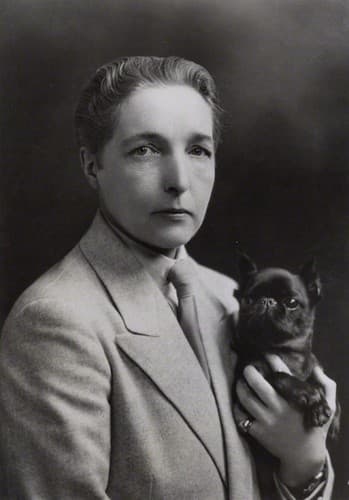
Marguerite Antonia Radclyffe Hall was an English poet and author, best known for the novel The Well of Loneliness, a groundbreaking work in lesbian literature. In adulthood, Hall often went by the name John, rather than Marguerite.
Similar books
- Orlando
Virginia Woolf
3.9 (61k) average on GoodreadsFantasyExplores gender identity and societal roles across centuries with a lyrical, introspective style.
- Maurice
E.M. Forster
4.0 (28k) average on GoodreadsHistorical FictionA classic novel exploring homosexual love and societal pressures in early 20th-century England.
- To Kill a Mockingbird
Harper Lee
4.3 (4.5M) average on GoodreadsHistorical FictionIn the 1930s Jim Crow South, Harper Lee writes about racial injustice, moral growth, and the quiet courage of a lawyer father, Atticus Finch, as seen through his young daughter's eyes.
- The Great Gatsby
F. Scott Fitzgerald
3.9 (3.8M) average on GoodreadsHistorical FictionIn the opulent Roaring Twenties, a mysterious millionaire's lavish parties hide his desperate, tragic pursuit of a lost love, exposing the emptiness within the American Dream.
- Pride and Prejudice
Jane Austen
4.3 (3M) average on GoodreadsHistorical FictionIn a society focused on status and money, Elizabeth Bennet navigates love and pride, challenging Mr. Darcy and social expectations to find true affection.
- Angels & Demons
Dan Brown
3.9 (2.7M) average on GoodreadsThrillerA Harvard symbologist races through Rome's ancient sites, deciphering cryptic clues to unmask the Illuminati and stop a vengeful plot to destroy the Vatican with a stolen antimatter weapon.




Enjoyed the summary?
A summary gives you the shape of the book. The book itself has the detail, the examples and the voice.
Find The Well of Loneliness on AmazonAs an Amazon Associate, BookBrief earns from qualifying purchases. How we're funded