
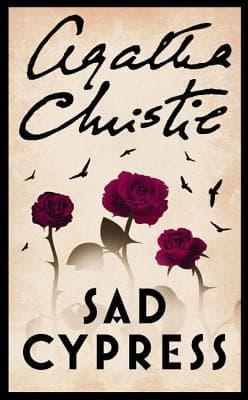
Synopsis
Covers the whole plot, including the ending.
- Difficulty
- Medium
- Pacing
- Moderate
- Mood
- Suspenseful, Intriguing, Dramatic, Melancholy
- Read it if
- You enjoy classic 'whodunit' mysteries with a focus on psychological drama and intricate plotting, and you appreciate Hercule Poirot's deductive reasoning.
- Skip it if
- You prefer fast-paced action thrillers or mysteries with graphic violence, or if you dislike courtroom dramas.
Sad Cypress Plot Summary
Covers the whole plot, including the ending.
Elinor Carlisle's Desperate Plea
The story begins with Elinor Carlisle in court, accused of Mary Gerrard's murder. Her lawyer, Peter Lord, believes she is innocent, but the evidence is strong. Elinor, accepting her situation, writes to Hercule Poirot. She asks him to investigate, not necessarily to save her, but to find the truth about Mary's death. She tells of the events leading to the tragedy, starting with her wealthy aunt, Laura Welman, getting sick. Then Mary Gerrard, a young woman who was a family ward years ago, reappears. Elinor's fiancé, Roddy Winter, becomes attracted to Mary, adding to Elinor's personal pain.
Aunt Laura's Illness and Mary's Return
Elinor Carlisle and her fiancé, Roddy Winter, visit Elinor's wealthy Aunt Laura Welman at Hunterbury. Aunt Laura is sick and cared for by Nurse Hopkins and Nurse O'Brien. During their visit, Mary Gerrard, a beautiful local girl who was once Aunt Laura's ward, comes back to Hunterbury. Aunt Laura shows strong affection for Mary, which immediately causes tension. Roddy Winter is clearly captivated by Mary's charm and beauty. Elinor tries to be polite but feels growing unease and jealousy about Mary's presence and Roddy's admiration.
Aunt Laura's Death and Unexpected Will
Aunt Laura Welman's health gets worse quickly, and she dies. After her death, her lawyer, Mr. Seddon, reads her will. To everyone's surprise, Aunt Laura changed her will just before she died. She left a large part of her estate, including Hunterbury, to Mary Gerrard, with Elinor getting a smaller amount. This news upsets Elinor, who always expected to inherit most of her aunt's money. It also strengthens Roddy's feelings for Mary, as she is now wealthy, making the relationships even more difficult.
Mary's Sudden Illness and Death
Soon after Aunt Laura's funeral and the will reading, Mary Gerrard, Nurse Hopkins, and Elinor Carlisle have lunch. During the meal, Mary says she feels unwell and quickly dies from a sudden, violent illness. The local doctor determines she was poisoned. Suspicion immediately falls on Elinor Carlisle. She had a clear reason (the inheritance) and the chance to give poison, having prepared the sandwiches and tea. The community, and later the police, see Elinor as the main suspect, leading to her arrest and trial.
The Trial and Poirot's Involvement
Elinor Carlisle's trial for Mary Gerrard's murder begins. The prosecution presents a strong case based on motive, opportunity, and a vial of morphine found with Elinor. Despite the strong evidence, Elinor says she is innocent. Hercule Poirot, after getting Elinor's letter, starts his investigation. He interviews the main people from Hunterbury, including Nurse Hopkins, Nurse O'Brien, Dr. Lord, and Roddy Winter. Poirot carefully checks the timeline, the house's layout, and the people involved, looking for inconsistencies or overlooked details that might explain Mary's death.
Poirot Uncovers Hidden History
As Poirot investigates, he finds an important piece of information about Mary Gerrard's past. He learns that Mary was not just Aunt Laura's ward, but her illegitimate daughter, conceived with a local farmer, Frederick Gerrard. This changes the inheritance situation greatly. Under British law at the time, an illegitimate child could not inherit from biological parents if they died without a will, or if the will did not clearly state the relationship. This discovery suggests that Mary's inheritance from Aunt Laura's will was possibly invalid. This gives a new reason for someone to want Mary dead before the will could be challenged or the truth revealed.
The Significance of the Morphine
During his investigation, Poirot focuses on the vial of morphine found with Elinor, presented as the murder weapon. He realizes that while morphine is a strong poison, Mary's symptoms before death (quick onset, convulsions, and specific facial contortions) are not fully consistent with morphine poisoning. This difference makes him suspect the morphine was a distraction, planted to blame Elinor. He thinks another, faster-acting poison was used. He starts looking for other substances in the house, especially medical ones, that could have caused Mary's quick death.
Nurse Hopkins's True Identity and Motive
Poirot eventually reveals Nurse Hopkins as the killer. He explains that 'Nurse Hopkins' is Elinor's Aunt Mary Riley, Laura Welman's sister, who was thought to be dead for many years. Mary Riley faked her death and returned with a false identity. She was driven by strong hatred for her sister, Laura, whom she blamed for a past injustice regarding a man they both loved. Her reason for killing Mary Gerrard was to stop her from inheriting the Welman estate, which Mary Riley believed belonged to Elinor, and eventually to herself through Elinor. This was her way of getting revenge on Laura, even after Laura's death.
The Poison and the Method
Poirot explains that Nurse Hopkins (Aunt Mary Riley) poisoned Mary Gerrard with eserine. This is an alkaloid from the Calabar bean, which she had access to as a nurse. It caused symptoms consistent with Mary's quick death. She gave the poison to Mary through a small piece of toast that only Mary ate during lunch. She knew Elinor would be blamed since Elinor prepared the other food. Also, Nurse Hopkins planted the morphine vial in Elinor's room to strengthen the case against her. She had also subtly influenced Aunt Laura's will to include Mary Gerrard, knowing Mary's illegitimate status would complicate the inheritance and further incriminate Elinor.
Justice and Resolution
With Poirot's careful investigation and strong evidence, Elinor Carlisle is found not guilty of Mary Gerrard's murder. Nurse Hopkins (Aunt Mary Riley) is arrested and faces justice for her crimes. The truth about Mary Gerrard's parents and Nurse Hopkins's plan brings a complex end to the tragedy. Roddy Winter, who was attracted to Mary, has to deal with the truth and his feelings. Elinor, though cleared, is changed by the experience. She finds a quiet resolution with Peter Lord, her lawyer, who believed she was innocent from the start, suggesting a possible future together. Roddy leaves her life.
Principal Figures
Elinor Carlisle
Protagonist
Wealthy young woman accused of murder, seeking truth and justice.
Elinor Carlisle is initially portrayed as a composed, somewhat reserved young woman, engaged to her cousin Roddy Winter and expecting to inherit her wealthy Aunt Laura's fortune. Her world is shattered first by Roddy's infatuation with Mary Gerrard, then by Aunt Laura's will leaving most to Mary, and finally by her own arrest for Mary's murder. Despite the overwhelming evidence against her, Elinor maintains a quiet dignity and a desire for the truth, even if it means her own conviction. Her journey is one of profound suffering and an eventual rediscovery of self beyond her initial expectations and relationships.
Relationships: Roddy Winter (fiancé, later estranged due to his infatuation with Mary); Mary Gerrard (romantic rival, victim); Aunt Laura Welman (wealthy aunt, benefactor); Hercule Poirot (investigator, savior); Peter Lord (defense counsel, potential new love interest)
Hercule Poirot
Detective
Eccentric Belgian detective tasked with uncovering the truth behind Mary Gerrard's murder.
Hercule Poirot is the renowned Belgian detective who receives a letter from Elinor Carlisle, prompting him to investigate Mary Gerrard's murder. He approaches the case with his characteristic meticulousness, focusing on psychological insights, inconsistencies in testimony, and the 'little grey cells.' Poirot is not swayed by circumstantial evidence or public opinion, instead seeking the underlying human motivations and hidden histories. His calm demeanor and methodical approach are crucial in unraveling the complex web of deceit and revealing the true murderer, ultimately saving Elinor from the gallows.
Relationships: Elinor Carlisle (client, the accused whom he believes innocent); Dr. Lord (fellow investigator, providing medical context); Nurse Hopkins (the murderer he unmasks)
Mary Gerrard
Victim
Beautiful young woman whose sudden death sparks the central murder mystery.
Mary Gerrard is the beautiful, charming, and seemingly innocent victim at the heart of the novel. She was a former ward of Aunt Laura Welman and returns to Hunterbury shortly before Laura's death. Her natural charm captivates Roddy Winter, making her Elinor's romantic rival. Mary's sudden inheritance from Aunt Laura and her subsequent death by poison create the central conflict. Later, it is revealed she was Aunt Laura's illegitimate daughter, a fact that plays a crucial role in the motive for her murder, as her inheritance was legally precarious.
Relationships: Aunt Laura Welman (biological mother (revealed posthumously), benefactor); Roddy Winter (object of his affection); Elinor Carlisle (romantic rival); Nurse Hopkins (her murderer)
Roddy Winter
Supporting
Elinor's fiancé, whose infatuation with Mary Gerrard complicates the plot.
Roddy Winter is Elinor Carlisle's charming but somewhat fickle fiancé. He is quickly captivated by Mary Gerrard's beauty and charisma, leading to a visible shift in his affections away from Elinor. His open admiration for Mary, especially after she inherits Aunt Laura's fortune, provides a strong motive for Elinor in the eyes of the police. Roddy's character highlights themes of superficial attraction versus deeper commitment and his actions contribute significantly to Elinor's emotional distress and the initial perception of her guilt.
Relationships: Elinor Carlisle (fiancé, later estranged); Mary Gerrard (object of his infatuation)
Nurse Hopkins
Antagonist
A seemingly caring nurse revealed to be the true murderer, driven by a hidden past.
Nurse Hopkins is initially presented as one of the two nurses caring for Aunt Laura Welman. She appears competent and professional, yet somewhat sharp-tongued. Poirot eventually unmasks her as the true murderer of Mary Gerrard. Her real identity is Mary Riley, Aunt Laura's sister, who was believed to have died years ago. Driven by a deep-seated grudge against Laura and a sense of entitlement to the family fortune, she orchestrated Mary Gerrard's death and framed Elinor, manipulating the will and using her nursing knowledge to administer a fast-acting poison.
Relationships: Aunt Laura Welman (sister, object of her resentment); Mary Gerrard (victim); Elinor Carlisle (framed by her); Hercule Poirot (her unmasker)
Aunt Laura Welman
Supporting/Victim (indirect)
Wealthy, ailing aunt whose death and will trigger the main events of the story.
Aunt Laura Welman is Elinor Carlisle's wealthy aunt, suffering from a terminal illness at the beginning of the novel. Her declining health and eventual death are the catalysts for the plot. She is portrayed as somewhat eccentric, with a strong attachment to Mary Gerrard, whom she names as the primary beneficiary in her final will. Later, it is revealed that Mary was her illegitimate daughter, a secret she carried for years. Her will and her hidden past are central to understanding the motives behind Mary Gerrard's murder.
Relationships: Elinor Carlisle (niece, original expected heir); Mary Gerrard (biological daughter, beneficiary); Nurse Hopkins (Mary Riley) (sister, held a grudge against her)
Peter Lord
Supporting
Elinor Carlisle's compassionate defense counsel, who believes in her innocence.
Peter Lord is Elinor Carlisle's defense counsel during her murder trial. Unlike many others, he believes in Elinor's innocence from the outset and works diligently to defend her. He is portrayed as intelligent, dedicated, and sympathetic, developing a deep respect and affection for Elinor throughout the ordeal. His belief in her and his efforts to secure her acquittal are a source of quiet strength for Elinor, and he represents a potential future for her after the trauma of the trial.
Relationships: Elinor Carlisle (client, later potential romantic interest); Hercule Poirot (collaborator in seeking the truth)
Nurse O'Brien
Supporting
The second nurse attending Aunt Laura, providing additional testimony.
Nurse O'Brien is the second nurse assigned to care for Aunt Laura Welman, working alongside Nurse Hopkins. She is a more straightforward and less complex character than Nurse Hopkins, providing observations and testimony to Poirot regarding the household dynamics and Aunt Laura's final days. While not a central figure, her presence and recollections help Poirot piece together the timeline and atmosphere at Hunterbury, and her testimony helps to indirectly confirm details that ultimately expose Nurse Hopkins.
Relationships: Aunt Laura Welman (patient); Nurse Hopkins (colleague)
Dr. Lord
Supporting
The local doctor who attends Aunt Laura and Mary Gerrard, and provides medical evidence.
Dr. Lord is the local physician attending to Aunt Laura Welman during her final illness and is later called to examine Mary Gerrard after her sudden death. He provides the initial medical assessment that Mary died of poisoning, and his observations of her symptoms are crucial for Poirot in determining the specific type of poison used. His professional testimony forms part of the prosecution's case against Elinor, but he also assists Poirot with medical details during the private investigation.
Relationships: Aunt Laura Welman (patient); Mary Gerrard (patient/victim); Hercule Poirot (consultant)
Themes & Insights
Jealousy and Obsession
Jealousy is a main force in 'Sad Cypress,' mostly seen in Elinor Carlisle's feelings toward Mary Gerrard. Roddy Winter's clear attraction to Mary, plus Mary's sudden inheritance, creates strong jealousy in Elinor. The prosecution uses this as her main reason for murder. However, the true depth of jealousy is shown in Nurse Hopkins's long-held anger and desire for revenge against her sister, Laura Welman. This ultimately leads her to murder and frame an innocent person. This theme shows how uncontrolled emotions can cause destructive acts.
“'It was her face,' he said. 'Her face and her youth. They seemed to belong to each other. And Elinor – Elinor's beautiful, but she's not young, not like Mary was.”
Hidden Identities and Secrets
The book has many hidden identities and old secrets that slowly come out. The most important reveal is Mary Gerrard's true parentage as Aunt Laura's illegitimate daughter, a fact kept secret for decades. This secret changes the inheritance situation and adds another layer of motive. Also, Nurse Hopkins's true identity as Mary Riley, Aunt Laura's supposedly dead sister, is the final reveal. Poirot uncovers these hidden lives and past events in detail, showing how secrets can grow and lead to tragic results, shaping lives and deaths from afar.
“'You see, Hastings, the past is never dead. It is not even past. It lies in wait, sometimes for years, sometimes for generations, to spring out and claim its due.”
Justice and Truth vs. Appearance
A main theme is finding true justice, which often differs from what seems true and from circumstantial evidence. Elinor Carlisle seems guilty under the law, with motive, opportunity, and means appearing to be against her. However, Poirot's investigation looks beyond these surface facts, seeking the deeper truth. The story shows how legal systems can fail when they rely only on evidence. It shows the importance of understanding human psychology and hidden motives to get real justice, instead of just convicting the most obvious suspect.
“'It is not enough that a woman should be beautiful, or that she should be loved. It is not enough that she should be innocent. She must be proved innocent.”
Inheritance and Greed
The idea of inheritance drives much of the early plot and character actions. Elinor expects to inherit Aunt Laura's money, and the change in the will, favoring Mary Gerrard, gives the prosecution a strong reason for murder. However, the true extent of greed is shown through Nurse Hopkins (Mary Riley), whose long-standing anger over past inheritance disputes and a wish for the Welman estate fueled her plan to kill Mary Gerrard and frame Elinor. The book explores how the desire for wealth can corrupt and motivate extreme actions.
“'It is always the money, Mademoiselle. The money, and the power that the money brings.”
Plot Devices & Literary Techniques
First-Person Narrative (Elinor's Recollection)
Elinor's perspective frames the initial understanding of events.
The novel ingeniously opens with Elinor Carlisle's internal monologue and her letter to Poirot, recounting the events leading up to Mary Gerrard's death from her perspective as the accused. This device immediately establishes Elinor's character, her emotional state, and the seemingly damning evidence against her. It creates a sense of intimacy and empathy for Elinor, while also subtly planting biases and incomplete information that Poirot will later challenge. By presenting her version of events first, Christie masterfully manipulates the reader's perception, making the eventual truth more shocking.
Poirot's Investigation as a Separate Narrative
Poirot's objective investigation contrasts with Elinor's subjective account.
After Elinor's initial first-person account, the narrative shifts to a more traditional third-person perspective following Hercule Poirot's investigation. This shift allows for an objective, detached exploration of the facts, contrasting sharply with Elinor's emotionally charged recollection. Poirot's methodical questioning, his focus on psychological details, and his re-examination of established 'facts' systematically dismantle the assumptions built by Elinor's narrative, leading the reader towards the unexpected truth. This dual narrative structure effectively builds suspense and misdirection.
The 'Red Herring' Poison (Morphine)
A planted poison to mislead investigators and frame the innocent.
The vial of morphine found in Elinor's possession serves as a classic red herring. While morphine is a potent poison and its discovery strongly implicates Elinor, Poirot's keen observation of Mary Gerrard's specific symptoms leads him to deduce that it was not the actual murder weapon. This device effectively misdirects both the police and the reader, making Elinor's guilt seem undeniable, only for Poirot to reveal that a different, faster-acting poison (eserine) was used, skillfully administered by the true killer, Nurse Hopkins, who deliberately planted the morphine to strengthen the frame-up.
The Unreliable Witness/Narrator (Subtle)
Characters' perceptions and memories are influenced by their biases and hidden roles.
While Elinor's initial account is largely truthful from her perspective, the novel subtly employs unreliable narration through the various characters' interpretations of events. Roddy's perception of Mary, Nurse Hopkins's seemingly professional demeanor, and even Aunt Laura's seemingly innocent will are all revealed to be colored by underlying motives, hidden identities, or incomplete information. Poirot's role is to sift through these subjective accounts and piece together the objective truth, demonstrating how personal biases and concealed agendas can distort reality and mislead investigators.
Sad Cypress Quotes
“The past is like a foreign country; they do things differently there.”
“It is not the crime that matters, it is the motive.”
“Human beings are very adaptable. They can get used to almost anything.”
“There are some things that even death cannot destroy.”
“One cannot judge a book by its cover, nor a person by their outward appearance.”
“The truth, however bitter, is always preferable to a comforting lie.”
“It is often the little things, the seemingly insignificant details, that hold the key.”
“Suspicion is a poison that can corrupt the purest heart.”
“People are so quick to jump to conclusions, especially when they want to believe something.”
“Love is a dangerous thing, Mademoiselle. It can drive people to madness, or to murder.”
“Everyone has secrets. Some are small, some are grave.”
“Grief, like love, can be a terribly selfish emotion.”
“The human heart is a dark and complex place.”
“Sometimes the most obvious explanation is the correct one, and sometimes it is a carefully constructed lie.”
Quiz
10 questions on the plot and the characters. Each answer comes with a short explanation.
Question 1
What is the primary motive attributed to Elinor Carlisle for the murder of Mary Gerrard at the beginning of the story?
- Mary was blackmailing Elinor's family.
- Mary was Elinor's rival for the affection of Roddy Winter.
- Mary had stolen a valuable family heirloom from Elinor.
- Mary knew a dark secret about Elinor's past.
Show answer
B. Mary was Elinor's rival for the affection of Roddy Winter. The core of the initial accusation against Elinor is her jealousy over Roddy Winter, who had become infatuated with Mary Gerrard after Elinor's aunt died.
Question 2
Who is the main detective investigating the case of Mary Gerrard's death?
- Inspector Japp
- Hercule Poirot
- Colonel Race
- Miss Marple
Show answer
B. Hercule Poirot The book explicitly states, 'Hercule Poirot was all that stood between Elinor and the gallows...', indicating he is the central detective.
Question 3
Where does the majority of the initial investigation into Mary Gerrard's death take place?
- In a London apartment building.
- At the country estate where Elinor's aunt and Mary Gerrard resided.
- On a cruise ship.
- In a hospital ward.
Show answer
B. At the country estate where Elinor's aunt and Mary Gerrard resided. The murder occurs at Hunter's Lodge, the country estate of Elinor's recently deceased aunt, where Mary Gerrard was living as a companion.
Question 4
What poison is used to kill Mary Gerrard?
- Strychnine
- Cyanide
- Morphine
- Arsenic
Show answer
C. Morphine Mary Gerrard dies from a fatal dose of morphine, which is administered in her tea.
Question 5
Who is Roddy Winter in relation to Elinor Carlisle?
- Her estranged brother.
- Her fiancé.
- Her cousin.
- Her lawyer.
Show answer
B. Her fiancé. Roddy Winter is Elinor's fiancé, and the love triangle between him, Elinor, and Mary Gerrard forms the central motive for the initial accusation.
Question 6
What key piece of evidence initially points to Elinor as the murderer?
- Her fingerprints were found on the poison bottle.
- She was seen purchasing the specific poison from a local chemist.
- She was the only person with access to the poison and the opportunity to administer it to Mary's tea.
- A confession letter written by Elinor was discovered.
Show answer
C. She was the only person with access to the poison and the opportunity to administer it to Mary's tea. The prosecution's case relies heavily on Elinor having 'the motive, the opportunity and the means' to poison Mary, particularly her exclusive access to the poison and the tea.
Question 7
What is the ultimate fate of Elinor's aunt, Laura Welman, shortly before Mary Gerrard's death?
- She recovers from a long illness.
- She dies of natural causes, leaving a significant inheritance.
- She moves abroad unexpectedly.
- She suffers a serious accident.
Show answer
B. She dies of natural causes, leaving a significant inheritance. Laura Welman dies of natural causes, specifically a stroke, which sets in motion the events leading to Mary Gerrard's death due to the inheritance and Roddy's sudden interest in Mary.
Question 8
What crucial detail does Poirot uncover regarding the method of poisoning that challenges the initial assumption about Elinor?
- The poison was actually in a different drink than tea.
- The poison was administered by injection, not orally.
- The poison was in a jam tart, not the tea, and was ingested by Mary earlier.
- Mary was allergic to a component of the tea, causing a fatal reaction.
Show answer
C. The poison was in a jam tart, not the tea, and was ingested by Mary earlier. Poirot discovers that Mary Gerrard was poisoned by morphine hidden in a jam tart she ate earlier, creating a window of opportunity for someone other than Elinor to administer the poison.
Question 9
Who is ultimately revealed to be the true murderer of Mary Gerrard?
- Roddy Winter
- Dr. Lord
- Nurse Hopkins (formerly Nurse O'Brien)
- Peter Lord
Show answer
C. Nurse Hopkins (formerly Nurse O'Brien) The true murderer is Nurse Hopkins, who was previously Nurse O'Brien and was Mary Gerrard's mother, seeking revenge and inheritance.
Question 10
What is the true underlying motive of the actual murderer of Mary Gerrard?
- To frame Elinor and marry Roddy Winter herself.
- To prevent Mary from revealing a secret about the murderer's past.
- Revenge against Mary's father for abandoning her mother, and to claim a hidden inheritance connected to Mary's true identity.
- Jealousy over Mary's beauty and charm.
Show answer
C. Revenge against Mary's father for abandoning her mother, and to claim a hidden inheritance connected to Mary's true identity. Nurse Hopkins (O'Brien) was Mary Gerrard's true mother, who had been wronged by Mary's father. She murdered Mary to claim an inheritance that would have gone to Mary, and also out of a twisted sense of justice and revenge.
Sad Cypress FAQ
What is "Sad Cypress" about?
"Sad Cypress" is a Hercule Poirot mystery where the famed detective investigates the murder of Mary Gerrard. Elinor Carlisle is the primary suspect, accused of poisoning Mary due to a love triangle involving Roddy Winter, Elinor's fiancé. Poirot must unravel the complex web of relationships and past events to uncover the true killer and save Elinor from the gallows.
Why should I read "Sad Cypress"?
You should read "Sad Cypress" for its intricate plot, deep psychological character studies, and its unique structure, which begins with Elinor Carlisle already on trial. Christie masterfully explores themes of jealousy, inheritance, and hidden motives, offering a compelling whodunit that keeps readers guessing until Poirot's final reveal.
What is the background/setting of "Sad Cypress"?
The story is primarily set in the English countryside, initially at the secluded country estate of Hunterbury, where the wealthy Laura Welman resides, and later at the nearby house where Mary Gerrard lives. The atmosphere is often somber and tense, reflecting the underlying resentments and secrets among the characters, particularly after Mrs. Welman's death and Mary's subsequent murder.
What are the most memorable quotes?
While specific verbatim quotes are not always the focus in Christie's narratives, memorable sentiments include Poirot's insistence on psychological truth: "It is the little things that are the most important. They are the keys to everything." Also, the poignant reflections on love and jealousy, such as Elinor's internal struggles with her feelings for Roddy and her resentment towards Mary.
What writing style does the author use?
Agatha Christie employs a classic, clear, and engaging prose style in "Sad Cypress." She uses a third-person narrative, often shifting perspectives between characters like Elinor, Roddy, and later Hercule Poirot, to build suspense and reveal motivations. The novel notably opens with Elinor's trial, providing a retrospective framework for Poirot's investigation.
What minor details add significant meaning?
The specific details about the two types of poison, hyoscine and morphine, and how they were administered, are crucial. Also, the seemingly innocuous mention of Elinor's proficiency in gardening and her knowledge of plants, including their medicinal properties, becomes a key piece of circumstantial evidence against her. The precise timing of the tea servings and the movements of the nurses are also vital to Poirot's deductions.
What are some subtle foreshadowing moments?
Subtle foreshadowing includes the early descriptions of Mary Gerrard's delicate health and her susceptibility, making her an easy target for poisoning. Also, the repeated emphasis on Nurse Hopkins's seemingly perfect demeanor and her unwavering devotion to Mrs. Welman, which initially seems admirable, subtly hints at a deeper, more manipulative nature.
What unexpected character connections exist?
The most significant unexpected connection is revealed to be between Mary Gerrard and Nurse Hopkins. Mary is not just a distant relative of Mrs. Welman, but it is discovered that Nurse Hopkins is Mary's true mother, and she orchestrated the entire scheme to secure Mary's inheritance from Mrs. Welman, even if it meant framing Elinor.
What are unspoken character motivations?
Elinor Carlisle's unspoken motivation is a deep-seated possessiveness of Roddy Winter and a subconscious resentment towards Mary Gerrard, even if she tries to rationalize her feelings. Nurse Hopkins's unspoken motivation is a fierce, almost obsessive maternal love for Mary and a desire to see her financially secure, driving her to extreme criminal acts.
What psychological complexities do characters exhibit?
Elinor exhibits psychological complexity through her internal conflict between love, jealousy, and a strong sense of duty. She struggles with her dark impulses and her rational mind, making her a compelling, ambiguous suspect. Nurse Hopkins, on the other hand, displays a chilling psychological duality: a seemingly caring nurse masking a ruthless, calculating murderer driven by a twisted maternal instinct.
What are the major emotional turning points?
A major emotional turning point is the reading of Mrs. Welman's will, which leaves a substantial sum to Mary Gerrard, instantly providing Elinor with a powerful motive for murder. Another key moment is Elinor's growing despair and resignation during her trial, as the evidence mounts against her, leading her to almost accept her fate before Poirot intervenes.
How do relationship dynamics evolve?
The relationship between Elinor and Roddy Winter devolves from an engaged couple to one strained by suspicion and doubt, particularly on Roddy's part. The dynamic between Elinor and Mary Gerrard is initially one of polite rivalry, but Mary's death transforms it into a posthumous accusation. Poirot's relationship with Elinor evolves from a detached investigator to her last hope for justice.
Which parts remain ambiguous or open-ended?
While Poirot meticulously solves the murder, some ambiguity remains around the full extent of Elinor's internal struggle and whether, in a different scenario, her darker impulses might have manifested differently. The exact nature of Mary's feelings for Roddy, beyond her initial attraction, is also left somewhat open to interpretation, as her life is cut short before a deeper relationship could develop.
What are controversial scenes or decisions?
One controversial element is Nurse Hopkins's extreme decision to murder Mary, her own daughter, simply to ensure the inheritance, believing it would ultimately benefit Mary's future children. This cold, calculating act of infanticide, albeit indirect, is particularly shocking, even if the motive is twisted maternal love. Elinor's initial cold reaction to Mary's death also proves divisive among some readers.
"Sad Cypress" ending explained: how it ends & what it means
The novel ends with Hercule Poirot revealing Nurse Hopkins as the true murderer of Mary Gerrard and Mrs. Welman. Hopkins poisoned both women to secure Mrs. Welman's fortune for Mary, whom she believed to be her biological daughter. The ending means Elinor is acquitted and free, though forever changed by the ordeal. It highlights the destructive power of greed and misguided love, and Poirot's ability to uncover truth through psychological insight and meticulous detail, even when the obvious suspect is seemingly guilty.
About the author
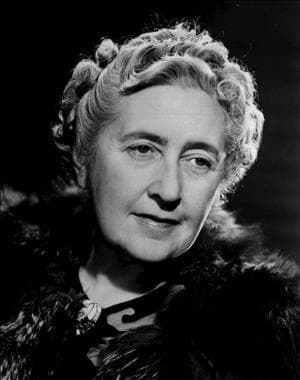
Dame Agatha Mary Clarissa Christie, Lady Mallowan, was an English writer known for her 66 detective novels and 14 short story collections, particularly those revolving around fictional detectives Hercule Poirot and Miss Marple. She also wrote the world's longest-running play, the murder mystery The Mousetrap, which has been performed in the West End since 1952. A writer during the "Golden Age of Detective Fiction", Christie has been called the "Queen of Crime". She also wrote six novels under the pseudonym Mary Westmacott. In 1971, she was made a Dame (DBE) by Queen Elizabeth II for her contributions to literature. Guinness World Records lists Christie as the best-selling fiction writer of all time, her novels having sold more than two billion copies.
Similar books
- And Then There Were None
Agatha Christie
4.3 (822k) average on GoodreadsThrillerAnother classic Christie mystery with a focus on psychological suspense and a clever, intricate plot.
- Death on the Nile
Agatha Christie
4.1 (127k) average on GoodreadsThrillerFeatures Hercule Poirot investigating a murder driven by love, jealousy, and inheritance, with a similar blend of romance and mystery.
- Rebecca
Daphne du Maurier
4.2 (450k) average on GoodreadsThrillerA gothic mystery with a strong focus on a love triangle, jealousy, and a woman accused of a crime she may not have committed.
- Angels & Demons
Dan Brown
3.9 (2.7M) average on GoodreadsThrillerA Harvard symbologist races through Rome's ancient sites, deciphering cryptic clues to unmask the Illuminati and stop a vengeful plot to destroy the Vatican with a stolen antimatter weapon.
- Gone Girl
Gillian Flynn
4.1 (2.3M) average on GoodreadsThrillerA wife's sudden disappearance on her fifth anniversary reveals a web of lies and psychological warfare, exposing the secrets within a seemingly perfect marriage.
- The Girl on the Train
Paula Hawkins
3.9 (2.1M) average on GoodreadsThrillerA woman’s fascination with a seemingly perfect couple she watches from her daily train commute leads her into a dark investigation when she witnesses something that shatters their idyllic image.





Enjoyed the summary?
A summary gives you the shape of the book. The book itself has the detail, the examples and the voice.
Find Sad Cypress on AmazonAs an Amazon Associate, BookBrief earns from qualifying purchases. How we're funded