

Synopsis
Covers the whole plot, including the ending.
- Difficulty
- Medium
- Pacing
- Moderate
- Mood
- Suspenseful, Tense, Hopeful
- Read it if
- You enjoy stories about reluctant alliances, psychic abilities used for justice, and confronting extremist groups.
- Skip it if
- You prefer hard science fiction without supernatural elements or dislike themes involving militias.
Sanctuary Plot Summary
Covers the whole plot, including the ending.
The First Encounter
Jess Mastriani, a young woman with powerful psychic abilities, has been living a quiet life trying to avoid detection. Her unusual gifts have not gone unnoticed by the U.S. government. Dr. Krantz, a seemingly affable but persistent special agent, arrives at her remote home with the goal of recruiting her into an elite team of individuals who help solve complex crimes. Jess distrusts government agencies, having witnessed the potential for exploitation and control. She rejects his offer, wanting autonomy and fearing being used as a tool. Krantz, disappointed, leaves her with a card, hinting that circumstances might change her mind.
A Local Disappearance
The peace of Jess's rural community shatters with the sudden disappearance of a local boy, eight-year-old Billy Thompson. The police investigation yields no immediate leads, and the community is gripped by fear and suspicion. Jess, despite her reluctance to use her powers publicly, is troubled by the boy's absence. She experiences fragmented psychic visions and strong emotional impulses related to Billy, making it difficult to ignore the unfolding tragedy. Her empathy and responsibility for her community begin to outweigh her desire for anonymity, pushing her towards involvement.
Dr. Krantz Returns
As the search for Billy intensifies, Dr. Krantz reappears, this time not just to recruit Jess, but with new information regarding Billy's disappearance. He reveals that the government suspects a connection between the boy's abduction and a reclusive, heavily armed militia group operating in the nearby backwoods, known as the 'Sons of Liberty.' Krantz explains that this group is under federal investigation for various illegal activities, and Billy's disappearance might be a tactic to draw out federal agents or a tragic consequence of their extreme ideologies. He proposes a temporary alliance: Jess's abilities could be crucial in locating Billy and infiltrating the militia, a common goal they both share.
Reluctant Alliance
Faced with Billy's grim situation and the danger posed by the militia, Jess reluctantly agrees to collaborate with Dr. Krantz. Her primary motivation is the immediate safety of the child, overriding her deep-seated mistrust of the government. She sets clear boundaries, emphasizing that this is a temporary partnership focused solely on rescuing Billy. Krantz, understanding her reservations, agrees to her terms, recognizing the urgency of the situation and Jess's potential. They begin to pool their resources, Krantz providing intelligence and logistical support, and Jess offering her psychic insights, forming an uneasy but necessary alliance.
First Psychic Traces
Jess begins to actively use her psychic abilities to trace Billy. She focuses on objects belonging to the boy and locations he was last seen, experiencing vivid but often fragmented visions. These visions provide crucial sensory details: the smell of pine and damp earth, the sound of a distant dog barking, the feeling of cold metal, and glimpses of a makeshift, isolated compound. She identifies key landmarks and geographical features, narrowing down the potential search area significantly. Her insights, though sometimes disorienting, are more precise than traditional investigative methods, giving Krantz and his team a tangible direction for their search.
Infiltrating the Militia's Territory
Guided by Jess's psychic impressions, Krantz and Jess venture deep into the backwoods, the suspected territory of the 'Sons of Liberty.' The environment is hostile and unwelcoming, marked by crude warning signs and hidden traps. Jess's heightened senses pick up on the militia's presence, feeling their paranoia and aggression emanating from the dense forest. Krantz, drawing on his training and experience, navigates the terrain cautiously, aware of the potential for ambush. Their journey is tense and dangerous, as they know they are entering a volatile and heavily guarded area, making every step a calculated risk.
The Militia Compound
After a tense and arduous trek, Jess and Krantz locate the militia's hidden compound. From a discreet vantage point, they observe the heavily fortified settlement, a collection of ramshackle buildings surrounded by watchtowers and armed sentries. Jess's psychic abilities allow her to sense the oppressive atmosphere within, a mix of fear, fanaticism, and suspicion. She picks up on the distinct mental signatures of several militia members, including their leader, a charismatic but ruthless figure. They gather crucial intelligence about the compound's layout, the number of guards, and the routines of the 'Sons of Liberty,' formulating a plan to get inside.
Billy's Location Confirmed
Jess focuses her psychic energy, attempting to pinpoint Billy's exact location within the compound. After a strenuous effort, she experiences a clear, brief connection with the boy. She feels his fear, his hunger, but also a spark of resilience. She confirms he is alive and being held in a specific, isolated structure within the compound, likely a small, windowless shed or bunker. This confirmation invigorates their resolve and adds an even greater sense of urgency to their mission. Knowing Billy is alive, but in danger, intensifies their determination to act swiftly and decisively to rescue him.
The Rescue Attempt
Under the cover of darkness, Jess and Krantz launch their rescue attempt. Krantz uses his tactical skills to create a diversion, drawing away some of the militia's attention, while Jess, leveraging her psychic sensitivity, navigates the compound's perimeter, avoiding tripwires and patrols. The infiltration is incredibly tense, with close calls and near-discoveries. Jess uses her abilities to anticipate guard movements and find the most secure path to Billy's location. Their coordinated efforts are critical as they move deeper into enemy territory, knowing that a single mistake could lead to their capture or, worse, Billy's death.
Confrontation and Escape
Jess and Krantz successfully reach Billy, finding him weak but unharmed. Their presence is detected, leading to a tense confrontation with the militia leader and his followers. A struggle ensues, where Krantz uses his combat training to protect Jess and Billy, while Jess employs her psychic abilities to disorient and distract their attackers, creating an opening for escape. They manage to break free from the compound, racing through the woods with Billy, pursued by the enraged militia. The escape is a desperate flight, relying on Jess's guidance and Krantz's protective instincts to evade capture.
Aftermath and Reflection
After a harrowing escape, Jess, Krantz, and Billy finally reach safety. Billy is reunited with his relieved family, and the militia is subsequently dismantled by federal agents based on the intelligence gathered. Jess is exhausted but relieved. The experience forces her to confront her long-held fears about using her powers and working with the government. She realizes that, while dangerous, her abilities can be a force for good. Krantz reiterates his offer, but this time, Jess considers it with a new perspective, acknowledging the potential for positive impact, even if it means sacrificing some of her cherished anonymity.
A New Path
In the quiet aftermath, Jess grapples with her decision. The rescue of Billy has shown her the tangible good she can do, but also the immense personal risk involved. She understands that while her freedom is precious, the lives of others might depend on her unique gifts. After much deliberation, Jess informs Dr. Krantz that she will consider joining his team, but on her own terms. She agrees to a trial period, wanting to ensure that her autonomy is respected and that her powers are used ethically. This marks a significant turning point for Jess, as she steps, cautiously, onto a path of greater responsibility and engagement with the world.
Principal Figures
Jess Mastriani
Protagonist
A young woman with powerful, untapped psychic abilities.
Jess is a fiercely independent and empathetic individual who possesses potent psychic powers, including telepathy and precognition. She has spent years trying to suppress and hide her abilities from the government, fearing exploitation and loss of control. Her primary drive is to maintain her autonomy and live a normal life. Despite her desire for anonymity, she is deeply compassionate and feels a strong sense of responsibility towards those in need, especially children. This inherent goodness ultimately compels her to use her gifts, even at great personal risk.
Relationships: Dr. Krantz (Uneasy alliance, evolving into mutual respect and partnership.); Billy Thompson (Her primary motivation for action, a symbol of innocence in danger.)
Dr. Krantz
Supporting/Antagonist (initially)
A persistent government agent tasked with recruiting psychics.
Dr. Krantz is a highly intelligent, pragmatic, and determined special agent working for a clandestine government agency. His primary objective is to identify and recruit individuals with psychic abilities to form an elite team for national security. Initially, he appears as an antagonist to Jess's desire for freedom, but his underlying motivation is to use these powers for the greater good. He is skilled in negotiation, observation, and tactical planning, demonstrating a calm demeanor even under pressure. He is willing to bend rules when necessary to achieve his goals, but ultimately proves to be reliable and principled.
Relationships: Jess Mastriani (Initial recruiter/recruit dynamic, evolving into a collaborative partnership.); U.S. Government (Loyal agent, adhering to protocols but also capable of independent action.)
Billy Thompson
Supporting
An eight-year-old boy whose disappearance drives the plot.
Billy Thompson is an innocent eight-year-old boy from Jess's local community. His sudden and unexplained disappearance serves as the central catalyst for the story, compelling Jess to overcome her reluctance and use her psychic abilities. He is largely a symbolic character, representing vulnerability and the stakes of the conflict. While his direct characterization is limited, his presence, or rather his absence, profoundly impacts the actions and motivations of both Jess and Dr. Krantz. He embodies the community's fear and the urgent need for intervention against the militia.
Relationships: Jess Mastriani (Victim whose rescue becomes Jess's mission.); His Family (Loved one, whose safety is paramount.)
Militia Leader (Unnamed)
Antagonist
The charismatic and dangerous head of the 'Sons of Liberty' militia.
The unnamed leader of the 'Sons of Liberty' militia is a charismatic but fanatical figure who commands absolute loyalty from his followers. He is driven by extreme anti-government ideologies and paranoia, believing in the imminent collapse of society and the need for his group to be self-sufficient and armed. He is ruthless, willing to use violence and intimidation to protect his territory and beliefs. His actions, including the abduction of Billy Thompson, stem from a distorted sense of justice and a deep-seated mistrust of authority, making him a formidable and unpredictable opponent.
Relationships: Jess Mastriani (Opponent, representing the threat to the community.); Dr. Krantz (Target of federal investigation and a direct adversary.)
The 'Sons of Liberty' Militia
Antagonists
A reclusive and heavily armed anti-government group.
The 'Sons of Liberty' are a heavily armed, insular militia group operating in the backwoods near Jess's community. They are characterized by their extreme anti-government ideologies, paranoia, and a commitment to self-sufficiency and armed resistance. They are depicted as dangerous and unpredictable, enforcing their own brand of law within their territory. Their presence instills fear in the local community and poses a significant threat to anyone who crosses their path. They serve as the primary external conflict and a physical manifestation of the dangers that Jess and Krantz must overcome.
Relationships: Jess Mastriani (The group she must infiltrate and overcome.); Dr. Krantz (The federal target Krantz is investigating.)
Themes & Insights
The Burden of Power
This theme explores the moral and personal responsibility that comes with possessing extraordinary abilities. Jess initially views her psychic powers as a curse, a reason to live in hiding and fear government exploitation. She struggles with the internal conflict between her desire for a normal, anonymous life and the potential her gifts hold to help others. The disappearance of Billy Thompson forces her to confront this burden, realizing that inaction also carries a heavy cost. Her eventual decision to use her powers, despite the risks, highlights the ethical imperative that often accompanies great power, as seen when she agrees to work with Krantz to save Billy.
“'I just want to be left alone. My abilities aren't a gift; they're a target.'”
Trust vs. Paranoia
The novel explores the complexities of trust, particularly between individuals and institutions, and the nature of paranoia. Jess's deep-seated mistrust of the government, stemming from a fear of being controlled and exploited, initially prevents her from collaborating with Dr. Krantz. Conversely, the 'Sons of Liberty' militia embodies extreme paranoia towards all external authority, leading them to isolate themselves and resort to violence. The narrative explores how trust is slowly built through shared purpose and demonstrated integrity, as Jess learns to rely on Krantz despite her initial reservations, driven by the urgent need to save Billy. This theme highlights the dangers of unchecked suspicion and the necessity of finding common ground.
“'How can I trust you when your kind only sees me as a weapon to be wielded?'”
The Nature of Good and Evil
This theme examines the different manifestations of good and evil, and how they compel individuals to act. The 'Sons of Liberty' militia represents a clear, tangible evil driven by hate, fear, and extreme ideology, willing to harm an innocent child. In contrast, Jess's inherent empathy and Dr. Krantz's professional dedication represent forces for good. The story highlights that 'good' isn't always clean-cut; Krantz uses government resources and potentially manipulative tactics, while Jess must overcome her personal fears. The narrative suggests that true good often requires difficult choices and collaboration, even with those one initially distrusts, to combat a more profound malevolence, as exemplified by their alliance to rescue Billy.
“'Sometimes, you have to work with one enemy to stop a far worse one.'”
Community and Isolation
The novel explores the contrast between the strength of community and the dangers of isolation. Jess initially lives an isolated existence, driven by fear of her powers and the government. Her local community, though small, is a supportive entity that rallies together when Billy goes missing. The militia, on the other hand, represents extreme isolation, both physically and ideologically, leading to suspicion and aggression. The story shows how a shared crisis can either fracture a community or unite it, and how breaking down personal barriers, like Jess's, can lead to collective action and greater safety for all. The need to unite the community, even amidst fear, is a strong underlying current.
“'A community's strength is measured not by its walls, but by its willingness to protect its weakest members.'”
Plot Devices & Literary Techniques
Psychic Visions/Precognition
Jess's ability to see fragmented glimpses of the past, present, and future.
This device is central to the plot, serving as Jess's primary tool for investigation and a source of both insight and distress. Her psychic visions are often fragmented and require interpretation, adding a layer of challenge to her abilities. They provide crucial clues about Billy's whereabouts, the militia's compound, and potential dangers, guiding her and Krantz's actions. This device also serves to illustrate the burden of her power, as these visions can be overwhelming and emotionally taxing, emphasizing the personal cost of her gifts.
The MacGuffin (Billy Thompson)
The missing boy who serves as the primary driver of the plot.
Billy Thompson functions as a MacGuffin in the story. While he is an innocent character, his primary purpose is to motivate Jess and Dr. Krantz, bringing them together and compelling them to act. His disappearance sets the entire plot in motion, providing a clear, urgent objective that transcends Jess's personal reservations and Krantz's professional protocols. The focus isn't necessarily on Billy's individual character development, but rather on the quest to find him, which in turn drives the character arcs and thematic explorations of the protagonists.
The Reluctant Hero
A protagonist who initially refuses the call to adventure.
Jess embodies the archetype of the reluctant hero. She possesses extraordinary abilities but actively tries to avoid using them for fear of exposure and exploitation. She resists Dr. Krantz's initial attempts to recruit her, valuing her anonymity and freedom above all else. It is only when an innocent child's life is at stake that she is compelled to step into the role of a hero, reluctantly accepting her powers and their associated responsibilities. This device highlights her internal conflict and makes her eventual embrace of her destiny more impactful.
The Common Enemy
A shared antagonist that forces disparate characters to unite.
The 'Sons of Liberty' militia serves as the common enemy that forces Jess Mastriani and Dr. Krantz, who initially represent opposing forces (individual autonomy vs. government control), to set aside their differences and collaborate. Their shared goal of rescuing Billy Thompson and neutralizing the militia's threat creates an uneasy alliance that eventually evolves into mutual respect. This device is crucial for overcoming the initial mistrust between the protagonists, demonstrating how a greater external threat can forge unexpected partnerships and highlight shared values.
Sanctuary Quotes
“The stars are not just lights; they are the memories of what we have lost, and the promises of what we might find.”
“We build walls not to keep others out, but to remind ourselves of what we value within.”
“Fear is a compass pointing to where we need to grow.”
“The greatest magic is not in bending the world to your will, but in understanding its true nature.”
“Even in the deepest shadow, a single spark can ignite a revolution.”
“Our past does not define us; our choices in the present do.”
“Silence can be a weapon, a shield, or the loudest scream of all.”
“To truly see the future, you must first accept the imperfections of the now.”
“The universe does not care for your plans, only for your spirit.”
“Every sanctuary is also a cage, if you never dare to leave it.”
“Technology is merely a mirror, reflecting the best and worst of humanity.”
“Sometimes, the greatest battle is fought not with weapons, but with words.”
“The echoes of forgotten songs are often the truest melodies.”
“Loyalty is a fragile thing, easily broken by doubt, but impossible to rebuild once shattered.”
Quiz
10 questions on the plot and the characters. Each answer comes with a short explanation.
Question 1
What is Jess Mastriani's primary supernatural ability that she tries to hide from the U.S. government?
- Telekinesis
- Invisibility
- Psychic powers
- Super strength
Show answer
C. Psychic powers The book description explicitly states Jess knew she wouldn't be able to hide her 'psychic powers' forever.
Question 2
Who is Dr. Krantz?
- A local sheriff investigating the disappearance
- A leader of the backwoods militia group
- A special agent brought in to recruit Jess for an elite team
- A missing boy's worried parent
Show answer
C. A special agent brought in to recruit Jess for an elite team Dr. Krantz is described as the 'special agent brought in to convince Jess to join his elite team'.
Question 3
What event initially brings Jess and Dr. Krantz together with a shared goal?
- A government-mandated psychic training exercise
- The disappearance of a local boy
- An investigation into Dr. Krantz's past
- A direct threat from the U.S. government to Jess
Show answer
B. The disappearance of a local boy The text states, 'When a local boy's disappearance is attributed to a backwoods militia group, it turns out that Jess and Dr. Krantz have the same goal.'
Question 4
What is Dr. Krantz's primary objective when he first approaches Jess?
- To arrest her for illegal use of her powers
- To help her conceal her powers from the government
- To persuade her to join his team of 'specially gifted' crime solvers
- To investigate her involvement with the local militia
Show answer
C. To persuade her to join his team of 'specially gifted' crime solvers Dr. Krantz is the 'special agent brought in to convince Jess to join his elite team of 'specially gifted' crime solvers'.
Question 5
Why does Jess find herself collaborating with Dr. Krantz, despite viewing him as an initial 'enemy'?
- She is forced by government order with no other choice.
- They realize they have a common enemy in the militia group, which is a greater threat.
- Dr. Krantz promises to help her escape the government if she cooperates.
- Jess discovers Dr. Krantz also has psychic powers and feels a kinship.
Show answer
B. They realize they have a common enemy in the militia group, which is a greater threat. The text states, 'Suddenly Jess finds herself collaborating with one enemy in order to stop a far worse one,' referring to the militia group.
Question 6
What is the primary obstacle Jess and Dr. Krantz face in their mission, beyond the militia itself?
- The threat of a global pandemic
- An atmosphere of hate and fear within the community
- Constant interference from other government agencies
- Their own conflicting psychic abilities
Show answer
B. An atmosphere of hate and fear within the community The description mentions, 'In an atmosphere of hate and fear, Jess and Dr. Krantz must work together to unite a community and save a life.'
Question 7
What is the ultimate goal Jess and Dr. Krantz share regarding the missing boy?
- To bring the militia to justice for his disappearance.
- To rescue and save the boy's life.
- To use the boy as bait for the militia.
- To discover if the boy also has psychic powers.
Show answer
B. To rescue and save the boy's life. Their shared goal is to 'unite a community and save a life,' referring to the missing boy.
Question 8
Which of the following best describes the initial relationship between Jess and Dr. Krantz?
- Mutual trust and respect
- A mentor-mentee dynamic
- Adversarial, with Jess viewing Krantz as an 'enemy'
- Romantic interest
Show answer
C. Adversarial, with Jess viewing Krantz as an 'enemy' The text states Jess 'never thought that she and Dr. Krantz...would have something in common' and later, 'Jess finds herself collaborating with one enemy'. This indicates an initial adversarial relationship from Jess's perspective.
Question 9
What is implied about the 'elite team of 'specially gifted' crime solvers' that Dr. Krantz is part of?
- They are a covert military unit with no special abilities.
- They are a government-sanctioned group utilizing individuals with supernatural talents.
- They are an independent vigilante group operating outside the law.
- They are a support group for people trying to suppress their powers.
Show answer
B. They are a government-sanctioned group utilizing individuals with supernatural talents. Dr. Krantz is a 'special agent' from the 'U.S. government' trying to recruit Jess for his 'elite team of 'specially gifted' crime solvers,' strongly implying a government program for individuals with special abilities.
Question 10
The book's final sentence, 'without losing their own,' refers to Jess and Dr. Krantz potentially losing what?
- Their government funding
- Their personal fortunes
- Their lives
- Their psychic abilities
Show answer
C. Their lives The phrase 'save a life...without losing their own' is a common idiom implying the risk of death in a dangerous situation.
Sanctuary FAQ
What is the central conflict Jess Mastriani faces at the beginning of 'Sanctuary'?
Jess Mastriani is initially conflicted by her desire to keep her psychic powers hidden from the U.S. government while simultaneously knowing she cannot avoid detection indefinitely. This internal struggle is complicated by the arrival of Dr. Krantz, who represents the very authority she wishes to evade, yet offers a path to utilizing her abilities.
Who is Dr. Krantz and what is his initial role in Jess's life?
Dr. Krantz is a special agent dispatched by the U.S. government to recruit Jess Mastriani for an elite team of 'specially gifted' crime solvers. His initial role is that of a pursuer and potential antagonist, aiming to convince Jess to reveal and utilize her psychic abilities for government purposes, despite her reluctance.
What event forces Jess and Dr. Krantz to collaborate, shifting their dynamic?
The disappearance of a local boy, attributed to a backwoods militia group, becomes the catalyst that forces Jess and Dr. Krantz to collaborate. This shared objective to find the boy and confront the militia group momentarily aligns their interests, transforming their initial adversarial relationship into an uneasy partnership.
What kind of 'elite team' does Dr. Krantz represent, and what are its goals?
Dr. Krantz represents an elite government team comprised of individuals with 'specially gifted' abilities, likely psychic or supernatural in nature. Their primary goal is to leverage these unique talents for crime solving and potentially national security, addressing threats that conventional methods cannot.
What makes the backwoods militia group a 'far worse enemy' compared to the government in Jess's eyes?
The backwoods militia group is perceived as a 'far worse enemy' due to their direct threat to an innocent life and their embodiment of hate and fear within the community. While the government represents a threat to Jess's autonomy, the militia poses an immediate, violent danger to others, compelling Jess to act.
Are there any subtle hints about Dr. Krantz's own 'gifts' or past before it's explicitly revealed?
Yes, there are subtle hints in Dr. Krantz's unusual understanding of Jess's reluctance and his methodical approach to persuasion, suggesting he might possess a deeper insight into psychic experiences. His ability to anticipate her reactions or understand her unique perspective might subtly indicate a shared background in 'special gifts' even before it's confirmed.
Does the book imply a larger conspiracy or organization behind the government's interest in 'gifted' individuals?
The book strongly implies a larger, structured organization behind the government's interest, given the existence of an 'elite team' and Dr. Krantz's specialized role. This suggests a dedicated program for identifying, recruiting, and utilizing individuals with psychic abilities, hinting at a broader, ongoing effort rather than isolated incidents.
What is the significance of the specific 'local boy' chosen as the victim by the militia group?
The specific local boy's disappearance is significant as it serves as a powerful symbol of innocence threatened by extremist ideologies, making the stakes deeply personal for the community. His abduction likely highlights the militia's disregard for human life and their willingness to target the vulnerable, galvanizing both Jess and Dr. Krantz.
How does Jess's initial reluctance to join Dr. Krantz's team reflect her psychological state?
Jess's initial reluctance stems from a deep-seated fear of exposure and a desire for autonomy, reflecting a psychological state of self-preservation and distrust of authority. She likely views her powers as a burden that isolates her, and government involvement as a further loss of control and individuality.
What psychological impact does the 'atmosphere of hate and fear' have on Jess and Dr. Krantz individually?
The 'atmosphere of hate and fear' likely heightens Jess's anxieties about her own safety and the consequences of using her powers, potentially triggering past traumas or insecurities. For Dr. Krantz, it might reinforce his professional resolve and sense of duty, but also expose him to the raw, irrational aspects of human prejudice, challenging his scientific detachment.
How does the forced collaboration with Dr. Krantz challenge Jess's established coping mechanisms for her powers?
The forced collaboration challenges Jess's established coping mechanisms by requiring her to actively engage with her powers rather than suppress or hide them, and to do so under external pressure. This pushes her beyond her comfort zone, forcing her to confront her fears of exposure and the ethical implications of her abilities in a public, high-stakes scenario.
In what ways does Dr. Krantz demonstrate a shift in his own psychological or emotional approach throughout the mission?
Dr. Krantz likely shifts from a purely professional, detached approach to one that shows more empathy and personal investment as he witnesses the direct impact of the militia's actions. Collaborating closely with Jess and confronting the human cost of the conflict might soften his rigid scientific mindset, revealing a more nuanced understanding of human suffering and connection.
Is Jess's choice to collaborate with Dr. Krantz a pragmatic decision or a moral one, or both?
Jess's decision to collaborate is a complex blend of both pragmatic and moral motivations. Pragmatically, she recognizes that her powers are needed to save a life and that Krantz offers resources. Morally, the immediate threat to an innocent boy likely overrides her personal aversion to government involvement, compelling her to act on a deeper sense of justice.
How does the book explore the theme of 'unity' in a community divided by 'hate and fear'?
The book explores unity by portraying how a common threat, like the militia, can force disparate community members to set aside differences and work together. Jess and Dr. Krantz's efforts to save the boy become a rallying point, demonstrating that shared vulnerability and a common cause can bridge divides fueled by prejudice and fear, even if temporarily.
What is the primary message the author conveys about power – both psychic and political – through Jess's journey?
The author conveys that power, whether psychic or political, comes with immense responsibility and moral dilemmas. Jess's journey highlights that true strength lies not just in possessing power, but in choosing how and when to use it for the greater good, even when it means aligning with perceived adversaries or sacrificing personal comfort for collective safety.
Does the ending suggest a permanent alliance between Jess and Dr. Krantz, or a temporary truce?
The ending likely suggests a temporary truce or a newly forged, uneasy alliance rather than a permanent integration of Jess into Dr. Krantz's team. While they successfully collaborated, their fundamental differences in values and Jess's desire for independence likely remain, leaving open the possibility of future collaborations but not necessarily a full commitment.
How does the setting of a 'backwoods militia group' contribute to the novel's themes?
The 'backwoods militia group' setting amplifies themes of isolation, suspicion, and the dangers of extremist ideologies flourishing unchecked. It starkly contrasts with government organization, highlighting how fear and prejudice can fester in marginalized communities and become a significant threat, both locally and potentially nationally, underscoring the need for intervention.
About the author

Jenny Carroll is a fiction author known for her engaging storytelling. Her notable works include Safe House, Darkest Hour, Reunion, and Sanctuary, which explore themes of suspense and human connection. Carroll's writing often captivates readers with its intricate plots and relatable characters.
Similar books
- Firestarter
Stephen King
3.9 (190k) average on GoodreadsThrillerFeatures a protagonist with psychic powers on the run from a government agency and confronting dangerous elements.
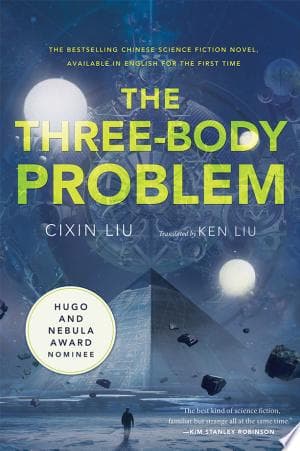
- The Three-Body Problem
Cixin Liu
4.1 (505k) average on GoodreadsScience Fiction'Sanctuary' shares the first contact premise but lacks Liu's intricate scientific detail, grand cosmological scope, and philosophical depth regarding humanity's place in the universe. Carroll's approach is more localized and action-oriented.
- The Dispossessed
Ursula K. Le Guin
4.2 (88k) average on GoodreadsPoliticsLe Guin's work offers a deeply nuanced exploration of societal structures, ideologies, and human nature within a speculative context. 'Sanctuary' presents a more straightforward good vs. evil conflict, without the complex socio-political commentary or detailed world-building found in 'The Dispossessed'.
- Harry Potter and the Sorcerer's Stone
J.K. Rowling
4.5 (7M) average on GoodreadsFantasyRescued from a miserable life under the stairs, an orphaned boy discovers he's a wizard destined for a magical school, where he uncovers a dangerous secret tied to the dark wizard who murdered his parents.
- The Hunger Games
Suzanne Collins
4.3 (6.4M) average on GoodreadsFantasyIn a future where children fight to the death on live television, Katniss Everdeen volunteers for the arena, turning a death sentence into a fight for survival and a spark of rebellion.
- 1984
George Orwell
4.2 (3.1M) average on GoodreadsPoliticsIn a future where surveillance and thought control are absolute, a man's search for truth clashes with the Party, showing that hope can be a form of rebellion.




Enjoyed the summary?
A summary gives you the shape of the book. The book itself has the detail, the examples and the voice.
Find Sanctuary on AmazonAs an Amazon Associate, BookBrief earns from qualifying purchases. How we're funded