
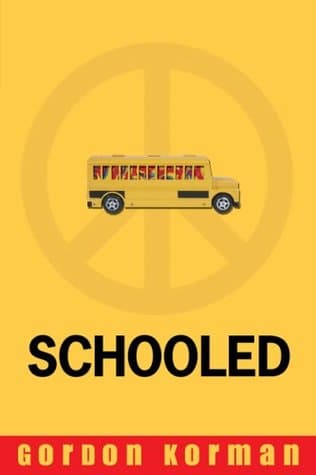
Synopsis
Covers the whole plot, including the ending.
- Difficulty
- Easy
- Pacing
- Moderate
- Mood
- Heartwarming, Humorous, Uplifting, Innocent
- Read it if
- You enjoy heartwarming stories about an outsider changing a community, middle school antics, and a blend of humor and genuine emotion.
- Skip it if
- You dislike stories with naive protagonists or prefer more complex, darker themes.
Schooled Plot Summary
Covers the whole plot, including the ending.
A Life Apart on Garland Farm
Capricorn 'Cap' Anderson lives an unusual life on Garland Farm with his grandmother, Rain. They are the last two members of a 1960s commune, living without television, pizza, or a cell phone. Rain homeschooled Cap, teaching him about Zen Buddhism, organic farming, and tie-dyeing. He has no experience with modern society or public school. This isolated existence ends when Rain falls from a tree while picking plums, breaking her hip. With Rain hospitalized, social services gets involved, and Cap must leave Garland Farm for the first time.
Entering the Lion's Den: C Average Middle School
Because Rain is in the hospital and Cap has no other family, he is placed with Mrs. Florence Donnelly, the guidance counselor at Claverage Middle School (known as C Average). Mrs. Donnelly, who used to live on Garland Farm, has a teenage daughter, Sophie. Sophie dislikes Cap's presence in their home, especially since it happens when she is trying to get her driving license. Cap's arrival at C Average Middle School immediately makes him an outsider. His homemade clothes, long hair, and complete lack of social knowledge make him a target for Zach Powers and Hugh Winkleman, the school's bullies.
The Unlikely Class President
Zach Powers, the most popular and manipulative eighth-grader, decides to play his usual prank on the new, odd kid: nominate Cap for class president. Everyone expects Cap to be humiliated and provide entertainment. However, Cap, unaware it is a prank, takes the nomination seriously. He starts doing kind things, like helping a student pick up dropped papers or offering advice from his unique upbringing. These actions, along with his sincere nature, begin to win over some classmates, much to Zach's surprise.
Sophie's Struggle and Cap's Influence
Sophie Donnelly is angry about Cap moving in. She complains about his strange habits and the embarrassment he causes. Her biggest concern is getting her driver's license, which she fails repeatedly. Cap, in his innocent way, tries to help, offering advice or just being there. When her boyfriend, Darryl, cancels on her for the Halloween dance, Cap, not knowing social rules, offers to drive her in Rain's car. This action, though awkward, is a turning point. It shows Sophie a different side of Cap and his genuine care, which contrasts with Darryl's superficiality.
The Halloween Dance and a New Perspective
Cap's presence at the Halloween dance, because he tried to help Sophie, turns into another unexpected success. He sees the social dynamics firsthand and even tries to join in. His simple, honest nature, which first made him a target, starts to become likable to some. For example, he helps a girl with a broken heel. His kindness and lack of hidden motives begin to subtly change the atmosphere at C Average, making students, even some bullies, rethink their usual behaviors and the 'odd kid' they first mocked.
The Rise of the Cap-Effect
As the class president election gets closer, Cap's genuine acts of kindness continue. He learns the names of all 1,100 students, helps a bullied student, and even offers practical advice from his farm experience. Students start to seek him out for help or just to talk. The traditional social order, led by Zach and his friends, begins to break down. Hugh Winkleman, Zach's usual friend, starts to feel conflicted, noticing the good changes Cap brings. Even the cheerleaders, usually focused on popularity, are drawn to Cap's authenticity.
The School Dance Committee and a Financial Dilemma
As class president, Cap is in charge of organizing the annual 8th-grade dance, an important school event. The dance committee, first led by popular students, does not work well. Cap, using his practical, communal way of thinking, tries to manage the budget. He finds that the previous year's dance committee spent too much, leaving little money for the current year. Unknown to him, Zach and his friends have been taking money for themselves, making the financial situation harder and threatening the dance's success.
The Bracelet and the Driving Lesson
Cap gives Sophie a homemade bracelet, made from a seashell, as a thank you. Sophie, though hesitant at first, is touched by the gift. This small gift shows a growing connection between them. Cap also continues to give her informal driving lessons in Rain's car, teaching her to relax and focus. His calm manner and unusual advice help Sophie overcome her anxiety, and she finally passes her driving test. This success is a big change in Sophie's life and her relationship with Cap, as she finally sees him as a good influence.
The Dance Disaster and Cap's Disappearance
The 8th-grade dance arrives, and Cap, because of his efforts, has made it a much-anticipated event. However, Zach and his friends, still upset by Cap's popularity and the trouble he caused, plan a prank to humiliate him. They arrange for a fake ambulance to arrive, pretending Cap has been injured. Cap, seeing the ambulance, thinks Rain is having another emergency and rushes out. The prank goes wrong, and Cap disappears into the night, leaving the whole school, including the Donnelly family, in a panic, fearing he has run away or been hurt.
The Search and the Revelation
The entire C Average community, including students, teachers, and the Donnelly family, searches for Cap. During the search, students openly show their concern and affection for Cap, showing how much he had affected them. Even Zach, feeling guilty, helps search. Sophie, using her new driver's license, drives around searching. Cap is eventually found at a bus station, trying to get back to Garland Farm to check on Rain, having misunderstood the ambulance prank. His innocent explanation shows how much he cares for his grandmother and his complete lack of bad intentions.
Rain's Return and Cap's Choice
Rain is released from the hospital and returns to Garland Farm, fully recovered. Cap is very happy to be with her again. However, his experiences at C Average Middle School have changed him. He has learned about friendship, community, and some modern life. He is torn between returning to his isolated life with Rain and continuing his education at C Average. Cap decides to return to public school, choosing to embrace the wider world and the new connections he has made, showing his growth and ability to adapt.
A New Beginning for Cap and C Average
Cap returns to C Average Middle School, now seen not as an outsider but as a valued friend and a good influence. His return is met with cheers and genuine warmth. The school's social dynamics have changed permanently; the bullying has lessened, and a sense of community has appeared. Zach, humbled by the experience, apologizes to Cap and the school. Cap remains himself, but now with a better understanding of the world and his place in it. C Average, once a place of social conflict, becomes a more accepting and kinder environment, all because of Cap.
Schooled Characters
Capricorn 'Cap' Anderson
Protagonist
A naive, homeschooled boy thrust into the complexities of middle school.
Cap is a 13-year-old boy raised entirely on Garland Farm by his hippie grandmother, Rain. He is completely unfamiliar with modern technology, popular culture, and social norms, having been homeschooled in Zen Buddhism, organic farming, and meditation. He is inherently kind, honest, and empathetic, always seeking to help others without ulterior motives. His innocence initially makes him a target, but his genuine nature ultimately transforms the school. He is driven by a strong sense of community and a deep love for his grandmother.
Relationships: Rain (Grandmother and sole guardian, deeply devoted to each other); Sophie Donnelly (Initially hostile stepsister figure, later becomes a close friend); Mrs. Donnelly (Guidance counselor and temporary guardian, supportive and understanding); Zach Powers (Initial tormentor, later becomes a respectful acquaintance); Hugh Winkleman (Initial follower of Zach, later becomes Cap's friend and admirer)
Rain
Supporting
Cap's eccentric, loving grandmother and sole guardian.
Rain is Cap's grandmother and the only remaining adult from the Garland Farm commune. She is a free-spirited, intelligent woman who believes strongly in communal living, Zen philosophy, and an off-the-grid lifestyle. She homeschools Cap, imparting her values and knowledge. Her fall from a tree is the catalyst for the entire plot, forcing Cap into the outside world. Despite her unconventional ways, she is deeply loving and protective of Cap, and her recovery allows her to witness Cap's growth and make peace with his desire for a more integrated life.
Relationships: Capricorn Anderson (Grandson, her primary focus and companion); Mrs. Donnelly (Former commune member, trusted friend and temporary guardian for Cap)
Sophie Donnelly
Supporting
Mrs. Donnelly's cynical teenage daughter, initially resentful of Cap.
Sophie is a typical eighth-grader who is initially mortified by Cap's presence in her home and school. She is image-conscious, concerned with popularity, and desperate to get her driver's license. She finds Cap's 'weirdness' embarrassing and an inconvenience. However, as Cap inadvertently helps her with her driving, offers genuine friendship, and shows her a different perspective on life, her hard exterior begins to soften. She eventually becomes one of Cap's strongest advocates and friends, realizing the depth of his character.
Relationships: Capricorn Anderson (Temporary housemate, initially hostile, later close friends); Mrs. Donnelly (Mother, often at odds but ultimately loving); Darryl Pennyfield (Boyfriend, superficial and self-centered)
Mrs. Florence Donnelly
Supporting
Cap's guidance counselor and temporary guardian, a former commune member.
Mrs. Donnelly is the guidance counselor at C Average Middle School and a former resident of Garland Farm, having lived there briefly as a child. This connection makes her the most suitable person to take Cap in during Rain's recovery. She is understanding, patient, and empathetic, trying her best to help Cap adjust to his new environment while also managing her own family life. She serves as a bridge between Cap's old world and his new one, often explaining social norms to him and advocating for him.
Relationships: Capricorn Anderson (Temporary guardian, supportive and caring); Sophie Donnelly (Daughter, often trying to guide her); Rain (Old acquaintance from Garland Farm, trusts her with Cap's care)
Zach Powers
Antagonist/Supporting
The popular, manipulative eighth-grader who targets Cap for pranks.
Zach is the most popular, and most Machiavellian, eighth-grader at C Average Middle School. He maintains his status by targeting social outcasts with elaborate pranks, the most notable being nominating the 'weird new kid' for class president. He is initially cruel and self-serving, using others for his own amusement and to solidify his social standing. However, as Cap's genuine kindness begins to dismantle Zach's social order, and especially after Cap's disappearance, Zach experiences guilt and a shift in perspective, ultimately apologizing for his actions.
Relationships: Capricorn Anderson (Initial tormentor, later shows remorse and respect); Hugh Winkleman (Follower and best friend, whose loyalty he eventually loses); Naomi Erlanger (Girlfriend, part of his popular clique)
Hugh Winkleman
Supporting
Zach's sidekick, an unpopular student who befriends Cap.
Hugh is an unpopular eighth-grader who clings to Zach Powers for social protection and status, often participating in Zach's pranks, including the class president nomination. He is initially an observer and follower, but as he spends more time with Cap, he begins to see the genuine good in him. Hugh is conflicted between maintaining his tenuous social standing with Zach and his growing admiration for Cap's authenticity. He eventually breaks away from Zach's influence and becomes a true friend to Cap, valuing kindness over popularity.
Relationships: Capricorn Anderson (Initial target, later becomes a close friend); Zach Powers (Best friend and leader, whose influence he eventually rejects)
Naomi Erlanger
Supporting
A popular girl and cheerleader who initially mocks Cap but later supports him.
Naomi is one of the popular girls at C Average Middle School and Zach Powers' girlfriend. She initially participates in the mockery of Cap, finding his strange ways amusing. However, she is also one of the first popular students to recognize Cap's genuine nature and the positive impact he has on the school. She gradually becomes more sympathetic to Cap, even defending him at times, and is instrumental in organizing the search for him after he disappears. She represents the shifting attitudes of the student body.
Relationships: Capricorn Anderson (Initially mocked, later respects and defends him); Zach Powers (Boyfriend, but her loyalty shifts as Zach's behavior becomes questionable)
Darryl Pennyfield
Mentioned/Minor Supporting
Sophie's superficial boyfriend.
Darryl is Sophie's boyfriend, primarily concerned with his own image and popularity. He's self-centered and not particularly reliable, often letting Sophie down, such as when he stands her up for the Halloween dance. His superficiality highlights Cap's genuine character and contributes to Sophie's re-evaluation of her priorities.
Relationships: Sophie Donnelly (Boyfriend, superficial and unreliable)
Schooled Themes
Identity and Self-Discovery
The novel shows Cap's journey of finding out who he is away from Garland Farm. He learns to live in a completely new world, adapting and growing without losing his core values. At the same time, other characters, like Sophie and Hugh, begin their own self-discovery as they rethink their values and social roles because of Cap. The book suggests that true identity comes from inside, not from fitting in with outside expectations.
“For the first time in his life, Cap actually belonged to something bigger than the two-person commune on Garland Farm.”
The Power of Kindness and Authenticity
Cap's kindness, honesty, and genuine nature cause the good changes at C Average Middle School. Even though bullies first targeted him, his actions—helping students, learning names, giving sincere advice—slowly break down the social hierarchy built on popularity and fear. The theme shows how simple, honest good deeds can have a deep and lasting effect on a community, inspiring others to be better.
“He didn't know how to be anything but himself.”
The Conflict Between Conformity and Individuality
The story clearly compares Cap's strong individuality, shaped by his commune upbringing, with the strong pressure to conform in middle school. At first, Cap's uniqueness makes him an outcast and a target. However, his refusal to conform, combined with his natural goodness, eventually challenges the school's social rules. The story suggests that while fitting in can offer a sense of belonging, true strength and good change often come from accepting one's individuality and questioning the way things are.
“The thing about Cap was, he didn't even know he was an outcast. He just thought he was a regular kid.”
Community and Belonging
Cap's life on Garland Farm was focused on a small, shrinking commune. When he enters C Average, he naturally applies his understanding of community to the school. He learns everyone's name, tries to help where he can, and genuinely cares for others. This creates a new sense of belonging for him and builds a stronger, more supportive community within the school, replacing the old atmosphere of cliques and bullying. The book argues that a true community is built on mutual respect and care, not social hierarchy.
“Cap had a way of making everyone feel important, even the people nobody else noticed.”
The Nature of Education
The novel asks what makes a 'good' education. Cap, homeschooled in practical skills, philosophy, and self-sufficiency, has a different kind of intelligence and wisdom than his publicly schooled peers. While he lacks knowledge of pop culture and social cues, his understanding of human nature and practical problem-solving often exceeds that of others. The story suggests that education is not just about academics but also about life skills, empathy, and understanding the world and people around you.
“He knew all about Zen Buddhism and organic farming, but absolutely nothing about how to survive eighth grade.”
Plot Devices & Literary Techniques
Fish-out-of-Water Trope
Cap's displacement from Garland Farm into middle school.
This device is central to the narrative, as Cap, a completely isolated and homeschooled individual, is suddenly plunged into the alien environment of C Average Middle School. His lack of understanding of modern social norms, technology, and popular culture creates both comedic situations and significant plot points. This displacement allows for a fresh perspective on the typical middle school experience and highlights the absurdity of some social conventions through Cap's innocent eyes. It also serves to showcase Cap's adaptability and the inherent kindness of some of his peers.
Multiple Perspectives/First-Person Narrators
The story is told through the alternating viewpoints of several characters.
The novel utilizes multiple first-person narrators, including Cap, Sophie, Zach, Hugh, and Naomi. This allows the reader to experience events from various angles, providing a comprehensive understanding of the social dynamics at C Average Middle School and how Cap's presence affects different individuals. This technique helps to build empathy for each character, reveals their inner thoughts and motivations, and showcases the gradual shift in attitudes towards Cap and each other, making the transformation of the school feel more authentic and earned.
The Class President Prank
A planned humiliation that backfires and elevates Cap.
This is a key plot catalyst. Zach's intention to nominate Cap for class president as a cruel joke sets the entire plot in motion. However, Cap's complete ignorance of the prank and his genuine approach to the role leads to unexpected positive outcomes. This device effectively highlights Cap's innocence and the superficiality of the bullies, while also demonstrating how sincerity and kindness can inadvertently subvert malicious intentions and create positive change within a social structure.
The Garland Farm/C Average Contrast
The stark juxtaposition of Cap's two worlds.
The novel continuously contrasts Cap's upbringing on the self-sufficient, peaceful, and philosophical Garland Farm with the chaotic, technology-driven, and socially complex world of C Average Middle School. This contrast highlights the themes of individuality versus conformity, and different forms of education. It allows the reader to appreciate the unique wisdom Cap brings from his background, while also recognizing the challenges he faces and the new experiences he gains in the modern world. This juxtaposition underscores the idea that both worlds have valuable lessons to offer.
Schooled Quotes
“You can't judge a book by its cover, but you can judge a person by their shoes.”
“Normal is just a setting on the dryer.”
“Sometimes the most normal thing you can do is be yourself.”
“You don't need a TV to have an imagination.”
“A little kindness can change someone's whole day.”
“The world is full of surprises if you're willing to look for them.”
“Friendship isn't about being popular; it's about being real.”
“You can learn more from a garden than from a textbook.”
“Sometimes the quietest people have the loudest minds.”
“Change isn't always bad; it's just different.”
“Laughter is the best medicine, especially in middle school.”
“Being different isn't a weakness; it's a superpower.”
“The best leaders are the ones who don't want to lead.”
“Home isn't a place; it's the people who care about you.”
Quiz
10 questions on the plot and the characters. Each answer comes with a short explanation.
Question 1
What is the name of the main character in 'Schooled'?
- Zach Powers
- Capricorn Anderson
- Sophie Donnelly
- Hugh Winkleman
Show answer
B. Capricorn Anderson The protagonist is Capricorn Anderson, nicknamed Cap, who was homeschooled by his grandmother on a commune before entering public school.
Question 2
Why does Cap have to leave his home and attend Claverage Middle School?
- His grandmother decides he needs a traditional education
- He wins a scholarship to the school
- His grandmother is hospitalized after a fall
- The commune is shut down by authorities
Show answer
C. His grandmother is hospitalized after a fall Cap's grandmother, Rain, falls from a tree while picking plums and is hospitalized, forcing Cap to move in with a school counselor and attend Claverage Middle School.
Question 3
What is the name of the school tradition where the most unpopular student is elected class president?
- The Prank Election
- The Nerd Nomination
- The Claverage Tradition
- The C Average Tradition
Show answer
D. The C Average Tradition At Claverage Middle School, students elect the most unpopular kid as class president as a prank, known as the 'C Average Tradition' (a play on the school's name).
Question 4
Who becomes Cap's main antagonist and orchestrates his election as class president?
- Sophie Donnelly
- Zach Powers
- Mr. Kasigi
- Hugh Winkleman
Show answer
B. Zach Powers Zach Powers, a popular and manipulative student, leads the effort to elect Cap as class president as part of the C Average Tradition, seeing him as an easy target due to his unconventional background.
Question 5
How does Cap initially react to being elected class president?
- He refuses the position out of anger
- He takes it seriously and tries to fulfill the duties
- He ignores it and continues his normal routine
- He teams up with Zach to play along with the joke
Show answer
B. He takes it seriously and tries to fulfill the duties Unaware that the election is a prank, Cap genuinely believes he was chosen for his leadership and diligently works on class president responsibilities, such as planning a school dance.
Question 6
What skill from his homeschooling does Cap use to help raise money for the school dance?
- Organic gardening
- Tie-dyeing T-shirts
- Meditation sessions
- Playing the sitar
Show answer
B. Tie-dyeing T-shirts Cap uses his tie-dyeing skills, learned from his grandmother on the commune, to create and sell tie-dye T-shirts as a fundraiser for the school dance, showcasing his practical abilities.
Question 7
Which character initially dislikes Cap but gradually becomes his friend and supporter?
- Zach Powers
- Sophie Donnelly
- Mr. Kasigi
- Hugh Winkleman
Show answer
B. Sophie Donnelly Sophie Donnelly starts out viewing Cap as weird and part of Zach's prank, but she eventually sees his kindness and integrity, becoming a key ally who helps him navigate school politics.
Question 8
What major theme in 'Schooled' is highlighted by Cap's contrast with the other students?
- The importance of academic competition
- The value of nonconformity and authenticity
- The dangers of technology overuse
- The necessity of strict school rules
Show answer
B. The value of nonconformity and authenticity Cap's unconventional upbringing and genuine behavior challenge the superficiality and peer pressure at Claverage Middle School, emphasizing themes of individuality, kindness, and being true to oneself.
Question 9
How does Cap's experience at Claverage Middle School ultimately change the student body?
- It leads to the abolition of all school traditions
- It causes a decline in school spirit and activities
- It inspires students to reject the C Average Tradition and embrace inclusivity
- It results in Cap being expelled for disrupting norms
Show answer
C. It inspires students to reject the C Average Tradition and embrace inclusivity Through Cap's positive influence and the success of events like the school dance, students realize the harm of the C Average Tradition and move towards a more accepting and united school community.
Question 10
What does Cap do at the end of the book that symbolizes his growth and connection to his new life?
- He returns to the commune permanently
- He runs for student council president again
- He gives a speech at the school dance advocating for change
- He transfers to a different school to avoid Zach
Show answer
C. He gives a speech at the school dance advocating for change At the school dance, Cap delivers a heartfelt speech about community and acceptance, which helps mend relationships and marks his transition from an outsider to an integral part of the school, showing his personal development.
Schooled FAQ
What is 'Schooled' by Gordon Korman about?
'Schooled' follows Capricorn (Cap) Anderson, a 13-year-old boy who has been homeschooled by his hippie grandmother, Rain, on a secluded commune called Garland Farm. When Rain breaks her hip and is hospitalized, Cap is forced to live with a school counselor, Mrs. Donnelly, and attend Claverage Middle School for the first time. The story centers on Cap's fish-out-of-water experiences as he navigates the social hierarchies, bullying, and unfamiliar customs of public school while maintaining his unique, peaceful worldview.
Why should I read 'Schooled'?
You should read 'Schooled' for its heartwarming and humorous take on middle school life, bullying, and acceptance. Through Cap's innocent perspective, the book offers a fresh critique of social conformity and peer pressure, while celebrating individuality and kindness. It's an engaging, fast-paced story that blends laugh-out-loud moments with meaningful lessons about empathy and resilience, making it appealing for both young readers and adults.
What is the background/setting of 'Schooled'?
The story is set in the fictional town of Claverage, primarily at Claverage Middle School. Cap's background is Garland Farm, a hippie commune where he lived with his grandmother Rain, isolated from mainstream society. This setting contrasts sharply with the structured, socially competitive environment of the middle school, highlighting themes of culture clash and adaptation as Cap transitions between these two worlds.
What are the most memorable quotes from 'Schooled'?
Memorable quotes include Cap's mantra, 'Take us to the leader,' which reflects his commune upbringing and naive approach to school hierarchy. Another is Rain's advice to Cap: 'You can't control what happens to you, but you can control how you react.' These lines encapsulate the book's themes of peace, resilience, and the power of perspective in facing challenges.
What writing style does Gordon Korman use in 'Schooled'?
Gordon Korman uses a humorous, accessible, and fast-paced writing style with multiple first-person perspectives, alternating between Cap and other characters like Zach Powers and Sophie Donnelly. This approach provides insight into different viewpoints on Cap's experiences, enhancing the story's depth and comedic effect while keeping it engaging for young adult readers.
What minor details add significant meaning in 'Schooled'?
Minor details like Cap's homemade tie-dyed clothes and his habit of meditating add significant meaning by symbolizing his non-conformist upbringing and inner peace. His lack of knowledge about common things like pizza or wedgies underscores his isolation, making his eventual acceptance by peers more impactful as they learn to appreciate his uniqueness.
What are some subtle foreshadowing moments in 'Schooled'?
Subtle foreshadowing includes early mentions of Rain's age and fragility, hinting at her eventual injury that forces Cap into school. Cap's initial confusion about school elections foreshadows his unexpected role as class president, set up by Zach Powers as a prank that backfires, leading to Cap's positive influence on the school.
What unexpected character connections exist in 'Schooled'?
An unexpected connection is between Cap and Sophie Donnelly, the daughter of his host family. Initially dismissive of Cap, Sophie gradually becomes his ally and friend, revealing her own struggles with social acceptance. This bond highlights how Cap's authenticity bridges gaps between different social groups, fostering unexpected friendships.
What are unspoken character motivations in 'Schooled'?
Zach Powers' unspoken motivation is to maintain his popularity by manipulating others, leading him to nominate Cap for president as a joke. Underneath, Zach seeks validation and fears losing social status. Similarly, Mrs. Donnelly is motivated by a desire to protect and guide Cap, stemming from her own experiences with students' struggles, though she initially seems strict.
What psychological complexities do characters exhibit in 'Schooled'?
Cap exhibits psychological complexity through his unwavering calm and empathy, rooted in his Zen Buddhist teachings, which contrast with the anxiety-driven behaviors of his peers. Zach Powers shows complexity as a bully who grapples with guilt and growth, revealing layers of insecurity beneath his confident exterior. These traits explore themes of identity and moral development.
What are the major emotional turning points in 'Schooled'?
Major emotional turning points include Cap's first day at school, where he faces ridicule but responds with kindness, shocking his classmates. Another is when Cap organizes a school dance that unites students, shifting perceptions of him from an outcast to a leader. The climax occurs as Cap's peers rally to support him and Rain, showing their emotional growth and acceptance.
How do relationship dynamics evolve in 'Schooled'?
Relationship dynamics evolve significantly, such as Cap and Zach's shift from bully-victim to mutual respect as Zach realizes Cap's genuine goodness. Cap's relationship with Sophie grows from indifference to deep friendship, symbolizing bridging social divides. The school community transforms from one of exclusion to inclusion, driven by Cap's influence on his peers' attitudes.
Which parts of 'Schooled' remain ambiguous or open-ended?
The story leaves some aspects open-ended, such as the long-term impact of Cap's experiences on his future schooling or whether he fully adapts to mainstream society. Additionally, the fate of Garland Farm after Rain's recovery is not detailed, allowing readers to ponder how Cap balances his hippie roots with his new life.
What are controversial scenes or decisions in 'Schooled'?
Controversial scenes include Zach's decision to nominate Cap for class president as a cruel prank, which raises questions about bullying and ethics. Some readers might debate the realism of Cap's rapid acceptance by peers, considering the depth of middle school social politics, but it serves the book's message of hope and change.
'Schooled' ending explained: how it ends & what it means
The ending sees Cap's grandmother Rain recovering and returning to Garland Farm, but Cap chooses to stay with the Donnellys and continue at Claverage Middle School, having formed meaningful connections. This signifies Cap's growth and integration into a broader community while retaining his core values. It emphasizes themes of adaptation, the importance of relationships, and the idea that kindness can transform environments.
About the author

Gordon Korman is a Canadian author known for his work in children's and young adult fiction. His notable books include "One False Note," "The Medusa Plot," "Schooled," "Ungifted," "Restart," and "Swindle," which often feature humor and relatable characters. Korman has been writing since he was a teenager and has published numerous titles that engage young readers.
Similar books
- Wonder
R.J. Palacio
4.4 (733k) average on GoodreadsChildren'sFeatures a unique protagonist navigating public school for the first time, leading to a ripple effect on those around him.
- Stargirl
Jerry Spinelli
3.8 (296k) average on GoodreadsChildren'sExplores the impact of an unconventional, free-spirited character on a high school community.
- Hoot
Carl Hiaasen
3.8 (97k) average on GoodreadsChildren'sInvolves a new student in a middle school setting, dealing with bullies and an unusual situation, with a focus on environmental themes.
- Harry Potter and the Sorcerer's Stone
J.K. Rowling
4.5 (7M) average on GoodreadsFantasyRescued from a miserable life under the stairs, an orphaned boy discovers he's a wizard destined for a magical school, where he uncovers a dangerous secret tied to the dark wizard who murdered his parents.
- The Hobbit, or There and Back Again
J.R.R. Tolkien
4.3 (2.9M) average on GoodreadsFantasyA comfort-loving hobbit named Bilbo Baggins is whisked away by a mischievous wizard and a band of dwarves on an unexpected journey to reclaim stolen treasure from a fearsome dragon, discovering courage and a magical ring along the way.
- Harry Potter and the Goblet of Fire
J.K. Rowling
4.6 (2.6M) average on GoodreadsFantasyA bewildered Harry Potter, underage and thrust into a deadly Triwizard Tournament, must brave dragons, mermaids, and a resurgent dark magic to survive a year that will forever alter the wizarding world.






Enjoyed the summary?
A summary gives you the shape of the book. The book itself has the detail, the examples and the voice.
Find Schooled on AmazonAs an Amazon Associate, BookBrief earns from qualifying purchases. How we're funded