
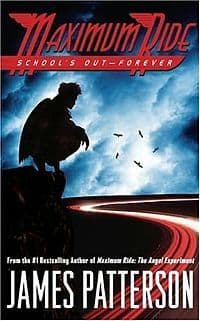
Synopsis
Covers the whole plot, including the ending.
- Difficulty
- Medium
- Pacing
- Fast
- Mood
- Action-packed, Suspenseful, Adventurous, Hopeful, Romantic
- Read it if
- You enjoy fast-paced YA thrillers with a blend of sci-fi, fantasy, and a touch of romance, featuring genetically engineered heroes.
- Skip it if
- You prefer realistic fiction, slow-burn mysteries, or stories without fantastical elements and intense action sequences.
School's Out Plot Summary
Covers the whole plot, including the ending.
The FBI's Discovery
After the events at the Institute, Max, Fang, Iggy, Nudge, Gazzy, and Angel live in hiding in a Grand Canyon cave. Their peaceful, isolated life shatters when an FBI agent, Daniel Marks, finds them. The flock is wary at first, trying to avoid him. Marks, surprisingly calm, convinces Max he means no harm and wants to help. He promises them a normal life and protection from the 'Erasers' and 'Scientists' who created them. Despite Max's distrust of adults, the promise of safety and normalcy for her younger siblings, especially Angel, sways her. They reluctantly go with him, ending their wild, free life and starting an uncertain future under human care.
The School of the Future
Daniel Marks takes the flock to a mysterious, advanced boarding school called the 'School of the Future' in upstate New York. It is a perfect, almost ideal facility, with holographic classrooms, custom learning programs, and many amenities. The students are all very bright, some appearing to be child prodigies. Max, always watchful, senses something is wrong beneath the polished surface. The school's director, Dr. Martinez, is overly friendly, and the staff seems to watch them closely. The flock gets individual rooms, new clothes, and access to everything they want, yet Max feels a growing unease, a familiar sense of being watched and experimented on, despite Marks's promises of safety.
The First Clues and Growing Suspicion
Max's suspicions are confirmed when she and Fang find hidden files on a school computer. These files contain information about their genetic makeup, their bird-hybrid abilities, and detailed surveillance logs on each of them. They also find references to 'Project Chimera' and vague warnings about a global threat. Max realizes the school is not just a haven but another form of captivity, though much more luxurious. Her distrust of adults grows, and she questions Daniel Marks's true motives. The flock tries to blend in while secretly investigating, using their abilities to navigate the school's security and gather more information, all while trying to act normal for the younger kids.
The Emergence of a Clone
The most disturbing discovery is a new student: a girl named Maximum Ride, an exact physical copy of Max. This clone is everything Max is not – perfectly groomed, charming, and seemingly without Max's rebellious spirit. This 'other Max' is quickly accepted by the school staff and many students, making Max feel more isolated and threatened. The clone's presence causes deep insecurities in Max, who struggles with her identity and purpose. She suspects the clone is a tool of the school, designed to replace her or manipulate the flock. The clone forces Max to confront her unique identity and the profound implications of her creation.
The Threat of the 'Itex' Corporation
As Max and Fang dig deeper, they discover that the 'School of the Future' is a front for 'Itex.' Itex is not just interested in genetic experiments but has a far more ambitious goal: to control the world's population by influencing human behavior through technology and selective breeding. They are developing a virus that will sterilize many people, leaving only those deemed 'worthy' to have children. The flock realizes they are not just test subjects but key players in Itex's plan, either as tools or as the only ones who can stop them. The stakes rise greatly, turning their personal fight for freedom into a fight for humanity's future.
Escaping the School
With the full truth about Itex and the school's dark purpose revealed, Max knows they cannot stay. The flock, helped by some students who are also suspicious, plans their escape. They use their flying abilities, Iggy's bomb-making skills, and Angel's mind-reading to outsmart the school's security and the watchful staff. The escape is dangerous, involving close calls with Erasers and fights with security. They break free, but not without challenges and leaving chaos, making them fugitives again, but now with a clearer understanding of their enemy.
The Search for Answers
After their escape, Max focuses more on the mysterious 'Voice' that has been talking to her telepathically in her dreams, giving cryptic clues about her destiny and the world's coming doom. She believes this Voice holds the key to understanding her purpose and how to stop Itex. The flock travels across the country, following the Voice's guidance, which leads them to various places, each giving a piece of the puzzle. This journey tests their strength and their bond, as they face Itex's constant pursuit and the challenges of surviving alone while trying to understand the complex messages from the Voice, which hints at a larger, older conflict.
Confrontation with the Clone
The flock eventually meets Maximum Ride again, this time as an active Itex agent. The clone, seemingly perfected and loyal to her creators, confronts Max, trying to persuade her to join Itex or eliminate her. This battle is not just physical but psychological, as Max deals with the idea of another version of herself, one that represents everything she could have been if she had given in to the scientists. The confrontation is intense, showing their shared abilities but also their different beliefs and spirits. Max must overcome the emotional turmoil of fighting a mirror image of herself, proving her unique strength and determination to protect her family and fight for what is right.
The 'Save the World' Mission Revealed
Through the Voice and other discoveries, Max finally understands her 'save the world' mission. She learns that Itex plans to release a deadly virus into the global water supply, sterilizing 98% of people, leaving only a chosen 'pure' few to inherit the Earth. Max and her flock, with their unique genetics and resistance, are the only ones who can stop this disaster. They are humanity's last hope. This revelation is huge, turning their personal fight for survival into a global fight against an existential threat. They must find the virus's source and stop Itex before it is too late.
The Arctic Base
The Voice guides the flock to a secret Itex facility deep in the Arctic. This is where the virus is being made and prepared for release. The Arctic base is heavily guarded and has advanced defenses, but the flock's combined skills – Max's leadership and flying, Fang's fighting ability, Iggy's technical skill, Nudge's investigative skills, Gazzy's explosive talents, and Angel's telepathy – allow them to get inside. They face Erasers, Itex scientists, and automated defenses in a desperate race against time. The cold adds another challenge to their dangerous mission, pushing them to their limits.
The Final Confrontation and Sacrifice
Inside the Arctic base, Max and the flock confront Itex's leader, a brilliant but ruthless scientist with a twisted vision of humanity's future. A fierce battle starts, ending in a desperate struggle to stop the virus's release. The flock fights with everything they have, getting hurt but refusing to give up. In a key moment, a flock member makes a great sacrifice to ensure the virus is contained and Itex's plans are stopped. This act of bravery shows the strong bond within the flock and their commitment to protecting humanity, even at great personal cost, making them true heroes.
Aftermath and Uncertain Future
With Itex's immediate threat gone and the virus contained, the world is safe, for now. However, the flock remains fugitives, their existence still a secret, and their creators still free. They have saved the world, but their own future is uncertain. Max thinks about the sacrifices made, the battles fought, and the changes within her and her family. While they have won a huge victory, their journey is far from over. They know their power and purpose, and understand they must continue to protect each other and possibly face new threats, embracing their unique identities as the world's reluctant saviors.
School's Out Characters
Maximum 'Max' Ride
Protagonist
The fierce, winged leader of the flock, burdened with saving the world.
Max is a fourteen-year-old bird-hybrid girl, the de facto leader and protector of her younger flock. She is fiercely independent, pragmatic, and often sarcastic, masking her deep love and concern for her family. Max possesses incredible strength, agility, and the ability to fly at high speeds. She struggles with the immense responsibility of leading her siblings and the constant paranoia of being hunted. Her primary motivation is to keep her flock safe and free, even as she grapples with the cryptic messages about her destiny to 'save the world.' She is constantly questioning authority and her own identity.
Relationships: Fang (Best friend, confidant, romantic tension); Iggy (Flock member, technical genius, brotherly bond); Nudge (Flock member, inquisitive, sisterly bond); Gazzy (Flock member, explosive expert, brotherly bond); Angel (Flock member, youngest, telepathic, sisterly bond); Maximum Ride (Clone) (Arch-nemesis, dark reflection, genetic twin); Daniel Marks (Initially trusted FBI agent, later revealed as Itex pawn); The Voice (Mysterious telepathic guide, source of her mission)
Fang
Supporting
Max's loyal second-in-command and closest confidant, with a dark, brooding demeanor.
Fang is a fourteen-year-old bird-hybrid, Max's most trusted companion and the flock's second-in-command. He is quiet, stoic, and fiercely protective, often communicating more through actions than words. Fang possesses exceptional fighting skills and a keen strategic mind. He is deeply loyal to Max and the flock, often acting as Max's sounding board and moral compass. Beneath his reserved exterior lies a passionate heart, and there is a palpable, unspoken romantic tension between him and Max. His primary drive is to protect his family and ensure their survival, often putting himself in harm's way.
Relationships: Max (Best friend, confidant, romantic tension); Iggy (Flock member, brotherly bond); Nudge (Flock member, brotherly bond); Gazzy (Flock member, brotherly bond); Angel (Flock member, protective brotherly bond)
Iggy
Supporting
The blind, technically brilliant, and often mischievous member of the flock.
Iggy is a thirteen-year-old bird-hybrid who is blind, a result of cruel experiments at the Institute. Despite his lack of sight, he possesses an extraordinary sense of smell and hearing, and a prodigious talent for explosives and technology. He is often mischievous and has a dry sense of humor, which he uses to cope with their harsh reality. Iggy's blindness sometimes makes him feel vulnerable, but he compensates with his other heightened senses and his invaluable skills, making him an indispensable member of the flock, especially when it comes to infiltration and dismantling enemy tech.
Relationships: Max (Flock leader, sisterly bond); Fang (Flock member, brotherly bond); Gazzy (Closest friend, partner in mischief, brotherly bond)
Nudge
Supporting
The talkative and inquisitive flock member with a passion for information.
Nudge is a ten-year-old bird-hybrid who is incredibly talkative and endlessly curious. She loves to gather information, often asking many questions, which sometimes gets her into trouble but also proves invaluable to the flock. Her enhanced senses allow her to pick up subtle details others miss. Nudge is observant and has a strong desire for normalcy, often dreaming of a regular life. Despite her youth, she is a brave and loyal member of the flock, always eager to help and contribute, and her inquisitive nature often uncovers crucial clues.
Relationships: Max (Flock leader, sisterly bond); Angel (Close friend, sisterly bond)
Gazzy
Supporting
The youngest boy of the flock, with a talent for creating noxious gases and explosives.
Gazzy is an eight-year-old bird-hybrid, known for his ability to produce various noxious gases and his surprising talent for creating makeshift explosives. He is often seen with Iggy, his best friend and partner in mischief. Gazzy is playful and sometimes crude, but fiercely loyal to his family. Despite his youthful appearance, he possesses a surprising amount of courage and resourcefulness, proving himself a valuable asset in combat and infiltration scenarios. His unique abilities, though often humorous, are incredibly effective in their dangerous missions.
Relationships: Max (Flock leader, brotherly bond); Iggy (Closest friend, partner in mischief, brotherly bond)
Angel
Supporting
The youngest and most powerful member of the flock, with telepathic abilities.
Angel is a six-year-old bird-hybrid, the youngest member of the flock. She possesses powerful telepathic abilities, including mind-reading and the ability to influence others' thoughts, and can also communicate with fish. Despite her innocent appearance, Angel is incredibly intelligent and perceptive, often knowing more than she lets on. Her powers are invaluable to the flock, but they also make her vulnerable to manipulation. Max is fiercely protective of Angel, who represents the innocence they are fighting to preserve, and her unique gifts often provide critical insights or turn the tide in battles.
Relationships: Max (Primary caregiver, fiercely protective sisterly bond); Fang (Protective brotherly bond)
Daniel Marks
Supporting
The FBI agent who initially 'rescues' the flock, later revealed to be an Itex operative.
Daniel Marks is the charismatic and seemingly benevolent FBI agent who discovers the flock in the Grand Canyon. He presents himself as a protector, offering them a normal life and safety at the 'School of the Future.' Marks is initially seen as a trustworthy figure, providing a stark contrast to the previous antagonists. However, he is later revealed to be an operative for Itex, playing a double agent role to lure the flock into their control. His deception highlights the theme of betrayal and the flock's inherent distrust of adult authority, as he manipulates their desire for a safe home.
Relationships: Max (Initial trust, later betrayal and adversary); Itex Corporation (Employee, loyal operative)
Maximum Ride (Clone)
Antagonist
Max's genetically identical clone, created by Itex to replace or control her.
Maximum Ride, often referred to as 'the clone,' is a genetically engineered duplicate of Max, created by Itex. She is designed to be a 'perfect' version of Max, lacking Max's rebellious spirit and emotional complexities. The clone is initially introduced as a new student at the 'School of the Future,' effortlessly charming and seemingly flawless, making Max feel insecure and threatened. She serves as a psychological antagonist for Max, a mirror image that embodies Max's fears about her own identity and purpose. The clone is an obedient tool of Itex, intended to either replace Max or bring her under Itex's control.
Relationships: Max (Arch-nemesis, genetic twin, rival); Itex Corporation (Creator, master)
Dr. Martinez
Supporting
The enigmatic director of the School of the Future, an Itex operative.
Dr. Martinez is the director of the 'School of the Future,' initially appearing as a benevolent and highly intelligent educator. She is impeccably dressed and maintains a calm, composed demeanor, but beneath the surface, Max senses a manipulative and watchful presence. Dr. Martinez is a high-ranking operative for Itex, responsible for overseeing the flock's integration into the school and monitoring their activities. She embodies the sophisticated and deceptive nature of Itex, using the guise of education and safety to further their sinister agenda. Her interactions with the flock are always measured and designed to extract information or guide them into Itex's plans.
Relationships: Max (Supervising figure, later adversary); Itex Corporation (High-ranking operative)
School's Out Themes
Identity and Self-Discovery
The novel explores Max's struggle with her identity, especially with her clone. Max deals with what it means to be 'Maximum Ride' when there is another, 'perfect' version of her. This makes her confront her unique flaws, strengths, and purpose. The flock, as genetic experiments, constantly tries to understand who they are beyond their creators' plans, wanting normalcy while accepting their extraordinary abilities. Their journey is about defining themselves against genetic manipulation and a set destiny.
“What does it mean to be me, when there's another me out there, perfect and polished, just waiting to take my place?”
Family and Loyalty
The bond between Max and her flock is the emotional center of the story. Despite constant danger and harsh realities, their loyalty to each other is strong. Max's main goal is always to protect her siblings, even if it means sacrificing her own desires or risking her life. This theme is clear during their escape from school and their journey, where they rely on each other for survival, emotional support, and planning. Their chosen family contrasts with the manipulative adults they meet.
“We're not just a flock. We're family. And family sticks together, no matter what.”
Trust and Betrayal
A repeated theme is the flock's struggle with trust, especially towards adults and authority figures. Daniel Marks's initial kindness and later betrayal at the 'School of the Future' deeply affects Max, strengthening her distrust. The novel explores the dangers of misplaced trust and the constant watchfulness needed when living as fugitives. Each new encounter with an adult tests their ability to tell friend from foe, making their world dangerous where even safe places can hide bad intentions. This theme emphasizes their isolation and reliance on each other.
“Every adult we've ever trusted has either tried to kill us or use us. How can we ever truly believe anyone?”
Environmentalism and Humanity's Future
The main plot involves Itex's plan for global sterilization, driven by a twisted vision of 'saving' the planet by removing 'unworthy' humans. This introduces a strong environmental theme, questioning humanity's effect on Earth and the morality of extreme solutions. The flock's mission to 'save the world' is not just about stopping a corporation but about preserving humanity's future and the planet. This theme highlights the ethical issues of scientific progress and the responsibility of powerful groups, making characters and readers consider the value of human life and nature.
“They want to 'cleanse' the world, but all they'll do is destroy it.”
Freedom vs. Control
From their escape from the Institute to their time at the 'School of the Future' and their flight, the flock constantly fights against forces that want to control them. Itex represents the ultimate form of control, not just over the flock but over global population and human evolution. Max and her siblings want true freedom – to live their lives on their own terms, without being hunted, experimented on, or manipulated. This theme explores the costs of fighting for independence against powerful, oppressive forces, showing the human desire for self-determination.
“They want to cage us, to control us, to make us into what they want. But we were born to fly free.”
Plot Devices & Literary Techniques
The 'Voice'
A telepathic guide providing cryptic clues to Max's destiny.
The mysterious 'Voice' that communicates with Max telepathically serves as a crucial plot device, guiding her and the flock towards their ultimate mission. It provides cryptic messages and visions, acting as a catalyst for Max's understanding of her purpose and the global threat posed by Itex. The Voice also adds a layer of mystical or prophetic element to the narrative, suggesting a destiny beyond simple genetic experimentation and creating a sense of urgency and foreboding. It functions as a narrative hook, propelling the plot forward as Max tries to decipher its meaning.
The Clone (Maximum Ride)
A doppelgänger antagonist that challenges Max's identity.
The introduction of Max's clone, Maximum Ride, is a significant plot device. She serves as both a physical and psychological antagonist, forcing Max to confront her own identity and purpose. The clone's existence raises questions about individuality, perfection, and what truly defines a person. As a tool of Itex, she also provides a direct, personal threat to Max, demonstrating the enemy's ability to replicate and potentially replace the flock's leader. This device intensifies Max's internal conflict and external battles, adding a layer of complexity to the story beyond simple good-versus-evil.
The 'School of the Future'
A deceptive utopian setting hiding a sinister corporate agenda.
The 'School of the Future' functions as a classic deceptive setting. Initially presented as a safe haven and an opportunity for normalcy, it quickly reveals itself to be another form of captivity and experimentation orchestrated by Itex. This device allows for the slow unveiling of the true antagonist and their sinister plans, building suspense and reinforcing the flock's distrust of authority. The contrast between its utopian facade and its true purpose highlights the pervasive and insidious nature of the enemy, providing a controlled environment for the flock's investigation and subsequent escape.
Genetic Manipulation / Bird-Human Hybrids
The core origin story and source of the flock's unique abilities.
The flock's identity as bird-human hybrids, resulting from genetic manipulation, is the foundational plot device. It explains their extraordinary abilities (flight, enhanced senses, unique powers) which are essential for their survival and their mission. It also provides the backstory for their persecution and the ethical questions surrounding their existence. This device not only drives the action but also explores themes of identity, humanity, and the consequences of scientific hubris. Their unique physiology is both their greatest strength and the reason they are hunted.
School's Out Quotes
“We were lab rats, pure and simple. And the lab was the world.”
“There's nothing like a near-death experience to make you appreciate the little things. Like breathing.”
“Sometimes, the hardest thing to do is to forgive yourself.”
“You can run, but you can't hide from who you are.”
“Hope is a dangerous thing. It can drive a man insane.”
“We were a family, even if we weren't related by blood. We were related by wings.”
“The world is full of monsters, and not all of them have fangs.”
“Sometimes you have to break the rules to do what's right.”
“Fear is a powerful motivator. It can make you do things you never thought possible.”
“Love isn't always easy. Sometimes it hurts like hell.”
“We were born to fly. It was in our DNA.”
“The truth is out there. We just have to find it.”
“Every choice has a consequence. Good or bad.”
“Even heroes get scared. It's what you do with that fear that matters.”
Quiz
10 questions on the plot and the characters. Each answer comes with a short explanation.
Question 1
What is the primary reason Max and her flock are forced to go to 'school' in 'School's Out—Forever'?
- They were caught stealing food and given a choice between school or jail.
- An FBI agent discovers them and mandates their enrollment for their own safety and integration.
- They voluntarily decide to attend school to learn more about human society.
- They are lured into a trap by the Erasers disguised as a school.
Show answer
B. An FBI agent discovers them and mandates their enrollment for their own safety and integration. Max and her flock are discovered by an FBI agent who then forces them to attend a normal school, believing it's the best way to keep them safe and help them adapt.
Question 2
What is the name of the school Max and her flock are forced to attend?
- Jefferson High
- The Institute
- Seton Academy
- Westwood Preparatory
Show answer
C. Seton Academy The specific school Max and her flock are enrolled in by the FBI agent is Seton Academy, a seemingly normal institution.
Question 3
Who is Max's greatest enemy introduced in 'School's Out—Forever'?
- The new leader of the Erasers
- A powerful human government official
- A clone of herself
- A rogue member of the flock who turns against them
Show answer
C. A clone of herself The book's description explicitly states that Max faces her greatest enemy, which is a clone of herself.
Question 4
What unique ability does Nudge possess that is highlighted during their time at Seton Academy?
- She can control electricity.
- She has an uncanny ability to read people and discern their secrets.
- She can turn invisible for short periods.
- She has photographic memory.
Show answer
B. She has an uncanny ability to read people and discern their secrets. Nudge's ability to 'read' people and pick up on their personal details and secrets is a key characteristic that becomes particularly useful, and sometimes problematic, in the social setting of Seton Academy.
Question 5
What is the primary theme explored through Max's internal struggle with her destiny in this book?
- The importance of conformity versus individuality.
- The burden of leadership and the responsibility to save the world.
- The conflict between technological advancement and natural order.
- The challenges of blending into human society after a life of isolation.
Show answer
B. The burden of leadership and the responsibility to save the world. A central conflict for Max is deciphering 'how and when she's supposed to save the world,' highlighting the immense burden and responsibility she feels as the leader of the flock and the one destined for a greater purpose.
Question 6
What specific event causes the flock to realize that Seton Academy is not just a normal school?
- They overhear teachers discussing their genetic mutations.
- They encounter the Erasers patrolling the school grounds.
- They discover hidden labs and surveillance equipment within the school.
- One of them is singled out for special, suspicious testing.
Show answer
C. They discover hidden labs and surveillance equipment within the school. The flock's suspicions are confirmed when they discover hidden labs, cameras, and other surveillance technology, revealing that Seton Academy is another facility linked to their creators, not just a typical school.
Question 7
What is the primary motivation behind the creation of Max's clone?
- To provide a spare organ donor for the original Max.
- To create a more obedient and controllable leader for the flock.
- To replace Max and fulfill the prophecy in a way controlled by the 'school' or its creators.
- To study the effects of different upbringings on genetically engineered children.
Show answer
C. To replace Max and fulfill the prophecy in a way controlled by the 'school' or its creators. The clone, referred to as 'Maximum Ride' by the creators, is intended to be a replacement for the original Max, who is deemed too rebellious and unpredictable to fulfill the prophecy on their terms. The clone is designed to be compliant and achieve the 'saving the world' goal as the creators desire.
Question 8
What significant romantic development occurs between Max and Fang in 'School's Out—Forever'?
- They officially become a couple and declare their love for each other.
- They share their first kiss, signifying a deepening of their relationship.
- They decide to keep their feelings for each other a secret from the rest of the flock.
- Their relationship becomes strained due to the pressures of school and their mission.
Show answer
B. They share their first kiss, signifying a deepening of their relationship. In 'School's Out—Forever,' Max and Fang share their first kiss, a pivotal moment that confirms the romantic tension and growing feelings between them, moving their relationship beyond just platonic friendship and leadership.
Question 9
How does the FBI agent, Agent Anne, initially view the flock, and how does her perception evolve?
- She sees them as dangerous experiments and maintains that view throughout.
- She views them as potential weapons but eventually sees them as children needing protection.
- She is immediately sympathetic but later betrays them.
- She is indifferent to them, treating them only as a case file.
Show answer
B. She views them as potential weapons but eventually sees them as children needing protection. Initially, Agent Anne is an authority figure who is somewhat wary and focused on the 'case' of the bird-kids. However, as she spends more time with them, particularly Max, she develops a protective instinct and begins to see them as children who have been wronged, rather than just experimental subjects or potential threats.
Question 10
What critical piece of information does Max learn about the 'Voice' in her head during her time at Seton Academy?
- The 'Voice' is a manifestation of her own subconscious fears.
- The 'Voice' is a sophisticated AI created by the School to guide her.
- The 'Voice' is connected to the clone and provides her with false information.
- The 'Voice' is a genetic implant, a form of direct communication from her creators.
Show answer
D. The 'Voice' is a genetic implant, a form of direct communication from her creators. Max discovers that the 'Voice' that has guided her throughout her life is not a mystical entity but a sophisticated genetic implant, a direct line of communication from the scientists who created her, allowing them to monitor and influence her actions.
School's Out FAQ
What is the core premise of 'School's Out—Forever'?
'School's Out—Forever' continues the story of Max and her genetically engineered 'flock' of winged human hybrids. After living on the run, they are discovered by an FBI agent and forced into a seemingly normal boarding school, which quickly proves to be a new kind of prison and training ground for their mysterious destiny to save the world.
Who are the main characters introduced or further developed in this sequel?
The core flock members—Max, Fang, Iggy, Nudge, Gazzy, and Angel—are central, with Max as the primary protagonist. New significant characters include the FBI agent Dr. Martinez, the school's enigmatic director Mr. Demetrius, and the terrifying genetically identical clone of Max, known as the 'Eraser-Max' or 'Maximum Ride'.
What is the significance of the 'school' setting for Max and her flock?
The 'school' (the Institute) serves as a deceptive facade for a highly controlled environment where the flock's abilities are monitored and manipulated, ostensibly to prepare them for their world-saving mission. It's a new form of captivity, replacing the 'School' where they were created, and forces them to confront the structured world while still being hunted.
What is Max's primary internal conflict in this book?
Max grapples with her role as the flock's leader, the weight of the prophecy that she must save the world, and her growing romantic feelings for Fang. She also struggles with trust issues concerning the adults at the Institute and the unsettling revelation of her clone, which challenges her sense of identity and uniqueness.
How does the 'Eraser-Max' complicate Max's mission and personal life?
The Eraser-Max is a chillingly powerful clone, designed to be Max's superior in combat and strategy, serving as a direct antagonist. Her existence not only poses a physical threat but also creates an identity crisis for Max, forcing her to confront the implications of her own genetic origins and the possibility of being replaced.
What clues hint at the true nature of the Institute and its staff?
Subtle hints include the overly strict rules, the lack of real freedom, the advanced technology, and the staff's evasiveness regarding the flock's past and future. Dr. Martinez's conflicted demeanor and Mr. Demetrius's manipulative charm also suggest ulterior motives beyond simple education, pointing to the Institute being another iteration of the 'School's' experiments.
Are there any subtle foreshadowings of the flock's greater purpose beyond just saving the world?
The constant emphasis on their unique genetic makeup and the 'voice' in Max's head guiding her decisions hint at a more profound, almost destined, role for the flock. The experiments and the creation of their kind suggest they are not just heroes, but a designed solution to a global problem, possibly even a new stage of human evolution.
What is the significance of the 'voice' Max hears, and how does it develop?
The 'voice' Max hears is a recurring element, acting as an internal guide or conscience, often providing cryptic instructions or warnings. In this book, its presence becomes more pronounced and urgent, suggesting a direct connection to the prophecy and potentially a higher power or the very genetic programming that defines her.
How does the relationship between Max and Fang evolve in this book?
Max and Fang's relationship deepens significantly, moving beyond platonic friendship into clear romantic tension. Their unspoken feelings become more evident through their protective actions, longing glances, and internal monologues, creating a central emotional arc as they navigate their leadership roles and the dangers they face.
How does Max's leadership style change under the pressure of the Institute?
Max's leadership becomes more strained and internally conflicted. While still fiercely protective, she struggles with the moral ambiguities presented by the Institute's demands and the burden of the prophecy. She often makes decisions based on instinct and protecting her flock, but the weight of responsibility starts to show, making her question her own judgment.
Analyze the psychological impact of the 'Eraser-Max' on Max's identity.
The Eraser-Max profoundly destabilizes Max's sense of self. Seeing a genetic duplicate, especially one designed to be superior and hostile, forces Max to confront her own origins as an experiment and question her uniqueness. It creates an existential crisis, making her feel interchangeable and challenging her individual identity and worth.
How do the younger flock members (Gazzy, Angel) cope with the new, structured environment, psychologically?
Gazzy often uses humor and pranks as a coping mechanism against the strictures, while Angel, with her telepathic abilities, is more aware of the underlying dangers and manipulation. They both exhibit resilience but also moments of fear and confusion, relying heavily on Max and Fang for stability and protection in the unfamiliar, deceptive school setting.
What psychological themes are explored through Dr. Martinez's character arc?
Dr. Martinez embodies the internal conflict of someone working within a morally ambiguous system. She struggles with her conscience, torn between her duty to the Institute and her growing empathy for the flock. Her arc explores themes of redemption, ethical responsibility, and the difficulty of making the 'right' choice when entangled in a corrupt organization.
Is the Institute truly trying to help the flock, or are they merely another form of captor/manipulator?
The narrative strongly suggests the Institute is another form of captor and manipulator, albeit one with a more sophisticated and deceptive approach. While they claim to be preparing the flock to save the world, their methods are controlling, their information is limited, and their ultimate goals seem self-serving, making them morally indistinct from the 'School' that created the children.
To what extent is Max's 'destiny' to save the world a genuine prophecy versus a programmed mission?
This is a central ambiguity. While presented as a prophecy, the flock's genetic engineering and the Institute's control suggest it might be a meticulously programmed mission. The 'voice' in Max's head could be a genetic imperative, blurring the line between free will and predestination, leaving readers to question if they are heroes or simply tools.
How does the book use the concept of 'school' as a metaphor for control and conformity?
The 'school' serves as a powerful metaphor for the oppressive forces attempting to control and normalize the flock. Despite its facade of education, it's a system designed to strip them of their individuality, freedom, and wildness, forcing them into a mold. It critiques institutions that prioritize conformity over personal growth and freedom.
Does the book endorse the idea that the ends justify the means, given the Institute's actions?
The book largely critiques this idea. While the Institute claims noble ends (saving the world), its manipulative, controlling, and often cruel means are consistently portrayed negatively. The narrative emphasizes the personal cost to the flock, suggesting that even a grand purpose doesn't excuse unethical treatment and the denial of freedom.
What is the broader commentary on genetic engineering and human experimentation within the story?
The book offers a cautionary tale about genetic engineering and human experimentation, highlighting the ethical dilemmas and devastating consequences. It portrays the flock as both extraordinary and deeply traumatized by their origins, questioning the morality of creating sentient beings for specific purposes, regardless of potential benefits.
About the author
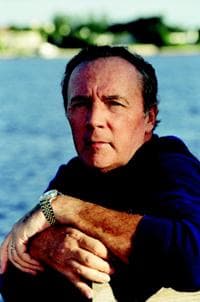
James Patterson is an American author known for his contributions to the thriller and fiction genres. His notable works include "Along Came a Spider," "Kiss the Girls," "1st to Die," "The Angel Experiment," "Suzanne's Diary for Nicholas," and "School's Out—Forever." Patterson has received multiple awards for his writing, including the Edgar Award.
Similar books
- The Hunger Games
Suzanne Collins
4.3 (6.4M) average on GoodreadsFantasyFeatures a strong female protagonist in a dystopian setting with a fight for survival.
- Divergent
Veronica Roth
4.2 (2.9M) average on GoodreadsFantasyYoung adults discovering unique abilities and fighting against a controlling system.
- Uglies
Scott Westerfeld
3.9 (560k) average on GoodreadsFantasy"Uglies" by Scott Westerfeld also explores themes of genetic manipulation and societal control, specifically through forced cosmetic surgery and brain alteration. Westerfeld's novel, however, provides a more thoughtful and detailed world-building, along with a deeper philosophical inquiry into beauty standards, conformity, and individuality. While Patterson's 'Itex' Corporation is a clear antagonist, Westerfeld presents a more insidious and complex system of control, allowing for greater reader engagement with the ethical questions posed. "Uglies" also features a more gradual unfolding of its mysteries, contrasting with Patterson's more immediate and action-driven revelations.
- Angels & Demons
Dan Brown
3.9 (2.7M) average on GoodreadsThrillerA Harvard symbologist races through Rome's ancient sites, deciphering cryptic clues to unmask the Illuminati and stop a vengeful plot to destroy the Vatican with a stolen antimatter weapon.
- Gone Girl
Gillian Flynn
4.1 (2.3M) average on GoodreadsThrillerA wife's sudden disappearance on her fifth anniversary reveals a web of lies and psychological warfare, exposing the secrets within a seemingly perfect marriage.
- The Girl on the Train
Paula Hawkins
3.9 (2.1M) average on GoodreadsThrillerA woman’s fascination with a seemingly perfect couple she watches from her daily train commute leads her into a dark investigation when she witnesses something that shatters their idyllic image.






Enjoyed the summary?
A summary gives you the shape of the book. The book itself has the detail, the examples and the voice.
Find School's Out on AmazonAs an Amazon Associate, BookBrief earns from qualifying purchases. How we're funded