
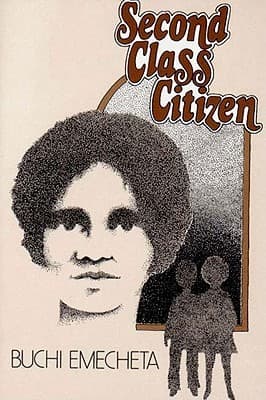
Synopsis
Covers the whole plot, including the ending.
- Difficulty
- Medium
- Pacing
- Moderate
- Mood
- Gritty, Resilient, Reflective, Empowering, Challenging
- Read it if
- You want a powerful story about a woman's resilience and fight for independence against immense societal and personal challenges.
- Skip it if
- You prefer lighthearted reads or find stories of domestic abuse and racial discrimination too difficult to engage with.
Second Class Citizen Plot Summary
Covers the whole plot, including the ending.
Early Life in Ibuza
Adah, a young girl from Ibuza, Nigeria, grows up wanting an education, a dream her community often dismisses as only for boys. She is drawn to the idea of the United Kingdom, a place her father’s cousin, Mr. Nweze, describes as a utopia where everyone is equal. Adah’s determination leads her to defy expectations, sneaking into school and doing well academically. Her father, a progressive man, supports her education, but his sudden death leaves Adah vulnerable to her mother's more traditional views. Despite this, Adah continues to fight for her schooling, seeing it as her only path to a better future and to fulfilling her dream of traveling to the UK.
Marriage to Francis and Arrival in Lagos
To escape relatives who plan to marry her off, Adah arranges her own marriage to Francis Obi, a young man she barely knows but who seems to share her goals. They move to Lagos, where Adah quickly gets a good job as a librarian at the American Consulate, which pays well and includes housing. Francis, meanwhile, struggles to find stable work, relying heavily on Adah's income. Despite their different levels of success, Adah believes in Francis's potential and supports his efforts to study for his accountancy exams. She also starts having children, a common expectation in Nigerian society, even as she balances her demanding job and household duties.
The Move to the United Kingdom
Adah's long-held dream of going to the United Kingdom finally happens when Francis decides to study accountancy there. Adah, despite her worry about leaving her secure job, agrees to move with their two young children, Vicky and Titi. They arrive in London to a harsh reality: the UK is not the promised land of equality she imagined. They settle in a run-down room in Kentish Town. Francis, instead of finding the opportunities he expected, struggles to adjust, becoming increasingly dependent and resentful. Adah quickly realizes that her romanticized image of London is far from the cramped, often hostile environment they now live in.
Life as an Immigrant in London
Life in London proves to be a constant struggle for Adah. She faces extreme poverty, racial discrimination from landlords and neighbors, and the challenge of raising her children in a foreign land. Francis, instead of focusing on his studies, becomes lazy and abusive, blaming Adah for their problems. He forbids her from working, believing it shames him, despite their dire financial state. Adah, however, is resourceful and determined. She secretly takes on odd jobs, like working in a factory, to provide for her children, often hiding her earnings from Francis to keep him from wasting them. The dream of the UK slowly disappears under the weight of their daily struggles.
The Birth of the 'Illegal' Baby
Against Francis's wishes and in the middle of their financial struggles, Adah becomes pregnant with her third child. Francis is angry, seeing another child as an unbearable burden. He calls the unborn baby 'illegal' due to their uncertain financial state and crowded living conditions. Despite his cruelty, Adah carries the pregnancy to term, giving birth to a daughter whom she names Adah, after herself. This birth highlights the deep difference between Adah's resilience and Francis's increasing irresponsibility and lack of empathy, strengthening her resolve to protect her children and secure their future, even if it means defying her husband.
Francis's Abuse Escalates
Francis's resentment and frustration lead to increasing physical and emotional abuse towards Adah. He often beats her, locks her out of their room, and verbally assaults her, often in front of their children. He blames her for their poverty and for his inability to pass his exams, despite his own lack of effort. Adah, though bruised and humiliated, refuses to be broken. She finds comfort in her children and her secret writing, which becomes her only escape. Her resilience is tested daily as she navigates the constant threat of Francis's temper while trying to maintain a sense of normalcy for her children and pursue her own intellectual growth.
Adah's Pursuit of Knowledge and Writing
Despite Francis's attempts to control her and deny her access to books, Adah secretly continues to educate herself. She goes to the local library often, reading books and newspapers, and even enrolls in a typing course. Her greatest ambition, however, is to write a novel. She begins to write about her experiences, pouring her heart and struggles onto paper. This act of writing becomes her rebellion, her voice, and her way to self-expression and eventual independence. Francis discovers her manuscript, titled 'The Bride Price,' and, in a fit of rage and jealousy, burns it, calling her aspirations foolish. This destructive act, however, only strengthens Adah's resolve to write and to leave him.
Seeking Independence
The burning of her manuscript is the final straw for Adah. She realizes that her marriage to Francis cannot be saved and that for her and her children to survive, she must leave him. She begins to actively seek ways to secure her independence, considering options like social services for her children. She confides in her friend, Janet, and begins to explore her legal rights as a woman in the UK. This decision is not easy, as it goes against traditional Nigerian cultural norms, but Adah's determination to protect her children and reclaim her own life outweighs her fear of societal judgment and the unknown.
Engaging with Social Services
Facing homelessness and Francis's continued abuse, Adah makes the difficult decision to temporarily place her children, Vicky and Titi, into the care of social services. This is a deep cultural taboo, as Nigerian mothers are expected to always keep their children with them. The separation is heartbreaking for Adah, but she sees it as a necessary step to stabilize her life and secure a safe environment for her children while she finds her footing. She visits them regularly, reassuring them of her love and her plan to reunite their family. This act shows Adah's immense sacrifice and her commitment to her children's well-being.
Legal Separation and New Beginnings
With the help of social workers and her growing understanding of her rights, Adah formally separates from Francis. She gets her own small flat, creating a safe home for herself and her children. Francis continues to harass her, demanding money and trying to control her, but Adah stands firm. She finds a job, enrolls her children in school, and begins to rebuild their lives. She eventually gets her children back from foster care, and they start a new chapter, free from Francis's abuse. Adah, though still facing challenges as a single Black mother in London, has achieved a deep sense of independence and self-worth.
Reclaiming Her Voice and Future
Adah, now truly independent, embraces her identity as a strong, resourceful woman and a writer. She continues to work, care for her children, and write, unaffected by Francis's attempts to sabotage her. She recognizes that the 'second class citizen' status she experienced, both in Nigeria as a girl wanting education and in London as an immigrant, no longer defines her. She has made her own path, showing immense courage and resilience. The novel ends with Adah looking towards the future with hope, determined to publish her stories and provide a better life for herself and her children, embodying self-reliance and defying societal limits.
Principal Figures
Adah Obi
Protagonist
A determined Nigerian woman who defies societal expectations to achieve independence
Adah is a highly intelligent, ambitious, and resilient woman from Ibuza, Nigeria. From a young age, she yearns for education and dreams of moving to the United Kingdom, seeing it as a land of opportunity and equality. Despite facing significant cultural barriers and patriarchal expectations, she is fiercely independent and resourceful. She prioritizes her children's well-being above all else and possesses an unwavering will to survive and thrive, even in the face of extreme poverty, racism, and domestic abuse. Her intellectual curiosity and passion for writing are central to her identity.
Relationships: Francis Obi (Husband, abusive and dependent); Vicky Obi (Daughter); Titi Obi (Daughter); Adah Obi (daughter) (Daughter (named after herself)); Janet (Supportive friend in London)
Francis Obi
Antagonist
Adah's abusive and dependent husband
Francis is Adah's husband, initially appearing ambitious but quickly revealing himself to be lazy, insecure, and increasingly abusive. He struggles academically and professionally, relying entirely on Adah's income and emotional support. He embodies patriarchal Nigerian cultural norms, believing a wife should be subservient and that a man's pride is paramount. His inability to adapt to life in London and his resentment of Adah's competence lead him to physically and emotionally abuse her, burn her manuscript, and sabotage her attempts at independence. He is a foil to Adah's resilience and determination.
Relationships: Adah Obi (Wife, victim of his abuse); Vicky Obi (Daughter); Titi Obi (Daughter); Adah Obi (daughter) (Daughter)
Vicky Obi
Supporting
Adah's eldest daughter
Vicky is Adah's first child and eldest daughter. She is a bright and observant child who, along with her siblings, experiences the harsh realities of their parents' struggles and Francis's abuse. Her presence and well-being are a constant motivation for Adah to fight for a better life. Vicky's experience in foster care, though difficult, highlights the extreme measures Adah takes to protect her children. She represents the future Adah is striving to secure, free from the limitations and suffering Adah herself endured.
Relationships: Adah Obi (Mother); Francis Obi (Father); Titi Obi (Sister)
Titi Obi
Supporting
Adah's second daughter
Titi is Adah's second child, another daughter. Like Vicky, she is a young witness to the family's struggles and her father's cruelty. Her vulnerability further underscores the urgency of Adah's quest for independence and stability. Titi's placement in foster care with Vicky is a pivotal moment, illustrating the depths of Adah's desperation and her commitment to her children's safety. She, too, represents the hope for a better future that Adah tirelessly works to achieve.
Relationships: Adah Obi (Mother); Francis Obi (Father); Vicky Obi (Sister)
Adah Obi (daughter)
Supporting
Adah's third child, born in the UK
The third child, also a daughter, is named Adah by her mother, an act of self-affirmation and a nod to her own identity. Her birth in London, amidst Francis's 'illegal' pronouncements and the family's dire poverty, is a testament to Adah's resilience and her refusal to be dictated by her husband's whims. This baby symbolizes a new beginning and Adah's ability to create life and hope even in the most challenging circumstances.
Relationships: Adah Obi (Mother); Francis Obi (Father); Vicky Obi (Sister); Titi Obi (Sister)
Janet
Supporting
Adah's supportive Nigerian friend in London
Janet is a Nigerian woman Adah befriends in London. She provides Adah with much-needed emotional support, practical advice, and a sense of community. Janet understands the unique challenges faced by Nigerian immigrants in the UK and offers Adah a sympathetic ear and encouragement during her darkest times. She is a voice of reason and strength, helping Adah navigate the complexities of her abusive marriage and the English social system, particularly when Adah decides to leave Francis.
Relationships: Adah Obi (Friend)
Mr. Nweze
Mentioned
Adah's father's cousin who inspired her dream of the UK
Mr. Nweze is a relative of Adah's father who lives in the United Kingdom. His letters home, filled with glowing descriptions of London as a place of equality and opportunity, ignite Adah's lifelong dream of moving there. He represents the idealized image of the UK that Adah carries throughout her childhood, a stark contrast to the reality she later encounters. Though he appears only briefly, his influence sets the initial trajectory of Adah's aspirations.
Relationships: Adah Obi (Distant relative, source of inspiration)
Adah's Mother
Supporting
A traditional Nigerian woman who initially opposes Adah's education
Adah's mother is a traditional Nigerian woman who initially adheres to societal norms that deem education primarily for boys. She is initially resistant to Adah's schooling, but her eventual acceptance, especially after Adah's father's death, shows a degree of adaptability. While she loves Adah, her worldview is shaped by the conservative culture of Ibuza, which often clashes with Adah's progressive ambitions. She represents the societal expectations Adah must overcome.
Relationships: Adah Obi (Mother); Adah's Father (Husband)
Adah's Father
Supporting
A progressive Nigerian man who supports Adah's education
Adah's father is a progressive and supportive figure in her early life. Unlike many men of his generation and culture, he recognizes and encourages Adah's intelligence and desire for education. He actively supports her schooling, seeing her potential beyond traditional gender roles. His untimely death is a significant turning point in Adah's life, as it removes her primary advocate and leaves her vulnerable to more conservative family influences. His brief but impactful presence instills in Adah the belief in her own worth and potential.
Relationships: Adah Obi (Father); Adah's Mother (Wife)
Themes & Insights
The Quest for Identity and Self-Determination
Adah's journey is about defining herself outside the roles her culture and husband assign her. From her childhood fight for education in Ibuza to her decision to leave Francis and pursue writing in London, she consistently asserts her right to an individual identity. Her refusal to be a 'second class citizen,' whether as a girl in Nigeria or a Black immigrant woman in the UK, drives her actions. This theme is clear when she names her third daughter Adah, symbolizing her self-affirmation, and when she secretly writes her novel, claiming her voice.
“She was a woman, and a black one at that, so she had to be a second-class citizen. But she was not going to be one.”
The Illusion of the Promised Land
The United Kingdom is first presented as a utopian 'heaven' in Adah's childhood imagination, a place of equality and opportunity. However, upon arrival, she finds a harsh reality of poverty, racism, and social indifference. This contrast between expectation and reality shatters her romanticized view. The theme explores how external perceptions of a place can differ from the lived experience, especially for immigrants facing systemic discrimination, as seen in the run-down housing and the casual racism Adah experiences from landlords and neighbors.
“The United Kingdom was not a dream, it was a nightmare. It was a place where people were rude to you because of the colour of your skin.”
Patriarchy and Gender Inequality
The novel examines the widespread nature of patriarchy, both in traditional Nigerian society and within Adah's marriage. In Nigeria, Adah battles the expectation that education is for boys and that a woman's main role is marriage and childbearing. In London, Francis embodies this patriarchy, expecting Adah to be subservient, financially dependent, and to give up her ambitions. His abuse and control come from his belief in male superiority. Adah's fight for independence challenges these patriarchal structures, ending with her decision to leave him and raise her children alone.
“In Nigeria, a woman was a second-class citizen. In England, she was a third-class citizen.”
Motherhood and Sacrifice
Adah's role as a mother is central to her identity and her motivations. Her children are both her greatest joy and her heaviest burden, especially with poverty and abuse. She makes great sacrifices for them, working secretly, enduring Francis's cruelty, and even making the difficult decision to temporarily place them in foster care to ensure their safety and future. Her unwavering love and commitment to her children drive her to seek independence and provide them with a better life, showing the profound strength and resilience in maternal love.
“Her children were her life. She would do anything for them, even if it meant sacrificing her own happiness.”
The Power of Education and Literature
Education is Adah's lifelong aspiration and her main tool for liberation. From her early determination to attend school in Ibuza to her secret library visits and her pursuit of writing in London, knowledge empowers her. Literature, especially her own novel, becomes her voice and her way of processing her experiences and asserting her identity. Francis's burning of her manuscript symbolizes his attempt to silence her, but it ultimately strengthens her resolve to write and to achieve intellectual freedom, proving that the power of words cannot be destroyed.
“Books were her only friends, her only hope, her only escape.”
Plot Devices & Literary Techniques
Foreshadowing
Hints at future difficulties and the disillusionment of the 'dream'
Foreshadowing is used to hint at the challenges Adah will face. Early descriptions of the UK as a 'heaven' or 'paradise' subtly set up the eventual disillusionment, suggesting that such an idealized vision cannot be sustained. Francis's initial laziness and reliance on Adah's income in Lagos foreshadow his later irresponsibility and abusive behavior in London. Adah's struggles with traditional expectations in Ibuza also foreshadow the larger battles she will fight against patriarchal control in her marriage and as an immigrant in a new country.
Irony (Situational)
The contrast between Adah's expectations of the UK and its harsh reality
Situational irony is prominent in the novel, particularly concerning Adah's expectations of the United Kingdom. She envisions it as a land of equality, opportunity, and escape from traditional constraints, a 'heaven' where everyone is treated fairly. The reality, however, is a stark contrast: she encounters poverty, racism, and a society that often treats her as a 'second class citizen.' This ironic reversal of her dreams highlights the systemic barriers faced by immigrants and the gap between idealized perceptions and lived experiences.
Symbolism (The Manuscript)
Adah's written work symbolizes her voice, identity, and freedom
Adah's manuscript, 'The Bride Price,' is a powerful symbol. It represents her voice, her intellectual aspirations, her personal story, and her burgeoning independence. The act of writing is her way of processing her experiences and asserting her identity. When Francis discovers and burns the manuscript, it symbolizes his attempt to silence her, destroy her dreams, and maintain control over her. However, this act ultimately serves as the catalyst for Adah's final break from him, making the manuscript a symbol of her eventual liberation rather than her defeat.
First-Person Narration (Limited Omniscient)
Provides intimate insight into Adah's thoughts and feelings
The novel is primarily told through a limited omniscient first-person perspective, focusing almost exclusively on Adah's internal world. This narrative choice allows readers deep access to her thoughts, emotions, and struggles, fostering empathy and understanding for her experiences. We understand her motivations, her dreams, her fears, and her resilience directly from her point of view. While it limits our insight into other characters' inner lives, it powerfully immerses us in Adah's journey of self-discovery and survival, making her story intensely personal and impactful.
Second Class Citizen Quotes
“All my life I had been told that I was a girl and that I was black; that alone was a double burden.”
“To be a Nigerian woman in England was to be a second-class citizen.”
“What was the point of being educated if you could not use your education?”
“She was a woman, and a black woman at that, and so she must always be grateful for any crumbs of kindness thrown her way.”
“The greatest joy for a woman was to be a mother.”
“She was alone in this big, cold country, with no one to turn to.”
“She decided that she would be a writer, no matter what.”
“It was her life, and she was going to live it the way she wanted.”
“The children were hers, and she would fight for them.”
“She was learning to be selfish, and she liked it.”
“There was no such thing as a free lunch, especially not for a black woman.”
“She had to make her own way, create her own path.”
“The future was not a place to be feared, but a place to be conquered.”
Quiz
10 questions on the plot and the characters. Each answer comes with a short explanation.
Question 1
What is Adah's primary ambition that drives her early life decisions in Ibuza?
- To become a successful trader like her mother.
- To marry a wealthy man and raise a large family.
- To go to school and receive an education.
- To travel to America and become a famous singer.
Show answer
C. To go to school and receive an education. From a very young age, Adah defies expectations by insisting on going to school, often sneaking in, as she sees education as her path to a better life.
Question 2
What is the name of Adah's husband?
- Francis Obi
- Pa Noble
- Taiwo
- Nnamdi
Show answer
A. Francis Obi Adah's husband is Francis Obi, a character whose actions and attitudes significantly contribute to her struggles in England.
Question 3
What country do Adah and Francis move to, believing it will offer better opportunities?
- Canada
- United States
- Germany
- England
Show answer
D. England Adah and Francis move to England, specifically London, with the hope that Francis can study accounting and Adah can find work.
Question 4
What specific job does Adah secure in England that allows her to be the primary breadwinner for a period?
- A teacher at a local primary school.
- A librarian at a public library.
- A nurse in a hospital.
- A factory worker.
Show answer
B. A librarian at a public library. Adah works as a librarian, which provides a steady income and allows her to continue reading and learning, despite Francis's disapproval.
Question 5
How does Francis react to Adah's intellectual pursuits and desire to write?
- He is supportive and encourages her to follow her dreams.
- He is indifferent, as long as she continues to provide for the family.
- He actively discourages and even destroys her writing, viewing it as a waste of time and a challenge to his authority.
- He tries to take credit for her work, claiming it as his own.
Show answer
C. He actively discourages and even destroys her writing, viewing it as a waste of time and a challenge to his authority. Francis is hostile towards Adah's writing, seeing it as frivolous and a threat to his traditional male dominance. He famously burns her manuscript.
Question 6
The title 'Second Class Citizen' primarily refers to:
- The status of immigrants in England compared to native-born citizens.
- The status of women in traditional Nigerian society and later as a black woman in England.
- The economic struggles faced by Adah and her family in London.
- The difficulty of obtaining a good education as an African in the 1960s.
Show answer
B. The status of women in traditional Nigerian society and later as a black woman in England. The title reflects Adah's experience of being marginalized first as a girl in her own culture, and then as a black, African woman in England, experiencing both racial and gender discrimination.
Question 7
What is the primary reason Adah eventually decides to leave Francis?
- She falls in love with another man.
- She receives a scholarship to study abroad without him.
- His escalating abuse, neglect of the children, and refusal to be a responsible partner.
- Her family in Nigeria demands she return home.
Show answer
C. His escalating abuse, neglect of the children, and refusal to be a responsible partner. Adah endures years of Francis's physical and emotional abuse, his irresponsibility, and his refusal to contribute to the family's well-being before finally deciding to leave him for her and her children's safety and future.
Question 8
What significant obstacle does Adah face when trying to find housing for herself and her children after leaving Francis?
- She cannot afford the rent for any available properties.
- Most landlords refuse to rent to a single black mother with multiple children.
- Francis actively sabotages her attempts to find a new place.
- There are no suitable properties available in her desired area.
Show answer
B. Most landlords refuse to rent to a single black mother with multiple children. Adah faces significant racial discrimination and prejudice from landlords who are unwilling to rent to a black single mother with children, highlighting the 'second class' status she experiences.
Question 9
What is the symbolic significance of the library in Adah's life, both in Nigeria and England?
- It represents a safe haven from domestic troubles.
- It is a place of intellectual freedom, escape, and a source of her income and personal growth.
- It is where she first meets Francis.
- It symbolizes the unattainable dreams of many immigrants.
Show answer
B. It is a place of intellectual freedom, escape, and a source of her income and personal growth. The library is consistently portrayed as a place of solace, knowledge, and independence for Adah. It's where she works, reads, and dreams of writing, representing her intellectual and personal liberation.
Question 10
Despite her struggles, what core belief about herself and her children does Adah ultimately hold onto, driving her to independence?
- That she will eventually return to Nigeria and live a traditional life.
- That she and her children deserve a better life than what Francis can provide, and she is capable of achieving it on her own.
- That her primary duty is to forgive Francis and reunite her family.
- That society owes her a comfortable life after all her hardships.
Show answer
B. That she and her children deserve a better life than what Francis can provide, and she is capable of achieving it on her own. Adah's unwavering belief in her own strength and her children's right to a better future, free from abuse and neglect, is the driving force behind her breaking away from Francis and establishing an independent life.
Second Class Citizen FAQ
What is the central premise of 'Second Class Citizen'?
The novel follows Adah Ofili, a young Nigerian woman from Ibuza, as she navigates societal expectations, cultural clashes, and personal hardships. It chronicles her journey from Nigeria to London, driven by a thirst for education and a desire to escape the restrictive traditional roles imposed on women, while also trying to build a better life for her children.
Who are the primary antagonists in Adah's story?
While there isn't a single 'villain,' Adah faces opposition from several sources: her husband Francis's selfishness and abuse, the ingrained patriarchal traditions of her Nigerian community that limit women's aspirations, and the subtle and overt racism she experiences in London. Francis's refusal to work and his constant demands for money, coupled with his physical violence, are major obstacles to her progress.
What is the significance of Adah's 'dream of going to the United Kingdom'?
Adah's dream of going to the United Kingdom represents her aspiration for intellectual freedom, a better education, and an escape from the confining expectations of her Nigerian society. She believes London is a place where she can pursue her literary ambitions and provide a more progressive upbringing for her children, free from the constraints she experienced in Ibuza.
How does Adah financially support herself and her family, especially in London?
In London, Adah works tirelessly as a librarian at the North Finchley Library, often taking on extra shifts and working through her pregnancies. This income is crucial, as Francis often refuses to work and squanders any money he gets, leaving Adah as the sole provider for their growing family, even while she tries to pursue her own studies.
What happens to Adah and Francis's marriage by the end of the book?
Adah ultimately leaves Francis, driven by his escalating abuse, infidelity, and refusal to be a responsible partner or father. She takes her children and seeks refuge in a hostel, initiating the process of divorce and demonstrating her powerful resolve to forge an independent life, free from his control and violence.
What is the implied fate of Adah's first novel, 'The Bride Price'?
Although Francis burns the manuscript of 'The Bride Price' in a fit of rage, the novel implies Adah's resilience and determination to rewrite it. Given Buchi Emecheta's own biography and the themes of the book, it suggests that Adah will eventually succeed in publishing her story, mirroring Emecheta's own literary journey.
Are there any subtle indications of Francis's character flaws before they move to London?
Even in Nigeria, Francis shows signs of irresponsibility and selfishness. He struggles to hold down a job, relies on Adah's earnings, and exhibits a sense of entitlement regarding her sacrifices for his education. His dismissive attitude towards her intellectual pursuits and his patriarchal expectations are evident early on.
How does the 'Ibuza women's meeting' in London reflect a deeper cultural conflict?
The 'Ibuza women's meeting' in London, where Adah is judged for her modern ways and her children are criticized, highlights the persistent tribal scrutiny and cultural expectations that follow her even abroad. It underscores the difficulty of fully escaping traditional judgment and the pressure to conform, even when physically distanced from Nigeria.
What role does Adah's relationship with her children play in her resilience?
Adah's children are both a significant burden and her primary motivation. Despite the immense challenges of raising them alone in a foreign country, their well-being and future are the driving force behind her perseverance. She endures hardship and abuse to ensure they have opportunities she never had, making them central to her will to survive and thrive.
How does Adah cope with the racism she encounters in London?
Adah largely internalizes the racism she faces, developing a quiet resilience rather than outward confrontation. She observes and processes the subtle slights and overt discrimination, often finding strength in her own identity and her determination to prove herself. This internal processing helps her maintain her dignity and focus on her goals despite the prejudice.
What psychological impact does Francis's abuse have on Adah, beyond the physical?
Francis's emotional and psychological abuse, including gaslighting, financial control, and constant belittling, erodes Adah's self-esteem and creates intense emotional distress. It forces her into a constant state of anxiety and fear, making her doubt her own perceptions and ability to escape, even as she fights to maintain her sanity and ambition.
In what ways does Adah demonstrate agency, even when seemingly powerless?
Despite being subjected to poverty, sexism, and abuse, Adah consistently demonstrates agency through her unwavering pursuit of education, her determination to work and provide for her children, and her ultimate decision to leave Francis. Her internal strength, refusal to give up on her dreams, and eventual fight for divorce are profound acts of self-determination.
Is 'Second Class Citizen' primarily a critique of Nigerian patriarchy or British society?
'Second Class Citizen' critiques both Nigerian patriarchy and British society. It exposes the restrictive nature of traditional gender roles in Nigeria that stifle women's ambition, but also highlights the racism, poverty, and social isolation faced by African immigrants in London, suggesting that 'freedom' abroad comes with its own set of oppressive challenges.
How does Adah's experience challenge the idealized perception of the 'mother country'?
Adah's experiences in London starkly challenge the idealized image of Britain as a land of opportunity and enlightenment. She encounters racism, squalid living conditions, and social indifference, revealing that the 'mother country' is far from the utopian vision she held, forcing her to confront the harsh realities of immigrant life.
Could Francis be seen as a victim of circumstances, or is he purely villainous?
While Francis is depicted as abusive and selfish, some might argue he is also a product of his patriarchal upbringing and the pressures of being an immigrant in a foreign land where he struggles to find employment. However, his active choices to neglect his family, physically abuse Adah, and hinder her progress suggest a deeper, more intentional malevolence rather than mere victimhood.
What is the broader message about identity and belonging that the novel conveys?
The novel conveys that identity and belonging are complex and often fluid for immigrants. Adah struggles to fit into traditional Nigerian society, yet also faces alienation in Britain. Her journey suggests that true belonging might not be found in a specific place, but in forging one's own path and creating a self-defined identity, free from external constraints.
How does the novel use irony to highlight Adah's situation?
The novel employs irony by contrasting Adah's initial hopeful perception of London as a land of opportunity and freedom with the harsh realities of racism, poverty, and continued domestic oppression she faces there. This contrast underscores the false promise of escape and the pervasive nature of her struggles, regardless of geographical location.
What does the title 'Second Class Citizen' specifically refer to in Adah's life?
The title 'Second Class Citizen' refers to multiple layers of Adah's marginalization: as a woman in patriarchal Nigerian society, as a Black immigrant in Britain, and as a wife subjected to Francis's abuse. It encapsulates her experience of being devalued and denied equal rights and opportunities in various contexts, both cultural and personal.
About the author
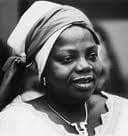
Buchi Emecheta was a prolific Nigerian novelist andонер known for her unflinching portrayal of the experiences of African women. Her seminal works, including 'The Joys of Motherhood,' 'The Bride Price,' and 'Second Class Citizen,' explore themes of female independence, cultural conflict, and post-colonial identity. Emecheta's powerful narrative voice and realistic depiction of societal pressures cemented her status as a significant voice in post-colonial literature.
Similar books
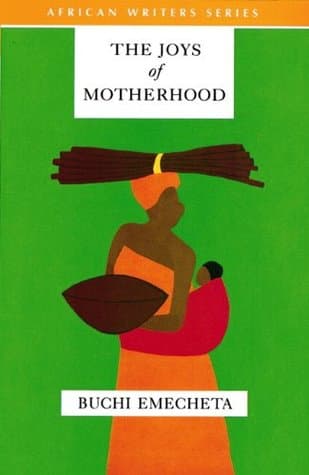
- The Joys of Motherhood
Buchi Emecheta
4.1 (5k) average on GoodreadsHistorical FictionExplores themes of womanhood, motherhood, and societal expectations in Nigeria.
- Americanah
Chimamanda Ngozi Adichie
4.3 (264k) average on GoodreadsLiterary FictionDeals with Nigerian immigrant experiences, race, and identity in Western countries.
- Nineteen Eighty-Four
George Orwell
4.2 (5.5M) average on GoodreadsFictionWinston Smith dreams of truth and rebellion in a world where Big Brother watches all, but he confronts the terrifying power of a regime that controls not just actions, but thoughts.
- The Frozen River
Ariel Lawhon
4.4 (600k) average on GoodreadsFictionIn 1789 Maine, a heroic midwife's diary helps her expose a murder and get justice in a town that wants to silence her.
- A Man Called Ove
Fredrik Backman
4.4 (569k) average on GoodreadsFictionA stubborn widower, who lives by strict rules, finds his quiet world changed by a lively new family next door, making him face his past and find happiness in human connection.
- The Art of Racing in the Rain
Garth Stein
4.2 (452k) average on GoodreadsFictionThrough the eyes of Enzo, a wise and observant dog, a race car driver's family navigates a journey of love, loss, and resilience, learning that life's most important lessons often come in the curves, not just on the straightaways.





Enjoyed the summary?
A summary gives you the shape of the book. The book itself has the detail, the examples and the voice.
Find Second Class Citizen on AmazonAs an Amazon Associate, BookBrief earns from qualifying purchases. How we're funded