
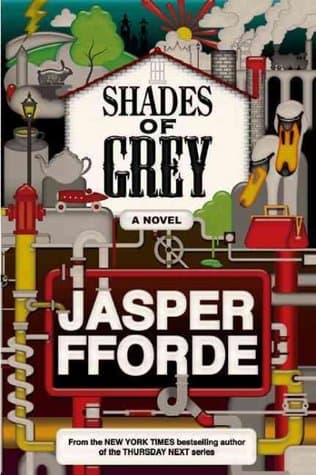
Synopsis
Covers the whole plot, including the ending.
- Difficulty
- Medium
- Pacing
- Moderate
- Mood
- Quirky, Satirical, Mysterious, Intriguing, Whimsical
- Read it if
- You enjoy intricate world-building, satirical social commentary, and a blend of mystery and adventure with a touch of romance.
- Skip it if
- You prefer fast-paced action over detailed exposition and quirky, often absurd, bureaucratic rules.
Shades of Grey Plot Summary
Covers the whole plot, including the ending.
Eddie's Relocation to Vermillion and First Encounter with Jane
Eddie Russet, a Red from the House of Red, moves to Vermillion in the Outer Fringes for a yearly 'color-seeing' test and to survey spoon use for the Color Control Agency. His father, a high-ranking Red, warns him about the Fringes. Eddie finds it hard to get used to Vermillion's strange customs and strict rules, especially the 'Swansong' ritual and the fear of night. He meets Jane, a smart and rebellious Grey who works at the local Resignation Centre. Society's rules say different castes should not mix, but Eddie likes her different ideas and intelligence, which make him question what he thought about the world.
The Spoon Survey and Unsettling Discoveries
As Eddie starts his spoon survey, he finds the job silly and useless. Villagers do not care about it. His talks with Jane become more frequent. She quietly shows him problems in the official history and how many rules do not make sense. She points out issues in the 'Great Leap Backwards' story and the supposed 'First Among Equals' who started their society. Eddie also learns about the 'chromatic scale' and the harsh punishments for 'hue-shifting' or being 'color-blind.' He starts to think that the social structure, based on color, aims to keep control rather than show truth, especially for the Greys.
The Nature of Color and the 'Swansong'
Jane tells Eddie the truth about color perception: people only see their own color and those below it. Reds see Red, Orange sees Orange and Red, Yellow sees Yellow, Orange, and Red, and so on, up to Purple, who sees all colors. Greys, she says, are not color-blind but see a different, more basic spectrum that the colored castes cannot see. Eddie also sees the 'Swansong' for himself, a ritual where old or sick people are 'retired' to the 'Great Beyond,' which means they are killed. This practice, said to be for lack of resources, bothers Eddie and makes him trust the system even less.
The Search for the Mythical 'Ultraviolet'
Jane's doubts and his own growing questions make Eddie look into the story of 'Ultraviolet,' a mythical color said to be beyond Purple, and a forgotten past. They find old, banned books and items that suggest a high-tech civilization before the 'Great Leap Backwards,' a disaster that reset society. Jane thinks the current government hides this knowledge to stay in power. Their search makes them question the 'Rules,' which seem to stop independent thought and discovery. They start to suspect that the 'Great Leap Backwards' was not an accident but a planned act or a cover-up.
Exposure to Higher Colors and the Green Man
Through Jane's actions, Eddie sees more colors. He starts to see Green, a color beyond his natural Red, which is a big and strange experience. It makes him question who he is and his place in society. This new ability makes him an oddity and a threat to the current order. He also meets the 'Green Man,' a private and wise person who lives outside the towns. The Green Man confirms many of Jane's ideas about the world before the Leap and the real nature of their society, hinting at a bigger conspiracy and a resistance group.
The Looming Threat and Jane's Past
As Eddie and Jane learn more, they get unwanted attention from the authorities, especially Colonel Magenta. Their discoveries become more dangerous to the current situation. Jane tells more about her past, including her link to a group of 'Un-Greys' who have special abilities and understand the world's true history better. She explains that the 'Great Leap Backwards' was a planned change to society, made to control people through color-based ranks and forced ignorance. The 'Rules' stop critical thinking and keep the ruling group, who know the truth, in power.
The Plan for Revolution and the Un-Greys
Knowing more about the past and the conspiracy, Eddie and Jane plan to tell the truth to everyone. They want to show that the color hierarchy is made up and that the 'Great Leap Backwards' was a lie. They try to gather the Greys and other unhappy people. They connect with 'Un-Greys'—people who see 'Ultraviolet' and other hidden parts of reality, who have been secretly keeping knowledge and planning for change. These Un-Greys have advanced technology and understand the world before the Leap, offering hope for a real revolution.
The Confrontation and the Revelation of the 'Chroma-Shift'
Eddie and Jane, with the Un-Greys' help, start their plan to change society. They want to publicly show that the color hierarchy is fake and that the ruling group spread lies. During a big public event, they try to show that color perception can change and that the 'Rules' are random. The conflict grows, and they show the 'Chroma-Shift,' a device or method that can temporarily let people see higher colors or even Ultraviolet. This news shocks the community, challenging society's structure and the Color Control Agency's power.
The Aftermath and the Path Forward
The public news causes a lot of trouble and confusion. Some accept the truth, but many resist, having been taught to accept the current order. The ruling group, led by Colonel Magenta and other high-ranking officials, fights back hard, trying to stop the rebellion and make Eddie and Jane look bad. People get hurt, and society's future is uncertain. Eddie, now fully dedicated, knows the fight for truth and freedom is not over. The book ends with the revolution started, but the outcome is unknown, making the reader think about the long and hard path ahead for society to get back its true colors and history.
Principal Figures
Eddie Russet
Protagonist
A naive Red, who gradually awakens to the truth of his society.
Eddie begins as a loyal, rule-abiding Red from the House of Red, content with his limited color perception and his role in the Color Control Agency. He is initially naive, accepting the strictures of his society without question. His journey to Vermillion and his encounters with Jane gradually dismantle his worldview. He is driven by a strong sense of curiosity and justice, which, once ignited, compels him to question authority and seek the truth behind the 'Great Leap Backwards.' His capacity for empathy and his willingness to challenge deeply ingrained beliefs make him a reluctant but determined revolutionary.
Relationships: Jane (Love interest and intellectual guide); Colonel Magenta (Antagonist, symbol of the oppressive regime); The Green Man (Mentor and source of hidden knowledge)
Jane
Co-protagonist/Love Interest
A rebellious Grey who exposes Eddie to the hidden truths of their world.
Jane is a sharp, intelligent, and fiercely independent Grey, belonging to the lowest social caste. Unlike most, she harbors deep skepticism about the official history and the societal structure. She works at the Resignation Centre, giving her a unique perspective on the system's cruelty. Jane is the catalyst for Eddie's awakening, subtly guiding him towards uncomfortable truths about color perception, the 'Great Leap Backwards,' and the true purpose of the 'Rules.' She is resourceful, brave, and deeply committed to uncovering the truth and dismantling the oppressive hierarchy, even if it means risking her life. She has connections to the 'Un-Greys' and a deeper understanding of the world's hidden mechanisms.
Relationships: Eddie Russet (Love interest and revolutionary partner); Colonel Magenta (Antagonist, representing the system she fights)
Colonel Magenta
Antagonist
A ruthless enforcer of the color-based hierarchy and the ruling elite.
Colonel Magenta is a high-ranking official within the Color Control Agency and a fervent upholder of the established order. As a Magenta, he possesses a higher color perception and therefore a higher social standing, which he believes justifies his authority. He is cunning, ruthless, and utterly dedicated to suppressing any dissent or challenge to the 'Rules.' He embodies the oppressive nature of the regime, actively hunting down those who question the system, particularly the Greys and anyone associated with the 'Un-Greys.' He is a formidable adversary for Eddie and Jane, representing the entrenched power that benefits from the manufactured hierarchy and widespread ignorance.
Relationships: Eddie Russet (Adversary and target of suppression); Jane (Adversary and target of suppression)
The Green Man
Supporting
A reclusive and wise figure who holds forbidden knowledge of the past.
The Green Man is a mysterious and reclusive individual living in the wilderness, outside the strictures of settled society. He is one of the few who possesses extensive knowledge of the 'pre-Leap' world and the true history that has been suppressed by the ruling elite. He serves as a mentor figure to Eddie, confirming many of Jane's suspicions and providing crucial information about the nature of their society, the 'Great Leap Backwards,' and the existence of a larger conspiracy. His wisdom and hidden insights are vital for Eddie and Jane's understanding of the world and their plans for revolution. He is part of the network of those who remember the past.
Relationships: Eddie Russet (Mentor and confidant); Jane (Ally and fellow truth-seeker)
Violet de Mauve
Supporting
A high-ranking Violet, representing the highest social stratum.
Violet de Mauve is a member of the House of Violet, the highest social caste, capable of perceiving almost all colors. She embodies the privilege and subtle manipulation of the ruling class. While not overtly villainous, her actions and beliefs reflect the ingrained biases and control mechanisms of their society. She is a figure of authority and influence, often seen making pronouncements or enforcing rules that reinforce the existing hierarchy. Her interactions with lower castes, though rare, highlight the vast social chasm and the unquestioning acceptance of their 'natural' superiority.
Relationships: Eddie Russet (Distant authority figure); Colonel Magenta (Peer in the ruling class)
Zebediah Russet
Supporting
Eddie's father, a high-ranking Red and loyalist to the system.
Zebediah Russet is Eddie's father, a respectable and high-ranking Red within the Color Control Agency. He is a staunch believer in the 'Rules' and the established order, genuinely convinced that the system provides stability and security. He represents the well-meaning but ultimately complicit majority of the 'colored' castes who are either ignorant of or unwilling to challenge the truth. He cares for Eddie but prioritizes conformity and obedience, often warning him against the dangers of independent thought or associating with lower castes, especially Greys. His loyalty makes him a barrier to Eddie's awakening.
Relationships: Eddie Russet (Father, often a source of well-intentioned but misguided advice)
The First Among Equals
Mentioned
The mythical founder of their society, whose true identity is a core mystery.
The 'First Among Equals' is the revered, almost mythical figure credited with establishing their current society after the 'Great Leap Backwards.' This individual is presented as a benevolent and wise leader who created the 'Rules' for the good of all. However, as Eddie and Jane investigate, they uncover evidence suggesting that the 'First Among Equals' might be a fabricated or misrepresented figure, used to legitimize the current oppressive regime. The true identity and motives of this founder become a central mystery, hinting at a darker, more manipulative origin for their color-based hierarchy.
The Un-Greys
Supporting
A hidden group of individuals who perceive 'Ultraviolet' and preserve forbidden knowledge.
The Un-Greys are a secret, loosely organized group of individuals who possess the rare ability to perceive 'Ultraviolet' and other aspects of reality beyond the visible spectrum of the 'colored' castes. They are aware of the true history of the world before the 'Great Leap Backwards' and have been secretly working to preserve knowledge and challenge the oppressive regime. They possess advanced understanding and sometimes residual technology from the pre-Leap era. Jane has connections to them, and they become crucial allies in the revolution, providing resources, information, and a deeper philosophical framework for the fight against the color-based hierarchy.
Relationships: Jane (Ally and fellow truth-seeker); Eddie Russet (Allies in the revolution)
Themes & Insights
Identity and Perception
The novel explores how perception, especially color perception, shapes identity. Characters' social standing, self-worth, and understanding of reality depend on the colors they see. Eddie's journey of seeing more colors shows how he grows in understanding his true identity and place. The theme questions if what we see is absolute truth, suggesting reality can be changed, as shown by society's ideas about color. The Greys, who 'see' differently, show that the color hierarchy is random and that other views are ignored.
“What you see is what you are. And what you are is what you can see.”
Social Hierarchy and Control
Fforde creates a society where a strict color-based system controls every part of life, from social status and benefits to behavior rules. The novel criticizes how such systems are made and kept through forced ignorance, propaganda ('The Great Leap Backwards'), and fear (the 'Swansong,' the dangers of night). The Color Control Agency and the 'Rules' control people, stopping them from moving up or thinking for themselves. The story shows the unfairness of a system that judges people by a random, unearned trait (color perception) instead of their worth or character, all to keep a ruling group in power.
“The Rules are there for a reason, Russet. They keep us safe. They keep us ordered. They keep us… colored.”
Truth, Ignorance, and Propaganda
A main theme is how truth is hidden and ignorance spread to keep control. The official story of the 'Great Leap Backwards' and the 'First Among Equals' is a made-up tale to hide the true, high-tech past. The 'Rules,' often illogical, stop independent thought and questions. Eddie slowly learns the truth, helped by Jane's doubts and the Un-Greys' secret knowledge. The book looks at the dangers of believing without question and how telling the truth can break down an unfair system.
“Sometimes the truth isn't something you find, Russet. It's something you make.”
Rebellion and Conformity
The conflict between following rules and rebelling drives much of the story. Eddie starts by following rules, but his talks with the rebellious Jane and seeing uncomfortable truths push him to dissent. Society stops rebellion with harsh punishments (demerits, expulsion, Swansong) and mind control. The Un-Greys are a long-standing, secret rebellion, keeping knowledge and planning for change. The novel examines the bravery needed to challenge a deep-rooted system and the personal costs of fighting for freedom and truth against big odds.
“To question is to betray. To think for oneself is to invite chaos.”
Love and Connection in a Divided World
Despite the strict social classes, the growing relationship between Eddie, a Red, and Jane, a Grey, goes against society's divisions. Their connection goes beyond the artificial barriers of color and caste, showing that people can have empathy and love, which the system tries to stop. Their bond is not just romantic but also intellectual; they challenge each other and work together to find the truth. Their relationship shows that unity and understanding across social divides are possible, offering hope for a future where such fake differences do not matter.
“Perhaps the greatest color isn't one you see, but one you feel.”
Plot Devices & Literary Techniques
Color-Based Social Hierarchy
The fundamental organizing principle of society, dictating status and perception.
This is the core world-building device. Society is strictly stratified by the color an individual can perceive, from Reds (lowest, seeing only red) to Purples (highest, seeing all colors). Greys are outside this spectrum, deemed 'color-blind' and lowest caste. This system dictates privilege, rules, and even perceived intelligence. It's a powerful metaphor for real-world social stratification based on arbitrary traits, serving to control the population and maintain the power of the ruling elite by limiting access to information and promoting a false sense of superiority.
The Great Leap Backwards
A fabricated historical event used to control information and justify the current societal structure.
The 'Great Leap Backwards' is the official explanation for their technologically stunted society, presented as a catastrophic event that forced humanity to restart. This historical narrative is a powerful propaganda tool, used to suppress knowledge of the advanced 'pre-Leap' world and to discourage innovation or questioning of the current 'Rules.' Eddie and Jane's investigation reveals it to be a deliberate act or a massive cover-up, designed to create a controllable, ignorant populace. It functions as a foundational lie that underpins the entire oppressive regime.
The Rules
A vast, often illogical, and ever-changing compendium of regulations governing all aspects of life.
The 'Rules' are an extensive and frequently contradictory set of regulations that govern every aspect of daily life, from spoon usage to social interactions. They are enforced by a system of merits and demerits, with severe penalties for infractions. This device highlights the absurdity and oppressive nature of the regime, designed not for logical governance but for social control. The constant need to consult the 'Rules' prevents independent thought and critical analysis, keeping the populace compliant and focused on trivialities rather than larger societal issues.
The Swansong
A euphemism for state-mandated euthanasia, presented as a dignified 'retirement'.
The 'Swansong' is a chilling plot device representing the ultimate control the state exerts over its citizens' lives. It's a ritual where individuals, typically the elderly or infirm, are forced to 'retire' to the 'Great Beyond,' which is a euphemism for euthanasia. This practice, justified by resource scarcity, is designed to eliminate 'unproductive' members of society and instill fear, reinforcing the absolute power of the ruling class. Witnessing a Swansong is a pivotal moment for Eddie, shattering his remaining illusions about the benevolence of the system.
The Chroma-Shift (or similar device/method)
A hidden technology or method capable of altering an individual's color perception.
This device, though not always explicitly named, refers to the means by which color perception can be temporarily or permanently altered, allowing individuals to see colors beyond their natural caste (e.g., Eddie seeing Green). It's a crucial plot device because it directly undermines the entire color-based hierarchy, proving that color perception is not an immutable, inherent trait but something that can be changed. Its revelation is a powerful tool for revolution, demonstrating that the system is a manufactured construct rather than a natural order.
Shades of Grey Quotes
“There are some things in this world that are not for us to know, and some things that are for us to know but we are not allowed to know them.”
“It is not the colour of your socks that matters, but the colour of your soul.”
“The past is a foreign country; they do things differently there.”
“Every shade has its purpose, every purpose its shade.”
“Ignorance is strength. Freedom is slavery. War is peace.”
“The greatest trick the Devil ever pulled was convincing the world he didn't exist.”
“To question is to understand, and to understand is to become a threat.”
“The truth is out there, but it's been painted over.”
“A lie told often enough becomes the truth.”
“When you're told not to look, that's precisely when you should.”
“The world is not what it seems, nor is it what it pretends to be.”
“Sometimes the greatest rebellion is simply to see things as they are.”
“Colour is merely vibration. Meaning is what we give it.”
“The past is a jigsaw puzzle, and the pieces are scattered across the land, waiting to be found.”
Quiz
10 questions on the plot and the characters. Each answer comes with a short explanation.
Question 1
In the society of 'Shades of Grey', what determines a person's social standing?
- Their physical strength and combat skills.
- Their ability to see and perceive colors, particularly higher spectrum colors.
- The number of merits accumulated through good behavior.
- Their family's historical contribution to the community.
Show answer
B. Their ability to see and perceive colors, particularly higher spectrum colors. The core premise of the society is that the ability to see the higher end of the color spectrum denotes a better social standing, with Greens being superior to Reds, and Greys at the very bottom.
Question 2
What is Eddie Russet's primary limitation regarding color perception at the beginning of the story?
- He can only see the color blue.
- He is completely colorblind and sees only shades of grey.
- He can only see his own color (Red) and everything else in shades of grey.
- He can see all colors, but they appear muted and dull.
Show answer
C. He can only see his own color (Red) and everything else in shades of grey. Eddie belongs to the low-level House of Red and can only see his own color, with the rest of the world appearing in shades of grey until artificially colorized.
Question 3
What is the primary function of the Color Control Agency, where Eddie works?
- To monitor and punish those who illegally attempt to see more colors.
- To artificially colorize the environment for those who cannot see certain colors.
- To develop new technologies for advanced color perception.
- To enforce social segregation based on color-seeing ability.
Show answer
B. To artificially colorize the environment for those who cannot see certain colors. The Color Control Agency is responsible for the artificial colorization of the world for individuals like Eddie, who can't naturally perceive all colors.
Question 4
What significant historical event is hinted at but never openly discussed in Eddie's society?
- A great war between different color Houses.
- A catastrophic natural disaster that altered human perception.
- The discovery of an alien civilization.
- A period of technological advancement that led to perfect color vision for all.
Show answer
B. A catastrophic natural disaster that altered human perception. The book mentions 'evidence of a never-discussed disaster' that precedes the current state of poor technology and altered color perception.
Question 5
Why is nighttime particularly terrifying for the inhabitants of Eddie's world?
- Dangerous nocturnal creatures emerge.
- They lose all color perception and are effectively blind in the dark.
- It is when the ruling class performs secret rituals.
- Rebellious factions launch their attacks under the cover of darkness.
Show answer
B. They lose all color perception and are effectively blind in the dark. The description states that 'nighttime is terrifying: no one can see in the dark,' implying a complete loss of vision without light.
Question 6
What is the primary catalyst for Eddie's shift in perspective about his seemingly 'just and good' world?
- He discovers ancient texts detailing the world's true history.
- His romantic involvement with Jane, a low-caste Grey.
- He is promoted within the Color Control Agency and sees its inner workings.
- He experiences a sudden, unexplained ability to see more colors.
Show answer
B. His romantic involvement with Jane, a low-caste Grey. The synopsis explicitly states, 'But that changes when he becomes smitten with Jane, a Grey, which is low-caste in this color-centric world. She shows Eddie that all is not well with the world he thinks is just and good.'
Question 7
What is the most severe punishment for violating rules and regulations in Eddie's society?
- A demotion in social standing.
- Forced labor in the Grey sector.
- Permanent expulsion from the community.
- A temporary loss of color perception.
Show answer
C. Permanent expulsion from the community. The text states that punishment 'can result in permanent expulsion,' indicating this is the most extreme consequence.
Question 8
What is the prevailing societal attitude towards 'change' in Eddie's world?
- It is actively encouraged for societal progress.
- It is viewed with suspicion and often met with resistance.
- It is considered an abhorrent concept.
- It is only permitted if approved by the highest color Houses.
Show answer
C. It is considered an abhorrent concept. The description states that 'the notion of change [is] abhorrent,' highlighting a deeply conservative and static society.
Question 9
The society's reliance on artificial colorization and poor technology suggests what about its current state?
- It is a highly advanced civilization that has mastered color manipulation.
- It is recovering from a significant decline and struggles with basic infrastructure.
- It deliberately limits technology to maintain social order.
- It is a utopian society where natural color is no longer needed.
Show answer
B. It is recovering from a significant decline and struggles with basic infrastructure. The text mentions 'evidence of a never-discussed disaster' and that 'technology is poor, news sporadic,' indicating a society that has regressed or is struggling to rebuild after a major collapse.
Question 10
What is the symbolic significance of Jane being a 'Grey' in relation to her role in Eddie's awakening?
- Her lack of color vision makes her immune to the society's propaganda.
- As a member of the lowest caste, she has direct experience with the society's injustices and flaws.
- Her 'greyness' represents a neutral stance, allowing her to see both sides objectively.
- She is literally 'grey' in appearance, making her stand out from others.
Show answer
B. As a member of the lowest caste, she has direct experience with the society's injustices and flaws. Being a 'Grey' signifies her low-caste status, meaning she is directly affected by the societal hierarchy and its inherent unfairness, giving her a unique perspective to challenge Eddie's 'rose-tinted life'.
Shades of Grey FAQ
What is Shades of Grey about?
Shades of Grey is set in a dystopian future where society is strictly stratified by one's ability to perceive color. Eddie Russet, a low-level Red, discovers that his world's rigid rules, technological decline, and fear of the dark are all consequences of a forgotten disaster. His life changes when he meets Jane, a Grey, who challenges his perception of their 'just and good' society and ignites revolutionary ideas.
Why should I read Shades of Grey?
You should read Shades of Grey for its unique world-building, blending dystopian commentary with witty social satire and a compelling mystery. Fforde crafts a society where color perception dictates social status, leading to absurd rules and hidden truths that Eddie and Jane gradually uncover, making for an engaging and thought-provoking read.
What is the background/setting of Shades of Grey?
The book is set in a post-apocalyptic future, many years after an unspecified 'Something That Happened' destroyed the old world and its advanced technology. Society has regressed, with communities living under a bizarre, highly regulated system of merits and demerits, where color perception determines social standing and access to resources. Nighttime is universally feared due to the inability to see in the dark.
What are the most memorable quotes?
While specific quotes aren't provided in the summary, memorable lines often highlight the absurdities of the color-based society, the characters' growing disillusionment, and the subtle humor in the face of oppression. Fforde's dialogue frequently features dry wit and observations on the illogical rules governing Eddie's world.
What writing style does the author use?
Jasper Fforde employs a distinctive writing style characterized by clever wordplay, a satirical tone, and intricate world-building. He blends elements of fantasy, mystery, and science fiction with a dry, British wit, often presenting serious themes through an absurd or whimsical lens, making the narrative both entertaining and thought-provoking.
What minor details add significant meaning?
Minor details like the specific, often illogical, rules governing daily life (e.g., the ban on certain color combinations, the strict adherence to the 'Colourtocracy') subtly reveal the depth of the societal control and the absurdity of the system. The recurring mention of the 'Something That Happened' as a forgotten but foundational event constantly hints at a deeper, hidden history.
What are some subtle foreshadowing moments?
Subtle foreshadowing includes the inconsistencies in historical accounts, the whispered rumors about the world before 'The Something That Happened,' and the unexpected abilities or knowledge displayed by certain 'lower' caste individuals like Jane. These moments hint that the official narrative is incomplete or deliberately misleading.
What unexpected character connections exist?
The most significant unexpected connection is between Eddie, a Red, and Jane, a Grey. Their forbidden relationship transcends the strict social boundaries and reveals that the 'lower' castes may possess vital knowledge or abilities, challenging the very foundation of their society. Other connections might hint at a hidden resistance or a shared past among unlikely allies.
What are unspoken character motivations?
Eddie's unspoken motivation initially is a desire for advancement within the system, but this quickly shifts to a deeper yearning for truth and justice, driven by his affection for Jane and his growing disillusionment. Jane's motivations are clearly to expose the truth and dismantle the oppressive system, stemming from a deeper understanding of its flaws.
What psychological complexities do characters exhibit?
Eddie exhibits the psychological complexity of someone grappling with cognitive dissonance, as his ingrained belief in his society's righteousness clashes with the unsettling truths Jane reveals. He struggles with loyalty to his upbringing versus the evidence of systemic injustice, leading to internal conflict and a re-evaluation of his entire worldview.
What are the major emotional turning points?
A major emotional turning point for Eddie is his encounter and subsequent infatuation with Jane, which forces him to look beyond his color-prescribed biases. Another is his realization that the 'just and good' world he believed in is built on lies and oppression, leading to a profound shift from passive acceptance to active questioning and revolutionary thought.
How do relationship dynamics evolve?
The relationship dynamics between Eddie and Jane evolve from a forbidden attraction to a partnership based on shared ideals and a dangerous quest for truth. Initially, Eddie holds a superior social position, but as Jane challenges his perceptions, their dynamic shifts towards one of mutual respect and reliance, with Jane often leading Eddie to uncomfortable truths.
Which parts remain ambiguous or open-ended?
The precise nature of 'The Something That Happened' and its full implications for the current society often remain partially ambiguous, leaving readers to piece together clues. The extent of the resistance movement and the ultimate fate of the 'old world' technology also present open-ended questions, hinting at a larger, ongoing struggle.
What are controversial scenes or decisions?
Controversial elements often revolve around the extreme punishments for breaking rules, such as permanent expulsion, and the systemic oppression based on color perception. Eddie's decision to align with Jane and engage in 'dangerous revolutionary talk' is a highly controversial choice within his rigid society, risking everything he knows.
Shades of Grey ending explained: how it ends & what it means
The summary doesn't detail the specific ending, but given the premise of 'dangerous revolutionary talk,' it implies that Eddie and Jane likely confront the established power structure or uncover significant truths about their world. The ending would signify the culmination of their quest, potentially leading to a societal upheaval, a deeper understanding of the past, or a new beginning for the characters, challenging the very foundations of the color-stratified world.
About the author
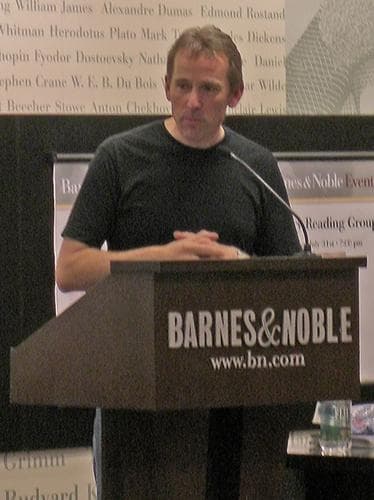
Jasper Fforde is a British author known for his imaginative and genre-blending fiction. His notable works include "The Eyre Affair," which features a literary detective, "Shades of Grey," set in a dystopian world, "The Big Over Easy," a whimsical take on nursery rhymes, "The Last Dragonslayer," a fantasy adventure, and "One of Our Thursdays Is Missing," which continues the adventures of Thursday Next.
Similar books
- The Hitchhiker's Guide to the Galaxy
Douglas Adams
4.2 (1.4M) average on GoodreadsFantasyShares a similar absurdist humor and satirical take on bureaucracy and existential questions.
- 1984
George Orwell
4.2 (3.1M) average on GoodreadsPoliticsFeatures a dystopian society with strict social control and a protagonist who questions the established order.
- The Giver
Lois Lowry
4.1 (1.8M) average on GoodreadsFantasyBoth 'Shades of Grey' and 'The Giver' explore dystopian societies where citizens are deprived of certain sensory experiences (color in Fforde, emotions/memories in Lowry) for the sake of societal control. However, Fforde's approach is significantly more satirical and humorous, using absurdity to critique social structures, whereas Lowry's tone is more somber and directly addresses the ethical implications of such control. Fforde's world is far more complex and whimsical in its construction.
- Brave New World
Aldous Huxley
4.0 (1.4M) average on GoodreadsFantasySimilar to 'Brave New World,' 'Shades of Grey' depicts a society where individuals are rigidly stratified and conditioned from birth to accept their designated roles. Both novels use a protagonist who questions the established order. However, Fforde's dystopian vision is less overtly oppressive and more subtly manipulative, relying on ingrained social norms and perceived natural differences (color perception) rather than the overt technological and biological conditioning seen in Huxley. Fforde's narrative also incorporates a strong mystery element that is absent in Huxley's more philosophical critique.
- Harry Potter and the Sorcerer's Stone
J.K. Rowling
4.5 (7M) average on GoodreadsFantasyRescued from a miserable life under the stairs, an orphaned boy discovers he's a wizard destined for a magical school, where he uncovers a dangerous secret tied to the dark wizard who murdered his parents.
- The Hunger Games
Suzanne Collins
4.3 (6.4M) average on GoodreadsFantasyIn a future where children fight to the death on live television, Katniss Everdeen volunteers for the arena, turning a death sentence into a fight for survival and a spark of rebellion.






Enjoyed the summary?
A summary gives you the shape of the book. The book itself has the detail, the examples and the voice.
Find Shades of Grey on AmazonAs an Amazon Associate, BookBrief earns from qualifying purchases. How we're funded