
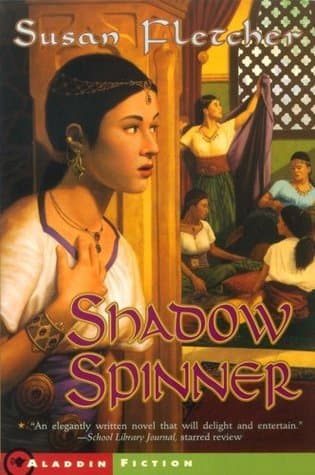
Synopsis
Covers the whole plot, including the ending.
- Difficulty
- Easy
- Pacing
- Moderate
- Mood
- Enchanting, Adventurous, Hopeful, Intriguing
- Read it if
- You enjoy historical fantasy with a strong female protagonist, are fascinated by the world of 'One Thousand and One Nights,' and appreciate stories about the power of storytelling.
- Skip it if
- You prefer fast-paced action over character-driven quests and intricate world-building, or are not interested in stories set in ancient Persia.
Shadow Spinner Plot Summary
Covers the whole plot, including the ending.
Marjan's Humble Life and the Sultan's Call
Marjan, a young girl with a crippled leg, lives a meager life in Isfahan, Iran, working as a servant for a kind carpet merchant, Master Hamid. Her greatest joy comes from listening to stories, especially those told by her friend, the baker's wife. One day, a royal guard arrives at Master Hamid's shop, demanding Marjan's presence in the Sultan's harem. Terrified and confused, Marjan learns that the Sultan's grandmother, the formidable Shahrazad, wishes to see her. Shahrazad, famous for telling a thousand and one stories to save her life, has fallen into a deep sadness, refusing to eat or speak. Marjan is brought to the forbidden women's quarters, a place of luxury and intrigue, where her simple life changes forever.
Shahrazad's Silence and the Missing Story
Upon entering the harem, Marjan is overwhelmed by its opulence and the watchful eyes of the other women, especially the jealous Pari and the kind Mandana. She is brought before Shahrazad, who remains silent and withdrawn, her once bright spirit dimmed. Shahrazad's attendant, the kind Dunyazad (Shahrazad's sister), explains that Shahrazad is troubled by an unfinished story, one she heard long ago but cannot recall the ending to. This missing ending is the key to her recovery. Shahrazad, recognizing Marjan's love for stories, tasks her with finding the conclusion to the tale, a task that seems impossible for a simple girl like Marjan.
The Quest for the Story's End
Marjan is given a cryptic clue by Shahrazad: the story involves a boy, a horse, and a mountain. She realizes she must leave the harem, a dangerous undertaking for any woman, especially a servant girl, and venture into the busy, often dangerous streets of Isfahan. With the help of Mandana, who provides her with a disguise and some guidance, Marjan slips out, determined to find a storyteller who might know the tale. Her journey takes her through crowded bazaars, past street performers, and into the heart of the city's oral tradition, where stories are important. She feels the weight of Shahrazad's hope and the danger of her mission.
Encounters in the City: Maaz and the Blind Storyteller
During her search, Marjan meets Maaz, a street orphan her own age, who initially tries to steal from her but quickly becomes her loyal companion and protector. Maaz, with his knowledge of the city's hidden paths and its people, proves very helpful. Together, they seek out various storytellers. They eventually find the blind storyteller, who recognizes the story Marjan describes but only remembers parts. He tells them of a dervish, a wandering mystic, who might know the full tale and gives them a small, detailed wooden bird, hinting at its importance. The blind storyteller's words are mysterious, urging Marjan to listen not just with her ears, but with her heart.
The Threat of Pari and the Sultan's Impatience
Back in the harem, Marjan faces increasing hostility from Pari, a jealous concubine who sees Marjan as a threat and constantly tries to get her into trouble with the guards. Pari spreads rumors and tries to undermine Marjan. Meanwhile, the Sultan, growing impatient with his grandmother's continued illness, issues an ultimatum: if Shahrazad does not recover soon, he will take drastic measures. This adds great pressure on Marjan, who feels the urgency of her quest growing. She must find the story's ending quickly, not only for Shahrazad's sake but for her own safety within the dangerous harem.
The Dervish and the Elephant House
Following the blind storyteller's lead, Marjan and Maaz search for the dervish. Their quest takes them to the Sultan's elephant house, a place both fascinating and dangerous. There, they finally locate the dervish, a wise and eccentric man. The dervish reveals that he knows the story's ending but will only share it if Marjan can prove herself worthy by solving a riddle or completing a task. He recognizes the wooden bird and explains its connection to the story. He stresses that the true ending is not merely words but understanding. Marjan, though tired, is more determined than ever.
The Dervish's Challenge and the True Ending
The dervish presents Marjan with riddles and observations, pushing her to think beyond the surface of the story. He speaks of the boy, the horse, and the mountain not just as characters and settings, but as symbols of courage, loyalty, and perseverance. With Maaz's practical insights and Marjan's own growing intuition, she begins to grasp the deeper meaning of the tale. The dervish reveals that the story is not simply about a physical journey but an internal one, about overcoming fear and finding one's own voice. He provides the final pieces of the narrative, explaining the boy's choice and the wisdom of the horse.
Return to the Harem and Pari's Treachery
Armed with the complete story, Marjan returns to the harem, feeling hopeful. However, Pari, who has been watching her every move, seizes the opportunity to sabotage her. As Marjan prepares to tell Shahrazad the ending, Pari, driven by envy, accuses Marjan of theft, claiming she stole the wooden bird. The guards are summoned, and despite Marjan's protests, she is thrown into the dungeon, her mission seemingly thwarted at the last moment. Her hopes of saving Shahrazad and herself are shattered, and she fears for Maaz's safety as well.
Dunyazad's Faith and the Sultan's Judgment
In the dungeon, Marjan despairs. However, Dunyazad, Shahrazad's loyal sister, believes in Marjan's innocence and her mission. She confronts Pari and gathers evidence to clear Marjan's name, including testimony from Mandana. Dunyazad then bravely approaches the Sultan, explaining the true situation and vouching for Marjan. The Sultan, a just but stern ruler, agrees to hear Marjan's side of the story. He orders her release from the dungeon, bringing her before him and Shahrazad for a final judgment, where Marjan must prove her worth and reveal the story's ending.
The Story's Revelation and Shahrazad's Healing
Before the Sultan, Shahrazad, and the entire harem, Marjan, still weak from her ordeal but resolute, begins to tell the complete story. She weaves the tale of the boy, the horse, and the mountain with newfound confidence, incorporating the ending she learned from the dervish. As she speaks, Shahrazad's eyes begin to clear, and a flicker of her old spirit returns. The story, now complete, resonates deeply with Shahrazad, awakening her from her melancholy. The Sultan is moved by Marjan's courage and the power of the narrative. Shahrazad, restored, thanks Marjan, granting her freedom and a place in her household as a storyteller.
Principal Figures
Marjan
Protagonist
A crippled orphan girl with a deep love for stories, tasked with a crucial quest.
Marjan is a young, intelligent, and resourceful girl living in 17th-century Isfahan. Born with a crippled leg, she endures hardship with remarkable resilience. Her passion for stories is her defining trait, making her the perfect choice for Shahrazad's unusual request. Despite her physical vulnerability and humble origins, she possesses great courage and an innate understanding of narrative. She is initially timid but grows in confidence and wisdom throughout her journey, learning to trust her instincts and the power of her voice.
Relationships: Shahrazad (mentor/mentee, employer/employee); Maaz (friend, protector, companion); Dunyazad (kind supporter, advocate); Master Hamid (former employer, kind guardian); Pari (antagonist, jealous rival)
Shahrazad
Supporting
The legendary storyteller, now in a deep melancholy, needing a story's ending.
Shahrazad is the Sultan's grandmother, famous for telling a thousand and one stories to save her life. When the story begins, she is in a profound state of melancholy, refusing to eat or speak, deeply disturbed by an unfinished tale from her past. Her silence is a central mystery and the catalyst for Marjan's quest. She is wise and discerning, choosing Marjan for her unique connection to stories. Her recovery signifies the power of narrative and healing.
Relationships: Marjan (mentor/mentee, employer/employee); Dunyazad (sister, loyal attendant); Sultan (grandson, ruler)
Maaz
Supporting
A street orphan who becomes Marjan's loyal friend and guide.
Maaz is a street-smart orphan boy of Marjan's age, living by his wits in the bustling streets of Isfahan. He is initially presented as a potential thief but quickly becomes Marjan's loyal companion and protector. His intimate knowledge of the city's alleys, hidden paths, and its diverse inhabitants proves invaluable to Marjan's quest. He is brave, resourceful, and possesses a strong sense of loyalty, providing practical support and friendship to Marjan.
Relationships: Marjan (friend, companion, protector)
Dunyazad
Supporting
Shahrazad's kind and loyal sister and attendant in the harem.
Dunyazad is Shahrazad's younger sister and devoted attendant. She is a kind, compassionate, and observant woman who genuinely cares for Shahrazad's well-being. She is the first to explain Shahrazad's condition to Marjan and offers her quiet support within the harem. When Marjan is falsely accused, Dunyazad bravely stands up for her, gathering evidence and appealing to the Sultan, demonstrating her loyalty and belief in Marjan.
Relationships: Shahrazad (sister, loyal attendant); Marjan (supporter, advocate)
Pari
Antagonist
A jealous concubine in the harem who schemes against Marjan.
Pari is a beautiful but malicious concubine in the Sultan's harem. She sees Marjan as an unwelcome intruder and a threat to her own status and influence. Driven by envy and a desire for power, she constantly tries to undermine Marjan's efforts, spreading rumors and ultimately framing her for theft. She represents the darker, more dangerous aspects of the harem's political landscape.
Relationships: Marjan (rival, antagonist)
The Dervish
Supporting
A wise, wandering mystic who holds the key to the story's ending.
The Dervish is an enigmatic and wise holy man whom Marjan and Maaz seek out. He possesses the complete knowledge of the story Shahrazad is missing. He doesn't simply give Marjan the ending but guides her to understand its deeper meaning through riddles and philosophical insights, emphasizing the importance of inner wisdom and courage over mere words. He is a spiritual guide, helping Marjan connect with the story on a profound level.
Relationships: Marjan (spiritual guide, mentor)
The Blind Storyteller
Supporting
An old, insightful storyteller who provides crucial clues to Marjan.
The Blind Storyteller is one of the first storytellers Marjan encounters in her quest. Though he doesn't know the full ending, he recognizes fragments of the story and directs Marjan to the Dervish. He gives Marjan the wooden bird and offers cryptic but important advice about listening with more than just her ears, hinting at the story's symbolic nature. He represents the living tradition of oral storytelling and its hidden depths.
Relationships: Marjan (informant, guide)
The Sultan
Supporting
Shahrazad's grandson and the stern, but ultimately just, ruler of Isfahan.
The Sultan is the powerful ruler of Isfahan and Shahrazad's grandson. He is initially impatient with Shahrazad's illness and issues an ultimatum, creating pressure on Marjan. However, he is depicted as a just ruler who, when presented with the truth by Dunyazad, is willing to listen and dispense fair judgment. His presence underscores the stakes of Marjan's mission and the formal power structures she navigates.
Relationships: Shahrazad (grandmother/grandson); Dunyazad (sister-in-law (implied), subject); Marjan (subject, judge)
Mandana
Supporting
A kind concubine in the harem who helps Marjan escape.
Mandana is a sympathetic concubine in the harem who offers quiet support to Marjan. She helps Marjan slip out of the harem disguised as a boy, providing practical assistance and demonstrating a kindness that contrasts with Pari's malice. Her actions show that not all women in the harem are hostile, and she plays a small but crucial role in enabling Marjan's quest.
Relationships: Marjan (ally, helper)
Themes & Insights
The Power of Storytelling
The main theme of 'Shadow Spinner' is the power of stories to heal, connect, and even save lives. Shahrazad's initial tales saved her from execution, and the missing ending of a story is what causes her deep sadness. Marjan's quest is driven by the need to complete a narrative, and its successful conclusion restores Shahrazad's spirit. The book shows that stories are not just entertainment but hold deep emotional and psychological weight, providing comfort, meaning, and a way to understanding.
“A story is not just a bunch of words. It's a living thing. It breathes. It grows. And sometimes, it needs a hand to help it grow.”
Identity and Self-Discovery
Marjan's journey is one of self-discovery. Initially, she is a timid, crippled orphan, defined by her physical limitation and humble status. Through her dangerous quest, she uncovers her inner strength, courage, and talent for storytelling. She learns to trust her intuition and finds her voice, changing from a passive listener into an active participant and creator of narratives. Her physical journey to find the story's ending runs parallel to her internal journey to define who she is beyond her circumstances.
“The story you seek is within you, child. You just have to listen.”
Courage in the Face of Adversity
Marjan faces many obstacles and dangers throughout the book: the rules of the harem, the dangers of the city streets, the threat of the Sultan's anger, and the malice of Pari. Despite her physical disability and her fear, she consistently chooses courage, driven by her loyalty to Shahrazad and her belief in the power of stories. Her journey shows that bravery is not the absence of fear, but the willingness to act despite it, often found in the most unexpected individuals.
“A crippled leg can't stop a determined heart.”
Friendship and Loyalty
Friendship and loyalty are important to Marjan's success. Maaz, a street boy, becomes her steadfast companion and protector, guiding her through the city and offering unwavering support. Dunyazad, Shahrazad's sister, shows fierce loyalty to both her sister and Marjan, speaking up for Marjan when she is imprisoned. These relationships highlight the importance of human connection and mutual support in overcoming challenges, providing strength and comfort in a world full of intrigue and danger.
“I will not let them harm you, Marjan. You are my friend.”
Plot Devices & Literary Techniques
The Unfinished Story
A narrative device that drives the entire plot and symbolizes Shahrazad's psychological state.
The unfinished story is the central plot device. Its incompleteness mirrors Shahrazad's own broken spirit and melancholy. Marjan's quest to find its ending provides the narrative's structure and suspense. The story itself, about a boy, a horse, and a mountain, is a metaphor for courage and perseverance, and its resolution brings healing. This device emphasizes the profound impact stories have on human well-being and the need for closure, both narratively and psychologically.
The Wooden Bird
A symbolic object that serves as a clue and represents the story's deeper meaning.
The small, intricate wooden bird given to Marjan by the Blind Storyteller acts as a tangible clue, leading her to the Dervish. Beyond its function as a plot device, it symbolizes the delicate and intricate nature of stories, and the hidden wisdom they contain. The dervish recognizes its significance, hinting that it represents a key element of the story, linking the physical quest with the spiritual understanding required to complete the tale.
The Harem vs. The City
A contrasting setting that highlights Marjan's journey and growth.
The stark contrast between the opulent, restrictive, and dangerous world of the Sultan's harem and the bustling, vibrant, yet equally perilous streets of Isfahan serves as a significant plot device. The harem represents confinement and intrigue, while the city offers freedom, knowledge, and diverse encounters. Marjan's movement between these two worlds underscores her journey of self-discovery, where she gains agency and understanding outside the gilded cage of royal life. It highlights the different forms of danger and opportunity present in her world.
Marjan's Crippled Leg
A physical trait that symbolizes vulnerability and eventual strength.
Marjan's crippled leg is a constant physical challenge and a symbol of her initial vulnerability and low status. It makes her journey through the city more difficult and marks her as different. However, it also highlights her resilience and determination. The fact that she, a physically challenged girl, is chosen for such a crucial mission underscores the idea that true strength comes from within, not from physical perfection. Her leg ultimately becomes a part of her unique identity, not a debilitating flaw.
Shadow Spinner Quotes
“Tell me a story, Mariam. A story that will make me forget my pain.”
“A story is like a spider's web, Mariam. Delicate, but strong enough to catch a king.”
“To truly know a story, you must live it.”
“Fear is a poor companion for a storyteller. It makes the tongue heavy and the mind dull.”
“Even the smallest thread can hold the most beautiful pattern.”
“The truth has many faces, Mariam. And sometimes, a story can show them all.”
“A secret is a heavy burden, especially when it belongs to someone else.”
“Hope is a fragile thing, but it is also the strongest.”
“To listen with your heart is more important than to listen with your ears.”
“A story does not end when the last word is spoken. It lives on in the listener's heart.”
“Sometimes, the most important stories are the ones we tell ourselves.”
“Even in the darkest night, there is always a thread of light.”
“The world is full of wonders, Mariam, if only you open your eyes to see them.”
“A tale well told can change a heart, or even a kingdom.”
Quiz
10 questions on the plot and the characters. Each answer comes with a short explanation.
Question 1
What is the name of the crippled serving girl who is the protagonist of 'Shadow Spinner'?
- Shahrzad
- Marjan
- Layla
- Zahra
Show answer
B. Marjan The protagonist's name is Marjan. She is a crippled serving girl tasked with a crucial mission.
Question 2
Why does Marjan venture outside the Sultan's palace?
- To escape the harem life permanently.
- To find a new audience for her storytelling.
- To seek out a storyteller who knows the ending to a specific tale.
- To deliver a secret message to her family.
Show answer
C. To seek out a storyteller who knows the ending to a specific tale. Marjan is sent outside the palace by Shahrazad's mother to find a storyteller who knows the missing ending to the 'Story of the Speaking Bird, the Singing Tree, and the Golden Water' to help Shahrazad continue her tales.
Question 3
What is the primary reason Shahrazad tells stories to the Sultan?
- To entertain the Sultan during his leisure time.
- To delay her own execution and save the lives of other women.
- To gain power and influence within the Sultan's court.
- To teach the Sultan moral lessons through fables.
Show answer
B. To delay her own execution and save the lives of other women. Shahrazad tells stories each night, leaving them unfinished, to pique the Sultan's curiosity and delay her execution, a fate that befell many women before her.
Question 4
Who is the main antagonist Marjan faces in her quest?
- The Sultan himself.
- The Grand Vizier.
- The Chief Eunuch, who is suspicious of her.
- A rival storyteller on the streets.
Show answer
C. The Chief Eunuch, who is suspicious of her. The Chief Eunuch is a significant antagonist, constantly suspicious of Marjan and her movements, and actively tries to thwart her mission.
Question 5
What physical characteristic sets Marjan apart and is often a source of her insecurity?
- She has a birthmark on her face.
- She is unusually tall.
- She has a crippled leg, causing her to limp.
- She is mute and cannot speak.
Show answer
C. She has a crippled leg, causing her to limp. Marjan has a crippled leg, which causes her to limp and makes her feel self-conscious, especially in a society that values physical perfection.
Question 6
What significant item does Marjan carry that helps her in her journey?
- A magical amulet given by Shahrazad.
- A map of the city's secret passages.
- A small, intricately carved wooden bird.
- A pouch of gold coins for bribes.
Show answer
C. A small, intricately carved wooden bird. Marjan carries a small, intricately carved wooden bird, which serves as a token of identification for the storyteller she seeks and connects her to the story itself.
Question 7
What is the central theme that Marjan's journey explores regarding the power of stories?
- Stories are merely a form of entertainment for the wealthy.
- Stories can be used to manipulate and deceive others.
- Stories have the power to save lives and shape destiny.
- Stories are best kept within the confines of the royal court.
Show answer
C. Stories have the power to save lives and shape destiny. The entire premise of the book, with Shahrazad telling stories to save her life and Marjan's quest to find an ending, emphasizes the life-saving and transformative power of storytelling.
Question 8
Who is the mysterious storyteller Marjan is ultimately sent to find?
- An old blind woman in the market.
- A reclusive hermit living outside the city walls.
- The Sultan's long-lost brother.
- A woman known as the 'Shadow Spinner' who lives in seclusion.
Show answer
D. A woman known as the 'Shadow Spinner' who lives in seclusion. Marjan's quest is to find the 'Shadow Spinner,' a legendary storyteller believed to know the missing ending, who lives hidden from the world.
Question 9
How does Marjan's own ability as a storyteller develop throughout the novel?
- She quickly becomes a master storyteller, surpassing Shahrazad.
- She initially doubts her abilities but gains confidence and finds her own voice.
- She remains a listener, never telling stories herself.
- Her storytelling ability is a weakness she must overcome.
Show answer
B. She initially doubts her abilities but gains confidence and finds her own voice. Marjan starts by simply remembering stories, but through her journey and interactions, she begins to understand the nuances of storytelling and eventually finds the courage to tell her own tales.
Question 10
What is the ultimate fate of the 'Story of the Speaking Bird, the Singing Tree, and the Golden Water'?
- It remains unfinished, and Shahrazad must create her own ending.
- Marjan successfully retrieves the true ending, allowing Shahrazad to complete it.
- The story is deemed too dangerous and is never told again.
- The Sultan grows bored and demands a different story entirely.
Show answer
B. Marjan successfully retrieves the true ending, allowing Shahrazad to complete it. Marjan's entire quest is to find the missing ending to this specific story, and she ultimately succeeds, providing Shahrazad with the information needed to weave the complete tale.
Shadow Spinner FAQ
What is Shadow Spinner about?
Shadow Spinner follows Marjan, a crippled serving girl in ancient Persia, who is tasked by Shahrazad, the Sultan's wife, with finding the missing ending to an incomplete story. This quest leads Marjan on a perilous journey through the intrigues of the harem, the dangers of the city streets, and ultimately brings her face-to-face with the formidable Sultan.
Why should I read Shadow Spinner?
You should read Shadow Spinner for its captivating blend of historical fiction and fantasy, set against the rich backdrop of ancient Persia. It offers a unique perspective on the world of A Thousand and One Nights, exploring themes of storytelling, courage, and the power of words through the eyes of a resourceful and empathetic protagonist.
What is the background/setting of Shadow Spinner?
The story is set in ancient Persia, within the Sultan's palace and the bustling city surrounding it, drawing heavily from the lore of A Thousand and One Nights. It specifically focuses on the precarious position of Shahrazad, who must tell stories to the Sultan to save her life, and the intricate social hierarchy of the harem.
What are the most memorable quotes?
One memorable quote reflects Marjan's journey: "A story is like a river; it flows, it changes, but it always finds its way to the sea." Another highlights the power of narrative: "Words are like seeds; plant them well, and they will grow into mighty trees." These quotes underscore the novel's central themes of storytelling and destiny.
What writing style does the author use?
Susan Fletcher employs a lyrical and evocative writing style that immerses the reader in the vibrant world of ancient Persia. Her prose is rich with sensory details and imagery, often mirroring the storytelling tradition of A Thousand and One Nights itself, making the narrative feel both authentic and magical.
What minor details add significant meaning?
Marjan's crippled foot, initially a source of shame and limitation, becomes a symbol of her resilience and unique perspective, allowing her to observe details others miss. The repeated motif of the 'shadow spinner' itself – a person who creates stories from shadows – subtly emphasizes the power of imagination and the hidden lives within the palace.
What are some subtle foreshadowing moments?
Early mentions of the Sultan's unpredictable temper and his history of executing wives subtly foreshadow the extreme danger Shahrazad is in and the high stakes of Marjan's quest. The mysterious nature of the 'storyteller's guild' and their secretive methods also hint at their eventual crucial role in Marjan's success.
What unexpected character connections exist?
Marjan discovers an unexpected connection between the seemingly benign Auntie Chava, a member of Shahrazad's household, and the secretive network of storytellers. This connection proves vital, as Auntie Chava provides crucial guidance and resources that Marjan would not have otherwise found, linking the domestic world of the harem to the broader, more dangerous world of story collectors.
What are unspoken character motivations?
Shahrazad's unspoken motivation to send Marjan on her quest isn't just to find a story ending, but to find a true ending that will captivate the Sultan long enough for her to secure her own future and potentially inspire him to change. Her desire for genuine connection and understanding, rather than mere survival, drives her deeper actions.
What psychological complexities do characters exhibit?
Marjan grapples with deep-seated feelings of inadequacy due to her disability, yet she also possesses an innate courage and curiosity that propels her forward. Shahrazad, despite her outward composure, lives with immense fear and the psychological burden of constantly weaving narratives to preserve her life, showcasing incredible mental fortitude under duress.
What are the major emotional turning points?
A major emotional turning point occurs when Marjan, after facing betrayal and danger in the marketplace, decides to fully embrace her role as a 'shadow spinner' and trust her own instincts, rather than solely relying on others. Another is her moment of direct confrontation with the Sultan, where her fear transforms into resolve as she understands the true power of her mission.
How do relationship dynamics evolve?
The relationship between Marjan and Shahrazad evolves from a mistress-servant dynamic to one of mutual respect and even friendship, as Shahrazad comes to rely on Marjan's bravery and resourcefulness. Marjan's relationship with the young eunuch, Maaz, also shifts from cautious acquaintances to a bond of trust and shared purpose as they navigate the city's dangers together.
Which parts remain ambiguous or open-ended?
The long-term fate of the Sultan, beyond his immediate reaction to the completed story, remains somewhat open-ended; while he is moved, his complete transformation is implied rather than explicitly detailed. The future of the storyteller's guild and their full purpose beyond this immediate crisis also leaves room for reader interpretation.
What are controversial scenes or decisions?
One controversial decision might be Shahrazad's initial choice to send a young, crippled girl like Marjan into such dangerous circumstances, highlighting the desperation of her situation. Marjan's decision to trust certain strangers in the marketplace, despite warnings, could also be seen as a risky choice that sparks debate about her judgment.
Shadow Spinner ending explained: how it ends & what it means
The book ends with Marjan successfully delivering the missing ending of the story to Shahrazad, who then tells it to the Sultan. The completed story, filled with wisdom and hope, deeply moves the Sultan, causing him to break his cycle of violence and sparing Shahrazad's life. This ending signifies the profound power of stories to heal, transform, and connect individuals, emphasizing that even the most vulnerable can be instrumental in enacting change.
About the author

Susan Fletcher is an author known for her works of fiction, including "Shadow Spinner." Her writing often explores themes of storytelling and cultural heritage, drawing inspiration from historical contexts. Fletcher's narratives are characterized by rich character development and intricate plots.
Similar books
- Book of a Thousand Days
Shannon Hale
4.0 (49k) average on GoodreadsFantasyWhile both draw from One Thousand and One Nights, Hale's book features a more overtly fantastical and isolated setting, focusing on a traditional quest. Fletcher's Shadow Spinner offers a more historically grounded and intimate exploration of storytelling's power within a constrained, realistic environment.
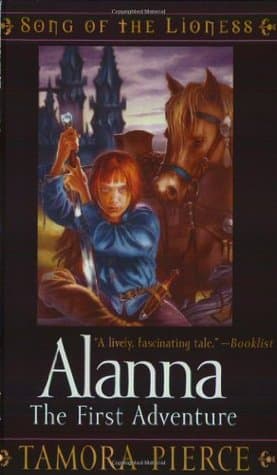
- Alanna: The First Adventure
Tamora Pierce
4.2 (116k) average on GoodreadsFantasyBoth books feature strong female protagonists defying societal norms. However, Pierce's world is entirely fictional and explicitly magical, focusing on a girl becoming a knight. Fletcher's Shadow Spinner grounds its themes in a specific historical context, with magic being more subtle and tied to human resilience and narrative, rather than overt spells or fantastic creatures.
- Harry Potter and the Sorcerer's Stone
J.K. Rowling
4.5 (7M) average on GoodreadsFantasyRescued from a miserable life under the stairs, an orphaned boy discovers he's a wizard destined for a magical school, where he uncovers a dangerous secret tied to the dark wizard who murdered his parents.
- The Hunger Games
Suzanne Collins
4.3 (6.4M) average on GoodreadsFantasyIn a future where children fight to the death on live television, Katniss Everdeen volunteers for the arena, turning a death sentence into a fight for survival and a spark of rebellion.
- 1984
George Orwell
4.2 (3.1M) average on GoodreadsPoliticsIn a future where surveillance and thought control are absolute, a man's search for truth clashes with the Party, showing that hope can be a form of rebellion.
- Divergent
Veronica Roth
4.2 (2.9M) average on GoodreadsFantasyIn a society divided by virtues, a sixteen-year-old's difference from the norm starts a rebellion that threatens her world.





Enjoyed the summary?
A summary gives you the shape of the book. The book itself has the detail, the examples and the voice.
Find Shadow Spinner on AmazonAs an Amazon Associate, BookBrief earns from qualifying purchases. How we're funded