

Synopsis
Covers the whole plot, including the ending.
- Difficulty
- Medium
- Pacing
- Moderate
- Mood
- Suspenseful, Mysterious, Emotional, Action-packed
- Read it if
- You enjoy a blend of classic detective mystery with unique magic systems, or are a fan of Brandon Sanderson's intricate world-building and character development.
- Skip it if
- You haven't read 'The Alloy of Law' first, as this is a direct sequel and builds heavily on previous events and character relationships.
Shadows of Self Plot Summary
Covers the whole plot, including the ending.
The First Attack and New Beginnings
The story begins with Lord Waxillium Ladrian responding to a bombing at the governor's mansion in Elendel. Marasi Colms, now a constable, is already there, promoted for her intelligence. The explosion is unusual, leaving ash and a strange residue. Wax's partner, Wayne, soon arrives, bringing humor and unique investigative methods, including impersonation. The initial investigation points to 'Bleeder,' a mysterious figure with powers similar to a Compounder, able to manipulate weight and another unknown power. This attack starts a series of incidents targeting important figures in Elendel.
The Governor's Plea and a Troubling Pattern
Governor Aradel asks Wax to help find and stop Bleeder. He stresses the political and social instability these attacks could cause, especially with elections and labor unrest approaching. Wax, Marasi, and Wayne start to gather evidence, noticing a pattern: Bleeder's victims are not random. They are all figures representing progress or stability in Elendel, particularly those tied to industry and politics. This suggests a calculated, ideological motive behind the terrorism, aiming to destabilize the city.
A Second Target: The Steel Ministry
Bleeder's next target is a prominent figure in the Steel Ministry, adding a religious element to the conflict. This attack is similar, leaving the same residue. It sparks outrage among the faithful and increases religious tensions in Elendel, especially between followers of the Survivor and the Path. Wax realizes Bleeder is targeting not just politicians but also religious authorities, trying to cause discord throughout society. He suspects a deeper, personal connection to the attacks, as Bleeder's methods seem to mimic some of his own abilities.
Wax's Investigation and the Return of Lessie
As Wax investigates, he is haunted by memories of his past, especially his time in the Roughs and his deceased wife, Lessie. He realizes Bleeder's actions and taunts are personal, hinting at a connection to his history. By analyzing crime scenes and Bleeder's messages, Wax makes a horrifying discovery: Bleeder is Lessie, or a construct using her form. This revelation throws Wax into emotional turmoil, forcing him to confront his past while trying to stop the person he loved from destroying Elendel. The emotional toll on Wax is immense, blurring the lines between duty and personal pain.
Marasi's Research and the Kandra Connection
While Wax deals with Lessie's return, Marasi researches Bleeder's powers and origin. Her detailed study of Allomancy and Feruchemy, along with her knowledge of Scadrial's history, leads to a breakthrough: Bleeder's abilities, including shapeshifting and consuming emotions, match those of a Kandra. This explains the mysterious ash and residue. Marasi realizes Bleeder is a Kandra using Lessie's bones and memories, but the reason why remains unknown. This discovery provides a vital clue, shifting the focus from a simple terrorist to a more complex, ancient threat.
Wayne's Pursuit and the Missing Bones
Wayne, using his disguise and deduction skills, follows a lead related to the Kandra's existence, focusing on the source of the bones Bleeder uses. His investigation leads him to a hidden location where he confronts Bleeder. During their encounter, Bleeder shows a deep understanding of Wax's past and motives, confirming her identity as Lessie-Kandra. Wayne, despite his usual irreverence, is shaken by the encounter, seeing the pain and manipulation involved. He gathers important information about Bleeder's movements and intentions, which he relays to Wax and Marasi, helping them narrow down her next targets.
A Confrontation in the Roughs
Wax, driven by duty and anguish, tracks Bleeder to the Roughs, where he and Lessie had built a life. There, Bleeder reveals her full motivations. She is Paalm, a Kandra sent by Harmony to observe Wax, who became corrupted by Lessie's death and her 'rebirth' as a Kandra. She believes Harmony is a flawed god, too passive, and that by creating chaos, she can force him to act, take a side, and prove his worth. She sees herself as a tool for Harmony's awakening, even if it means destroying his world.
Harmony's Intervention and the Bleeder's Plea
During the confrontation, Harmony, the Shard of Preservation and Ruin, directly communicates with Wax. He explains that Paalm, originally a Kandra named Bleeder, was sent to observe Wax as a potential solution to a problem. However, the trauma of Lessie's death and Paalm's bonding with her bones and memories corrupted her, leading her to believe Harmony was weak and needed to be spurred into action. Harmony reveals his own struggles with his dual nature, the constant tension between Preservation and Ruin, and his inability to intervene directly without causing more harm. He expresses regret for Paalm's suffering and the chaos she causes.
The Final Showdown in the City
The conflict ends in a chase and battle across Elendel's rooftops and streets. Paalm, driven by her conviction and enhanced Kandra abilities, is a strong opponent. She taunts Wax, using Lessie's memories and their shared past to manipulate him, making it hard for him to fight effectively. Wax, torn between his love for Lessie and his duty to protect Elendel, struggles to stop her without destroying the memory of the woman he loved. Marasi and Wayne provide support, but the final decision rests with Wax, who must face his past.
The Sacrifice and the Aftermath
In a heartbreaking moment, Wax makes the ultimate sacrifice. Realizing Paalm cannot be reasoned with and threatens Elendel, he uses his Allomantic abilities to impale her with steel, killing the Kandra. The act is devastating for Wax, who feels as if he has killed Lessie again. Afterwards, Elendel begins to heal, but the scars of the attacks remain. Wax grapples with the emotional fallout, questioning his role and Harmony's will. The city, though safe, considers the cost of progress and the fragility of peace.
Harmony's Revelation and a New Purpose
After Paalm's defeat, Harmony speaks to Wax again, revealing a deeper part of his plan. He explains that Paalm's actions, though destructive, were a necessary catalyst. He also hints at a greater threat to Scadrial, one that needs a different kind of protector. Harmony gives Wax the title of 'Sword of Harmony,' giving him a new, more active role in protecting the world, beyond simple law enforcement. This gives Wax a new purpose, despite his grief, and sets the stage for future challenges, hinting at a larger cosmic struggle involving the balance of Preservation and Ruin.
Moving Forward and Lingering Questions
In the final scenes, Wax, Marasi, and Wayne reflect on the traumatic events. Marasi, now more confident, continues her work as a constable, her intellect sharpened. Wayne, a loyal friend, offers support and his unique perspective, helping Wax cope with his grief. While the immediate threat is gone, questions remain about Harmony's true intentions, the Kandra, and Scadrial's future. The trio understands their fight is far from over, and Elendel's challenges are growing more complex, requiring them to adapt.
Principal Figures
Waxillium Ladrian
Protagonist
A lawman torn between his noble duties and his past as a Roughs marshal.
Wax is a Twinborn (Coinshot and Steelpusher) and a Lord of House Ladrian. He is a skilled marksman and detective, known for his stern demeanor but also a deep sense of justice. He carries the trauma of his past in the Roughs, particularly the death of his former love, Lessie. He often struggles with the expectations of high society versus his desire for direct action and maintaining order. His internal conflict drives much of his character arc, especially when his past directly collides with his present duties.
Relationships: Wayne (Best friend and partner, a source of comic relief and unexpected wisdom.); Marasi Colms (Intelligent and capable constable, a romantic interest, and a vital investigative partner.); Lessie (Paalm) (Deceased former love, whose identity is usurped by the Kandra antagonist, creating immense personal conflict.); Harmony (The Shard God who communicates with him, offering guidance and eventually a new mission.)
Wayne
Supporting
Wax's eccentric, shapeshifting, and loyal best friend and partner.
Wayne is a Twinborn (Slider and Bloodmaker), capable of manipulating time bubbles and healing rapidly. He's known for his bizarre disguises, unique sense of humor, and unconventional methods of investigation. Despite his often-clownish exterior, Wayne is incredibly perceptive, deeply loyal to Wax, and possesses a surprisingly profound understanding of human nature. He uses humor as a coping mechanism but is fiercely protective of those he cares about, often acting as Wax's moral compass and emotional support.
Relationships: Waxillium Ladrian (Best friend and partner, a deep and enduring bond.); Marasi Colms (Colleague, often teasing her but valuing her intelligence.)
Marasi Colms
Supporting
A brilliant and ambitious constable, eager to prove her worth and understand the world.
Marasi is a Twinborn (Pulser and Steelrunner), capable of slowing time and storing physical speed. She is highly intelligent, analytical, and dedicated to her work as a constable. Initially somewhat naive, she is eager to learn and prove herself, often providing the intellectual backbone to Wax and Wayne's more direct methods. She has a strong sense of justice and a growing understanding of the complex social and political landscape of Elendel. She develops a romantic interest in Wax, which adds another layer to her character.
Relationships: Waxillium Ladrian (Colleague and romantic interest, learning much from him.); Wayne (Colleague, often exasperated by his antics but respects his skills.); Steris Harms (Half-sister, a strained but developing relationship.)
Paalm (Bleeder/Lessie)
Antagonist
A Kandra driven to chaos by trauma and a desire to force Harmony's intervention.
Paalm is a Kandra, originally sent by Harmony to observe Wax. After Lessie's death, Paalm assumed her identity by using Lessie's bones and memories, leading to a profound corruption of her purpose. She believes Harmony is a weak and indecisive god, and that by creating chaos and suffering, she can force him to become a more active, decisive deity. She is a powerful Kandra, utilizing both shapeshifting and the ability to consume emotions. Her actions are deeply personal to Wax, as she uses Lessie's identity to torment him, blurring the lines between the woman he loved and the monster she has become.
Relationships: Waxillium Ladrian (Former love (as Lessie), now the primary antagonist, deeply intertwined by past and present conflict.); Harmony (Her creator and the target of her rebellion, believing him to be flawed.)
Harmony (Sazed)
Mentioned/Supporting
The Shard God of Scadrial, burdened by the opposing forces of Preservation and Ruin.
Harmony is the ascended being formed from the Shards of Preservation and Ruin, formerly Sazed. He is the benevolent but often distant deity of Scadrial, struggling to balance the two opposing forces within him. He communicates with Wax through visions and direct messages, guiding him and revealing the deeper cosmic stakes. Harmony's actions are often indirect, as he is bound by his nature and the need to maintain a delicate balance, making him seem passive to some, like Paalm. He represents the complex moral and philosophical core of the Mistborn universe, questioning the nature of divinity and intervention.
Relationships: Waxillium Ladrian (His chosen 'Sword,' receiving guidance and a new mission.); Paalm (His corrupted Kandra, a source of regret and a catalyst for his deeper plans.)
Steris Harms
Supporting
Wax's pragmatic and meticulously organized fiancée, often misunderstood.
Steris is Wax's fiancée, arranged for political and social convenience. She is highly organized, detail-oriented, and somewhat socially awkward, often appearing cold or distant. However, beneath her reserved exterior lies a pragmatic and deeply caring individual who expresses her affection through meticulous planning and preparation. She is an invaluable asset in managing Wax's social life and finances, and her unique perspective often provides unexpected insights. She slowly begins to open up and show her true self to Wax, revealing a hidden depth of character.
Relationships: Waxillium Ladrian (Fiancée, their relationship slowly evolves from convenience to genuine affection.); Marasi Colms (Half-sister, a developing, sometimes strained, relationship.)
Governor Aradel
Supporting
The earnest and politically astute governor of Elendel.
Governor Aradel is a dedicated and responsible leader, deeply concerned with the welfare of Elendel and its citizens. He represents the political establishment and the efforts to maintain order and progress in a rapidly evolving society. He relies on Wax's unique skills to combat the rising tide of terrorism and unrest, demonstrating his trust in Wax's abilities despite their differing approaches. He is a symbol of the stable, democratic forces that Bleeder seeks to undermine.
Relationships: Waxillium Ladrian (Relies on him for law enforcement and crisis management.)
Themes & Insights
The Burden of Identity and Legacy
This theme explores how past identities and legacies, personal and societal, shape present actions. Wax battles his past as a Roughs marshal and the expectations of his noble house. The most striking example is Paalm adopting Lessie's identity, forcing Wax to confront his lost love in a horrifying new form. This shows how identity can be manipulated and how deeply personal history can become a weapon. The novel also touches on Scadrial's legacy, with the Kandra representing an ancient past interacting with a modernizing world, and Harmony's struggle with the legacies of Preservation and Ruin.
“You can’t just stop being who you are, Wax. You can’t leave it all behind. It’s a part of you.”
The Nature of Justice and Morality
The novel explores the complexities of justice in an evolving world. Wax follows a strict moral code, but he faces situations that defy simple solutions, especially when the antagonist is someone he once loved. Paalm's actions, though destructive, are driven by her own twisted sense of justice, aiming to force Harmony into a more active role. This raises questions about whether the ends justify the means and what is 'good' or 'evil' when even a god struggles with moral obligations. Marasi's growth as a constable also shows this theme, as she learns justice is rarely clear-cut.
“Sometimes, the only way to save a world is to give it a villain.”
Faith, Doubt, and Divine Intervention
Religion plays an important role, with Scadrial's four faiths competing for followers. Bleeder's attacks often target religious institutions, aiming to cause discord and challenge established beliefs. Harmony, the world's god, is a distant but active presence, communicating with Wax and struggling with his limitations. His inability to intervene directly without causing greater harm leads to doubt among his followers and fuels Paalm's rebellion. This theme explores the nature of faith when a god is imperfect and suffering, and how individuals deal with divine will versus personal choice. It questions what it means to believe in a deity who allows suffering.
“I am Harmony. I am the balance. And the balance is a terrible thing to bear.”
Societal Progress vs. Instability
Elendel is a city at the start of a new era, mixing magic and technology, but this rapid progress brings instability. The rise of democracy, industrialization, and competing religions creates conflict. Bleeder's terrorism targets the pillars of this progress—political figures, industrial leaders, and religious institutions—aiming to unravel the social fabric. The novel highlights the tension between the desire for advancement and the risks of societal upheaval, suggesting that progress, while good, must be managed carefully to prevent it from tearing society apart. Labor unrest and political maneuvers are signs of this tension.
“The city is a tinderbox, Wax. One spark, and it all goes up.”
Plot Devices & Literary Techniques
The Kandra's True Identity
The revelation that Bleeder is a Kandra using Lessie's bones and memories.
This device serves as the central mystery and emotional core of the novel. The Kandra's ability to assume the form and memories of a deceased person creates a profound personal conflict for Wax, as he is forced to fight the woman he loved. It heightens the stakes by making the antagonist intimately connected to the protagonist's past trauma, blurring the lines between hero and villain and forcing Wax to confront his deepest regrets. It also links the modern world of Scadrial to its ancient past, bringing a creature of legend into a contemporary setting.
Harmony's Direct Communication
The Shard God Harmony speaking directly to Wax, revealing cosmic stakes.
Harmony's direct intervention through visions and mental communication serves to elevate the conflict beyond simple terrorism. It provides Wax with crucial information about Paalm's true nature and motivations, but also burdens him with the immense responsibility of understanding divine will. This device allows Sanderson to explore the philosophical underpinnings of his world, revealing Harmony's struggles and the broader cosmic balance between Preservation and Ruin, making Wax a pawn in a much larger game and giving his actions greater significance.
The 'Bleeder' Attacks
A series of targeted bombings and assassinations using unique Allomantic/Kandra powers.
The Bleeder attacks are the primary inciting incidents and driving force of the plot. Their unusual nature (ash, crystalline residue, specific targeting) creates a compelling mystery for Wax and his team to solve. The escalating nature of these attacks, targeting different pillars of Elendel society (government, religion, industry), highlights the growing social and political instability of the city and serves to raise the stakes. Each attack provides new clues, slowly revealing the antagonist's identity and motivations, pushing the plot forward and creating a sense of urgency.
Wax's Personal Trauma
The unresolved grief and guilt over Lessie's death.
Wax's past trauma regarding Lessie's death is not merely backstory but a potent plot device. It is constantly referenced and exploited by Paalm, making Wax emotionally vulnerable and complicating his ability to fight her. This device creates immense internal conflict for the protagonist, forcing him to choose between his personal feelings and his duty. It allows for a deeper exploration of Wax's character, his flaws, and his capacity for sacrifice, making the final confrontation incredibly impactful and tragic.
Shadows of Self Quotes
“The past is a road, not a home.”
“A man who cannot protect his own is no man at all.”
“The greatest trick of the devil was convincing the world he didn't exist. The greatest trick of a god was convincing the world he did.”
“Sometimes the only way to find out what's true is to risk everything.”
“It's hard to be a hero when you're just trying to survive.”
“There's always another secret.”
“The world isn't about what you deserve. It's about what you make of it.”
“Hatred is a hungry thing. It eats at you, then it eats at those around you.”
“You can't save everyone, but you can save someone.”
“Every lie we tell is a debt we incur.”
“The greatest strength is not in never falling, but in rising every time we fall.”
“Sometimes, the best way to hide something is to put it in plain sight.”
“A good shot isn't just about hitting the target. It's about knowing when to pull the trigger.”
“It's not about being perfect. It's about being better than you were yesterday.”
Quiz
10 questions on the plot and the characters. Each answer comes with a short explanation.
Question 1
Which major city in the Elendel Basin is the primary setting for 'Shadows of Self'?
- Fadrex City
- Urteau
- Elendel
- Luthadel
Show answer
C. Elendel The story of 'Shadows of Self' primarily unfolds in the bustling metropolis of Elendel, the heart of the Elendel Basin.
Question 2
What is the primary role of Marasi Colms in 'Shadows of Self' when she assists Wax and Wayne?
- A seasoned lawkeeper from the Roughs
- An apprentice to a powerful Kandra
- A university student studying law and criminology
- A wealthy noble funding their investigations
Show answer
C. A university student studying law and criminology Marasi Colms is depicted as a university student with a keen interest in law and criminology, providing a fresh, analytical perspective to the investigations.
Question 3
What type of magical ability does Waxillium Ladrian primarily use as a Coinshot?
- Pushing on metals
- Pulling on metals
- Burning tin for enhanced senses
- Storing weight in a metalmind
Show answer
A. Pushing on metals As a Coinshot, Wax's primary Allomantic ability is Pushing on metals, which he frequently uses for movement and combat.
Question 4
What is the main objective of the terrorist acts occurring in Elendel throughout 'Shadows of Self'?
- To dismantle the technological advancements of the city
- To stir up labor strife and religious conflict within Scadrial's society
- To assassinate specific members of the Elendel nobility
- To steal valuable Allomantic metals from the government
Show answer
B. To stir up labor strife and religious conflict within Scadrial's society The synopsis explicitly states that the crimes are 'intended to stir up labor strife and religious conflict,' which is the core aim of the terrorism.
Question 5
What personal internal conflict does Waxillium Ladrian grapple with throughout the book regarding his past in the Roughs?
- Whether to return to the Roughs permanently or embrace his role as a lord
- His failure to capture a notorious bandit leader from his past
- Regret over leaving his family behind in the Roughs to become a lawman
- His struggle to adapt to the more primitive technology of the Roughs after living in Elendel
Show answer
A. Whether to return to the Roughs permanently or embrace his role as a lord Wax continually struggles with his identity and responsibilities, torn between his past as a lawman in the Roughs and his duty as Lord Ladrian in Elendel.
Question 6
Which of the following is NOT mentioned as a competing cultural force in Elendel society in the context of 'Shadows of Self'?
- Technology and magic
- Growing economy
- The rise of ancient Kandra houses
- Four competing faiths
Show answer
C. The rise of ancient Kandra houses The synopsis mentions technology and magic, the economy, democracy, and four competing faiths as cultural forces. The rise of ancient Kandra houses is not listed as a general societal force in the context provided.
Question 7
What specific type of magical ability does Wayne possess that allows him to alter his physical appearance and clothing quickly?
- Coinshot (Pushing metals)
- Skimmer (Storing weight)
- Pewterarm (Burning pewter)
- Slider (Storing speed)
Show answer
D. Slider (Storing speed) Wayne is a Slider, a Feruchemist who can store and tap speed in a gold metalmind. This allows him to rapidly change clothes and disguise himself.
Question 8
The antagonist behind the terrorism in 'Shadows of Self' has a complex relationship with Wax, rooted in their shared past. Who is this primary antagonist?
- Telsin Ladrian
- Suit
- Miles Hundredlives
- Paalm
Show answer
A. Telsin Ladrian The primary antagonist responsible for the terrorism is Telsin Ladrian, Wax's sister, whose motives and actions drive much of the plot and provide a deep personal conflict for Wax.
Question 9
What significant revelation about Marasi Colms's parentage is made in 'Shadows of Self' that impacts her understanding of her place in Elendel society?
- She is secretly a descendant of the Lord Ruler.
- She is the illegitimate daughter of Lord Harms, a prominent Elendel figure.
- She is a full Mistborn, a power she had suppressed.
- She is a Kandra, secretly observing human society.
Show answer
B. She is the illegitimate daughter of Lord Harms, a prominent Elendel figure. It is revealed that Marasi is the illegitimate daughter of Lord Harms, a revelation that ties her more deeply into the Elendel nobility and its politics.
Question 10
The concept of 'Harmony' is central to the spiritual understanding of Scadrial. How is Harmony depicted as interacting with the world and its people in 'Shadows of Self'?
- Harmony directly intervenes to prevent major disasters.
- Harmony communicates through dreams and subtle nudges to select individuals, including Wax.
- Harmony has withdrawn completely, leaving Scadrial to its own devices.
- Harmony manifests physically to guide the four competing faiths.
Show answer
B. Harmony communicates through dreams and subtle nudges to select individuals, including Wax. Harmony, a combination of Preservation and Ruin, is shown to subtly influence events and individuals, particularly Wax, through visions and insights, rather than overt intervention.
Shadows of Self FAQ
What is the central conflict in 'Shadows of Self'?
The central conflict revolves around a series of terrorist attacks in Elendel, seemingly orchestrated to ignite labor strife and religious conflict. Waxillium Ladrian, Wayne, and Marasi Colms must investigate and stop the perpetrator to prevent civil unrest from destabilizing Scadrial's evolving society.
Who are the main protagonists investigating the crimes?
The primary investigators are Lord Waxillium Ladrian, a Lawman turned noble, who uses his Twinborn abilities of Iron (Coinshot) and Steel (Steelpush) to great effect. He is joined by his eccentric and highly skilled partner, Wayne, a Twinborn with Bendalloy (Skimmer) and Steel (Slider) abilities, and the intelligent constable Marasi Colms.
What role does technology play in Scadrial during this era?
Scadrial is experiencing a rapid technological boom, with advancements like electricity, trains, and firearms becoming common. This blend of emerging technology with established Allomancy and Feruchemy creates unique challenges and opportunities, influencing everything from law enforcement to economic structures.
How do the various religions impact the plot?
Religion is a growing cultural force, with four major faiths competing for influence. The terrorist attacks explicitly target religious institutions and figures, attempting to exploit existing tensions and incite inter-faith violence, making religious harmony a critical component of the investigation.
What is the significance of the title 'Shadows of Self'?
The title refers to the emergence of Kelsier's 'shadow' or cognitive shadow, who is revealed to be the true mastermind behind the attacks. It also touches on Wax's internal struggle with his past as a lawman and his current noble responsibilities, and the doppelgänger attacks that mimic his specific abilities.
Who is the 'Paalm' mentioned in the book, and what is her connection to Wax?
Paalm is a Kandra, formerly known as Bleeder, who impersonates people, including Lessie, Wax's deceased wife. She is the direct antagonist executing the attacks, driven by a twisted agenda to challenge Harmony and force him to act, believing he is too passive.
What is the true identity of the 'doppelgänger' attacking Elendel?
The doppelgänger is revealed to be Paalm, a Kandra, who has taken on Wax's appearance and mimicked his Allomantic and Feruchemical abilities. Her ability to perfectly imitate Wax, including his unique Twinborn powers, is central to the mystery and the framing of Wax.
How does Harmony (Sazed) influence events in 'Shadows of Self'?
Harmony, the Shard holder of Scadrial, is deeply conflicted and hesitant to directly intervene, despite the chaos. His inaction is a major point of contention for Paalm, who believes he has become too passive. Harmony's internal struggle and limited guidance shape the choices of the protagonists.
Analyze Wax's psychological struggle with his past and present roles.
Wax grapples with the conflict between his identity as a rough-and-tumble Lawman from the Roughs and his inherited role as Lord Ladrian. He feels guilt over Lessie's death and a sense of duty to protect Elendel, constantly questioning if he is making the right choices and if he truly belongs in high society.
How does Wayne's unique personality and past trauma affect his actions?
Wayne's eccentricities, including his love for hats and disguises, often mask a deeper sensitivity and a traumatic past, specifically his accidental killing of a man as a youth. This trauma drives his desire to 'balance the scales' by helping others and his unwavering loyalty to Wax.
Discuss Marasi's growth and internal conflicts throughout the investigation.
Marasi struggles with self-doubt and feelings of inadequacy, often comparing herself to Wax. However, her keen intellect, photographic memory, and dedication to justice allow her to contribute vital insights to the investigation, solidifying her role and growing her confidence.
How does Paalm's motivation reflect a criticism of Harmony's divine role?
Paalm believes Harmony has become too indecisive and passive, allowing suffering to persist rather than actively intervening. Her actions are a desperate, albeit violent, attempt to force Harmony to take a more active role in guiding Scadrial, reflecting a philosophical debate about divine responsibility.
Is Paalm's goal to make Harmony act justified, despite her violent methods?
This is a highly debatable point. While her methods are undeniably destructive and cause immense suffering, her underlying critique of Harmony's perceived inaction resonates with some. However, the cost of her 'awakening' of Harmony is so high that most would argue her actions are not justified.
How does the revelation of Kelsier's involvement recontextualize events from 'Mistborn: The Final Empire'?
The reveal that Kelsier, as a Cognitive Shadow, is orchestrating events through Paalm adds a layer of complexity to his character. It suggests his plans extend far beyond the original trilogy, and his manipulative nature, seen in the Final Empire, persists even after death, albeit with different goals.
What is the significance of the 'Set' and its connection to the overall Cosmere?
The Set is a shadowy organization with ambitions beyond Scadrial, hinted at having connections to broader Cosmere forces. Their interest in Hemalurgy and potential for inter-planetary influence establishes them as a significant, long-term threat, tying Scadrial more directly into the wider Cosmere narrative.
Does 'Shadows of Self' suggest a darker, more ambiguous future for Scadrial?
Yes, the book introduces significant moral ambiguity, particularly with Harmony's inaction and Kelsier's manipulative return. It suggests that even with a benevolent god, Scadrial's future will be fraught with complex ethical dilemmas, hidden powers, and the constant struggle between progress and chaos.
How does the ending set up future conflicts and character arcs for Wax and Harmony?
The ending leaves Wax with the heavy burden of knowing Paalm's true identity and the implications for Harmony. It sets up his internal struggle with his faith and his role as Harmony's sword, while also forcing Harmony to confront his own passivity, promising a more active, albeit still constrained, divine presence in future books.
About the author
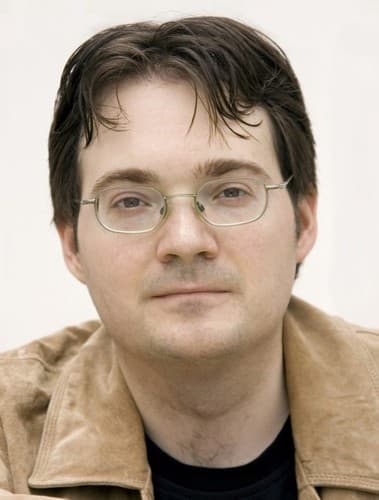
Brandon Sanderson is a prolific American author of epic fantasy and science fiction. He is best known for his expansive Cosmere universe, featuring series like Mistborn and The Stormlight Archive, as well as his completion of Robert Jordan's Wheel of Time series. Sanderson's intricate magic systems and compelling world-building have earned him a dedicated global fanbase and critical acclaim.
Similar books
- The Alloy of Law
Brandon Sanderson
4.2 (137k) average on GoodreadsFantasyDirect prequel, essential for context and character background.
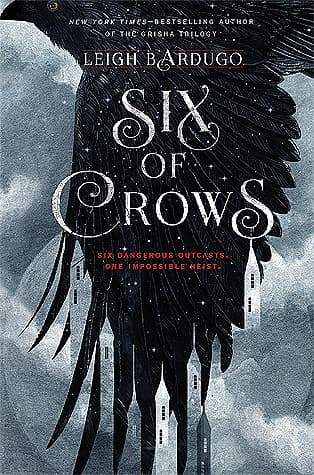
- Six of Crows
Leigh Bardugo
4.4 (316k) average on GoodreadsFantasyFeatures a crew of skilled individuals solving a complex problem in a grimy, industrializing city.
- Rivers of London
Ben Aaronovitch
3.9 (94k) average on GoodreadsFantasyCombines a detective procedural with urban fantasy elements and a unique magic system.
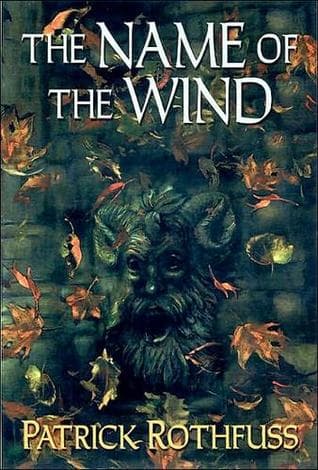
- The Name of the Wind
Patrick Rothfuss
4.5 (716k) average on GoodreadsFantasyWhile both Shadows of Self and The Name of the Wind are character-driven fantasies, Sanderson's work focuses on an established, somewhat cynical hero grappling with immediate threats and past trauma, often through a detective lens. Rothfuss's novel, conversely, is an origin story, a sprawling first-person narrative chronicling the legendary Kvothe's youth and rise, prioritizing lyrical prose and a slower, more introspective pace over Sanderson's intricate plot mechanics and hard magic system. Shadows of Self offers a contained, yet cosmere-connected, mystery, whereas The Name of the Wind is the beginning of a much larger, unresolved epic.
- Harry Potter and the Sorcerer's Stone
J.K. Rowling
4.5 (7M) average on GoodreadsFantasyRescued from a miserable life under the stairs, an orphaned boy discovers he's a wizard destined for a magical school, where he uncovers a dangerous secret tied to the dark wizard who murdered his parents.
- The Hunger Games
Suzanne Collins
4.3 (6.4M) average on GoodreadsFantasyIn a future where children fight to the death on live television, Katniss Everdeen volunteers for the arena, turning a death sentence into a fight for survival and a spark of rebellion.




Enjoyed the summary?
A summary gives you the shape of the book. The book itself has the detail, the examples and the voice.
Find Shadows of Self on AmazonAs an Amazon Associate, BookBrief earns from qualifying purchases. How we're funded