
Synopsis
Covers the whole plot, including the ending.
- Difficulty
- Easy
- Pacing
- Fast
- Mood
- Witty, Humorous, Satirical, Lighthearted
- Read it if
- You enjoy witty dialogue, social satire, and classic British comedies of manners.
- Skip it if
- You prefer serious, dramatic narratives or dislike plays with extensive wordplay.
The Importance of Being Earnest Plot Summary
Covers the whole plot, including the ending.
Algernon's Flat and the Discovery of Bunbury
The play begins in Algernon Moncrieff's London flat, where his butler Lane serves tea. Algernon and Lane discuss marriage and music, revealing Algernon's cynical, witty outlook. His nephew, Ernest Worthing, arrives, but Algernon quickly confronts him about an inscribed cigarette case. Jack, whose real name is Jack Worthing, admits he lives a double life: in the country, he is the respectable guardian Jack, but in London, he invents a wicked younger brother named Ernest. This brother's supposed misadventures give him an excuse to visit the city. Algernon confesses to a similar deception, using an invalid friend named Bunbury to escape social obligations, a practice he calls 'Bunburying.'
Gwendolen's Arrival and Proposal
Gwendolen Fairfax, Algernon's cousin and Lady Bracknell's daughter, arrives. Jack takes the opportunity to propose to her. Gwendolen, who wants to marry a man named Ernest, readily accepts, believing Jack is Ernest. However, the formidable Lady Bracknell soon appears and questions Jack rigorously about his background and financial prospects. Jack passes the financial test, but his revelation that he was found as a baby in a handbag at Victoria Station, cloakroom number 'Bags, left luggage,' by a railway official, horrifies Lady Bracknell. She declares such an origin makes him unsuitable for her daughter.
Algernon's Plan and Cecily's Diary
After Lady Bracknell forbids the marriage, Gwendolen reaffirms her love for Jack and promises to remain faithful, despite his unknown parents. Jack, frustrated, decides to 'kill off' his fictional brother Ernest, announcing his death from a severe chill in Paris. Meanwhile, Algernon, having learned Jack's country address and the existence of his charming ward, Cecily Cardew, decides to 'Bunbury' his way into the country. He plans to impersonate Jack's wicked brother, Ernest, to meet Cecily. Jack, unaware of Algernon's scheme, prepares to return to the country.
Algernon Arrives at Woolton
The scene moves to Jack's country estate in Woolton. Cecily Cardew, Jack's innocent and romantic ward, studies German with her governess, Miss Prism. Dr. Chasuble, the local rector, also visits. Cecily expresses her interest in Jack's supposedly wicked brother, Ernest. Algernon arrives, introducing himself as Ernest Worthing, to Cecily's delight. Cecily, who has long fantasized about Ernest, is immediately charmed by Algernon and his 'wicked' reputation, which she finds romantic. She quickly falls in love with him, having already written a detailed account of their imaginary courtship in her diary.
Jack's Return and Double 'Ernest' Confusion
Jack returns to Woolton, dressed in mourning clothes, ready to announce his brother Ernest's death. He is shocked and furious to find Algernon already there, having convinced Cecily that he is Ernest. Jack tries to expose Algernon's deception, but Cecily is too smitten to listen. The situation becomes more complicated when Gwendolen arrives unexpectedly, having traveled to the country after hearing of Jack's whereabouts. Both women believe they are engaged to 'Ernest Worthing,' leading to a humorous confrontation as they realize they are engaged to two different men using the same name.
The Muffin Incident and Reconciliation
Gwendolen and Cecily initially connect over their shared love for 'Ernest Worthing,' only to discover the truth about Jack and Algernon's deceptions. They angrily confront the two men, who try to explain their 'Bunburying.' The women are particularly upset that neither man is actually named Ernest. After a brief but intense argument, largely about eating muffins, the women withdraw their affections. Eventually, after the men agree to be christened 'Ernest' to satisfy their fiancées, the couples reconcile. Their love proves stronger than the initial deception, though the name 'Ernest' remains a key point for both women.
Lady Bracknell's Arrival at Woolton
Lady Bracknell unexpectedly arrives at Jack's country estate, having followed Gwendolen. She is initially pleased to find Gwendolen, but her mood sours when she discovers Algernon is engaged to Cecily. Lady Bracknell immediately questions Cecily's background and fortune. She is delighted to learn that Cecily has a substantial inheritance of one hundred and thirty thousand pounds, making her a highly desirable match. However, Jack, as Cecily's guardian, refuses to consent to the marriage unless Lady Bracknell allows him to marry Gwendolen. This creates a stalemate, as Lady Bracknell remains firm in her disapproval of Jack's unknown parentage.
Miss Prism's Past Revealed
During the standoff, Dr. Chasuble mentions that Miss Prism, Cecily's governess, had once written a three-volume novel. Lady Bracknell overhears this and, to everyone's surprise, recognizes Miss Prism's name. She accuses Miss Prism of having disappeared twenty-eight years ago with a baby in a perambulator, leaving a manuscript in its place. Miss Prism, flustered, admits to having confused the baby with her novel, inadvertently placing the infant in a handbag and the manuscript in the perambulator. She reveals she left the handbag in the cloakroom of Victoria Station, the same location where Jack was found.
The Handbag and Jack's True Identity
Jack rushes to retrieve the handbag from his dressing-room, confirming it is the one Miss Prism described. The revelation that Jack is the baby Miss Prism misplaced means he is of respectable birth and Algernon's elder brother. Lady Bracknell then reveals that Jack is the son of her late sister, Mrs. Moncrieff, and General Moncrieff. Jack, consulting the Army Lists, discovers his father's Christian name was Ernest. This means Jack's real name has always been Ernest, and his fictional brother Ernest was, in fact, himself. The play concludes with Jack realizing that 'the importance of being Earnest' was a truth all along.
Triple Engagements and Happy Endings
With Jack's true identity and noble lineage confirmed, Lady Bracknell gives her full consent to his marriage with Gwendolen. Algernon is already engaged to Cecily, and Dr. Chasuble proposes to Miss Prism, who accepts. The play ends with all three couples happily engaged. Jack, now truly Ernest, embraces Gwendolen, exclaiming that he finally understands the 'importance of being Earnest.' The characters have navigated a maze of lies and deceptions, only to arrive at a conclusion where truth, though revealed through comedic circumstances, ultimately wins, leading to happiness and the fulfillment of all romantic wishes.
The Importance of Being Earnest Characters
Jack Worthing (Ernest)
Protagonist
A respectable country gentleman with a secret identity in London.
Jack Worthing is a seemingly earnest and responsible guardian to Cecily Cardew in the country. However, he maintains a fictional younger brother named Ernest in London, whose supposed misbehavior allows Jack to escape to the city for pleasure. He is deeply in love with Gwendolen Fairfax and struggles to overcome Lady Bracknell's objections to his unknown parentage. He is earnest in his desire for love and respectability, despite his deceptive methods.
Relationships: Algernon Moncrieff (Best friend, later revealed to be his brother); Gwendolen Fairfax (Fiancée); Cecily Cardew (Ward); Lady Bracknell (Gwendolen's mother, later revealed to be his aunt); Miss Prism (Cecily's governess, later revealed to be his biological mother's employee who misplaced him)
Algernon Moncrieff
Protagonist/Supporting
A witty, cynical dandy who invents an invalid friend to escape social duties.
Algernon is a charming, aristocratic, and highly cynical young man, obsessed with food, fashion, and wit. He invents an invalid friend named Bunbury, whose frequent 'relapses' allow him to avoid tiresome social engagements. He is a master of paradox and epigram, often using his wit to mask a deeper emotional detachment. He is Jack's best friend and later revealed to be his brother, and he falls in love with Cecily.
Relationships: Jack Worthing (Best friend, later revealed to be his brother); Gwendolen Fairfax (Cousin); Cecily Cardew (Fiancée); Lady Bracknell (Aunt)
Gwendolen Fairfax
Supporting
An aristocratic woman obsessed with marrying a man named Ernest.
Gwendolen is a fashionable and highly opinionated young woman, accustomed to getting her own way. She is deeply in love with Jack, primarily because she believes his name is Ernest, which she considers an 'irresistible' and 'perfectly wonderful' name. She is heavily influenced by her mother, Lady Bracknell, but also possesses a strong will, especially when it comes to her romantic attachments. She values appearance and social standing above all else.
Relationships: Jack Worthing (Fiancée); Algernon Moncrieff (Cousin); Lady Bracknell (Mother)
Cecily Cardew
Supporting
Jack's innocent and romantic ward, who falls for Algernon disguised as Ernest.
Cecily is a young, imaginative, and somewhat naïve girl, Jack's ward, who lives in the country. She is fascinated by the idea of wickedness and romanticizes Jack's fictional brother, Ernest, keeping a detailed diary of their imagined courtship. She is easily charmed by Algernon, who arrives pretending to be Ernest. She values romance and excitement, often preferring fantasy to reality, which makes her susceptible to Algernon's deception.
Relationships: Jack Worthing (Guardian); Algernon Moncrieff (Fiancée); Miss Prism (Governess)
Lady Bracknell
Antagonist
A formidable, aristocratic matriarch who dictates social propriety and marriage.
Lady Bracknell is Gwendolen's mother and Algernon's aunt, a towering figure of Victorian high society. She is a snobbish, authoritarian, and utterly ruthless woman who values lineage, wealth, and social connections above all else. Her interrogation of Jack is one of the play's most famous scenes, highlighting her rigid adherence to social conventions. She embodies the superficiality and hypocrisy of the upper class, yet her pronouncements are often comically absurd.
Relationships: Gwendolen Fairfax (Daughter); Algernon Moncrieff (Nephew); Jack Worthing (Potential son-in-law, later revealed to be her nephew)
Miss Prism
Supporting
Cecily's governess, a woman with a mysterious past and a penchant for morality.
Miss Prism is Cecily's governess, a seemingly prim and proper woman with strong moralistic views. She once wrote a three-volume novel that she inadvertently confused with a baby in a handbag. She is attracted to Dr. Chasuble and often engages in intellectual banter with him. Her past mistake with the handbag is central to unraveling the play's central mystery, making her an unexpectedly pivotal character.
Relationships: Cecily Cardew (Governess); Dr. Chasuble (Love interest/Fiancé); Jack Worthing (Unwittingly involved in his past)
Dr. Chasuble
Supporting
The local rector, a celibate clergyman with a soft spot for Miss Prism.
Dr. Chasuble is the local rector at Jack's country estate. He is a somewhat pompous but generally good-natured clergyman who frequently delivers long, moralistic sermons. He harbors a clear affection for Miss Prism, and their interactions provide a secondary romantic plotline. He is willing to christen both Jack and Algernon as 'Ernest' without question, highlighting the superficiality of the era's religious conventions.
Relationships: Miss Prism (Love interest/Fiancé)
Lane
Mentioned
Algernon's stoic butler.
Lane is Algernon's butler, a minor character who opens the play. He serves as a foil for Algernon's witty remarks, often responding with deadpan humor or feigned ignorance. His brief appearances highlight the social hierarchy and the casual indifference of the upper class.
Relationships: Algernon Moncrieff (Employer)
The Importance of Being Earnest Themes
The Nature of Marriage
Wilde critiques Victorian attitudes towards marriage, showing it less as a union of love and more as a social and economic arrangement. Lady Bracknell's questioning of Jack about his finances and connections, and her refusal to allow Gwendolen to marry him based on his lack of 'parents,' shows this. Both Jack and Algernon initially view marriage with a cynical detachment, using it as a means to an end or a social necessity rather than a romantic ideal. However, the play suggests that beneath the superficialities, genuine affection can still grow, even through absurd circumstances.
“An engagement should come on a young girl as a surprise, pleasant or unpleasant, as the case may be.”
The Importance of Being Earnest/Earnestness
This theme uses the double meaning of the word 'earnest' – both the name and the quality of being serious and sincere. The characters are obsessed with the name 'Ernest,' believing it embodies desirable traits, while engaging in elaborate deceptions. Jack and Algernon create alter egos named Ernest to escape their responsibilities, highlighting Victorian society's hypocrisy. The play makes fun of the idea that appearance (having the 'right' name) is more valued than genuine character (being earnest). The ending, where Jack discovers his real name is Ernest, ironically validates the women's superficial desires.
“In matters of grave importance, style, not sincerity, is the vital thing.”
Social Hypocrisy and Deception
The entire plot centers on the deceptions of 'Bunburying' and the creation of the fictional brother Ernest. Characters constantly maintain false fronts to escape social obligations or to pursue forbidden pleasures. Jack pretends to be Ernest in London, while Algernon invents Bunbury. Even the seemingly moral Miss Prism has a secret past involving a lost baby. Wilde uses these deceptions to expose the widespread hypocrisy of Victorian upper-class society, where maintaining appearances and following strict social codes often took precedence over truth and genuine morality.
“The truth is rarely pure and never simple.”
The Triviality of the Upper Class
Wilde critiques the idleness, superficiality, and self-absorption of the Victorian aristocracy. Characters focus on trivial matters like cucumber sandwiches, muffins, and the 'correct' name for a husband, while serious issues are often treated lightly. Lady Bracknell's absurd questions during her interrogation of Jack, and Algernon's constant witty but meaningless pronouncements, highlight this theme. The play suggests that the upper class, free from the need to work, has become disconnected from real concerns, finding meaning only in social rituals and witty conversation.
“I never travel without my diary. One should always have something sensational to read in the train.”
Love and Romance
Despite the satirical tone, love and romance are central to the play. All the main characters seek love, though often with very superficial or unconventional conditions. Gwendolen and Cecily are obsessed with the name Ernest, seeing it as a requirement for love. Jack and Algernon are driven by their affections, even if their methods are deceptive. The play, while mocking romantic conventions, celebrates love's power to overcome obstacles, even those created by the characters' own lies. The happy ending sees all couples united, suggesting that love, in its own peculiar way, triumphs.
“To lose one parent, Mr. Worthing, may be regarded as a misfortune; to lose both looks like carelessness.”
Plot Devices & Literary Techniques
Bunburying
The invention of a fictional invalid friend to escape social obligations.
Bunburying is Algernon's term for creating a fictional persona or situation to avoid unwanted social engagements. Algernon invents 'Bunbury,' an invalid friend whose frequent relapses require Algernon to visit him in the country. Jack employs a similar device with his fictional wicked brother, Ernest. This device allows the characters to lead double lives, highlighting the hypocrisy of Victorian society and providing the central comedic engine for the plot, as the two 'Bunburyists' eventually clash.
The Misplaced Handbag
A crucial prop that reveals Jack's true parentage.
The handbag in which Jack was found as a baby serves as the ultimate deus ex machina. Its seemingly trivial nature, combined with the detailed description of its location at Victoria Station, links Jack's unknown origins to Miss Prism's past mistake. This plot device is essential for resolving the central conflict of Jack's parentage and allowing him to marry Gwendolen. It also cleverly ties together the themes of identity, truth, and the absurd coincidences that drive the plot.
The Name 'Ernest'
A name that becomes a catalyst for romantic obsession and identity confusion.
The name 'Ernest' is central to the play's title and its comedic misunderstandings. Both Gwendolen and Cecily are fixated on marrying a man named Ernest, believing it embodies ideal characteristics. This superficial obsession drives Jack and Algernon to adopt the name, leading to mistaken identities and farcical confrontations. The irony culminates when Jack discovers his true, birth name actually is Ernest, fulfilling the women's desires in an unexpected and humorous way, and underscoring the play's commentary on appearance versus reality.
The Diary
A personal journal used to record and invent romantic fantasies.
Cecily's diary is a key plot device that reveals her romantic idealism and imagination. She meticulously records her imagined courtship with Jack's fictional brother, Ernest, anticipating Algernon's arrival and their subsequent 'romance.' The diary highlights Cecily's preference for fantasy over reality and serves as evidence of her affections, both real and imagined. It also contributes to the comedic confusion when Gwendolen believes her own engagement to 'Ernest' is being recorded, leading to a confrontation between the two women.
The Importance of Being Earnest Quotes
“I can resist everything except temptation.”
“To lose one parent, Mr. Worthing, may be regarded as a misfortune; to lose both looks like carelessness.”
“The truth is rarely pure and never simple.”
“All women become like their mothers. That is their tragedy. No man does. That is his.”
“I never travel without my diary. One should always have something sensational to read in the train.”
“Oh! I don't think I would care to catch a sensible man. I should not know what to talk to him about.”
“The very essence of romance is uncertainty.”
“In matters of grave importance, style, not sincerity, is the vital thing.”
“Gwendolen, it is a terrible thing for a man to find out suddenly that all his life he has been speaking nothing but the truth.”
“I am sick of not being Earnest.”
“Few people nowadays are sufficiently sensible to their own defects to make any real change for the better.”
“The good ended happily, and the bad unhappily. That is what Fiction means.”
“I hate people who are not serious about meals. It is so shallow of them.”
“You can never be overdressed or overeducated.”
Quiz
10 questions on the plot and the characters. Each answer comes with a short explanation.
Question 1
What is Jack Worthing's real name, which he discovers at the end of the play?
- Algernon Moncrieff
- Ernest Moncrieff
- John Bracknell
- Thomas Cardew
Show answer
B. Ernest Moncrieff Jack discovers he is actually Algernon's elder brother, and his name is indeed Ernest, as his father's Christian name was Ernest John.
Question 2
What object does Miss Prism confess to accidentally placing in the perambulator instead of the baby?
- A parasol
- A handbag
- A prayer book
- A novel manuscript
Show answer
B. A handbag Miss Prism mistakenly placed her three-volume novel manuscript in the perambulator and the baby (Jack) in her handbag, which she then left at Victoria Station.
Question 3
What is the name of Algernon Moncrieff's imaginary invalid friend, whom he uses as an excuse to avoid social engagements?
- Bunbury
- Earnest
- Chasuble
- Merriman
Show answer
A. Bunbury Algernon invents 'Bunbury' as his invalid friend to escape tiresome social obligations, a practice he calls 'Bunburying'.
Question 4
Which character famously states that 'To lose one parent, Mr. Worthing, may be regarded as a misfortune; to lose both looks like carelessness'?
- Cecily Cardew
- Lady Bracknell
- Gwendolen Fairfax
- Miss Prism
Show answer
B. Lady Bracknell Lady Bracknell delivers this iconic line during her interrogation of Jack Worthing regarding his suitability as a suitor for Gwendolen.
Question 5
What is the primary reason both Gwendolen and Cecily are attracted to the name 'Ernest'?
- It implies wealth and social standing.
- They believe it signifies a serious and responsible character.
- It is a family tradition for their future husbands.
- They find the sound of the name particularly melodious.
Show answer
B. They believe it signifies a serious and responsible character. Both Gwendolen and Cecily are captivated by the name 'Ernest' because they associate it with earnestness, reliability, and a moral character, rather than the actual person.
Question 6
What does Algernon famously say about marriage, in contrast to Jack's view?
- That it is 'a very pleasant state of things'.
- That 'the essence of romance is uncertainty'.
- That 'in married life, three is company and two is none'.
- That 'marriage is the triumph of hope over experience'.
Show answer
C. That 'in married life, three is company and two is none'. Algernon expresses his cynical view on marriage by stating, 'In married life, three is company and two is none,' highlighting his belief that a third party (like Bunbury) is essential to maintain interest.
Question 7
What is the relationship between Jack Worthing and Cecily Cardew before the play's climax?
- They are cousins.
- Jack is Cecily's guardian.
- They are engaged to be married.
- They are siblings.
Show answer
B. Jack is Cecily's guardian. Jack Worthing is Cecily Cardew's guardian, as appointed by his adoptive father, Thomas Cardew.
Question 8
How does Lady Bracknell react to Jack's explanation of his origins, specifically being found in a handbag at Victoria Station?
- She expresses immediate sympathy for his unfortunate upbringing.
- She finds it a romantic and intriguing story.
- She considers it an unacceptable lack of social standing and parental connections.
- She offers to help him find his true parents.
Show answer
C. She considers it an unacceptable lack of social standing and parental connections. Lady Bracknell is appalled by Jack's origins, stating, 'A handbag? . . . To be born, or at any rate bred, in a handbag, whether it has handles or not, seems to me to display a contempt for the ordinary decencies of family life.'
Question 9
What is the primary satirical target of Wilde's play, as evidenced by the characters' superficial concerns and deceptive identities?
- The working class and their lack of education.
- Victorian morality and the hypocrisy of the upper class.
- The institution of marriage itself.
- The political system of the time.
Show answer
B. Victorian morality and the hypocrisy of the upper class. The play primarily satirizes the superficiality, hypocrisy, and rigid social conventions of Victorian upper-class society, particularly their obsession with appearances and disregard for genuine earnestness.
Question 10
Why does Dr. Chasuble initially refuse to re-christen Jack and Algernon with the name 'Ernest'?
- He believes it is sacrilegious to change one's name for romantic reasons.
- He has already committed to christening another child at that hour.
- He thinks they are being frivolous and irresponsible.
- He does not have the authority to perform adult re-christenings.
Show answer
B. He has already committed to christening another child at that hour. Dr. Chasuble initially states he cannot re-christen them because he has 'already promised to christen little Miss Prism's baby at half-past four.' This is a humorous misunderstanding, as Miss Prism has no baby.
The Importance of Being Earnest FAQ
What is the central premise of 'The Importance of Being Earnest'?
The play revolves around two bachelors, Jack Worthing and Algernon Moncrieff, who invent fictional alter egos named 'Earnest' to escape social obligations and pursue romantic interests. Their deceptions lead to a tangled web of mistaken identities and comedic misunderstandings as they both try to woo women who insist on marrying a man named Earnest.
Who are the primary romantic pairings in the play?
The main romantic pairings are Jack Worthing with Gwendolen Fairfax, and Algernon Moncrieff with Cecily Cardew. Both women are infatuated with the name 'Earnest,' complicating the bachelors' attempts to reveal their true identities and secure their engagements.
What role does Lady Bracknell play in the unfolding drama?
Lady Bracknell is Gwendolen's formidable aunt and a quintessential Victorian aristocrat who acts as a major obstacle to Jack's marriage to Gwendolen. Her rigorous interrogation of Jack about his background and her strict social standards drive much of the play's conflict and humor, particularly regarding his origins in a handbag.
What is 'Bunburying' and who practices it?
'Bunburying' is Algernon Moncrieff's invention: a fictional invalid friend, Bunbury, whose supposed ill health allows Algernon to escape inconvenient social engagements in the city and pursue his own pleasures. Jack Worthing practices a similar deception with his fictional wicked brother, 'Earnest,' in London.
How is the mystery of Jack's parentage ultimately resolved?
Jack's parentage is resolved in the final act when it is revealed that he is actually Algernon's elder brother, Ernest Moncrieff, and the son of Lady Bracknell's sister and General Moncrieff. He was accidentally left in a handbag at Victoria Station by Miss Prism, confirming his true identity and fulfilling Gwendolen's desire to marry an 'Earnest'.
What is the significance of the name 'Earnest' beyond its literal meaning?
The name 'Earnest' is a pun on 'earnestness,' highlighting the superficiality of Victorian society where appearance and a name are valued more than genuine sincerity. The women are attracted to the idea of a man named Earnest, rather than the qualities of an earnest person, satirizing the era's misplaced values.
How does the recovered handbag function as a plot device?
The handbag serves as the crucial physical evidence that unravels the central mystery of Jack's identity. Its discovery and identification by Miss Prism directly lead to the revelation of Jack's true parentage and his relationship to Algernon and Lady Bracknell, providing the climactic resolution.
Are there any subtle critiques of the Victorian class system embedded in the dialogue?
Yes, Wilde subtly critiques the Victorian class system through Lady Bracknell's pronouncements and the characters' preoccupation with social standing. Her dismissal of Jack due to his lack of 'connections' and her absurd criteria for a suitor highlight the arbitrary and often hypocritical nature of aristocratic values.
How does the play explore the human desire for escape and reinvention?
The play explores this through Jack and Algernon's 'Bunburying' and their invented identities. Both characters create alternate lives to escape the constraints and expectations of their real existences, demonstrating a universal human desire to shed responsibilities and pursue desires without consequence.
What psychological motivations drive Gwendolen and Cecily's insistence on marrying a man named 'Earnest'?
Gwendolen and Cecily's insistence on 'Earnest' is driven by a romanticized ideal and a desire for a name that they associate with moral uprightness and societal approval. Their fixation reflects a superficial understanding of character, preferring the illusion of virtue over genuine substance, a common psychological trap.
How does Lady Bracknell's character embody Victorian hypocrisy?
Lady Bracknell embodies Victorian hypocrisy through her rigid adherence to social conventions while often making absurd and self-serving pronouncements. She prioritizes wealth and lineage above all else, exemplified by her dismissal of Jack's character in favor of his 'birth,' revealing the era's superficial morality.
In what ways do Jack and Algernon demonstrate arrested development or a refusal to fully mature?
Jack and Algernon both exhibit arrested development by constantly seeking to avoid responsibility through their fictional alter egos. They prioritize pleasure and convenience over duty, illustrating a reluctance to embrace the seriousness of adulthood and its obligations, preferring a prolonged adolescence of deception.
Is the play a celebration of wit and artifice, or a critique of it?
The play is arguably both. While it undeniably celebrates wit and clever dialogue, it simultaneously critiques the artifice and superficiality of Victorian society by exposing how easily people are deceived by appearances and how little genuine earnestness truly exists beneath the polished surface.
How does Wilde use paradox and epigrams to convey his social commentary?
Wilde uses paradox and epigrams to turn conventional wisdom on its head, revealing the inherent absurdities and contradictions of Victorian society. For instance, statements like 'The truth is rarely pure and never simple' challenge moralistic views, forcing the audience to re-evaluate accepted norms.
What is the broader significance of the play's subtitle, 'A Trivial Comedy for Serious People'?
The subtitle is a direct challenge to the audience, suggesting that what appears trivial on the surface holds deeper meaning for those willing to look. It implies that the play's lighthearted humor and farcical plot are actually vehicles for serious social critique, inviting intellectual engagement.
Could the play be interpreted as a commentary on the performative nature of identity?
Absolutely. The entire plot hinges on Jack and Algernon performing different identities ('Earnest') to navigate social situations and romantic pursuits. This highlights the idea that identity, especially in a rigid society, can be a constructed and performative act rather than an inherent truth.
How does the play's ending, with everyone marrying, reinforce or subvert traditional romantic comedy tropes?
While the play ends with the traditional romantic comedy resolution of multiple marriages, it subverts the trope by having these unions be based on initial deception and superficiality. The characters marry for reasons like a desirable name, rather than genuine, earnest love, mocking the genre's usual sincerity.
About the author
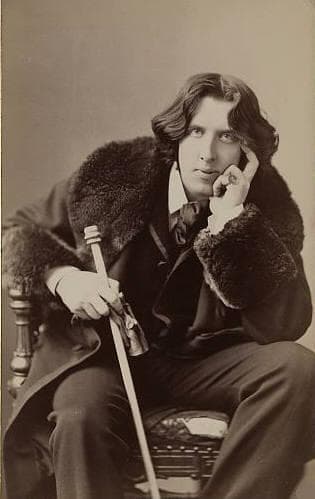
Oscar Fingal O'Fflahertie Wills Wilde was an Irish poet and playwright. After writing in different forms throughout the 1880s, he became one of the most popular playwrights in London in the early 1890s. He is best remembered for his epigrams and plays, his novel The Picture of Dorian Gray, and the circumstances of his criminal conviction for gross indecency for consensual homosexual acts in "one of the first celebrity trials", imprisonment, and early death from meningitis at the age of 46.
Similar books
- Pride and Prejudice
Jane Austen
4.3 (3M) average on GoodreadsHistorical FictionShares themes of social class, marriage, and witty dialogue in a historical setting.
- A Midsummer Night's Dream
William Shakespeare
4.0 (443k) average on GoodreadsFantasyInvolves mistaken identities, romantic entanglement, and comedic resolution.
- A Doll's House
Henrik Ibsen
3.7 (106k) average on GoodreadsFictionIbsen's 'A Doll's House' delves into profound psychological realism and tragedy, directly challenging gender roles and societal expectations with stark, often bleak, dramatic force. In contrast, Wilde's 'Earnest' approaches similar themes of societal pressure and appearances through the lens of farce and high comedy, deliberately avoiding the serious, introspective tone of Ibsen. Wilde's play revels in the absurdity of these pressures, whereas Ibsen explores their devastating human cost.
- The Diary of a Young Girl
Anne Frank
4.2 (2.7M) average on GoodreadsBiographyDuring the Nazi occupation, a teenage girl's diary, written from a secret annex, shares observations on humanity, hope, and the wait for freedom.
- Night
Elie Wiesel
4.3 (970k) average on GoodreadsBiographyIn the darkness of Auschwitz and Buchenwald, a teenage Elie Wiesel faces the extermination of his family, the loss of his faith, and the lasting scars of humanity's deepest cruelty.
- Steve Jobs
Walter Isaacson
4.1 (957k) average on GoodreadsBusinessSteve Jobs was a visionary who fused creativity and technology to revolutionize six industries and shape our digital world.





Enjoyed the summary?
A summary gives you the shape of the book. The book itself has the detail, the examples and the voice.
Find The Importance of Being Earnest on AmazonAs an Amazon Associate, BookBrief earns from qualifying purchases. How we're funded