

Synopsis
Covers the whole plot, including the ending.
- Difficulty
- Easy
- Pacing
- Moderate
- Mood
- Suspenseful, Intriguing, Classic Mystery, Atmospheric
- Read it if
- You love classic whodunits with a strong sense of place, psychological tension, and the brilliant deductions of Miss Marple.
- Skip it if
- You prefer fast-paced, modern thrillers or explicit violence.
Sleeping Murder Plot Summary
Covers the whole plot, including the ending.
Gwenda Arrives in England and Buys Hillside
Gwenda Reed, newly married to Giles Reed, arrives in England from New Zealand to find and furnish a house before her husband joins her. While house-hunting, she is drawn to a Victorian villa named Hillside in Dillmouth, Dorset, and buys it. As she oversees renovations, Gwenda experiences strange sensations of déjà vu. She recognizes parts of the house she has never seen before, such as a blocked-up door and a specific wallpaper pattern. These uncanny experiences disturb her, especially a vivid mental image of a man strangling a woman on the stairs, with a child singing 'Oranges and Lemons' in the background.
A Play Triggers a Terrifying Memory
After Giles joins her, Gwenda and Giles attend a performance of John Webster's 'The Duchess of Malfi' in London. During a scene where the Duchess is strangled, Gwenda is overwhelmed by a terrifying memory: she sees a man, whom she identifies as her father, strangling a woman named Helen on the stairs of Hillside. The memory is so strong she collapses. This incident confirms her belief that she saw a murder as a small child, and that the house she bought was the crime scene. Giles, at first skeptical, believes her due to the intensity of her experience.
Miss Marple Enters the Scene
Disturbed by her memories, Gwenda tells Miss Marple, an elderly woman staying with her nephew, Raymond West, and his wife, Joan, in the nearby village of St. Mary Mead. Miss Marple, known for her sharp mind and understanding of people, listens carefully to Gwenda's story. She suggests that Gwenda's memories are not a delusion but a repressed memory of a real event. Interested by the challenge of a 'sleeping murder'—a crime committed long ago and forgotten—Miss Marple agrees to help Gwenda and Giles find the truth behind Helen's disappearance, advising them to be careful.
The Search for Helen Kennedy
Gwenda and Giles begin to investigate Gwenda's childhood. They learn that Gwenda's father, Major James Kennedy, was an army officer who married a beautiful woman named Helen. Helen was Gwenda's stepmother. The couple lived at Hillside for a short time before Helen mysteriously disappeared, supposedly running off with another man. Gwenda's father then sent her to live with relatives in New Zealand, never speaking of Helen again. The official story was that Helen had eloped, but Gwenda's memories strongly contradict this, suggesting a murder. They realize the man Gwenda saw was her own father.
Meeting the Past Connections
To get more information, Gwenda and Giles contact people who knew Helen Kennedy. They visit Dr. Kennedy, Helen's half-brother, now a successful physician. He confirms Helen's beauty and charming but somewhat inconsistent nature, and the story of her elopement. They also meet the Fentons, the family who lived at Hillside before the Kennedys and employed Helen as a companion. Mrs. Helen Fane (née Fenton) remembers Helen Kennedy well, recalling her as a captivating but manipulative woman. They also learn of a young man, Richard Erskine, who liked Helen and was suspected of having an affair with her.
Uncovering Discrepancies and New Suspects
The investigation, subtly guided by Miss Marple, uncovers several inconsistencies. The story of Helen's elopement with a man named Charles Burnaby seems too neatly explained. They learn that Helen had a difficult relationship with her first husband, who died shortly before she met Major Kennedy. Gwenda and Giles also meet Lily, a former maid at Hillside, who remembers Helen being unhappy and constantly flirting. Lily also recalls Helen having a secret admirer and hints at a darker side to Helen's personality. The Reeds begin to suspect that Major Kennedy might have been provoked, or that someone else was involved.
The Poisoner's Connection
Miss Marple, through her acquaintances, learns about a woman named Mrs. Fane, who was connected to the Fentons and had a history of poisoning. This Mrs. Fane had a sister, Helen, who coincidentally had the same name as the victim. Miss Marple begins to suspect a more complex plot than a simple crime of passion. She realizes that the story of Helen Kennedy's elopement might have been a deliberate lie to cover up a more planned murder, possibly involving poison, rather than the strangling Gwenda remembered. This opens up the possibility of a different killer.
The 'Oranges and Lemons' Clue
Gwenda's recurring memory of the children's rhyme 'Oranges and Lemons' is a vital clue. Miss Marple realizes that the rhyme lists church bells and specific locations in London. They investigate the possibility that the rhyme was not just a childhood tune, but a coded message or an important detail connected to the crime. This leads them to explore the possibility of a body being buried in a specific location, perhaps one mentioned in the rhyme, or that the rhyme was sung by a child at a crucial moment. The song's importance grows, indicating it was more than background noise.
The Body is Found
Following the clues, especially the 'Oranges and Lemons' rhyme and Miss Marple's deductions about the location, the Reeds and the police eventually dig up a disused part of the garden at Hillside. To everyone's shock, they find the skeletal remains of Helen Kennedy. The discovery confirms Gwenda's repressed memory and establishes that Helen was murdered, not eloped. The cause of death is strangulation, matching Gwenda's visual memory. This discovery turns the cold case into an active murder investigation, with Gwenda's father becoming the main suspect.
The True Killer Revealed
With the body found, suspicion falls heavily on Major Kennedy, who had died years ago. However, Miss Marple reveals the chilling truth: Helen Kennedy was murdered by her half-brother, Dr. Kennedy. He had carefully planned the crime, poisoning Helen with digitalis over time to weaken her, then staging the strangulation on the stairs to frame Major Kennedy. Gwenda's childhood memory was manipulated; the figure she saw was not her father strangling Helen, but Dr. Kennedy carrying Helen's seemingly lifeless body down the stairs. Dr. Kennedy had a motive: Helen was about to reveal a past crime of his, and he stood to inherit money. He had also been having an affair with Helen, and she was threatening to expose him. The 'Oranges and Lemons' rhyme was a distraction, a detail Gwenda remembered from a time shortly before the murder, not necessarily during the act itself.
Sleeping Murder Characters
Gwenda Reed
Protagonist
Young woman whose repressed childhood memory of a murder drives the investigation.
Gwenda is a spirited and independent young woman from New Zealand who arrives in England to set up a home with her husband, Giles. She is initially practical and modern, but her life is irrevocably altered by the uncanny sensations and terrifying visions she experiences upon moving into Hillside. Her strong conviction in her memories, despite initial skepticism from others, is the catalyst for the entire murder investigation. She is courageous and determined to uncover the truth about Helen Kennedy's death, even when it points to her own father. Her journey is one of confronting a traumatic past to understand her present.
Relationships: Giles Reed (Husband, supportive partner in the investigation); Miss Marple (Confidante and mentor); Major James Kennedy (Father (accused murderer)); Helen Kennedy (Stepmother (victim))
Giles Reed
Supporting
Gwenda's devoted and supportive husband, who aids her in the investigation.
Giles is Gwenda's intelligent and loving husband. Although initially skeptical of Gwenda's 'ghosts' and memories, he quickly becomes her most steadfast supporter once he witnesses the intensity of her distress. He is practical and methodical, taking an active role in researching Gwenda's past and interviewing potential witnesses. His unwavering belief in Gwenda, even when the evidence points to her own father, is crucial for her emotional well-being and the progression of the investigation. He acts as a grounded counterpoint to Gwenda's more intuitive approach.
Relationships: Gwenda Reed (Wife, investigative partner); Miss Marple (Collaborator in the investigation)
Miss Jane Marple
Supporting
Elderly amateur detective whose sharp mind and understanding of human nature help solve the cold case.
Miss Marple is an astute elderly spinster known for her profound understanding of human nature, which she often likens to the goings-on in her village of St. Mary Mead. She meets Gwenda while staying with her nephew and immediately recognizes the validity of Gwenda's repressed memories. Miss Marple acts as a wise guide and strategist, offering subtle advice and making crucial connections that elude the younger investigators and the police. Her ability to see patterns in human behavior and her knowledge of past crimes prove invaluable in unmasking a killer from decades ago. She is the quiet force driving the truth to light.
Relationships: Gwenda Reed (Protégée, client); Giles Reed (Collaborator); Raymond West (Nephew)
Helen Kennedy
Mentioned
The beautiful, charming, and manipulative victim of the 'sleeping murder'.
Helen Kennedy (née Spenlove) is the murdered stepmother of Gwenda Reed. Though only appearing in Gwenda's memories and through the recollections of others, her presence dominates the narrative. She is consistently described as strikingly beautiful, charming, and captivating, but also as flirtatious, manipulative, and perhaps even cruel. She was Major Kennedy's second wife and had a reputation for attracting men. Her mysterious disappearance, initially explained as an elopement, is the central mystery. Her true character, revealed through various accounts, provides motives for several potential suspects.
Relationships: Major James Kennedy (Husband); Gwenda Reed (Stepmother); Dr. Kennedy (Half-brother (killer)); Richard Erskine (Infatuated admirer)
Major James Kennedy
Supporting
Gwenda's father, initially suspected of Helen's murder.
Major Kennedy was Gwenda's father and Helen's second husband. He is portrayed through the memories of others as a somewhat stiff, honorable, and perhaps naive military man who was deeply in love with Helen. After Helen's supposed elopement, he sent Gwenda to New Zealand and never spoke of Helen again, suggesting trauma or guilt. His death prior to the investigation makes him an easy initial suspect, but also complicates the immediate resolution of the case. He is ultimately cleared of the murder, revealing him as another victim of Dr. Kennedy's machinations.
Relationships: Gwenda Reed (Daughter); Helen Kennedy (Wife (victim))
Dr. Kennedy
Antagonist
Helen's half-brother and the cunning, manipulative true murderer.
Dr. Kennedy (James Kennedy) is Helen's half-brother, a seemingly respectable and successful physician. He presents himself as a cultured and helpful individual when Gwenda and Giles first meet him. However, beneath his polished exterior lies a ruthless and calculating mind. He had a complex relationship with Helen, involving both an affair and a motive related to inheritance and the suppression of a past crime. He meticulously planned Helen's murder and the subsequent cover-up, framing Major Kennedy and ensuring Gwenda was sent away. His cold intelligence and ability to maintain a façade make him a chilling villain.
Relationships: Helen Kennedy (Half-sister (victim)); Gwenda Reed (Half-niece)
Lily Curtis (née Lygon)
Supporting
Former maid at Hillside, whose recollections provide crucial details about Helen.
Lily was a young maid working at Hillside during the time Helen Kennedy lived there. She is a working-class woman with a keen memory for details and a somewhat gossipy nature. Her observations about Helen's flirtatious behavior, her unhappiness, and specific events in the house prove invaluable to Gwenda and Giles's investigation. Lily's testimony helps to paint a more nuanced picture of Helen's character and the atmosphere in the house before her disappearance. She provides the 'inside' perspective of the household dynamics.
Relationships: Helen Kennedy (Former employer (victim)); Gwenda Reed (Investigative contact)
Richard Erskine
Supporting
A young man who was infatuated with Helen Kennedy and was a minor suspect.
Richard Erskine was a young man deeply infatuated with Helen Kennedy, leading to speculation that he might have been her lover or involved in her disappearance. He is described as a somewhat weak but devoted individual. His past connection to Helen is explored as the Reeds investigate, making him a temporary person of interest. He provides insight into Helen's captivating effect on men and the emotional turmoil she could cause. He is ultimately cleared of any involvement in the murder, serving primarily to illustrate Helen's manipulative charm.
Relationships: Helen Kennedy (Object of infatuation); Gwenda and Giles Reed (Investigative contact)
Mrs. Helen Fane (née Fenton)
Supporting
Former resident of Hillside, who employed Helen Kennedy as a companion.
Mrs. Fane is a key figure from the past who lived at Hillside before the Kennedys. She employed Helen Kennedy as a companion, offering a perspective on Helen's character before her marriage to Major Kennedy. Her recollections provide crucial background information about Helen's personality, her social interactions, and the general atmosphere of the house. She remembers Helen as charming but also somewhat unsettling, providing another piece of the puzzle regarding Helen's complex nature. Her testimony helps to establish Helen's presence and influence in the community.
Relationships: Helen Kennedy (Former companion); Gwenda and Giles Reed (Investigative contact)
Sleeping Murder Themes
Memory and Repression
The novel explores memory, especially repressed childhood trauma. Gwenda's fragmented, terrifying memories of a murder, at first dismissed by others, form the core of the plot. The story shows how deeply buried memories can resurface, triggered by familiar surroundings or sensory experiences, and how they can be misinterpreted or incomplete. Gwenda's process of piecing together her past is a journey into the imperfect and powerful nature of human memory, and the psychological impact of seeing a traumatic event as a child. It questions what we truly 'see' versus what we interpret.
“One remembers things, you know, not exactly as they happened, but as one sees them later.”
The Nature of Evil
Sleeping Murder looks at the nature of evil, especially how it can hide behind a respectable appearance. Dr. Kennedy, the killer, is presented as a cultured and successful professional, making his calculated villainy more shocking. The novel contrasts passionate crime with planned, cold-blooded murder, showing how a 'perfect crime' can stay hidden for decades. It explores the depths of human wickedness and how far people will go to protect their secrets, even at the cost of innocent lives and reputations. Helen's own manipulative tendencies also suggest a more complex moral situation.
“Evil is not something that happens out there, Gwenda. It is something that happens in here.”
Truth and Deception
The entire plot centers on the struggle to uncover the truth hidden beneath layers of deception and convenient lies. Helen Kennedy's 'elopement' is a carefully built falsehood meant to hide her murder. Characters' recollections are often biased or incomplete, requiring careful sifting to tell fact from fiction. Miss Marple's role is to see through these deceptions, using her understanding of people to look past appearances. The novel shows how easily truth can be suppressed or distorted, and the persistent effort needed to bring it to light, even decades later.
“It's extraordinary, isn't it, how people can manage to mislead you simply by telling you what they think is the truth.”
The Past Haunting the Present
The main idea of 'Sleeping Murder' is how an unresolved past crime affects the present. Gwenda's life is disrupted by the echoes of a murder committed decades before she was consciously aware of it. The house, Hillside, is a physical representation of this haunting past, its architecture triggering Gwenda's memories. The story shows how secrets, once buried, can resurface with devastating force, demanding resolution and justice. It supports the idea that some wrongs cannot remain 'sleeping' indefinitely and will inevitably awaken to demand reckoning.
“The past is never dead. It's not even past.”
Plot Devices & Literary Techniques
Repressed Memory
The central mechanism for uncovering a decades-old murder.
Gwenda Reed's repressed childhood memory of witnessing a murder is the primary plot device driving the entire narrative. The initial fragments of memory, triggered by her new home and later solidified by a play, provide the only direct evidence of the 'sleeping murder'. This device allows Christie to explore psychological suspense and the unreliability of memory, while also creating a compelling reason for a cold case to be reopened. It creates a personal stake for the protagonist, ensuring her relentless pursuit of the truth.
The Uncanny House (Hillside)
A seemingly ordinary house that triggers terrifying memories and serves as the crime scene.
Hillside, the house Gwenda purchases, is more than just a setting; it acts as a catalyst for her repressed memories. Its features—a blocked-up door, a specific wallpaper pattern, the stairs—all trigger Gwenda's subconscious recollections. The uncanny feeling she experiences, a sense of having 'been there before' despite knowing she hasn't, is a key element of the psychological suspense. The house physically embodies the haunting past, making the environment itself a crucial character in uncovering the truth of the murder committed within its walls.
The Nursery Rhyme ('Oranges and Lemons')
A seemingly innocent children's rhyme that becomes a crucial, misleading clue.
The nursery rhyme 'Oranges and Lemons' is a significant symbolic and plot device. Gwenda distinctly remembers hearing it during the murder, leading her and Giles to initially believe it holds a direct clue to the killer or the body's location, perhaps pointing to London churches. However, it ultimately proves to be a red herring in its direct interpretation, instead signifying a moment in time just before the murder. Its inclusion highlights how fragmented childhood memories can be misinterpreted and how seemingly innocuous details can take on sinister meaning.
The 'Perfect Crime'
A murder so meticulously planned and covered up that it remains unsolved for decades.
The concept of a 'perfect crime' is central to the mystery. Helen Kennedy's murder is initially disguised as an elopement, a story so convincing that it fools everyone for years. The killer's careful planning, including the framing of Major Kennedy and the disposal of the body, ensures the crime remains 'sleeping'. This device showcases Christie's skill in crafting intricate plots and challenges the characters (and the reader) to unravel a seemingly flawless deception, emphasizing the difficulty of solving crimes where the perpetrator has had ample time to cover their tracks.
Sleeping Murder Quotes
“When you wake up and find yourself in a place you’ve never seen before, and you recognize it, that’s a strange feeling.”
“It’s not what people say, it’s what they don’t say.”
“The past is never dead. It’s not even past.”
“There are some people who are born to do evil things, and some people who are born to be victims.”
“One can always tell a great deal about a house by the books it keeps.”
“It’s very easy to be wise after the event.”
“People remember what they want to remember, and forget what they want to forget.”
“The truth is a very elusive thing, you know. Especially when people don’t want it to be found.”
“A house has a memory, you know. It remembers what happened in it.”
“Sometimes the most obvious explanation is the right one, and sometimes it’s the most misleading.”
“It’s extraordinary how much one forgets, and how little one forgets.”
“There’s always a reason for everything, if you can only find it.”
“Fear is a very strong emotion. It can make people do very foolish things.”
“One has to be very careful about making assumptions. They can lead you very far astray.”
Quiz
10 questions on the plot and the characters. Each answer comes with a short explanation.
Question 1
What is the name of the protagonist who moves into a new home and experiences unsettling feelings?
- Jane Marple
- Gwenda Reed
- Helen Kennedy
- Lily Horton
Show answer
B. Gwenda Reed Gwenda Reed is the young woman who moves into the house in Dillmouth and begins to experience strange, unsettling memories and feelings, prompting her to seek Miss Marple's help.
Question 2
What specific unsettling feeling does Gwenda experience every time she climbs the stairs in her new home?
- A sense of overwhelming joy
- An irrational sense of terror
- A strong feeling of déjà vu about a party
- A sudden urge to redecorate immediately
Show answer
B. An irrational sense of terror The synopsis explicitly states, 'Worse, she felt an irrational sense of terror every time she climbed the stairs,' which is a key detail leading her to believe something is wrong.
Question 3
What role does Miss Marple play in helping Gwenda?
- She acts as Gwenda's interior decorator.
- She helps Gwenda sell the unsettling house.
- She turns ghost hunter to uncover evidence of a past crime.
- She advises Gwenda to ignore her feelings.
Show answer
C. She turns ghost hunter to uncover evidence of a past crime. The description clearly states, 'the indomitable Miss Marple turns ghost hunter and uncovers shocking evidence of a perfect crime,' indicating her active role in investigating the past.
Question 4
Where does Gwenda move into her new home?
- St. Mary Mead
- London
- Dillmouth
- Lymstock
Show answer
C. Dillmouth Gwenda moves into a house in Dillmouth, a coastal town, where the events of the past begin to resurface.
Question 5
What is the 'perfect crime' that Miss Marple and Gwenda investigate?
- A recent theft of valuable antiques from Gwenda's house.
- A poisoning that occurred during Gwenda's childhood.
- The murder of Gwenda's stepmother, Helen Kennedy, many years ago.
- A kidnapping attempt on Gwenda's husband.
Show answer
C. The murder of Gwenda's stepmother, Helen Kennedy, many years ago. The 'perfect crime' refers to the murder of Helen Kennedy, Gwenda's stepmother, which was disguised as a suicide or accidental death decades earlier.
Question 6
What is the initial belief about Helen Kennedy's death?
- She ran away with another man.
- She died of natural causes.
- She committed suicide or died accidentally.
- She was killed by a burglar.
Show answer
C. She committed suicide or died accidentally. The original belief surrounding Helen Kennedy's death was that she committed suicide or died accidentally, which allowed the true murder to remain hidden for years.
Question 7
How does Gwenda initially recall details of the past crime?
- She finds old diaries in the attic.
- She has vivid dreams and fragmented memories triggered by her surroundings.
- She overhears conversations from the local villagers.
- Her husband tells her stories from his childhood.
Show answer
B. She has vivid dreams and fragmented memories triggered by her surroundings. Gwenda's memories are not through documents but through fragmented, vivid recollections and impressions, particularly when she is in the house, which are later confirmed to be accurate childhood memories.
Question 8
What is the significance of the play 'The Duchess of Malfi' in the investigation?
- It was a favorite play of Gwenda's husband.
- It contains a line spoken by Gwenda's stepmother before her death, revealing a key detail.
- Miss Marple uses it as a metaphor for the entire case.
- The killer was an actor who performed in the play.
Show answer
B. It contains a line spoken by Gwenda's stepmother before her death, revealing a key detail. A line from 'The Duchess of Malfi' – 'Cover her face; mine eyes dazzle; she died young' – is recalled by Gwenda as being spoken by her stepmother, Helen, and is a crucial clue that points to the presence of a murderer.
Question 9
Who is the perpetrator of the 'perfect crime'?
- Gwenda's father, Kelvin Halliday
- Helen Kennedy's brother
- A disgruntled servant
- Gwenda's childhood nanny
Show answer
A. Gwenda's father, Kelvin Halliday It is revealed that Gwenda's father, Kelvin Halliday, murdered Helen Kennedy, his wife, and made it appear as a suicide, a truth Gwenda had suppressed as a child.
Question 10
What is the main theme explored in 'Sleeping Murder'?
- The futility of trying to escape the past.
- The power of suppressed childhood memories and their eventual resurfacing.
- The dangers of modernizing old houses.
- The importance of trusting strangers.
Show answer
B. The power of suppressed childhood memories and their eventual resurfacing. The core of the novel revolves around Gwenda's repressed childhood memories of her stepmother's murder, which are triggered by her new home and eventually lead to the solving of the cold case. The past literally 'sleeps' until Gwenda awakens it.
Sleeping Murder FAQ
What is Sleeping Murder about?
Sleeping Murder follows Gwenda Reed, a young woman who, upon returning to England and buying a new home, experiences unsettling déjà vu and visions that suggest a murder occurred there years ago. She enlists the help of Miss Marple to investigate these disturbing memories and uncover the truth behind a 'perfect crime' from the past, specifically the death of her stepmother, Helen.
Why should I read Sleeping Murder?
You should read Sleeping Murder for its unique premise of a 'sleeping' crime awakened by memory, its intricate plot full of red herrings and clever misdirection, and the masterful deduction by Miss Marple. It's a classic example of Christie's ability to weave psychological elements into a compelling mystery, exploring how past events can haunt the present.
What is the background/setting of Sleeping Murder?
The story is primarily set in the English countryside, initially at Gwenda Reed's new home, Hillside, which triggers her repressed memories. The investigation later takes Miss Marple and Gwenda to various locations connected to Helen Kennedy's past, including a theatrical company and other houses, painting a vivid picture of early 20th-century England.
What are the most memorable quotes?
While Sleeping Murder doesn't have a single iconic quote, Miss Marple's observations on human nature and the deceptiveness of appearances are memorable. For example, her quiet pronouncements on how 'evil never dies' or how 'the past is never really dead' encapsulate the novel's core theme.
What writing style does the author use?
Agatha Christie employs her signature clear, concise, and engaging prose. The narrative is primarily from Gwenda's perspective initially, shifting to Miss Marple's astute observations. Christie masterfully uses dialogue to reveal character and advance the plot, while also building suspense through Gwenda's fragmented memories and the gradual unveiling of secrets.
What minor details add significant meaning?
The specific details Gwenda remembers, such as a child's glove, a picture of a man pointing, and the lines from 'The Duchess of Malfi' play a crucial role. These seemingly insignificant fragments are not just random memories but direct clues that, when pieced together by Miss Marple, reveal the true circumstances of Helen's death and expose the murderer.
What are some subtle foreshadowing moments?
Gwenda's initial, almost irrational terror when climbing the stairs of her new home subtly foreshadows the traumatic event that occurred there. Also, the recurring motif of the nursery rhyme 'See No Evil, Hear No Evil, Speak No Evil' hints at the deliberate cover-up and silence surrounding Helen's murder.
What unexpected character connections exist?
A key unexpected connection is between Dr. Kennedy, Helen's husband, and Mrs. Fane, who was Helen's childhood friend and later involved in the theatrical group. Their shared past and knowledge of Helen's true nature, along with the involvement of Helen's half-brother, Giles, create a complex web of relationships that obscure the truth.
What are unspoken character motivations?
The unspoken motivation of the murderer is a deep-seated possessiveness and a desire to eliminate any obstacle to their happiness, masked by a facade of charm and normalcy. The true motive for Helen's murder is not just jealousy or anger, but a cold, calculated decision driven by self-preservation and a refusal to be exposed.
What psychological complexities do characters exhibit?
Gwenda exhibits repressed memory and psychological trauma, manifesting as irrational fear and vivid flashbacks. The murderer displays a chilling psychopathy, capable of maintaining a convincing outward appearance while harboring a dark secret and a complete lack of remorse. Helen herself is portrayed as a complex character, charming yet potentially manipulative.
What are the major emotional turning points?
A major emotional turning point is when Gwenda fully accepts that her 'visions' are not supernatural but genuine memories of a past event, propelling her and Miss Marple to actively investigate. Another is the moment Miss Marple realizes the true nature of the murderer, shifting from suspicion to certainty, leading to the final confrontation.
How do relationship dynamics evolve?
The relationship between Gwenda and her husband, Giles, evolves from a loving but somewhat detached partnership to one deeply intertwined with a shared, terrifying past. The dynamic between Gwenda and Miss Marple develops into a trusting mentor-mentee bond, where Miss Marple guides Gwenda through her emotional turmoil and helps her piece together the puzzle.
Which parts remain ambiguous or open-ended?
While the core mystery of Helen's murder is resolved, some minor character fates or feelings, particularly of those peripherally involved, are left to the reader's imagination. The full extent of Helen's manipulative tendencies before her death is also hinted at rather than fully explored, leaving some ambiguity about her true character.
What are controversial scenes or decisions?
A potentially controversial aspect is the manipulative nature of the murderer, who skillfully uses the trust and affection of others to escape detection for years. The decision to frame an innocent party, and the ease with which this deception was maintained, can be seen as a chilling commentary on human gullibility and the power of a convincing facade.
Sleeping Murder ending explained: how it ends & what it means
The book ends with Miss Marple revealing that Helen Kennedy was murdered by her own half-brother, Walter Fane, who was obsessed with her and killed her when she planned to leave him for another man. He then manipulated events to make it appear she ran away or committed suicide. The 'sleeping murder' refers to how the crime lay dormant in Gwenda's subconscious until her return to the house awakened the memories, allowing justice to finally be served. It signifies that truth, however buried, can eventually surface.
About the author

Dame Agatha Mary Clarissa Christie, Lady Mallowan, was an English writer known for her 66 detective novels and 14 short story collections, particularly those revolving around fictional detectives Hercule Poirot and Miss Marple. She also wrote the world's longest-running play, the murder mystery The Mousetrap, which has been performed in the West End since 1952. A writer during the "Golden Age of Detective Fiction", Christie has been called the "Queen of Crime". She also wrote six novels under the pseudonym Mary Westmacott. In 1971, she was made a Dame (DBE) by Queen Elizabeth II for her contributions to literature. Guinness World Records lists Christie as the best-selling fiction writer of all time, her novels having sold more than two billion copies.
Similar books
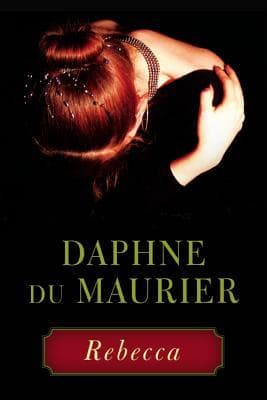
- Rebecca
Daphne du Maurier
4.2 (450k) average on GoodreadsThrillerExplores themes of a new wife haunted by the past in an old house, with psychological suspense.
- An Unsuitable Job for a Woman
P.D. James
3.8 (14k) average on GoodreadsThrillerWhile both feature young, independent women investigating past deaths, James's novel grounds its mystery more in professional investigation and contemporary psychological realism, contrasting with Christie's use of Gothic memory recall and a more traditional Golden Age structure. James's Cordelia Gray is an active, professional detective, whereas Gwenda Reed is an amateur driven by personal trauma.
- Gaudy Night
Dorothy L. Sayers
4.2 (23k) average on GoodreadsHistorical FictionSayers's novel is a masterpiece of intellectual puzzle and social commentary within an academic setting, focusing on psychological motivations and complex character relationships. Sleeping Murder, in contrast, leans into a more primal, domestic Gothic horror with a simpler, yet effective, psychological underpinning of repressed memory, making it less about intellectual debate and more about uncovering a terrifying personal history.
- Angels & Demons
Dan Brown
3.9 (2.7M) average on GoodreadsThrillerA Harvard symbologist races through Rome's ancient sites, deciphering cryptic clues to unmask the Illuminati and stop a vengeful plot to destroy the Vatican with a stolen antimatter weapon.
- Gone Girl
Gillian Flynn
4.1 (2.3M) average on GoodreadsThrillerA wife's sudden disappearance on her fifth anniversary reveals a web of lies and psychological warfare, exposing the secrets within a seemingly perfect marriage.
- The Girl on the Train
Paula Hawkins
3.9 (2.1M) average on GoodreadsThrillerA woman’s fascination with a seemingly perfect couple she watches from her daily train commute leads her into a dark investigation when she witnesses something that shatters their idyllic image.




Enjoyed the summary?
A summary gives you the shape of the book. The book itself has the detail, the examples and the voice.
Find Sleeping Murder on AmazonAs an Amazon Associate, BookBrief earns from qualifying purchases. How we're funded