

Synopsis
Covers the whole plot, including the ending.
- Difficulty
- Easy
- Pacing
- Slow
- Mood
- Whimsical, Reflective, Nostalgic, Gentle
- Read it if
- You enjoy gentle, reflective fantasy, allegorical tales, or are a Tolkien enthusiast looking for a lesser-known work.
- Skip it if
- You prefer fast-paced action, complex plots, or high-stakes epic fantasy.
Smith of Wootton Major Plot Summary
Covers the whole plot, including the ending.
The Feast of Good Children
The village of Wootton Major prepares for its Feast of Good Children, a celebration every twenty-four years where ten-year-olds get a slice of the Great Cake. This cake, known for its magic, is baked by the Master Cook. This time, the current Master Cook, Alf, bakes the cake with his apprentice, Nokes. Years ago, the previous Master Cook, also named Alf, had hidden a small, star-shaped token in the cake for a future child. The children eagerly await their slices, hoping for the cake's wonders.
Smith Receives the Star
At the feast, a boy named Smith receives his slice of the Great Cake and finds a small, five-pointed silver star inside. Unlike other children who find trinkets or nothing, Smith's star is special. The star, a gift from the King of Faery, is not just a charm but a key, giving him access to Faery. Smith, not knowing its true power at first, wears the star on his forehead, where it glows faintly, a sign of his unique link to the magical world beyond the ordinary.
Early Glimpses of Faery
As Smith grows, the star lets him glimpse Faery, often without fully understanding what he sees or where he goes. He finds himself in enchanted glades, seeing mythical creatures, and hearing unearthly music. These experiences feel vivid and real, but back in Wootton Major, they often fade into dreams or strong imagination. He learns to play incredibly beautiful music, and his craftsmanship becomes exceptional, hinting at Faery's subtle influence on his talents.
The Full Awakening
Eventually, Smith learns to use the star to cross into Faery consciously. He discovers he can choose to see the true nature of things, finding magical beings and landscapes usually hidden from mortal eyes. He explores different parts of Faery, meeting its various inhabitants—from beautiful and kind to strange and sometimes dangerous. The star on his forehead becomes a beacon, a welcome sign in many areas and a warning in others, helping him navigate its complexities with some safety and understanding.
Encounters and Journeys in Faery
Smith travels widely in Faery. He visits lands of eternal spring, dark forests with ancient powers, and mountains where mythical creatures live. He interacts with various beings, sometimes watching, sometimes joining their world. He learns their customs, joys, and sorrows. While he never fully leaves his life in Wootton Major, Faery becomes a second home, a place of wonder and deep experience that broadens his understanding of the world and himself, shaping his art and spirit.
The Passage of Time
Years pass in Wootton Major; Smith grows older, marries, and has children. His life as a smith continues, but his secret life in Faery deeply influences his craft and wisdom. He is known for his beautiful work, which seems to have an almost magical quality. The star stays with him, a constant companion and source of wonder. He observes the cycles of life and death, both in his village and in the timeless realm of Faery, gaining a unique perspective on existence that few mortals ever achieve.
The Coming of the Next Feast
Decades pass, and the next Feast of Good Children approaches. Smith, now an old man, still wears the star, though its light may have dimmed to mortal eyes. He watches the preparations in Wootton Major with a mix of joy and sadness, remembering his own childhood feast. He understands the event's importance, not just as a village tradition, but as a possible path for another child into the wonders he has known. The Master Cook, now Nokes, prepares the Great Cake, unaware of the star's history.
The Decision to Pass On the Star
Knowing the star is not meant for one person forever, Smith makes the hard choice to pass it on. He understands the star's purpose: to grant access to Faery, and it is time for someone else to experience its wonders. He carefully removes the star from his forehead. This act is not about loss, but about deep generosity and understanding the star's true nature as a gift to be shared, ensuring the connection between Wootton Major and Faery continues.
The Star's Return to the Cake
Under cover of night, Smith visits the bakery where the Great Cake is being prepared. With great care and secrecy, he places the star back into the cake, embedding it deep within the dough, just as the King of Faery had done decades before. He makes sure it is positioned to be found by a child at the upcoming feast. This act is a silent, selfless gesture, keeping the magical tradition alive and ensuring the gateway to Faery remains open for a new generation.
The Star Finds a New Recipient
At the Feast of Good Children, the cake is cut and given out. A young girl named Tim finds the star in her slice. The narrator notes that though she may not immediately grasp its full meaning, the star will now begin its magic for her, just as it did for Smith. The cycle of wonder and connection to Faery continues, showing the lasting power of the gift and the timeless nature of the magical realm, even as the mortal world of Wootton Major moves forward.
Smith's Legacy and Peace
After passing on the star, Smith lives out his remaining years as an old man in Wootton Major. While he no longer holds the physical key to Faery, the experiences and wisdom from his time there remain deeply within him. He continues his craft, his work still showing subtle magic and beauty. He finds peace knowing that Faery's wonder will continue to touch others' lives, and he carries the memories of his extraordinary journeys with contentment, having fulfilled his role as the star-bearer.
Smith of Wootton Major Characters
Smith
Protagonist
A humble villager chosen by a magical star to explore Faery.
Smith is a kind-hearted and observant boy who grows into a skilled craftsman in the village of Wootton Major. He is characterized by his innate curiosity and a quiet appreciation for beauty, which is amplified by his unique connection to Faery. He is not a hero in the traditional sense, but a wanderer and a witness, whose experiences in Faery enrich his life and his art. He embodies the idea that magic can exist within the ordinary, and that even a simple life can be extraordinary.
Relationships: The King of Faery (indirect benefactor; source of the star); Nokes (apprentice to the Master Cook, later Master Cook himself; a more pragmatic villager); Tim (the next recipient of the star)
The King of Faery
Supporting
The mysterious and benevolent ruler of Faery, who orchestrates the star's journey.
The King of Faery is a wise and ancient being, though he never appears directly in the story. His presence is felt through the star and its purpose. He is the original giver of the star, planting it in the Great Cake to select a mortal child to experience his realm. He represents the timeless magic and enduring mystery of Faery, and his actions demonstrate a benevolent interest in connecting the mortal world with his own, offering a glimpse of wonder to those deemed worthy.
Relationships: Smith (indirect benefactor; chose Smith to be the star-bearer); Faery (ruler and guardian of the realm)
Nokes
Supporting
The apprentice cook who becomes the Master Cook of Wootton Major.
Nokes is introduced as the apprentice to Alf, the Master Cook, and later takes on the role himself. He represents the more mundane, practical side of Wootton Major. He is skilled in his craft but lacks the deep, intuitive understanding of the cake's magical history that Alf possessed, or the connection to Faery that Smith develops. He is a steady, reliable figure, focused on the traditions and duties of the village, serving as a contrast to Smith's enchanted life.
Relationships: Alf (Master Cook) (mentor and predecessor); Smith (fellow villager, though unaware of Smith's secret life)
Alf (Master Cook)
Mentioned
The Master Cook who first placed the star in the Great Cake.
Alf is the Master Cook who initially placed the star within the Great Cake, acting on behalf of the King of Faery. He is a figure of quiet wisdom and connection to the magical world, suggesting that some mortals are aware of the deeper currents flowing through their lives. Though he is only mentioned and appears briefly, his actions set the entire story in motion, highlighting the subtle ways in which the mundane and magical intertwine.
Relationships: The King of Faery (servant/agent); Nokes (his apprentice)
Tim
Supporting
The young girl who becomes the next star-bearer after Smith.
Tim is a young girl from Wootton Major who, at the story's end, receives the star in her slice of the Great Cake. She represents the next generation and the continuation of the magical cycle. Her discovery of the star signals that the wonders of Faery will continue to be accessible to mortals, ensuring that the connection between the two realms remains alive. She is a symbol of hope and the enduring power of magic in the world.
Relationships: Smith (recipient of Smith's passed-on gift)
The Children of Wootton Major
Supporting
The collective group of children who participate in the Feast of Good Children.
These children represent the innocence and potential of the village. They are the recipients of the Great Cake, and their reactions to the trinkets (or lack thereof) they find in their slices highlight Smith's unique experience. They embody the ordinary lives that run parallel to Smith's extraordinary one, emphasizing that while magic is rare, its potential is always present among them. They are the future of the village and the potential future star-bearers.
Relationships: Smith (peers in childhood); The Master Cook (provider of the cake)
Smith of Wootton Major Themes
The Intertwining of Mundane and Magical
The story explores how the ordinary world of Wootton Major connects subtly to the extraordinary realm of Faery. Smith lives a double life, a respected smith in his village and a visitor to Faery. His daily craft becomes better because of his magical experiences, making his work unusually beautiful. This theme appears early with the magical star hidden in the seemingly ordinary Great Cake, a symbol of magic within tradition.
“For the Great Cake was not only a custom but a link, and a door.”
The Nature of Gifts and Stewardship
The star is a gift, not something to keep. Smith's journey involves not just experiencing Faery, but understanding the responsibility that comes with such a gift. His final act of putting the star back into the cake shows a deep understanding of stewardship—that true gifts are meant to be shared and serve a purpose beyond personal enjoyment. This theme is central to Smith's character and the story's ending.
“He knew that the Star was not his own, to keep for ever, or to give to whom he chose.”
Childhood Wonder and Adult Wisdom
The story begins with children at a feast, highlighting an inborn capacity for wonder. Smith's first experiences of Faery are like vivid dreams, blurring reality, much like childhood imagination. As he ages, his understanding of Faery deepens, moving from simple wonder to a deep wisdom about its beauty, dangers, and place in the world. His journey reflects growth from innocent perception to a mature, responsible engagement with magic, without losing the initial sense of awe.
“He had seen wonders and terrors, and he had learned wisdom, and he had made things of beauty.”
The Passage of Time and Continuity
The Feast of Good Children happens every twenty-four years, marking the passage of generations and life's cycles. Smith's story covers several feast cycles, showing how people come and go, but traditions and the magical connection last. His choice to return the star to the cake ensures Faery's link continues, emphasizing that while individual lives are short, the spirit of wonder and magic can persist through time, passed from one generation to the next.
“So the Feast came again in its turn, and the Master Cook baked the Great Cake, and the children came.”
Plot Devices & Literary Techniques
The Great Cake
A ceremonial cake that acts as a conduit for magic and a marker of tradition.
The Great Cake is the central plot device, serving as the literal and symbolic link between Wootton Major and Faery. It is the vessel in which the star is hidden, and its distribution marks the beginning of a child's magical journey. Beyond its magical role, it also represents the enduring traditions of the village and the cyclical nature of time. Its preparation and consumption are ritualistic, emphasizing the importance of community and the subtle presence of magic within everyday life.
The Star
A magical token that grants its bearer access to the realm of Faery.
The star is the primary magical object in the story. It is not merely a charm but a key, a beacon, and a mark of privilege. It allows Smith to perceive and enter Faery, guiding him and protecting him. Its temporary nature, meant to be passed on, highlights the theme of stewardship and the idea that magic is a gift to be shared, not hoarded. The star's faint glow and its ability to disappear and reappear underscore its otherworldly nature.
The Feast of Good Children
A recurring village festival that functions as a magical lottery and rite of passage.
The Feast of Good Children serves as a narrative device to initiate the magical journey for a chosen child every twenty-four years. It provides a structured setting for the transfer of the star and signifies a rite of passage for the children turning ten. Its regular occurrence emphasizes the cyclical nature of the story and the enduring presence of magic within the community's traditions, providing a framework for the story's timeline and the star's transmission.
The Realm of Faery
A magical, parallel world that exists alongside the mortal realm.
Faery is a distinct plot device, acting as the setting for Smith's extraordinary adventures and the source of the story's magic. It is a world of wonder and beauty, but also of potential peril and mystery, existing just beyond the veil of mortal perception. Its existence provides the contrast to the mundane village life of Wootton Major, allowing for the exploration of themes like wonder, wisdom, and the intertwining of different realities. It is the destination and the ultimate teacher for the star-bearer.
Smith of Wootton Major Quotes
“For it is not the time for the King to be abroad, when his people are in danger.”
“But a man must have a star, or he is nothing.”
“The great Cake was divided into twenty-four pieces, one for each year of the child's life, and one over for luck.”
“For the things of Faery are not like the things of the world, and they do not always come when called.”
“But there are always some who are more than others, and they must carry the burden.”
“And it is not well to meddle too deeply with things that are not of your kind.”
“For a gift given, however small, may bear fruit beyond all reckoning.”
“The great world, for all its wonders, can be a lonely place without a friend.”
“And so, when the time came, the Star passed on, as all things must.”
“It is a strange thing to be a child, and stranger still to grow old.”
“For the best of gifts are those that are given freely, and not demanded.”
“There are things in the world that cannot be explained, but only felt.”
“And sometimes, even the smallest of creatures can hold the greatest of secrets.”
“For the true journey is not just out and back, but within and through.”
Quiz
10 questions on the plot and the characters. Each answer comes with a short explanation.
Question 1
What special item does Smith inherit from his grandfather that signifies his connection to Faery?
- A silver locket
- A golden key
- A star in his forehead
- A magical sword
Show answer
C. A star in his forehead Smith inherits a small star in his forehead, which is the gift of Faery passed down through generations.
Question 2
What is the traditional name of the feast held in Wootton Major every twenty-four years?
- The Midsummer Festival
- The Cook's Feast
- The Star-Gazer's Gala
- The King's Jubilee
Show answer
B. The Cook's Feast The feast is known as the Cook's Feast, and it is a central event in the story's beginning.
Question 3
Who is Nokes, the Master Cook at the beginning of the story, before Alf is appointed?
- A skilled baker
- An old, wise man who serves as an advisor
- A grumpy, less imaginative cook
- The village mayor
Show answer
C. A grumpy, less imaginative cook Nokes is depicted as a rather ordinary and uninspired cook, whose retirement paves the way for Alf.
Question 4
What does the star in Smith's forehead enable him to do?
- Understand animal speech
- Travel unseen through the village
- Enter the realm of Faery and perceive its wonders
- Summon food and drink at will
Show answer
C. Enter the realm of Faery and perceive its wonders The star is the key to Smith's ability to cross into Faery and experience its magic and beauty.
Question 5
What is the primary role of Alf, the new Master Cook, in relation to the Star?
- To bake the largest cake for the feast
- To select the child who will receive the Star
- To guard the Star from evil forces
- To teach the children about Faery
Show answer
B. To select the child who will receive the Star Alf, the Master Cook, is responsible for placing the Star into one of the pieces of the Great Cake, thereby choosing its next bearer.
Question 6
How does Smith eventually pass on the Star to another child?
- He gives it to his own son directly.
- He places it into a piece of the Great Cake for the next feast.
- He buries it under a special tree.
- He throws it into a magical well.
Show answer
B. He places it into a piece of the Great Cake for the next feast. Following the tradition, Smith returns the Star to the Master Cook (now himself) to be baked into the Great Cake for a new child to find.
Question 7
What does the story suggest about the nature of Faery and its relationship with the ordinary world?
- Faery is a dangerous place that should be avoided at all costs.
- Faery is completely separate from the human world and has no influence on it.
- Faery is intertwined with the human world, offering wonder and beauty to those with the gift to perceive it.
- Faery is a figment of imagination, not a real place.
Show answer
C. Faery is intertwined with the human world, offering wonder and beauty to those with the gift to perceive it. The story emphasizes that Faery is a real, distinct, yet accessible realm that enhances and enriches the lives of those who can enter it.
Question 8
Why does Smith ultimately decide to pass on the Star, rather than keeping it for himself indefinitely?
- He grows tired of the responsibilities that come with it.
- He realizes that the gift is meant to be shared and passed on to new generations.
- The Star begins to lose its power, forcing him to relinquish it.
- He is commanded by a Faery queen to do so.
Show answer
B. He realizes that the gift is meant to be shared and passed on to new generations. Smith understands that the Star is a gift meant to be experienced by others, ensuring the continued connection between Wootton Major and Faery.
Question 9
What specific 'peril' is alluded to in the description of Faery within the story, despite its beauty?
- The risk of being trapped there forever.
- The danger of losing one's way and forgetting the mortal world.
- Physical harm from hostile Faery creatures.
- The temptation to steal Faery treasures.
Show answer
B. The danger of losing one's way and forgetting the mortal world. The 'perilous realm of Faery' refers to the risk of becoming so enchanted that one might forget their mortal life and responsibilities, a common theme in Faery lore.
Question 10
The story mentions 'intriguing links to the world of Middle-earth'. Which of the following is a thematic link often discussed by scholars regarding 'Smith of Wootton Major' and Tolkien's larger works?
- The direct appearance of Elves or Hobbits in Wootton Major.
- The concept of 'sub-creation' and the importance of craft and artistry.
- The use of a magical ring to travel between worlds.
- A shared historical timeline with events from the First Age.
Show answer
B. The concept of 'sub-creation' and the importance of craft and artistry. Tolkien's concept of 'sub-creation,' where mortals create secondary worlds through art and craft, is a strong thematic link present in both 'Smith of Wootton Major' and his Middle-earth legendarium.
Smith of Wootton Major FAQ
What is the basic premise of 'Smith of Wootton Major'?
The story centers on Smith, a young boy from the village of Wootton Major, who inherits a magical star from a special Great Cake baked for the village's twenty-four-year Feast of Good Children. This star grants him a passport to the perilous and enchanting realm of Faery, allowing him to experience its wonders and dangers throughout his life.
Who is Nokes and what is his role in the story?
Nokes is the current Master Cook of Wootton Major, responsible for baking the traditional Great Cake for the Feast of Good Children. He is a somewhat pompous and conventional man, initially dismissive of Alf, the former Master Cook's apprentice, and later unknowingly passes on the magical star to Smith.
How does Smith first come into possession of the magical star?
The magical star is baked into the Great Cake prepared for the Feast of Good Children. Smith, as one of the children celebrating their tenth birthday, receives the slice containing the star. He swallows it without realizing its true nature, and it settles on his forehead, becoming visible only in Faery.
What is the significance of the Feast of Good Children?
The Feast of Good Children is a traditional celebration held every twenty-four years in Wootton Major, honoring all children turning ten. It is the occasion when the Great Cake is baked, and historically, it is when the Master Cook from Faery, disguised as an apprentice, places a magical token into the cake.
How does Smith's family react to his unusual abilities and frequent disappearances?
Smith's family, particularly his wife, is aware that he is 'different' and often preoccupied, but they do not fully comprehend the true nature of his journeys into Faery. They accept his wanderings with a mixture of resignation and quiet understanding, attributing it to his unique character.
Who is Alf, and what is his true identity?
Alf initially appears as Nokes's quiet and skilled apprentice, but he is in fact the former Master Cook, who is himself a King of Faery. He deliberately places the magical star into the Great Cake, intending it for a worthy recipient to carry the spirit of Faery into the human world.
What is the significance of the Queen of Faery's gaze upon Smith?
The Queen of Faery's gaze is a moment of profound recognition and blessing. It signifies her approval of Smith as a worthy bearer of the star and a true friend to Faery, acknowledging his deep understanding and respect for her realm. It is a silent bestowal of grace and acceptance.
How does the story subtly link to the concept of 'luck' or 'fate' in Tolkien's broader mythology?
The seemingly accidental inheritance of the star by Smith, guided by Alf's deliberate placement, echoes the themes of 'eucatastrophe' and 'providence' found in Middle-earth. It suggests a higher design at play, where seemingly random events lead to significant outcomes for individuals and realms.
What is the symbolic meaning of the star itself within the narrative?
The star symbolizes a connection to the numinous and the magical, serving as both a key and a mark of belonging to Faery. It represents inspiration, wonder, and the inner light that allows one to perceive and interact with the unseen world, rather than just a physical object.
How does Smith's journey into Faery reflect a psychological need for escapism or wonder?
Smith's frequent retreats into Faery can be interpreted as fulfilling a deep human psychological need for wonder, beauty, and a connection to something beyond the mundane. He isn't escaping from misery but rather seeking a profound enrichment of his soul, a common theme in human desire for the fantastical.
In what ways does Smith's character embody a balanced approach to the mundane and the magical?
Smith embodies a rare balance by living a fulfilling life in Wootton Major as a respected craftsman and family man, while simultaneously experiencing the wonders of Faery. He integrates both realities without abandoning one for the other, showing a healthy psychological integration of fantasy and reality.
How does the story explore the psychological impact of aging and the passing of wonder?
The narrative subtly explores the bittersweet nature of aging as Smith eventually passes on the star. It reflects the psychological reality that while direct engagement with pure wonder may diminish with age, the lessons and spirit of it can be passed on, transforming into wisdom and legacy.
What psychological archetype does Smith represent in his role as the 'star-bearer'?
Smith represents the archetype of the 'Wanderer' or 'Seeker of Truth,' who is chosen to bridge worlds. He is also the 'Gifted Mortal,' granted a unique connection to the transcendent, reflecting the human capacity to perceive and engage with deeper realities beyond the everyday.
Is 'Smith of Wootton Major' primarily a children's story, or does it contain deeper philosophical layers for adults?
While accessible to children due to its clear narrative and magical elements, 'Smith of Wootton Major' contains profound philosophical layers concerning the nature of Faery, the role of art and wonder in life, and the passing of traditions, making it deeply resonant for adult readers.
How does the story engage with Tolkien's concept of 'Faery' as distinct from mere 'fairies'?
The story presents Faery as a perilous and profound realm, not just a place of tiny winged creatures, aligning with Tolkien's broader definition of Faery as a dimension of imagination, danger, and deep magic. It's a place where mortals can be lost or transformed, emphasizing its power and otherness.
What is the interpretation of the star being passed on to the next generation?
The passing of the star to the next Master Cook, who then places it in the cake for the next generation, symbolizes the enduring nature of wonder, the cyclical renewal of inspiration, and the idea that the spirit of Faery must be continually nurtured and passed down to new receptive souls.
Does the ending of the story suggest a loss of magic in the world, or merely a shift?
The ending suggests a shift rather than a complete loss. While Smith gives up his personal connection to the star, the star itself continues its journey, ensuring that Faery's influence persists. It implies that wonder adapts and finds new vessels, rather than diminishing entirely.
How does the character of Alf (the King of Faery) embody a specific aspect of Tolkien's view on the role of magic in the world?
Alf embodies the idea of magic as a subtle, guiding force, working through seemingly ordinary channels to maintain a connection between worlds. He doesn't overtly intervene but orchestrates events to preserve the spirit of Faery, reflecting Tolkien's preference for 'enchantment' over overt 'magic tricks'.
About the author
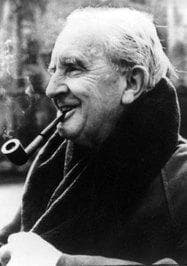
J.R.R. Tolkien was an English writer and philologist, best known for his high-fantasy works. His notable books include "The Hobbit, or There and Back Again," "The Fellowship of the Ring," and "The Return of the King," which are foundational texts in the fantasy genre. He also authored "The Silmarillion" and a boxed set featuring "The Hobbit" and "The Lord of the Rings."
Similar books
- The Last Unicorn
Peter S. Beagle
4.3 (8k) average on GoodreadsFantasyFeatures a journey into a magical, often bittersweet, realm with a reflective tone.
- Farmer Giles of Ham
J.R.R. Tolkien
3.9 (8k) average on GoodreadsFantasyAnother charming, shorter work by Tolkien set in a whimsical, pseudo-medieval world.
- A Wizard of Earthsea
Ursula K. Le Guin
4.0 (241k) average on GoodreadsFantasyLe Guin's work focuses on the weighty responsibility and potential hubris of magic, emphasizing moral development through trials and consequences. In contrast, Tolkien's story is one of gentle discovery and integration of wonder, less about power's dangers and more about its appreciation.
- Harry Potter and the Sorcerer's Stone
J.K. Rowling
4.5 (7M) average on GoodreadsFantasyRescued from a miserable life under the stairs, an orphaned boy discovers he's a wizard destined for a magical school, where he uncovers a dangerous secret tied to the dark wizard who murdered his parents.
- The Hunger Games
Suzanne Collins
4.3 (6.4M) average on GoodreadsFantasyIn a future where children fight to the death on live television, Katniss Everdeen volunteers for the arena, turning a death sentence into a fight for survival and a spark of rebellion.
- 1984
George Orwell
4.2 (3.1M) average on GoodreadsPoliticsIn a future where surveillance and thought control are absolute, a man's search for truth clashes with the Party, showing that hope can be a form of rebellion.





Enjoyed the summary?
A summary gives you the shape of the book. The book itself has the detail, the examples and the voice.
Find Smith of Wootton Major on AmazonAs an Amazon Associate, BookBrief earns from qualifying purchases. How we're funded