

Synopsis
Covers the whole plot, including the ending.
- Difficulty
- Easy
- Pacing
- Moderate
- Mood
- Humorous, Whimsical, Charming, Lighthearted
- Read it if
- You enjoy lighthearted, humorous fantasy stories with a reluctant hero and sly wit, or are a fan of Tolkien's less serious works.
- Skip it if
- You prefer serious, epic fantasy, or are looking for a story with deep character development and complex world-building.
Farmer Giles of Ham Plot Summary
Covers the whole plot, including the ending.
The Arrival of the Giant
A simple, peace-loving farmer named Giles lives in the village of Ham in the Middle Kingdom. One day, a clumsy giant named Gawaine wanders into the kingdom, damaging crops. The villagers are scared, but Giles, with his old blunderbuss, decides to act. He fires a shot at the giant, not to hurt him, but to make noise. The giant, annoyed by the pellets and mistaking Giles for an insect, leaves. This act earns Giles fame and respect among his villagers and the King, who gives him a sword named Caudimordax, though Giles doesn't know its power.
The King's Recognition and the Sword
After his accidental heroism, Farmer Giles goes to the King's court. The King, impressed by Giles's supposed bravery, knights him and gives him a sword with a dog's head hilt, named Caudimordax, meaning 'tail-biter'. Giles, a practical and somewhat lazy man, sees this honor and the sword as a burden. He cares more about his farm than knightly duties. The sword, however, is a legendary weapon made for slaying dragons. Its true nature and power remain hidden from Giles, who just tolerates its presence as a symbol of his unwanted fame.
The Dragon's Awakening
News spreads that a dragon, Chrysophylax Dives, has awakened and is causing trouble in the northern kingdom, eating livestock and hoarding treasure. The King, remembering Giles's 'bravery' against the giant, sends for Sir Giles of Ham to deal with this new threat. Giles, despite his growing discomfort and wish to avoid more heroics, cannot refuse the royal command. He tries to make excuses, but the pressure from the villagers and the King's court is too great. He must accept his new role, however unwillingly.
The Reluctant Journey
With much complaining and delay, Farmer Giles prepares for his journey. He travels with his loyal, smart dog, Garm, who often understands more than Giles. Giles rides his mare, who is as stubborn and practical as he is. He carries the magical sword Caudimordax, which he still doubts, and his old blunderbuss. The villagers, full of admiration, send him off with ceremony, believing him to be their champion. Giles, however, feels dread and hopes the dragon will disappear or be handled by someone else before he arrives.
Caudimordax Reveals Itself
As Giles and Garm travel, Caudimordax shows its true nature. When the dragon is near, the sword becomes heavy and hard to sheathe, pulling Giles toward the danger. This unnerves Giles, who prefers to avoid conflict, but he cannot ignore the sword's pull. Garm, with his sharp senses, also knows the dragon is close and tries to warn Giles. The sword's increasing activity makes it clear that a direct meeting with Chrysophylax is unavoidable, much to Giles's dismay.
The First Encounter with Chrysophylax
Giles finally meets Chrysophylax, a large and clever dragon. The dragon, expecting a traditional knight, first dismisses the unassuming farmer. However, Giles, guided by the sword's magic and his own unexpected quick thinking, gains an advantage. He uses his knowledge of the land and his blunderbuss to distract the dragon, letting him get close enough for Caudimordax to work. The sword, now glowing, causes Chrysophylax great pain and fear when it nips at his tail, showing its legendary power against dragons.
The Dragon's Surrender
After a fierce but quick battle, Chrysophylax, badly stung and scared by the magical sword, surrenders to Giles. The dragon, being smart and practical, agrees to return all stolen treasure and promises to leave the Middle Kingdom in peace, if Giles spares his life. Giles, never cruel without reason, accepts the terms. This unexpected outcome further solidifies Giles's reputation as a dragon-slayer, though he knows it was mostly due to the sword and the dragon's own cleverness rather than his personal bravery.
The Return of the Treasure
True to his word, Chrysophylax begins to return the vast treasure he had collected. This includes items stolen from the Middle Kingdom and other riches from his lair. The returned gold and jewels amaze the villagers and the King. Giles, now wealthy, uses some treasure for his comfort and farm, but also shares a good portion with the villagers. The kingdom benefits greatly from the dragon's unwilling generosity, and Giles's fame grows.
The Dragon's Treachery and Giles's Resolve
Despite his promise, Chrysophylax tries to break his agreement, hoping to escape and reclaim his treasure. He tries to trick Giles, but Garm, always watching, stops the dragon's plans. This act of betrayal strengthens Giles's resolve. Realizing the dragon cannot be trusted, Giles decides a more permanent solution is needed. He understands his initial leniency was a mistake and that to ensure his kingdom's safety, he must take a more decisive, though still reluctant, action against the dragon.
The Final Confrontation and the Dragon's Service
In a final, decisive fight, Giles, now fully aware of Caudimordax's power and his own unexpected courage, completely controls Chrysophylax. Instead of killing the dragon, Giles, with his usual practicality, decides to put the dragon to work. He forces Chrysophylax to carry his treasure and serve him, ensuring the dragon's good behavior. This unique solution is both effective and profitable, further cementing Giles's legend as not just a dragon-slayer, but a dragon-master, and securing the Middle Kingdom's peace.
The Founding of the Little Kingdom
With his new wealth and Chrysophylax under his command, Farmer Giles and the people of Ham become more independent from the King of the Middle Kingdom. Giles, tired of the King's demands and constant expectations of heroism, eventually declares his territory, the 'Little Kingdom,' separate from the larger realm. He establishes himself as the ruler of this new domain, with his own court, and the now-obedient Chrysophylax as a unique, if reluctant, beast of burden and guardian. This act completes his change from a simple farmer to a sovereign ruler.
Principal Figures
Farmer Giles of Ham
Protagonist
A reluctant, pragmatic farmer who becomes an accidental hero and king.
Giles is a simple, somewhat lazy, and eminently practical farmer who prefers the quiet life of his farm to adventure. He is initially portrayed as an ordinary man, slightly plump and fond of comfort. Despite his lack of heroic ambition, he possesses a shrewd wit, common sense, and an unexpected resourcefulness when pushed. He is a man of the earth, more concerned with his crops and livestock than with glory or royal decrees. His actions are often driven by self-preservation or a desire for peace, rather than grand ideals.
Relationships: Garm (Loyal and intelligent dog, Giles's companion and often his unacknowledged advisor.); Chrysophylax Dives (Antagonistic at first, then a subdued servant and beast of burden.); The King of the Middle Kingdom (His sovereign, whom Giles eventually defies to form his own kingdom.)
Garm
Supporting
Farmer Giles's loyal and intelligent dog.
Garm is Farmer Giles's faithful canine companion. He is exceptionally intelligent, often understanding situations better than his master and possessing a keen sense of danger. He is practical and observant, frequently providing unspoken warnings or guidance to Giles. Garm is fiercely loyal and plays a crucial role in several key moments, particularly in sensing the dragon's presence and foiling Chrysophylax's attempts at trickery. He is a source of quiet wisdom and unwavering support for Giles.
Relationships: Farmer Giles (His master and companion, whom he loyally serves.)
Chrysophylax Dives
Antagonist/Supporting
A cunning and greedy dragon, later subdued by Giles.
Chrysophylax Dives is a large, ancient, and exceedingly cunning dragon. He is intelligent, articulate, and driven by a powerful desire for gold and comfort. While formidable and destructive, he is also pragmatic and capable of negotiation when faced with overwhelming force, particularly the magical sword Caudimordax. He initially views humans with disdain but learns to respect Giles's unexpected resourcefulness. His name, 'Chrysophylax Dives,' literally means 'Keeper of Gold' and 'Rich,' highlighting his primary motivation.
Relationships: Farmer Giles (His conqueror and later, his master.)
The King of the Middle Kingdom
Supporting
The somewhat pompous ruler who bestows unwanted fame upon Giles.
The King of the Middle Kingdom is a well-meaning but somewhat detached and self-important monarch. He is quick to bestow honors and demand heroic deeds, often based on superficial understanding of events. He represents the established authority that Giles eventually challenges. The King is fond of ceremony and titles, but lacks the practical common sense of Giles. He initially admires Giles's 'bravery' but eventually finds himself outmaneuvered by the farmer's growing independence.
Relationships: Farmer Giles (His subject, who becomes a rival and eventually an independent ruler.)
Gawaine
Mentioned
A short-sighted and clumsy giant.
Gawaine is the giant whose accidental encounter with Farmer Giles initiates Giles's reputation as a hero. He is depicted as large, clumsy, and somewhat dim-witted, mistaking Giles's blunderbuss pellets for annoying insect stings. His retreat is not out of fear of Giles, but annoyance, which ironically elevates Giles to heroic status. Gawaine's role is brief but pivotal in setting the stage for Giles's unwilling adventures.
Relationships: Farmer Giles (The human who inadvertently scares him away.)
The Parish Council of Ham
Supporting
The local governing body representing the villagers' interests.
The Parish Council of Ham represents the collective voice and interests of the villagers. They are largely reactive, prone to panic when faced with threats like giants or dragons, and quick to hail Giles as their savior. They are also instrumental in pressuring Giles to undertake his heroic tasks, reflecting the community's desire for protection and their unwavering belief in Giles's capabilities, regardless of his own feelings.
Relationships: Farmer Giles (Their local hero and later, their ruler.)
The Mare
Supporting
Farmer Giles's loyal and stubborn horse.
Giles's mare is a practical, stubborn, and sensible animal, much like her master. She is not a grand warhorse but a reliable farm animal, perfectly suited to Giles's pragmatic nature. She accompanies Giles on his journey to confront the dragon, often reflecting her master's reluctance and occasional grumpiness. Her steadfastness provides a grounding presence for Giles during his adventures.
Relationships: Farmer Giles (Her owner and rider.)
Themes & Insights
Accidental Heroism and Reluctant Leadership
The story centers on Farmer Giles, an ordinary man who becomes a hero by accident. His first 'bravery' against the giant is a misunderstanding, and his later fight with Chrysophylax is forced upon him. Giles tries to avoid his duties, but his common sense and Caudimordax's magic keep pushing him into heroic acts. This theme questions the traditional idea of heroism, suggesting that courage can appear unexpectedly and that leadership can be forced on those who least want it. For example, Giles's grumbling acceptance of his knighthood and his delays in fighting the dragon show his reluctance.
“Giles was by no means a hero by nature; he was a 'humbug', a man of peace and comfort, and a lover of good food and a quiet life.”
The Power of Common Sense vs. Grandeur
Tolkien often contrasts Farmer Giles's practical, down-to-earth common sense with the more formal, often inefficient, grandeur of the King and his court. Giles's solutions, whether dealing with a giant or a dragon, are practical and often unusual, relying on his knowledge of farming and daily life. The King, in contrast, relies on titles, ceremonies, and traditional knightly courage, which are shown to be less effective. Giles's decision to make Chrysophylax work rather than simply kill him is a prime example of his practical approach winning over conventional heroic actions.
“Giles knew more about beasts than most knights, and more about fields than any king.”
Subverting Epic Fantasy Tropes
The story playfully reverses many common ideas in epic fantasy and medieval romances. The hero is not a noble knight but a simple farmer; the magical sword needs no special skill to use, only to be near a dragon; and the dragon, though powerful, is also smart and can negotiate, instead of just being mindlessly destructive. The tale mocks the arrogance of kings and the often-exaggerated accounts of heroism. This reversal is clear when the giant's retreat is due to annoyance, not fear, and Giles constantly complains about his heroic duties.
“He was, in fact, Sir Giles, though he did not like the title, and was not much of a Sir.”
The Evolution of Power and Governance
The story subtly explores themes of political change and the creation of new governments. Giles's journey from a simple subject to an independent ruler, establishing his 'Little Kingdom,' shows a shift in power. His rule comes not from conquest or divine right, but from necessity, popular support, and his own practical skills. The story suggests that effective leadership can come from ordinary people and challenge established, less effective, monarchies. This is clearly seen when Giles, with his dragon and treasure, becomes more powerful than the King.
“He established himself as the undisputed Lord of the Little Kingdom.”
Plot Devices & Literary Techniques
The Blunderbuss
An old, rusty firearm that initiates Giles's accidental fame.
The blunderbuss is a key plot device that kickstarts Giles's heroic journey. It is an old, rusty, and rather ineffective firearm, yet its loud report and scattered pellets are enough to annoy the giant Gawaine into retreating. This creates the initial misunderstanding that transforms Giles from an ordinary farmer into a celebrated hero. The blunderbuss symbolizes Giles's common, unheroic nature, and its 'success' highlights the accidental and ironic nature of his early fame.
Caudimordax (Tail-biter)
A magical, dragon-slaying sword that guides and empowers Giles.
Caudimordax is a legendary sword with a dog's head hilt, gifted to Giles by the King. It is a magical artifact specifically designed to combat dragons, becoming active and powerful in their presence. Giles initially views it as a cumbersome ornament, unaware of its true nature. The sword acts as a sentient guide and a source of power, literally pulling Giles towards the dragon and inflicting pain upon Chrysophylax. It represents destiny and inherent power, making Giles a hero despite himself.
The Dragon's Hoard
A vast collection of treasure that serves as both motive and reward.
Chrysophylax's hoard of treasure is a central plot device, serving multiple functions. It is the primary motivation for the dragon's actions (greed) and the reason for its initial conflict with the kingdom. Once retrieved, the hoard becomes a significant reward for Giles, granting him immense wealth and power. This wealth enables him to assert his independence from the King and establish his own 'Little Kingdom,' transforming him from a simple farmer to a sovereign ruler.
Garm's Intelligence
The dog's keen senses and understanding that aid Giles.
Garm's exceptional intelligence and loyalty are crucial plot devices. He acts as Giles's silent, often unacknowledged, advisor and protector. His ability to sense danger, understand situations, and even foil the dragon's trickery (as when Chrysophylax tries to escape) is vital to Giles's success. Garm represents intuitive wisdom and unwavering fidelity, often providing the practical insights that Giles, despite his common sense, might overlook in moments of stress or reluctance.
Farmer Giles of Ham Quotes
“It was a lazy time. But it was also a time of peace and plenty for the most part.”
“Giles was a rather short, red-bearded man, and he was getting on in years.”
“For the first time in his life Giles had a reputation. He was a hero.”
“It is a dangerous thing to meddle with dragons, and a still more dangerous thing to meddle with a dragon's treasure.”
“Chrysophylax Dives was a dragon of the old and opulent sort. He was ancient, and cunning, and very rich.”
“It is always best to be polite to dragons, if you can. But it is not always easy.”
“The King was a great hand at making laws, but not so good at enforcing them.”
“He had a sword, and he had a dog, and he had a reputation, and he had a bit of luck.”
“A good name is better than riches, they say. But riches are not to be despised.”
“It is often the way with kings: they like to give orders, but not to take them.”
“And that is the end of the story of Farmer Giles of Ham, and of the rise of the Little Kingdom.”
“He was not a hero by nature, nor a swordsman, nor a king, but he became all these things.”
“The dragon was quite comfortable, and if he had only been left alone, he would have done no harm.”
“It is a rare thing to find a king who knows his own mind, and rarer still to find one who knows the minds of others.”
Quiz
10 questions on the plot and the characters. Each answer comes with a short explanation.
Question 1
What is the name of the dragon that Farmer Giles is eventually called upon to face?
- Smaug
- Glaurung
- Chrysophylax
- Fafnir
Show answer
C. Chrysophylax The synopsis explicitly states that Farmer Giles is called to save his country from the marauding dragon Chrysophylax.
Question 2
How does Farmer Giles initially gain his reputation as a hero?
- By bravely challenging a knight to a duel.
- By using his blunderbuss to drive away a wandering giant.
- By discovering a hidden treasure.
- By taming a wild beast.
Show answer
B. By using his blunderbuss to drive away a wandering giant. The synopsis mentions that Giles wins a great reputation by firing his blunderbuss at a wandering giant.
Question 3
What is the giant's true reason for retreating after Farmer Giles shoots at him?
- He was genuinely terrified of Giles's bravery.
- He was wounded by the blunderbuss shot.
- He wanted to avoid the tiresome stinging 'insect' (Giles).
- He was called away by another urgent matter.
Show answer
C. He wanted to avoid the tiresome stinging 'insect' (Giles). The synopsis clarifies that the giant retreats 'not in fear but to avoid this tiresome stinging "insect"'.
Question 4
What special item does Farmer Giles possess that is effective against dragons?
- A magical shield
- A legendary anti-dragon sword
- An enchanted helmet
- A powerful spellbook
Show answer
B. A legendary anti-dragon sword The text states that Giles 'has a legendary anti-dragon sword and a lot of luck'.
Question 5
What type of explanation does Tolkien humorously provide for certain Thames Valley placenames within the story?
- Historical accounts of ancient battles.
- Philological explanations linking them to Giles's adventures.
- Botanical origins related to local flora.
- Geographical descriptions of their formation.
Show answer
B. Philological explanations linking them to Giles's adventures. The synopsis mentions Tolkien's 'jokey philological explanations that Giles's amazing adventures are commemorated in Thames Valley placenames like Worminghall and Thame'.
Question 6
What is the meaning of the dragon's name, Chrysophylax, according to the bonus notes in the anniversary edition?
- Lord of Fire
- Winged Terror
- Keeper of Gold
- Ancient Serpent
Show answer
C. Keeper of Gold The bonus section notes that 'Chrysophylax means "keeper of gold", which is indeed what dragons do'.
Question 7
The synopsis compares Farmer Giles to which other reluctant heroes?
- King Arthur and Beowulf
- Robin Hood and Zorro
- The Brave Little Tailor and Bilbo in The Hobbit
- Hercules and Odysseus
Show answer
C. The Brave Little Tailor and Bilbo in The Hobbit The text describes Giles as 'A reluctant hero like the Brave Little Tailor or Bilbo in The Hobbit'.
Question 8
What specific content is included in the 50th-anniversary edition as a bonus, besides the main story and illustrations?
- A sequel story and new character profiles.
- An introduction, an original unfinished draft, and notes on allusions and names.
- Author's personal letters and a map of the setting.
- Audio recordings of Tolkien reading the story and a glossary of terms.
Show answer
B. An introduction, an original unfinished draft, and notes on allusions and names. The bonus content includes 'an introduction telling the story's history, a transcription of the original, unfinished draft, and 23 pages of notes on allusions and names'.
Question 9
What is the primary criticism leveled against the illustrations by Paula Baynes in the 50th-anniversary edition?
- They are too modern in style for the story.
- They depict the characters inaccurately.
- They look faded, 'like fourth-generation photocopies'.
- There are too few illustrations for the length of the book.
Show answer
C. They look faded, 'like fourth-generation photocopies'. The review states, 'Tolkien loved these, but some look sadly faded here, like fourth-generation photocopies.'
Question 10
In what decade was 'Farmer Giles of Ham' expanded for publication, despite being originally told to Tolkien's children much earlier?
- 1930s
- 1940s
- 1950s
- 1960s
Show answer
B. 1940s The synopsis states it was 'originally told to his children in the 1920s and expanded for publication in 1949'.
Farmer Giles of Ham FAQ
What is the basic premise of 'Farmer Giles of Ham'?
The story follows Farmer Giles, an ordinary and somewhat blustery farmer in a land-of-fable England, who inadvertently gains a reputation for bravery after a chance encounter with a giant. This fame leads him to confront a formidable dragon named Chrysophylax, despite his own reluctance and desire for a quiet life.
How does Farmer Giles first become famous?
Giles achieves initial fame when he fires his blunderbuss at a giant who wanders into his fields. The giant, annoyed by the stinging pellets rather than truly frightened, retreats, leading the villagers to believe Giles bravely drove him off, much to Giles's own surprise and eventual discomfort.
Who is Chrysophylax and what is his role in the story?
Chrysophylax is the main antagonist, a cunning and somewhat vain dragon who terrorizes the kingdom. His name, meaning 'keeper of gold,' aptly describes his nature, as he is primarily motivated by accumulating treasure, which ultimately becomes his undoing when confronted by Giles.
What special item does Farmer Giles possess that aids him against the dragon?
Farmer Giles comes into possession of Caudimordax, a legendary anti-dragon sword. This sword, whose name means 'tail-biter,' is a crucial element in his confrontation with Chrysophylax, possessing inherent properties that make it uniquely effective against dragons.
How does the story conclude for Farmer Giles?
Giles, through a combination of luck, the magical sword, and his own unexpected shrewdness, manages to defeat and subjugate Chrysophylax. He then uses the dragon's hoard to establish himself as the King of the Little Kingdom, demonstrating a significant shift from his humble beginnings.
What is the significance of the placenames mentioned in the story, like Worminghall and Thame?
Tolkien cleverly incorporates jokey philological explanations, suggesting that Giles's adventures are commemorated in real-world Thames Valley placenames. Worminghall, for instance, alludes to 'worm' (an old term for dragon), while Thame is linked to the location of his exploits, adding a layer of meta-narrative wit.
What is the meaning behind the dragon's name, Chrysophylax?
Chrysophylax is a Greek-derived name meaning 'keeper of gold.' This detail highlights the dragon's primary motivation and nature, emphasizing its avarice and the traditional role of dragons in hoarding treasure, a core element of its character and eventual downfall.
How does the story connect to Tolkien's other works, particularly 'The Hobbit'?
Farmer Giles is described as a 'reluctant hero' similar to Bilbo Baggins in 'The Hobbit.' Both characters are ordinary individuals who prefer comfort but are drawn into extraordinary adventures and display unexpected courage and cunning when faced with formidable foes like dragons, reflecting a common Tolkienian archetype.
What is the role of the dog, Garm, in Giles's adventures?
Garm, Giles's loyal but somewhat dim-witted dog, plays a minor but significant role. He is the one who initially alerts Giles to the giant's presence, inadvertently setting off the chain of events that leads to Giles's fame, showcasing the unpredictable nature of fate in the narrative.
How does Farmer Giles's psychology evolve throughout his journey?
Initially, Giles is a bluff, self-interested, and somewhat lazy farmer who prioritizes comfort. As events unfold, he reluctantly embraces his 'heroic' role, developing unexpected shrewdness, assertiveness, and leadership qualities, culminating in his transformation from farmer to king.
In what ways does Giles demonstrate an 'unheroic' psychological profile at the start?
At the outset, Giles is characterized by his desire to avoid trouble, his grumbling nature, and his general disinterest in anything beyond his farm and comfort. He is an accidental hero, constantly trying to shirk responsibility, which grounds his character in relatable human flaws.
How does Chrysophylax's vanity and cunning influence his actions?
Chrysophylax's vanity makes him susceptible to flattery and underestimation of his opponents, particularly Giles. His cunning allows him to negotiate and manipulate situations, but ultimately, his pride leads him to be outwitted by Giles, who exploits these very traits.
What psychological insight does the story offer about accidental heroism?
The story suggests that heroism can emerge from unexpected places and circumstances, often driven by necessity or even self-interest. Giles's journey illustrates that courage isn't always a pre-existing trait but can be forged through challenging experiences, even for the most reluctant individuals.
Is Farmer Giles a true hero or merely lucky?
This is debatable. While Giles benefits immensely from luck and the magical sword Caudimordax, he also displays growing cunning, resourcefulness, and a willingness to act when pushed. His transformation from reluctant farmer to effective king suggests more than just luck, implying an emergent, if unconventional, heroism.
What is the primary satirical target of 'Farmer Giles of Ham'?
The story subtly satirizes bureaucracy, political maneuvering, and the nature of reputation. The King's court, the knights' cowardice, and the way Giles's fame is manufactured and then exploited all point to a critique of societal structures and the often-undeserved nature of public acclaim.
How does the story subvert traditional fairy tale tropes?
'Farmer Giles of Ham' subverts tropes by presenting a highly reluctant, rather unglamorous protagonist who achieves greatness more through accidental circumstances and shrewdness than inherent bravery. The dragon itself is also more cunning and conversational than a typical monstrous adversary, adding a layer of realism to the fantasy.
What message does the story convey about power and leadership?
The story suggests that true leadership can arise from practical competence and shrewdness, even in unexpected individuals, rather than solely from noble birth or established authority. Giles, despite his humble origins, proves to be a more effective leader than the existing King and his knights, highlighting the merits of common sense.
About the author
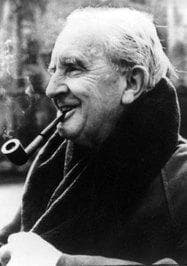
J.R.R. Tolkien was an English writer and philologist, best known for his high-fantasy works. His notable books include "The Hobbit, or There and Back Again," "The Fellowship of the Ring," and "The Return of the King," which are foundational texts in the fantasy genre. He also authored "The Silmarillion" and a boxed set featuring "The Hobbit" and "The Lord of the Rings."
Similar books
- The Hobbit, or There and Back Again
J.R.R. Tolkien
4.3 (2.9M) average on GoodreadsFantasyFeatures a reluctant hero (Bilbo) going on an unexpected adventure and confronting a dragon, with a similar blend of fantasy and wit.
- Stardust
Neil Gaiman
4.1 (359k) average on GoodreadsFantasyA whimsical, fairy-tale-like fantasy adventure with a journey, magical elements, and a lighthearted tone.
- The Sword in the Stone
T.H. White
3.9 (23k) average on GoodreadsFantasyBoth books employ humor and satire within a medieval-inspired setting. However, White's work offers a more expansive and deeply philosophical exploration of Arthurian legend, with more complex character arcs, a greater emphasis on education, and a deeper psychological insight into its characters. 'Farmer Giles' is more focused on linguistic play and light satire, with less profound character development.
- Harry Potter and the Sorcerer's Stone
J.K. Rowling
4.5 (7M) average on GoodreadsFantasyRescued from a miserable life under the stairs, an orphaned boy discovers he's a wizard destined for a magical school, where he uncovers a dangerous secret tied to the dark wizard who murdered his parents.
- The Hunger Games
Suzanne Collins
4.3 (6.4M) average on GoodreadsFantasyIn a future where children fight to the death on live television, Katniss Everdeen volunteers for the arena, turning a death sentence into a fight for survival and a spark of rebellion.
- 1984
George Orwell
4.2 (3.1M) average on GoodreadsPoliticsIn a future where surveillance and thought control are absolute, a man's search for truth clashes with the Party, showing that hope can be a form of rebellion.






Enjoyed the summary?
A summary gives you the shape of the book. The book itself has the detail, the examples and the voice.
Find Farmer Giles of Ham on AmazonAs an Amazon Associate, BookBrief earns from qualifying purchases. How we're funded