
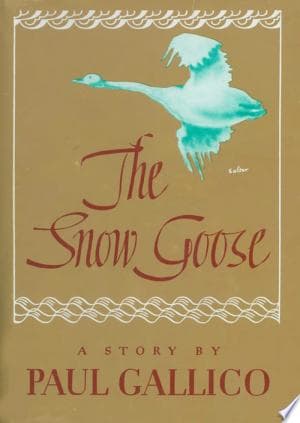
Synopsis
Covers the whole plot, including the ending.
- Difficulty
- Easy
- Pacing
- Slow
- Mood
- Melancholy, Poignant, Hopeful, Reflective
- Read it if
- You enjoy poignant tales of unlikely friendships, quiet heroism, and the profound impact of nature amidst human conflict.
- Skip it if
- You prefer fast-paced action or stories with complex plots and multiple character arcs.
Snow Goose Plot Summary
Covers the whole plot, including the ending.
The Lonely Artist of the Lighthouse
Philip Rhayader, a painter with a disfigured hand and shoulder, lives in an abandoned lighthouse on the desolate Essex coast. Society shuns him due to his appearance, so he lives alone, painting the wild landscape and its migratory birds. Gulls, curlews, and geese are his only companions. He has a gentle spirit, despite his outward appearance, and feels a deep connection to the natural world, which he paints skillfully. His life is peaceful but very isolated, following nature's rhythms instead of human interaction.
Fritha's Arrival and the Wounded Goose
One bleak November afternoon, a small, timid girl named Fritha, from a nearby fishing village, comes to Rhayader's lighthouse. She carries a large, pure white snow goose with a broken, bleeding wing. Fritha, initially afraid of the reclusive artist due to local superstitions, gathers the courage to ask for his help. Rhayader, despite usually avoiding people, is moved by the girl's compassion and the bird's injury. He gently takes the goose, understanding its need for care, and begins to tend to its wound, creating the first link between his solitary world and another person.
Nursing the Snow Goose Back to Health
Rhayader carefully cares for the wounded snow goose, which Fritha names 'Canada' because of its origins. He splints its wing and gives it a safe place in his studio. Fritha, overcoming her shyness, starts visiting regularly, bringing food for the bird and watching Rhayader's gentle care. Through their shared concern for Canada, a quiet understanding develops between the disfigured artist and the young girl. Fritha learns that beneath his rough exterior, Rhayader is deeply kind. Rhayader finds a quiet companionship he had long missed. The goose slowly recovers with their combined attention.
Canada's Recovery and Migration
As spring nears, Canada's wing heals, and it regains its strength. The snow goose, now fully recovered, begins to show its wild instincts, wanting the open sky and the call of its kind. One morning, it flies off, circling the lighthouse before heading north to its breeding grounds. Fritha and Rhayader watch it leave with a mix of joy for its freedom and sadness at its absence. Its departure leaves a noticeable quiet in the lighthouse, showing the bond they had formed with the bird, and with each other through it. They now share a common experience and a quiet hope for its return.
The Annual Return
Each autumn, as cold winds sweep across the Essex marshes, Fritha and Rhayader wait for Canada's return. And each year, the magnificent white bird reappears, sometimes alone, sometimes with a mate. Its faithful migration becomes a symbol of their lasting friendship. Fritha, now a young woman, continues her visits to the lighthouse, not out of duty but genuine affection and companionship. Rhayader, in turn, finds quiet joy in her presence and in the shared anticipation of Canada's arrival. The lighthouse, once a lonely place, becomes a haven of quiet understanding and shared natural wonder.
The Shadow of War
As years pass, the peaceful rhythm of the Essex marshes is broken by the distant rumblings of World War II. News of the conflict reaches even the secluded lighthouse, bringing an unsettling tension. The familiar sight of migrating birds is sometimes overshadowed by military aircraft. The war, initially a distant threat, begins to get closer, changing the landscape and the lives of those who live there. The natural world, which had been a source of comfort and constancy, now feels vulnerable to the destructive forces of human conflict.
Canada's Early Departure
In 1940, a year of increasing conflict, Canada, along with other migratory birds, leaves the marshes earlier than usual. Rhayader and Fritha see their early flight as an instinctive response to the growing unrest and danger of the war. The birds, sensing the changing atmosphere, leave their usual wintering grounds, leaving an eerie silence. This early departure is a clear sign of the approaching crisis, showing that even the natural world is affected by human conflict and its disruption.
The Call to Dunkirk
The urgent call for all available boats to help evacuate British and French soldiers stranded at Dunkirk reaches Rhayader. Despite his reclusive nature and physical disfigurement, a deep sense of duty and patriotism makes him respond. He prepares his small, sturdy fishing boat, 'The Snow Goose,' for the dangerous journey across the English Channel. Fritha watches him go, her heart heavy with worry, yet understanding why he must go. Rhayader, once an outcast, now acts as an Englishman, sailing toward an unknown and dangerous fate.
Rhayader's Heroism at Dunkirk
Amidst the chaos, bombing, and desperation on the beaches of Dunkirk, Rhayader steers his small boat through the dangerous waters. He tirelessly ferries exhausted, wounded soldiers from the shore to larger evacuation ships, making repeated trips under heavy fire. His disfigured appearance, once a reason for being shunned, goes unnoticed or is ignored in the face of his heroic actions. He shows selfless courage, risking his life repeatedly to save others, driven by a deep humanity that goes beyond his physical challenges and past isolation. His boat, 'The Snow Goose,' becomes a symbol of hope in despair.
The Last Flight of The Snow Goose
On his final trip to the beaches, as 'The Snow Goose' is full of rescued soldiers, Rhayader's boat is hit by enemy fire. He dies instantly, becoming one of Dunkirk's many unsung heroes. However, at the moment of his death, a single, pure white snow goose, clearly Canada, is seen circling high above the battle's chaos, a beacon of peace and enduring spirit against the backdrop of war. Its presence is a poignant farewell to the man who saved it and who, in turn, found a connection to humanity through it. The goose then flies away, a solitary white speck against the darkening sky.
Fritha's Vigil and the Return of the Goose
Back in the Essex marshes, Fritha waits anxiously for Rhayader's return, but he never comes. News of the Dunkirk evacuation brings no comfort, only confirmation of many losses. Fritha continues her watch at the lighthouse, now a monument to absence. That autumn, Canada returns, circling the empty lighthouse. It lands, and for many winters after, it continues to return, a solitary white presence in the marshes. Fritha, now an old woman, still visits the lighthouse, finding comfort in the goose's faithful return, a living link to her cherished memories of Rhayader and their unique friendship.
Snow Goose Characters
Philip Rhayader
Protagonist
A reclusive, disfigured artist who finds purpose through a wounded goose and a young girl.
Philip Rhayader is a gentle, introverted artist with a severely disfigured hand and shoulder, which has led him to live in self-imposed exile in an abandoned lighthouse on the Essex marshes. Shunned by society, he finds solace and expression in painting the wild landscape and its migratory birds. He possesses a profound empathy for nature and a quiet, unassuming courage. Despite his forbidding appearance, he is deeply kind and capable of great compassion, which is revealed through his care for the snow goose and his friendship with Fritha. He is an embodiment of the 'ugly duckling' who reveals inner beauty.
Relationships: Fritha (A deep, platonic friendship based on shared compassion and understanding, evolving from her childhood to adulthood.); Canada (the snow goose) (A profound bond of care and mutual salvation; the goose is a catalyst for Rhayader's connection to the world.)
Fritha
Supporting
A timid but compassionate young girl who forms a unique friendship with Rhayader.
Fritha is a young girl from a nearby fishing village, initially shy and fearful of Rhayader due to local superstitions about his appearance. However, her inherent kindness and compassion compel her to seek his help for a wounded snow goose. She grows into a young woman, her visits to the lighthouse becoming a source of quiet companionship and understanding for both her and Rhayader. She is observant, loyal, and possesses a deep, intuitive connection to the natural world. Fritha represents innocence, unwavering friendship, and the ability to see beyond superficial appearances.
Relationships: Philip Rhayader (A deep, platonic friendship that spans years, built on shared compassion for nature and mutual respect.); Canada (the snow goose) (The initial catalyst for her friendship with Rhayader and a symbol of their enduring bond and shared memories.)
Canada (the Snow Goose)
Supporting
A wounded snow goose that becomes a central symbol of hope, friendship, and the wild spirit.
Canada is a large, pure white snow goose found with a broken wing by Fritha. Its injury brings Fritha to Rhayader, initiating their unlikely friendship. After being nursed back to health, Canada becomes a faithful visitor to the Essex marshes each winter, its annual return symbolizing the enduring bond between Rhayader and Fritha. It represents the untamed beauty of nature, resilience, and the power of connection. Canada is not merely a bird but a character whose presence drives much of the narrative and emotional development, becoming a poignant symbol of remembrance and the natural world's indifference to human conflict.
Relationships: Philip Rhayader (The recipient of Rhayader's care and compassion; a muse for his art and a catalyst for his human connection.); Fritha (The initial rescuer of the goose, fostering her compassion and leading her to Rhayader.)
The Marshlands of Essex
Mentioned
The desolate, wild landscape that serves as the primary setting and a character in itself.
The marshlands of Essex are more than just a setting; they are a character in the story, embodying solitude, wild beauty, and a refuge from human society. This desolate, windswept landscape is where Rhayader finds his sanctuary and artistic inspiration. It is a place of profound natural cycles, where migratory birds arrive and depart, mirroring the ebb and flow of life and human connection. The marshes represent both isolation and a deep, elemental belonging, shaping the lives and perspectives of Rhayader and Fritha. Its unchanging nature provides a stark contrast to the human conflict that eventually intrudes.
Relationships: Philip Rhayader (His home, his muse, and his sanctuary; a place where he feels truly himself.); Fritha (Her childhood landscape, a place of adventure and where her special friendship blossomed.)
The Fishing Villagers
Mentioned
The local community that shuns Rhayader and represents societal prejudice.
The unnamed fishing villagers represent the conventional, sometimes prejudiced, society from which Rhayader isolates himself. They view him with suspicion and fear due to his disfigurement, propagating rumors and avoiding his lighthouse. Their initial reaction to Fritha's visits is likely disapproval, highlighting the societal barriers that Rhayader faces. They serve as a contrast to Fritha's open-heartedness and Rhayader's gentle nature, embodying the superficiality and fear of the unknown that can exist within communities. Their presence underscores Rhayader's isolation and the unique nature of his friendship with Fritha.
Relationships: Philip Rhayader (They are the source of his social ostracization and the reason for his reclusive life.)
Snow Goose Themes
The Healing Power of Compassion and Connection
The novel explores how compassion, shown to both humans and animals, can heal emotional wounds and build deep connections. Rhayader, isolated by his disfigurement, finds comfort and purpose in caring for the wounded snow goose, Canada. This act of kindness, shared with Fritha, breaks down his solitude and her shyness, forming an unlikely friendship. Their shared empathy for the bird creates a bond that goes beyond social norms and physical appearances, showing that true connection comes from the heart, as when Fritha bravely asks the 'frightening' Rhayader for help.
“And it was this shared love for the wild creature that first bridged the gulf between the man and the child.”
Beauty in the Unconventional and Overcoming Prejudice
The story questions common ideas of beauty and highlights the prejudice faced by those who are different. Rhayader's physical disfigurement causes society to shun him, making him live alone. However, his inner beauty—his kindness, artistic soul, and deep empathy for nature—attracts Fritha and shows his true character. The snow goose, initially a helpless, broken creature, becomes a symbol of majestic beauty and resilience. The story suggests that true worth and beauty are not in outward appearance but in spirit and action, as Rhayader's heroism at Dunkirk overcomes all prior judgment.
“He was a man who had withdrawn from the world because of what the world had made him feel about his body, yet his spirit was pure.”
The Indifference and Resilience of Nature Against Human Conflict
The natural world, especially the Essex marshes and migratory birds, acts as a powerful setting that both contrasts with and is affected by human conflict. The peaceful, timeless cycles of bird migrations and marsh seasons highlight the destructive and temporary nature of war. While war disrupts bird patterns (Canada's early departure), nature ultimately endures and continues its cycles. The snow goose's return to the empty lighthouse after Rhayader's death symbolizes nature's resilience and its role as a constant, a living memorial to the bonds formed in its presence, even as human lives are lost.
“The wild things knew. The birds had left early that year.”
Heroism and Sacrifice
Heroism and sacrifice are central to the story's climax. Rhayader, a man previously defined by his isolation, answers the call of duty during the Dunkirk evacuation, showing great courage and selflessness. His decision to risk his life for strangers, despite his past isolation, makes him a true hero. His ultimate sacrifice, unnoticed by the world but seen by the symbolic snow goose, points to the quiet, deep acts of bravery often missed in the larger story of war. His heroism is not about glory, but about a deep, fundamental humanity.
“There was no glory in his task, only the grim, unceasing battle against the sea and death.”
Plot Devices & Literary Techniques
Symbolism of the Snow Goose
The snow goose represents purity, resilience, freedom, and enduring connection.
The snow goose, Canada, is the central and most powerful symbol in the story. Its pure white plumage symbolizes innocence and purity, contrasting with the ugliness of war and human prejudice. Its annual migration represents the enduring cycles of nature, resilience, and hope, as it faithfully returns despite human conflict. It also symbolizes the unique, almost spiritual, bond between Rhayader and Fritha, acting as a catalyst for their friendship and a living testament to their shared compassion. Its final appearance over Dunkirk embodies Rhayader's spirit and the enduring wildness of nature.
The Lighthouse as a Symbol
The lighthouse represents isolation, sanctuary, and a beacon of hope.
The abandoned lighthouse serves as a multifaceted symbol. Initially, it represents Rhayader's isolation and his chosen refuge from a society that judges him. It is a place of solitude, yet also a sanctuary where he can be truly himself and pursue his art. As the story progresses and Fritha begins her visits, it transforms into a beacon of hope and connection, a place where an unlikely friendship flourishes. In the context of the war, a lighthouse, traditionally a guide for ships, mirrors Rhayader's role as a rescuer at Dunkirk, guiding soldiers to safety, and ultimately, a monument to his memory.
Foreshadowing through Nature
Natural events, like the birds' early departure, hint at impending human conflict.
The story subtly uses natural phenomena to foreshadow the impending human conflict of World War II. The most prominent example is the early departure of the migratory birds, including Canada, from the Essex marshes. This unusual behavior is interpreted by Rhayader and Fritha as an instinctive response by nature to the growing unease and danger in the world. This device underscores the deep connection Rhayader has with nature, allowing him to perceive subtle shifts that human society might ignore, and creates a sense of growing tension and inevitability leading up to the Dunkirk evacuation.
The Narrator's Voice
A reflective, almost elegiac tone that emphasizes the timeless and poignant aspects of the story.
The story is told with a reflective, slightly detached, yet deeply emotional narrative voice. This elegiac tone imbues the events with a sense of timelessness and poignancy, elevating the simple tale to the status of a legend or a fable. The narrator often speaks with a sense of looking back, emphasizing the enduring impact of the characters and events. This style allows for philosophical commentary on themes of humanity, nature, and sacrifice, creating an atmosphere that is both intimate and universal, and guiding the reader to reflect on the deeper meanings within the narrative.
Snow Goose Quotes
“There was in this man a incredible gentleness, a shyness almost, and a profound understanding of the wild things.”
“The great birds knew him; and they knew too, with the uncanny instinct of the wild, that he was their friend.”
“There was a wound in her wing, and her leg was broken, and she was very cold and hungry and afraid.”
“The greatest joy of all joys is the joy of saving something that is lost.”
“It was a strange friendship that grew up between the lonely man, the silent child, and the wild bird.”
“In the spring, when the wild geese returned, the Snow Goose would rise to join them, circling higher and higher until she was lost to sight.”
“And always, when she came back, she would bring with her a new note of wildness, a new pride in her great wings.”
“He was an outcast, a lonely man, but he had found something to love, and something that loved him in return.”
“The sea mist began to thin, and a pale sun broke through, touching the ruined tower with a ghostly light.”
“The world was at war, but in the desolate marshlands of Essex, a different kind of drama was unfolding.”
“He knew he had to go, even though it meant leaving everything he held dear.”
“The great white bird, a beacon of hope and freedom, circled above him.”
“The Snow Goose was a living thing, a spirit of the wild, and she could not be held captive by human grief.”
“And so, in the end, there was only the memory of a man, a child, and a great white bird against the gray skies of war.”
Quiz
10 questions on the plot and the characters. Each answer comes with a short explanation.
Question 1
Where does Philip Rhayader live in the marshes of Essex?
- A refurbished cottage
- An abandoned lighthouse
- A boathouse by the river
- A small hut near the village
Show answer
B. An abandoned lighthouse Philip Rhayader, the disfigured artist, lives in an abandoned lighthouse in the Essex marshes, a place that reflects his isolation from society.
Question 2
What is the initial reason Fritha brings the snow goose to Philip Rhayader?
- She wants him to paint it
- The goose is injured and needs help
- She found it lost and alone
- She wants to sell it to him
Show answer
B. The goose is injured and needs help Fritha first approaches Philip Rhayader because she has found a wounded snow goose and believes he can help it, initiating their friendship.
Question 3
What physical characteristic makes Philip Rhayader shunned by society?
- He is blind
- He has a speech impediment
- He is disfigured
- He is a recluse by choice, not appearance
Show answer
C. He is disfigured Philip Rhayader is described as a disfigured artist, which is the primary reason he is shunned by society and lives in isolation.
Question 4
How do Philip and Fritha's interactions evolve over the years?
- They become artistic collaborators
- They maintain a formal acquaintance
- Their friendship deepens, centered around the birds
- They grow apart as Fritha gets older
Show answer
C. Their friendship deepens, centered around the birds Their friendship deepens over the years, characterized by their shared anticipation of the migrating birds each autumn.
Question 5
What significant historical event serves as the backdrop for the story's climax?
- The Battle of Britain
- The evacuation of Dunkirk
- The Blitz
- The Normandy landings
Show answer
B. The evacuation of Dunkirk The story culminates during World War II, specifically the dramatic evacuation of soldiers from the beaches of Dunkirk in 1940.
Question 6
What prompts Philip Rhayader to leave his isolated home and participate in the war effort?
- He is drafted into the army
- He seeks revenge for a personal loss
- A sense of duty as an Englishman to help at Dunkirk
- Fritha convinces him to join
Show answer
C. A sense of duty as an Englishman to help at Dunkirk Despite his isolation, Philip is compelled by a strong sense of national duty to assist in the evacuation of soldiers from Dunkirk.
Question 7
What symbolic role does the snow goose play in the narrative?
- It represents the harshness of nature
- It symbolizes beauty, freedom, and the enduring bond between Philip and Fritha
- It foreshadows a tragic event
- It is merely a plot device to bring the characters together
Show answer
B. It symbolizes beauty, freedom, and the enduring bond between Philip and Fritha The snow goose represents beauty, freedom, and the unique, enduring bond that forms between the isolated artist and the young girl.
Question 8
How does Philip Rhayader contribute to the Dunkirk evacuation?
- He pilots a fighter plane
- He uses his boat to rescue stranded soldiers
- He provides medical aid on the beaches
- He organizes supplies for the departing ships
Show answer
B. He uses his boat to rescue stranded soldiers Philip uses his small boat from the marshes to assist in the heroic effort of evacuating soldiers from the beaches of Dunkirk.
Question 9
What is the ultimate fate of Philip Rhayader?
- He returns to his lighthouse and lives out his days peacefully
- He is killed during the Dunkirk evacuation
- He is wounded and eventually recovers
- He moves away to join the army permanently
Show answer
B. He is killed during the Dunkirk evacuation Philip Rhayader tragically dies during his heroic efforts to rescue soldiers at Dunkirk, making the ultimate sacrifice.
Question 10
What overarching theme is most central to 'The Snow Goose'?
- The futility of war
- The power of nature over humanity
- The transformative power of selfless love, courage, and sacrifice
- The struggle for artistic recognition
Show answer
C. The transformative power of selfless love, courage, and sacrifice The story primarily explores themes of selfless love (between Philip and Fritha, and Philip's love for his country), the courage to overcome personal fears and societal judgment, and the ultimate sacrifice made for others.
Snow Goose FAQ
What is the central premise of 'Snow Goose'?
The story centers on the unlikely friendship between Philip Rhayader, a reclusive, disfigured artist living in an abandoned lighthouse, and Fritha, a young village girl. Their bond deepens over years as they care for a wounded snow goose and share a love for the wild marshlands, all set against the escalating backdrop of World War II.
Who is Philip Rhayader and why does he live in isolation?
Philip Rhayader is a painter who lives in an old lighthouse in the Essex marshes. He is disfigured from a childhood hunting accident, which caused society to shun him, leading him to seek solitude and find solace in nature and art.
How does Fritha first meet Philip Rhayader?
Fritha, a young girl from a nearby village, first encounters Philip Rhayader when she brings a wounded snow goose to his lighthouse. She seeks his help because of his known affinity for birds and his isolated dwelling.
What role does the snow goose play in their relationship?
The wounded snow goose, named 'Laelia' by Philip, acts as a catalyst for their initial meeting and a symbol of their evolving friendship. Its annual migrations and return become a shared ritual, marking the passage of time and the deepening of their bond.
What prompts Philip Rhayader to leave his solitude and participate in the war effort?
Philip is compelled to leave his isolation when England calls upon all available vessels to aid in the evacuation of soldiers from Dunkirk in 1940. His sense of duty as an Englishman overrides his reclusive nature, prompting him to use his small boat.
Is there any deeper significance to the snow goose's name, Laelia?
While not explicitly stated in the text, 'Laelia' is a genus of orchids, often associated with beauty and rarity. This could subtly hint at the unique and precious nature of the bird itself, and by extension, the unusual friendship it helps to foster between Philip and Fritha.
How does the author use the changing seasons and bird migrations to foreshadow events?
The author uses the regular, predictable cycles of the seasons and the birds' migrations to contrast with the growing chaos of the war. The early departure of the birds in 1940, for instance, subtly foreshadows the disruption and impending crisis of Dunkirk, signaling a departure from the natural order.
What is the significance of the lighthouse as Philip's home?
The lighthouse symbolizes both isolation and guidance. It highlights Philip's separation from society but also his role as a beacon of quiet strength and, ultimately, a guide in the evacuation. Its sturdy, solitary nature reflects his own character.
How does Philip's disfigurement influence his interactions and self-perception?
Philip's disfigurement causes him to believe he is an outcast, leading him to seek solitude and avoid human contact. However, it also makes him more attuned to the beauty of nature and less concerned with superficial appearances, allowing him to connect with Fritha on a deeper, non-judgmental level.
What psychological journey does Fritha undergo throughout the story?
Fritha evolves from a shy, observant child into a resilient young woman. Her initial fearlessness in approaching Philip, coupled with her steadfast loyalty and understanding, demonstrates a deep emotional maturity that transcends her youth, culminating in her poignant wait for his return.
How does the war impact the characters' sense of hope and purpose?
The war, particularly the Dunkirk evacuation, shifts the characters' focus from personal solace to collective duty and sacrifice. Philip finds a new, profound purpose in aiding his countrymen, while Fritha's hope becomes inextricably linked to his safe return, highlighting the fragility of peace.
What psychological significance can be drawn from Philip's love for wild places and birds?
Philip's affinity for wild places and birds suggests a deep longing for freedom, authenticity, and acceptance. In nature, he finds a mirror for his own wild, untamed spirit and a refuge from societal judgment, where beauty is found in its rawest form.
Is Philip Rhayader's sacrifice at Dunkirk an act of redemption?
Philip's sacrifice can be interpreted as an act of profound redemption, as he, a man shunned by society, gives his life to save others. It transforms his perceived 'ugliness' into heroism, proving his intrinsic worth and connecting him to the community he once avoided.
What is the overarching theme of 'Snow Goose' regarding love?
The book explores various facets of love: the pure, unconditional love between Philip and Fritha; Philip's deep love for nature and art; and the patriotic love for one's country that compels sacrifice. It suggests that love, in its many forms, is a powerful, transformative force.
How does the story challenge traditional notions of beauty and heroism?
The story challenges these notions by presenting a disfigured recluse, Philip, as its hero, demonstrating that true beauty lies within one's spirit and actions, not physical appearance. His heroism is quiet and selfless, contrasting with more conventional, glorified wartime bravery.
What message does the enduring presence of the snow goose convey after Philip's death?
The snow goose's return after Philip's death conveys a message of enduring hope, the cyclical nature of life, and the lasting impact of love. It symbolizes that while individuals may pass, their spirit and the bonds they forged can live on, represented by the bird's continued presence with Fritha.
Could the snow goose itself be seen as a symbolic representation of Philip?
Yes, the snow goose can be seen as a powerful symbol of Philip. Like Philip, it is initially wounded and an outsider (a snow goose in Essex is rare). It is beautiful, wild, and ultimately returns to the marsh, much like Philip's spirit is implied to remain, a free and noble presence.
About the author
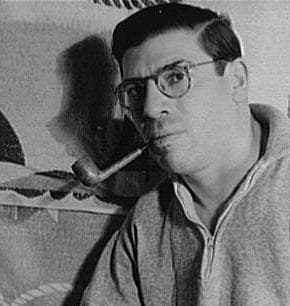
Paul Gallico was an American author known for his fiction, particularly his short novel "The Snow Goose," which explores themes of love and sacrifice during World War II. Another notable work, "Snow Goose," also reflects his interest in the bond between humans and nature. His writing often combines elements of fantasy and realism, showcasing his unique storytelling style.
Similar books
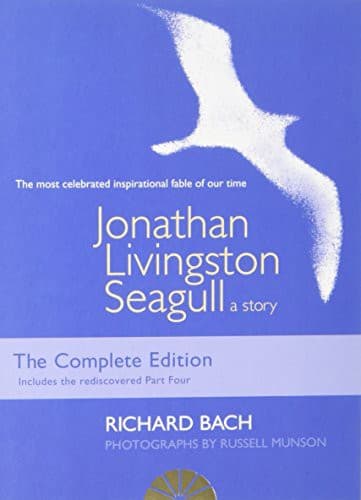
- Jonathan Livingston Seagull
Richard Bach
3.8 (202k) average on GoodreadsFantasyExplores themes of individuality and the spirit of an animal.
- The Old Man and the Sea
Ernest Hemingway
3.8 (831k) average on GoodreadsLiterary FictionFeatures a solitary figure, a deep connection to nature, and themes of struggle and dignity.
- A Day No Pigs Would Die
Robert Newton Peck
3.6 (9k) average on GoodreadsChildren'sA coming-of-age story involving a young person and their relationship with an animal, set against a rural backdrop.
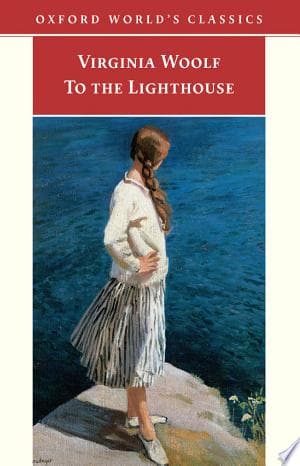
- To the Lighthouse
Virginia Woolf
3.8 (133k) average on GoodreadsLiterary FictionWhile both books feature a lighthouse and explore themes of isolation and artistic sensibility, The Snow Goose is more externally focused on human-nature bonds and wartime heroism. To the Lighthouse delves deeper into internal psychological landscapes, memory, and the passage of time within a family, employing a stream-of-consciousness narrative style that contrasts with Gallico's more direct storytelling.
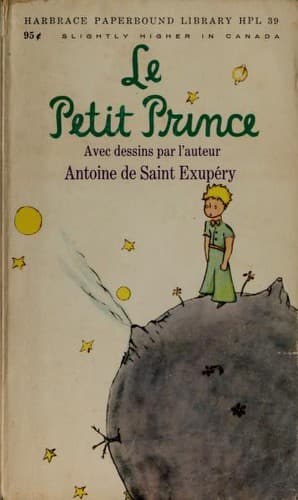
- The Little Prince
Antoine De Saint Exupéry
Both are allegorical novellas featuring solitary figures and profound connections. However, The Snow Goose is firmly rooted in a specific historical and geographical context (Essex marshes, WWII), using its allegory to explore human resilience and sacrifice. The Little Prince offers broader philosophical musings on humanity, love, and the universe, with a more fantastical and less grounded setting.
- Nineteen Eighty-Four
George Orwell
4.2 (5.5M) average on GoodreadsFictionWinston Smith dreams of truth and rebellion in a world where Big Brother watches all, but he confronts the terrifying power of a regime that controls not just actions, but thoughts.


Enjoyed the summary?
A summary gives you the shape of the book. The book itself has the detail, the examples and the voice.
Find Snow Goose on AmazonAs an Amazon Associate, BookBrief earns from qualifying purchases. How we're funded