
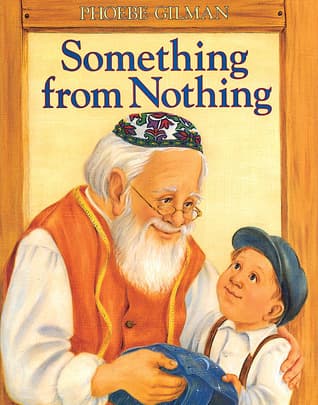
Synopsis
Covers the whole plot, including the ending.
- Difficulty
- Easy
- Pacing
- Moderate
- Mood
- Heartwarming, Nostalgic, Gentle, Resourceful
- Read it if
- You enjoy heartwarming stories about family, tradition, and resourcefulness, or if you're looking for a gentle tale about cherishing memories and the cycle of life.
- Skip it if
- You prefer complex plots or stories without repetitive elements.
Something from Nothing Plot Summary
Covers the whole plot, including the ending.
The Blanket's Birth
When Joseph was a baby, his Grandpa made him a wonderful blue blanket. It was a special blanket, with stars and moons, and it seemed to keep Joseph safe from bad dreams and warm. Joseph loved his blanket more than anything, taking it everywhere, through mud and puddles, and holding it during naps. His mother often worried about how worn and dirty it got, but Joseph always wanted it by his side, loving the comfort and security it gave him.
The Blanket Becomes a Jacket
As Joseph grew, his blanket became more worn out. It got frayed, torn, and full of holes. Joseph's mother said it was too old to be a blanket anymore. She suggested throwing it away, but Joseph was very sad. Grandpa, always clever and understanding Joseph's feelings, took the blanket. With his scissors and needle, he skillfully cut and sewed, making the large, torn blanket into a perfectly fitting, nice jacket for Joseph. Joseph was happy, now having a new way to keep his special blanket close.
The Jacket Transforms into a Vest
Joseph loved his new jacket and wore it all the time. He played in it, ate in it, and sometimes even slept in it. Soon, the jacket, like the blanket before it, started to show a lot of wear. It got holes, a sleeve ripped, and the fabric became thin in places. Joseph's mother again pointed out how ragged it was, saying it was time to get rid of it. But Joseph, still very attached, went to his Grandpa. Grandpa, with his usual wisdom and skill, took the worn jacket and, with a few snips and stitches, turned it into a smart, warm vest for Joseph, which made him very happy.
The Vest Becomes a Tie
Joseph loved his vest and wore it everywhere, just as he had worn the blanket and jacket. But time and play took their toll, and soon the vest became too small and too worn, with loose threads and thin fabric. Joseph's mother, seeing its condition, said it was beyond repair and told Joseph to let it go. However, Joseph could not part with the last parts of his special blanket. He brought the vest to Grandpa, who, with his clever hands, carefully cut and sewed, making the torn vest into a stylish and unique tie for Joseph, allowing the memory of the blanket to continue.
The Tie Becomes a Handkerchief
Joseph was proud of his tie, wearing it for special events. But even a tie, with enough use, starts to fray. It eventually became too small and too worn to be a proper tie anymore. Joseph's mother, seeing its state, suggested it was finally time to throw it away, saying there was nothing left to make from it. Joseph still went to his Grandpa, who, with his never-ending creativity, took the small piece of fabric. With careful work, he trimmed and stitched, making the tie into a neat little handkerchief for Joseph, keeping the blanket's story alive in an even smaller form.
The Handkerchief Becomes a Button
Joseph cherished his handkerchief, keeping it safe in his pocket. One day, while playing, he lost it. After looking everywhere, he found it, but it was just a tiny, torn piece of fabric, hard to recognize. Joseph's mother, frustrated, said that absolutely nothing more could be made from such a small piece. Yet, Joseph, still hoping, gave the tiny piece to his Grandpa. Grandpa, with his great skill and love, took the last remaining piece of fabric and, with a few final stitches, made it into a small, strong button, which he sewed onto Joseph's coat.
The Button is Lost
Joseph loved his button. It was a small, perfect circle, a clear reminder of his blanket, jacket, vest, tie, and handkerchief. He wore it on his coat with pride, knowing it held all the memories. One day, while playing outside with his friends, Joseph was running and jumping, full of energy. Suddenly, he saw the button was gone. He looked everywhere, going back over his steps, looking under leaves and stones, but the little blue button, the last piece of his special blanket, was nowhere. Joseph was heartbroken, feeling like he had lost a part of himself.
Joseph Writes a Story
Even though the button was lost, Joseph still carried the memories of his special blanket. He sat down and thought about all the wonderful things his Grandpa had made from it: the blanket, the jacket, the vest, the tie, the handkerchief, and finally, the button. He realized that even though the items were gone, the love and the story behind them remained. Taking a pen and paper, Joseph began to write his own story, a story about 'Something from Nothing,' making sure that the magic of his blanket and his Grandpa's cleverness would live on through his words.
The Mice's Story
Throughout Joseph's story, another story happens under the floorboards of his house. A family of mice watches Grandpa's changes. Each time Grandpa cuts a piece from the blanket, jacket, vest, or tie, the mice quickly gather the discarded scraps. They carefully collect the blue fabric pieces and take them back to their cozy home. With the collected pieces, the mother mouse skillfully sews and stitches, making a warm and comfortable little blanket for her baby mouse, copying Grandpa's actions and adding to the idea of resourcefulness.
A New Blanket for the Baby Mouse
As Joseph's blanket got smaller through its many changes, the pile of scraps under the floorboards grew. The mother mouse, with her sharp eye and tiny needle, carefully put together all the discarded pieces of blue fabric. She worked hard, sewing them together patch by patch, until she had made a beautiful, patchwork blanket just the right size for her baby mouse. This new blanket, made from the 'nothing' left behind by Joseph's story, gave warmth and comfort to the baby mouse, completing the story's cycle of creation and repurposing.
Something from Nothing Characters
Joseph
Protagonist
The boy who cherishes his blanket and its transformations.
Joseph is a young boy who deeply loves his blue blanket, a gift from his Grandpa. He is imaginative, sentimental, and resistant to letting go of things that hold meaning for him. His attachment to the blanket is central to the story, driving the narrative of its transformations. He values connection and memory over newness, finding comfort and security in the familiar. His journey culminates in him becoming a storyteller, preserving the legacy of his cherished item.
Relationships: Grandpa (Grandson, looks up to him for wisdom and ingenuity.); Mother (Son, she is practical and sometimes exasperated by his attachment to worn items.)
Grandpa
Supporting
The wise and resourceful grandfather who transforms the blanket.
Grandpa is a patient, loving, and incredibly resourceful old man. He is a skilled tailor, able to see potential in worn-out items and transform them into something new and useful. His actions are driven by his love for Joseph and his understanding of the boy's emotional attachment to the blanket. He embodies the theme of making 'something from nothing' and represents tradition, wisdom, and the power of repurposing. He never says 'no' to Joseph's requests to save the blanket.
Relationships: Joseph (Grandfather, a mentor and provider of comfort and solutions.); Mother (Father, they have differing views on practicality but share love for Joseph.)
Joseph's Mother
Supporting
The practical parent who wants to discard worn items.
Joseph's Mother is the voice of practicality and common sense in the story. She is concerned with cleanliness and order, often suggesting that worn-out items, including Joseph's blanket and its subsequent transformations, should be thrown away. While she loves Joseph, she struggles to understand his deep emotional attachment to material things that are no longer functional. Her role provides a contrast to Grandpa's resourcefulness and Joseph's sentimentality, highlighting different perspectives on value.
Relationships: Joseph (Mother, she cares for him but is often exasperated by his attachment to old items.); Grandpa (Son-in-law/Daughter-in-law, she relies on his skill but disagrees with his habit of saving scraps.)
Mice (Family)
Supporting
A family of mice who cleverly repurpose the discarded scraps.
The family of mice, particularly the mother mouse, serve as a parallel narrative element. They live beneath the floorboards and observe Grandpa's work. Each time a piece of fabric is cut off and discarded, the resourceful mice collect the scraps. The mother mouse then uses these 'nothings' to create a new, warm blanket for her baby mouse. They embody the theme of resourcefulness and making something from nothing in a literal, animalistic sense, mirroring the larger human narrative.
Relationships: Joseph (Unaware of their existence, but they benefit from his discarded items.); Grandpa (Unaware of their existence, but they benefit from his discarded scraps.)
Something from Nothing Themes
Resourcefulness and Transformation
This is the main idea, clearly shown by Grandpa's ability to always repurpose Joseph's blanket. Each time the blanket gets too worn, Grandpa takes the 'nothing' of a torn item and turns it into 'something' new and useful—a jacket, a vest, a tie, a handkerchief, and finally a button. This idea is also shown by the mice, who gather the discarded scraps to make a blanket for their baby. It highlights the value of creativity, cleverness, and not wasting things, showing that even the smallest piece can have potential.
“Grandpa took the piece of cloth, snipped and clipped, and turned it into something new.”
Love and Sentimentality
Joseph's strong attachment to his blanket, and then to every item made from it, shows the idea of love and sentiment. The blanket is not just fabric; it represents his Grandpa's love and gives comfort and security. Joseph's refusal to part with even the smallest piece shows how emotional connections can give objects great value, beyond their material worth or use. His wish to keep a piece of his history, and his Grandpa's love, drives all the transformations.
“Joseph loved his blanket. He loved it when it was new and he loved it when it was old.”
The Power of Storytelling and Memory
Even after the button, the last physical piece of the blanket, is lost, the story does not end in sadness. Joseph realizes that the most important part of the blanket is not the item itself, but the memories and the story linked to it. By writing his own story, 'Something from Nothing,' Joseph ensures that the legacy of his blanket and his Grandpa's cleverness continues. This idea emphasizes that stories keep history, lessons, and emotional connections alive, making them last even when physical objects disappear.
“He took a pencil and paper and he wrote his own story. 'Something from Nothing,' he called it.”
The Cycle of Life and Change
The constant change of the blanket reflects the natural cycle of life, growth, and change. Just as Joseph grows from a baby to a boy, the blanket changes from a large item to smaller ones, adapting to his needs and the effects of time. Each change means an end and a new start, showing that nothing truly vanishes but instead changes. This idea suggests that change is unavoidable, but with creativity and love, new purpose and beauty can always come from what seems to be an end.
“But Grandpa always said, 'There's always something from nothing.'”
Plot Devices & Literary Techniques
Repetitive Structure
A recurring pattern of wear, transformation, and renewed love.
The story employs a clear repetitive structure where Joseph's blanket (or its subsequent form) gets old and worn, his mother suggests throwing it away, Joseph takes it to Grandpa, and Grandpa transforms it into a new, smaller item. This pattern reinforces the central theme of resourcefulness and Joseph's enduring attachment. The repetition makes the narrative predictable in a comforting way for young readers and emphasizes the grandfather's consistent ingenuity and love.
Parallel Narrative (Mice)
A secondary storyline featuring mice repurposing discarded scraps.
A clever parallel narrative runs alongside Joseph's main story, depicting a family of mice living beneath the floorboards. Each time Grandpa cuts a piece from the blanket, the mice collect the discarded scraps. This subplot provides a visual and thematic reinforcement of the 'something from nothing' theme, showing another instance of repurposing and resourcefulness in a different scale and context. It adds depth and a touch of humor to the main story without distracting from it.
Symbolism of the Blanket
The blanket represents love, security, and the passage of time.
The blue blanket is more than just a piece of fabric; it symbolizes Grandpa's love, Joseph's childhood security, and the passage of time. As it transforms, it represents the enduring nature of these values, even as their physical manifestation changes. Its eventual loss and Joseph's decision to write a story about it elevate its symbolism to represent the power of memory and storytelling over tangible objects, making the 'something from nothing' a creative and intellectual act.
Something from Nothing Quotes
“When Joseph was a baby, his grandmother made him a beautiful blanket. It was a wonderful blanket.”
“But as Joseph grew, the wonderful blanket grew too, or rather, Joseph grew out of it. It got tattered, and torn, and full of holes.”
“So Joseph's mother said, 'Joseph, look at your blanket. It's time to throw it out.'”
“No!' said Joseph. 'It's still good.”
“Joseph's grandfather took the blanket. Snip, snip, snip, snip, snip! And out of the good parts of the blanket, he made Joseph a wonderful jacket.”
“When the jacket got old and worn, Joseph's grandfather took it. Snip, snip, snip, snip, snip! And out of the good parts of the jacket, he made Joseph a wonderful vest.”
“When the vest got old and worn, Joseph's grandfather took it. Snip, snip, snip, snip, snip! And out of the good parts of the vest, he made Joseph a wonderful tie.”
“When the tie got old and worn, Joseph's grandfather took it. Snip, snip, snip, snip, snip! And out of the good parts of the tie, he made Joseph a wonderful handkerchief.”
“When the handkerchief got old and worn, Joseph's grandfather took it. Snip, snip, snip, snip, snip! And out of the good parts of the handkerchief, he made Joseph a wonderful button.”
“When the button got lost, Joseph's mother said, 'Joseph, look at your button. It's gone!'”
“Joseph thought and thought and thought... and out of the good parts of his memory, Joseph made a wonderful story.”
“And that is what this book is about.”
Quiz
10 questions on the plot and the characters. Each answer comes with a short explanation.
Question 1
What was the very first item Joseph's grandfather made for him from the piece of cloth?
- A small hat
- A warm blanket
- A tiny shirt
- A pair of mittens
Show answer
B. A warm blanket The story begins with Joseph's grandfather making him a beautiful blue blanket when he was a baby.
Question 2
When Joseph's blanket became old and worn, what did his grandfather transform it into next?
- A pair of pants
- A warm jacket
- A new pair of shoes
- A comfortable pillow
Show answer
B. A warm jacket After the blanket was too old, Joseph's grandfather skillfully remade it into a jacket.
Question 3
What is the very last item Joseph's grandfather is able to make from the remnants of the original cloth?
- A small coin purse
- A tiny button
- A single shoelace
- A small patch
Show answer
B. A tiny button The very last piece of cloth, too small for anything else, was turned into a button for Joseph's vest.
Question 4
What happens to the button that Joseph loses, which he made from the very last piece of cloth?
- His mother finds it and sews it back on.
- He writes a story about it.
- His grandfather makes him a new one.
- A mouse finds it and uses it for a toy.
Show answer
B. He writes a story about it. When Joseph loses his button, his mother says, 'You can't make something from nothing!' but Joseph replies, 'Oh yes, you can! And he writes a wonderful story about it.
Question 5
What is the underlying theme represented by Joseph's grandfather continually transforming the old cloth?
- The importance of buying new things.
- The value of resourcefulness and love.
- The difficulty of making things by hand.
- The fleeting nature of childhood possessions.
Show answer
B. The value of resourcefulness and love. The grandfather's actions highlight resourcefulness, the ability to make use of what you have, and the enduring love he has for Joseph, expressed through his creations.
Question 6
In the illustrations, what animals are frequently shown living beneath the floorboards of Joseph's house?
- Squirrels
- Birds
- Mice
- Rabbits
Show answer
C. Mice Throughout the book, a family of mice is depicted collecting the scraps of cloth that fall through the floorboards, making their own 'something from nothing'.
Question 7
After the jacket became too small, what item did Joseph's grandfather craft from it?
- A pair of gloves
- A vest
- A small backpack
- A cap
Show answer
B. A vest Following the jacket, the cloth was transformed into a vest, continuing the cycle of reuse.
Question 8
The phrase 'You can't make something from nothing' is repeated by Joseph's mother. How does Joseph ultimately prove this statement false?
- He finds a new blanket.
- He convinces his grandfather to make more items.
- He writes a story using his imagination.
- He discovers hidden fabric in the attic.
Show answer
C. He writes a story using his imagination. Even after the physical cloth is gone, Joseph creates 'something' (a story) from 'nothing' (the lost button and his memories), demonstrating the power of imagination and narrative.
Question 9
How does the author, Phoebe Gilman, enhance the traditional Jewish folktale in her adaptation?
- By changing the main character's name to a non-Jewish name.
- By adding the parallel story of the mouse family.
- By setting the story in a modern, urban environment.
- By removing the grandfather character entirely.
Show answer
B. By adding the parallel story of the mouse family. Gilman's unique contribution to the traditional Yiddish folktale is the charming subplot of the mouse family beneath the floorboards, who also make use of the scraps, mirroring the main story.
Question 10
What specific item did Joseph's grandfather create from the cloth immediately *before* the handkerchief?
- A bowtie
- A tie
- A small bag
- A pair of socks
Show answer
B. A tie The progression of items is blanket, jacket, vest, tie, handkerchief, and finally, a button.
Something from Nothing FAQ
What is the central premise of 'Something from Nothing'?
The book follows a young boy named Joseph who receives a beloved blanket from his Grandpa. As the blanket wears out over many years, Grandpa ingeniously refashions it into smaller and smaller, yet equally cherished, items until only a tiny piece remains.
Who is the main character and what is his relationship with his grandfather?
The main character is Joseph, a young boy who deeply loves his special blanket. His grandfather is portrayed as a resourceful and loving figure who consistently finds new ways to preserve the blanket's essence and Joseph's connection to it.
What are some of the items the blanket is transformed into?
Over time, the blanket is transformed into a jacket, then a vest, followed by a tie, a handkerchief, and finally, a button. Each transformation allows Joseph to continue using and loving a piece of his original treasure.
What happens to the 'something from nothing' at the very end of the story?
The very last piece of the blanket becomes a small button. When even the button is lost, Joseph's mother remarks, 'You can always make something from nothing,' inspiring Joseph to draw a picture of his beloved blanket, preserving its memory.
How does the story highlight the theme of resourcefulness?
The story consistently showcases Grandpa's incredible resourcefulness as he meticulously re-purposes the blanket. He never discards it, instead finding creative solutions to extend its life and utility, teaching Joseph the value of making the most of what you have.
Are there any recurring visual motifs in the illustrations that hint at the story's deeper meaning?
Yes, the mice living under the floorboards are a recurring visual motif. They collect the discarded scraps of the blanket after each transformation, mirroring the human act of making something from nothing by using the scraps to furnish their own tiny home.
What is the significance of the mice's subplot in the story?
The mice's subplot serves as a parallel narrative, reinforcing the central theme of resourcefulness. They demonstrate that even the smallest discarded pieces can be valuable and useful, providing a charming, wordless commentary on the main story's events.
Does the book connect to any specific cultural traditions or folklore?
Yes, the book is a modern adaptation of a traditional Jewish folktale. Phoebe Gilman's retelling maintains the core message of resourcefulness and the enduring value of cherished items, while making it accessible to a contemporary audience.
How does Joseph's emotional attachment to the blanket evolve throughout the story?
Joseph's emotional attachment remains consistently strong, adapting with each transformation. He doesn't mourn the loss of the blanket as much as he celebrates the new item it becomes, showing his deep trust in his grandfather and his ability to find joy in continuity.
What psychological comfort might the blanket and its transformations provide Joseph?
The blanket and its subsequent transformations provide Joseph with a sense of security, continuity, and enduring love from his grandfather. Each new item is a tangible reminder of that bond and a familiar comfort, even as it changes form.
How does the story subtly teach children about resilience and adaptability?
Through Joseph's journey, children learn that things change, but their essence or value can remain. Joseph adapts to each new item, demonstrating resilience in accepting change and finding new ways to cherish something, rather than being upset by its transformation.
What role does memory play in the story's conclusion, particularly when the button is lost?
Memory becomes paramount at the end. When the physical button is gone, Joseph's ability to recall and recreate the blanket through drawing ensures its spirit lives on. This emphasizes that true value isn't just in the object, but in the memories and love associated with it.
Is the ending where Joseph draws the blanket satisfying, or does it feel like a cop-out for losing the last physical piece?
Most readers find the ending satisfying because it shifts the focus from the physical object to the power of memory and creativity. It suggests that true value and connection can transcend material form, empowering Joseph to continue the 'making something from nothing' tradition in his own way.
Could the story be interpreted as a metaphor for the cycle of life and renewal?
Absolutely. The continuous transformation of the blanket, from large to small, and then its spiritual continuation through art, can be seen as a metaphor for life's cycles, where old things give way to new, and essence endures through adaptation and memory.
What message does the book convey about consumerism or waste?
The book subtly critiques consumerism by advocating for resourcefulness and minimal waste. Grandpa's actions demonstrate that items can have extended lives and multiple purposes, encouraging readers to think creatively about reusing and valuing possessions rather than simply discarding them.
How does the phrase 'You can always make something from nothing' resonate throughout the narrative?
This phrase, uttered by Joseph's mother, becomes the story's core philosophy. It encapsulates Grandpa's ingenuity, the mice's resourcefulness, and ultimately Joseph's creative act of drawing. It's a powerful message about human potential, creativity, and finding value in unexpected places.
What is the broader significance of the grandfather's role beyond just mending things?
The grandfather represents wisdom, love, and the transmission of values across generations. He doesn't just mend objects; he mends Joseph's potential disappointment, teaches him resilience, and instills a deep appreciation for creativity and resourcefulness, leaving a lasting legacy.
Similar books
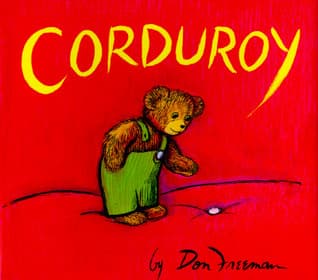
- Corduroy
Don Freeman
4.3 (194k) average on GoodreadsFantasyExplores themes of a beloved object and the comfort it brings, with a gentle, reassuring tone.
- A Chair for My Mother
Vera B. Williams
4.2 (25k) average on GoodreadsChildren'sFocuses on family, resourcefulness, and finding joy in simple things, with a warm, loving atmosphere.
- Harry Potter and the Sorcerer's Stone
J.K. Rowling
4.5 (7M) average on GoodreadsFantasyRescued from a miserable life under the stairs, an orphaned boy discovers he's a wizard destined for a magical school, where he uncovers a dangerous secret tied to the dark wizard who murdered his parents.
- The Hobbit, or There and Back Again
J.R.R. Tolkien
4.3 (2.9M) average on GoodreadsFantasyA comfort-loving hobbit named Bilbo Baggins is whisked away by a mischievous wizard and a band of dwarves on an unexpected journey to reclaim stolen treasure from a fearsome dragon, discovering courage and a magical ring along the way.
- Harry Potter and the Goblet of Fire
J.K. Rowling
4.6 (2.6M) average on GoodreadsFantasyA bewildered Harry Potter, underage and thrust into a deadly Triwizard Tournament, must brave dragons, mermaids, and a resurgent dark magic to survive a year that will forever alter the wizarding world.
- Harry Potter and the Order of the Phoenix
J.K. Rowling
4.5 (2.5M) average on GoodreadsFantasyIn a year of oppressive secrets and the threat of Voldemort, Harry Potter and Dumbledore's Army secretly train for war, shown through Jim Kay and Neil Packer's dark illustrations.





Enjoyed the summary?
A summary gives you the shape of the book. The book itself has the detail, the examples and the voice.
Find Something from Nothing on AmazonAs an Amazon Associate, BookBrief earns from qualifying purchases. How we're funded