
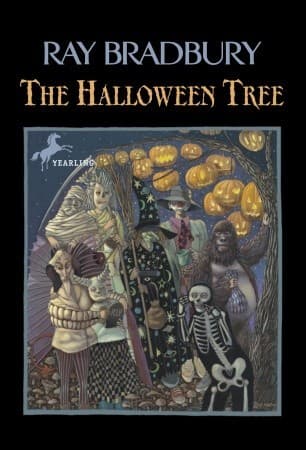
Synopsis
Covers the whole plot, including the ending.
- Difficulty
- Easy
- Pacing
- Fast
- Mood
- Eerie, Whimsical, Educational, Adventurous
- Read it if
- You love whimsical, slightly spooky tales that blend history with fantasy, and want to understand the origins of Halloween traditions.
- Skip it if
- You prefer straightforward horror or highly realistic stories, or dislike allegorical narratives.
The Halloween Tree Plot Summary
Covers the whole plot, including the ending.
The Boys Gather, Pipkin Goes Missing
On Halloween night, a group of eight boys, including Tom Skelton, Ralph Bengstrum, and Wally Babb, put on their costumes and gather at a meeting spot. They are excited for trick-or-treating and the annual bonfire, but they are waiting for their friend, Pipkin, who is always late and often sick. They decide to meet him at the old, haunted house on the edge of town, a place known for being spooky. As they get close, they hear Pipkin's cough and see a shadowy figure, later Mr. Moundshroud, at the house. Suddenly, Pipkin disappears, seemingly swept away by an unseen force, leaving his friends confused and scared.
Meeting Mr. Moundshroud and the Halloween Tree
Inside the old haunted house, the boys meet the gaunt, mysterious Mr. Moundshroud, who seems to control the shadows. He says he is waiting for Pipkin, implying Pipkin is in trouble. Moundshroud leads them outside to a huge, old tree, the Halloween Tree, from which hang hundreds of carved pumpkins, each glowing. He explains that these pumpkins are like the boys' souls and that Pipkin's soul, a single pumpkin, is flickering and in danger of going out. To save Pipkin, they must understand Halloween itself.
Ancient Egypt and the Origins of Mummification
Mr. Moundshroud, with a wave of his hand, makes a giant kite of leaves, which carries the boys through time and space. Their first stop is ancient Egypt, where they watch a pharaoh's funeral and the process of mummification. They learn about the Egyptian belief in the afterlife, preserving the body for the soul, and the fear of a soul being lost. Moundshroud explains that this practice, though different, shares a common idea with later Halloween traditions: remembering the dead. The boys start to understand the ancient roots of their holiday.
The Druids and Celtic Samhain
Next, the boys are taken to ancient Celtic lands, where they see the Druids celebrating Samhain, the start of Halloween. They see bonfires, sacrifices, and the belief that on this night, the barrier between the living and the dead thins, allowing spirits to cross over. Moundshroud explains how the Celts left food out for spirits, lit fires to guide them, and wore disguises to keep away evil entities. This part emphasizes the harvest, the fear of winter, and respect for ancestors, showing how these things became the traditions they now practice on Halloween.
Roman Festivals and the Feast of Pomona
The kite then carries the boys to ancient Rome, where they see harvest festivals, specifically the Feast of Pomona, the goddess of fruit and trees. They see masked people, games, and offerings to the gods for good harvests. Moundshroud says Roman traditions, especially those with apples and nuts, mixed with existing Celtic Samhain practices as the Roman Empire grew. This mix of cultures and beliefs added to the customs that would become modern Halloween, showing the boys how different civilizations contributed to their holiday.
The Notre Dame Gargoyles and Medieval Europe
Their journey becomes eerie as they land atop Notre Dame Cathedral in medieval France, surrounded by gargoyles. Moundshroud explains how the Christian church, to convert pagans, often used existing traditions and festivals, reinterpreting them. All Saints' Day and All Souls' Day became Christian versions of Samhain, a time to honor saints and pray for the souls of the dead. The gargoyles, he explains, protected against evil spirits and reminded people of the darker parts of the spiritual world, connecting pagan fears and Christian beliefs.
The Day of the Dead in Mexico
Finally, the kite lands in Mexico, where the boys see the joyful and colorful celebrations of Día de los Muertos (Day of the Dead). They see families picnicking at gravesides, sugar skulls, marigolds, and altars with offerings. Moundshroud says the Mexican belief is that death is a natural part of life and that the dead are honored and remembered with happiness rather than fear. This experience contrasts with some of the more fearful aspects of earlier traditions, showing the boys a different, celebratory way to remember the dead, and adding to their understanding of the human need to acknowledge death.
The Race to Save Pipkin
Throughout their journey, Pipkin's pumpkin on the Halloween Tree has been growing dimmer, showing his weakening life force. Moundshroud says Pipkin is barely alive in the house, his spirit connected to his body. The boys realize that their adventure was not just a lesson, but a race against time to gather enough 'life' or understanding to save their friend. Moundshroud explains that Pipkin's life is fading fast, and only a big act can bring him back. He hints that a sacrifice is needed.
The Sacrifice and Pipkin's Return
Back at the Halloween Tree, with Pipkin's pumpkin barely glowing, Mr. Moundshroud gives the boys a choice: let Pipkin die, or each of them give a year of their own lives to save him. Without hesitation, because they love their friend, the boys agree. One by one, they touch Pipkin's pumpkin, and a year of their life force transfers to him. As they do, the pumpkin glows brighter, and Moundshroud confirms that Pipkin's life has been restored. The boys, though now a year 'older' in spirit, are relieved and happy.
Farewell to Moundshroud and the Meaning of Halloween
Pipkin, now healthy, comes out of the house, unaware of his friends' sacrifice. He is simply happy to be alive and rejoin them. Mr. Moundshroud, his mission done, says goodbye to the boys, disappearing into the shadows. The boys, changed by their journey, now understand that Halloween is not just about costumes and candy, but is a mix of human history, a celebration of life, death, and remembrance across thousands of years. They walk home, no longer just trick-or-treaters, but people who know about ancient traditions, carrying the true spirit of Halloween within them.
Principal Figures
Tom Skelton
Protagonist
The thoughtful leader of the boys, often questioning Moundshroud
Tom Skelton is the central figure among the group of boys, often taking the lead in their interactions with Mr. Moundshroud. He is observant, intelligent, and the most vocal in asking questions about the origins of Halloween and Pipkin's predicament. His costume is a skeleton, symbolizing death and the themes explored in the story. Tom represents the inquisitive mind seeking knowledge and understanding, and he is instrumental in rallying the other boys to make the sacrifice for Pipkin. He is deeply loyal to his friends.
Relationships: Pipkin (Best friend, deeply concerned for his well-being); Mr. Moundshroud (Student to his enigmatic teacher); Ralph Bengstrum (Close friend, fellow adventurer)
Pipkin (Joe Pipkin)
Supporting
The frail, late, and ultimately endangered friend whose life hangs in the balance
Pipkin is the ninth boy, perpetually late and often suffering from a cough or general frailty. He is the catalyst for the entire adventure, as his sudden disappearance and flickering life force (represented by his pumpkin) drive the boys and Mr. Moundshroud through time. Pipkin embodies the vulnerability of life and the human spirit. Despite his physical weakness, his friends' love for him is strong enough to prompt their extraordinary sacrifice. He remains mostly unaware of the journey and sacrifice made on his behalf, representing the innocence that is protected.
Relationships: Tom Skelton (Best friend); The other boys (Cherished friend, subject of their loyalty)
Mr. Moundshroud
Antagonist/Mentor
The mysterious, cadaverous guide who embodies the spirit of Halloween and death
Mr. Moundshroud is the enigmatic, gaunt figure who appears at the haunted house. He is a master of time and space, possessing an encyclopedic knowledge of death rituals and Halloween's origins across cultures and centuries. He acts as both a benevolent guide and a stern, almost ominous, figure, pushing the boys to confront the deeper meanings of life and death. He is a personification of the holiday itself, a gatekeeper between worlds, and a teacher who reveals the interconnectedness of human history with the celebration of the departed. His motives are to preserve Pipkin's life by teaching the boys the true meaning of the holiday.
Relationships: Tom Skelton (Teacher to his student); The other boys (Guide and challenge giver)
Ralph Bengstrum
Supporting
One of the loyal boys, dressed as a mummy
Ralph is one of Tom's close friends and a member of the group. He is dressed as a mummy, a costume that fittingly foreshadows and connects to their journey to ancient Egypt and the practices of preserving the dead. Ralph is generally supportive and follows Tom's lead, participating in the adventure and ultimately in the collective sacrifice to save Pipkin. He represents the collective spirit of friendship and loyalty among the boys.
Relationships: Tom Skelton (Close friend); Pipkin (Friend for whom he makes a sacrifice)
Wally Babb
Supporting
One of the boys, known for his large appetite
Wally Babb is another one of the boys, often characterized by his appetite, which provides a touch of grounding humor amidst the fantastical journey. He is dressed as a witch, adding to the classic Halloween imagery. Despite his more practical concerns (like food), Wally is just as invested in saving Pipkin and participates fully in the adventure and the final sacrifice. He embodies the simple joys of Halloween alongside its deeper meanings.
Relationships: Tom Skelton (Friend); Pipkin (Friend for whom he makes a sacrifice)
J.J. (J.J. Smith)
Supporting
One of the boys, dressed as a monster
J.J. is one of the eight boys, dressed in a monster costume. He contributes to the collective dynamic of the group, reacting with fear, wonder, and determination throughout their journey. His presence reinforces the idea of childhood innocence encountering complex themes of life and death. He is a loyal friend to Pipkin and does not hesitate to join in the sacrifice.
Relationships: Tom Skelton (Friend); Pipkin (Friend for whom he makes a sacrifice)
The Other Boys (Gargoyle, Ghost, Mummy, Skeleton, Witch, Beggar, etc.)
Supporting
The remaining members of the group, each in unique costumes
The remaining boys (Cornelius, Fred, etc.) are distinct through their costumes (e.g., gargoyle, ghost, beggar) but largely function as a collective. They provide reactions, questions, and a sense of shared experience throughout the journey. Their individual costumes often subtly connect to the historical periods they visit, such as the mummy or the gargoyle. Together, they represent the communal spirit of childhood friendship and the universal human journey of discovery. They all willingly participate in the sacrifice for Pipkin.
Relationships: Pipkin (Collective friends, united in their effort to save him); Tom Skelton (Followers and fellow adventurers)
Themes & Insights
Life, Death, and Immortality
The main idea of the book is about understanding death not as an end, but as a part of life and a concept humanity has dealt with throughout history. Moundshroud's journey shows different cultural ways of looking at death, from Egyptian mummification to Celtic Samhain and Mexican Día de los Muertos. The flickering pumpkin for Pipkin's life constantly reminds the boys that life is fragile and that humans universally want immortality, whether through remembrance, spiritual continuation, or physical preservation. The boys' sacrifice for Pipkin shows the value of life and the power of combined effort over death.
“For once you knew what death was, you were no longer afraid of it. But for once you knew what life was, you were no longer afraid of living.”
The Origins and Meaning of Halloween
The whole story is a lesson in how Halloween has changed through history and culture. Moundshroud guides the boys through different civilizations and their death-related festivals, showing how traditions (Egyptian mummification, Celtic Samhain, Roman harvest festivals, medieval Christian observances, Mexican Day of the Dead) all contributed to the holiday they know. This idea explains Halloween, showing it not as a simple night of candy and costumes, but as a rich mix of humanity's ancient fears, celebrations, and lasting need to connect with the past and remember the dead. The boys' journey is one of historical and cultural education.
“Don't you see? All these things are the same thing! All Hallow's Eve, All Saints' Day, Halloween, the Day of the Dead, Samhain, the Feast of Pomona, the Mummification of the Ancient Egyptians...”
Friendship and Sacrifice
The strong bond between the nine boys, especially their love for the frail Pipkin, drives the main conflict and how it is solved. Their journey through time is because they want to save their friend. This idea ends with the act of sacrifice, where each boy willingly gives a year of his own life to restore Pipkin's. This act shows how deep their friendship is, proving that true friendship means being selfless and willing to give everything for those you care about. It makes their bond more than just childhood companionship; it is a heroic, life-affirming act.
“One year from each of you, for him. That's eight years of life. Enough to save a life, to be sure.”
The Power of Storytelling and Imagination
Ray Bradbury, through Mr. Moundshroud, uses storytelling as the main way to teach and change. Moundshroud's descriptions and the journey itself are immersive stories that take the boys and the reader through time and culture. The book celebrates imagination, both in the boys' costumes and in how Moundshroud creates ancient worlds. It suggests that understanding history and complex ideas is more engaging and memorable through imaginative, narrative-driven experiences, reinforcing that stories connect us to our past and shape how we understand the present.
“The wind. It is an old wind, boy. It has seen many things pass by. And it is a storyteller.”
Plot Devices & Literary Techniques
The Halloween Tree
A physical manifestation of life, death, and the collective human spirit
The Halloween Tree is a colossal, ancient tree outside the haunted house, from which hundreds of carved pumpkins hang, each representing a soul. It serves as a central symbol and plot device, physically linking Pipkin's fading life force to a specific pumpkin. As Pipkin's pumpkin flickers, it creates urgency and a visual representation of his predicament. The tree itself embodies the deep roots of Halloween, connecting all the various historical traditions into one organic whole. It's Moundshroud's domain and the place where the ultimate sacrifice is made, making it a sacred and powerful focal point.
The Kite
A magical vehicle for time and space travel
The kite, fashioned from autumn leaves and controlled by Mr. Moundshroud, is the primary means of transportation for the boys through different historical periods and geographical locations. It is a fantastical element that allows for the episodic structure of the plot, enabling the boys to witness the origins of Halloween traditions firsthand. More than just transport, the kite symbolizes the journey of discovery and the ephemeral, wind-swept nature of time itself, carrying the boys through the 'winds of history' to uncover ancient truths.
Costumes
Symbols of identity, transformation, and cultural connection
The boys' Halloween costumes (skeleton, mummy, witch, monster, gargoyle, ghost, beggar) are more than mere disguises; they are integral to the narrative. Each costume subtly links to one of the historical periods or themes explored during their journey (e.g., the mummy to Egypt, the gargoyle to medieval Europe, the skeleton to death itself). The costumes also represent the boys' initial, superficial understanding of Halloween, which is then deepened by their experiences. They serve as a constant reminder of the holiday's playful yet profound nature, and how dressing up connects individuals to a collective human experience of confronting and celebrating life and death.
The Flickering Pumpkin
A visual metaphor for Pipkin's fading life and the urgency of the quest
Pipkin's pumpkin, hanging on the Halloween Tree, is a powerful visual metaphor for his precarious health and fading life force. Its dimming light and occasional sputtering create a constant sense of urgency and tension throughout the story. It is a tangible representation of the abstract concept of a soul or life, making Pipkin's plight immediate and relatable for the boys. The pumpkin's state directly dictates the pace and stakes of their journey, culminating in its restoration after the boys' sacrifice, symbolizing the triumph of life and friendship.
The Halloween Tree Quotes
“The wind outside nested in each tree, prowled the sidewalks in invisible treads like unseen cats.”
“The first thing you learn in life is you're a fool. The last thing you learn in life is you're the same fool.”
“They were all in love with death. They were all in love with dying. They were all in love with being dead.”
“Everything that ever was, is; everything that ever will be, is; and everything that ever will be, was.”
“The Halloween Tree stood in the black grass by the old dark house, and it was hung with a thousand pumpkins.”
“They ran like a dark river, a black tide, down the hill, under the trees, toward the town.”
“Death is the mother of beauty; hence from her, alone, shall come fulfillment to our dreams and our desires.”
“The wind was a torrent of darkness among the gusty trees.”
“They were not afraid of the dark. They were afraid of what was in the dark.”
“Halloween is a time of ghosts and goblins, but it is also a time of memories.”
“The past is a ghost, the future a dream, and all we ever have is now.”
“They flew like black leaves on a black wind, over the town, over the world.”
“Every man's life is a ghost story.”
“The pumpkins grinned with fiery eyes, and the wind sang in the wires.”
Quiz
10 questions on the plot and the characters. Each answer comes with a short explanation.
Question 1
What is the name of the friend who is swept away at the beginning of the story, prompting the journey?
- Tom
- Pipkin
- Mr. Moundshroud
- Joe
Show answer
B. Pipkin Pipkin is the friend who is swept away by a dark Something while trying to join the eight boys, setting off the adventure to find him and understand Halloween.
Question 2
How do the boys and Mr. Moundshroud travel through time and space to search for Pipkin?
- On a magic carpet
- In a time machine
- On the tail of a kite
- Through a haunted house portal
Show answer
C. On the tail of a kite Mr. Moundshroud leads the boys on the tail of a kite, which serves as their vehicle for traveling to different historical periods related to Halloween.
Question 3
What is the primary setting where the boys initially gather on Halloween night?
- A school playground
- A haunted house outside town
- A pumpkin patch
- A cemetery
Show answer
B. A haunted house outside town The story begins with eight costumed boys running to meet Pipkin at the haunted house outside town, which is their meeting point before the adventure starts.
Question 4
Which of the following historical periods or cultures do the boys NOT visit during their journey?
- Ancient Egypt
- Medieval Europe
- Ancient Rome
- Prehistoric times
Show answer
C. Ancient Rome The boys visit various places like Ancient Egypt, Medieval Europe, and Prehistoric times to learn about Halloween origins, but Ancient Rome is not a stop in their journey as described in the book.
Question 5
What does Mr. Moundshroud represent or symbolize in the story?
- A friendly guide to Halloween fun
- The spirit of Halloween and death
- A villain trying to trap the boys
- A historical figure from the past
Show answer
B. The spirit of Halloween and death Mr. Moundshroud is described as huge and cadaverous, and he embodies the darker, mystical aspects of Halloween, guiding the boys through its history and meanings related to death and the supernatural.
Question 6
Why do the boys embark on their journey through time?
- To win a Halloween contest
- To find Pipkin and learn the meaning of Halloween
- To escape from the haunted house
- To collect historical artifacts
Show answer
B. To find Pipkin and learn the meaning of Halloween After Pipkin is swept away, Mr. Moundshroud leads the boys on a quest to search the past for their friend and to understand the origins and significance of Halloween.
Question 7
What is a key theme explored in 'The Halloween Tree'?
- The importance of friendship and adventure
- The historical and cultural roots of Halloween
- The dangers of time travel
- The rivalry between boys on Halloween
Show answer
B. The historical and cultural roots of Halloween The book delves into the origins of Halloween by taking the characters through different eras, highlighting how various cultures contributed to the holiday's traditions and meanings.
Question 8
In the context of the story, what does the 'dark Something' that sweeps Pipkin away likely symbolize?
- A literal monster from the haunted house
- The unknown fears and mysteries of Halloween
- A time-travel anomaly
- Mr. Moundshroud's magic trick
Show answer
B. The unknown fears and mysteries of Halloween The 'dark Something' represents the eerie and mysterious elements of Halloween, setting the tone for the adventure and symbolizing the holiday's connection to the supernatural and the unknown.
Question 9
How does the journey affect the boys' understanding of Halloween by the end of the book?
- They realize it is just a commercial holiday
- They learn it has deep historical and cultural significance beyond costumes and candy
- They decide to never celebrate it again
- They conclude it is a dangerous event to avoid
Show answer
B. They learn it has deep historical and cultural significance beyond costumes and candy Through their travels, the boys gain insight into the ancient traditions and meanings behind Halloween, appreciating it as more than just a fun night but as a holiday with rich historical roots.
Question 10
What role do the boys' costumes play in the story?
- They are merely for Halloween trick-or-treating
- They help them blend in during time travel
- They symbolize different aspects of Halloween and history explored in the journey
- They are used to scare Mr. Moundshroud
Show answer
C. They symbolize different aspects of Halloween and history explored in the journey The boys' costumes are integral to the narrative, often reflecting the historical periods they visit and the themes of Halloween, such as death, monsters, and cultural rituals, enhancing the story's exploration of the holiday's essence.
The Halloween Tree FAQ
What is 'The Halloween Tree' about?
On Halloween night, eight boys—including Tom Skelton—rush to meet their friend Pipkin at a haunted house, but instead encounter the mysterious Mr. Moundshroud. When Pipkin is mysteriously swept away by a dark force, Moundshroud guides the boys on a time-traveling journey via a kite to explore Halloween's origins across ancient civilizations, hoping to save Pipkin and understand the holiday's deeper meaning.
Why should I read 'The Halloween Tree'?
It's a thrilling blend of fantasy, history, and adventure that explores Halloween's cultural roots through vivid, poetic prose. Bradbury masterfully weaves suspense with educational elements, making it both entertaining and thought-provoking for readers of all ages, especially during the Halloween season.
What is the background/setting of 'The Halloween Tree'?
The story begins in a small American town on Halloween night, 1934, but quickly expands through time travel to ancient Egypt, Greece, Rome, Celtic Druid ceremonies, Medieval Paris (Notre Dame), and the Day of the Dead in Mexico, all tied together by the mystical Halloween Tree itself.
What are the most memorable quotes from 'The Halloween Tree'?
Key quotes include Mr. Moundshroud's 'The wind... the wind...' chant that signals time travel, and philosophical lines like 'Everything that ever was, is; everything that ever will be, is' that reflect the book's themes of memory and continuity. Pipkin's whispered 'I'm cold' also hauntingly underscores his plight.
What writing style does Ray Bradbury use in 'The Halloween Tree'?
Bradbury employs lyrical, atmospheric prose rich with sensory details and poetic metaphors, creating an eerie yet magical tone. His style blends fast-paced adventure with historical exposition, making complex concepts accessible while maintaining suspense and emotional depth.
What minor details add significant meaning in 'The Halloween Tree'?
The boys' costumes—such as a Skeleton, Gargoyle, and Witch—subtly mirror the historical eras they visit, symbolizing Halloween's evolving traditions. The kite they ride, described as 'a great dark leaf,' represents both their journey and the fragile connection to Pipkin's soul.
What are some subtle foreshadowing moments in 'The Halloween Tree'?
Early mentions of Pipkin being 'pale' and 'tired' hint at his illness and impending capture. Mr. Moundshroud's cryptic warnings about 'the dark Something' and the boys' initial fear of the haunted house foreshadow the supernatural stakes and time-travel dangers they'll face.
What unexpected character connections exist in 'The Halloween Tree'?
Mr. Moundshroud is revealed as a timeless guardian of Halloween traditions, connected to historical figures like the Egyptian priests and Celtic Druids. Pipkin's fate ties to ancient beliefs about death and the soul, linking him symbolically to every era the boys visit.
What are unspoken character motivations in 'The Halloween Tree'?
Tom Skelton's fierce determination to save Pipkin stems from deep loyalty and guilt over not protecting him sooner. Mr. Moundshroud's guidance is driven by a desire to pass on Halloween's legacy to the next generation, ensuring its traditions aren't forgotten.
What psychological complexities do characters exhibit in 'The Halloween Tree'?
The boys grapple with fear, curiosity, and growing maturity as they witness death rituals across cultures. Pipkin embodies vulnerability and acceptance, while Mr. Moundshroud balances ominous mystery with paternal wisdom, reflecting the dual nature of Halloween itself.
What are the major emotional turning points in 'The Halloween Tree'?
Key moments include Pipkin's disappearance, which shifts the adventure from fun to urgent rescue; the boys' horror at ancient sacrifices, challenging their innocence; and the climax where they must each give up a year of life to save Pipkin, symbolizing sacrifice and friendship.
How do relationship dynamics evolve in 'The Halloween Tree'?
The boys start as playful friends but bond deeply through shared peril and discovery, with Tom emerging as a leader. Their initial fear of Mr. Moundshroud turns to respect as he mentors them, and Pipkin's absence heightens their empathy and collective purpose.
Which parts of 'The Halloween Tree' remain ambiguous or open-ended?
The exact nature of the 'dark Something' that captures Pipkin is left mysterious, as is Mr. Moundshroud's full origin. The ending implies Pipkin's recovery but leaves his long-term fate uncertain, inviting readers to ponder the balance between life, death, and memory.
What are controversial scenes or decisions in 'The Halloween Tree'?
Some readers debate the boys' choice to sacrifice a year of their lives for Pipkin, questioning if it's a noble act or a reckless bargain. The depictions of ancient death rituals, like Egyptian mummification or Druid sacrifices, can be intense for younger audiences.
'The Halloween Tree' ending explained: how it ends & what it means
The boys each give a year of their life to the Halloween Tree to restore Pipkin, who returns weakened but alive. Mr. Moundshroud vanishes, and the boys go home wiser, having learned that Halloween honors the dead and celebrates life's continuity. The ending emphasizes sacrifice, friendship, and the enduring power of tradition.
About the author
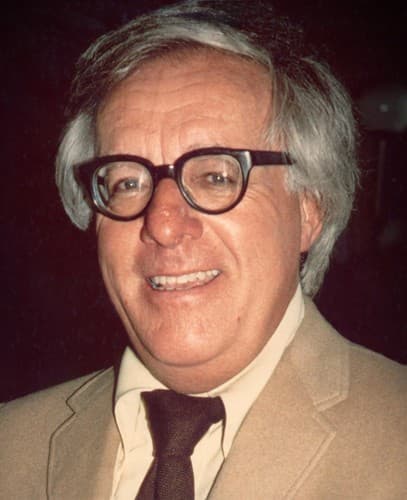
Ray Douglas Bradbury was an American author and screenwriter. One of the most celebrated 20th-century American writers, he worked in a variety of modes, including fantasy, science fiction, horror, mystery, and realistic fiction.
Similar books
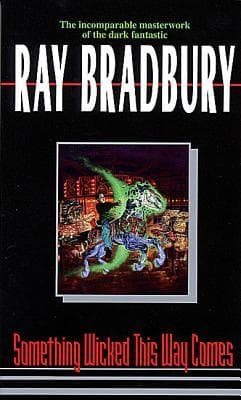
- Something Wicked This Way Comes
Ray Bradbury
3.9 (100k) average on GoodreadsFantasyShares Bradbury's signature blend of dark fantasy, carnival atmosphere, and exploration of good vs. evil.
- Coraline
Neil Gaiman
4.0 (23k) average on GoodreadsFantasyFeatures a young protagonist entering a magical, slightly unsettling world with a mysterious guide, exploring themes of childhood and danger.
- Harry Potter and the Sorcerer's Stone
J.K. Rowling
4.5 (7M) average on GoodreadsFantasyRescued from a miserable life under the stairs, an orphaned boy discovers he's a wizard destined for a magical school, where he uncovers a dangerous secret tied to the dark wizard who murdered his parents.
- The Hunger Games
Suzanne Collins
4.3 (6.4M) average on GoodreadsFantasyIn a future where children fight to the death on live television, Katniss Everdeen volunteers for the arena, turning a death sentence into a fight for survival and a spark of rebellion.
- 1984
George Orwell
4.2 (3.1M) average on GoodreadsPoliticsIn a future where surveillance and thought control are absolute, a man's search for truth clashes with the Party, showing that hope can be a form of rebellion.
- Divergent
Veronica Roth
4.2 (2.9M) average on GoodreadsFantasyIn a society divided by virtues, a sixteen-year-old's difference from the norm starts a rebellion that threatens her world.





Enjoyed the summary?
A summary gives you the shape of the book. The book itself has the detail, the examples and the voice.
Find The Halloween Tree on AmazonAs an Amazon Associate, BookBrief earns from qualifying purchases. How we're funded